

Search Result
Results for "
animal fats
" in MedChemExpress (MCE) Product Catalog:
7
Biochemical Assay Reagents
20
Isotope-Labeled Compounds
| Cat. No. |
Product Name |
Target |
Research Areas |
Chemical Structure |
-
- HY-N2041
-
-
-
- HY-N2041S
-
|
|
Endogenous Metabolite
|
Others
|
|
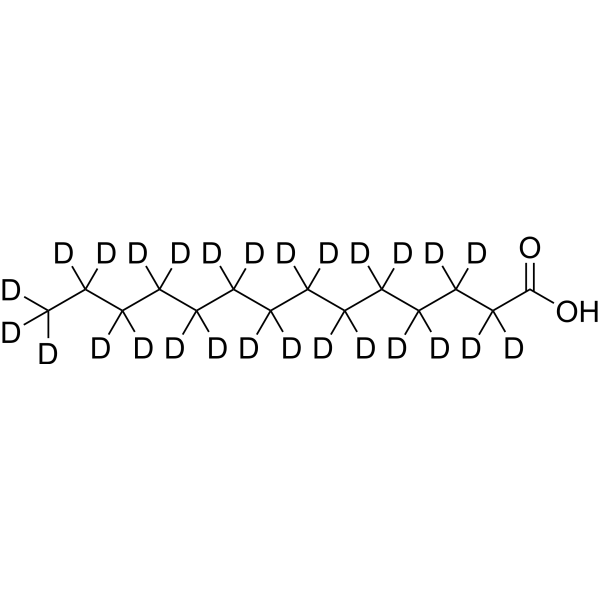
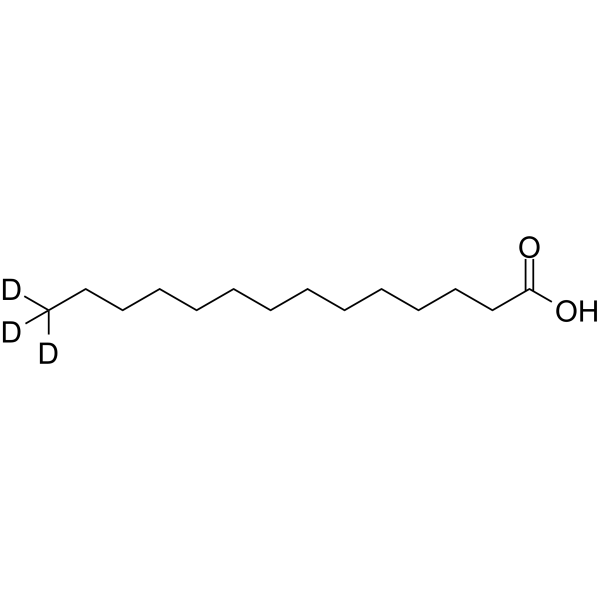
Myristic acid-d27 is the deuterium labeled Myristic acid. Myristic acid is a saturated 14-carbon fatty acid occurring in most animal and vegetable fats, particularly butterfat and coconut, palm, and nutmeg oils.
|
-
-
- HY-151226
-
|
GMS
|
Environmental Pollutants
Liposome
|
Others
|
|
Glyceryl monostearate (GMS) is a type of monoglyceride. Glyceryl monostearateGlyceryl monostearate can serve as a core lipid material for constructing solid lipid nanoparticles in the field of drug delivery. Glyceryl monostearate can be used as a gelling agent to structure liquid vegetable oils into semi-solid oleogels, so as to replace animal fat in meat products .
|
-
-
- HY-B2219S4
-
-
-
- HY-B2219S3
-
-
-
- HY-W017960
-
|
Et-HE; 1,4-DHP
|
SOD
|
Endocrinology
|
|
Diludine (BNP-7787) is an orally effective feed additive. Diludine reduces the activity of G6PD and increases the level of superoxide dismutase (SOD). Diludine reduces the mutagenic effect of environmental pollutants, protects parental reproductive systems and improves offspring quality. Diludine is mainly applied during the transition period of dairy cows to increase milk yield and milk fat content, and improve health status during parturition. Diludine can be used in animal feeding research .
|
-
-
- HY-B2219S2
-
-
-
- HY-W099601
-
|
Lauric acid sodium salt, 99-100%
|
Environmental Pollutants
Biochemical Assay Reagents
|
Others
|
|
Sodium LaurateIt is an organic compound belonging to fatty acids. It is the sodium salt of lauric acid, a medium-chain saturated fatty acid found in various animal and vegetable fats. Sodium LaurateCommonly used as surfactants, emulsifiers and cleaning agents in various industries such as cosmetics, personal care and detergent industries. It's found in a variety of products, including soaps, shampoos, toothpaste, and laundry detergent. Furthermore, it also has applications in the food industry where it is used as a food additive to improve texture and stability.
|
-
-
- HY-B2219S9
-
|
|
Endogenous Metabolite
|
Cancer
|
|
Stearic acid-d7 is the deuterium labeled Stearic acid. Stearic acid is a long chain dietary saturated fatty acid which exists in many animal and vegetable fats and oils.
|
-
-
- HY-N7861
-
|
Methyl trans-9-Octadecenoate; (E)-Methyl octadec-9-enoate
|
Biochemical Assay Reagents
|
Others
|
|
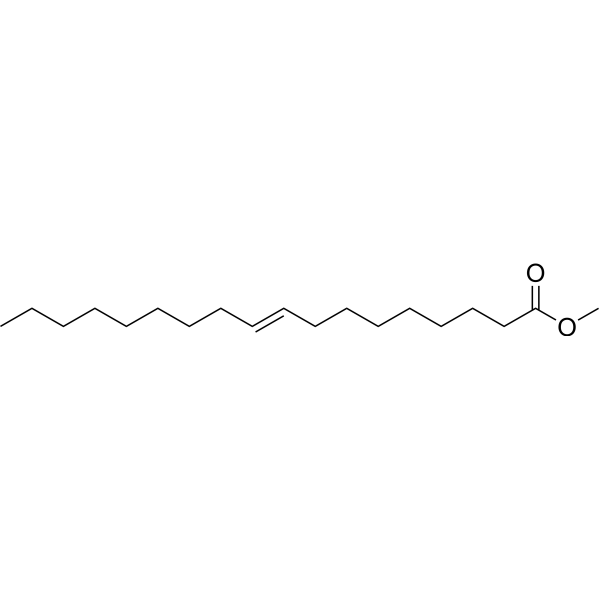
Methyl elaidate is a compound belonging to the class of fatty acid esters. It is derived from elaidic acid, a monounsaturated omega-9 fatty acid found in certain vegetable oils and animal fats. Methyl elaidate is commonly used as a reference compound for the analysis of fatty acids and their derivatives by gas chromatography.
|
-
-
- HY-W093183
-
|
Palmitic acid anhydride
|
Biochemical Assay Reagents
|
Others
|
|
Palmitic anhydride, a saturated fatty acid found in many natural sources such as animal fats and vegetable oils, is commonly used as a reagent in organic synthesis to introduce palmitoyl(hexadecanoyl) functional groups into other organic molecules, moreover, Palmitic anhydride has been Used in the production of surfactants, lubricants and plasticizers, as well as in the preparation of cosmetics and pharmaceuticals.
|
-
-
- HY-W009544
-
|
3-Hydroxymyristic acid
|
Biochemical Assay Reagents
|
Others
|
|
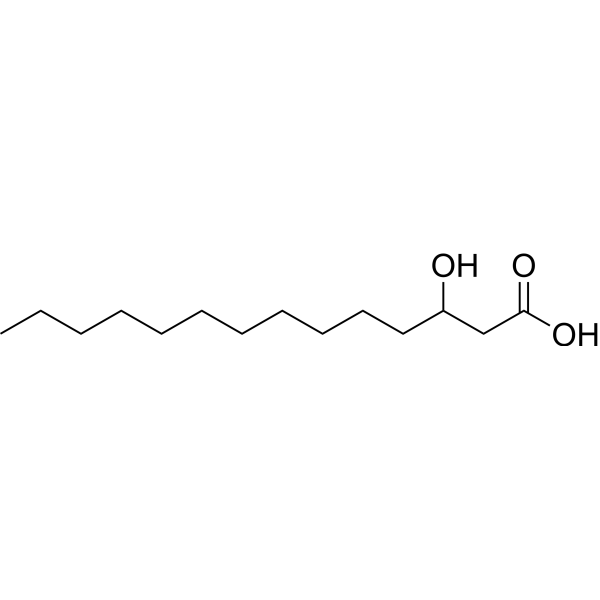
3-Hydroxytetradecanoic acidis a saturated fatty acid. 3-Hydroxytetradecanoic acidOccurs naturally in various animal and plant sources such as butter and milk fat. 3-Hydroxytetradecanoic acidIt has various uses in industry, especially in the production of soaps, detergents and other surfactants. 3-Hydroxytetradecanoic acidIt is also used as a precursor for the synthesis of other bioactive compounds such as antibiotics and anticancer drugs.
|
-
-
- HY-124141
-
|
trans-9-Tetradecenoic acid
|
Endogenous Metabolite
|
Metabolic Disease
|
|
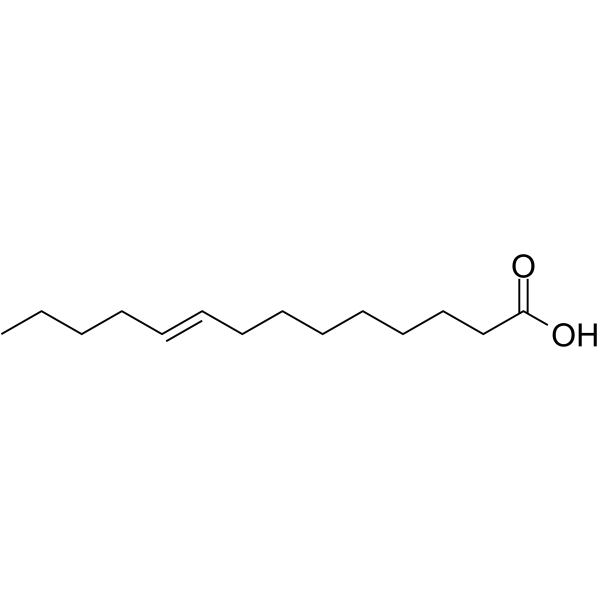
Myristelaidic acid (trans-9-Tetradecenoic acid), a 14-carbon trans fatty acid, is the trans isomer of Myristoleic acid. Myristelaidic acid is found in most animal fats .
|
-
-
- HY-N2041R
-
|
|
Reference Standards
Endogenous Metabolite
NF-κB
Bacterial
|
Infection
Inflammation/Immunology
|
|
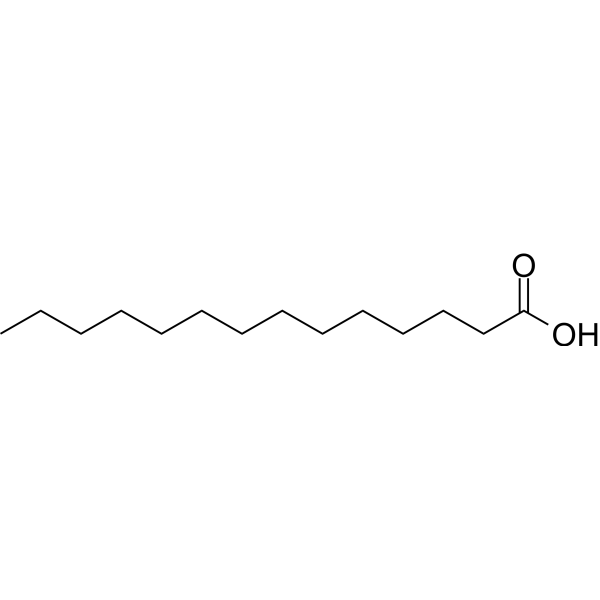
Myristic acid (Standard) is the analytical standard of Myristic acid. This product is intended for research and analytical applications. Myristic acid is an orally active saturated 14-carbon fatty acid found in most animal and plant fats, especially milk fat coconut oil, palm oil and nutmeg oil. Myristic acid exerts anti-inflammatory activity through the NF-κB pathway. Myristic acid has antibacterial, anti-inflammatory and analgesic properties .
|
-
-
- HY-W099570
-
|
|
Environmental Pollutants
Biochemical Assay Reagents
|
Others
|
|
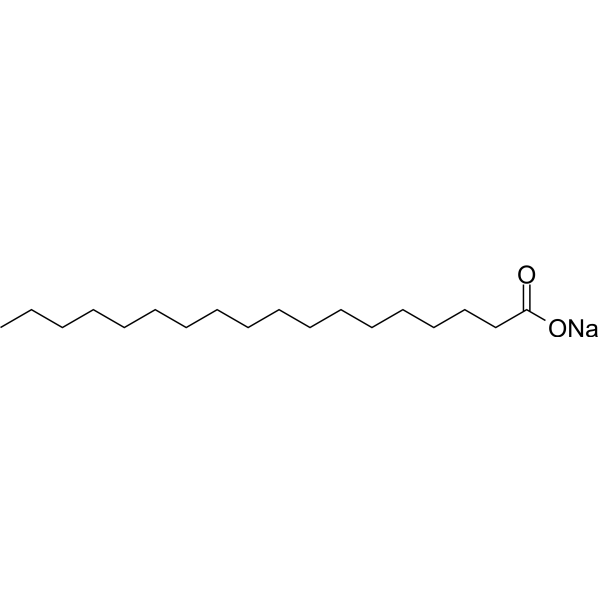
Stearate sodiumIt is an organic compound belonging to fatty acids. It is the sodium salt of stearic acid, a saturated fatty acid commonly found in various animal and vegetable fats. Stearate sodiumCommonly used as surfactants, emulsifiers and detergents, it is widely used in the cosmetics, personal care and detergent industries. It's found in a variety of products, including soaps, shampoos, toothpaste, and laundry detergent. Also, it has applications in the food industry where it is used as a food additive to improve texture and shelf life.
|
-
-
- HY-B2219S6
-
-
-
- HY-B2219S7
-
-
-
- HY-N2041S3
-
|
|
Isotope-Labeled Compounds
Endogenous Metabolite
|
Others
|
|
Myristic acid-d33 is the deuterium labeled Myristic acid. Myristic acid is a saturated 14-carbon fatty acid occurring in most animal and vegetable fats, particularly butterfat and coconut, palm, and nutmeg oils.
|
-
-
- HY-W051298
-
|
Stearic diglyceride
|
Biochemical Assay Reagents
|
Metabolic Disease
|
|
Distearin is a diacylglycerol containing stearic acid at two positions. Stearic acid is a long chain dietary saturated fatty acid which exists in many animal and vegetable fats and oils .
|
-
-
- HY-B2219S
-
-
-
- HY-N2041S2
-
|
|
Isotope-Labeled Compounds
Endogenous Metabolite
|
Others
|
|
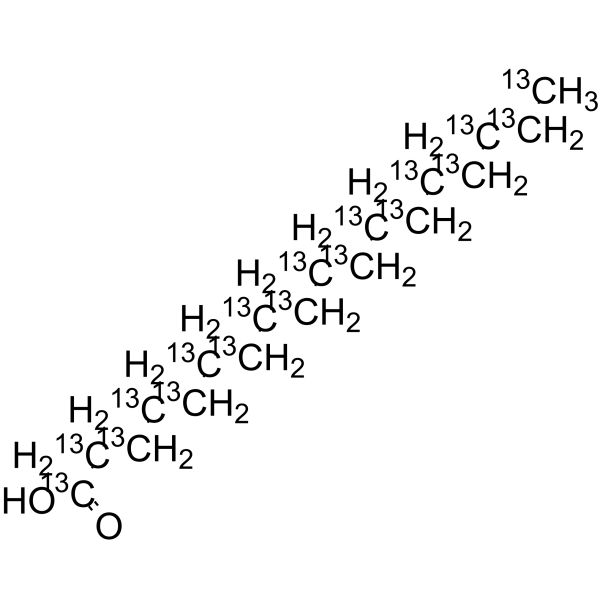
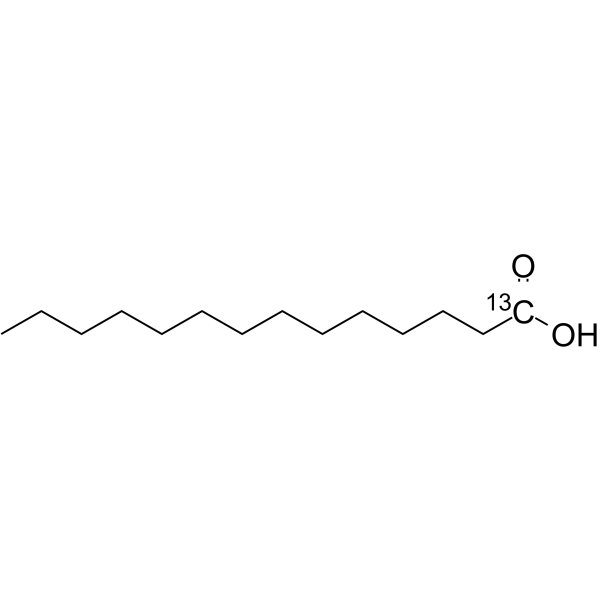
Myristic acid- 13C the 13C is labeled Myristic acid. Myristic acid is a saturated 14-carbon fatty acid occurring in most animal and vegetable fats, particularly butterfat and coconut, palm, and nutmeg oils.
|
-
-
- HY-N2041S4
-
|
|
Isotope-Labeled Compounds
Endogenous Metabolite
|
Others
|
|
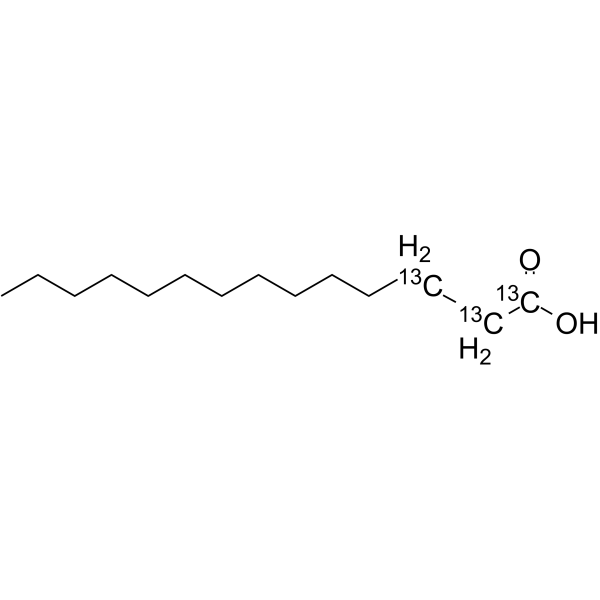
Myristic acid- 13C3 is the 13C labeled Myristic acid. Myristic acid is a saturated 14-carbon fatty acid occurring in most animal and vegetable fats, particularly butterfat and coconut, palm, and nutmeg oils.
|
-
-
- HY-N2041S6
-
|
|
Endogenous Metabolite
|
Infection
|
|
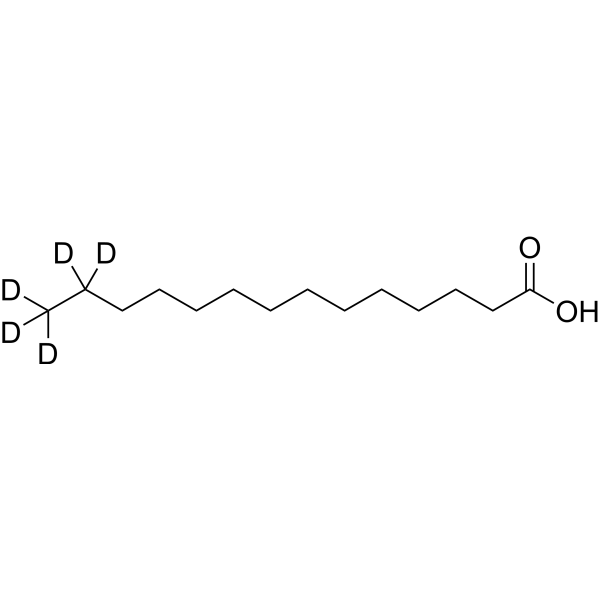
Myristic acid-d5 is the deuterium labeled Myristic acid. Myristic acid is a saturated 14-carbon fatty acid occurring in most animal and vegetable fats, particularly butterfat and coconut, palm, and nutmeg oils.
|
-
-
- HY-N2041S7
-
-
-
- HY-134577
-
|
|
Adrenergic Receptor
|
Endocrinology
|
|
Clorprenaline is a potent agonist of β2-adrenergic. Clorprenaline promotes animal muscular mass growth and decreases fat accumulation. Clorprenaline is a potential new lean meat-boosting feed additive .
|
-
-
- HY-B2219S1
-
-
-
- HY-121855
-
|
Glycerol 1-monoelaidate; α-Monoelaidin
|
Biochemical Assay Reagents
|
Others
|
|
Monoeladin is an ester derivative of glycerin and oleic acid, which are commonly found in various vegetable and animal fats. Monoeladin has unique chemical properties that make it an important intermediate in the biosynthesis of other lipid molecules, especially in the formation of triglycerides and phospholipids. It also plays a role in food science as a partial replacement for saturated fat, which has been linked to an increased risk of heart disease.
|
-
-
- HY-N2041S8
-
-
-
- HY-W127851
-
|
Cypridina luciferin analog
|
Biochemical Assay Reagents
|
Others
Cancer
|
|
CLA, or conjugated linoleic acid, is a polyunsaturated fatty acid that occurs naturally in a variety of animal products, such as meat and dairy. It has several potential benefits for human health, including the ability to reduce body fat mass, improve insulin sensitivity, and reduce inflammation. CLA has been extensively studied for its effects on weight loss and muscle growth, as well as its potential role in preventing chronic diseases such as heart disease and cancer. Additionally, it can be taken as a dietary supplement in capsule form.
|
-
-
- HY-W017960R
-
|
Et-HE (Standard); 1,4-DHP (Standard)
|
SOD
Reference Standards
|
Metabolic Disease
|
|
Diludine (Standard) is the analytical standard of Diludine (HY-W017960). This product is intended for research and analytical applications. Diludine (BNP-7787) is an orally effective feed additive. Diludine reduces the activity of G6PD and increases the level of superoxide dismutase (SOD). Diludine reduces the mutagenic effect of environmental pollutants, protects parental reproductive systems and improves offspring quality. Diludine is mainly applied during the transition period of dairy cows to increase milk yield and milk fat content, and improve health status during parturition. Diludine can be used in animal feeding research .
|
-
-
- HY-B2219S8
-
-
-
- HY-166088
-
|
trans-9-Tetradecenoic acid sodium
|
Endogenous Metabolite
|
Metabolic Disease
|
|
Myristelaidic acid (trans-9-Tetradecenoic acid) sodium, a 14-carbon trans fatty acid, is the trans isomer of Myristoleic acid. Myristelaidic acid is found in most animal fats .
|
-
-
- HY-N2041S1
-
-
-
- HY-B2219S5
-
|
|
Endogenous Metabolite
|
Metabolic Disease
Cancer
|
|
Stearic acid-9,10-d2 is the deuterium labeled Stearic acid. Stearic acid is a long chain dietary saturated fatty acid which exists in many animal and vegetable fats and oils.
|
-
-
- HY-134577R
-
|
|
Reference Standards
Adrenergic Receptor
|
Endocrinology
|
|
Clorprenaline (Standard) is the analytical standard of Clorprenaline. This product is intended for research and analytical applications. Clorprenaline is a potent agonist of β2-adrenergic. Clorprenaline promotes animal muscular mass growth and decreases fat accumulation. Clorprenaline is a potential new lean meat-boosting feed additive .
|
-
-
- HY-100935S
-
|
CL 263780-d7
|
Isotope-Labeled Compounds
Adrenergic Receptor
|
Endocrinology
|
|
Cimaterol-d7 is the deuterium labeled Cimaterol. Cimaterol is a potent agonist of β-adrenergic receptors (pEC50s=8.13, 8.78, and 6.62 for human β1, β2, and β3, respectively). Cimaterol has been used in farmed animals to increase carcass mass and to alter muscle and fat deposition.
|
-
-
- HY-W111403
-
|
|
Environmental Pollutants
Biochemical Assay Reagents
|
Others
|
|
Calcium oxide (CaO) acts as a heterogeneous base catalyst. Calcium oxide can be extracted not only from waste materials such as oyster shells, eggshells and crab shells, but also exhibits tolerance to low to moderate oil quality, free fatty acid and water content in raw materials. Calcium oxide can be used in biodiesel production, where it effectively catalyzes the transesterification of vegetable oils or animal fats to produce alkyl esters .
|
-
-
- HY-165093
-
|
1-Arachidin-2-olein-3-palmitin; TG(20:0/18:1/16:0)
|
Others
|
Others
|
|
1-Arachidoyl-2-oleoyl-3-palmitoyl-rac-glycerol (1-Arachidin-2-olein-3-palmitin) is a triglyceride characterized by regioisomerism by silver ion HPLC/MS. The method can be applied to the analysis of complex samples of vegetable oils and animal fats, and the results show that plant and animal fats have different preferences for fatty acid occupancy at the sn-2 position.
|
-
-
- HY-N2041S5
-
-
-
- HY-N7861R
-
|
Methyl trans-9-Octadecenoate (Standard); (E)-Methyl octadec-9-enoate (Standard)
|
Biochemical Assay Reagents
Reference Standards
|
Others
|
|
Methyl elaidate (Standard) is the analytical standard of Methyl elaidate. This product is intended for research and analytical applications. Methyl elaidate is a compound belonging to the class of fatty acid esters. It is derived from elaidic acid, a monounsaturated omega-9 fatty acid found in certain vegetable oils and animal fats. Methyl elaidate is commonly used as a reference compound for the analysis of fatty acids and their derivatives by gas chromatography.
|
-
| Cat. No. |
Product Name |
Type |
-
- HY-W099601
-
|
Lauric acid sodium salt, 99-100%
|
Biochemical Assay Reagents
|
|
Sodium LaurateIt is an organic compound belonging to fatty acids. It is the sodium salt of lauric acid, a medium-chain saturated fatty acid found in various animal and vegetable fats. Sodium LaurateCommonly used as surfactants, emulsifiers and cleaning agents in various industries such as cosmetics, personal care and detergent industries. It's found in a variety of products, including soaps, shampoos, toothpaste, and laundry detergent. Furthermore, it also has applications in the food industry where it is used as a food additive to improve texture and stability.
|
-
- HY-N7861
-
|
Methyl trans-9-Octadecenoate; (E)-Methyl octadec-9-enoate
|
Biochemical Assay Reagents
|
|
Methyl elaidate is a compound belonging to the class of fatty acid esters. It is derived from elaidic acid, a monounsaturated omega-9 fatty acid found in certain vegetable oils and animal fats. Methyl elaidate is commonly used as a reference compound for the analysis of fatty acids and their derivatives by gas chromatography.
|
-
- HY-W093183
-
|
Palmitic acid anhydride
|
Biochemical Assay Reagents
|
|
Palmitic anhydride, a saturated fatty acid found in many natural sources such as animal fats and vegetable oils, is commonly used as a reagent in organic synthesis to introduce palmitoyl(hexadecanoyl) functional groups into other organic molecules, moreover, Palmitic anhydride has been Used in the production of surfactants, lubricants and plasticizers, as well as in the preparation of cosmetics and pharmaceuticals.
|
-
- HY-W009544
-
|
3-Hydroxymyristic acid
|
Biochemical Assay Reagents
|
|
3-Hydroxytetradecanoic acidis a saturated fatty acid. 3-Hydroxytetradecanoic acidOccurs naturally in various animal and plant sources such as butter and milk fat. 3-Hydroxytetradecanoic acidIt has various uses in industry, especially in the production of soaps, detergents and other surfactants. 3-Hydroxytetradecanoic acidIt is also used as a precursor for the synthesis of other bioactive compounds such as antibiotics and anticancer drugs.
|
-
- HY-121855
-
|
Glycerol 1-monoelaidate; α-Monoelaidin
|
Biochemical Assay Reagents
|
|
Monoeladin is an ester derivative of glycerin and oleic acid, which are commonly found in various vegetable and animal fats. Monoeladin has unique chemical properties that make it an important intermediate in the biosynthesis of other lipid molecules, especially in the formation of triglycerides and phospholipids. It also plays a role in food science as a partial replacement for saturated fat, which has been linked to an increased risk of heart disease.
|
-
- HY-W127851
-
|
Cypridina luciferin analog
|
Biochemical Assay Reagents
|
|
CLA, or conjugated linoleic acid, is a polyunsaturated fatty acid that occurs naturally in a variety of animal products, such as meat and dairy. It has several potential benefits for human health, including the ability to reduce body fat mass, improve insulin sensitivity, and reduce inflammation. CLA has been extensively studied for its effects on weight loss and muscle growth, as well as its potential role in preventing chronic diseases such as heart disease and cancer. Additionally, it can be taken as a dietary supplement in capsule form.
|
-
- HY-N7861R
-
|
Methyl trans-9-Octadecenoate (Standard); (E)-Methyl octadec-9-enoate (Standard)
|
Biochemical Assay Reagents
|
|
Methyl elaidate (Standard) is the analytical standard of Methyl elaidate. This product is intended for research and analytical applications. Methyl elaidate is a compound belonging to the class of fatty acid esters. It is derived from elaidic acid, a monounsaturated omega-9 fatty acid found in certain vegetable oils and animal fats. Methyl elaidate is commonly used as a reference compound for the analysis of fatty acids and their derivatives by gas chromatography.
|
| Cat. No. |
Product Name |
Category |
Target |
Chemical Structure |
| Cat. No. |
Product Name |
Chemical Structure |
-
- HY-N2041S
-
2 Publications Verification
|
|
Myristic acid-d27 is the deuterium labeled Myristic acid. Myristic acid is a saturated 14-carbon fatty acid occurring in most animal and vegetable fats, particularly butterfat and coconut, palm, and nutmeg oils.
|
-
-
- HY-B2219S4
-
|
|
|
Stearic Acid-d35 is the deuterium labeled Stearic acid. Stearic acid is a long chain dietary saturated fatty acid which exists in many animal and vegetable fats and oils.
|
-
-
- HY-B2219S3
-
|
|
|
Stearic acid-d3 is the deuterium labeled Stearic acid. Stearic acid is a long chain dietary saturated fatty acid which exists in many animal and vegetable fats and oils.
|
-
-
- HY-B2219S2
-
1 Publications Verification
|
|
Stearic acid- 13C18is the 13C-labeled Stearic acid. Stearic acid is a long chain dietary saturated fatty acid which exists in many animal and vegetable fats and oils.
|
-
-
- HY-B2219S9
-
|
|
|
Stearic acid-d7 is the deuterium labeled Stearic acid. Stearic acid is a long chain dietary saturated fatty acid which exists in many animal and vegetable fats and oils.
|
-
-
- HY-B2219S6
-
|
|
|
Stearic acid-d55 is the deuterium labeled Stearic acid. Stearic acid is a long chain dietary saturated fatty acid which exists in many animal and vegetable fats and oils.
|
-
-
- HY-B2219S7
-
|
|
|
Stearic acid-d4 is the deuterium labeled Stearic acid. Stearic acid is a long chain dietary saturated fatty acid which exists in many animal and vegetable fats and oils .
|
-
-
- HY-N2041S3
-
|
|
|
Myristic acid-d33 is the deuterium labeled Myristic acid. Myristic acid is a saturated 14-carbon fatty acid occurring in most animal and vegetable fats, particularly butterfat and coconut, palm, and nutmeg oils.
|
-
-
- HY-B2219S
-
|
|
|
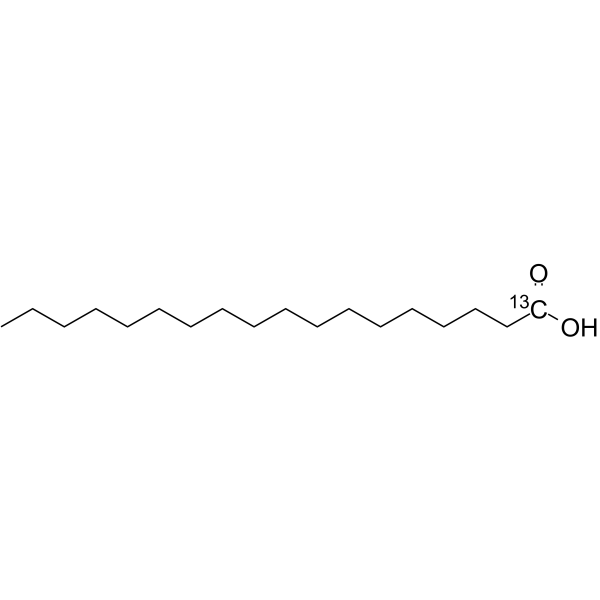
Stearic acid-1- 13C is the 13C labeled Stearic acid. Stearic acid is a long chain dietary saturated fatty acid which exists in many animal and vegetable fats and oils.
|
-
-
- HY-N2041S2
-
|
|
|
Myristic acid- 13C the 13C is labeled Myristic acid. Myristic acid is a saturated 14-carbon fatty acid occurring in most animal and vegetable fats, particularly butterfat and coconut, palm, and nutmeg oils.
|
-
-
- HY-N2041S4
-
|
|
|
Myristic acid- 13C3 is the 13C labeled Myristic acid. Myristic acid is a saturated 14-carbon fatty acid occurring in most animal and vegetable fats, particularly butterfat and coconut, palm, and nutmeg oils.
|
-
-
- HY-N2041S6
-
|
|
|
Myristic acid-d5 is the deuterium labeled Myristic acid. Myristic acid is a saturated 14-carbon fatty acid occurring in most animal and vegetable fats, particularly butterfat and coconut, palm, and nutmeg oils.
|
-
-
- HY-N2041S7
-
|
|
|
Myristic acid-d7 is the deuterium labeled Myristic acid. Myristic acid is a saturated 14-carbon fatty acid occurring in most animal and vegetable fats, particularly butterfat and coconut, palm, and nutmeg oils.
|
-
-
- HY-B2219S1
-
|
|
|
Stearic acid-d2 is the deuterium labeled Stearic acid. Stearic acid is a long chain dietary saturated fatty acid which exists in many animal and vegetable fats and oils.
|
-
-
- HY-N2041S8
-
|
|
|
Myristic acid- 13C2 is the 13C-labeled Myristic acid (HY-N2041). Myristic acid is an orally active saturated 14-carbon fatty acid found in most animal and plant fats, especially milk fat coconut oil, palm oil and nutmeg oil. Myristic acid exerts anti-inflammatory activity through the NF-κB pathway. Myristic acid has antibacterial, anti-inflammatory and analgesic properties .
|
-
-
- HY-B2219S8
-
|
|
|
Stearic acid-d is the deuterium labeled Stearic acid. Stearic acid is a long chain dietary saturated fatty acid which exists in many animal and vegetable fats and oils.
|
-
-
- HY-N2041S1
-
|
|
|
Myristic acid-d2 is the deuterium labeled Myristic acid. Myristic acid is a saturated 14-carbon fatty acid occurring in most animal and vegetable fats, particularly butterfat and coconut, palm, and nutmeg oils.
|
-
-
- HY-B2219S5
-
|
|
|
Stearic acid-9,10-d2 is the deuterium labeled Stearic acid. Stearic acid is a long chain dietary saturated fatty acid which exists in many animal and vegetable fats and oils.
|
-
-
- HY-100935S
-
|
|
|
Cimaterol-d7 is the deuterium labeled Cimaterol. Cimaterol is a potent agonist of β-adrenergic receptors (pEC50s=8.13, 8.78, and 6.62 for human β1, β2, and β3, respectively). Cimaterol has been used in farmed animals to increase carcass mass and to alter muscle and fat deposition.
|
-
-
- HY-N2041S5
-
|
|
|
Myristic acid-d is the deuterium labeled Myristic acid. Myristic acid is a saturated 14-carbon fatty acid occurring in most animal and vegetable fats, particularly butterfat and coconut, palm, and nutmeg oils.
|
-
| Cat. No. |
Product Name |
|
Classification |
-
- HY-N2041
-
|
|
|
Emulsifiers
|
|
Myristic acid is an orally active saturated 14-carbon fatty acid found in most animal and plant fats, especially milk fat coconut oil, palm oil and nutmeg oil. Myristic acid exerts anti-inflammatory activity through the NF-κB pathway. Myristic acid has antibacterial, anti-inflammatory and analgesic properties .
|
-
- HY-151226
-
|
GMS
|
|
Phospholipids
|
|
Glyceryl monostearate (GMS) is a type of monoglyceride. Glyceryl monostearateGlyceryl monostearate can serve as a core lipid material for constructing solid lipid nanoparticles in the field of drug delivery. Glyceryl monostearate can be used as a gelling agent to structure liquid vegetable oils into semi-solid oleogels, so as to replace animal fat in meat products .
|
Your information is safe with us. * Required Fields.
Inquiry Information
- Product Name:
- Cat. No.:
- Quantity:
- MCE Japan Authorized Agent:

