1. Search Result
Search Result
Results for "

antifeedant

" in MedChemExpress (MCE) Product Catalog:

41

阻害剤およびアゴニスト

39

天然物

製品番号 製品名 Target 研究分野 構造式
  • HY-100597
    Saponins
    5 Publications Verification

    Saponin

    Environmental Pollutants Bacterial Fungal Inflammation/Immunology
    Saponins (Saponin) is a class of chemical compound of glycosides found in particular abundance in various plant species. In plants, Saponins may serve as anti-feedants, and to protect the plant against microbes and fungi .
    Saponins
  • HY-N3014
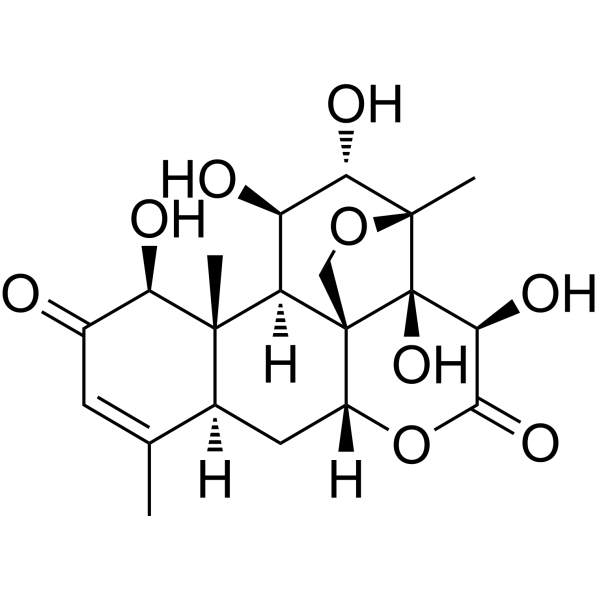
    Bruceine D
    4 Publications Verification

    Notch Apoptosis Parasite Infection Cancer
    Bruceine D is a Notch inhibitor with anti-cancer activity and induces apoptosis in several human cancer cells. Bruceine D is an effective botanical insect antifeedant with outstanding systemic properties, causing potent pest growth inhibitory activity . Bruceine D has strong anthelmintic activity against D. intermedius with an EC50 value of 0.57 mg/L .
    Bruceine D
  • HY-W004291

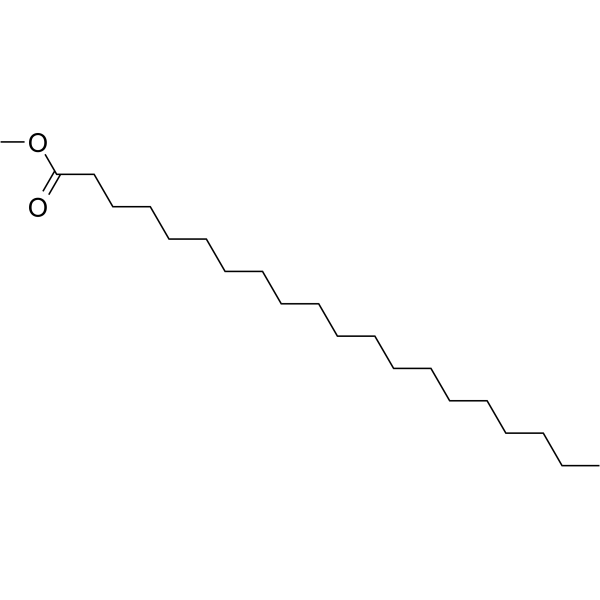
    Methyl icosanoate

    Aminopeptidase Infection
    Methyl arachidate (Methyl icosanoate) is a component of lipid mixtures. Methyl arachidate can be isolated from flowering plants. Methyl arachidate inhibits LTA4H. Methyl arachidate shows no antifeedant activity against Leptinotarsa decemlineata .
    Methyl arachidate
  • HY-111934

    Parasite Potassium Channel Others Cancer
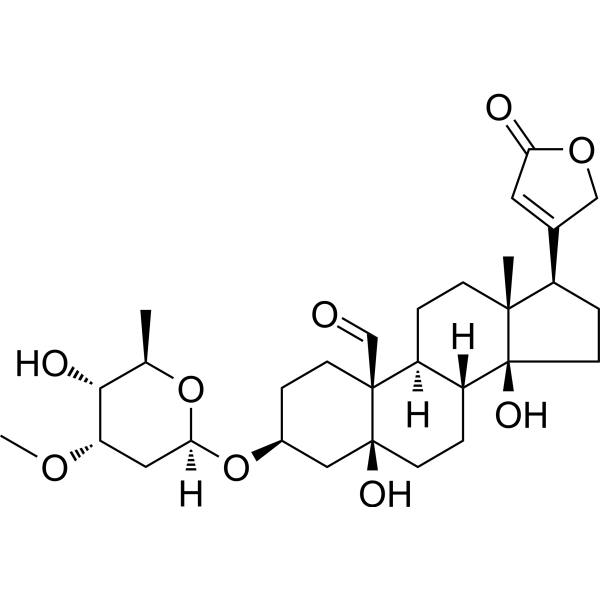
    Cymarin, a cardiac glycoside, potently inhibits the Palytoxin (PTX)-induced K + release (IC50=0.42 μM). Cymarin reveals an antitumor activity against breast cancer and pancreatic cancer. Cymarin exhibits antifeedant and growth inhibitory effects as crop protectant .
    Cymarin
  • HY-N5022

    7-Methoxydictamnine; Evolitrin

    Others Inflammation/Immunology
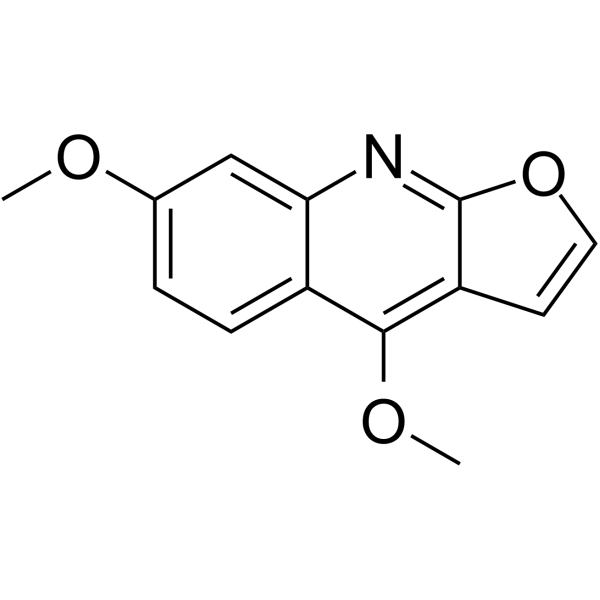
    Evolitrine (7-Methoxydictamnine; Evolitrin) is isolated from Acronychia pedunculata and show anti-inflammatory and antifeedant activities .
    Evolitrine
  • HY-W012892

    Phenylmethylacetylene

    Drug Intermediate Infection
    Methylphenylethyne (Phenylmethylacetylene) is an intermediate of bioactive compounds. Methylphenylethyne has antifeedant activities for larvae of Pieris rapae crucivora. Methylphenylethyne can be used for pest control research .
    Methylphenylethyne
  • HY-118401

    Fungal Bacterial Herbicide Infection
    Mansonone E (Compound 5) is a pesticide. Mansonone E can be isolated from heartwood of Mansonia gagei. Mansonone E has significant antifungal activity against Cladosporium cucumerinum, Candida albicans and Phytophthora parasitica. Mansonone E has potent antibacterial activity with MIC50s of both 7.8 μg/mL for Xanthomonas oryzae pv. oryzae and X. oryzae pv. Oryzicola. Mansonone E also has antifeedant and herbicidal activities .
    Mansonone E
  • HY-N7179

    Others Others
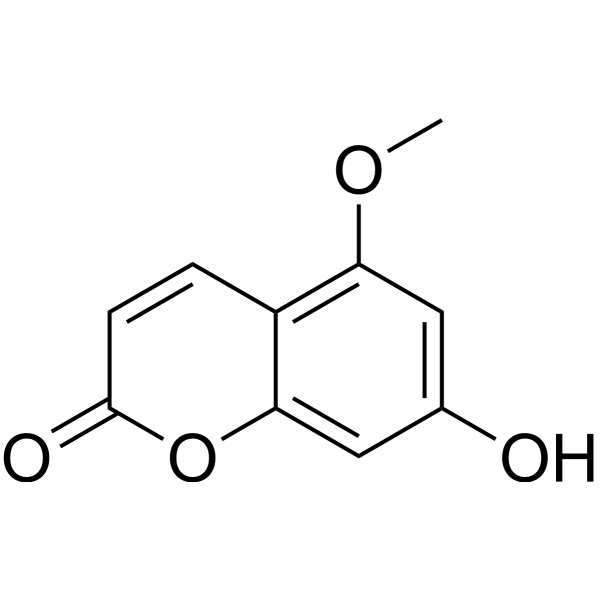
    7-Hydroxy-5-methoxycoumarin is a phloroglucinol-type furocoumarins, a potent naturally-occurring insect antifeedant .
    7-Hydroxy-5-methoxycoumarin
  • HY-N3184

    Others Others
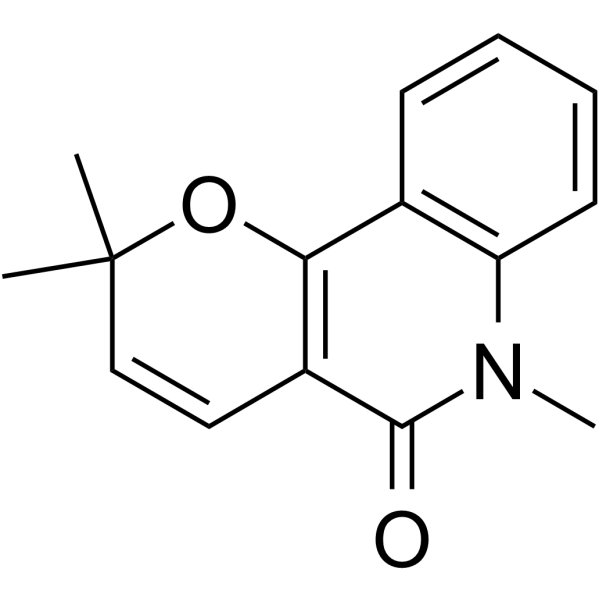
    N-Methylflindersine is a compound isolated as insect antifeedants from the East African Rutaceous medicinal plants Fagara chalybea and F. holtziana .
    N-Methylflindersine
  • HY-N3068

    Nigakilactone I; Simalikalactone B

    Others Others
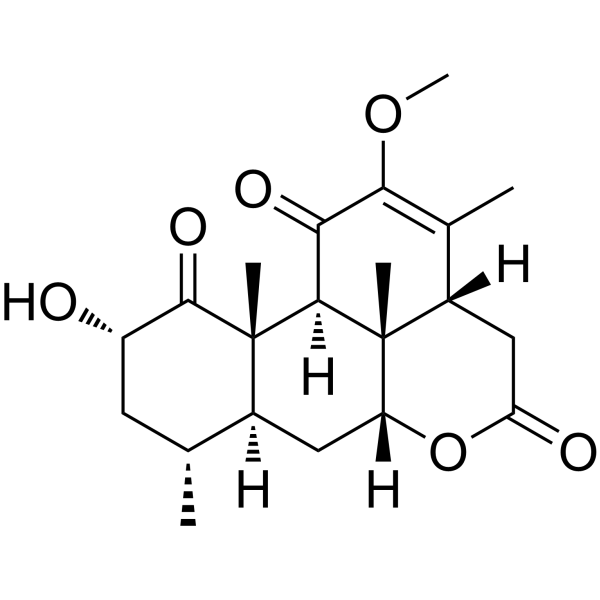
    Picrasin B (Nigakilactone I) can be isolated from the bark of Picrasma quassioides. Picrasin B shows antifeedant and insecticidal activity against Diamondback Moth .
    Picrasin B
  • HY-118565

    Endogenous Metabolite Bacterial Infection
    Rhizocarpic acid (Compound 2) is a secondary metabolite of lichen. Rhizocarpic acid effectively inhibits the growth of bacteria, such as Bacillus subtilis and Staphylococcus aureus, as well as murine myeloma NS-1 cells. Rhizocarpic acid is an antioxidant and an insect antifeedant with an ED50 of 71 μmol/g dry weight against neonate larvae of the Egyptian cotton leaf worm Spodoptera littoralis .
    Rhizocarpic acid
  • HY-169068

    Carboxylesterase (CES) Infection
    Antifeedant agent 1 is a carboxylesterase inhibitor that exerts insecticidal activity by inhibiting insect feeding, with an EC50 value of 0.038 mg/mL. Antifeedant agent 1 can be used in research related to pest control .
    Antifeedant agent 1
  • HY-N3291

    Others Others
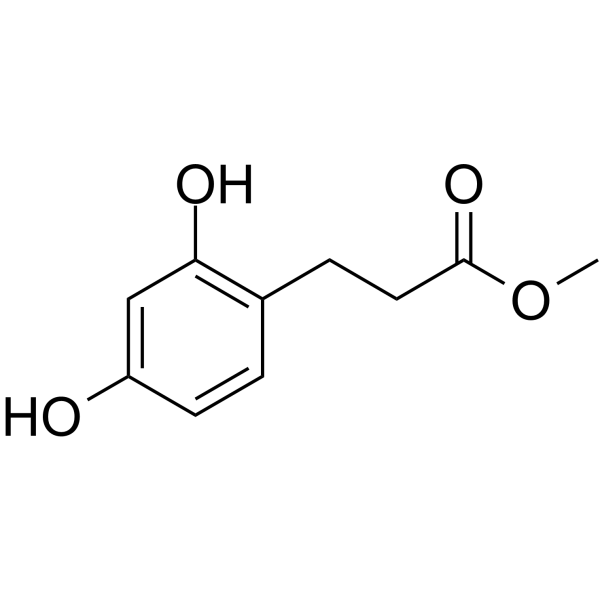
    Methyl-3-(2,4-dihydroxy phenyl) propanoate is a phenylpropanoic ester with antifeedant activity .
    Methyl-3-(2,4-dihydroxy phenyl) propanoate
  • HY-N3970

    Others Neurological Disease
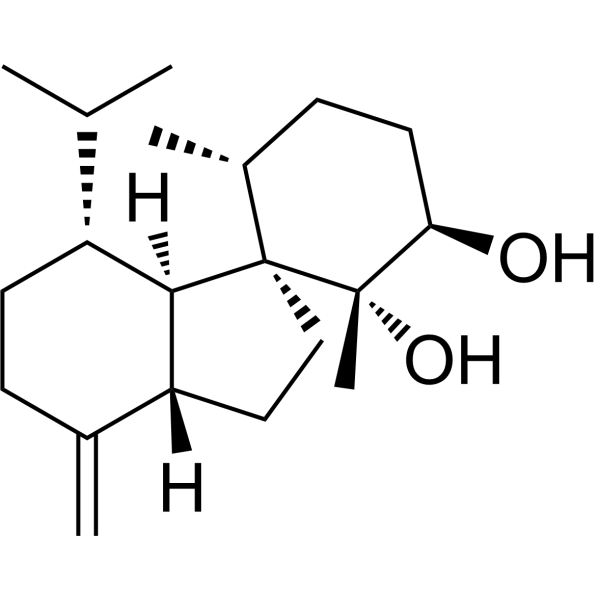
    Gopherenediol is a diterpenoid with putative antifeedant activity against Mammalian herbivores. Gopherenediol is the active compound in to form deterrent effect, protects gopherweed, Euphorbia lathyris (Euphorbiaceae) from feeding by Mammalian herbivores .
    Gopherenediol
  • HY-N12875

    Tyrosinase Others
    Ailancoumarin E (Compound 5) is a derivative of Coumarin (HY-N0709). Ailancoumarin E exhibits antifeedant activity toward Plutella xylostella, and inhibits growth of third instar larva. Ailancoumarin E inhibits tyrosinase with IC50 of 14.21 μM .
    Ailancoumarin E
  • HY-N10813

    Others Others
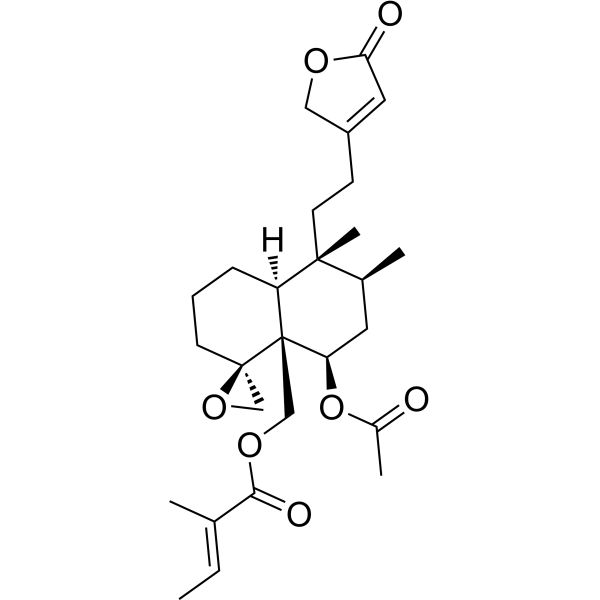
    Ajugacumbin B is an antifeedant with an EC50 of 15.2 μg/cm 2 against Helicoverpa armigera.
    Ajugacumbin B
  • HY-N1284

    (-)-Seneganolide

    Others Others
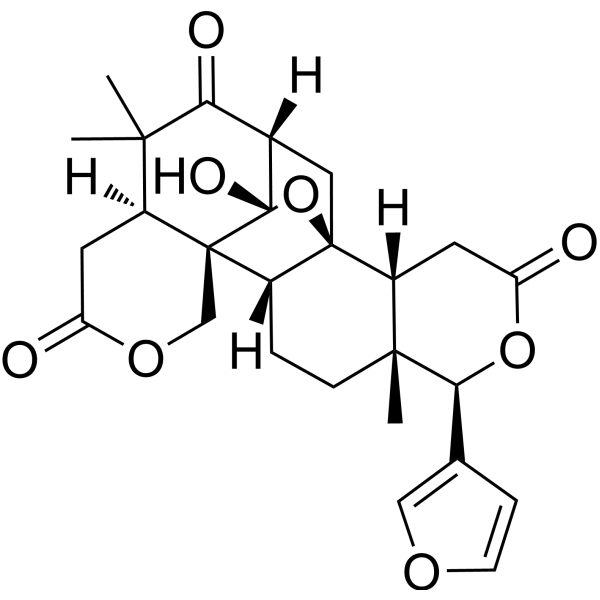
    Seneganolide (compound 1) is isolated from the stem bark of Khaya senegalensis. Seneganolide can be used as insect antifeedant .
    Seneganolide
  • HY-N1134

    Hinokiresinol; trans-Hinokiresinol

    Others Others
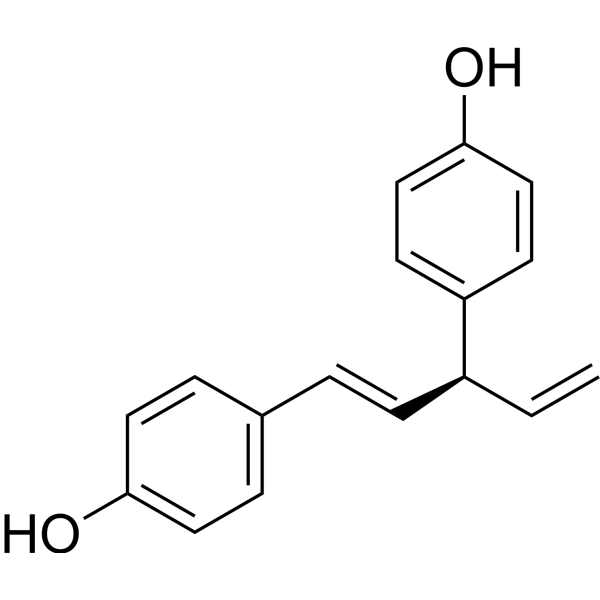
    (-)-Hinokiresinol (Hinokiresinol; trans-Hinokiresinol) can be isolated from Chamaecyparis obtusa. (-)-Hinokiresinol has weak termiticidal activity but strong antifeedant and repellent activity .
    (-)-Hinokiresinol
  • HY-N10831

    Others Others
    Ajuganipponin A is a nature product that could be isolated from the aerial parts of Ajuga nipponensis. Ajuganipponin A has antifeedant activity against larvae of the Egyptian cotton leafworm .
    Ajuganipponin A
  • HY-N3494

    Isocostic acid

    Others Others
    γ-Costic acid (compound 13)is a kind of terpenoid. γ-Costic acid can be obtained by chemical transformation. γ-Costic acid has effective antifeedant and cytotoxic doses with EC50 0.5 μg/ml against L. decemlineata .
    γ-Costic acid
  • HY-W004291R

    Methyl icosanoate (Standard)

    Reference Standards Aminopeptidase Infection
    Methyl arachidate (Standard) is the analytical standard of Methyl arachidate (HY-W004291). This product is intended for research and analytical applications. Methyl arachidate (Methyl icosanoate) is a component of lipid mixtures. Methyl arachidate can be isolated from flowering plants. Methyl arachidate inhibits LTA4H. Methyl arachidate shows no antifeedant activity against Leptinotarsa decemlineata .
    Methyl arachidate (Standard)
  • HY-117901

    Insecticide Others
    Sandoricin is a limonoid compound that can be extracted from the seeds of Sandoricum koetjape. Sandoricin exhibits strong antifeedant properties in larvae of Fall Armyworm (Spodoptera frugiperda) and European Corn Borer (Ostrinia nubilalis) fed on artificial diets. Sandoricin induces reduced growth rate and delayed pupation at lower doses, while higher doses cause massive mortality of larvae. Sandoricin is a potential field insecticide .
    Sandoricin
  • HY-N3076

    (-)-Phyllostine; Phyllostin

    Others Others
    Phyllostine ((-)-Phyllostine) can be isolated from D. miriciae. Phyllostine exhibits strong antifeedant, contact toxicity, and oviposition deterrent activities against P. xylostella .
    Phyllostine
  • HY-N18061

    Insecticide Infection
    Neoazedarachin B is an insect antifeedant present in the root bark of Melia toosendan. Neoazedarachin B reduces the feeding behavior of third-instar larvae of Spodoptera littoralis .
    Neoazedarachin B
  • HY-N18151

    Others Others
    Ohchinolide C is a ring C-seco limonoid and insect antifeedant. Ohchinolide C can be found in the root bark of Melia toosendan. Ohchinolide C exerts antifeedant activity against Spodoptera eridania larvae .
    Ohchinolide C
  • HY-N18148

    Others Infection
    Trichilin K is a insect antifeeding iimonoid found in the stem bark of Melia toosendan. Trichilin K displays antifeedant activity against Spodoptera eridania larvae .
    Trichilin K
  • HY-N18060

    Insecticide Infection
    Nimbolinin C is an insect antifeedant present in the unripe fruits of Melia toosendan. Nimbolinin C exhibits weak activity against the feeding behavior of third-instar larvae of Spodoptera exigua at a concentration of 1000 ppm .
    Nimbolinin C
  • HY-N15432

    Endogenous Metabolite Others
    4-Cholenic acid-3-one is an antifeedant steroid metabolite formed via anaerobic biotransformation of Lithocholic acid (HY-B0172) by Pseudomonas sp. strain NCIB 10590 .
    4-Cholenic acid-3-one
  • HY-N17907

    Others Infection
    1-(4-Hydroxy-3-methoxyphenyl)dec-5-en-3-one is an aryldecanone termite antifeedant compound found in the seeds of Aframomum melegueta. 1-(4-Hydroxy-3-methoxyphenyl)dec-5-en-3-one acts as a feeding deterrent against Reticulitermes speratus workers in a choice filter paper disk bioassay .
    1-(4-Hydroxy-3-methoxyphenyl)dec-5-en-3-one
  • HY-N15634

    Insecticide Neurological Disease
    Anticopalic acid is a labdane-type diterpenoid insect antifeedant that exhibits dose-dependent antifeedant activity against the fall armyworm (Spodoptera frugiperda). Anticopalic acid can be isolated from Vitex hemsleyi. Anticopalic acid may be involved in neuroreceptor-mediated insect taste regulation and could be used to develop environmentally friendly antifeedants targeting lepidopteran pests .
    Anticopalic acid
  • HY-N9401

    Others Others
    Azedarachol possesses antifeedant activity .
    Azedarachol
  • HY-N16837

    Insecticide Infection
    6''-O-β-D-Apiofuranosylastragalin (compound 1) is a flavonoid glycoside that can be naturally extracted from the methanol extract of fresh leaves of Solidago altissima L. (a plant of the genus Solidago in the Asteraceae family). The related methanol extract exhibits antifeedant activity against Thrips palmi and can be used in the research of natural antifeedants for agricultural pest control .
    6''-O-β-D-Apiofuranosylastragalin
  • HY-N9002

    Drug Derivative Others
    20-Hydroxyaflavinine is a natural diterpene.
    20-Hydroxyaflavinine
  • HY-N0144A

    Drug Isomer Infection
    Isopiperine is the geometric isomer of Piperine (HY-N0144). Isopiperine can be isolated from pepper. Isopiperine shows antifeedant activity against S. litura with an ED50 of 0.058 (μmol/cm 2) .
    Isopiperine
  • HY-N18873

    Insecticide Infection
    Inulasalsolin is a insecticide with antifeedant activity, which is isolated from the plant Inula salsoloides. Inulasalsolin reduces the feeding behavior of third-instar Plutella xylostella larvae. Inulasalsolin induces the death of third-instar Plutella xylostella larvae and vegetable aphids. Inulasalsolin is applicable to pest control research .
    Inulasalsolin
  • HY-N17875

    (+)-Demethylsalvicanol

    Drug Derivative Cancer
    Demethylsalvicanol ((+)-Demethylsalvicanol), a diterpene, is a anticancer agent with an IC50 of 0.71 μg/mL against P388 murine leukemia cells. Demethylsalvicanol induces cytotoxic activity against leukemia cells and insect Sf9 cells. Demethylsalvicanol acts as an antifeedant against Leptinotarsa decemlineata. Demethylsalvicanol can be used for the research of leukemia .
    Demethylsalvicanol
  • HY-N9698

    Others Others
    1,5-Diphenyl-2-penten-1-one is a natural product extracted from Stellera chamaejasme. 1,5-Diphenyl-2-penten-1-one has strong contact activity and very good anti-feedant activity against Aphis gossypii and Schizaphis graminum .
    1,5-Diphenyl-2-penten-1-one
  • HY-N15281

    Insecticide Others
    Khellol is a furanochromone derivative with feeding deterrent activity against insects. Khellol induces 12.12 % feeding inhibition at 100 ppm against Spodoptma litura larvae .
    Khellol
  • HY-N18288

    Insecticide Infection
    6''-O-(3'''-Hydroxy-3'''-methylglutaryl) vitexin is an orally active flavonoid glycoside and insecticide that can be isolated from the twigs of Eleusine coracana. 6''-O-(3'''-Hydroxy-3'''-methylglutaryl) vitexin exhibits distinct antifeedant activity against Nilaparvata lugens (brown planthopper) nymphs and effectively inhibits their feeding behavior. 6''-O-(3'''-Hydroxy-3'''-methylglutaryl) vitexin can serve as a plant-derived natural defense substance for regulating pest behavior and investigating potential control mechanisms of agricultural pests .
    6''-O-(3'''-Hydroxy-3'''-methylglutaryl) vitexin
  • HY-N2770

    Drug Derivative Others
    8-Desmethylsideroxylin is a natural flavonoid.
    8-Desmethylsideroxylin
  • HY-N18080

    Parasite DNA Alkylator/Crosslinker Bacterial Infection Inflammation/Immunology Cancer
    Parthenin is a pseudoguaianolide-type sesquiterpene lactone present in Parthenium hysterophorus L. Parthenin induces chromosomal aberrations, mainly chromatid breaks, in human peripheral blood lymphocytes. Parthenin exhibits toxicity against Salmonella typhimurium and Escherichia coli strains, with reduced toxicity in the presence of a metabolic activation system (S9). Parthenin acts as an antifeedant against the 6th instar larvae of the tobacco cutworm (Spodoptera litura). Parthenin shows insecticidal activity against adult cowpea weevils (Callosobruchus maculatus). Parthenin inhibits seed germination and seedling growth of sicklepod (Cassia tora). Parthenin possesses nematicidal activity against the 2nd instar larvae of the southern root-knot nematode (Meloidogyne incognita). Parthenin serves as a research agent for studies related to cancer, malaria, amoebiasis, inflammatory diseases, and bacterial infections .
    Parthenin

オンラインお問い合わせ

入力情報は安全に管理されます. 必須入力項目.

タイトル


国或いは地域 *

お名前 *


組纖名 *

デパートメント *


メールアドレス *


製品名 *

製品番号


カスタマ需要量 *

電話番号 *


必ず会社名を記載ください。個人への返信は行いません。

備考

バルクお問い合わせ

Inquiry Information

製品名:
製品番号:
数量:
MCE 日本正規代理店:

