

1. Search Result
Search Result
Results for "

anxiogenic effects

" in MedChemExpress (MCE) Product Catalog:

15

Inhibitors & Agonists

2

Peptides

Cat. No. Product Name Target Research Areas Chemical Structure
  • HY-B0330B
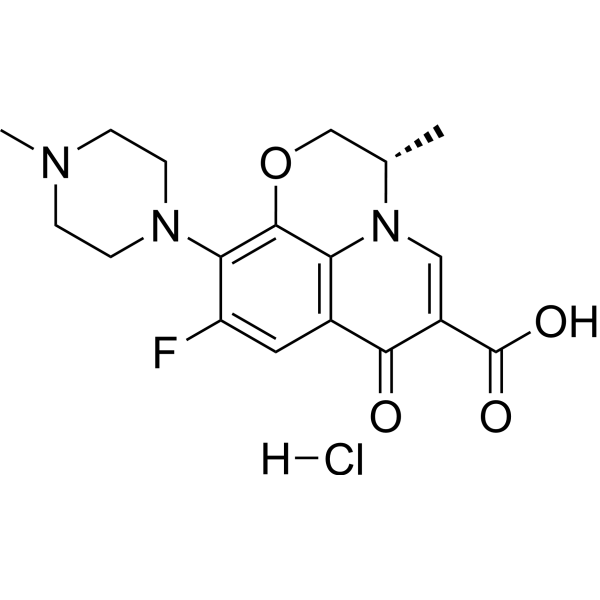
    Levofloxacin hydrochloride
    Maximum Cited Publications
    35 Publications Verification

    (-)-Ofloxacin hydrochloride

    Antibiotic Bacterial DNA/RNA Synthesis Topoisomerase Orthopoxvirus Apoptosis Infection Neurological Disease Cancer
    Levofloxacin hydrochloride is an orally active antibiotic. Levofloxacin inhibits DNA gyrase and topoisomerase IV activity, inducing Apoptosis. Levofloxacin hydrochloride has antibacterial activity against both Gram-positive and Gram-negative bacteria. Levofloxacin hydrochloride exhibits anticancer activity against lung cancer. Levofloxacin hydrochloride has anti-acnegenic, anxiogenic, and analgesic effects. Levofloxacin hydrochloride shortens sleep duration in mice. Levofloxacin hydrochloride can be used in the research of infectious diseases (such as tuberculosis, chronic periodontitis, bacterial infections associated with stable COPD, and BK viremia) and lung cancer .
    Levofloxacin hydrochloride
  • HY-P1108
    Astressin 2B
    1 Publications Verification

    CRFR Neurological Disease Inflammation/Immunology
    Astressin 2B is a blood-brain barrier-impermeable, highly selective CRFR2 antagonist (rCRFR2, IC50=0.57 nM). Astressin 2B blocks the protective effects mediated by CRFR2, thereby exacerbating indomethacin (HY-14397)-induced hemorrhagic intestinal injury in rats. Astressin 2B reverses the protective effects of Urocortin 1 against intestinal hypermotility, bacterial invasion and upregulation of inflammatory mediators. Astressin 2B also blocks the anxiogenic effect of Urocortin 2 and attenuates stress-induced anxiety-related behaviors. In the Clostridioides difficile toxin A (C. difficile toxin A)-mediated enteritis model, Astressin 2B mimics the phenotype of CRFR2-deficient mice, significantly exacerbating intestinal epithelial damage, edema, neutrophil migration and the expression of multiple proinflammatory cytokines. Astressin 2B is an important tool molecule for investigating the intestinal protective mechanisms of CRFR2 .
    Astressin 2B
  • HY-P1108A
    Astressin 2B TFA
    1 Publications Verification

    CRFR Neurological Disease Inflammation/Immunology
    Astressin 2B TFA is a blood-brain barrier-impermeable, highly selective CRFR2 antagonist (rCRFR2, IC50=0.57 nM). Astressin 2B TFA blocks the protective effects mediated by CRFR2, thereby exacerbating indomethacin (HY-14397)-induced hemorrhagic intestinal injury in rats. Astressin 2B TFA reverses the protective effects of Urocortin 1 against intestinal hypermotility, bacterial invasion and upregulation of inflammatory mediators. Astressin 2B TFA also blocks the anxiogenic effect of Urocortin 2 and attenuates stress-induced anxiety-related behaviors. In the Clostridioides difficile toxin A (C. difficile toxin A)-mediated enteritis model, Astressin 2B TFA mimics the phenotype of CRFR2-deficient mice, significantly exacerbating intestinal epithelial damage, edema, neutrophil migration and the expression of multiple proinflammatory cytokines. Astressin 2B TFA is an important tool molecule for investigating the intestinal protective mechanisms of CRFR2 .
    Astressin 2B TFA
  • HY-16687A

    DU 28853 hydrochloride

    5-HT Receptor Neurological Disease
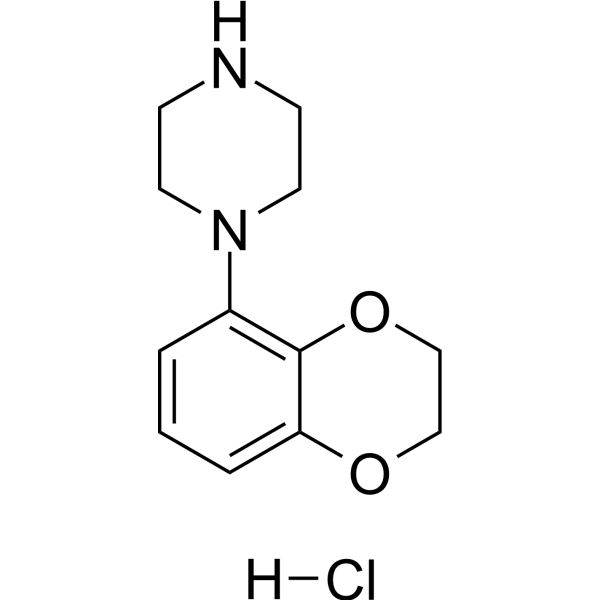
    Eltoprazine (DU 28853) hydrochloride is a 5-HT1A/5-HT1B receptors agonist and a 5-HT2C receptor antagonist. Eltoprazine hydrochloride shows antiaggressive and anxiogenic effects .
    Eltoprazine hydrochloride
  • HY-121870

    Larocaine

    Drug Derivative Cytochrome P450 Neurological Disease
    Dimethocaine (Larocaine) is a cocaine derivative and ester-type local anesthetic. Dimethocaine is metabolized by hP450 1A2, 2C19, 2D6, and 3A4 in vitro. Dimethocaine exhibits locomotor-promoting, reinforcing, and anxiogenic effects .
    Dimethocaine
  • HY-W009009

    GABA Receptor Neurological Disease
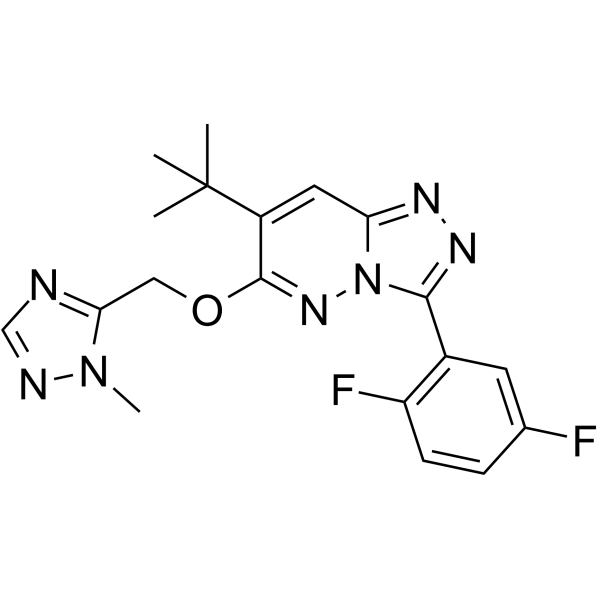
    L-838417 is a selective partial agonist at the α2, α3 and α5 subtypes of the GABAA receptor and an antagonist at the α1, with binding Ki values of 0.79 nM, 0.67 nM, 1.67 nM, 267 nM, 2.25 nM and 2183 nM for α1β3γ2, α2β3γ2, α3β3γ2, α4β3γ2, α5β3γ2 and α6β3γ2. L-838417 has anti-anxiety activity .
    L-838417
  • HY-128174

    Beta-CCM; Ro 22-7497

    GABA Receptor Neurological Disease
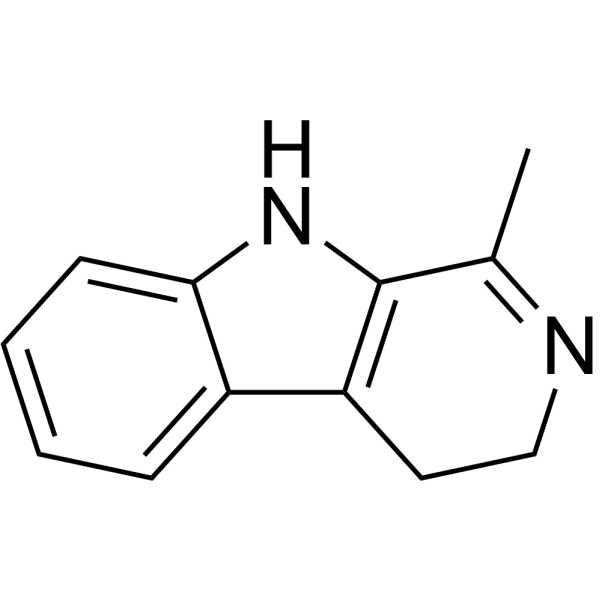
    β-CCM is a benzodiazepine receptor inverse agonist with anxiogenic and proconvulsant effects. β-CCM enhances emotional reactivity and reduces vulnerability to interference in spatial working memory tasks. β-CCM can be used for research on anxiety-related disorders .
    β-CCM
  • HY-16687

    DU 28853

    5-HT Receptor Neurological Disease
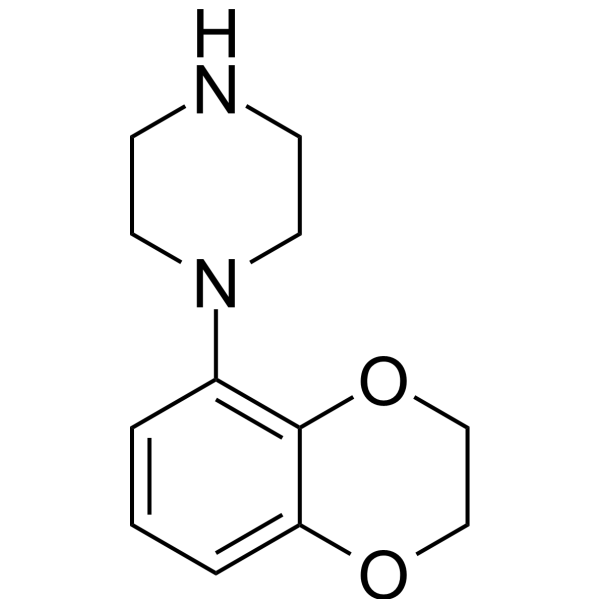
    Eltoprazine (DU 28853) is a 5-HT1A/5-HT1B receptors agonist and a 5-HT2C receptor antagonist. Eltoprazine shows antiaggressive and anxiogenic effects .
    Eltoprazine
  • HY-B0330BR

    (-)-Ofloxacin hydrochloride (Standard)

    Reference Standards Antibiotic Bacterial DNA/RNA Synthesis Topoisomerase Orthopoxvirus Apoptosis Infection Neurological Disease Cancer
    Levofloxacin (hydrochloride) (Standard) is the analytical standard of Levofloxacin hydrochloride (HY-B0330B). This product is intended for research and analytical applications. Levofloxacin hydrochloride is an orally active antibiotic. Levofloxacin inhibits DNA gyrase and topoisomerase IV activity, inducing Apoptosis. Levofloxacin hydrochloride has antibacterial activity against both Gram-positive and Gram-negative bacteria. Levofloxacin hydrochloride exhibits anticancer activity against lung cancer. Levofloxacin hydrochloride has anti-acnegenic, anxiogenic, and analgesic effects. Levofloxacin hydrochloride shortens sleep duration in mice. Levofloxacin hydrochloride can be used in the research of infectious diseases (such as tuberculosis, chronic periodontitis, bacterial infections associated with stable COPD, and BK viremia) and lung cancer .
    Levofloxacin hydrochloride (Standard)
  • HY-16687AR

    DU 28853 hydrochloride (Standard)

    5-HT Receptor Reference Standards Neurological Disease
    Eltoprazine (hydrochloride) (Standard) is the analytical standard of Eltoprazine (hydrochloride). This product is intended for research and analytical applications. Eltoprazine (DU 28853) hydrochloride is a 5-HT1A/5-HT1B receptors agonist and a 5-HT2C receptor antagonist. Eltoprazine hydrochloride shows antiaggressive and anxiogenic effects .
    Eltoprazine hydrochloride (Standard)
  • HY-W009009R

    Reference Standards GABA Receptor Neurological Disease
    L-838417 (Standard) is the analytical standard of L-838417 (HY-W009009). This product is intended for research and analytical applications. L-838417 is a selective partial agonist at the α2, α3 and α5 subtypes of the GABAA receptor and an antagonist at the α1, with binding Ki values of 0.79 nM, 0.67 nM, 1.67 nM, 267 nM, 2.25 nM and 2183 nM for α1β3γ2, α2β3γ2, α3β3γ2, α4β3γ2, α5β3γ2 and α6β3γ2. L-838417 has anti-anxiety activity .
    L-838417 (Standard)
  • HY-16687B

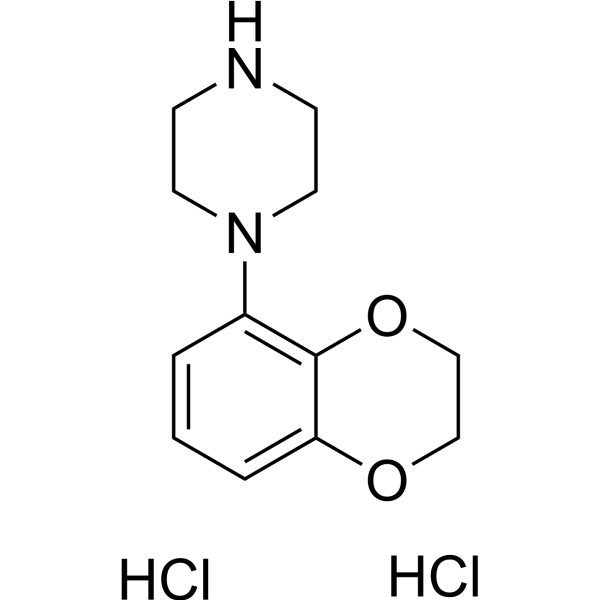
    DU 28853 dihydrochloride

    5-HT Receptor Neurological Disease
    Eltoprazine (DU 28853) dihydrochloride is a 5-HT1A/5-HT1B receptors agonist and a 5-HT2C receptor antagonist. Eltoprazine dihydrochloride shows antiaggressive and anxiogenic effects .
    Eltoprazine dihydrochloride
  • HY-100924

    GABA Receptor Neurological Disease
    β-CCB is a ligand for benzodiazepine receptor, which inhibits the binding of [ 3H]flunitrazepam and ethyl (3-[ 3H]carboline-3-carboxylate to benzodiazepine receptors, with Ki of 3-4 nM. β-CCB exhibits proconvulsant and anxiogenic effects .
    β-CCB
  • HY-107719

    iGluR Neurological Disease
    D-AP7 is a specific NMDA receptor antagonist with inhibitory activity against epileptiform activity. D-AP7 attenuated neuronal activation in spot activity by reducing the duration and number of exogenously induced bursts. D-AP7 also increased the amplitude of secondary action potentials, which may restore neuronal activity in some epileptiform bursts. D-AP7 showed anxiogenic effects and impaired memory consolidation in passive avoidance learning .
    D-AP7
  • HY-15080

    LY 293606

    iGluR Cardiovascular Disease Neurological Disease
    GYKI 53405 is a non-competitive, orally active AMPA receptor antagonist. GYKI 53405 shows no significant binding affinity for GABAA, GABAB or benzodiazepine receptors. GYKI 53405 increases self-grooming behavior, induces wet dog-like shakes, reduces spontaneous activity, produces anxiolytic-like behavior, reverses the anxiogenic effect induced by mCPP, inhibits locomotor activity, suppresses sound-induced and maximal electroshock-induced seizures, prolongs survival in global cerebral ischemia models, and exhibits sustained anticonvulsant effects at doses below the sedation threshold. GYKI 53405 can be used in research related to absence epilepsy, anxiety disorders and global cerebral ischemia .
    GYKI 53405

Inquiry Online

Your information is safe with us. * Required Fields.

Salutation


Country or Region *

Applicant Name *


Organization Name *

Department *


Email Address *


Product Name *

Cat. No.


Requested quantity *

Phone Number *


Remarks

Inquiry Online

Inquiry Information

Product Name:
Cat. No.:
Quantity:
MCE Japan Authorized Agent:

