17 Results for "

aspartate transaminase

" in MedChemExpress (MCE) Product Catalog:
Products (17)

17 Results for "aspartate transaminase" in MCE Product Catalog:

1
1 Cited Publications
Cat. No.: HY-P3016
CAS No.: 9000-97-9
Synonyms: EC 2.6.1.1; GOT; AST
Aspartate aminotransferase (EC 2.6.1.1), Genetically engineered bacteria is a metabolic regulator with the highest activity in the heart, liver and skeletal muscle. Aspartate aminotransferase, Genetically engineered bacteria comprises two isozymes: the cytoplasmic form (AST1) and the mitochondrial form (AST2). By catalyzing reversible transamination reactions between oxaloacetate, L-glutamate and other substances, it is deeply involved in key physiological processes such as amino acid metabolism, the tricarboxylic acid cycle and neurotransmitter synthesis. Aspartate aminotransferase, Genetically engineered bacteria also provides substrate support for the synthesis of urea and purines/pyrimidines. Aspartate aminotransferase, Genetically engineered bacteria is a serum marker reflecting cardiac and hepatic injury, and its abnormal levels are also closely associated with myocardial infarction, cardiovascular diseases and various cancers .
loading...
    loading...
1
1 Cited Publications
Cat. No.: HY-P7611
Purity:  ≥ 95%, as determined by reducing SDS-PAGE.
Synonyms: GOT1; aspartate transaminase 1; Glutamic-Oxaloacetic transaminase 1; transaminase A; Glutamate Oxaloacetate transaminase 1; CAspAT; AST1; CCAT; SGOT; Glutamic-Oxaloacetic transaminase 1, Soluble (aspartate Aminotransferase 1); AST; Testis Secretory Sperm-
Species:  
Human
Source:  
E. coli
loading...
    loading...
Cat. No.: HY-N7697B
CAS No.: 115350-24-8
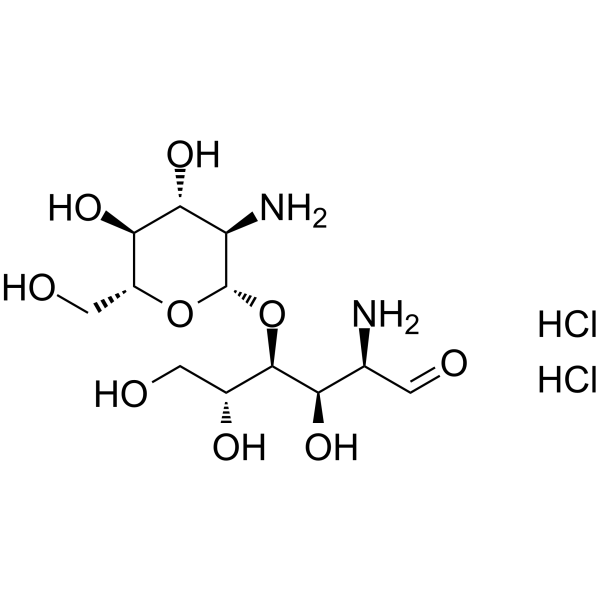
Chitobiose dihydrochloride is an orally active chitosan oligosaccharide (degree of polymerization 2). Chitobiose dihydrochloride shows hepatoprotective activity and counteracts CCl4-induced elevation of plasma aspartate transaminase and alanine transaminase activities in rats. Chitobiose dihydrochloride can be used for the research of carbon tetrachloride-induced acute hepatotoxicity .
loading...
    loading...
Cat. No.: HY-N7697F
CAS No.: 577-76-4
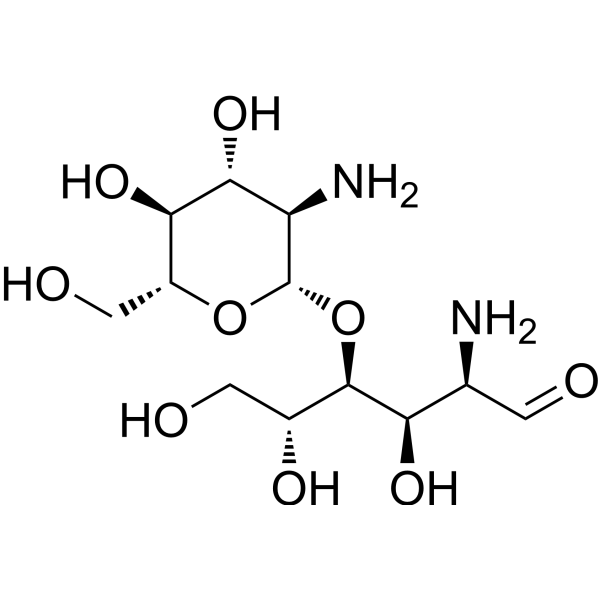
Chitobiose is an orally active chitosan oligosaccharide (degree of polymerization 2). Chitobiose shows hepatoprotective activity and counteracts CCl4-induced elevation of plasma aspartate transaminase and alanine transaminase activities in rats. Chitobiose can be used for the research of carbon tetrachloride-induced acute hepatotoxicity .
loading...
    loading...
Cat. No.: HY-124825
CAS No.: 882256-55-5
Purity:  99.77%
Research Areas:  

Cancer

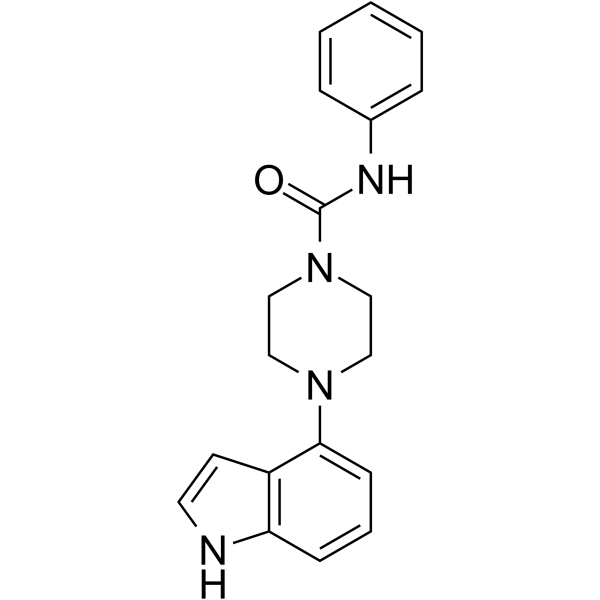
iGOT1-01 is a potent aspartate aminotransferase 1 (glutamate oxaloacetate transaminase 1; GOT1) inhibitor. iGOT1-01 has IC50s of 85 μM and 11.3 μM in MDH coupled GOT1 enzymatic assay and GOT1/GLOX/HRP assay, respectively. iGOT1-01 has anti-cancer activity .
loading...
    loading...
Cat. No.: HY-184701
α-Glucosidase-IN-119 is an α-glucosidase inhibitor with an IC50 of 3.32 μM and oral effectiveness. α-Glucosidase-IN-119 acts as an antihyperglycemic agent, reduces blood glucose levels, restores normal levels of alkaline phosphatase, aspartate transaminase, alanine transaminase, urea, blood urea nitrogen, and total protein, and exhibits antioxidant activity. α-Glucosidase-IN-119 can be used for the research of type 2 diabetes mellitus .
loading...
    loading...
Cat. No.: HY-P82430
Synonyms: aspartate aminotransferase; cytoplasmic; Glutamate oxaloacetate transaminase 1; transaminase A

Host:  

Rabbit

Application:  

WB, IHC-F, IHC-P, ICC/IF

Reactivity:  

Human, Mouse, Rat

loading...
    loading...
Cat. No.: HY-P82430A
Synonyms: aspartate aminotransferase; cytoplasmic; Glutamate oxaloacetate transaminase 1; transaminase A

Host:  

Rabbit

Application:  

WB, IHC-F, IHC-P, ICC/IF

Reactivity:  

Human, Mouse, Rat

loading...
    loading...
Cat. No.: HY-P85630
Synonyms: AATM_HUMAN; AL022787; aspartate aminotransferase; aspartate aminotransferase 2; aspartate aminotransferase, mitochondrial; ASPATA; FABP 1; FABP pm; FABP-1; FABPpm; Fatty acid binding protein; Fatty acid-binding protein; FLJ40994; Glutamate oxaloacetate transaminase 2; Glutamate oxaloacetate transaminase 2, mitochondrial; Glutamate oxaloacetate transaminase, mitochondrial; Glutamic oxaloacetic transaminase 2, mitochondrial; aspartate aminotransferase 2; Got 2; GOT2; KAT4; KATIV; Kynurenine aminotransferase IV; mAspAT; MGC102129; MGC115763; mitAAT; mitochondrial; Mitochondrial aspartate aminotransferase; OTTMUSP00000017748; Plasma membrane fatty acid binding protein; Plasma membrane-associated fatty acid-binding protein; transaminase A.

Host:  

Mouse

Application:  

WB

Reactivity:  

Human, Mouse

loading...
    loading...
Cat. No.: HY-P3016C
CAS No.: 9000-97-9
Synonyms: EC 2.6.1.1, Human; GOT, Human; AST, Human
Research Areas:  

Others

Aspartate aminotransferase (EC 2.6.1.1), Human s a metabolic regulator with the highest activity in the heart, liver and skeletal muscle. Aspartate aminotransferase, Human (HEK293) comprises two isozymes: the cytoplasmic form (AST1) and the mitochondrial form (AST2). By catalyzing reversible transamination reactions between oxaloacetate, L-glutamate and other substances, it is deeply involved in key physiological processes such as amino acid metabolism, the tricarboxylic acid cycle and neurotransmitter synthesis. Aspartate aminotransferase, Human also provides substrate support for the synthesis of urea and purines/pyrimidines. Aspartate aminotransferase, Human is a serum marker reflecting cardiac and hepatic injury, and its abnormal levels are also closely associated with myocardial infarction, cardiovascular diseases and various cancers .
loading...
    loading...
Cat. No.: HY-E71482
Research Areas:  

Others

2-Aminohexanoate transaminase (EC 2.6.1.67) is a pyridoxal-phosphate protein; also acts on L-leucine and, more slowly, on L-isoleucine, L-2-aminopentanoate and L-aspartate.
loading...
    loading...
Cat. No.: HY-W083125
CAS No.: 86711-45-7
Asp-02 is an orally active AMPK activator. Asp-02 reduces non-fasting blood glucose levels, improves body weight, and normalizes elevated serum levels of aspartate transaminase (SGOT), alanine transaminase (SGPT), alkaline phosphatase (ALP), urea and creatinine. Asp-02 can be used in the research of type 2 diabetes .
loading...
    loading...
Cat. No.: HY-P705711
Purity:  ≥ 90%, as determined by reducing SDS-PAGE .
Synonyms: aspartate aminotransferase, mitochondrial; EC:2.6.1.1; EC:2.6.1.7; mAspAT; Fatty acid-binding protein (FABP-1); Glutamate oxaloacetate transaminase 2; ; Kynurenine aminotransferase 4; ; Kynurenine aminotransferase IV; Kynurenine--oxoglutarate transaminase 4; GOT2; KYAT4; Plasma membrane-associated fatty acid-binding protein (FABPpm); transaminase A
Species:  
Human
Source:  
E. coli
loading...
    loading...
Cat. No.: HY-177972
Zotadirsen is the core component of the AOC drug Delpacibart zotadirsen (AOC1044) (HY-177564), consisting of a phosphorodiamidate morpholino oligonucleotide (PMO) targeting exon 44 of the dystrophin gene and an SMCC linker (HY-42360). Upon conjugation with the anti-TfR1 antibody Delpacibart (HY-P990051), Zotadirsen exerts splicing regulatory activity and mediates exon skipping. Zotadirsen can be used in studies related to AOC synthesis .
loading...
    loading...
Cat. No.: HY-P992153

Target:  

Interleukin Related

Research Areas:  

Inflammation/Immunology

Serrumab is a human monoclonal antibody that counteracts the biochemical and immunological effects of Tityus serrulatus venom. Serrumab inhibits the TsV-induced increase in the production of IL-6, TNFα and IL-10. Serrumab also prevents TsV-induced elevations in plasma urea, creatinine, aspartate transaminase and glucose levels, as well as the TsV-induced increase in neutrophil recruitment. Serrumab can be used in research related to envenoming by the Brazilian yellow scorpion .
loading...
    loading...
Cat. No.: HY-189393
CAS No.: 3089177-97-6
Target:  

P-glycoprotein

Research Areas:  

Inflammation/Immunology

RTY-406 is an orally active ABCB4/MDR3 and ABCB11/BSEP positive modulator. RTY-406 increases ABCB4/MDR3 and ABCB11/BSEP protein levels and functional output, elevates biliary phospholipid levels, enhances bile acid efflux, increases bile flow and micelle formation, reduces hepatic bile acids, and promotes cholesterol-to-bile-acid conversion. RTY-406 does not induce hepatocellular injury, maintains normal serum alanine transaminase and aspartate aminotransferase levels, and shows a favorable safety profile in cynomolgus monkeys. RTY-406 can be used for the research of primary sclerosing cholangitis and cholestasis .
loading...
    loading...
Cat. No.: HY-L064
1,827 compounds

Glutamine is an important metabolic fuel that helps rapidly proliferating cells meet the increased demand for ATP, biosynthetic precursors, and reducing agents. Glutamine Metabolism pathway involves the initial deamination of glutamine by glutaminase(GLS), yielding glutamate and ammonia. Glutamate is converted to the TCA cycle intermediate α-ketoglutarate (α-KG) by either glutamate dehydrogenase (GDH) or by the alanine or aspartate transaminases (TAs), to produce both ATP and anabolic carbons for the synthesis of amino acids, nucleotides and lipids. During periods of hypoxia or mitochondrial dysfunction, α-KG can be converted to citrate in a reductive carboxylation reaction catalyzed by IDH2. The newly formed citrate exits the mitochondria where it is used to synthesize fatty acids and amino acids and produce the reducing agent, NADPH.

Cancer cells display an altered metabolic circuitry that is directly regulated by oncogenic mutations and loss of tumor suppressors. Mounting evidence indicates that altered glutamine metabolism in cancer cells has critical roles in supporting macromolecule biosynthesis, regulating signaling pathways, and maintaining redox homeostasis, all of which contribute to cancer cell proliferation and survival. Thus, intervention in glutamine metabolic processes could provide novel approaches to improve cancer treatment.

MCE owns a unique collection of 1,827 compounds targeting the mainly proteins and enzymes involved in glutamine metabolism pathway. Glutamine Metabolism compound library is a useful tool for intervention in glutamine metabolic processes.

  • 1

