19 Results for "

blue fluorescent protein

" in MedChemExpress (MCE) Product Catalog:
Products (19)

19 Results for "blue fluorescent protein" in MCE Product Catalog:

194
194 Publications Verification
Cat. No.: HY-D0079
CAS No.: 104821-25-2
Synonyms: Hydroethidine; PD-MY 003
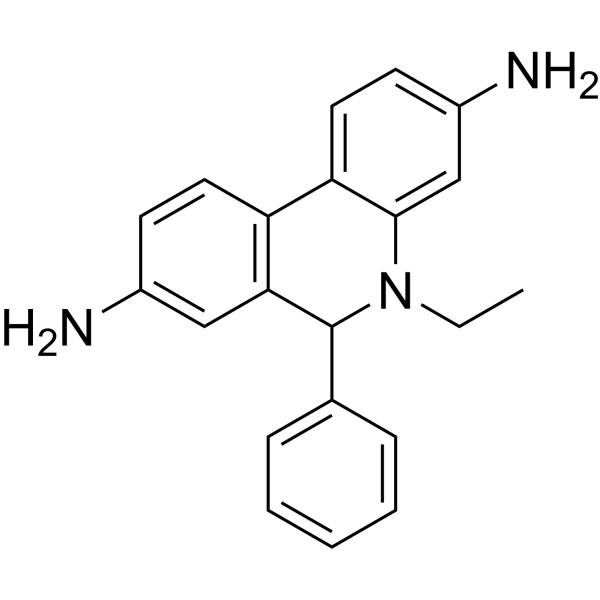
Dihydroethidium, also known as DHE, is a peroxide indicator. Dihydroethidium penetrates cell membranes to form a fluorescent protein complex with blue fluoresces. After entering the cells, Dihydroethidium is mainly localized in the cell membrane, cytoplasm and nucleus, and the staining effect is the strongest in the nucleus. Dihydroethidium produces inherent blue fluorescence with a maximum excitation wavelength of 370 nm and a maximum emission wavelength of 420 nm; after dehydrogenation, Dihydroethidium combines with RNA or DNA to produce red fluorescence with a maximum excitation wavelength of 300 nm and a maximum emission wavelength of 610 nm. 535 nm can also be used as the excitation wavelength for actual observation .
loading...
    loading...
2
2 Cited Publications
Cat. No.: HY-D0017
CAS No.: 605-65-2
Synonyms: DNSCl
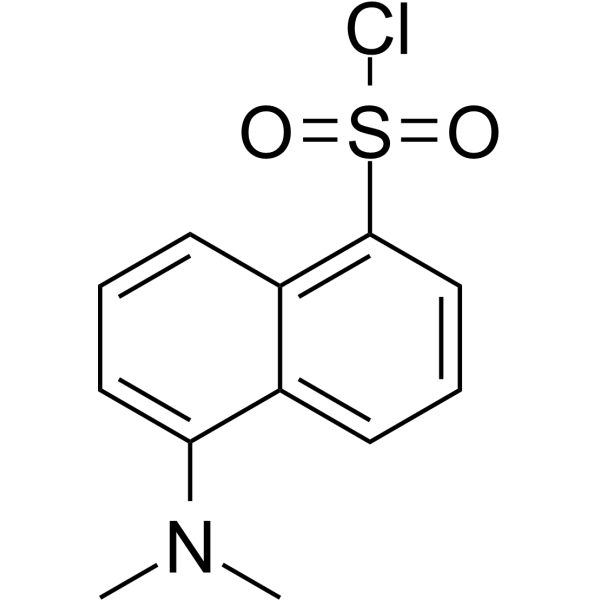
Dansyl chloride is a reagent that produces stable blue or blue-green fluorescent sulfonamide adducts in the reaction of aliphatic and aromatic amines with primary amino groups, and is widely used for modified amino acids, protein sequencing and amino acid analysis .
loading...
    loading...
1
1 Cited Publications
Cat. No.: HY-D0017S
CAS No.: 1276379-68-0
Synonyms: DNSCl-d6
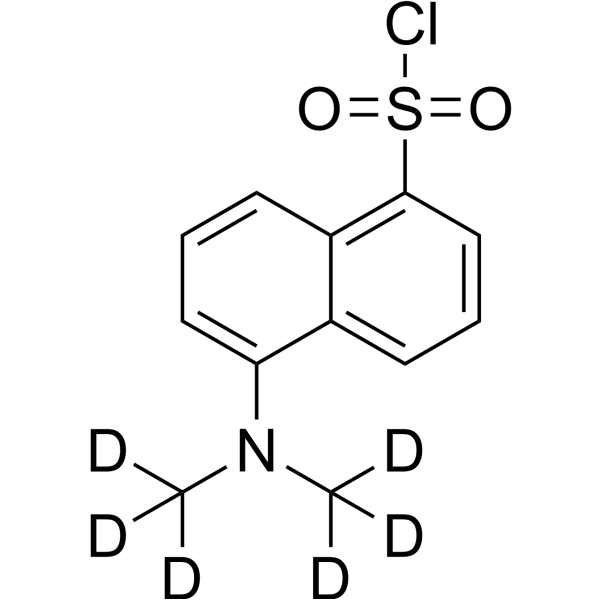
Dansyl chloride-d6 is the deuterium labeled Dansyl chloride (HY-D0017). Dansyl chloride is a reagent that produces stable blue or blue-green fluorescent sulfonamide adducts in the reaction of aliphatic and aromatic amines with primary amino groups, and is widely used for modified amino acids, protein sequencing and amino acid analysis .
loading...
    loading...
Cat. No.: HY-D0025
CAS No.: 106562-32-7
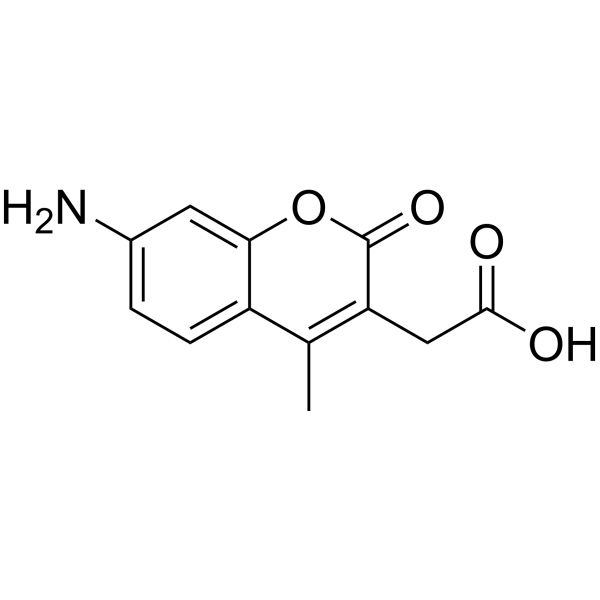
7-Amino-4-methylcoumarin-3-acetic acid (AMCA) serves as the parent structure of coumarin-based blue fluorescent dyes, and its activated form AMCA-NHS can directly conjugate with proteins (Ex/Em ≈ 350/440-460).
loading...
    loading...
Cat. No.: HY-D0074
CAS No.: 70504-01-7
Target:  

Fluorescent Dye

Research Areas:  

Others

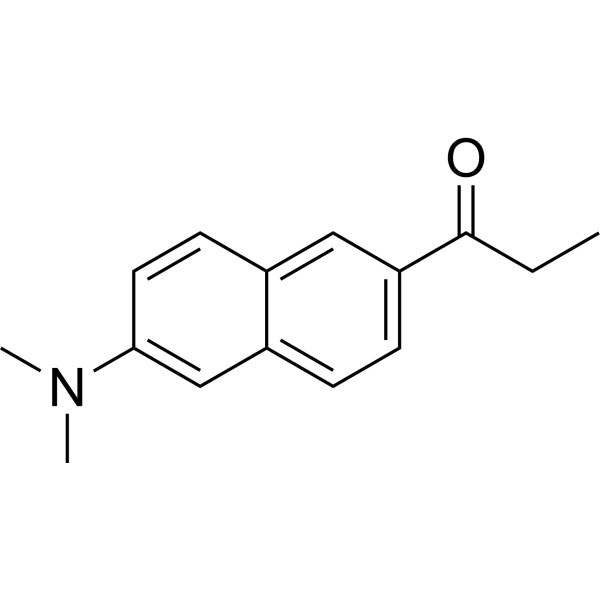
Prodan is an environment-sensitive fluorescent probe used to investigate the polarity, fluidity, and structure of lipid membranes. Prodan exhibits environment-dependent excitation/emission wavelengths, with its wavelength range covering Ex = 360-410 nm and Em = 430-530 nm when in solvents, bound to DNA, located in lipid bilayers, or associated with proteins. Prodan can interact with the major groove of DNA, regions of lipid bilayers, and hydrophobic pockets of proteins. During phase transitions, Prodan localizes to different regions of the bilayer: the emission minimum is 430-440 nm in the gel phase, while it shifts to 480-500 nm in the liquid-crystalline phase or interdigitated gel phase. When bound to rigid hydrophobic sites of proteins, the emission peak of Prodan undergoes a blue shift and its fluorescence intensity increases .
loading...
    loading...
Cat. No.: HY-DY1015
CAS No.: 104821-25-2
Dihydroethidium (solution) , also known as DHE, is a peroxide indicator. Dihydroethidium penetrates cell membranes to form a fluorescent protein complex with blue fluoresces. After entering the cells, Dihydroethidium is mainly localized in the cell membrane, cytoplasm and nucleus, and the staining effect is the strongest in the nucleus. Dihydroethidium produces inherent blue fluorescence with a maximum excitation wavelength of 370 nm and a maximum emission wavelength of 420 nm; after dehydrogenation, Dihydroethidium combines with RNA or DNA to produce red fluorescence with a maximum excitation wavelength of 300 nm and a maximum emission wavelength of 610 nm. 535 nm can also be used as the excitation wavelength for actual observation .
Solvent and concentration: DMSO: 5 mM
loading...
    loading...
Cat. No.: HY-145385
CAS No.: 50611-86-4
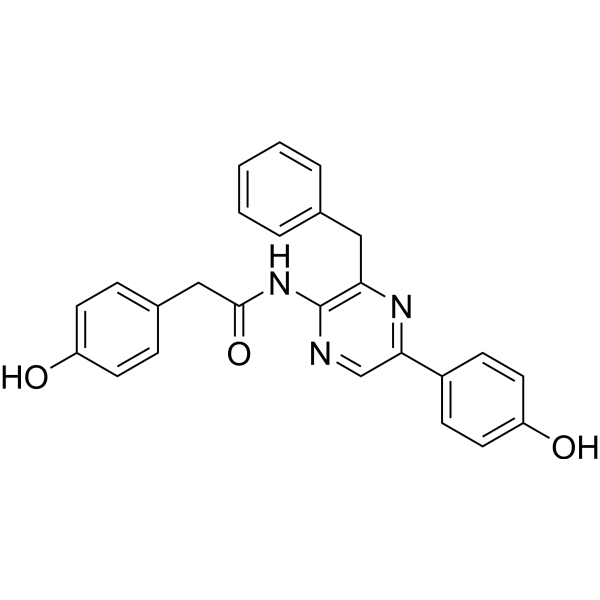
Coelenteramide is a oxidative product of Coelenterazine (HY-18743). Coelenteramide can form a complex with apoAequorin/Ca 2+, which is known as blue fluorescent protein (BFP) and shows continuous weak luminescence with Coelenterazine like a luciferase. Coelenteramide can be used as an imaging agent .
loading...
    loading...
Cat. No.: HY-D1470
CAS No.: 210832-86-3
Target:  

Fluorescent Dye

Research Areas:  

Others

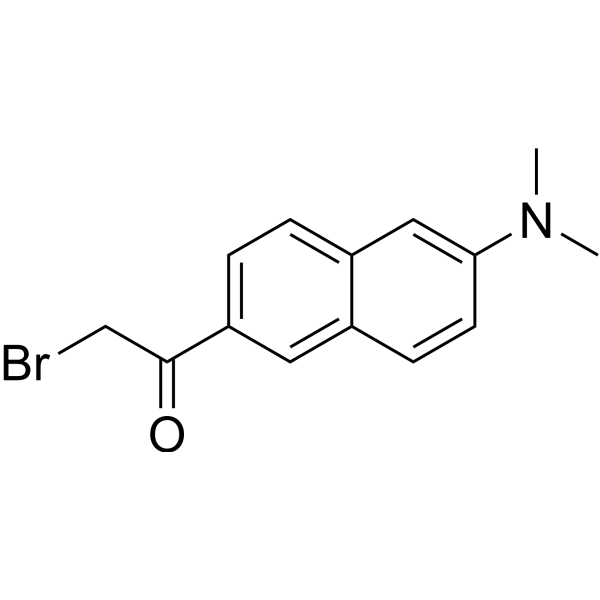
BADAN is a thiol-reactive, environment-sensitive fluorescent probe used for site-specific labeling of protein cysteine residues to detect protein topology, local polarity, protein-lipid interactions, and conformational changes. The bromoacetyl group of BADAN covalently binds to cysteine thiols, and its fluorescence originates from the intramolecular charge transfer (ICT) excited state. The emission peak position varies with the polarity of the surrounding medium: it blue-shifts to approximately 488 nm in nonpolar environments (such as the hydrophobic core of lipid bilayers) and red-shifts to approximately 496-507 nm in polar environments (such as aqueous phases), independent of enzymes, pH, or membrane potential. Ex = 380-402 nm; Em = 400-600 nm .
loading...
    loading...
Cat. No.: HY-D2771
CAS No.: 2131079-93-9
BP Fluor 405 NHS Ester is a water-soluble, blue-fluorescent dye that is often used in multi-color applications, including flow cytometry and super-resolution microscopy using STORM. Its excitation is ideally suited for the 407 nm spectral line of the krypton laser or the 408 nm violet laser diode. BP Fluor 405 conjugates are pH-insensitive from pH 4 to pH 10. The NHS ester (or succinimidyl ester) is the most popular amine reactive group for labeling with the primary amines of proteins (Lys), amine-modified oligonucleotides, and other amine-containing molecules. Proteins can be labeled with BP Fluor 405 NHS Ester at high molar ratios without significant self-quenching, leading to brighter conjugates and more sensitive detection. BP Fluor 405 conjugates can also be used for the detection of abundance targets.
loading...
    loading...
Cat. No.: HY-D0115
CAS No.: 134471-24-2
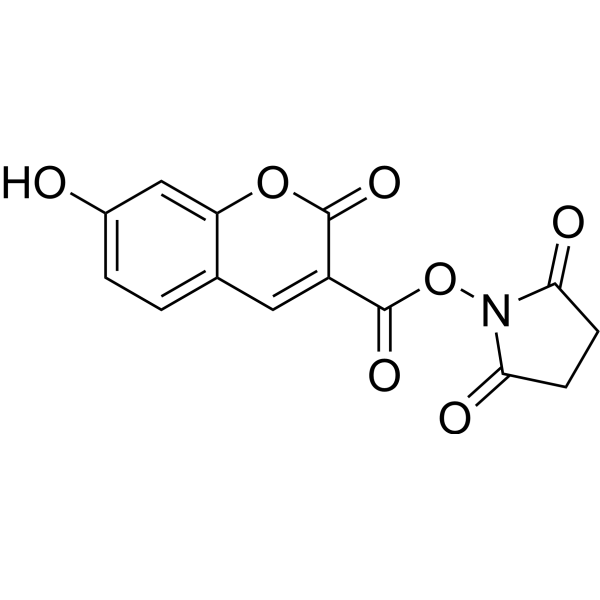
7-Hydroxycoumarin-3-carboxylic acid N-succinimidyl ester is the amine-reactive succinimidyl ester of 7-Hydroxycoumarin-3-carboxylic acid. 7-Hydroxycoumarin-3-carboxylic acid N-succinimidyl ester is a blue fluorescent dye for labeling proteins and nucleic acids .
loading...
    loading...
Cat. No.: HY-D0114
CAS No.: 779-27-1
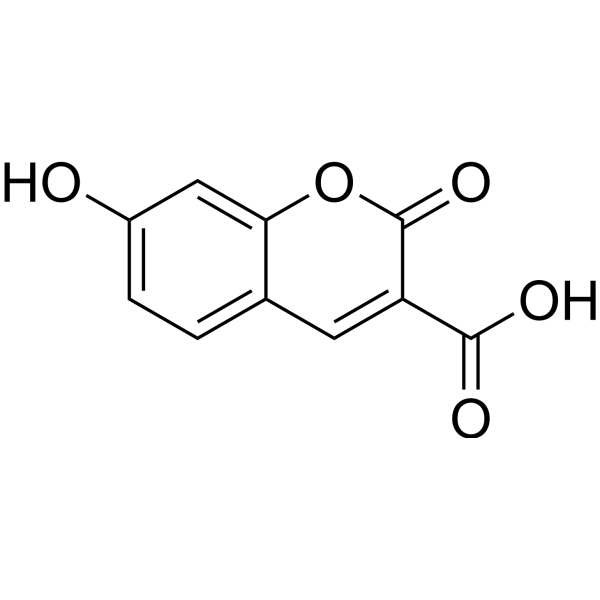
3-Carboxy-7-Hydroxycoumarin is a 7-hydroxycoumarin (umbelliferone) fluorescent dye and antibody-conjugated labeling agent with UV excitation properties. 3-Carboxy-7-Hydroxycoumarin undergoes deprotonation in neutral-to-alkaline environments, producing strong blue fluorescence. The absorption/emission maxima of 3-Carboxy-7-Hydroxycoumarin are 386/448 nm. 3-Carboxy-7-Hydroxycoumarin is applicable for related research such as fluorescent probe synthesis and covalent protein labeling .
loading...
    loading...
Cat. No.: HY-P703064
Purity:  ≥ 80%, as determined by reducing SDS-PAGE.
Synonyms: BFP; Y1-blue fluorescent protein; Y1-BFP; blue fluorescence protein
Species:  
Others
Source:  
E. coli
loading...
    loading...
Cat. No.: HY-P703065
Purity:  ≥ 90%, as determined by reducing SDS-PAGE.
Synonyms: pBI-SS(Tom)(TP)101-EGFP; other blue fluorescent protein
Species:  
Others
Source:  
E. coli
loading...
    loading...
Cat. No.: HY-W998644
CAS No.: 1971849-54-3
PB LC acid is a blue-fluorescent dye that is reactive with primary amines on biomolecules such as peptides, proteins, modified nucleotides and biopolymers (Ex/Em = 410/455 nm) .
loading...
    loading...
Cat. No.: HY-D0017S1
CAS No.: 274250-28-1
Synonyms: DNSCl-13C2
Dansyl chloride- 13C2 is the 13C labeled Dansyl chloride (HY-D0017) . Dansyl chloride is a reagent that produces stable blue or blue-green fluorescent sulfonamide adducts in the reaction of aliphatic and aromatic amines with primary amino groups, and is widely used for modified amino acids, protein sequencing and amino acid analysis.
loading...
    loading...
Cat. No.: HY-D3341
AMCA-PEG4-NHS ester is a derivative of AMCA (aminomethylcoumarin acetate) , a blue fluorescent coumarin dye. It features NHS ester reactive group for amine conjugation; PEG4 linker for improved solubility and reduced steric hindrance. Main applications: antibody/protein labeling. Commonly used in fluorescence microscopy, flow cytometry, immunoassays, and nucleic acid detection. (Ex/Em = 347/444 nm)
loading...
    loading...
Cat. No.: HY-D3111
CAS No.: 1240465-12-6
Target:  

Fluorescent Dye

Research Areas:  

Neurological Disease

DBHA is a long-wavelength polarity-sensitive fluorescent probe based on Nile Red. Under the catalysis of Pd (OAc)2/TPPTS, DBHA site-selectively labels protein tyrosine residues via a π-allyl palladium complex intermediate. Utilizing the property that its maximum emission wavelength blue-shifts with decreasing local polarity (650 nm in aqueous solution → 584-608 nm in hydrophobic domains), it detects changes in local polarity and conformation of protein tyrosine domains under acid/thermal denaturation conditions. DBHA can be used in studies related to SOD1-associated oxidative stress neurodegenerative diseases .
loading...
    loading...
Cat. No.: HY-D3112
Target:  

Fluorescent Dye

Research Areas:  

Neurological Disease

P2-Aggregate is a polarity-sensitive fluorescent probe for protein aggregation, which is based on the Nile Red scaffold and modified with a morpholine ring to enhance water solubility. P2-Aggregate improves anti-precipitation ability in aqueous phase via morpholine ring modification, and enables site-specific labeling of target proteins by combining with HaloTag technology. Utilizing the property that its emission wavelength blue-shifts with decreasing local polarity (excited at 543 nm), P2-Aggregate quantitatively detects changes in local polarity during protein aggregation and polarity heterogeneity inside aggregates in living cells. P2-Aggregate can be used in the research of diseases associated with the aggregation of Htt-110Q and SOD1 proteins, such as Huntington's disease and amyotrophic lateral sclerosis .
loading...
    loading...
Cat. No.: HY-D3072
Research Areas:  

Neurological Disease

P6-Aggrate is a fluorescent probe for aggregated proteome detection. P6-Aggrate specifically recognizes amorphous aggregated proteomes through non-covalent reversible binding, and its fluorescence enhances after heat-induced protein aggregation. P6-Aggrate reflects the polarity and compactness heterogeneity within aggregated proteomes via emission wavelength shift: short-wavelength emission (blue shift) corresponds to large aggregates with high compactness, while long-wavelength emission (red shift) corresponds to small spots with low compactness (Ex/Em = 488/520-580 nm). P6-Aggrate enables reversible monitoring of the dynamic processes of formation and clearance of stress-induced proteome aggregation such as that induced by MG132 (HY-13259) in living cells. P6-Aggrate can be used in studies related to protein homeostasis imbalance, neurodegenerative diseases and protein aggregation .
loading...
    loading...
  • 1

