51 Results for "

cellular toxicity

" in MedChemExpress (MCE) Product Catalog:
Products (51)

51 Results for "cellular toxicity" in MCE Product Catalog:

7
7 Publications Verification
Cat. No.: HY-N7038
CAS No.: 9008-97-3
Synonyms: PHA-M
Phytohemagglutinin (PHA-M), the major seed lectin of the common bean, Phaseolus vulgaris, is a T-cell activator. Phytohemagglutinin stimulates human mononuclear leukocytes, inducing the expression of ChAT mRNA and potentiating ACh synthesis. Phytohemagglutinin induces dose- and time-dependent toxicity in THP-1 monocytes/macrophages, alters cellular morphology, causes organelle dysfunction, and increases the expression of NF-κB, COX2, IL-1β .
loading...
    loading...
7
7 Publications Verification
Cat. No.: HY-110082
CAS No.: 130-89-2
Quinine hydrochloride is an alkaloid extracted from cinchona bark and exhibits oral activity, acting as a potassium channel inhibitor. Quinine hydrochloride modulates the tolerance of red blood cells and presents dose-dependent toxicity and embryonic effects. Quinine hydrochloride is a typical hemolysin that directly lyses red blood cells, with cellular components of red blood cell membranes as its action targets. Quinine hydrochloride disrupts red blood cell membranes and induces hemolysis at high concentrations, while merely weakening the anti-hemolytic capacity of red blood cells at low concentrations. Quinine hydrochloride continuously reduces red blood cell tolerance after in vivo administration, and high doses can also alter blood cell counts. Quinine hydrochloride can be applied to researches related to red blood cell hemolysis, cancer and malaria .
loading...
    loading...
1
1 Cited Publications
Cat. No.: HY-145652
CAS No.: 1393653-34-3
Purity:  99.86%
Synonyms: AMP-945
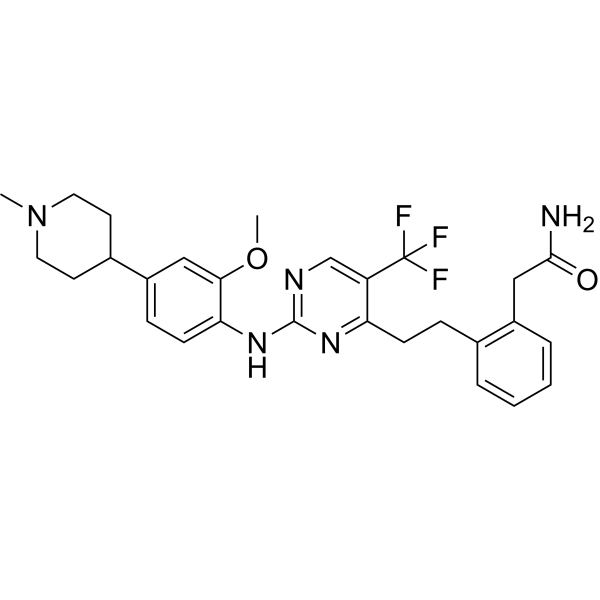
Narmafotinib (AMP-945) is an orally active inhibitor of the enzyme focal adhesion kinase (FAK, KD=0.21 nM). Narmafotinib inhibits autophosphorylation of 397Y-FAK in MDA-MB-231 cells with an IC50=7 nM and exhibits low general cellular toxicity (IC50=2.7 μM, MDA-MB-231 cells). Narmafotinib can be used for anti-cancer study .
loading...
    loading...
Cat. No.: HY-13568
CAS No.: 51234-28-7
Purity:  99.24%
Synonyms: LRCL 3794
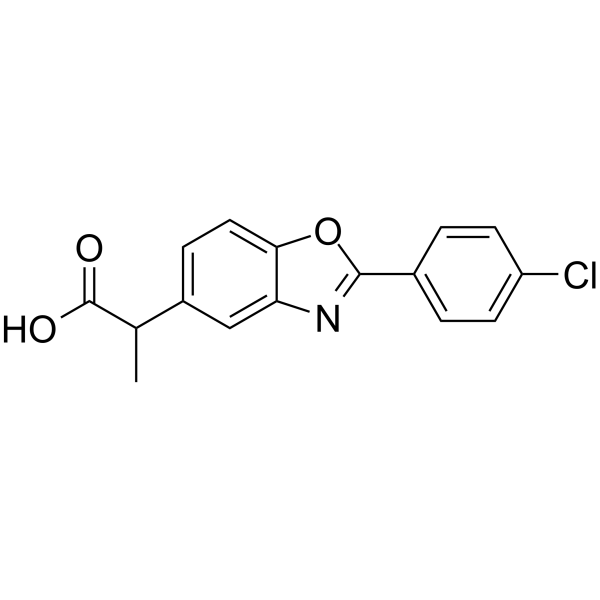
Benoxaprofen (LRCL 3794) is a nonsteroidal anti-inflammatory agent that blocks the biosynthesis of inflammatory mediators such as leukotrienes and prostaglandins by inhibiting 5-LOX, PGH2 synthase and cytochrome P-450. Benoxaprofen exhibits significant toxicity: it not only alters cellular redox status, uncouples oxidative phosphorylation and disrupts calcium ion homeostasis, but also causes liver injury through the formation of covalent adducts between its active metabolites and hepatic proteins. Benoxaprofen shows strong phototoxicity under ultraviolet irradiation, and induces erythrocyte lysis, mast cell degranulation and histamine release. Benoxaprofen is widely used in studies of urticaria and related phototoxic mechanisms .
loading...
    loading...
Cat. No.: HY-Y1366
CAS No.: 116-09-6
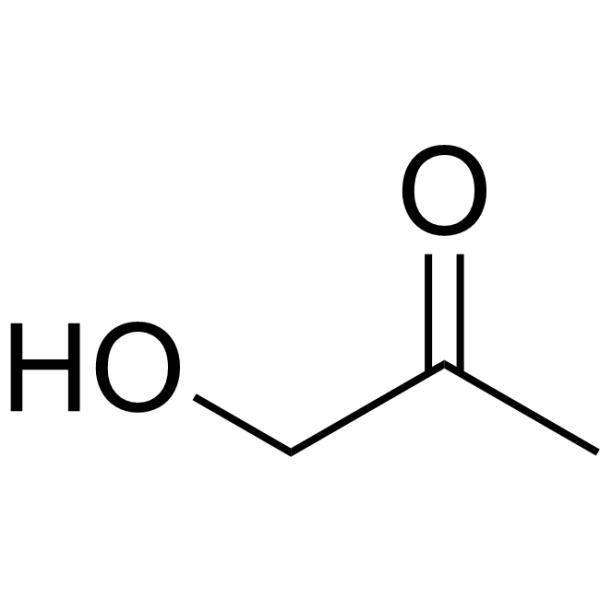
Hydroxyacetone is a toxic compound. Hydroxyacetone can be isolated from e-cigarette aerosols. Hydroxyacetone reduces the activity of cellular Mitochondrial reductase (with an IC50 of 5.53 mg/mL for mitochondrial reductase in BEAS-2B cells) and increases ROS levels. Hydroxyacetone induces mitochondrial stress and oxidative damage. Hydroxyacetone induces destabilization of F-actin. At high concentrations, Hydroxyacetone promotes cell rounding and Apoptotic body formation. Hydroxyacetone exerts toxic effects on cells including airway epithelial cells and possesses respiratory toxicity potential .\n


loading...
    loading...
Cat. No.: HY-34154
CAS No.: 619-60-3
Target:  

Lactate Dehydrogenase

Research Areas:  

Others

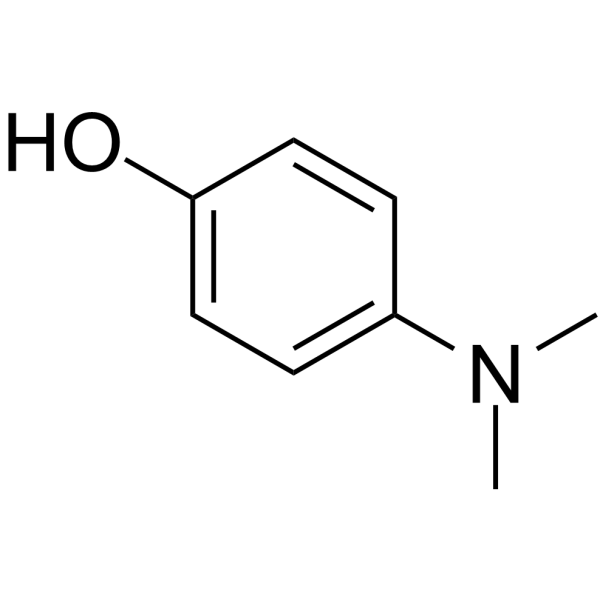
4-(Dimethylamino)phenol is a potent cyanide antidote. 4-(Dimethylamino)phenol increases the extracellular lactate dehydrogenase (LDH) without markedly affecting gluconeogenesis. 4-(Dimethylamino)phenol cannot decreases the ATP content until the membrane becomes permeable to LDH. 4-(Dimethylamino)phenol’s toxicity is related to its reaction with glutathione and formation of covalent complexes, leading to impaired cellular function .
loading...
    loading...
Cat. No.: HY-N2620
CAS No.: 33237-37-5
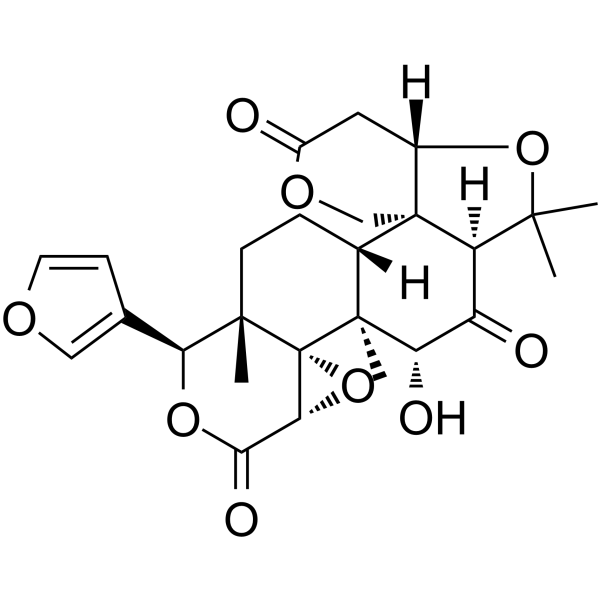
Rutaevin is an antifungal toxin and CYP3A4 inactivator. Rutaevin requires NADPH-dependent bioactivation to generate cis-but-2-ene-1,4-dial, which then covalently modifies and mechanism-based inactivates human CYP3A4 (IC50=4.48 μM, Ki=15.98 μM), and interacts with substances such as glutathione. Rutaevin disrupts the cellular structure of Sirococcus conigenus, accumulates linearly in resistant larch after pathogen exposure, and induces liver toxicity in mice via oral administration. Rutaevin can be applied to research in fields related to larch shoot blight and other associated areas .
loading...
    loading...
Cat. No.: HY-119715
CAS No.: 486414-35-1
Target:  

CDK Apoptosis

Research Areas:  

Inflammation/Immunology Cancer

AG-012986 is a pan-CDK inhibitor with Ki values of 44 nM (CDK1), 9.2 nM (CDK4), 94 nM (CDK2), and IC50 values of 22 nM (CDK5), 4 nM (CDK9). AG-012986 causes apoptosis of T-cells by targeting upstream kinases in the p38 Mitogen-activated protein kinase (MAPK) pathway and impairing cellular survival. AG-012986 induces cell cycle arrest, retinoblastoma protein hypophosphorylation, and reduces Ki-67 expression. AG-012986 exerts antiproliferative activity in tumor cells, demonstrates antitumor efficacy in human xenograft models, and causes retinal and peripheral neurotoxicity, plus immune cell toxicity. AG-012986 can be used for the research of colon carcinoma, non-small cell lung carcinoma, lung carcinoma, breast carcinoma, ovarian tumor, pancreatic carcinoma, osteosarcoma, lymphoma, leukemia, retinotoxicity .
loading...
    loading...
Cat. No.: HY-119904
CAS No.: 1634-78-2
Purity:  98.03%
Target:  

Cholinesterase (ChE)

Research Areas:  

Infection

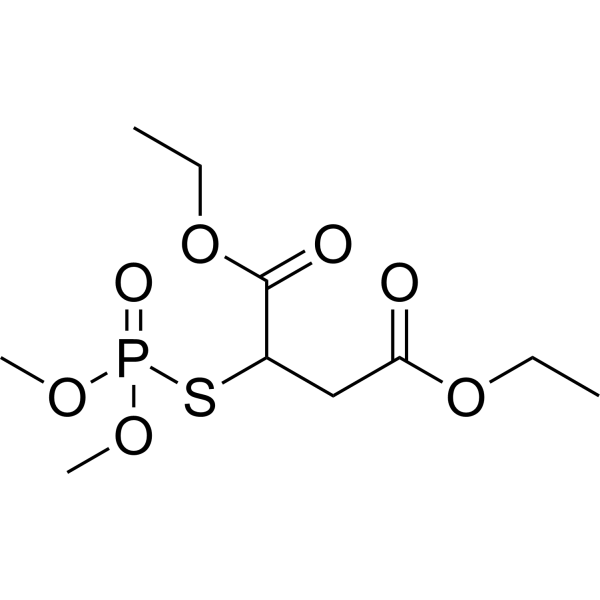
Malaoxon is a pesticide metabolite. Malaoxon can induce cellular death in cultured human pulmonary cells. Malaoxon can be used for the research of pulmonary toxicity .
loading...
    loading...
Cat. No.: HY-130581
CAS No.: 86559-73-1
Target:  

Bacterial

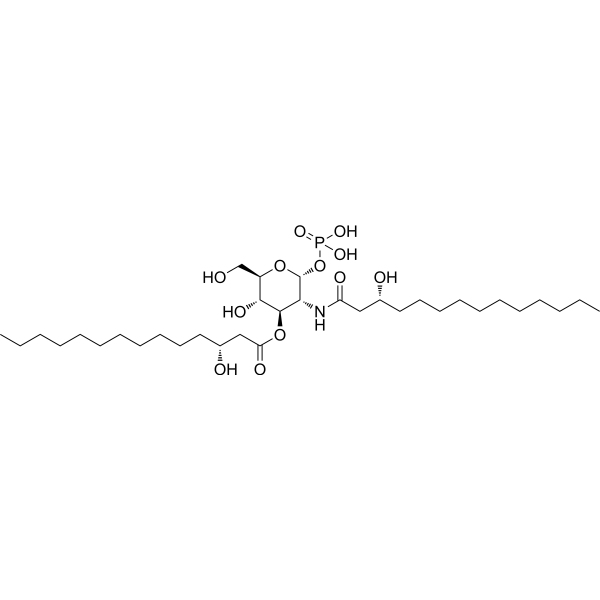
Lipid X is a 2,3-diacylglucosamine-1-phosphate that serves as the monosaccharide precursor of lipid A, possessing both LPS antagonist and weak agonist activities. Lipid X exerts protective effects by inhibiting tumor necrosis factor production, monocyte procoagulant activity, and neutrophil priming. Lipid X may induce transient pulmonary hypertension, neutropenia, and mild pyrogenic effects in laboratory animals. Lipid X has low toxicity and no in vitro antibacterial activity, but it significantly reduces mortality following Gram-negative bacterial infection and endotoxin exposure. Lipid X tends to accumulate in liver tissue, binds to circulating cellular components, and can be converted to lipid Y through transesterification. Lipid X can be used in research on Gram-negative bacterial sepsis, endotoxemia, and associated pulmonary hypertension .
loading...
    loading...
Cat. No.: HY-201296A
CAS No.: 17515-36-5
Synonyms: TUCA sodium
Target:  

Drug Isomer

Research Areas:  

Cancer

Tauroursocholic acid (TUCA) sodium is a taurine-conjugated form of the bile acid ursocholic acid and the 7β-hydroxy epimer of Taurocholic acid (HY-B1788). Tauroursocholic acid sodium exists in abundance during the biliary tract cancer, disrupting the balance and cellular toxicity of bile acids and inducing carcinogenesis through oxidative DNA damage and DNA mutation. Tauroursocholic acid (TUCA) sodium can be used for biliary tract cancer research .
loading...
    loading...
Cat. No.: HY-144647
CAS No.: 2766185-81-1
Target:  

SARS-CoV Virus Protease

Research Areas:  

Infection

SP inhibitor 1 (compound 34) is a selective SARS-CoV-2 spike protein (SP) inhibitor with an IC50 of 3.26 μM, >25 μM, >25 μM for SP, M pro and PL pro protein, respectively. SP inhibitor 1 is a vitro SARS-CoV-2 replication inhibitor at non-toxic concentrations (0.3250<5.98 μM). SP inhibitor 1 shows cellular antiviral activity .
loading...
    loading...
Cat. No.: HY-173148
CAS No.: 2892688-18-3
Target:  

SARS-CoV

Research Areas:  

Infection

TKB272 is an orally active and selective antiviral agent targeting the main protease (Mpro) of SARS-CoV-2. It effectively blocks the infection and replication of various SARS-CoV-2 strains, including Omicron variants such as XBB.1.5 and EG.5.1. The enzymatic inhibitory activity of TKB272 shows an IC50 of 0.7 µM (against SARS-CoV-2WK-521 Mpro), and its antiviral activity at the cellular level reaches an EC50 as low as 2.6 nM (against BQ.1.1 strain in HeLahACE2-TMPRSS2 cells), with a cytotoxicity CC50 of 98 µM, indicating no apparent toxicity. In addition, TKB272 significantly suppresses the replication of SARS-CoV-2XBB.1.5 in B6.Cg-Tg(K18-hACE2)2-Prlmn/J transgenic mouse models. TKB272 holds promise for research in the field of SARS-CoV-2 infection .
loading...
    loading...
Cat. No.: HY-179013
CAS No.: 812683-94-6
Research Areas:  

Infection

NS2B/NS3-IN-9 (Compound 73) is a broad-spectrum, non-competitive anti-Orthoflavivirus lipopeptide inhibitor targeting the NS2B-NS3 protease. NS2B/NS3-IN-9 exhibits IC50 values for Dengue virus DENV2 NS2B-NS3, West Nile virus WNV NS2B-NS3, and Zika virus ZIKV NS2B-NS3 of 2.4, 7.2, and 1.9 μM, respectively. NS2B/NS3-IN-9 also exhibits antiviral activity at the cellular level against DENV2, WNV, and ZIKV, with EC50 values of 4.1, 4.9, and 5.0 μM, respectively. NS2B/NS3-IN-9 has no significant toxicity to cells. NS2B/NS3-IN-9 can be used for the study of anti-Orthoflavivirus .
loading...
    loading...
Cat. No.: HY-119904R
CAS No.: 1634-78-2
Research Areas:  

Infection

Malaoxon (Standard) is the analytical standard of Malaoxon. This product is intended for research and analytical applications. Malaoxon is a pesticide metabolite. Malaoxon can induce cellular death in cultured human pulmonary cells. Malaoxon can be used for the research of pulmonary toxicity .
loading...
    loading...
Cat. No.: HY-126643
CAS No.: 74686-30-9
Wedeloside is a diterpenoid amino glycoside isolated from the plant Wedelia asperrima. Wedeloside is capable of inhibiting ADP-stimulated respiration in mitochondria and possesses potential anti-tumor activity. Wedeloside is applicable in drug development and toxicological research .
loading...
    loading...
Cat. No.: HY-119857
CAS No.: 304896-21-7
Synonyms: SIRT2 Inhibitor,Inactive Control
Target:  

Sirtuin

Research Areas:  

Neurological Disease

AGK7 is a potent inhibitor of sirtuin 2 (SIRT2). AGK7 rescues alpha-synuclein toxicity and modified inclusion morphology in a cellular model of Parkinson's disease. AGK7 protects against dopaminergic cell death both in vitro and in a Drosophila model of Parkinson's disease .
loading...
    loading...
Cat. No.: HY-170562
CAS No.: 3098824-77-9
STEP-IN-1 (Compound 14b) is a potent and selective STEP inhibitor with an IC50 of 5.27 μM. STEP-IN-1 has a neuroprotective effect, which can protect nerve cells from glutamate-induced toxicity, reduce cellular ROS accumulation, and inhibit apoptosis. STEP-IN-1 can be used in the study of neurodegenerative diseases .
loading...
    loading...
Cat. No.: HY-111125
CAS No.: 923515-92-8
AMRI-59 is a potent inhibitor of PrxI used for parasitic infections. AMRI-59 can increase cellular ROS, leading to activation of signaling pathways mediated by mitochondria and apoptosis signal-regulated kinase 1, thereby leading to apoptosis in A549 human lung adenocarcinoma. AMRI-59 exhibits significant antitumor activity without apparent acute toxicity .
loading...
    loading...
Cat. No.: HY-151134
CAS No.: 2161364-69-6
Target:  

HBV

Research Areas:  

Infection

HBV-IN-25 is a good potency, orally active novel HBV cccDNA reducer. HBV-IN-25 has anti-HBeAg potency and anti-HBV activity with IC50 values of 0.58 μM and 1.15 μM, respectively. HBV-IN-25 has good aqueous solubility (LYSA>452 μg/mL) and good PK property with no cellular toxicity .
loading...
    loading...

