12 Results for "

chloroplast lipids

" in MedChemExpress (MCE) Product Catalog:
Products (12)

12 Results for "chloroplast lipids" in MCE Product Catalog:

5
5 Cited Publications
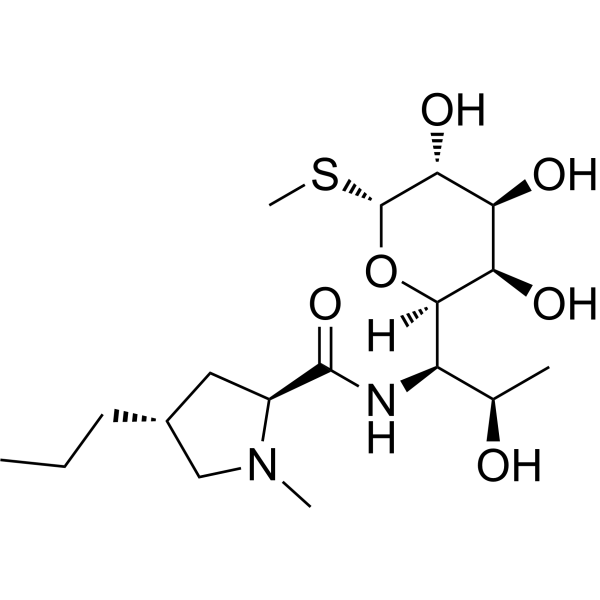
Cat. No.: HY-117660
CAS No.: 154-21-2
Purity:  99.82%
Synonyms: U-10149
Lincomycin (U-10149) is an orally active lincosamide antibiotic. Lincomycin binds to the ribosomes of Gram-positive bacteria to inhibit protein synthesis. Lincomycin can inhibit chloroplast translation, disrupt chloroplast integrity, and activate chloroplast-to-nucleus retrograde signaling in Arabidopsis thaliana seedlings. Lincomycin induces alterations in lipid profiles and liver injury, disrupts blood glucose and insulin levels, and increases growth rate in mice .
loading...
    loading...
5
5 Cited Publications
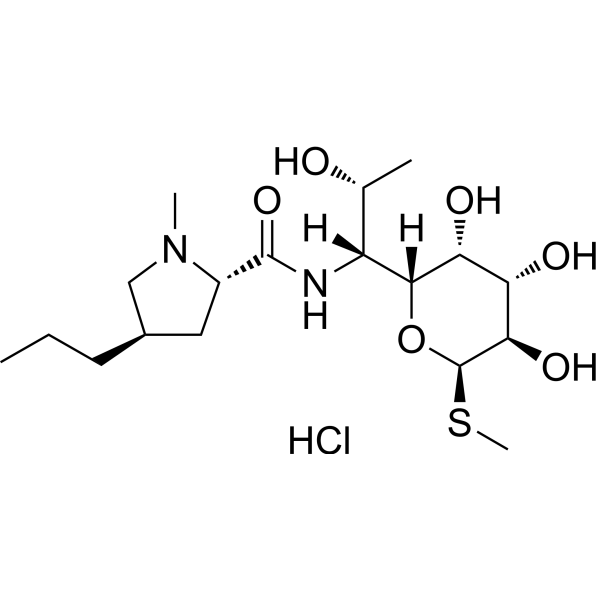
Cat. No.: HY-B0417A
CAS No.: 859-18-7
Synonyms: U10149A
Lincomycin hydrochloride (U10149A) is an orally active lincosamide antibiotic. Lincomycin hydrochloride binds to the ribosomes of Gram-positive bacteria to inhibit protein synthesis. Lincomycin hydrochloride can inhibit chloroplast translation, disrupt chloroplast integrity, and activate chloroplast-to-nucleus retrograde signaling in Arabidopsis thaliana seedlings. Lincomycin hydrochloride induces alterations in lipid profiles and liver injury, disrupts blood glucose and insulin levels, and increases growth rate in mice .
loading...
    loading...
5
5 Cited Publications
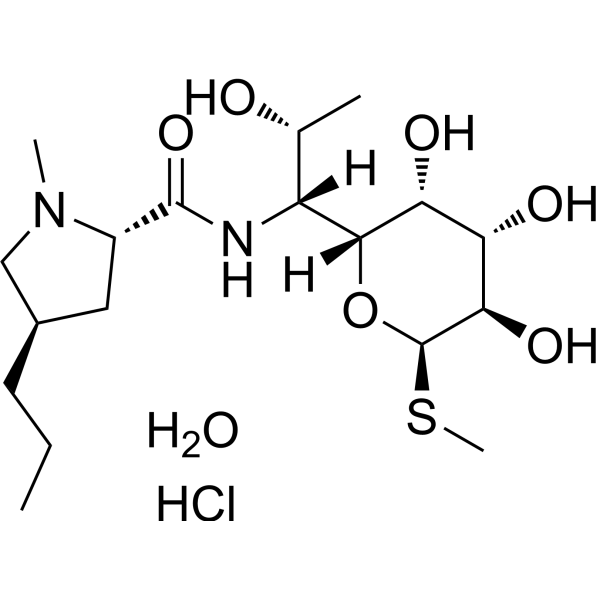
Cat. No.: HY-B1358
CAS No.: 7179-49-9
Synonyms: U-10149 hydrochloride monohydrate
Lincomycin (U-10149) hydrochloride monohydrate is an orally active lincosamide antibiotic. Lincomycin hydrochloride monohydrate binds to the ribosomes of Gram-positive bacteria to inhibit protein synthesis. Lincomycin hydrochloride monohydrate can inhibit chloroplast translation, disrupt chloroplast integrity, and activate chloroplast-to-nucleus retrograde signaling in Arabidopsis thaliana seedlings. Lincomycin hydrochloride monohydrate induces alterations in lipid profiles and liver injury, disrupts blood glucose and insulin levels, and increases growth rate in mice .
loading...
    loading...
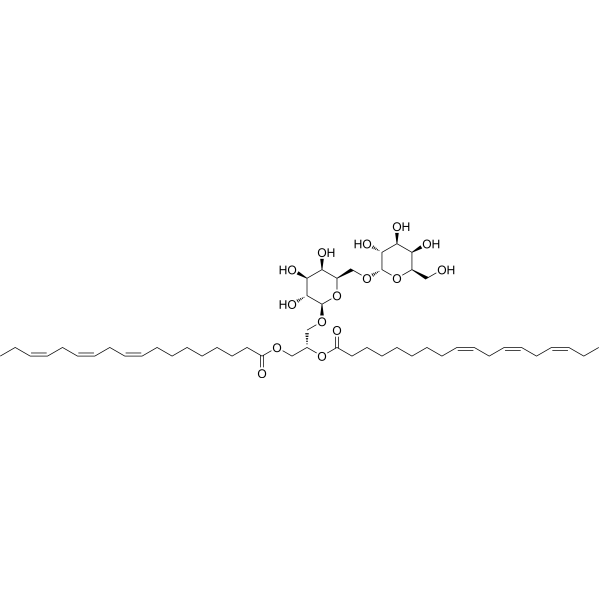
Cat. No.: HY-143693
CAS No.: 63142-69-8
Purity:  ≥99.0%
DGDG, a chloroplast lipid, is a bilayer-forming lipid. DGDG is important for photosynthesis, and can be used for drug delivery .
loading...
    loading...
Cat. No.: HY-117660S
Purity:  99.90%
Synonyms: U-10149-d3
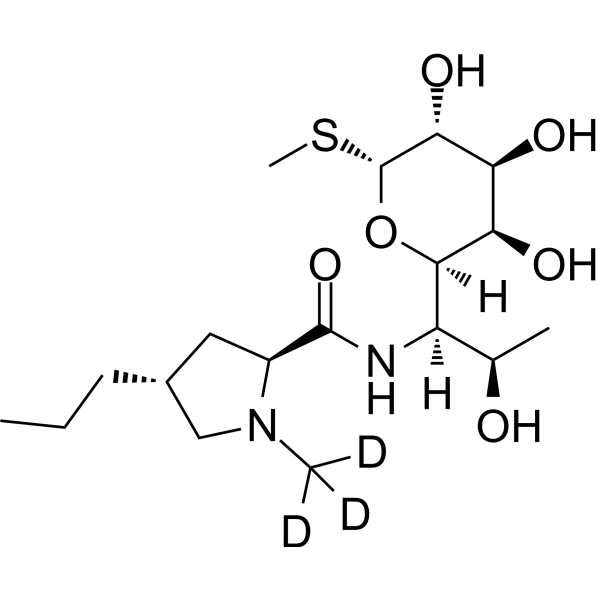
Lincomycin-d3 (U-10149-d3) is the deuterium labeled Lincomycin. Lincomycin is an orally active lincosamide antibiotic. Lincomycin binds to the ribosomes of Gram-positive bacteria to inhibit protein synthesis. Lincomycin can inhibit chloroplast translation, disrupt chloroplast integrity, and activate chloroplast-to-nucleus retrograde signaling in Arabidopsis thaliana seedlings. Lincomycin induces alterations in lipid profiles and liver injury, disrupts blood glucose and insulin levels, and increases growth rate in mice.
loading...
    loading...
Cat. No.: HY-117660R
CAS No.: 154-21-2
Synonyms: U-10149 (Standard)
Lincomycin (U-10149) (Standard) is the analytical reference standard of Lincomycin (HY-117660). This product is used for research and analytical applications. Lincomycin is an orally active lincosamide antibiotic. Lincomycin binds to the ribosomes of Gram-positive bacteria to inhibit protein synthesis. Lincomycin can inhibit chloroplast translation, disrupt chloroplast integrity, and activate chloroplast-to-nucleus retrograde signaling in Arabidopsis thaliana seedlings. Lincomycin induces alterations in lipid profiles and liver injury, disrupts blood glucose and insulin levels, and increases growth rate in mice.
loading...
    loading...
Cat. No.: HY-B1358R
CAS No.: 7179-49-9
Synonyms: U-10149 hydrochloride monohydrate (Standard)
Lincomycin (U-10149) hydrochloride monohydrate (Standard) is the analytical standard of Lincomycin hydrochloride monohydrate (HY-B1358). This product is intended for research and analytical applications. Lincomycin hydrochloride monohydrate is an orally active lincosamide antibiotic. Lincomycin hydrochloride monohydrate binds to the ribosomes of Gram-positive bacteria to inhibit protein synthesis. Lincomycin hydrochloride monohydrate can inhibit chloroplast translation, disrupt chloroplast integrity, and activate chloroplast-to-nucleus retrograde signaling in Arabidopsis thaliana seedlings. Lincomycin hydrochloride monohydrate induces alterations in lipid profiles and liver injury, disrupts blood glucose and insulin levels, and increases growth rate in mice.
loading...
    loading...
Hydrogenated DGDG
0 Images
β-D-Galactopyranoside, (2S)-2,3-bis[(1-oxooctadecyl)oxy]propyl 6-O-β-D-galactopyranosyl-
Cat. No.: HY-N16344
CAS No.: 960204-99-3
Hydrogenated DGDG is a lipid derived from plants. Digalactosyldiacylglycerol (DGDG) is a galactosylglycerolipid, which is a major lipid component in the thylakoid membrane of leaf chloroplasts. DGDG is vital for photosynthesis.
loading...
    loading...
Cat. No.: HY-117660S1
Synonyms: U-10149-13C,d3
Lincomycin- 13C,d3 (U-10149- 13C,d3) is the deuterium and 13C-labeled Lincomycin (HY-117660). Lincomycin (U-10149) is an orally active lincosamide antibiotic. Lincomycin binds to the ribosomes of Gram-positive bacteria to inhibit protein synthesis. Lincomycin can inhibit chloroplast translation, disrupt chloroplast integrity, and activate chloroplast-to-nucleus retrograde signaling in Arabidopsis thaliana seedlings. Lincomycin induces alterations in lipid profiles and liver injury, disrupts blood glucose and insulin levels, and increases growth rate in mice .
loading...
    loading...
Cat. No.: HY-N16337
CAS No.: 51424-47-6
Target:  

Others

Research Areas:  

Others

Hydrogenated MGDG is a type of glycolipid. Monogalactosyldiacylglycerol (MGDG), a galactosylglycerolipid, is a major lipid in the thylakoid membrane of the chloroplast of leaves. It is also localized in the roots, fruits and grains. MGDG is synthesized from Monogalactosyldiacylglycerol synthase 1 (MGD1). It is a precursor for digalactosyldiacylglycerol (DGDG).
loading...
    loading...
Cat. No.: HY-113947
CAS No.: 256412-89-2
Research Areas:  

Others

Metamifop is a post-emergence lipid synthesis inhibitor herbicide, with an IC50 of 41.1 nM against the carboxyltransferase (CT) domain of chloroplast acetyl-CoA carboxylase (ACCase) in barnyard grass (Echinochloa crus-galli). Metamifop inhibits the activity of the CT domain, thereby blocking fatty acid biosynthesis .
loading...
    loading...
Cat. No.: HY-183416
CAS No.: 111234-77-6
Research Areas:  

Others

M&B 39279 is an inhibitor of protoporphyrinogen oxidase (Protoporphyrinogen Oxidase). M&B 39279 induces protoporphyrin IX accumulation, light-dependent lipid peroxidation, degradation of membranes and organelles, and reduction of photosynthesis. M&B 39279 functions through the mechanism of action of diphenyl ether herbicides, and can be used for studies on PPO inhibition and herbicide mechanisms of action .
loading...
    loading...
  • 1

