1. Search Result
Search Result
Results for "

cognitive,

" in MedChemExpress (MCE) Product Catalog:

553

Inhibitors & Agonists

1

Screening Libraries

2

Fluorescent Dyes

5

Biochemical Assay Reagents

15

Peptides

6

Inhibitory Antibodies

83

Natural
Products

32

Isotope-Labeled Compounds

1

Click Chemistry

2

Oligonucleotides

Cat. No. Product Name Target Research Areas Chemical Structure
  • HY-109590
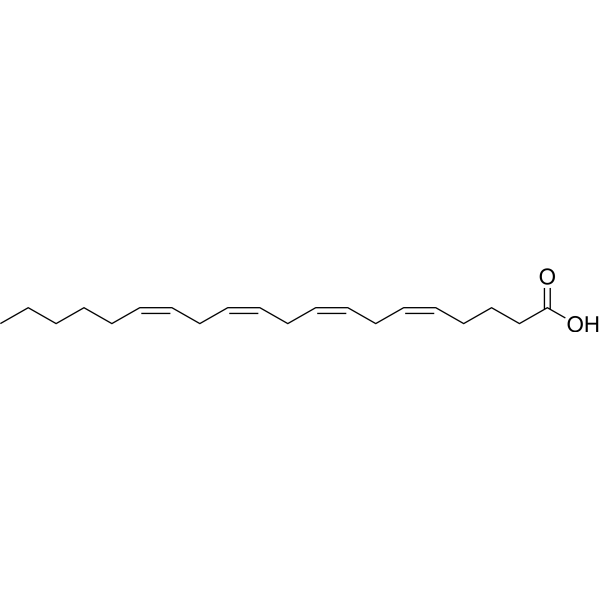
    Arachidonic acid
    Maximum Cited Publications
    55 Publications Verification

    Immunocytophyt

    Endogenous Metabolite Cardiovascular Disease Inflammation/Immunology
    Arachidonic acid (Immunocytophyt) is a polyunsaturated omega-6 fatty acid and a major constituent of biomembranes. Arachidonic acid also acts as the substrate for various lipid mediators, such as prostaglandins (PGs). Arachidonic acid improves cognitive response and cardiovascular function .
    Arachidonic acid
  • HY-W004260
    Arachidic acid
    3 Publications Verification

    Eicosanoic acid

    Endogenous Metabolite Neurological Disease
    Arachidic acid is an orally bioavailable membrane fluidity modulator and receptor/ion channel effector. Arachidic acid does not activate arachidonic acid-sensitive K + channels in rat midbrain and hypothalamic neurons. Arachidic acid alleviates age-related spatial cognitive impairment. Arachidic acid is applicable for research related to age-related spatial cognitive impairment .
    Arachidic acid
  • HY-B0463
    Clomiphene citrate
    5 Publications Verification

    Clomifene citrate

    Estrogen Receptor/ERR Neurological Disease Endocrinology Cancer
    Clomiphene citrate (Clomifene citrate) is an orally active estrogen-receptor modulator. Clomiphene citrate has anti-cancer actixity, induces perturbations during meiotic maturation and cytogenetic abnormalities and ameliorates in managing psychiatric and cognitive impairment .
    Clomiphene citrate
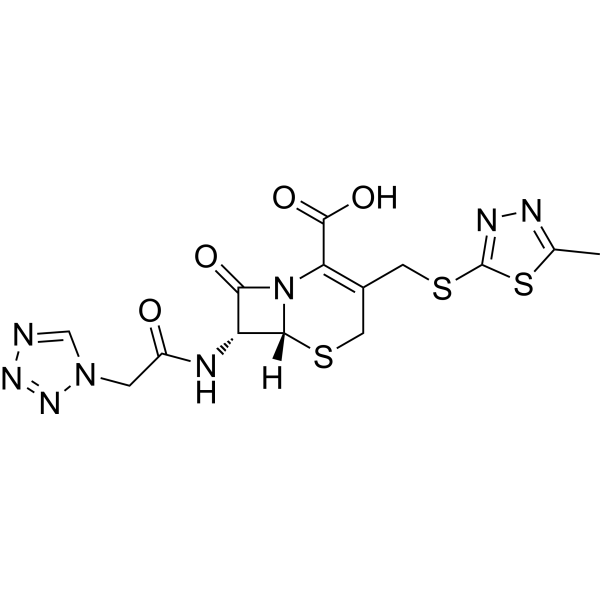
  • HY-B1892
    Cefazolin
    10+ Cited Publications

    Cephazolin

    Antibiotic Bacterial Infection Neurological Disease Inflammation/Immunology Cancer
    Cefazolin (Cephazolin) is a first-generation cephalosporin antibiotic and can be used in varieties of bacterial infections research . Cefazolin has anti-inflammatory effect and can attenuate post-operative cognitive dysfunction (POCD) .
    Cefazolin
  • HY-11013

    ST-101

    Calcium Channel nAChR Neurological Disease Cancer
    ZSET1446 is a novel cognitive enhancer that significantly improves learning deficits in various types of Alzheimer disease (AD) models.
    ZSET1446
  • HY-B0585
    Piracetam
    1 Publications Verification

    UCB-6215

    iGluR Neurological Disease
    Piracetam (UCB-6215) is a cyclic derivative of the neurotransmitter gamma-aminobutyric acid (GABA), used in treatment of a wide range of cognitive disorders.
    Piracetam
  • HY-B1078
    Cefazolin sodium
    10+ Cited Publications

    Cephazolin sodium

    Bacterial Antibiotic Infection Neurological Disease Inflammation/Immunology Cancer
    Cefazolin sodium is a first-generation cephalosporin antibiotic and can be used in varieties of bacterial infections research . Cefazolin sodium has anti-inflammatory effect and can attenuate post-operative cognitive dysfunction (POCD) .
    Cefazolin sodium
  • HY-10933
    CX516
    2 Publications Verification

    BDP 12

    iGluR Neurological Disease
    CX516 (BDP 12) is an ampakine and acts as an AMPA receptor positive allosteric modulator for the research of Alzheimer's disease, schizophrenia and mild cognitive impairment (MCI) .
    CX516
  • HY-N2195
    Nootkatone
    4 Publications Verification

    (+)-Nootkatone

    Environmental Pollutants Interleukin Related TNF Receptor Neurological Disease
    Nootkatone, a neuroprotective agent from Vitis vinifera, has antioxidant and anti-inflammatory effects . Nootkatone improves cognitive impairment in lipopolysaccharide-induced mouse model of Alzheimer's disease .
    Nootkatone
  • HY-N2189
    Swertisin
    2 Publications Verification

    Adenosine Receptor HBV SGLT Infection Neurological Disease Inflammation/Immunology
    Swertisin is an oral adenosine A1 receptor antagonist and an SGLT2 inhibitor. Swertisin has anti-diabetic, antioxidant properties, inhibits HBV, and improves cognitive and memory impairments in mice .
    Swertisin
  • HY-109590A
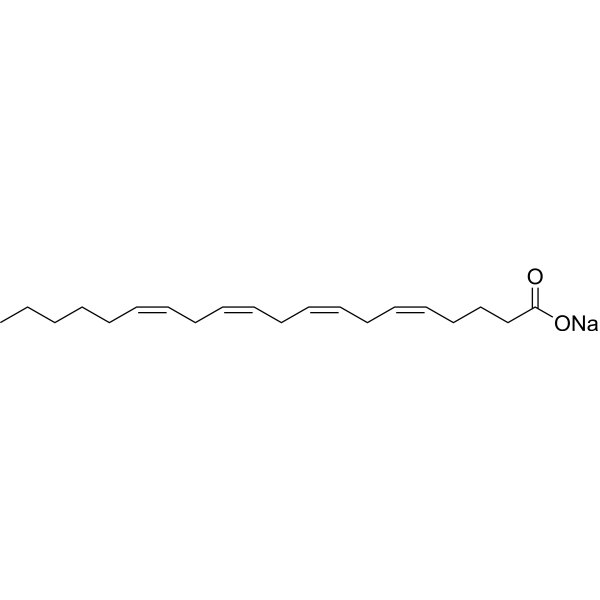
    Arachidonic acid sodium salt
    Maximum Cited Publications
    55 Publications Verification

    Immunocytophyt sodium salt

    Endogenous Metabolite Cardiovascular Disease Neurological Disease Inflammation/Immunology
    Arachidonic acid (Immunocytophyt) sodium salt is a polyunsaturated omega-6 fatty acid and a major constituent of biomembranes. Arachidonic acid sodium salt also acts as the substrate for various lipid mediators, such as prostaglandins (PGs). Arachidonic acid sodium salt improves cognitive response and cardiovascular function .
    Arachidonic acid sodium salt
  • HY-17550

    DM-235

    iGluR Neurological Disease
    Sunifiram (DM-235) is an ampakine-like compound and an agonist of AMPA receptor with oral activity. Sunifiram can increase the release of acetylcholine in the rat cerebral cortex and exhibits potent cognitive enhancement effects with better nootropic activity compared to piracetam (HY-B0585). Sunifiram is promising for research in neurodegenerative diseases such as mild cognitive impairment (MCI) and Alzheimer's disease (AD) .
    Sunifiram
  • HY-N7981
    Pratensein
    1 Publications Verification

    NF-κB Neurological Disease
    Pratensein, a flavonoid, ameliorates β-amyloid-induced cognitive impairment in rats via reducing oxidative damage and restoring synapse and BDNF levels .
    Pratensein
  • HY-W009081

    Free Fatty Acid Receptor Neurological Disease
    Tricosanoic acid is an endogenous agonist of long-chain saturated fatty acids and free fatty acid receptor FFAR1, which can activate hair growth. Tricosanoic acid (C23:0) has the activity of improving cognitive function by regulating neuronal membrane fluidity, inhibiting neuroinflammatory response, participating in myelination and neuronal energy metabolism. Tricosanoic acid expression levels are low in the prefrontal cortex of Alzheimer's disease (AD) models; while better cognitive performance corresponds to higher serum concentration levels. Tricosanoic acid can be used as a biomarker for diseases related to cognitive decline .
    Tricosanoic acid
  • HY-107111

    mAChR Neurological Disease
    GSK1034702 is an orally active and allosteric agonist of M1 mAChR (pEC50=8.1) that can cross the blood-brain barrier. GSK1034702 activates the Gq/11 protein-mediated signaling pathway, enhancing neuronal firing and long-term potentiation (LTP) in the CA1 region of the hippocampus. GSK1034702 can modulate hippocampal function, improve memory encoding in the nicotine withdrawal cognitive dysfunction model, and show pro-cognitive effects in rodents. GSK1034702 can be used for the study of the mechanisms of cognitive impairment diseases such as Alzheimer's disease, and has certain peripheral M receptor activation-related side effects (such as gastrointestinal reactions) .
    GSK1034702
  • HY-132806

    RG-7816; RO-7017773

    GABA Receptor Neurological Disease
    Alogabat is a positive allosteric modulator (PAM) and agonist (Ki <100 nM) of the GABAA α5 receptor, targeting the α5β3γ2 subunit with a Ki of 8.7 nM. Alogabat increases the expression level of α5β3γ2 in oocytes (1.97-fold). GABAA has been implicated in cognitive impairment associated with central nervous system (CNS) disorders, brain cancer (including brain tumors such as medulloblastoma), and can be used in the study of mild cognitive impairment (MCI), amnestic MCI (aMCI), age-associated memory impairment (AAMI), age-related cognitive decline (ARCD), dementia, Alzheimer's disease (AD), prodromal AD, post-traumatic stress disorder (PTSD), schizophrenia, bipolar disorder, amyotrophic lateral sclerosis (ALS), cognitive impairment associated with cancer treatment, mental retardation, Parkinson's disease (PD), autism spectrum disorder, fragile X, Rett syndrome, obsessive-compulsive behavior, and substance addiction .
    Alogabat
  • HY-17455

    CI-879 free base

    Prolyl Endopeptidase (PREP) Neurological Disease
    Pramiracetam (CI-879 free base) is a PREP (prolyl endopeptidase) inhibitor. Pramiracetam improves cognitive impairment caused by traumatic brain injury. Pramiracetam can be used in the study of neurodegenerative diseases .
    Pramiracetam
  • HY-121599
    CGP 36742
    1 Publications Verification

    SGS-742

    GABA Receptor Neurological Disease
    CGP 36742 (SGS-742) is an orally active and selective antagonist of GABAB receptor (IC50 = 36 µM). CGP 36742 is a brain-penetrant compound and improves cognitive performances. CGP 36742 can be used for depression study .
    CGP 36742
  • HY-11044

    Histamine Receptor Neurological Disease Metabolic Disease Inflammation/Immunology
    PF-03654746 Tosylate is a potent, selective and brain-penetrant histamine H3 receptor antagonist. PF-03654746 Tosylate reduces allergen-induced nasal symptoms . PF-03654746 Tosylate has potential for treatment of human cognitive disorders, improves cognitive efficacy and disease-modifying effects in Alzheimer's disease (AD) .
    PF-03654746 Tosylate
  • HY-111178

    BisfluoroModafinil; CRL-40940

    Drug Derivative Neurological Disease
    Lauflumide (BisfluoroModafinil) is the common alternative of modafinil. Modafinil is commonly prescribed for the research narcolepsy. Lauflumide has the potential for cognitive enhancing .
    Lauflumide
  • HY-N8903

    Integrin NF-κB Toll-like Receptor (TLR) TNF Receptor Cardiovascular Disease Neurological Disease
    Mumefural is a bioactive component of the processed fruit of Prunus mume Sieb. Mumefural inhibits platelet aggregation. Mumefural shows anti-thrombotic effects and ameliorates cognitive impairment .
    Mumefural
  • HY-125931

    DM232

    iGluR Neurological Disease Inflammation/Immunology
    Unifiram (DM232) is a AMPA receptor activator and cognitive enhancer. Unifiram activates the AMPA-mediated neurotransmission system. Unifiram reverses NBQX-induced amnesia in the passive avoidance test in mice. Unifiram reverses the antagonistic effect of kynurenic acid on NMDA-mediated [ 3H]NA release in rat hippocampal slices. Unifiram enhances excitatory synaptic transmission in the rat hippocampus in vitro. Unifiram can be used in studies related to amnesia and cognitive dysfunction, including age-related memory decline, neurodegenerative diseases such as Alzheimer's disease or Parkinson's disease, multiple sclerosis, schizophrenia, and attention deficit hyperactivity disorder .
    Unifiram
  • HY-137994

    Drug Derivative Neurological Disease
    Deschloroetizolam is a designer Benzodiazepine. Deschloroetizolam is a psychoactive substance, with physical and cognitive effects .
    Deschloroetizolam
  • HY-W166297
    Esculin sesquihydrate
    5 Publications Verification

    p38 MAPK Cancer
    Esculin sesquihydrate, a fluorescent coumarin glucoside, is an active ingredient of ash bark. Esculin sesquihydrate ameliorates cognitive impairment in experimental diabetic nephropathy (DN), and exerts anti?oxidative stress and anti?inflammatory effects, via the MAPK signaling pathway .
    Esculin sesquihydrate
  • HY-116800

    Adenosine Receptor Neurological Disease
    FR194921 is a potent, selective and orally active and cross the blood-brain barrier Adenosine A1 antagonist with Ki value of 6.6, 5400 nM for A1, A2A, respectively. FR194921 shows cognitive-enhancing and anxiolytic activity .
    FR194921
  • HY-153763

    Amino acid Transporter Neurological Disease
    PROT-IN-1 is a PROT inhibitor (IC50: 1.48 μM). PROT-IN-1 is applicable to research related to cognitive impairment .
    PROT-IN-1
  • HY-102083

    HDAC Neurological Disease
    BRD4884 is a potent and brain-penetrant HDAC inhibitor with IC50 values of 29 nM, 62 nM, and 1090 nM for HDAC1, HDAC2, and HDAC3, respectively. BRD4884 can be used for the study of cognitive impairment .
    BRD4884
  • HY-133025

    Somatostatin Receptor Neurological Disease
    FK962 is an enhancer of somatostatin release, exerts cognitive-enhancing actions. Anti-dementia properties .
    FK962
  • HY-160239

    Aminopeptidase Neurological Disease
    HFI-437 is a potent non-peptidic insulin-regulated aminopeptidase (IRAP) inhibitor with a Ki of 20 nM. HFI-437 is a cognitive enhancer .
    HFI-437
  • HY-N15339

    Sigma Receptor Neurological Disease
    Convolamine is an alkaloid found in Convolvulus pluricaulis and an effective positive modulator of the sigma-1 receptor (IC50 = 289 nM), exhibiting cognitive and neuroprotective properties .
    Convolamine
  • HY-129250

    Histamine Receptor Neurological Disease
    AZD5213 is a selective and competitive human H3 receptor antagonist with a pKi value of 9.3 for hH3R. AZD5213 can be used for the research of sleep and cognitive regulation .
    AZD5213
  • HY-W588194

    Drug Metabolite Neurological Disease Metabolic Disease
    Cotinine N-β-D-Glucuronide is a glucuronide conjugate of the tobacco metabolite Cotinine (HY-B1178). Cotinine N-β-D-Glucuronide is promising for research of tobacco carcinogen metabolism and cognitive function .
    Cotinine N-β-D-Glucuronide
  • HY-113448

    20:3 (8Z,11Z,14Z) CE; 20:3 n-6 CE; 20:3 (8Z,11Z,14Z) Cholesterol Ester

    Endogenous Metabolite Cardiovascular Disease
    Cholesteryl homo-γ-linolenate is a cholesterol ester. It accumulates in the adrenal gland of rabbits fed a diet high in linolenic acid.1 Levels of cholesteryl homo-γ-linolenate are decreased and positively correlate with cognitive decline in HIV-infected humans.
    CE(20:3(8Z,11Z,14Z))
  • HY-115383
    Roflupram
    1 Publications Verification

    Phosphodiesterase (PDE) Neurological Disease Inflammation/Immunology
    Roflupram is a selective, orally active and brain-penetrant PDE4 inhibitor, with an IC50 of 26.2 nM for core catalytic domains of human PDE4. Roflupram can reverse cognitive deficits and reduce the production of pro-inflammatory factors .
    Roflupram
  • HY-107676

    nAChR Neurological Disease
    SIB-1553A is an orally bioavailable nicotinic acetylcholine receptors (nAChRs) agonist, with selectivity for β4 subunit-containing nAChRs. SIB-1553A is also a selective neuronal nAChR ligand. SIB-1553A is a cognitive enhancer, and has therapeutic potential for the symptomatic treatment of Alzheimer’s disease and other cognitive disorders .
    SIB-1553A
  • HY-124389

    Histamine Receptor Neurological Disease
    UCL-1972 is an antagonist of Histamine H3 receptor. UCL-1972 can be studied in research on cognitive diseases .
    UCL-1972
  • HY-103424
    A-412997 dihydrochloride
    1 Publications Verification

    Dopamine Receptor Neurological Disease
    A-412997 dihydrochloride is a selective dopamine D4 receptor agonist. A-412997 dihydrochloride improves cognitive performance in rats and can be used in the research of psychiatric diseases .
    A-412997 dihydrochloride
  • HY-105170B

    nAChR Neurological Disease
    ABT-418 hydrochloride is a potent and selective agonist of nAChRs with cognitive enhancing and anxiolytic activities. ABT-418 hydrochloride activates cholinergic channel and can be used for research of Alzheimer's disease .
    ABT-418 hydrochloride
  • HY-W001273

    CI-879 sulfate

    Prolyl Endopeptidase (PREP) Neurological Disease
    Pramiracetam (CI-879) sulfate Pramiracetam is a PREP (prolyl endopeptidase) inhibitor. Pramiracetam sulfate improves cognitive impairment caused by traumatic brain injury. Pramiracetam sulfate can be used in the study of neurodegenerative diseases .
    Pramiracetam sulfate
  • HY-110176

    GlyT Neurological Disease
    ASP2535 is a potent, orally bioavailable, selective, brain permeable and centrally-active glycine transporter-1 (GlyT1) inhibitor. ASP2535 can improve cognitive impairment in animal models of schizophrenia and Alzheimer's disease .
    ASP2535
  • HY-148331

    Prolyl Endopeptidase (PREP) Neurological Disease
    Z-Thioprolyl-Thioproline is a bovine brain prolyl endopeptidase (PEP) inhibitor (IC50=16 µM; Ki=37 µM). Z-Thioprolyl-Thioproline is used in the study of neurological disorders such as memory disorders and cognitive disorders .
    Z-Thioprolyl-Thioproline
  • HY-156634

    NYX-783

    iGluR Neurological Disease
    Risevistinel (NYX-783) is a positive allosteric modulator of N-methyl-D-aspartate (NMDA) receptor. Nevadistinel can be used to inhibit cognitive impairment associated with neurodegenerative diseases, such as mild cognitive impairment, mild Alzheimer's disease, Parkinson's disease, Lewy body disease .
    Risevistinel
  • HY-19092

    mAChR Neurological Disease
    YM-796 dihydroxybutanedioate is a selective muscarinic M1 receptor agonist. YM-796 dihydroxybutanedioate can improve cognitive impairment and reduce amyloid plaque deposition. YM-796 dihydroxybutanedioate can be used in the research of cognitive impairment diseases such as Alzheimer's disease .
    YM-796 dihydroxybutanedioate
  • HY-156626

    NYX-458; NYX-3054

    iGluR Neurological Disease
    Nevadistinel (NYX-458; NYX-3054) is a positive allosteric modulator of N-methyl-D-aspartate (NMDA) receptor. Nevadistinel can be used to inhibit cognitive impairment associated with neurodegenerative diseases, such as mild cognitive impairment, mild Alzheimer's disease, Parkinson's disease, Lewy body disease .
    Nevadistinel
  • HY-120641

    mGluR Neurological Disease
    BMS-955829 is an orally active and selective mGluR5 positive allosteric modulator with an EC50 of 2.6 nM. BMS-955829 has no intrinsic agonist activity and a low glutamate fold shift (2.4). BMS-955829 can effectively improve cognitive and executive function deficits in rodents. BMS-955829 can be used in the research of cognitive impairment diseases such as schizophrenia .
    BMS-955829
  • HY-120276

    GR3027

    GABA Receptor Neurological Disease
    Golexanolone is a GABAA receptor modulating steroid antagonist. Golexanolone reduces peripheral inflammation and neuroinflammation and improves cognitive and motor function in hyperammonemic rats .
    Golexanolone
  • HY-N10408

    Apoptosis Autophagy Neurological Disease Cancer
    Tripchlorolide is a neuroprotective agent that can be found in Tripterygium wilfordii. Tripchlorolide prevents tumor growth by inducing apoptosis and autophagy. Tripchlorolide improves cognitive deficits in Alzheimer's disease .
    Tripchlorolide
  • HY-113745

    Amino acid Transporter Neurological Disease
    LX-6171 is an orally active SLC6A7 inhibitor. LX-6171 can be used to study diseases characterized by cognitive impairment, such as Alzheimer's disease, schizophrenia or vascular dementia .
    LX-6171
  • HY-B0756

    Cephazolin sodium pentahydrate

    Antibiotic Bacterial Infection Neurological Disease Inflammation/Immunology Cancer
    Cefazolin sodium pentahydrate is a first-generation cephalosporin antibiotic and can be used in varieties of bacterial infections research . Cefazolin sodium pentahydrate has anti-inflammatory effect and can attenuate post-operative cognitive dysfunction (POCD) .
    Cefazolin sodium pentahydrate
  • HY-153189

    Trk Receptor Neurological Disease
    TrkB-IN-1 is a potent and orally active TrkB agonist and has favorable PK properties. TrkB-IN-1 reverses the cognitive defects in an AD mouse model and can be used for alzheimer’s disease research .
    TrkB-IN-1

Inquiry Online

Your information is safe with us. * Required Fields.

Salutation


Country or Region *

Applicant Name *


Organization Name *

Department *


Email Address *


Product Name *

Cat. No.


Requested quantity *

Phone Number *


Remarks

Inquiry Online

Inquiry Information

Product Name:
Cat. No.:
Quantity:
MCE Japan Authorized Agent:

