11 Results for "

colonic inflammatory cytokine

" in MedChemExpress (MCE) Product Catalog:
Products (11)

11 Results for "colonic inflammatory cytokine" in MCE Product Catalog:

1
1 Cited Publications
Cat. No.: HY-P4633
CAS No.: 7432-23-7
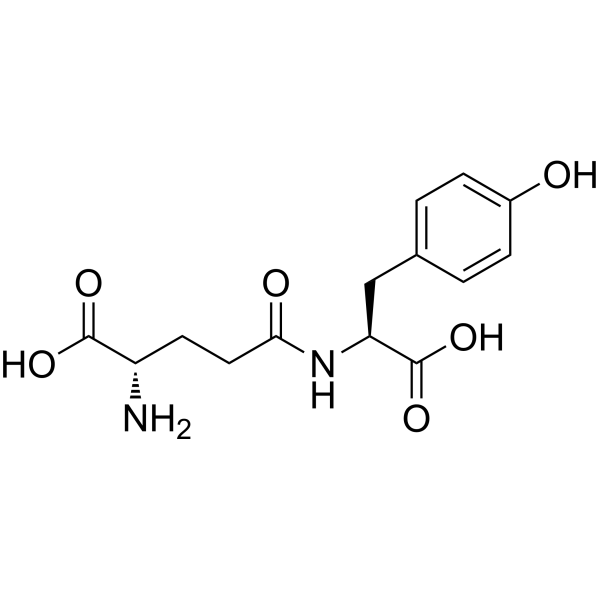
γ-Glu-Tyr is an orally active gut microbiota-derived metabolite and a competitive DPP-IV inhibitor with an IC50 of 6.77 mM against hDPP-IV. γ-Glu-Tyr weakly activates hCaSR. γ-Glu-Tyr decreases colonic pro-inflammatory cytokine (IL-6, IL-1β, TNF-α) levels. γ-Glu-Tyr activates the cAMP/PKA signaling pathway and inhibits NF-κB phosphorylation, thereby reducing inflammatory responses. γ-Glu-Tyr can be used for research on type 2 diabetes and ulcerative colitis .
loading...
    loading...
Cat. No.: HY-B1648
CAS No.: 10058-44-3
Ferric pyrophosphate is an orally effective anti-inflammatory agent and iron fortifier. Ferric pyrophosphate downregulates the expression of colonic pro-inflammatory cytokines, modulates the intestinal flora, and corrects the dysbiosis associated with iron deficiency anemia (IDA). Ferric pyrophosphate can be used in studies related to iron deficiency anemia .
loading...
    loading...
Cat. No.: HY-N6017
CAS No.: 19906-72-0
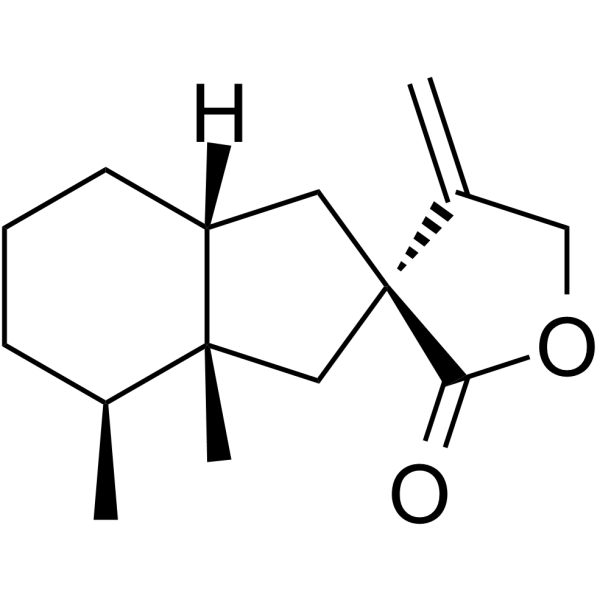
Bakkenolide A is an anticancer agent. Bakkenolide A reduces the viability of leukemia cells, inhibits cell colony formation and invasion, and downregulates the expression of HDAC3 in cells. Bakkenolide A downregulates the expression of pro-inflammatory cytokines including TNF-α, interleukins such as IL-1β, TGF-β1 and IFN-γ, as well as the expression of PI3K, PDK and PKC in leukemia cells. Bakkenolide A downregulates activated Akt, GSK and Bad, while upregulates Cyto-c, cleaved Caspase3 and cleaved Caspase7, induces apoptosis (apoptosis) in leukemia cells and thereby inhibits inflammatory responses in leukemia cells. Bakkenolide A significantly slows the growth of subcutaneous leukemia tumors in nude mice. Bakkenolide A is applicable to leukemia-related research .
loading...
    loading...
Cat. No.: HY-103325
CAS No.: 282089-49-0
Purity:  98.72%
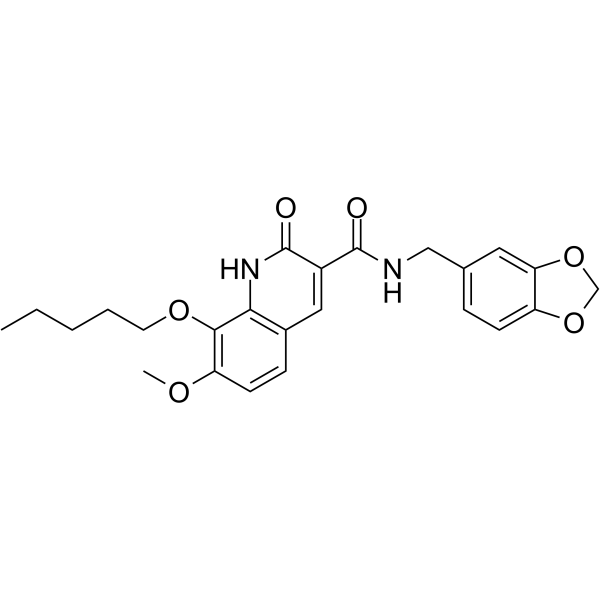
JTE-907 is a selective and orally active cannabinoid CB2 receptor inverse agonist and exerts anti-inflammatory effects. JTE-907 upregulates IL-6, MCP-1, IL-1β, VEGF, ANGPTL4, and TRPV1 in mature adipocytes. JTE-907 downregulates CB1, MCP-1, and IL-1β in preadipocytes. JTE-907 inhibits ear swelling in mice. JTE-907 reverses the protective effects of CB2 agonists and Anandamide (HY-10863) against cytokine-evoked colonic mucosal damage. JTE-907 can be used for the research of allergic dermatitis, obesity, and colitis .
loading...
    loading...
Cat. No.: HY-W717504
CAS No.: 497155-61-0
Synonyms: GluCer (Soy)
Target:  

Drug Derivative

Research Areas:  

Inflammation/Immunology Cancer

Glucosylceramide, plant (GluCer (Soy)) is an orally active, plant-derived glucosylceramide. Glucosylceramide, plant inhibits lipopolysaccharide-induced cytokine production and Apoptosis. Glucosylceramide, plant suppresses DSS-induced body weight loss, colonic crypt damage and intestinal inflammation in mice. Glucosylceramide, plant can be used in research related to inflammatory bowel disease and colon cancer .
loading...
    loading...
Cat. No.: HY-125387
CAS No.: 1628439-59-7
Target:  

Src

Research Areas:  

Inflammation/Immunology

TOP1210 is a narrow-spectrum tyrosine kinase inhibitor with potent inhibitory activity against P38α, Src, and Syk kinases. TOP1210 effectively reduced proinflammatory cytokines released by peripheral blood monocytes, primary macrophages, HT29 cells, inflammatory cells in ulcerative colitis (UC) biopsies, and myofibroblasts isolated from inflamed colonic UC mucosa. TOP1210 showed significant anti-inflammatory effects in cell experiments and UC biopsies, superior to some selective kinase inhibitors. The multi-kinase inhibition of TOP1210 provides the possibility of obtaining a wider range of therapeutic effects, especially in the regulation of autoimmune responses .
loading...
    loading...
Cat. No.: HY-L161
1,416 compounds

Cytokines are a kind of low molecular soluble proteins synthesized and secreted by immunogen, mitogen or other factors. They have functions of regulating innate and adaptive immune responses, promoting hematopoiesis, stimulating cell activation, proliferation and differentiation. The process of releasing a large number of cytokines is also called “Cytokine storm”, which can cause damage to many tissues and organs in the body. Cytokine is involved in the pathogenesis of many human diseases, including cancer, diabetes, chronic inflammatory diseases and so on. Cytokine inhibitors are a class of essential compounds that act by directly inhibiting the synthesis and release of cytokine or blocking the binding of cytokine to their receptors. Cytokine inhibitors are important compounds for the study of tumor and autoimmune diseases.

MCE designs a unique collection of 1,416 cytokine inhibitors, mainly targeting the receptor interleukin (IL), colony-stimulating factor (CSF), interferon (IFN), tumor necrosis factor (TNF), growth factor (GF) and chemokine, which is an effective tool for development and research of anti-cancer, anti-chronic inflammatory diseases and anti-autoimmune diseases compounds.

Cat. No.: HY-188018
Target:  

TNF Receptor

Research Areas:  

Inflammation/Immunology

Mouse Tnf ASO is an antisense oligonucleotide (ASO) that targets the expression of mouse TNF-α. Mouse Tnf ASO reduces the tissue levels of various pro-inflammatory cytokines, Th1 cytokines and Th17 cytokines. Mouse Tnf ASO improves the clinical and histopathological severity of experimental colitis, including alleviating weight loss, diarrhea and intestinal protein loss. Mouse Tnf ASO can be delivered to activated colonic macrophages in mice via galactosylated low-molecular-weight chitosan nanocomplexes, with higher delivery efficiency compared to naked ASO. Mouse Tnf ASO can be used in the research of Crohn's disease .
loading...
    loading...
Cat. No.: HY-187227
STING-IN-19 is a STING inhibitor with a Kd value of 2.31 μM for human STING. STING-IN-19 inhibits the activation of TBK1 and IRF3 by binding to STING, thereby suppressing the activation of downstream signaling pathways. STING-IN-19 reduces the levels of key inflammatory cytokines IL-1β, IL-6 and TNF-α in colonic tissues and serum of mice with ulcerative colitis. STING-IN-19 can be used in studies related to ulcerative colitis .
loading...
    loading...
Cat. No.: HY-183573
PTPRO-IN-1 is a selective, orally active PTPRO inhibitor with an IC50 of 0.16 μM. PTPRO-IN-1 exhibits IC50 values of 2.4 μM, 2.33 μM and 2.13 μM against PTPN22, PTP1B and PTPRT, respectively, and shows almost no inhibitory activity against STEP/SSH2. PTPRO-IN-1 inhibits the TLR4/NF-κB signaling pathway in macrophages, ameliorates colonic pathological conditions and suppresses the secretion of pro-inflammatory cytokines by T cells. PTPRO-IN-1 can be used for the research of inflammatory bowel disease .
loading...
    loading...
Cat. No.: HY-182268
Antibiofilm agent-21 is an orally active prodrug of Antibiofilm agent-20 (HY-182268) with glucuronidation. Antibiofilm agent-21 avoids absorption in the small intestine via reduced membrane permeability, improving colon delivery rate, and converts to its active form in the colon. Antibiofilm agent-21 increases colon length and reduces IL-17 and TNF-α levels in a murine DSS (HY-116282C)-induced colitis model. Antibiofilm agent-21 can be used for the research of inflammatory bowel disease .
loading...
    loading...
  • 1

