1. Search Result
Search Result
Results for "

colorectal tumorigenesis

" in MedChemExpress (MCE) Product Catalog:

6

Inhibitors & Agonists

2

Isotope-Labeled Compounds

Cat. No. Product Name Target Research Areas Chemical Structure
  • HY-B1119
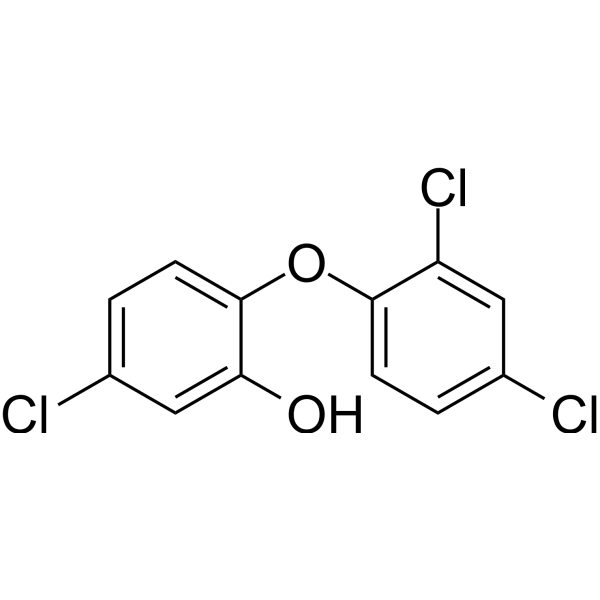
    Triclosan
    5+ Cited Publications

    Environmental Pollutants Antibiotic Apoptosis Bacterial Fungal Infection Cancer
    Triclosan is a broad-spectrum antibacterial agent that inhibits bacterial fatty acid synthesis at the enoyl-acyl carrier protein reductase (FabI) step. Triclosan inhibits E. coli enoyl-acyl carrier protein reductase (FabI) and FabI containing a glycine-to-valine substitution at position 93 (FabIG93V) with IC50s of 2 µM and 10 µM, respectively. Triclosan causes apoptotic effect in cultured rat neural stem cells (NSC). Triclosan exacerbates colitis and colitis-associated colorectal tumorigenesis in animal models .
    Triclosan
  • HY-139621

    DNA Alkylator/Crosslinker Cancer
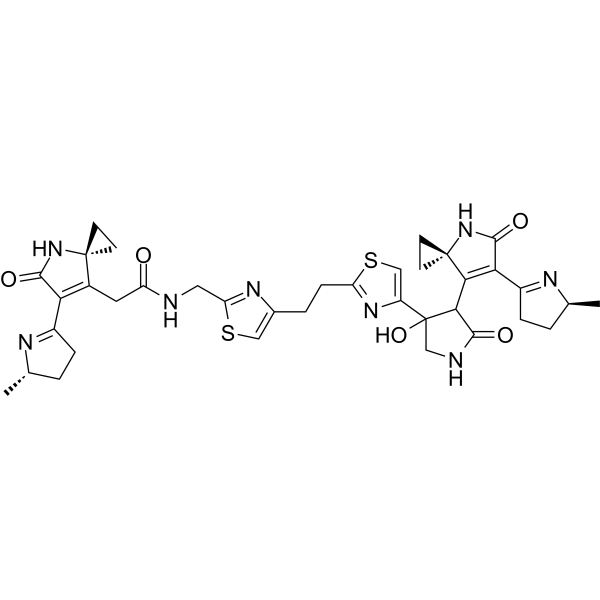
    Colibactin 742 is a covalently binding DNA-damaging agent targeting DNA, with an IC50 of 5.2 μM against human cervical cancer cells (HeLa). Colibactin 742 covalently binds to DNA, forming interstrand crosslinks (ICLs), activating the Fanconi anemia DNA repair pathway, inducing γH2AX and FANCD2 foci formation and cell cycle arrest, while exacerbating mismatch repair deficiency (MMRd)-related mutations. Colibactin 742 can mimic the genotoxicity of natural Colibactin while avoiding its instability, and is mainly used in colorectal cancer (CRC) related research, including microbial tumorigenesis mechanisms, DNA damage repair pathways, and mutation signature analysis .
    Colibactin 742
  • HY-W747491

    Isotope-Labeled Compounds Antibiotic Apoptosis Bacterial Fungal Infection Cancer
    Triclosan- 13C12 is 13C labeled Triclosan (HY-B1119). Triclosan is a broad-spectrum antibacterial agent that inhibits bacterial fatty acid synthesis at the enoyl-acyl carrier protein reductase (FabI) step. Triclosan inhibits E. coli enoyl-acyl carrier protein reductase (FabI) and FabI containing a glycine-to-valine substitution at position 93 (FabIG93V) with IC50s of 2 μM and 10 μM, respectively. Triclosan causes apoptotic effect in cultured rat neural stem cells (NSC). Triclosan exacerbates colitis and colitis-associated colorectal tumorigenesis in animal models .
    Triclosan-13C12
  • HY-W653962

    Isotope-Labeled Compounds Apoptosis Antibiotic Fungal Bacterial Infection Cancer
    Triclosan- 13C6 is 13C labeled Triclosan. Triclosan is a broad-spectrum antibacterial agent that inhibits bacterial fatty acid synthesis at the enoyl-acyl carrier protein reductase (FabI) step. Triclosan inhibits E. coli enoyl-acyl carrier protein reductase (FabI) and FabI containing a glycine-to-valine substitution at position 93 (FabIG93V) with IC50s of 2 μM and 10 μM, respectively. Triclosan causes apoptotic effect in cultured rat neural stem cells (NSC). Triclosan exacerbates colitis and colitis-associated colorectal tumorigenesis in animal models .
    Triclosan-13C6
  • HY-B1119R

    Reference Standards Bacterial Fungal Antibiotic Apoptosis Infection Cancer
    Triclosan (Standard) is the analytical standard of Triclosan. This product is intended for research and analytical applications. Triclosan is a broad-spectrum antibacterial agent that inhibits bacterial fatty acid synthesis at the enoyl-acyl carrier protein reductase (FabI) step. Triclosan inhibits E. coli enoyl-acyl carrier protein reductase (FabI) and FabI containing a glycine-to-valine substitution at position 93 (FabIG93V) with IC50s of 2 µM and 10 µM, respectively. Triclosan causes apoptotic effect in cultured rat neural stem cells (NSC). Triclosan exacerbates colitis and colitis-associated colorectal tumorigenesis in animal models .
    Triclosan (Standard)
  • HY-165369

    Aurora Kinase Cancer
    IBPR002 is an inhibitor of Aurora kinase A and Aurora kinase B, with IC50 values of 41 nM and 17 nM, respectively. IBPR002 disrupts the nucleation and bundling of kinetochore microtubules, impairs the bipolarity of mitotic spindles, and promotes the binding of non-phosphorylated hepatoma up-regulated protein (HURP) to microtubules derived from the mother centrosome. IBPR002 reduces tumorigenesis levels in a colorectal cancer xenograft model using athymic nude mice. IBPR002 is applicable for research related to colorectal cancer .
    IBPR002

Inquiry Online

Your information is safe with us. * Required Fields.

Salutation


Country or Region *

Applicant Name *


Organization Name *

Department *


Email Address *


Product Name *

Cat. No.


Requested quantity *

Phone Number *


Remarks

Inquiry Online

Inquiry Information

Product Name:
Cat. No.:
Quantity:
MCE Japan Authorized Agent:

