Search Result
Results for "
coumarin compound
" in MedChemExpress (MCE) Product Catalog:
2
Biochemical Assay Reagents
2
Isotope-Labeled Compounds
| Cat. No. |
Product Name |
Target |
Research Areas |
Chemical Structure |
-
- HY-N0573
-
|
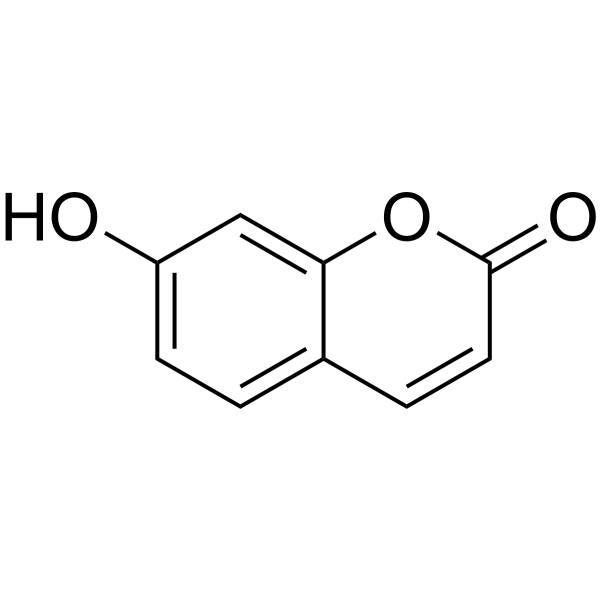
7-Hydroxycoumarin; Hydrangin; NSC 19790
|
Apoptosis
Fluorescent Dye
|
Neurological Disease
Inflammation/Immunology
Cancer
|
|
Umbelliferone (7-Hydroxycoumarin), a natural orally active product of the coumarin family, is a fluorescing compound which can be used as a sunscreen agent. Umbelliferone induces cell cycle arrest, apoptosis and DNA fragmentation in HepG2 cells. Umbelliferone exhibits significant anticancer effects. Umbelliferone attenuates the alteration characteristics of allergic airway inflammation. Umbelliferone displays the neuroprotective effects and cross the blood-brain barrier. Umbelliferone exhibits anti-inflammatory and antioxidant effects in
chronic alcohol-fed rats .
|
-
-
- HY-N2488
-
|
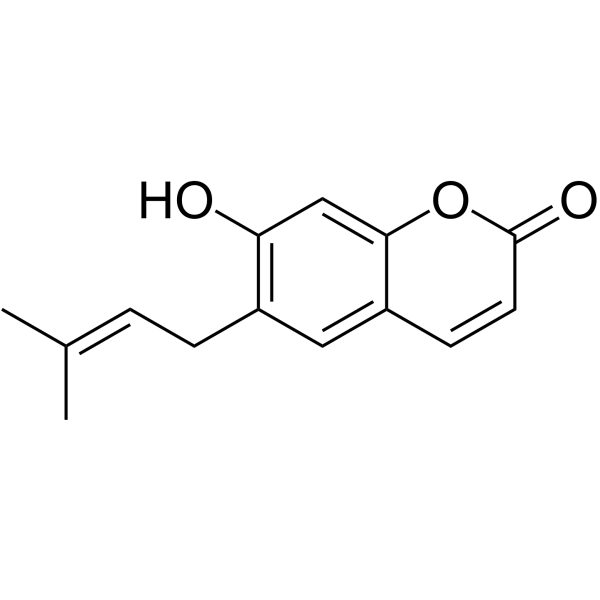
7-Demethylsuberosin
|
Calcium Channel
NO Synthase
|
Cardiovascular Disease
Neurological Disease
Inflammation/Immunology
|
|
Demethylsuberosin (7-Demethylsuberosin) is a coumarin compound found in Angelica gigas Nakai. Demethylsuberosin exerts antihypertensive effects by inhibiting the L-type CaV1.2 channel. Demethylsuberosin has antioxidant and anti-inflammatory activities. Demethylsuberosin also exhibits neuroprotective activities against glutamate-induced toxicity in primary cultured rat cortical cells .
|
-
-
- HY-N6856
-
|
|
Bacterial
Endogenous Metabolite
|
Infection
Cancer
|
|
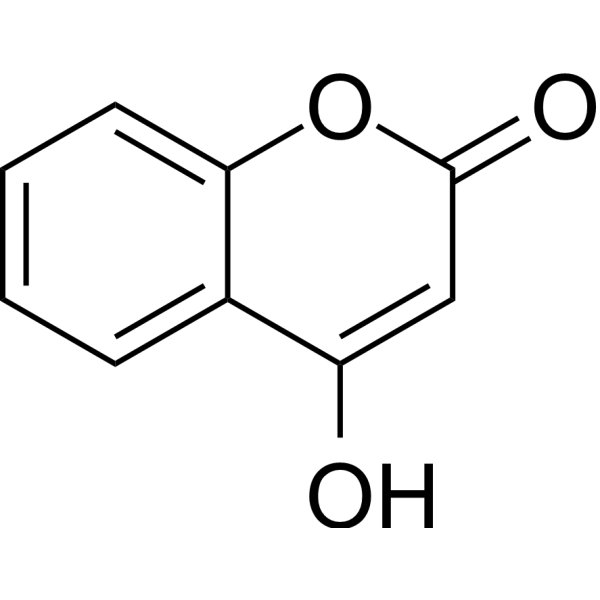
4-Hydroxycoumarin is an orally active coumarin derivative, one of the most versatile heterocyclic scaffolds, often used in the synthesis of various organic compounds. 4-Hydroxycoumarin possesses both electrophilic and nucleophilic properties. 4-Hydroxycoumarin is an HIV protease inhibitor and tyrosine kinase inhibitor. 4-Hydroxycoumarin has anti-inflammatory, antibacterial and anti-tumor effects .
|
-
-
- HY-W027968
-
|
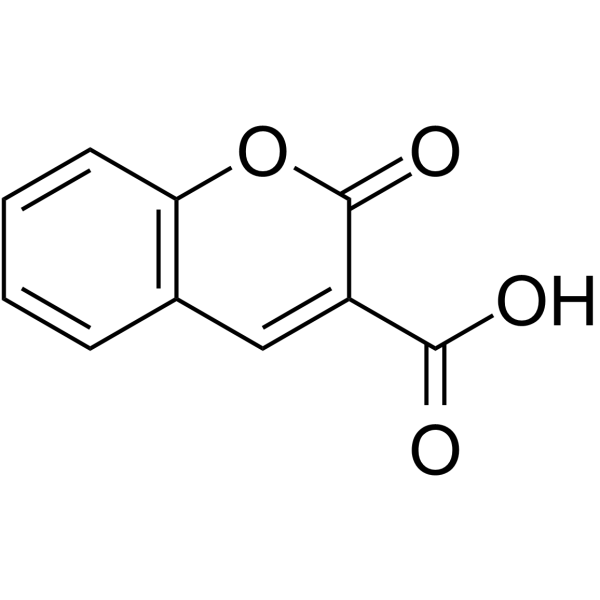
2-Oxochromene-3-carboxylic acid
|
Fluorescent Dye
|
Cancer
|
|
Coumarin-3-carboxylic acid (2- Oxochromene-3-carboxylic acid) is an important initial compound for the synthesis of coumarins which are well known natural products for their diverse biological activities. Lanthanide complexes of Coumarin-3-carboxylic acid exhibit antiproliferative activity towards K-562 cell line .
|
-
-
- HY-Y1298
-
|
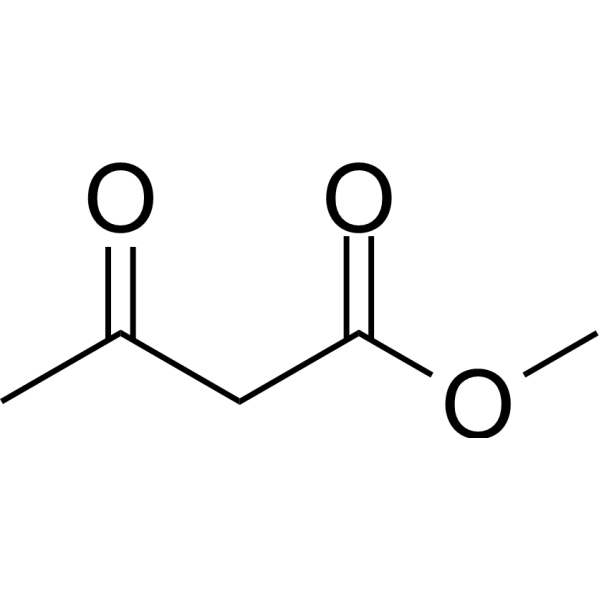
Acetoacetate methyl ester; Methyl 3-oxobutanoate; Methyl acetoacetate
|
Endogenous Metabolite
|
Metabolic Disease
Inflammation/Immunology
|
|
Methyl acetylacetate is a chemical reagent used in the synthesis of pharmaceuticals for the synthesis of α-substituted acetoacetate and cyclic compounds such as pyrazole, pyrimidine, and coumarin derivatives. Methyl acetoacetate can be used in the study of inflammatory diseases .
|
-
-
- HY-W506116
-
|
Ostruthine
|
Bacterial
DNA/RNA Synthesis
|
Cardiovascular Disease
Infection
|
|
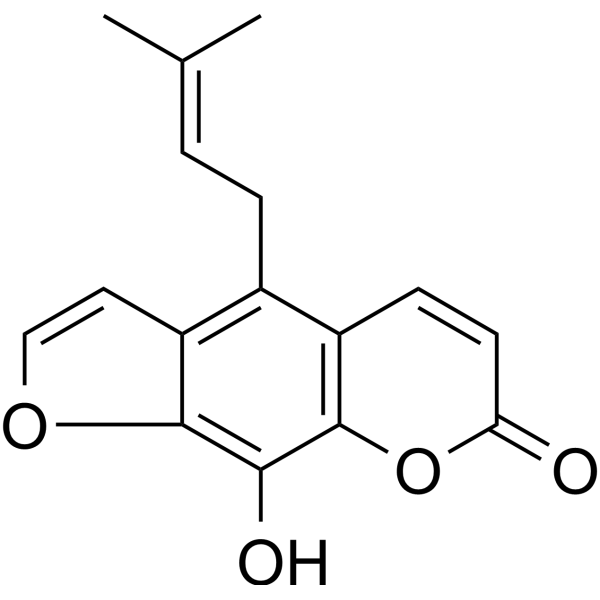
Ostruthin is a natural coumarin compound with bacterial and antimycobacterial activities . Ostruthin inhibits the growth of mycobacteria and Staphylococcus aureus. Ostruthin suppresses vascular smooth muscle cell proliferation as well as de novo cellular DNA synthesis. Ostruthin is applicable to research related to mycobacterial infections and cardiovascular and cerebrovascular diseases .
|
-
-
- HY-N0081
-
|
|
Calcium Channel
NF-κB
Interleukin Related
|
Cardiovascular Disease
Inflammation/Immunology
|
|
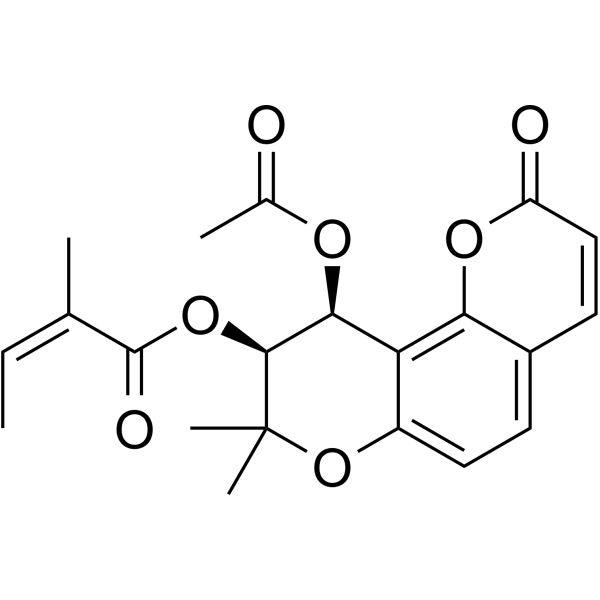
(±)-Praeruptorin A, a coumarin compound, is the main bioactive component in Peucedani Radix. As a calcium channel blocker, (±)-Praeruptorin A exhibits great antihypertensive effects. In addition, (±)-Praeruptorin A also has the effects of relaxing vascular smooth muscle, inhibiting airway inflammation and airway hyperresponsiveness. (±)-Praeruptorin A can be used for the research of allergic asthma, hypertension and other diseases .
|
-
-
- HY-D0046
-
|
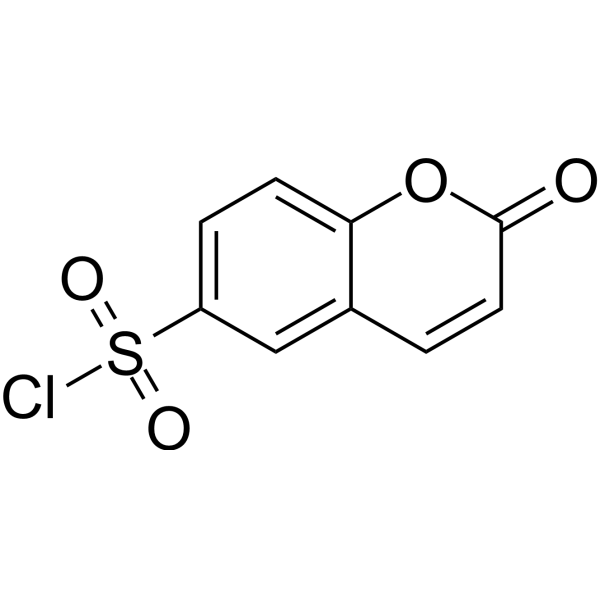
2-Oxo-2H-chromene-6-sulfonyl chloride
|
Biochemical Assay Reagents
|
Others
|
|
Coumarin-6-sulfonyl chloride is a biochemical reagent that can be used as a biological material or organic compound for life science related research.
|
-
-
- HY-109714
-
|
|
Drug Derivative
|
Inflammation/Immunology
|
|
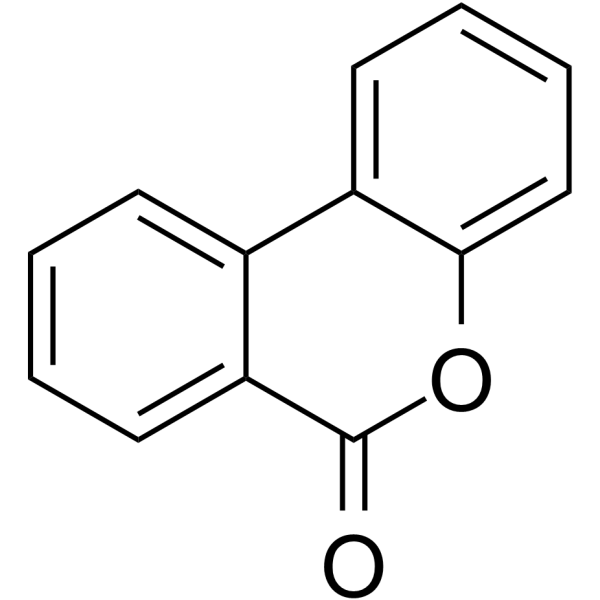
3,4-Benzocoumarin is a kind of the expanded structure of coumarin derivatives.Coumarin is a chemical compound in the benzopyrone chemical class that can be found in many natural species. Coumarins possess variety of biological activities and unique photophysical properties . 3,4-Benzocoumarin, a AOH‐like compound , has the sensibility of the antibody with an IC50 of 919.2 ng/mL .
|
-
-
- HY-135646
-
|
|
Influenza Virus
|
Infection
Inflammation/Immunology
|
|
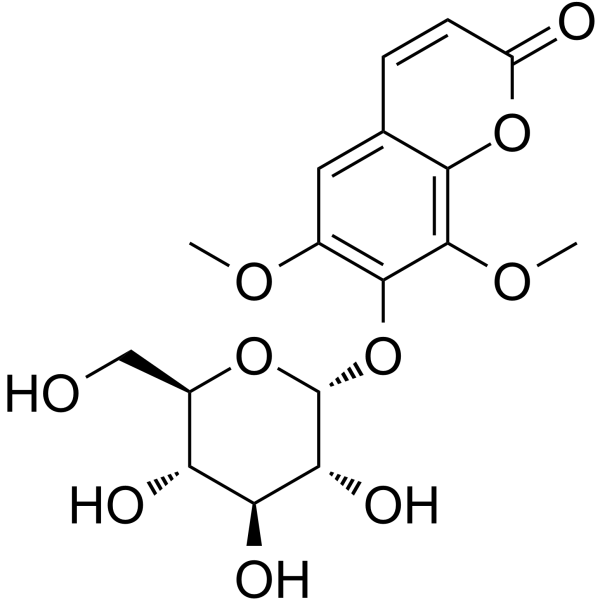
Eleutheroside B1, a coumarin compound, has a wide spectrum of anti-human influenza virus efficacy, with an IC50 value of 64-125 µg/ml. Eleutheroside B1 mediates its anti-influenza activity through POLR2A and N-glycosylation. Eleutheroside B1 inhibits the mRNA expression of several chemokine genes and the influenza nucleoprotein (NP) gene, and exhibits low cytotoxicity. Antiviral and anti-inflammatory activities .
|
-
-
- HY-N2558
-
|
|
Others
|
Cancer
|
|
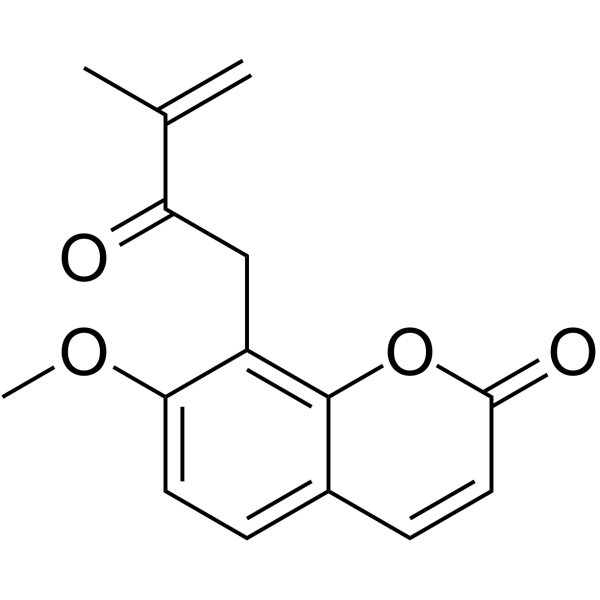
Murrayone, a coumarin-containing compound extracted from M. paniculata, is the most bioactive substance in this species and is a cancer metastasis chemopreventive agent based on its unique pharmacological properties .
|
-
-
- HY-76779
-
|
|
Drug Derivative
|
Cancer
|
|
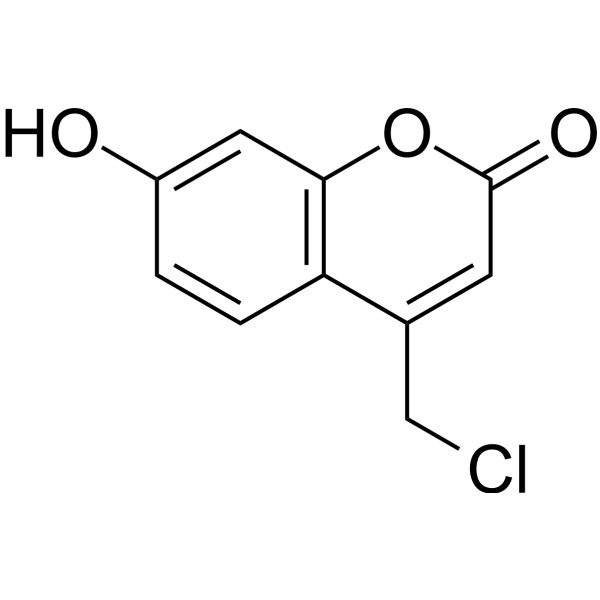
4-(Chloromethyl)-7-hydroxycoumarin (compound 4) is a hydroxycoumarin derivative with potent antioxidant effect and high hydroxyl radical-scavenging property. 4-(Chloromethyl)-7-hydroxycoumarin contains a methyl group and a chlorine group in the heterocyclic ring. A series of coumarins incorporating hydroxy-, chloro- and/or chloromethyl-moieties has been investigated as potent inhibitors of the zinc enzyme carbonic anhydrase, expecially tumor-associated isoforms CA IX and XII .
|
-
-
- HY-N0573R
-
|
7-Hydroxycoumarin (Standard); Hydrangin (Standard); NSC 19790 (Standard)
|
Reference Standards
Apoptosis
Fluorescent Dye
|
Neurological Disease
Inflammation/Immunology
Cancer
|
|
Umbelliferone (Standard) (7-Hydroxycoumarin (Standard)) is the analytical standard of Umbelliferone (HY-N0573). This product is intended for research and analytical applications. Umbelliferone (7-Hydroxycoumarin), a natural orally active product of the coumarin family, is a fluorescing compound which can be used as a sunscreen agent. Umbelliferone induces cell cycle arrest, apoptosis and DNA fragmentation in HepG2 cells. Umbelliferone exhibits significant anticancer effects. Umbelliferone attenuates the alteration characteristics of allergic airway inflammation. Umbelliferone displays the neuroprotective effects and cross the blood-brain barrier. Umbelliferone exhibits anti-inflammatory and antioxidant effects in
chronic alcohol-fed rats.
|
-
-
- HY-N0573S
-
|
7-Hydroxycoumarin-d5; Hydrangin-d5; NSC 19790-d5
|
Isotope-Labeled Compounds
Apoptosis
Fluorescent Dye
|
Neurological Disease
Inflammation/Immunology
Cancer
|
|
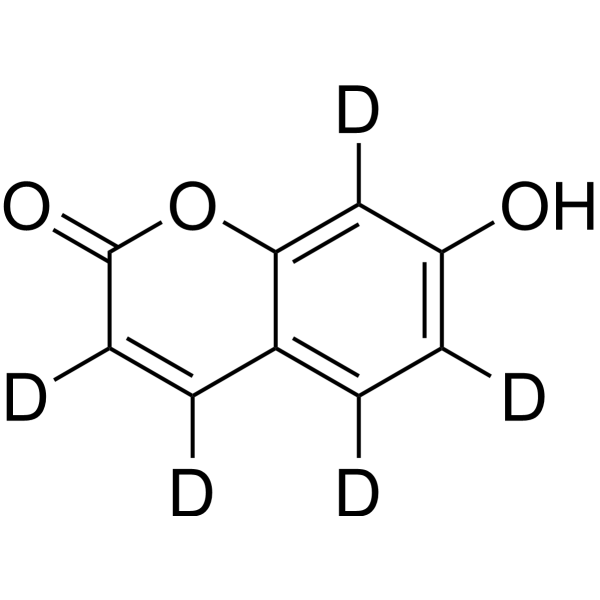
Umbelliferone-d5 (7-Hydroxycoumarin-d5) is the deuterium labeled Umbelliferone (HY-N0573 ). Umbelliferone (7-Hydroxycoumarin), a natural orally active product of the coumarin family, is a fluorescing compound which can be used as a sunscreen agent. Umbelliferone induces cell cycle arrest, apoptosis and DNA fragmentation in HepG2 cells. Umbelliferone exhibits significant anticancer effects. Umbelliferone attenuates the alteration characteristics of allergic airway inflammation. Umbelliferone displays the neuroprotective effects and cross the blood-brain barrier. Umbelliferone exhibits anti-inflammatory and antioxidant effects in chronic alcohol-fed rats .
|
-
-
- HY-N2623
-
|
Prangenidin
|
Others
|
Cancer
|
|
Alloimperatorin (Prangenidin), a coumarin compound, is extracted from Angelica dahurica. Alloimperatorin (Prangenidin) has antitumor activity .
|
-
-
- HY-N6856R
-
|
|
Reference Standards
Bacterial
Endogenous Metabolite
|
Infection
Cancer
|
|
4-Hydroxycoumarin (Standard) is the analytical standard of 4-Hydroxycoumarin. This product is intended for research and analytical applications. 4-Hydroxycoumarin is an orally active coumarin derivative, one of the most versatile heterocyclic scaffolds, often used in the synthesis of various organic compounds. 4-Hydroxycoumarin possesses both electrophilic and nucleophilic properties. 4-Hydroxycoumarin is an HIV protease inhibitor and tyrosine kinase inhibitor. 4-Hydroxycoumarin has anti-inflammatory, antibacterial and anti-tumor effects .
|
-
-
- HY-D0066
-
|
DCCH
|
Fluorescent Dye
|
Others
|
|
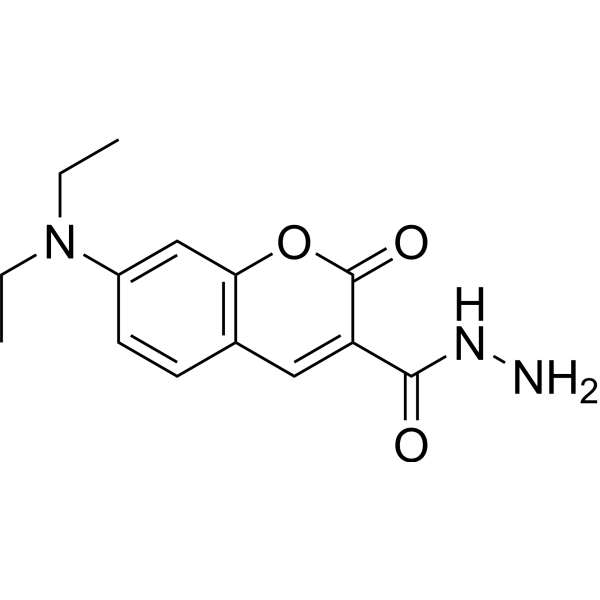
7-Diethylaminocoumarin-3-carbohydrazide is a coumarin. 7-Diethylaminocoumarin-3-carbohydrazide can be used to detect sugar chains and quantify biological carbonyl compounds .
|
-
-
- HY-128105
-
|
|
Bacterial
|
Others
|
|
1,2-Dihydroxynaphthalene is an intermediate isolated from the metabolism of naphthalene and has been shown to be a precursor to the formation of naphthoquinones. 1,2-Dihydroxynaphthalene can be further metabolized by some bacteria (such as Pseudomonas) to compounds such as coumarins and salicylic acid .
|
-
-
- HY-N9531
-
|
|
Bacterial
|
Infection
|
|
3'-Hydroxyxanthyletin is a coumarin compound with antimycobacterial activities .
|
-
-
- HY-W094665
-
|
|
Biochemical Assay Reagents
|
Others
|
|
7-(Diethylamino)-4-(hydroxymethyl)coumarin (compound 10) is an organic compound that can be used as a photosensitizer in organic synthesis .
|
-
-
- HY-N10978
-
|
|
Others
|
Others
|
|
(-)-8-Methoxyobliquin is a coumarin compound that can be isolated from the aerial parts ofH. heterophyllus .
|
-
-
- HY-N6658
-
|
|
Drug Metabolite
|
Cancer
|
|
6-Hydroxy-4-methylcoumarin (compound 9) is a coumarins secondary metabolites and has anticancer activity .
|
-
-
- HY-N10015
-
|
|
Others
|
Others
|
|
7-Methoxy-4-methyl-coumarin-8-ol (compound 31) is a compound isolated from sour orange (Citrus aurantium) .
|
-
-
- HY-179212
-
|
|
Drug Derivative
Fungal
|
Infection
|
|
(±)-Coladonin (Compound (±)-12), Coumarin (HY-N0709) derivative, is an antifungal agent. (±)-Coladonin exhibits potent inhibitory effect on the plant pathogenic fungus Botrytis cinerea. (±)-Coladonin is mainly used for the research on the prevention and control of gray mold disease in crops .
|
-
-
- HY-177798
-
|
|
Cholinesterase (ChE)
|
Neurological Disease
|
|
AChE-IN-98 (Compound 26) is an AChE inhitibor, with an IC50 value of 7.3 μM for ee AChE. AChE-IN-98 is also a Coumarin (HY-N0709) derivative. AChE-IN-98 can be used in the research of Alzheimer's disease .
|
-
-
- HY-149958
-
|
|
Parasite
|
Infection
|
|
Antileishmanial agent-17 is a coumarin hybrid compound with antileishmanial effects (IC50 <0.78 μM). Antileishmanial agent-17 is safe to normal VERO cells. Antileishmanial agent-17 binds to folate pathway enzymes pteridine reductase and DHFR-TS. And Antileishmanial agent-17 shows the most potent with IC50 value of 0.40 μM against promastigote and 0.68 μM against amastigote, respectivley.
|
-
-
- HY-N4280
-
|
|
Na+/K+ ATPase
Glutathione Peroxidase
NF-κB
p38 MAPK
Interleukin Related
|
Neurological Disease
Metabolic Disease
Inflammation/Immunology
|
|
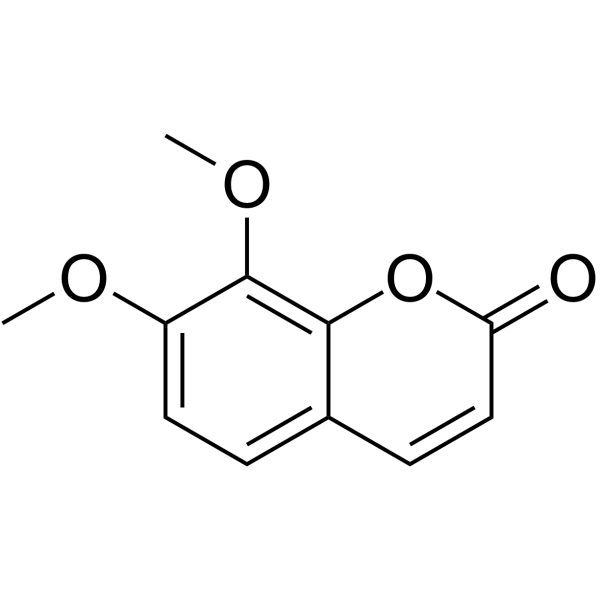
7,8-Dimethoxycoumarin is a coumarin compound derived from Artemisia caruifolia with oral activity. 7,8-Dimethoxycoumarin inhibits mitochondrial permeability transition pore and H +/K +-ATPase, and exhibits antioxidant, anti-inflammatory, renoprotective, neuroprotective and gastroprotective effects. 7,8-Dimethoxycoumarin reduces lipid peroxidation (TBARS), increases GSH levels, inhibits myeloperoxidase (MPO) activity, and regulates the expression of inflammatory factors by inhibiting the NF‑κB and MAPK pathways. 7,8-Dimethoxycoumarin ameliorates gastric mucosal injury, alleviates renal tissue lesions and relieves neuropathic pain. 7,8-Dimethoxycoumarin can be used in studies related to acute renal failure, trigeminal neuralgia and gastritis .
|
-
-
- HY-N8632
-
|
|
Others
|
Others
|
|
Qianhucoumarin A is a natural coumarin compound found in the roots of Peucedanum praeruptorum Dunn .
|
-
-
- HY-N10169
-
|
|
Others
|
Others
|
|
Edgeworin is a coumarin compound can be isolated from the root and stem of Edgeworthia .
|
-
-
- HY-N10029
-
|
|
Others
|
Others
|
|
Edgeworoside C (compound 5) is a coumarin isolated from the flower buds of Edgeworthia chrysantha .
|
-
-
- HY-N15523
-
|
|
Others
|
Others
|
|
Moracin M 6-β-D-glucopyranoside is found in Morus alba. Moracin M 6-β-D-glucopyranoside is a derivative of coumarin compounds .
|
-
-
- HY-138145
-
|
|
Fungal
Bacterial
|
Infection
|
|
8-Acetyl-7-hydroxycoumarin is a coumarin-like compound found in Mexican patchouli (Tagetes lucida) that has anti-bacterial and anti-fungal activities .
|
-
-
- HY-N8618
-
|
|
Others
|
Others
|
|
Erythro-guaiacylglycerol-β-O-4'-dihydroconiferyl alcohol was identified as one of the phenolic compounds isolated from Canadian maple syrup (MS-BuOH). It exhibited antioxidant properties along with other phenolic compounds and coumarins isolated from the syrup. These compounds showed varying degrees of antioxidant activity, with phenolic derivatives and coumarins showing superior activity, more so than lignans and flavonoids. This study marks the first time that 16 of the 23 phenolic compounds, including Erythro-guaiacylglycerol-β-O-4'-dihydroconiferyl alcohol, have been identified in maple syrup .
|
-
-
- HY-163397
-
|
|
Fungal
|
Infection
|
|
Antibacterial agent 196 (compound 6b) is a coumarin derivative containing oxime ether structure, and shows antifungal activity, with the EC50 of 0.46 μg/mL against Rhizoctonia solani .
|
-
-
- HY-117754
-
|
|
Cannabinoid Receptor
|
Neurological Disease
|
|
PSB-SB1202 (Compound 21a) is a phenyl coumarin compound. PSB-SB1202 is a CB1/CB2 agonist with EC50 values of 56 and 14 nM, and Ki values of 32 and 49 nM, respectively .
|
-
-
- HY-N7650
-
|
|
Biochemical Assay Reagents
|
Others
|
|
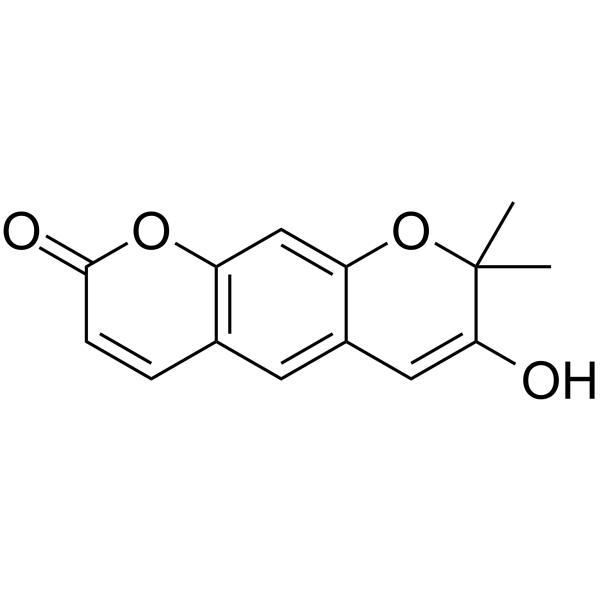
Dihydroseselin is a derivative of 7-hydroxycoumarin (HY-N0573). 7-hydroxycoumarin, a natural product of the coumarin family, is a fluorescing compound which can be used as a sunscreen agent
|
-
-
- HY-N12875
-
|
|
Tyrosinase
|
Others
|
|
Ailancoumarin E (Compound 5) is a derivative of Coumarin (HY-N0709). Ailancoumarin E exhibits antifeedant activity toward Plutella xylostella, and inhibits growth of third instar larva. Ailancoumarin E inhibits tyrosinase with IC50 of 14.21 μM .
|
-
-
- HY-N15662
-
|
|
Drug Intermediate
|
Infection
Neurological Disease
Inflammation/Immunology
Cancer
|
|
Coumestan is a secondary metabolite found in leguminous plants and can be used as drug intermediate
Coumestan can be used to synthesize various coumarin compounds such as Coumestrol (HY-N2335), Glytabastan B, and Coumestan Pks13 inhibitor. Coumestans can be used for the study of anti-cancer, anti-inflammatory, anti-oxidative, antibacterial, neuroprotective and organ protective .
|
-
-
- HY-131799A
-
|
|
Nucleoside Antimetabolite/Analog
|
Others
|
|
3'-Amino-3'-deoxyadenosine-5'-O-diphosphate sodium is an amine-modified nucleotide that can be used in the synthesis of other active compounds. The coumarin-labeled derivatives of 3'-Amino-3'-deoxyadenosine-5'-O-diphosphate sodium exhibit significant fluorescence changes when interacting with myosin and can mimic the function of natural ADP .
|
-
-
- HY-163457
-
|
|
Aminoacyl-tRNA Synthetase
Parasite
|
Infection
|
|
Antileishmanial agent-27 (compound 7j) is a benzothiazolo-coumarin derivative. Antileishmanial agent-27 is a competitive inhibitor of arginyl-tRNA synthetases (ArgRSs). Antileishmanial agent-27 shows selectivity toward ArgRS of Leishmania donovani (LdArgRS) than its human counterpart (HsArgRS), with IC50 values of 1.2 and 19 μM, respectively. Antileishmanial agent-27 possesses high pharmacokinetic properties .
|
-
-
- HY-N0081R
-
|
|
Reference Standards
Calcium Channel
Interleukin Related
|
Cardiovascular Disease
Inflammation/Immunology
|
|
(±)-Praeruptorin A (Standard) is the analytical standard of (±)-Praeruptorin A (HY-N0081). This product is intended for research and analytical applications. (±)-Praeruptorin A, a coumarin compound, is the main bioactive component in Peucedani Radix. As a calcium channel blocker, (±)-Praeruptorin A exhibits great antihypertensive effects. In addition, (±)-Praeruptorin A also has the effects of relaxing vascular smooth muscle, inhibiting airway inflammation and airway hyperresponsiveness. (±)-Praeruptorin A can be used for the research of allergic asthma, hypertension and other diseases .
|
-
-
- HY-N3373R
-
|
|
Reference Standards
Bacterial
|
Infection
|
|
4-Hydroxycoumarin (Standard) is the analytical standard of 4-Hydroxycoumarin. This product is intended for research and analytical applications. 4-Hydroxycoumarin is an orally active coumarin derivative, one of the most versatile heterocyclic scaffolds, often used in the synthesis of various organic compounds. 4-Hydroxycoumarin possesses both electrophilic and nucleophilic properties. 4-Hydroxycoumarin is an HIV protease inhibitor and tyrosine kinase inhibitor. 4-Hydroxycoumarin has anti-inflammatory, antibacterial and anti-tumor effects .
|
-
-
- HY-158402
-
|
|
Bacterial
Fungal
|
Infection
Inflammation/Immunology
|
|
Anti-inflammatory agent 84 (Compound 4D) is a derivative of Coumarin (HY-N0709) with antimicrobial and anti-inflammatory activities. Anti-inflammatory agent 84 inhibits E. coli, Candida albicans, Staphylococcus aureus and methicillin-resistant S. aureus (MRSA), with MIC of 312, 156, 19 and 316 μg/mL, respectively. Anti-inflammatory agent 84 inhibits biofilm formation of S. aureus, E. coli and MRSA, with IC50 of 185, 321 and 99 μM, respectively. Anti-inflammatory agent 84 inhibits nitric oxide production in Lipopolysaccharide (HY-D1056)-stimulated RAW264.7 macrophage cell .
|
-
-
- HY-W777393
-
|
7-Hydroxycoumarin-13C6; Hydrangin-13C6; NSC 19790-13C6
|
Isotope-Labeled Compounds
Apoptosis
Fluorescent Dye
|
Neurological Disease
Inflammation/Immunology
Cancer
|
|
Umbelliferone- 13C6 (7-Hydroxycoumarin- 13C6) is the 13C-labeled Umbelliferone (HY-N0573). Umbelliferone (7-Hydroxycoumarin), a natural orally active product of the coumarin family, is a fluorescing compound which can be used as a sunscreen agent. Umbelliferone induces cell cycle arrest, apoptosis and DNA fragmentation in HepG2 cells. Umbelliferone exhibits significant anticancer effects. Umbelliferone attenuates the alteration characteristics of allergic airway inflammation. Umbelliferone displays the neuroprotective effects and cross the blood-brain barrier. Umbelliferone exhibits anti-inflammatory and antioxidant effects in
chronic alcohol-fed rats .
|
-
-
- HY-N19792
-
|
|
Drug Derivative
|
Cancer
|
|
6-(3'-Methyl-1',3'-butadienyl)-5,7-dimethoxycoumarin is a cytotoxic coumarin compound that can be isolated from the stem bark of Toddalia asiatica. 6-(3'-Methyl-1',3'-butadienyl)-5,7-dimethoxycoumarin can be used for the research of small cell lung cancer .
|
-
-
- HY-W110775
-
-
-
- HY-N17572
-
|
|
Others
|
Others
|
|
Angustifolin coumarin is a coumarin compound present in the aerial parts of Ruta angustifolia .
|
-
-
- HY-N17790
-
|
|
Others
|
Others
|
|
Monoisovalerate is a coumarin compound that can be isolated from Ammi visnaga .
|
-
-
- HY-116931
-
|
|
Others
|
Others
|
|
Kelletinin I is a coumarin compound with anti-HIV-1 activity.
|
-
-
- HY-N18259
-
|
|
Drug Derivative
|
Others
|
|
8-Formyllimettin (Compound 25) is a coumarin compound that can be isolated from the root bark of Toddalia asiatica .
|
-
- HY-N9637
-
|
|
Others
|
Others
|
|
Swietenocoumarin I (Compound 5) is a coumarin compound that can be found in the combined stem bark and roots of Clausena anisata .
|
-
- HY-N16679
-
|
|
Others
|
Others
|
|
Graveolone is a novel coumarin compound that can be isolated from dill (Anethum graveolens) .
|
-
- HY-N17376
-
|
|
Others
|
Others
|
|
Praeroside VI (Compound 2) is a coumarin glycoside found in the roots of Peucedanum praeruptorum Dunn .
|
-
- HY-N3888
-
|
|
Others
|
Others
|
|
Excavatin M is a coumarin-type compound that can be isolated from the chemical constituents of the plant Clausena excavata .
|
-
- HY-N11413
-
-
- HY-W150273
-
|
|
Biochemical Assay Reagents
|
Others
|
|
6-Aminocoumarin hydrochloride is a coumarin dye, which belongs to the donor-acceptor compounds as it contains a donor amine group and an acceptor carbonyl group .
|
-
- HY-N19836
-
|
|
Drug Intermediate
|
Metabolic Disease
|
|
iso-Pedilanthocoumarin B is a coumarin compound found in the bark of Mammea neurophylla. iso-Pedilanthocoumarin B can be used for the research of diabetes-related endothelial dysfunction .
|
-
- HY-N19680
-
|
|
Others
|
Others
|
|
Dihydroxanthyletin (Compound 8), a coumarin, is a natural product found in the fruits of Ammi majus, Cassia pumila Lam., and Seseli tortuosum L.B.S. Eur. .
|
-
- HY-N7482
-
|
|
Drug Derivative
|
Others
|
|
Pyranocoumarin (Compound 13) is a heterocyclic scaffold (coumarin + pyran ring fusion). Pyranocoumarin inhibits the S-warfarin hydroxylation catalyzed by CYP2C9 .
|
-
- HY-N9206
-
|
|
Others
|
Cardiovascular Disease
|
|
Kimcuongin (compound 1)is a coumarin that can be found in Murraya paniculata. Kimcuongin shows vasorelaxant activity with an IC50 value of 37.7 μM. Kimcuongin can be used as a vasodilator .
|
-
- HY-N11685
-
|
Xanthogalol
|
Bacterial
Fungal
|
Infection
|
|
(±)-Lomatin (Xanthogalol) (Compound 10) is a coumarin-type secondary metabolite. (±)-Lomatin can be found in Coleonema album. (±)-Lomatin can be used for the research of bacterial infections, mycobacterial infections, and fungal infections .
|
-
- HY-N15612
-
|
|
Others
|
Cancer
|
|
5-Hydroxy-7-methoxycoumarin is a coumarin compound present in the whole plant of Euphorbia kansuensis, with an IC50 > 40 μM against five human cancer cell lines .
|
-
- HY-123118
-
|
|
DNA-PK
|
Cancer
|
|
NU-7031 (compound 10), a coumarin derivative, is a DNA-PK inhibitor with an IC50 of 1.7 μM. NU-7031 can be used for the study of cancer .
|
-
- HY-N17508
-
|
|
Drug Derivative
|
Others
|
|
Qianhucoumarin J (Compound 2) is a khellactone-derived coumarin (3'(S)-angeloyloxy-4'(S)-propionyloxy-3',4'-dihydroseselin) that can be found in the roots of Peucedanum praeruptorum Dunn .
|
-
- HY-N16747
-
|
|
Others
|
Others
|
|
Excavatin G is a novel coumarin compound that can be isolated from Clausena excavata. While the Clausena excavata plant itself has traditional uses such as insecticidal properties and relieving stomach pain, the specific key activities and functions of Excavatin G require targeted research and verification .
|
-
- HY-N18386
-
|
|
Sirtuin
MDM-2/p53
|
Neurological Disease
|
|
Altissimacoumarin F (Compound 4) is a terpenylated coumarin. Altissimacoumarin F can be isolated from the stem bark of Ailanthus altissima. Altissimacoumarin F enhances SIRT1 activity, decreases p53 transcriptional activity. Altissimacoumarin F can be used for the research of age-related disorders .
|
-
- HY-N19281
-
|
|
Drug Derivative
|
Neurological Disease
|
|
Puberulin is a coumarin compound and an orally effective analgesic. Puberulin is present in Choisya ternata var. Sundance. Puberulin exerts analgesic activity against chemical and heat-induced pain agents in mouse models, and this activity does not involve opioid receptors or muscarinic receptors. Puberulin can be used in the research of neuropathic pain .
|
-
- HY-N18751
-
|
|
Bacterial
|
Inflammation/Immunology
|
|
Aegle marmelos extract, derived from the Aegle marmelos plant, is rich in various bioactive compounds, such as coumarins (e.g., ligustin, ligustin, ligustin, psoralen, scopolamine, and umbelliferone), flavonoids, phenolic acids, and terpenoids. Aegle marmelos extract possesses anti-inflammatory, antibacterial, antioxidant, antiviral, antifungal, antitumor, and antidiabetic properties.
|
-
- HY-W043574
-
|
|
Bcl-2 Family
Drug Derivative
|
Cancer
|
|
6-Ethyl-7-hydroxy-4-methyl-2H-chromen-2-one (Compound 32), a derivative of Coumarin (HY-N0709), acts as a Mcl-1 inhibitor with a Ki of 5.47 μM and an IC50 of 30.88 μM. 6-Ethyl-7-hydroxy-4-methyl-2H-chromen-2-one is applicable for cancer research .
|
-
- HY-N19788
-
-
-
-
HY-L0107V
-
|
|
13,236 compounds
|
|
Natural products are small molecules produced naturally by any organism including primary and secondary metabolites. Nowadays, new drugs based on Natural products are successfully applied to treat tumors, viral and bacterial diseases, and nervous disorders.
In response to the current drug discovery demand, we created this natural product-like compound library with 13,236 in-stock synthetic compounds similar to natural ones. The library was designed by 2D fingerprint similarity filtering, chemical descriptor-based and natural-likeness scoring selection. These compounds are useful tools for high throughput screening (HTS) and high content screening (HCS) programs.
|
| Cat. No. |
Product Name |
Type |
-
- HY-D0066
-
|
DCCH
|
Fluorescent Dyes
|
|
7-Diethylaminocoumarin-3-carbohydrazide is a coumarin. 7-Diethylaminocoumarin-3-carbohydrazide can be used to detect sugar chains and quantify biological carbonyl compounds .
|
| Cat. No. |
Product Name |
Type |
-
- HY-D0046
-
|
2-Oxo-2H-chromene-6-sulfonyl chloride
|
Biochemical Assay Reagents
|
|
Coumarin-6-sulfonyl chloride is a biochemical reagent that can be used as a biological material or organic compound for life science related research.
|
-
- HY-W150273
-
|
|
Biochemical Assay Reagents
|
|
6-Aminocoumarin hydrochloride is a coumarin dye, which belongs to the donor-acceptor compounds as it contains a donor amine group and an acceptor carbonyl group .
|
| Cat. No. |
Product Name |
Category |
Target |
Chemical Structure |
-
- HY-N0573
-
-
-
- HY-N2488
-
-
-
- HY-N6856
-
-
-
- HY-Y1298
-
-
-
- HY-N0081
-
-
-
- HY-135646
-
-
-
- HY-N2558
-
-
-
- HY-N0573R
-
|
7-Hydroxycoumarin (Standard); Hydrangin (Standard); NSC 19790 (Standard)
|
Structural Classification
Monophenols
Coumarins
Phenols
Phenylpropanoids
Endogenous metabolite
Source Classification
|
Reference Standards
Apoptosis
Fluorescent Dye
|
|
Umbelliferone (Standard) (7-Hydroxycoumarin (Standard)) is the analytical standard of Umbelliferone (HY-N0573). This product is intended for research and analytical applications. Umbelliferone (7-Hydroxycoumarin), a natural orally active product of the coumarin family, is a fluorescing compound which can be used as a sunscreen agent. Umbelliferone induces cell cycle arrest, apoptosis and DNA fragmentation in HepG2 cells. Umbelliferone exhibits significant anticancer effects. Umbelliferone attenuates the alteration characteristics of allergic airway inflammation. Umbelliferone displays the neuroprotective effects and cross the blood-brain barrier. Umbelliferone exhibits anti-inflammatory and antioxidant effects in
chronic alcohol-fed rats.
|
-
-
- HY-N2623
-
-
-
- HY-N6856R
-
-
-
- HY-128105
-
|
|
Microorganisms
Phenols
Polyphenols
Source Classification
|
Bacterial
|
|
1,2-Dihydroxynaphthalene is an intermediate isolated from the metabolism of naphthalene and has been shown to be a precursor to the formation of naphthoquinones. 1,2-Dihydroxynaphthalene can be further metabolized by some bacteria (such as Pseudomonas) to compounds such as coumarins and salicylic acid .
|
-
-
- HY-N9531
-
-
-
- HY-N10978
-
-
-
- HY-N10015
-
-
-
- HY-N4280
-
|
|
Structural Classification
Classification of Application Fields
Rutaceae
Coumarins
Phenylpropanoids
Plants
Inflammation/Immunology
Disease Research Fields
Citrus reticulata Blanco
Source Classification
|
Na+/K+ ATPase
Glutathione Peroxidase
NF-κB
p38 MAPK
Interleukin Related
|
|
7,8-Dimethoxycoumarin is a coumarin compound derived from Artemisia caruifolia with oral activity. 7,8-Dimethoxycoumarin inhibits mitochondrial permeability transition pore and H +/K +-ATPase, and exhibits antioxidant, anti-inflammatory, renoprotective, neuroprotective and gastroprotective effects. 7,8-Dimethoxycoumarin reduces lipid peroxidation (TBARS), increases GSH levels, inhibits myeloperoxidase (MPO) activity, and regulates the expression of inflammatory factors by inhibiting the NF‑κB and MAPK pathways. 7,8-Dimethoxycoumarin ameliorates gastric mucosal injury, alleviates renal tissue lesions and relieves neuropathic pain. 7,8-Dimethoxycoumarin can be used in studies related to acute renal failure, trigeminal neuralgia and gastritis .
|
-
-
- HY-N8632
-
-
-
- HY-N10169
-
-
-
- HY-N10029
-
-
-
- HY-N15523
-
-
-
- HY-138145
-
-
-
- HY-N8618
-
|
|
Monophenols
Sapindaceae
Phenols
Acer saccharum Marshall
Plants
Source Classification
|
Others
|
|
Erythro-guaiacylglycerol-β-O-4'-dihydroconiferyl alcohol was identified as one of the phenolic compounds isolated from Canadian maple syrup (MS-BuOH). It exhibited antioxidant properties along with other phenolic compounds and coumarins isolated from the syrup. These compounds showed varying degrees of antioxidant activity, with phenolic derivatives and coumarins showing superior activity, more so than lignans and flavonoids. This study marks the first time that 16 of the 23 phenolic compounds, including Erythro-guaiacylglycerol-β-O-4'-dihydroconiferyl alcohol, have been identified in maple syrup .
|
-
-
- HY-N7650
-
-
-
- HY-N12875
-
-
-
- HY-N15662
-
-
-
- HY-N0081R
-
-
-
- HY-N3373R
-
-
-
- HY-N19792
-
-
-
- HY-N17572
-
-
-
- HY-N17790
-
-
-
- HY-116931
-
-
-
- HY-N18259
-
-
-
- HY-N9637
-
-
-
- HY-N16679
-
-
-
- HY-N17376
-
-
-
- HY-N3888
-
-
-
- HY-N11413
-
-
-
- HY-N19836
-
-
-
- HY-N19680
-
-
-
- HY-N9206
-
-
-
- HY-N11685
-
-
-
- HY-N15612
-
-
-
- HY-N17508
-
-
-
- HY-N16747
-
-
-
- HY-N18386
-
-
-
- HY-N19281
-
-
-
- HY-N18751
-
|
|
Structural Classification
Extract
|
Bacterial
|
|
Aegle marmelos extract, derived from the Aegle marmelos plant, is rich in various bioactive compounds, such as coumarins (e.g., ligustin, ligustin, ligustin, psoralen, scopolamine, and umbelliferone), flavonoids, phenolic acids, and terpenoids. Aegle marmelos extract possesses anti-inflammatory, antibacterial, antioxidant, antiviral, antifungal, antitumor, and antidiabetic properties.
|
-
-
- HY-N19788
-
-
| Cat. No. |
Product Name |
Chemical Structure |
-
- HY-N0573S
-
|
|
|
Umbelliferone-d5 (7-Hydroxycoumarin-d5) is the deuterium labeled Umbelliferone (HY-N0573 ). Umbelliferone (7-Hydroxycoumarin), a natural orally active product of the coumarin family, is a fluorescing compound which can be used as a sunscreen agent. Umbelliferone induces cell cycle arrest, apoptosis and DNA fragmentation in HepG2 cells. Umbelliferone exhibits significant anticancer effects. Umbelliferone attenuates the alteration characteristics of allergic airway inflammation. Umbelliferone displays the neuroprotective effects and cross the blood-brain barrier. Umbelliferone exhibits anti-inflammatory and antioxidant effects in chronic alcohol-fed rats .
|
-
-
- HY-W777393
-
|
|
|
Umbelliferone- 13C6 (7-Hydroxycoumarin- 13C6) is the 13C-labeled Umbelliferone (HY-N0573). Umbelliferone (7-Hydroxycoumarin), a natural orally active product of the coumarin family, is a fluorescing compound which can be used as a sunscreen agent. Umbelliferone induces cell cycle arrest, apoptosis and DNA fragmentation in HepG2 cells. Umbelliferone exhibits significant anticancer effects. Umbelliferone attenuates the alteration characteristics of allergic airway inflammation. Umbelliferone displays the neuroprotective effects and cross the blood-brain barrier. Umbelliferone exhibits anti-inflammatory and antioxidant effects in
chronic alcohol-fed rats .
|
-
Your information is safe with us. * Required Fields.
Inquiry Information
- Product Name:
- Cat. No.:
- Quantity:
- MCE Japan Authorized Agent:

