



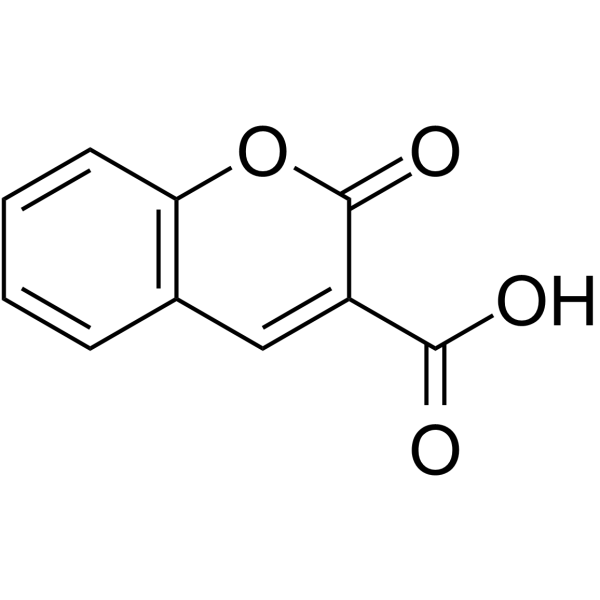
Coumarin-3-carboxylic Acid
Based on 2 publication(s) in Google Scholar
Coumarin-3-carboxylic acid (2- Oxochromene-3-carboxylic acid) is an important initial compound for the synthesis of coumarins which are well known natural products for their diverse biological activities. Lanthanide complexes of Coumarin-3-carboxylic acid exhibit antiproliferative activity towards K-562 cell line.
For research use only. We do not sell to patients.
- Purity : 99.93%
- CAS No.: 531-81-7
- Formula: C10H6O4
- Molecular Weight:190.15
-
Storage:Powder -20°C, 3 years , 4°C, 2 years ; In solvent -80°C, 2 years , -20°C, 1 year

To place orders, for customer services and technical support, please contact: MedChemExpress USA
Tel: 609-228-6898 E-mail: [email protected] [email protected]


-
 Biological Activity
-
Chemical Information
-
Solvent & Solubility
- Protocols
- Purity & Documentation
- References
-
 Help & FAQs


-

HY-W324391
Coumarin 106AChE/BChE Inhibitor -
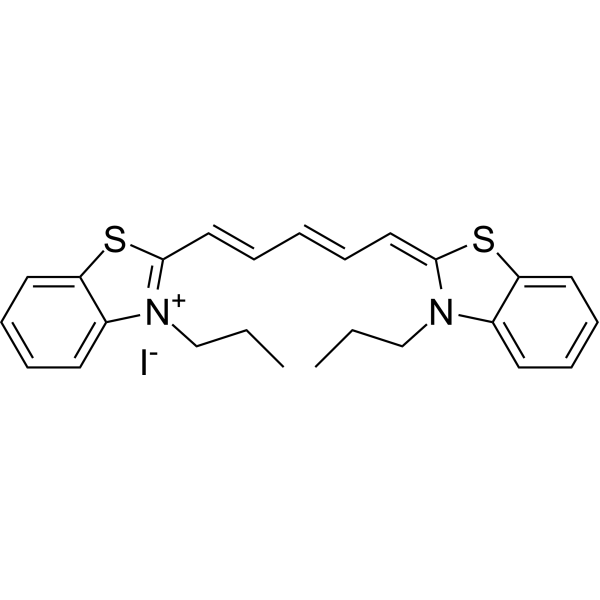
HY-D0085
DiSC3(5)Fluorescent Probe -
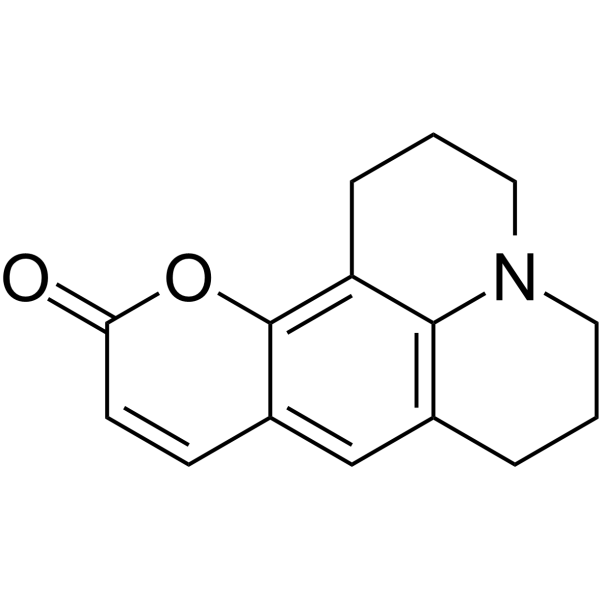
HY-121930
Coumarin 6HCoumarin Laser Dye -
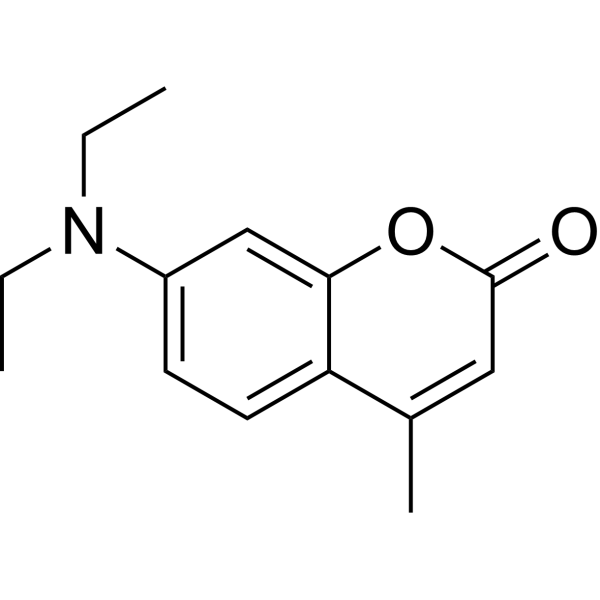
HY-D0082
7-Diethylamino-4-methylcoumarinLaser Dye -
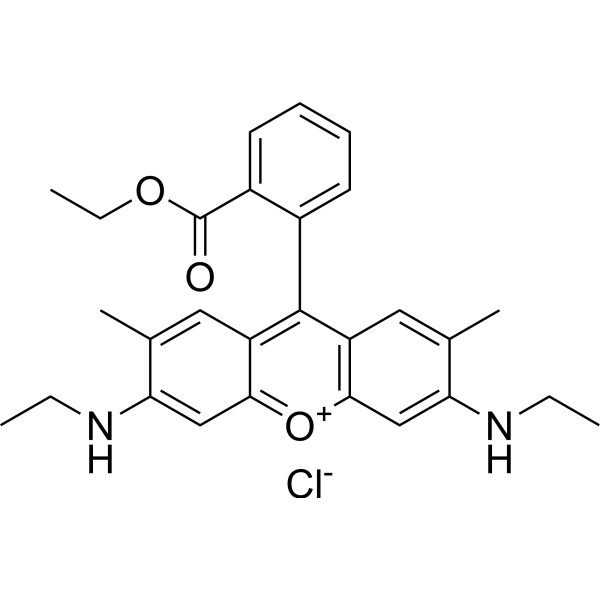
HY-D0309
Rhodamine 6GLaser Dye -
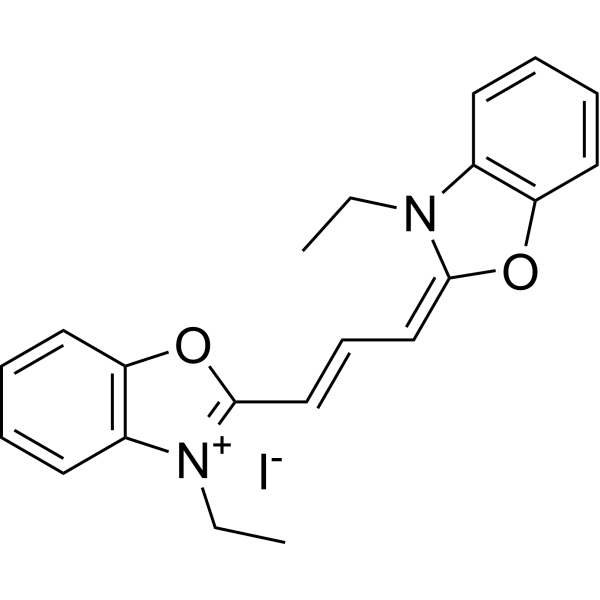
HY-W040258
3,3'-Diethyloxacarbocyanine iodideMicroviscosity Fluorescent Probe -
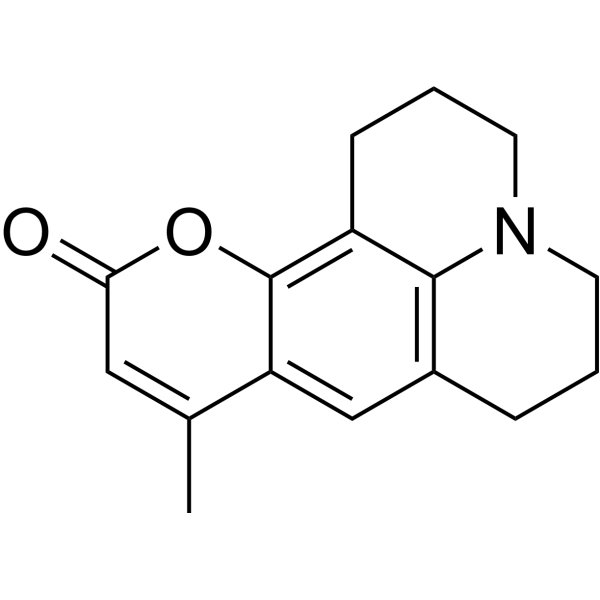
HY-W268197
Coumarin 480Laser Dye -
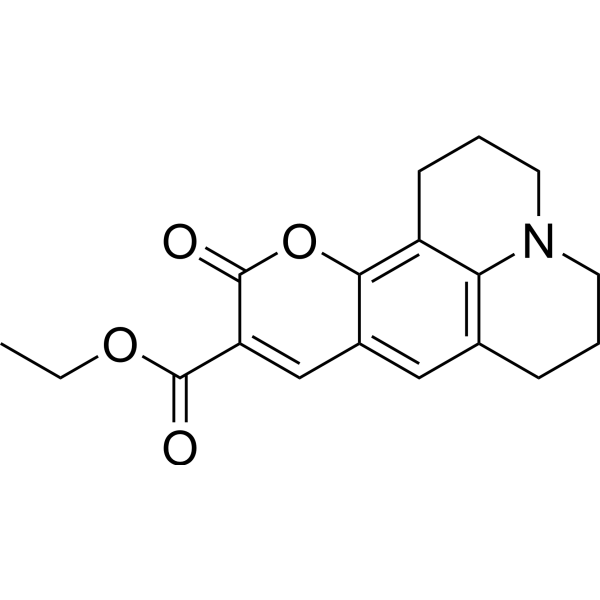
HY-W027857
Coumarin 314 -

HY-DY1021
DiSC3(5) (solution)Fluorescent Probe -
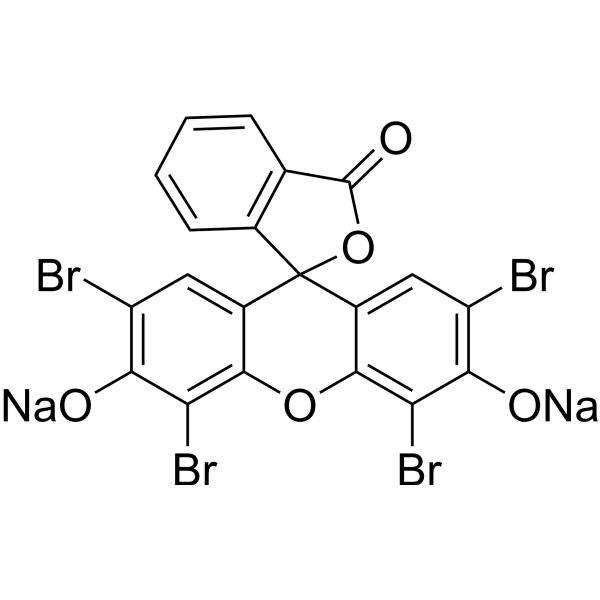
HY-D0505A
Eosin Y disodiumDye Molecule -
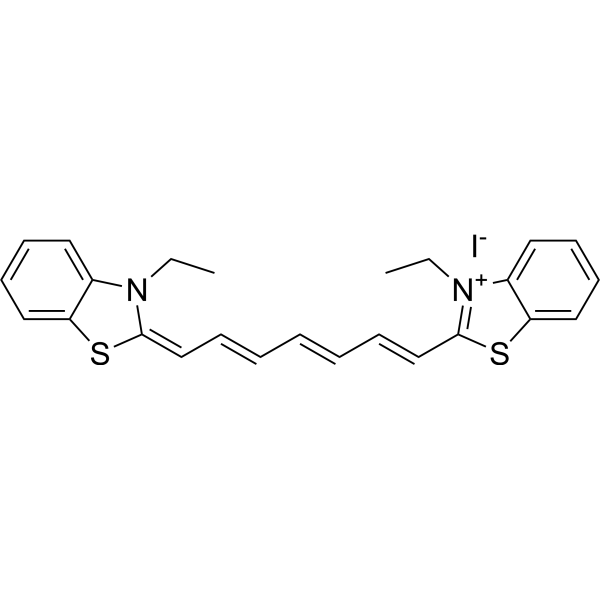
HY-D1180
DTTCISensitizing Dye -

HY-W103826
(5,10,15,20-Tetraphenylporphinato)manganese(III) chlorideCatalyst
Publications Citing Use of MedChemExpress (MCE) Coumarin-3-carboxylic Acid
More

Biological Activity
Description
Cellular Effect
|
Cell Line

|
Type | Value | Description | References |
|---|---|---|---|---|
| B16-F10 | IC50 |
>10 μM
Compound: C3CA
|
Cytotoxicity against mouse B16-F10 cells assessed as cell growth inhibition measured after 72 hrs by MTT assay
Cytotoxicity against mouse B16-F10 cells assessed as cell growth inhibition measured after 72 hrs by MTT assay
|
[PMID: 33956447] |
| HepG2 | IC50 |
>10 μM
Compound: C3CA
|
Cytotoxicity against human HepG2 cells assessed as cell growth inhibition measured after 72 hrs by MTT assay
Cytotoxicity against human HepG2 cells assessed as cell growth inhibition measured after 72 hrs by MTT assay
|
[PMID: 33956447] |
| HT-29 | IC50 |
>10 μM
Compound: C3CA
|
Cytotoxicity against human HT-29 cells assessed as cell growth inhibition measured after 72 hrs by MTT assay
Cytotoxicity against human HT-29 cells assessed as cell growth inhibition measured after 72 hrs by MTT assay
|
[PMID: 33956447] |
| Oocyte | IC50 |
282 μM
Compound: Coum-COOH
|
Antagonist activity at Gloeobacter violaceus ligand-gated ion channel expressed in Xenopus oocytes assessed as inhibition of MES buffer pH 5.5 -induced currents after 30 secs by voltage clamp technique
Antagonist activity at Gloeobacter violaceus ligand-gated ion channel expressed in Xenopus oocytes assessed as inhibition of MES buffer pH 5.5 -induced currents after 30 secs by voltage clamp technique
|
[PMID: 23682762] |
In Vitro
Coumarin-3-carboxylic Acid (0-200 μM, 48 h) exhibits antiproliferative activity against leukemia cell K562 when combined with rare earth elements (Sm, Gd, Dy), IC50s for samarium-complex and gadolinium-complex is 108.39 μM and 164.52 μM[2].
Coumarin-3-carboxylic Acid is a sensitive and quantitative fluorescent probe for •OH detection by interacting with •OH to generate the fluorescent product 7-Hydroxycoumarin-3-carboxylic acid[3].
MedChemExpress (MCE) has not independently confirmed the accuracy of these methods. They are for reference only. Further protocols information, click here.
-
Cell Line:K562
-
Concentration:0-200 μM
-
Incubation Time:Inhibited the cell viability when combined with rare earth element Sm and Gd.
-
Result:Inhibited the cell viability when combined with rare earth element Sm and Gd.
In Vivo
MedChemExpress (MCE) has not independently confirmed the accuracy of these methods. They are for reference only.


Chemical Information
-
CAS No. 531-81-7
-
Appearance Solid
-
Molecular Weight 190.15
-
Formula C10H6O4
-
Color White to off-white
-
SMILES
O=C(O1)C(C(O)=O)=CC2=C1C=CC=C2
-
Synonyms
2-Oxochromene-3-carboxylic acid
-
Shipping
Room temperature in continental US; may vary elsewhere.
-
Storage
Powder -20°C 3 years 4°C 2 years In solvent -80°C 2 years -20°C 1 year


Publications (2)
-
Journal Impact Factor
-
Most Recent
-
Exploration
Tumour-microenvironment-responsive Na2S2O8 nanocrystals encapsulated in hollow organosilica-metal-phenolic networks for cycling persistent tumour-dynamic therapy. [Abstract]2023 Nov 14;4(2):20230054. PMID: 38855614 -
Part Fibre Toxicol
Ultrasmall iron oxide nanoparticles cause significant toxicity by specifically inducing acute oxidative stress to multiple organs. [Abstract]2022 Mar 29;19(1):24. PMID: 35351185


Solvent & Solubility
In Vitro:
DMSO : 100 mg/mL (525.89 mM; Need ultrasonic; Hygroscopic DMSO has a significant impact on the solubility of product, please use newly opened DMSO)
Please refer to the solubility information to select the appropriate solvent. Once prepared, please aliquot and store the solution to prevent product inactivation from repeated freeze-thaw cycles.
Storage method and period of stock solution: -80°C, 2 years; -20°C, 1 year. When stored at -80°C, please use it within 2 years. When stored at -20°C, please use it within 1 year.
Please refer to the solubility information to select the appropriate solvent. Once prepared, please aliquot and store the solution to prevent product inactivation from repeated freeze-thaw cycles.
Storage method and period of stock solution: -80°C, 2 years; -20°C, 1 year. When stored at -80°C, please use it within 2 years. When stored at -20°C, please use it within 1 year.
Concentration (start) × Volume (start) = Concentration (final) × Volume (final)
In Vivo:
Select the appropriate dissolution method based on your experimental animal and administration route.
- For the following dissolution methods, please ensure to first prepare a clear stock solution using an In Vitro approach and then sequentially add co-solvents:
- To ensure reliable experimental results, the clarified stock solution can be appropriately stored based on storage conditions. As for the working solution for In Vivo experiments, it is recommended to prepare freshly and use it on the same day.
- The percentages shown for the solvents indicate their volumetric ratio in the final prepared solution. If precipitation or phase separation occurs during preparation, heat and/or sonication can be used to aid dissolution.
Add each solvent one by one: 10% DMSO 40% PEG300 5% Tween-80 45% Saline
Solubility: ≥ 2.5 mg/mL (13.15 mM); Clear solution
This protocol yields a clear solution of ≥ 2.5 mg/mL (saturation unknown).
Taking 1 mL working solution as an example, add 100 μL DMSO stock solution (25.0 mg/mL) to 400 μL PEG300, and mix evenly; then add 50 μL Tween-80 and mix evenly; then add 450 μL Saline to adjust the volume to 1 mL.
Preparation of Saline: Dissolve 0.9 g sodium chloride in ddH₂O and dilute to 100 mL to obtain a clear Saline solution.
Add each solvent one by one: 10% DMSO 90% (20% SBE-β-CD in Saline)
Solubility: ≥ 2.5 mg/mL (13.15 mM); Clear solution
This protocol yields a clear solution of ≥ 2.5 mg/mL (saturation unknown).
Taking 1 mL working solution as an example, add 100 μL DMSO stock solution (25.0 mg/mL) to 900 μL 20% SBE-β-CD in Saline, and mix evenly.
Preparation of 20% SBE-β-CD in Saline (4°C, storage for one week): 2 g SBE-β-CD powder is dissolved in 10 mL Saline, completely dissolve until clear.
In Vivo Dissolution Calculator
Please enter the basic information of animal experiments:
-
-
-
-
Recommended: Prepare an additional quantity of animals to account for potential losses during experiments.
Please enter your animal formula composition:
-
%DMSO +
Recommended: Keep the proportion of DMSO in working solution below 2% if your animal is weak.
-
%+
-
+%Tween-80 + +
-
%Saline +
The co-solvents required include: DMSO, . All of co-solvents are available by MedChemExpress (MCE). , Tween 80. All of co-solvents are available by MedChemExpress (MCE).
Working solution concentration: 0.22 mg/mL
Method for preparing stock solution: mg drug dissolved in μL DMSO. Stock solution concentration: mg/mL.
1. Take μL DMSO stock solution;
2. Add μL .
μL , mix evenly;
3. Then add μL Tween 80, mix evenly;
4. Then add μL
Please ensure that the stock solution in the first step is dissolved to a clear state, and add co-solvents in sequence. You can use ultrasonic heating (ultrasonic cleaner, recommended frequency 20-40 kHz), vortexing, etc. to assist dissolution.

Protocols
-
Cell Viability Determination by MTT Colorimetric Assay
The following protocol uses the MTT colorimetric assay as a classic literature-established method for assessing cell viability/metabolic activity in cultured mammalian cells. MTT[3-(4,5-dimethylthiazol-2-yl)-2,5-diphenyltetrazolium bromide] is reduced by metabolically active cells to a colored formazan product; the amount of formazan is quantified spectrophotometrically and provides an indirect measure of metabolically active viable cells. Importantly, MTT reduction reflects cellular oxidoreductase/metabolic activity rather than an absolute direct count of living cells, so changes in cellular metabolism can alter the signal independently of cell number.


Purity & Documentation
-
Data Sheet (277 KB)
-
SDS (479 KB)
- English - EN (479 KB)
- Français - FR (479 KB)
- Deutsch - DE (479 KB)
- Norwegian - NO (479 KB)
- Español - ES (479 KB)
- Swedish - SV (479 KB)
- Italian - IT (479 KB)
- Korean - KR (479 KB)
- Portuguese - PT (479 KB)
-
Handling Instructions (2659 KB)
References
[2]. Kostova I, et al. New Samarium(III), Gadolinium(III), and Dysprosium(III) Complexes of Coumarin-3-Carboxylic Acid as Antiproliferative Agents. Met Based Drugs. 2007;2007:15925. [Content Brief]
[4]. Wu L, et al., Ultrasmall iron oxide nanoparticles cause significant toxicity by specifically inducing acute oxidative stress to multiple organs. Part Fibre Toxicol. 2022 Mar 29;19(1):24. [Content Brief]


Complete Stock Solution Preparation Table
Please refer to the solubility information to select the appropriate solvent. Once prepared, please aliquot and store the solution to prevent product inactivation from repeated freeze-thaw cycles.
Storage method and period of stock solution: -80°C, 2 years; -20°C, 1 year. When stored at -80°C, please use it within 2 years. When stored at -20°C, please use it within 1 year.
| Optional Solvent | Concentration Solvent Mass | 1 mg | 5 mg | 10 mg | 25 mg |
|---|---|---|---|---|---|
| DMSO | 1 mM | 5.2589 mL | 26.2945 mL | 52.5890 mL | 131.4724 mL |
| 5 mM | 1.0518 mL | 5.2589 mL | 10.5178 mL | 26.2945 mL | |
| 10 mM | 0.5259 mL | 2.6294 mL | 5.2589 mL | 13.1472 mL | |
| 15 mM | 0.3506 mL | 1.7530 mL | 3.5059 mL | 8.7648 mL | |
| 20 mM | 0.2629 mL | 1.3147 mL | 2.6294 mL | 6.5736 mL | |
| 25 mM | 0.2104 mL | 1.0518 mL | 2.1036 mL | 5.2589 mL | |
| 30 mM | 0.1753 mL | 0.8765 mL | 1.7530 mL | 4.3824 mL | |
| 40 mM | 0.1315 mL | 0.6574 mL | 1.3147 mL | 3.2868 mL | |
| 50 mM | 0.1052 mL | 0.5259 mL | 1.0518 mL | 2.6294 mL | |
| 60 mM | 0.0876 mL | 0.4382 mL | 0.8765 mL | 2.1912 mL | |
| 80 mM | 0.0657 mL | 0.3287 mL | 0.6574 mL | 1.6434 mL | |
| 100 mM | 0.0526 mL | 0.2629 mL | 0.5259 mL | 1.3147 mL |


Coumarin-3-carboxylic Acid Related Classifications
HY-W027968 Related Classifications
 Powered by Bioz