1. Search Result
Search Result
Results for "

cytotoxic effects

" in MedChemExpress (MCE) Product Catalog:

332

Inhibitors & Agonists

1

Screening Libraries

2

Fluorescent Dyes

3

Biochemical Assay Reagents

16

Peptides

8

Inhibitory Antibodies

113

Natural
Products

18

Isotope-Labeled Compounds

2

Oligonucleotides

Targets Recommended:
Cat. No. Product Name Target Research Areas Chemical Structure
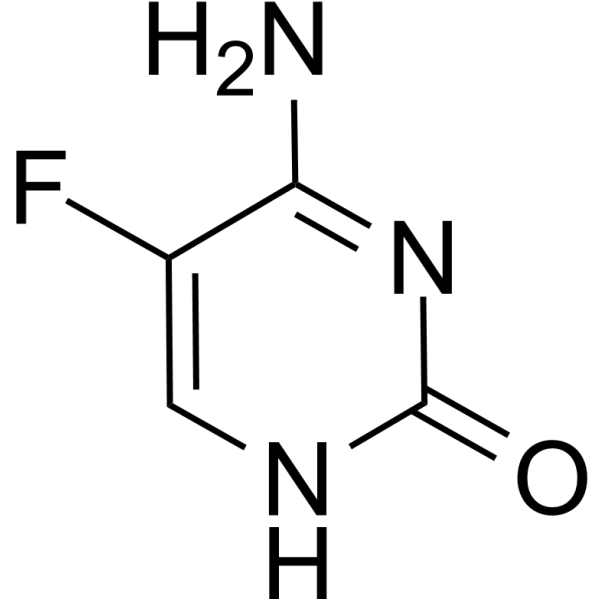
  • HY-B0139
    Flucytosine
    3 Publications Verification

    5-Fluorocytosine; NSC 103805; Ro 2-9915

    Fungal Antibiotic Infection Cancer
    Flucytosine (5-Fluorocytosine) is an antifungal compound with oral activity. Flucytosine is a widely used cytotoxic drug that, after further metabolism, produces fluorinated ribonucleotides and deoxyribonucleotides, inhibits DNA and protein synthesis, and has multiple effects such as inhibiting candida and candida neoplasm infection and producies cytotoxicity to cancer cells .
    Flucytosine
  • HY-W001187
    Tempo
    10+ Cited Publications

    Mitochondrial Metabolism DNA/RNA Synthesis Reactive Oxygen Species (ROS) Cancer
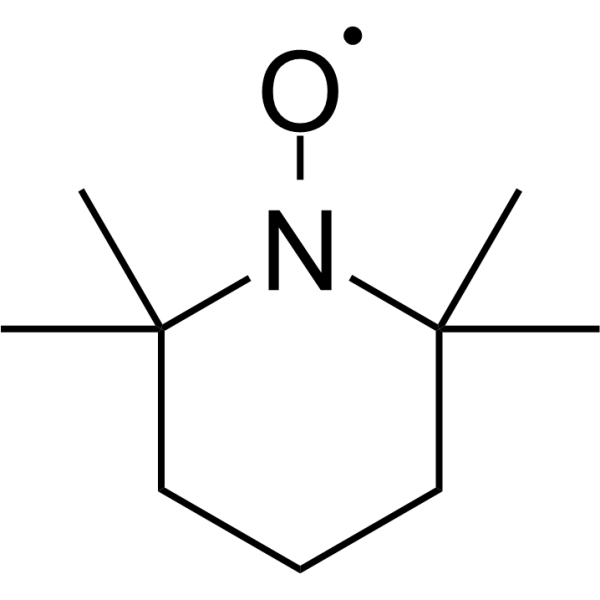
    Tempo is a nitric oxide radical and a selective scavenger of ROS in mitochondria. Tempo is also an organocatalyst that disproportionates superoxide and oxidizes primary alcohols to aldehydes in a catalytic cycle. Tempo has mutagenic and antioxidant effects and can induceDNA strand breaks. Tempo also exerts cytotoxic and mutagenic properties in mouse lymphoma cells .
    Tempo
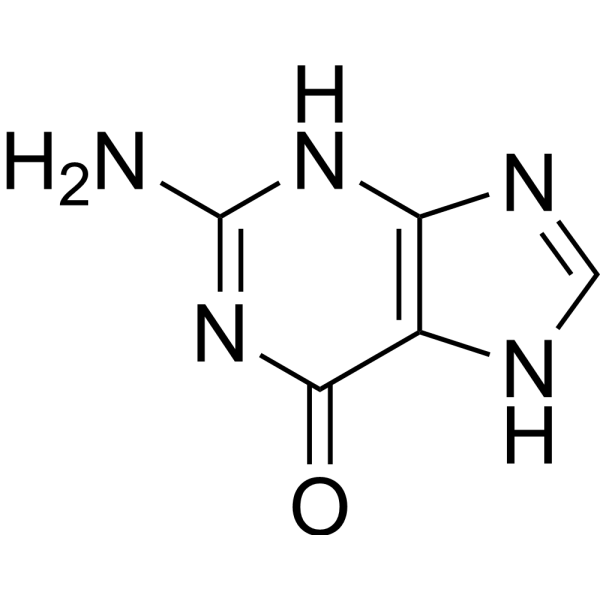
  • HY-Y1055
    Guanine
    3 Publications Verification

    DNA/RNA Synthesis Endogenous Metabolite Infection Neurological Disease Cancer
    Guanine is one of the fundamental components of nucleic acids (DNA and RNA). Guanine is a purine derivative, consisting of a fused pyrimidine-imidazole ring system with conjugated double bonds. Guanine has the potential to serve as a large-capacity N pool. Guanine has cytotoxic, antinociceptive and neuroprotective effects .
    Guanine
  • HY-106406
    Benzylacyclouridine
    2 Publications Verification

    BAU; 5-Benzylacyclouridine

    Drug Derivative Cancer
    Benzylacyclouridine (BAU) is a potent and specific inhibitor of uridine phosphorylase, the first enzyme in the catabolism of uridine. Benzylacyclouridine inhibits the metabolic activity of UPP1 and the activity of UPP2. Benzylacyclouridine can modulate the cytotoxic side effects of 5-fluorouracil (5-FU) and its derivatives .
    Benzylacyclouridine
  • HY-101374A

    (+)-BRD4780

    Imidazoline Receptor Caspase Mitochondrial Metabolism Lactate Dehydrogenase Cardiovascular Disease Neurological Disease Cancer
    AGN 192403 (BRD4780) hydrochloride is a potent and selective imidazoline-1 receptor antagonist with a Ki value of 42 nM. AGN 192403 hydrochloride is also a TMED9 inhibitor. AGN 192403 hydrochloride shows protective effects on oxidative cytotoxicity and mitochondrial inhibitor-induced cytotoxicity in astrocytes. AGN 192403 hydrochloride mitigates the proliferation and migration of differentiated glioma tumor cells. AGN 192403 hydrochloride can be used for glioma tumor and neurological diseases research .
    AGN 192403 hydrochloride
  • HY-117371

    (-)-Hemiasterlin; Milnamide B

    ADC Payload Cancer
    Hemiasterlin ((-)-Hemiasterlin) is an antimitotic marine natural product with potent anticancer effects. Hemiasterlin can be used as a cytotoxic payload (ADC Cytotoxin) in antibody-drug conjugates (ADCs) .
    Hemiasterlin
  • HY-13767
    Tirapazamine
    10+ Cited Publications

    SR259075; SR4233; Win59075; SML 0552; SR 259075; Tirazone

    DNA/RNA Synthesis Cancer
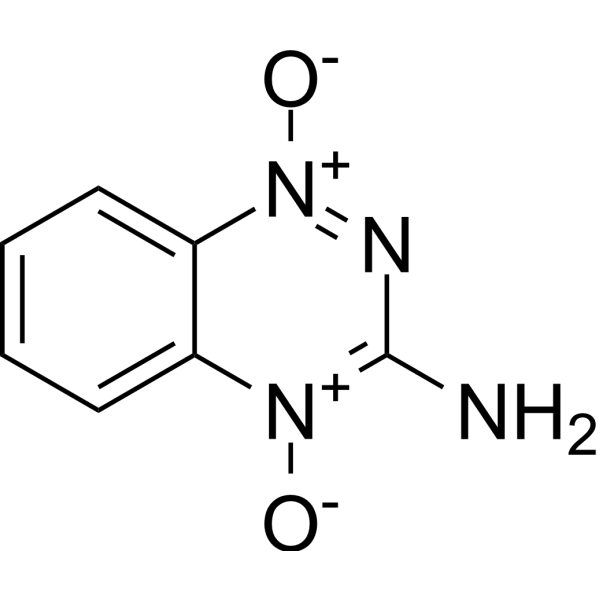
    Tirapazamine (SR259075) is an anticancer agent that shows selective cytotoxicity for hypoxic cells in solid tumors, thereby inducing single-and double-strand breaks in DNA, base damage, and cell death. Tirapazamine is an anticancer and bioreductive agent.Tirapazamine (SR259075) can enhance the cytotoxic effects of ionizing radiation in hypoxic cells .
    Tirapazamine
  • HY-W018025

    Bacterial Fungal Parasite Endogenous Metabolite Infection Inflammation/Immunology
    5,6-Dihydroxyindole, a melanin precursor, has a broad-spectrum antibacterial, antifungal, antiviral, antiparasitic activity. 5,6-Dihydroxyindole has cytotoxic effects and is strongly toxic against various pathogens .
    5,6-Dihydroxyindole
  • HY-116572A

    Reactive Oxygen Species (ROS) JNK Apoptosis Caspase Cancer
    TASIN-1 is a selective inhibitor of truncated APC TR (adenomatous polyposis coli gene) that exerts cytotoxic effects by inhibiting cholesterol biosynthesis. TASIN-1 specifically targets colorectal cancer (CRC) cells carrying APC truncated mutations, while having no significant toxicity to wild-type APC cells. TASIN-1 exerts cytotoxic effects by targeting Emopamil binding protein (EBP) to inhibit cholesterol biosynthesis, triggering endoplasmic reticulum (ER) stress, reactive oxygen species (ROS) generation, and JNK-mediated apoptosis, and inhibiting Akt survival signaling. TASIN-1 can be used to prevent and intervene in APC mutant colorectal cancer .
    TASIN-1
  • HY-N1517

    Aldose Reductase Inflammation/Immunology Cancer
    Ganoderic acid C2 is a bioactive triterpenoid in Ganoderma lucidum. Ganoderic acid C2 possesses the potential anti-tumor bioactivity, antihistamine, anti-aging and cytotoxic effects. Ganoderic acid C2 is the inhibitor for aldose reductase with an IC50 of 43.8 µM .
    Ganoderic acid C2
  • HY-N6642

    PPAR Apoptosis Inflammation/Immunology Cancer
    Ankaflavin, isolated from Monascus-Fermented red rice, is an orally active PPARγ agonist. Ankaflavin exhibits selective cytotoxic effect and induces cell death through apoptosis on cancer cells. Ankaflavin has anti-inflammatory, anti-cancer, antiatherosclerotic, and hypolipidemic effects .
    Ankaflavin
  • HY-Y1055A
    Guanine hydrochloride
    3 Publications Verification

    Endogenous Metabolite DNA/RNA Synthesis Infection Neurological Disease Cancer
    Guanine hydrochloride is one of the fundamental components of nucleic acids (DNA and RNA). Guanine hydrochloride is a purine derivative, consisting of a fused pyrimidine-imidazole ring system with conjugated double bonds. Guanine hydrochloride has the potential to serve as a large-capacity N pool. Guanine hydrochloride has cytotoxic, antinociceptive and neuroprotective effects .
    Guanine hydrochloride
  • HY-W015424
    N-Methyl-DL-glutamic acid
    1 Publications Verification

    Endogenous Metabolite Others
    N-Methyl-DL-glutamic acid is a L-Glutamic acid (HY-14608) analog with cytotoxic effects .
    N-Methyl-DL-glutamic acid
  • HY-139615

    Sec61 Cancer
    Sec61-IN-1 (compound A317) is a potent sec61 inhibitor that effectively targets glioma cells and enhances T cell cytotoxic effects[1][2].
    Sec61-IN-1
  • HY-116038

    Others Cancer
    Kulinone has cytotoxic effects against A549, H460 and HGC27 with IC50 values of 6.2, 7.8, 5.6 μg/mL .
    Kulinone
  • HY-141604
    Glembatumumab vedotin
    1 Publications Verification

    CDX-011; CR011-vcMMAE

    Antibody-Drug Conjugates (ADCs) Microtubule/Tubulin Cancer
    Glembatumumab vedotin (CDX-011) is an ADC comprising a fully human IgG2 monoclonal antibody (CR011) directed against glycoprotein NMB (GPNMB) and conjugated to the potent tubulinbinding cytotoxic agent MMAE via a protease-sensitive vc linker. Glembatumumab vedotin has potent anticancer effects .
    Glembatumumab vedotin
  • HY-N8198

    Apoptosis Ferroptosis Cancer
    Ardisiacrispin B displays cytotoxic effects in multi-factorial agent resistant cancer cells via ferroptotic and apoptotic cell death .
    Ardisiacrispin B
  • HY-N6896
    Isoviolanthin
    1 Publications Verification

    TGF-beta/Smad PI3K Akt mTOR MMP Histone Demethylase Endocrinology Cancer
    Isoviolanthin is a flavonoid glycoside. Isoviolanthin can be extracted from Dendrobium officinale. Isoviolanthin has a strong affinity for binding to KDM6B, CHAC2, ESCO2, and IPO4. Isoviolanthin decreases MMP-2 and MMP-9. Isoviolanthin inhibits TGF-β/Smad and PI3K/Akt/mTOR signaling pathways. Isoviolanthin increases Fhl3 expression. Isoviolanthin has cytoprotective effects. Isoviolanthin has anticancer activity against hepatocellular carcinoma .
    Isoviolanthin
  • HY-136591

    Drug Metabolite Neurological Disease Cancer
    Demoxepam is a major metabolite of Chlordiazepoxide. Demoxepam exhibits cytotoxicity activity against cancer cell lines. Demoxepam has anticonvulsant and anxiolytic effects. Demoxepam has an inhibitory effect on in vitro [ 3H]tryptophan binding to rat hepatic nuclei .
    Demoxepam
  • HY-N1464A

    Complement System Apoptosis Cancer
    Aristolone is a sesquiterpene that can be isolated from Aristolochia debilis, Rosmarinus officinalis and Ficus Auriculata. Aristolone in Ara Fruit can be used as a prediction of apoptosis in HeLa cells. Aristolone inhibits the C1 complement component. Aristolone produces cytotoxicity effects on cells. Aristolone has anticancer properties and can be studied in research for cervical cancer .
    Aristolone
  • HY-B0139R

    5-Fluorocytosine (Standard); NSC 103805 (Standard); Ro 2-9915 (Standard)

    Reference Standards Fungal Antibiotic Infection Cancer
    Flucytosine (Standard) is the analytical standard of Flucytosine. This product is intended for research and analytical applications. Flucytosine (5-Fluorocytosine) is an antifungal compound with oral activity. Flucytosine is a widely used cytotoxic drug that, after further metabolism, produces fluorinated ribonucleotides and deoxyribonucleotides, inhibits DNA and protein synthesis, and has multiple effects such as inhibiting candida and candida neoplasm infection and producies cytotoxicity to cancer cells .
    Flucytosine (Standard)
  • HY-N8420

    Fungal Infection Cancer
    Thalifoline is an isoquinoline alkaloid. Thalifoline exerts cytotoxic effects on cancer cells. Thalifoline inhibits the growth of Fusarium oxysporum f. sp. lycopersici. Thalifoline can be used in research related to lung adenocarcinoma, colon cancer, oral epidermoid carcinoma, and fungal infections .
    Thalifoline
  • HY-Z15849

    Others Metabolic Disease Inflammation/Immunology Cancer
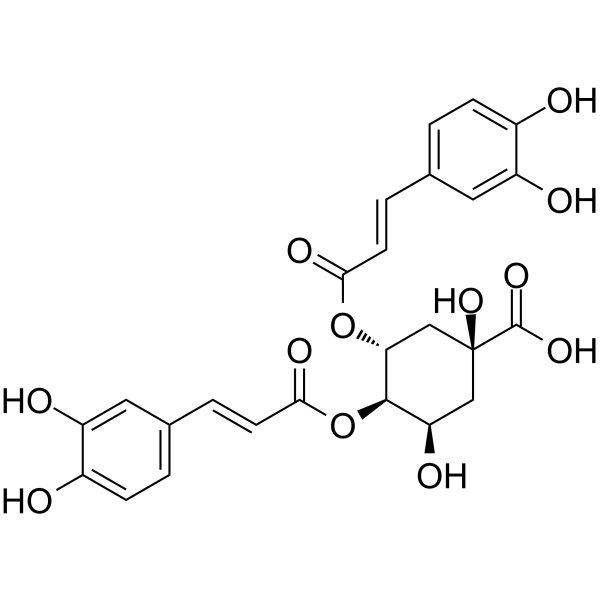
    Caffeoylmalic acid is an orally active hydroxycinnamoyl-malate ester found in stinging nettle (Urtica dioica). Caffeoylmalic acid exhibits anti-diabetic, anti-inflammation and anti-oxidant effects. Caffeoylmalic acid shows cytotoxicity to cancer cells. Caffeoylmalic acid can be used for the researches of cancer, inflammation and metabolic disease, such as colon cancer and diabetes .
    Caffeoylmalic acid
  • HY-N4265

    Others Inflammation/Immunology
    Vinaginsenoside R4, isolated from the leaves of hydroponic Panax ginseng. It has an inhibitory effect on melanin biosynthesis without any cytotoxic effects on the melan-a cells, and enhances the depigmentation on the zebrafish .
    Vinaginsenoside R4
  • HY-N0377A

    (±)-4',7-Dihydroxyflavanone

    Reactive Oxygen Species (ROS) Cardiovascular Disease
    (±)-Liquiritigenin ((±)-4',7-Dihydroxyflavanone) is isolated from Angelica keiskei, a hardy perennial herb of the Umbelliferae family. (±)-Liquiritigenin promotes cell proliferation, has cytoprotective activity and reduces cytotoxicity, and also has antioxidant stress effects .
    (±)-Liquiritigenin
  • HY-155534

    17β-HSD Others
    17β-HSD10-IN-1 (compound 9) is an orally active inhibitor of 17β-hydroxysteroid dehydrogenase type 10 (17β-HSD10) with blood-brain permeability. 17β-HSD10-IN-1 doesn't result additional effects for mitochondrial off-targets and cytotoxic or neurotoxic effects .
    17β-HSD10-IN-1
  • HY-N12013

    Others Cancer
    11-Oxomogroside IV A (compound 12) is a cucurbitane triterpene glycoside isolated from unripe fruits of Luo Han Guo. 11-Oxomogroside IV A has anti-tumor effects and is cytotoxic to tumor cells SMMC-772 (IC50: 288 μg/mL) .
    11-Oxomogroside IV A
  • HY-N15458

    Apoptosis Cancer
    5,6,7,8,4'-Pentahydroxyflavone (Compound 2b) is a flavonoid with antitumor activity. 5,6,7,8,4'-Pentahydroxyflavone exerts cytotoxic effects via inhibiting cell proliferation and inducing apoptosis .
    5,6,7,8,4'-Pentahydroxyflavone
  • HY-101374

    (+)-BRD4780 free base

    Imidazoline Receptor Mitochondrial Metabolism Caspase Lactate Dehydrogenase Cardiovascular Disease Neurological Disease Cancer
    AGN 192403 (BRD4780) is a potent and selective imidazoline-1 receptor antagonist with a Ki value of 42 nM. AGN 192403 is also a TMED9 inhibitor. AGN 192403 shows protective effects on oxidative cytotoxicity and mitochondrial inhibitor-induced cytotoxicity in astrocytes. AGN 192403 mitigates the proliferation and migration of differentiated glioma tumor cells. AGN 192403 can be used for glioma tumor and neurological diseases research .
    AGN 192403
  • HY-16984

    Itk Inflammation/Immunology
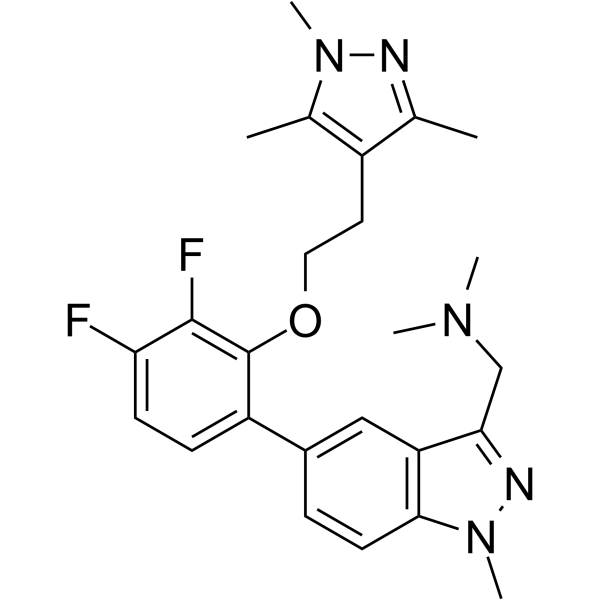
    GNE-4997 is a potent and selective interleukin-2-inducible T-cell kinase (ITK) inhibitor with a Ki of 0.09 nM, and the correlation between the basicity of solubilizing elements in GNE-4997 and off-target antiproliferative effects reduces cytotoxicity .
    GNE-4997
  • HY-125443

    Others Cancer
    Lucialdehydes A is a lanostante-type triterpene aldehydes, isolated from the fruiting bodies of Ganoderma lucidum. Lucialdehydes A shows cytotoxic effects on tumor cells, including Lewis lung carcinoma (LLC), T-47D, Sarcoma 180, and Meth-A tumor cell lines .
    Lucialdehyde A
  • HY-W724853

    1,4-Dimethyltetrasulfane

    Apoptosis Caspase Reactive Oxygen Species (ROS) Cancer
    Dimethyl tetrasulfide (1,4-Dimethyltetrasulfane) is an apoptosis inducer targeting leukemia cells. Dimethyl tetrasulfide exerts cytotoxic effects through the induction of intracellular reactive oxygen species (ROS) production and activation of caspase-3 enzyme. Dimethyl tetrasulfide is promising for research of cancers, such as leukemia .
    Dimethyl tetrasulfide
  • HY-N11928

    Others Cancer
    Changnanic acid (schisandrin) is a triterpene compound with potential anti-tumor effects. Changnanic acid exhibits moderate cytotoxic activity against human tumor cell lines Bel-7402, MCF-7 and HL-60, with IC50s of 100 μM, 100 μM and 50.51 μM respectively .
    Changnanic acid
  • HY-N7934

    (-)-Trachelogenin

    HCV Infection Neurological Disease Inflammation/Immunology
    Trachelogenin ((-)-Trachelogenin) is an HCV entry inhibitor without genotype specificity, and with low cytotoxicity. Trachelogenin inhibits HCVcc infection and HCVpp cell entry in a dose-dependent manner with an IC50 of 0.325 and 0.259 μg/mL in HCVcc and HCVpp models, respectively. Trachelogenin exhibits effective antiviral, anti-inflammatory and analgesic effects .
    Trachelogenin
  • HY-W391625

    (Rac)-Epiligulyl oxide

    Fungal Cancer
    (Rac)-Dehydrocostus Lactone ((Rac)-Epiligulyl oxide) is a natural product with antiparasitic activity. (Rac)-Dehydrocostus Lactone can significantly inhibit the growth of Trypanosoma brucei rhodesiense. (Rac)-Dehydrocostus Lactone exhibits a broad spectrum of biological effects, including anti-inflammatory, anticancer, antiviral and antimicrobial activities. (Rac)-Dehydrocostus Lactone also has antifungal, antioxidant, antidiabetic, antiulcer and antihelminthic effects. (Rac)-Dehydrocostus Lactone exhibits different IC(50) values in cytotoxicity tests and has a high selectivity index .
    (Rac)-Dehydrocostus Lactone
  • HY-177414

    Antibody-Drug Conjugates (ADCs) EGFR Inflammation/Immunology Cancer
    BB-1701 is an anti-HER2 antibody-drug conjugate (ADC). BB-1701 is composed of a humanized anti-HER2 antibody (Trastuzumab) (HY-P9907), a linker (Mal-PEG2-VCP), a microtubule inhibitor (Eribulin) (HY-13442), and the drug-linker conjugate for ADC is Mal-PEG2-VCP-Eribulin (HY-128870). BB-1701 has a potent cytotoxicity and bystander effects on tumors with heterogeneous target expression. BB-1701 significantly induces immunogenic cell death and the activation of the immune .
    BB-1701
  • HY-113636

    Apoptosis Autophagy Akt AMPK Cancer
    Kazinol A induces cytotoxic effects in human bladder cancer cells, including the cisplatin-resistant T24R2 .
    Kazinol A
  • HY-125664

    Antibiotic Cancer
    Lucialdehyde B is a tetracyclic triterpene isolated from the substrates of Ganoderma lucidum with antiviral and cytotoxic activities. Lucialdehyde B has cytotoxic effects against Lewis lung cancer (LLC), T-47D, Sarcoma 180 and Meth-A tumor cell lines .
    Lucialdehyde B
  • HY-P4836

    Parasite Infection
    LL-37 FK-13 is an antimicrobial agent, that inhibits Trichomonas vaginalis. LL-37 FK-13 exhibits slight hemolytic effects on human erythrocytes and low cytotoxicity to human fibroblasts .
    LL-37 FK-13
  • HY-N6842

    Others Infection Cancer
    ArnicolideC is a sesquiterpene lactone isolated Centipeda minima . ArnicolideC exertes a cytotoxic effect on the panel of Nasopharyngeal carcinoma (NPC) cells, significantly inhibiting cell growth in a dose- and time- dependent manner. ArnicolideC also exhibits inhibitory effects on NPC proliferation .
    ArnicolideC
  • HY-116572

    Reactive Oxygen Species (ROS) JNK Apoptosis Caspase Cancer
    TASIN-1 hydrochloride is a selective inhibitor of truncated APC TR (adenomatous polyposis coli gene) that exerts cytotoxic effects by inhibiting cholesterol biosynthesis. TASIN-1 hydrochloride specifically targets colorectal cancer (CRC) cells carrying APC truncated mutations, while having no significant toxicity to wild-type APC cells. TASIN-1 hydrochloride exerts cytotoxic effects by targeting Emopamil binding protein (EBP) to inhibit cholesterol biosynthesis, triggering endoplasmic reticulum (ER) stress, reactive oxygen species (ROS) generation, and JNK-mediated apoptosis, and inhibiting Akt survival signaling. TASIN-1 hydrochloride can be used to prevent and intervene in APC mutant colorectal cancer .
    TASIN-1 hydrochloride
  • HY-146096

    P-glycoprotein Apoptosis Cancer
    RMS3, a tetrandrine analogue, is a potent P-glycoprotein (P-gp) inhibitor. RMS3 has markedly antiproliferative and cytotoxic effects on cancer cells. RMS3 causes PARP cleavage, a marker for cells undergoing apoptosis. RMS3 has strong anticancer property .
    RMS3
  • HY-129592

    Apoptosis Cancer
    p-Tolylmaleimide (compound 9) is a naphthalimide derivative that has cytotoxic effects on cancer cells. p-Tolylmaleimide can arrest the cell cycle of human acute myeloid leukemia cells K562 in the sub-G0/G1 phase and induce apoptosis .
    p-Tolylmaleimide
  • HY-A0300

    EMD 270179

    Integrin Cardiovascular Disease
    Cyclopeptide-5 (EMD 270179) is an αvβ3 antagonist that can improve PAF-induced increased adhesion of sickle red blood cells, capillary post-obstruction, and enhance blood flow dynamics. Cyclopeptide-5 also has cytotoxic effects .
    Cyclopeptide-5
  • HY-123384

    P-glycoprotein Cardiovascular Disease Cancer
    KR30031, a Verapamil (HY-14275) analog, is an orally active P-glycoprotein (P-gp) inhibitor. KR30031 enhances the cytotoxicity of anticancer agents by inhibiting P-gp with fewer cardiovascular adverse effects. KR30031 can be used to study multidrug resistance (MDR) reversal in cancer .
    KR30031
  • HY-W015424R

    Reference Standards Endogenous Metabolite Others
    N-Methyl-DL-glutamic acid is a L-Glutamic acid (HY-14608) analog with cytotoxic effects .
    N-Methyl-DL-glutamic acid (Standard)
  • HY-149840

    Apoptosis Cancer
    Antitumor agent-113 shows cytotoxic effects on A549 cells with IC50 value of 46.60 μM and induces apoptosis. Antitumor agent-113 can be used in non-small cell lung cancer study .
    Antitumor agent-113
  • HY-N12198

    Others Cancer
    Mollicellin H is a secondary metabolite of the fungus C. brasiliense and has a wide range of biological activities, including immunomodulation, cytotoxicity and anti-tumor effects. The growth inhibitory effects (GI50s) of Mollicellin H on human breast cancer (Bre04), human lung (Lu04) and human neuroma (N04) cell lines are 5.1 μg/mL, 6.5 μg/mL and 2.5 μg/mL respectively .
    Mollicellin H
  • HY-123292

    Biochemical Assay Reagents Cancer
    RSU 1164 is a radiosensitizer and chemopotentiator. RSU 1164 has anticancer effects .
    RSU 1164
  • HY-125131

    NO Synthase COX Inflammation/Immunology Cancer
    Buddlejasaponin IV (BS‐IV) exerts anti-inflammatory and cytotoxic effects against cancer cells .
    Buddlejasaponin IV

Inquiry Online

Your information is safe with us. * Required Fields.

Salutation


Country or Region *

Applicant Name *


Organization Name *

Department *


Email Address *


Product Name *

Cat. No.


Requested quantity *

Phone Number *


Remarks

Inquiry Online

Inquiry Information

Product Name:
Cat. No.:
Quantity:
MCE Japan Authorized Agent:

