



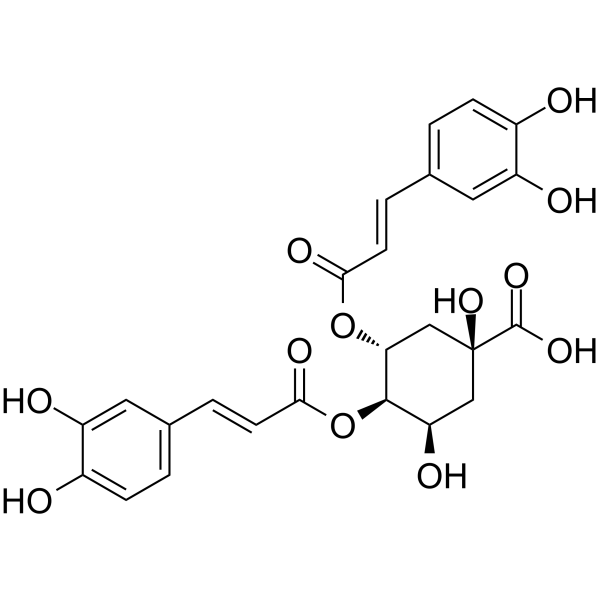
3,4-Dicaffeoylquinic acid
Based on 10 publication(s) in Google Scholar
3,4-Dicaffeoylquinic acid (3,4-Di-O-caffeoylquinic acid), naturally isolated from Laggera alata, has antioxidative, DNA protective, neuroprotective and hepatoprotective properties. 3,4-Dicaffeoylquinic acid exerts apoptosis-mediated cytotoxicity and α-glucosidase inhibitory effects. 3,4-Dicaffeoylquinic acid possesses a unique mechanism of anti-influenza viral activity, that is, enhancing viral clearance by increasing TRAIL.
For research use only. We do not sell to patients.
- Purity : 98.15%
- CAS No.: 14534-61-3
- Formula: C25H24O12
- Molecular Weight:516.45
-
Storage:Powder -20°C, 3 years , 4°C, 2 years ; In solvent -80°C, 6 months , -20°C, 1 month

To place orders, for customer services and technical support, please contact: MedChemExpress USA
Tel: 609-228-6898 E-mail: [email protected] [email protected]


-
 Biological Activity
-
Chemical Information
-
Solvent & Solubility
- Purity & Documentation
- References
-
 Help & FAQs


-
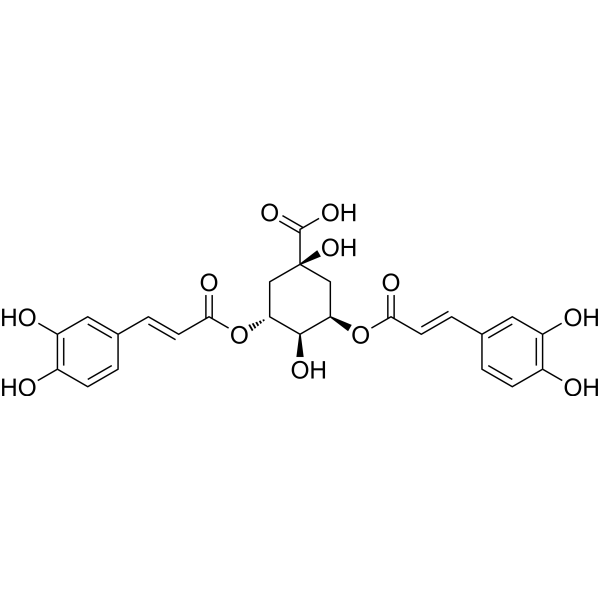
HY-N0056
Isochlorogenic acid A -
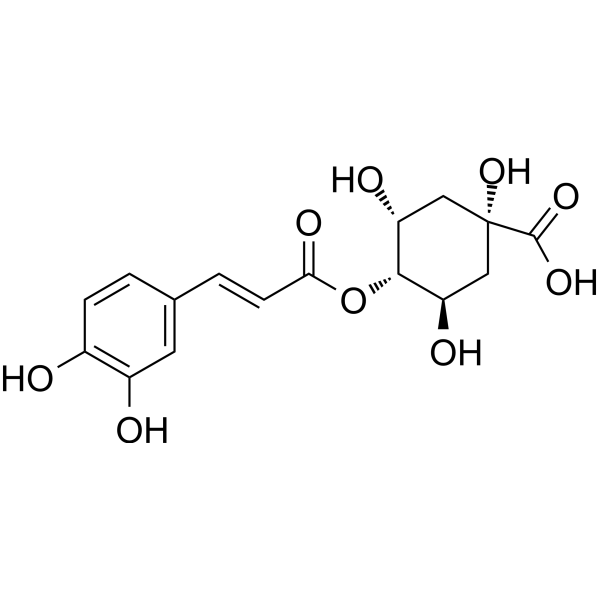
HY-N0787
Cryptochlorogenic acid -
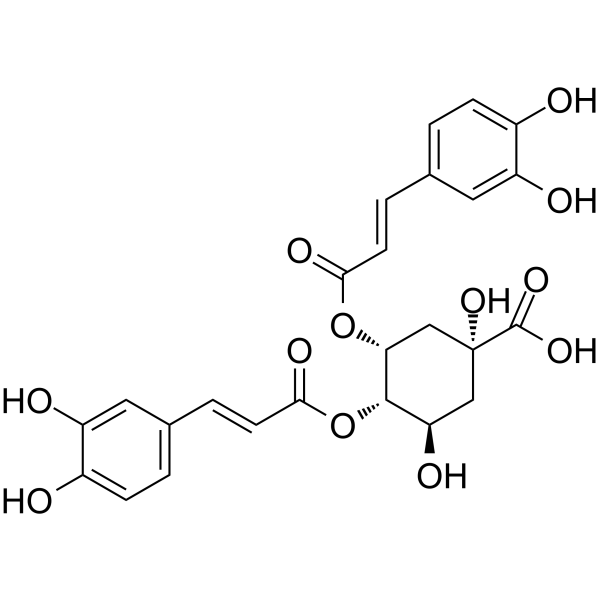
HY-N0058
4,5-Dicaffeoylquinic acid -
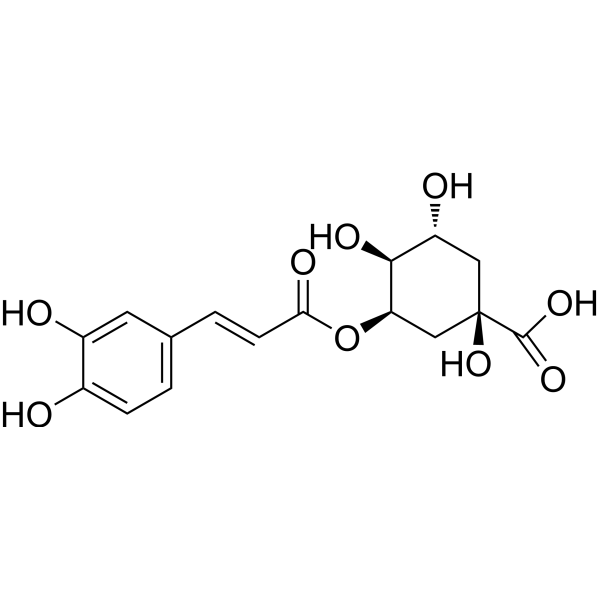
HY-N0722
Neochlorogenic acid -
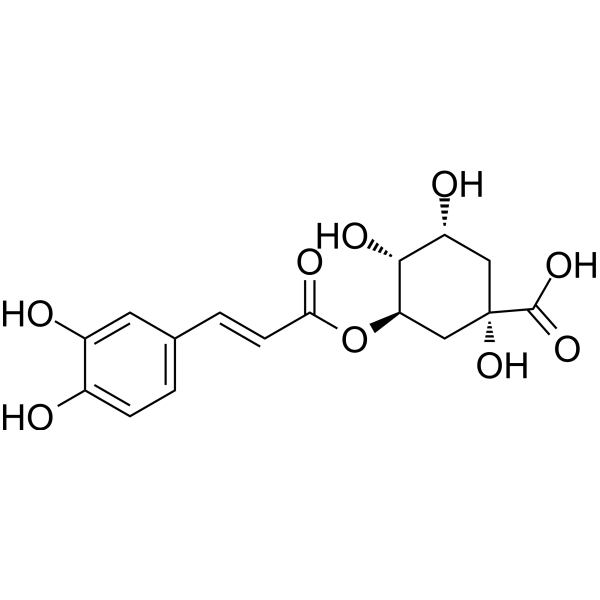
HY-N0055
Chlorogenic acid -
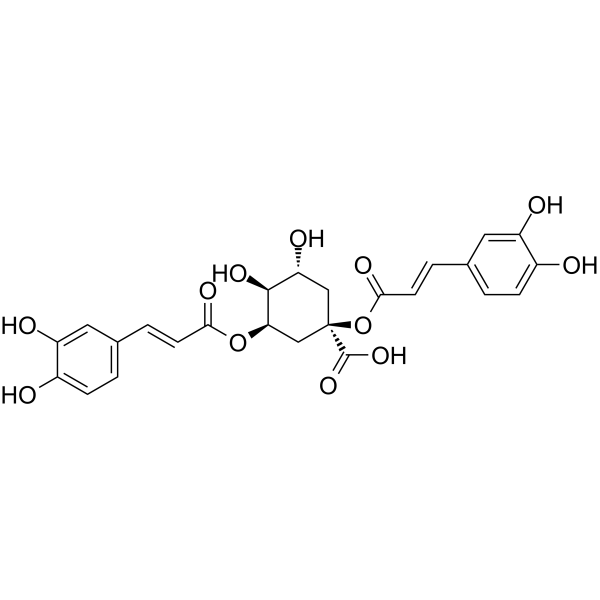
HY-N0359
Cynarin -
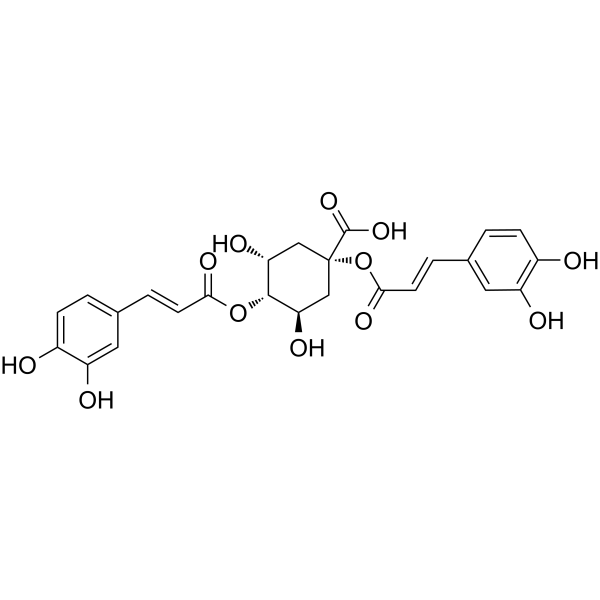
HY-N0358
1,4-Dicaffeoylquinic acid -

HY-N0057R
3,4-Dicaffeoylquinic acid (Standard) -
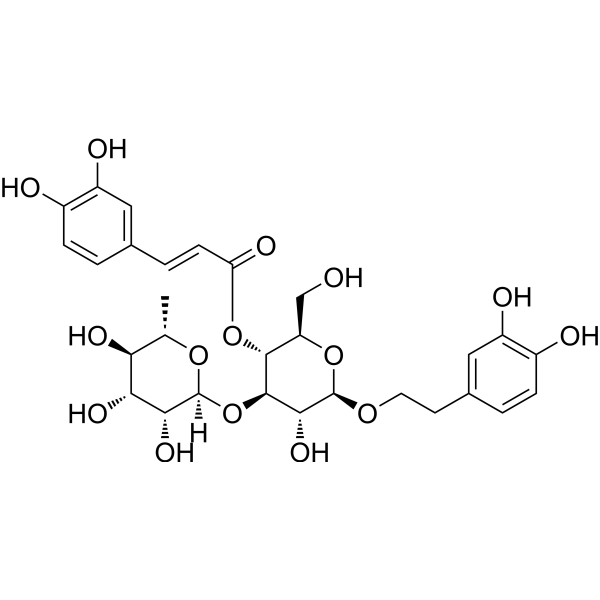
HY-N0021
Verbascoside -
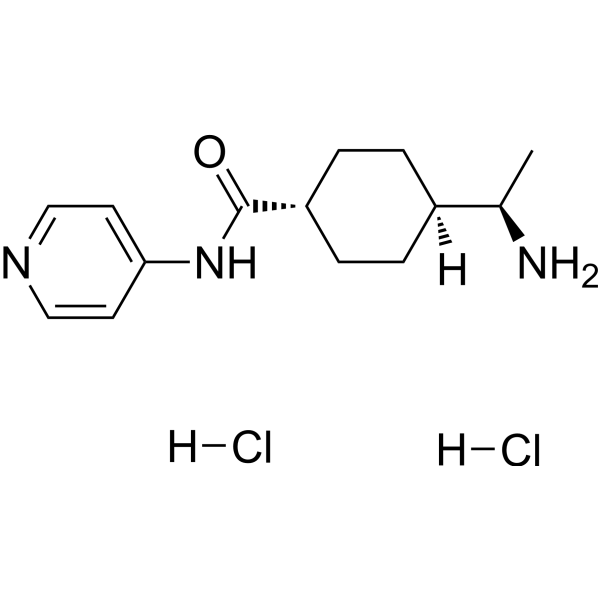
HY-10583
Y-27632 dihydrochloride -
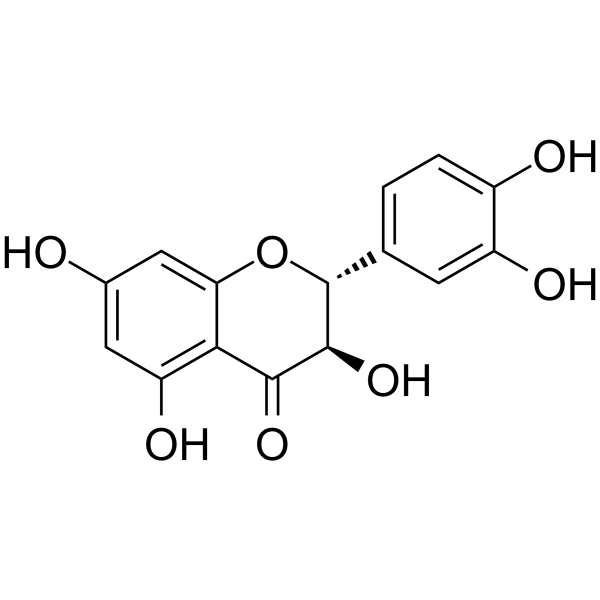
HY-N0136
Taxifolin -
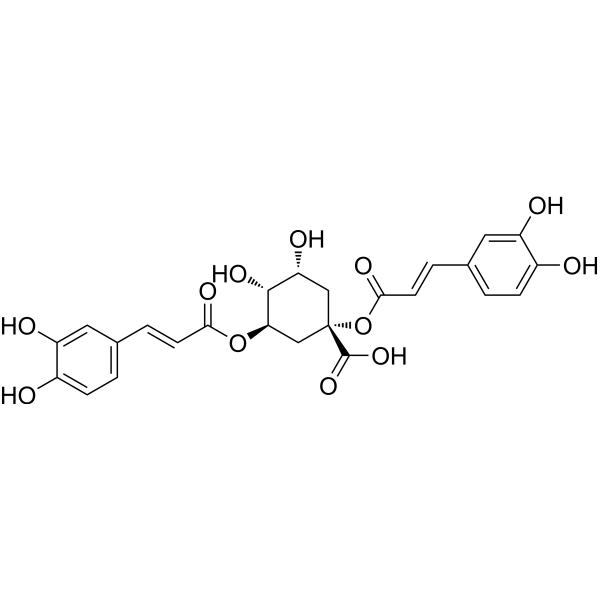
HY-N1412
1,3-Dicaffeoylquinic acid
Publications Citing Use of MedChemExpress (MCE) 3,4-Dicaffeoylquinic acid
More- Nat Aging. 2024 Sep;4(9):1231-1248. [Abstract]
- Phytomedicine. 2026 Feb:151:157776. [Abstract]
- Cell Biosci. 2023 Nov 14;13(1):210. [Abstract]
- Cells. 2026 Feb 3;15(3):287. [Abstract]
- Foods. 2024 Apr 3;13(7):1101. [Abstract]
- ACS Omega. 2025 Sep 22;10(38):44260-44269. [Abstract]
- Vet Microbiol. 2026 May:316:110992. [Abstract]
- Chem Pharm Bull. 2024;72(1):93-97. [Abstract]
- SSRN. 2026 Apr 14.
- SSRN. 2026 Apr 8.
 Customer Validation & Images

-
Cell Proliferation/Viability Assay
-
Cell Proliferation/Viability Assay
-
IP
-
Bio/Physico-chemical Assay
-
WB
All Endogenous Metabolite Isoforms
More

Biological Activity
Description
Cellular Effect
|
Cell Line

|
Type | Value | Description | References |
|---|---|---|---|---|
| Jurkat | IC50 |
>35 mM
Compound: 3
|
Cytotoxicity against human Jurkat T cells
Cytotoxicity against human Jurkat T cells
|
[PMID: 15921434] |
| Jurkat | IC50 |
>35 μM/mL
Compound: 3
|
Cytotoxicity against human Jurkat T cells
Cytotoxicity against human Jurkat T cells
|
[PMID: 15921434] |
In Vitro
3,4-Dicaffeoylquinic acid acts as a greater primary antioxidant than its methanol extract, by having higher ferric reducing activity (EC50 2.18 μg/ml), β-carotene bleaching activity (EC50 23.85 μg/ml) and DPPH scavenging activity (EC50 68.91 μg/ml). 3,4-Dicaffeoylquinic acid exhibits a remarkable dose-dependent inhibitory effect on NCI-H23 (human lung adenocarcinoma) cell lines (EC50 3.26 μg/ml) and is found to be apoptotic in nature based on a clear indication of DNA fragmentation. 3,4-Dicaffeoylquinic acid also displays a concentration-dependent α-glucosidase inhibition with EC50 241.80 μg/ml[1].
MedChemExpress (MCE) has not independently confirmed the accuracy of these methods. They are for reference only.


Chemical Information
-
CAS No. 14534-61-3
-
Appearance Solid
-
Molecular Weight 516.45
-
Formula C25H24O12
-
Color Off-white to light yellow
-
SMILES
O=C([C@@]1(O)C[C@@H](OC(/C=C/C2=CC=C(O)C(O)=C2)=O)[C@H](OC(/C=C/C3=CC=C(O)C(O)=C3)=O)[C@H](O)C1)O
-
Synonyms
3,4-Di-O-caffeoylquinic acid; Isochlorogenic acid B
-
Structure Classification
-
Initial Source
-
Shipping
Room temperature in continental US; may vary elsewhere.
-
Storage
Powder -20°C 3 years 4°C 2 years In solvent -80°C 6 months -20°C 1 month


Publications (10)
-
Journal Impact Factor
-
Most Recent
-
Nat Aging
Targeting senescence induced by age or chemotherapy with a polyphenol-rich natural extract improves longevity and healthspan in mice. [Abstract]2024 Sep;4(9):1231-1248. PMID: 38951692
3,4-Dicaffeoylquinic acid purchased from MedChemExpress. Usage Cited in: Nat Aging. 2024 Sep;4(9):1231-1248. [Abstract]
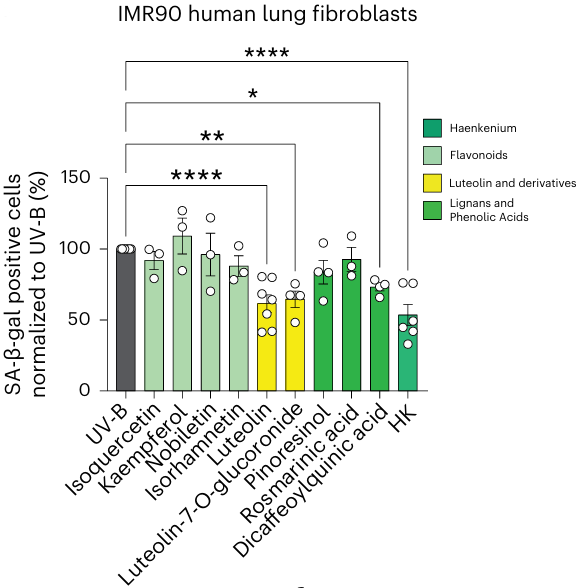
Quantification of SA-β-Gal assay of UV-B-irradiated IMR90 fibroblasts, treated with the indicated compounds (3,4-Dicaffeoylquinic acid (Dicaffeoylquinic acid), etc.) at 1 μM concentration or 10 μg/mL for HK.
-
Phytomedicine
A novel mechanism of Reduning injection in sepsis treatment: Targeting inflammatory kinases TBK1 and IKKβ. [Abstract]2026 Feb:151:157776. PMID: 41512388 -
Cell Biosci
2023 Nov 14;13(1):210. PMID: 37964389
3,4-Dicaffeoylquinic acid purchased from MedChemExpress. Usage Cited in: Cell Biosci. 2023 Nov 14;13(1):210. [Abstract]
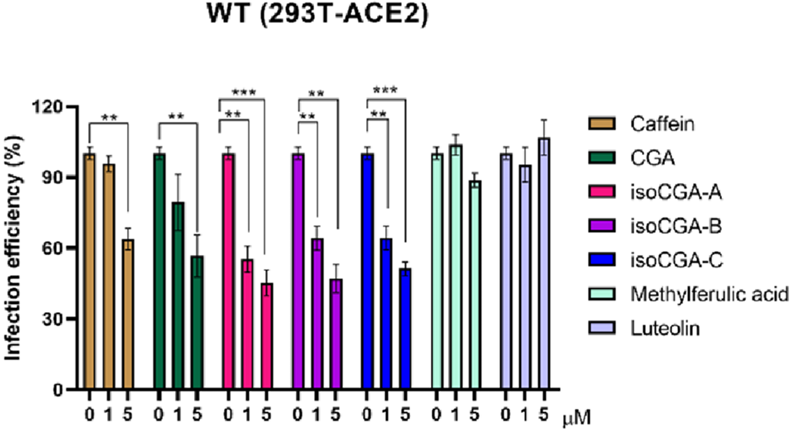
Examination of the inhibition capability of caffeine, CGA, isoCGA-A, isoCGA-B (3,4-Dicaffeoylquinic acid) (1-5 μM; 1 h), isoCGA-C, methylferulic acid and luteolin against the entry of wild-type SARS-CoV-2 on 293 T-ACE2 cells by Vpp (MOI = 0.1).
3,4-Dicaffeoylquinic acid purchased from MedChemExpress. Usage Cited in: Cell Biosci. 2023 Nov 14;13(1):210. [Abstract]
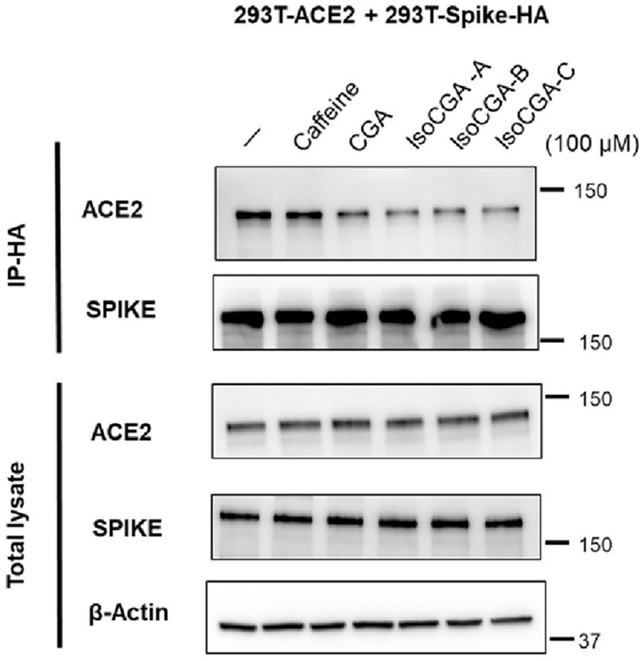
Co-immunoprecipitation using 293 T cells expressing SARS-CoV-2 spike-HA and ACE2 to verify that 5 compounds can inhibit the binding of ACE2 and spike. After anti-HA pulldown, adding 5 compounds (3,4-Dicaffeoylquinic acid (IsoCGA-B), etc.) (100 μM; 1 h), ACE2, and spike antibodies were used to detect by immunoblotting.
3,4-Dicaffeoylquinic acid purchased from MedChemExpress. Usage Cited in: Cell Biosci. 2023 Nov 14;13(1):210. [Abstract]
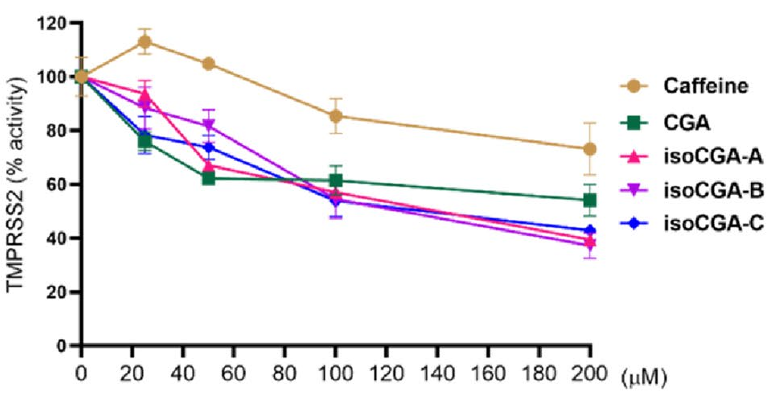
Validation of the ability of caffeine, CGA, isoCGA-A, isoCGA-B (3,4-Dicaffeoylquinic acid) (1h), and isoCGA-C at 0, 25, 50, 100, and 200 μM to repress TMPRSS2 activity using a cell-based TMPRSS2 enzyme activity assay.
3,4-Dicaffeoylquinic acid purchased from MedChemExpress. Usage Cited in: Cell Biosci. 2023 Nov 14;13(1):210. [Abstract]
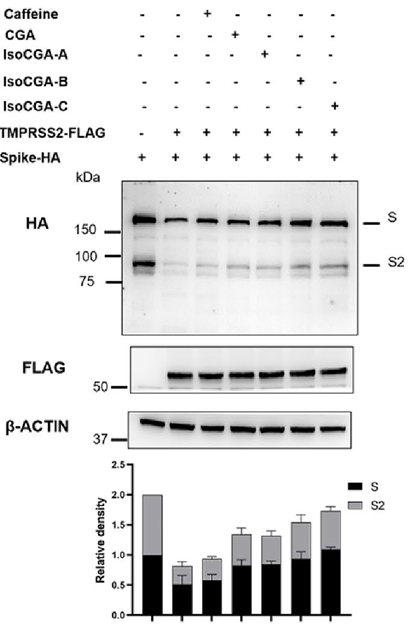
Through Western blot to test 5 compounds (3,4-Dicaffeoylquinic acid (IsoCGA-B) (1 h), etc.) at 100 μM impact cleavage of SARS-CoV-2 S by TMPRSS2.
-
Cells
Identification of Natural Compounds Triggering MRGPRX2-Mediated Calcium Flux and Degranulation in RBL-2H3 Cells. [Abstract]2026 Feb 3;15(3):287. PMID: 41677650 -
Foods
Effects of Cooking Methods on Caffeoylquinic Acids and Radical Scavenging Activity of Sweet Potato. [Abstract]2024 Apr 3;13(7):1101. PMID: 38611405 -
ACS Omega
Selective Enhancement of Caffeoylquinic Acid Derivative via UV Irradiation and Validation of Analytical Method in the Aerial Aster × chusanensis Y. S. Lim. [Abstract]2025 Sep 22;10(38):44260-44269. PMID: 41048756 -
Vet Microbiol
The Chinese medicine monomer Schisandrin C inhibits PRRSV infection by regulating the OGT-PI3K/AKT/mTOR signaling pathway. [Abstract]2026 May:316:110992. PMID: 41865607 -
Chem Pharm Bull
Chromatographic Evaluation and Characterization of Constituents of Sunflower Seed Extract Used as Food Additives. [Abstract]2024;72(1):93-97. PMID: 38233137 -
-


Solvent & Solubility
In Vitro:
DMSO : 50 mg/mL (96.81 mM; Need ultrasonic; Hygroscopic DMSO has a significant impact on the solubility of product, please use newly opened DMSO)
Please refer to the solubility information to select the appropriate solvent. Once prepared, please aliquot and store the solution to prevent product inactivation from repeated freeze-thaw cycles.
Storage method and period of stock solution: -80°C, 6 months; -20°C, 1 month. When stored at -80°C, please use it within 6 months. When stored at -20°C, please use it within 1 month.
Please refer to the solubility information to select the appropriate solvent. Once prepared, please aliquot and store the solution to prevent product inactivation from repeated freeze-thaw cycles.
Storage method and period of stock solution: -80°C, 6 months; -20°C, 1 month. When stored at -80°C, please use it within 6 months. When stored at -20°C, please use it within 1 month.
Concentration (start) × Volume (start) = Concentration (final) × Volume (final)


Purity & Documentation
-
Data Sheet (278 KB)
-
SDS (396 KB)
- English - EN (396 KB)
- Français - FR (396 KB)
- Deutsch - DE (396 KB)
- Norwegian - NO (396 KB)
- Español - ES (396 KB)
- Swedish - SV (396 KB)
- Italian - IT (396 KB)
- Korean - KR (396 KB)
- Portuguese - PT (396 KB)
-
Handling Instructions (2659 KB)
References
[1]. Takemura T, et al. 3,4-Dicaffeoylquinic Acid, a Major Constituent of Brazilian Propolis, Increases TRAIL Expression and Extends the Lifetimes of Mice Infected with the Influenza A Virus. Evid Based Complement Alternat Med. 2012;2012:946867. [Content Brief]
[2]. Liu X, et al. Protective effect of isochlorogenic acid B on liver fibrosis in non-alcoholic steatohepatitis of mice. Basic Clin Pharmacol Toxicol. 2019;124(2):144-153. [Content Brief]
[3]. Ooi KL, et al. Cytotoxic, apoptotic and anti-α-glucosidase activities of 3,4-di-O-caffeoyl quinic acid, an antioxidant isolated from the polyphenolic-rich extract of Elephantopus mollis Kunth. J Ethnopharmacol. 2011;135(3):685-695. [Content Brief]


Complete Stock Solution Preparation Table
Please refer to the solubility information to select the appropriate solvent. Once prepared, please aliquot and store the solution to prevent product inactivation from repeated freeze-thaw cycles.
Storage method and period of stock solution: -80°C, 6 months; -20°C, 1 month. When stored at -80°C, please use it within 6 months. When stored at -20°C, please use it within 1 month.
| Optional Solvent | Concentration Solvent Mass | 1 mg | 5 mg | 10 mg | 25 mg |
|---|---|---|---|---|---|
| DMSO | 1 mM | 1.9363 mL | 9.6815 mL | 19.3630 mL | 48.4074 mL |
| 5 mM | 0.3873 mL | 1.9363 mL | 3.8726 mL | 9.6815 mL | |
| 10 mM | 0.1936 mL | 0.9681 mL | 1.9363 mL | 4.8407 mL | |
| 15 mM | 0.1291 mL | 0.6454 mL | 1.2909 mL | 3.2272 mL | |
| 20 mM | 0.0968 mL | 0.4841 mL | 0.9681 mL | 2.4204 mL | |
| 25 mM | 0.0775 mL | 0.3873 mL | 0.7745 mL | 1.9363 mL | |
| 30 mM | 0.0645 mL | 0.3227 mL | 0.6454 mL | 1.6136 mL | |
| 40 mM | 0.0484 mL | 0.2420 mL | 0.4841 mL | 1.2102 mL | |
| 50 mM | 0.0387 mL | 0.1936 mL | 0.3873 mL | 0.9681 mL | |
| 60 mM | 0.0323 mL | 0.1614 mL | 0.3227 mL | 0.8068 mL | |
| 80 mM | 0.0242 mL | 0.1210 mL | 0.2420 mL | 0.6051 mL |


3,4-Dicaffeoylquinic acid Related Classifications
HY-N0057 Related Classifications
 Powered by Bioz