



10605-03-5
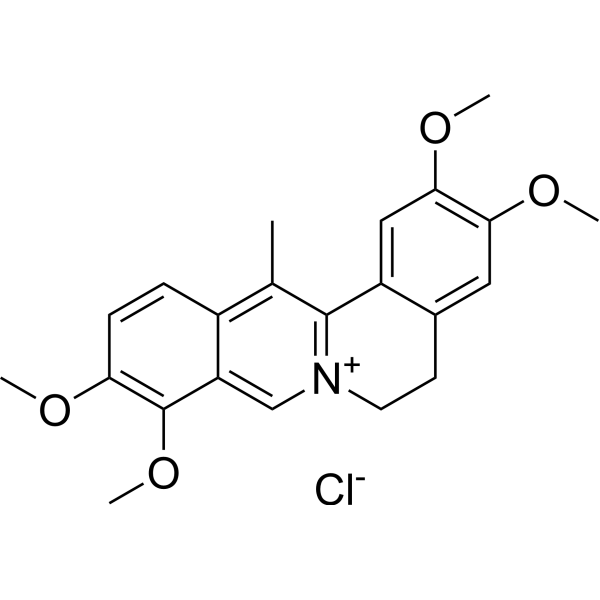
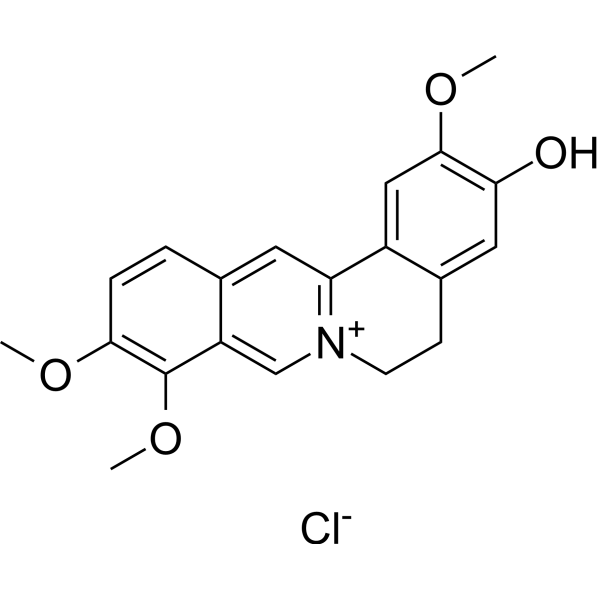
Chemical Structure
Dehydrocorydaline chloride
Synonym(s): 13-Methylpalmatine chloride
- No. CAS: 10605-03-5
- Formula:C22H24ClNO4
- Molecular Weight:401.88
IUPAC Name: 2,3,9,10-tetramethoxy-13-methyl-5,6-dihydroisoquinolino[3,2-a]isoquinolin-7-ium chloride
InChIKey: WXOSEFNJXIPZNV-UHFFFAOYSA-M
SMILES: CC1=C(C=CC(OC)=C2OC)C2=C[N+]3=C1C4=CC(OC)=C(OC)C=C4CC3.[Cl-]
Biological Activity: Dehydrocorydaline (13-Methylpalmatine) chloride is an orally active alkaloid that inhibits acetylcholinesterase (AChE) (IC50 = 0.62 μM). Dehydrocorydaline chloride inhibits synaptosomal reuptake of serotonin/dopamine/norepinephrine, the NLRP3 inflammasome, microglial activation, biofilm formation, and Plasmodium/Trypanosoma growth, and has pain-relieving effects. Dehydrocorydaline chloride activates p38 MAPK/MyoD-driven myoblast differentiation, binds SPTA1 (Kd = 2.18 µM), inhibits aldose reductase, hOCT2/3, hPMAT, MEK/ERK, NF-κB/TRAF6, IRE1/PERK, SMAD2/3, and NR2B phosphorylation, and modulates Bcl-2/Bax, caspase-8/7, and PARP signaling. Dehydrocorydaline chloride can be used in research on pain, breast cancer, melanoma, non-small cell lung cancer, bacterial infections, parasitic infections, pulmonary fibrosis, and atherosclerosis[1][2][3][4][5][6][7][8][9][10][11][12][13][14][15][16].
| Referencia número | Nombre del producto | Pureza | Descripciòn | Pricing | |||||||||||||||||||
|---|---|---|---|---|---|---|---|---|---|---|---|---|---|---|---|---|---|---|---|---|---|---|---|
|
|
Dehydrocorydaline chloride | 99.75% | Dehydrocorydaline (13-Methylpalmatine) chloride is an orally active alkaloid that inhibits acetylcholinesterase (AChE) (IC50 = 0.62 μM). Dehydrocorydaline chloride inhibits synaptosomal reuptake of serotonin/dopamine/norepinephrine, the NLRP3 inflammasome, microglial activation, biofilm formation, and Plasmodium/Trypanosoma growth, and has pain-relieving effects. Dehydrocorydaline chloride activates p38 MAPK/MyoD-driven myoblast differentiation, binds SPTA1 (Kd = 2.18 µM), inhibits aldose reductase, hOCT2/3, hPMAT, MEK/ERK, NF-κB/TRAF6, IRE1/PERK, SMAD2/3, and NR2B phosphorylation, and modulates Bcl-2/Bax, caspase-8/7, and PARP signaling. Dehydrocorydaline chloride can be used in research on pain, breast cancer, melanoma, non-small cell lung cancer, bacterial infections, parasitic infections, pulmonary fibrosis, and atherosclerosis. | ||||||||||||||||||||
|
loading...
/
|
|||||||||||||||||||||||
-
Similarity Score 0.98
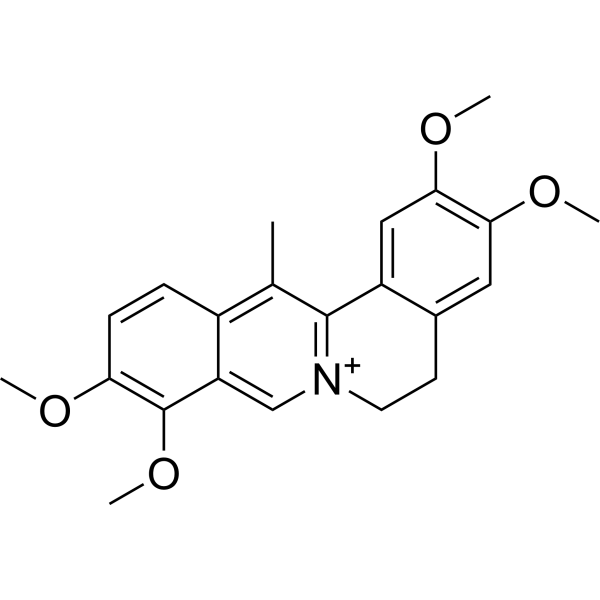 HY-N0674Dehydrocorydaline
-
Similarity Score 0.93
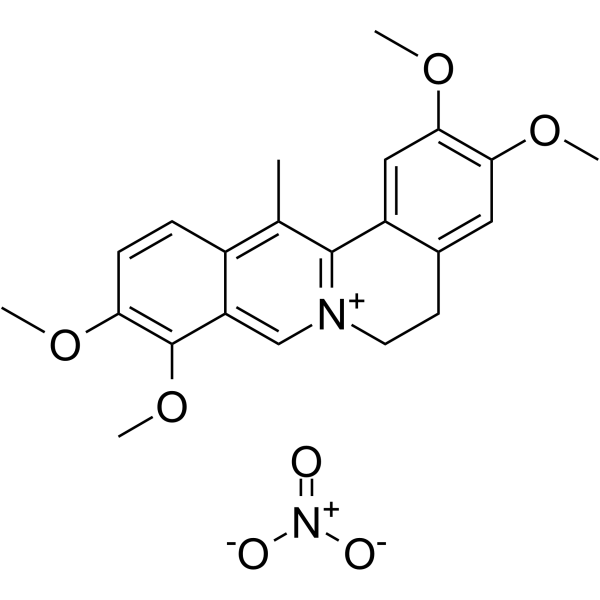 HY-N4238Dehydrocorydaline nitrate
-
Similarity Score 0.89
 HY-N8262Dehydrocorybulbine chloride
-
Similarity Score 0.79
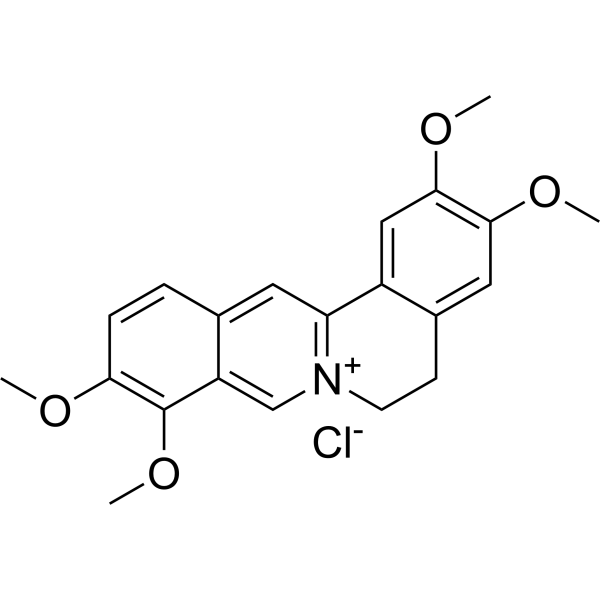 HY-N0110RPalmatine chloride (Standard)
-
Similarity Score 0.79
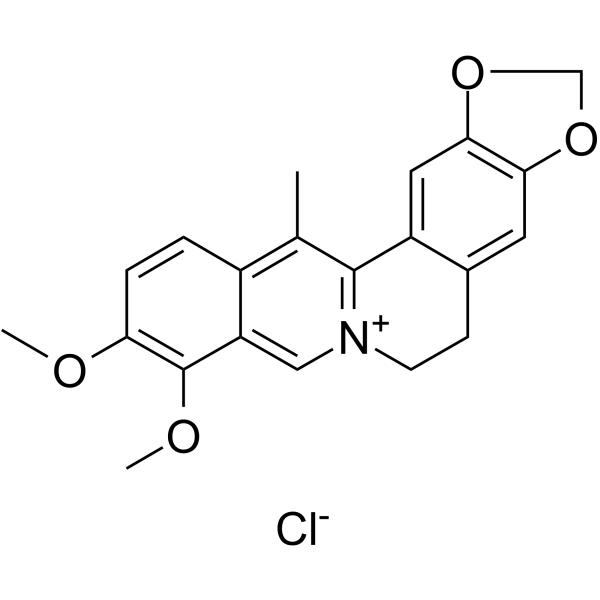 HY-12582713-Methylberberine chloride
-
Similarity Score 0.78
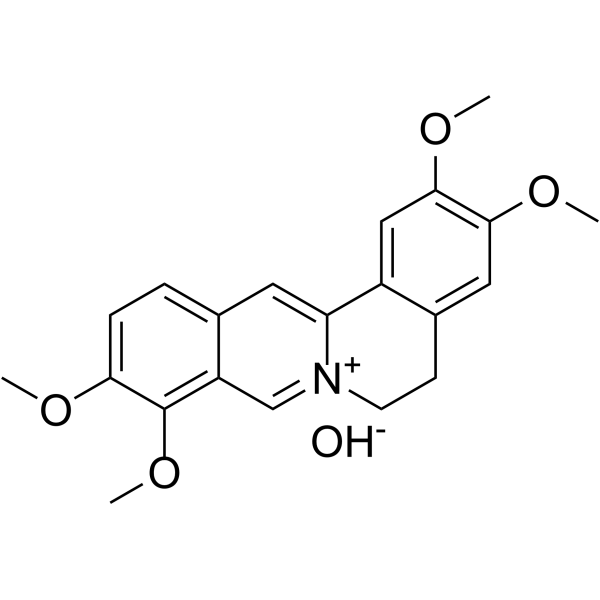 HY-N0110BPalmatine hydroxide
-
Similarity Score 0.78
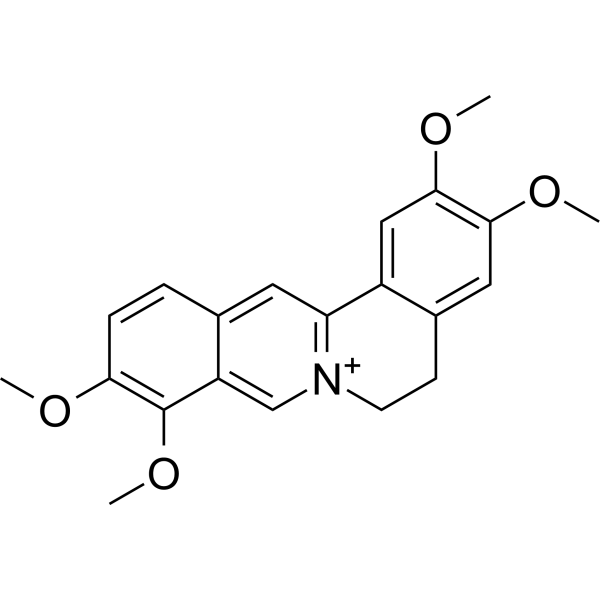 HY-N0110APalmatine
-
Similarity Score 0.72
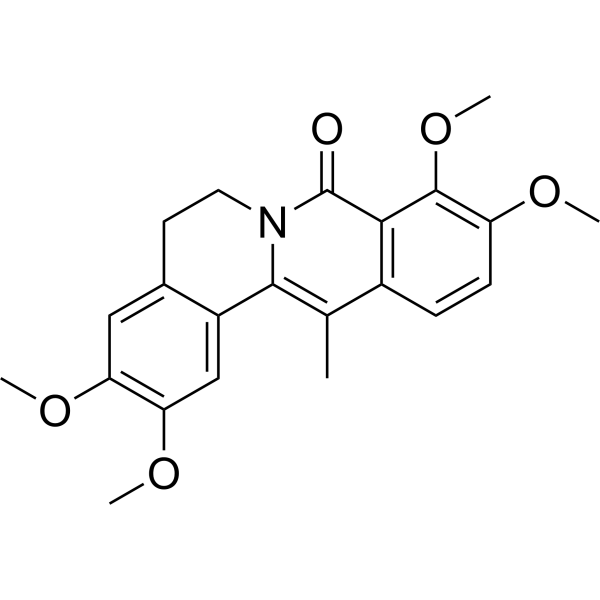 HY-N12279Yuanamide
-
Similarity Score 0.71
 HY-N0740Jatrorrhizine chloride
-

Explore the MedChemAI to find more analogs

References
- [1]. Nonaka M, et al. Screening of a library of traditional Chinese medicines to identify anti-malarial compounds and extracts. Malaria journal. 2018 Jun 25;17(1):244. [Content Brief]
- [2]. Tayama Y, et al. Anti-Trypanosoma cruzi activity of Coptis rhizome extract and its constituents. Tropical medicine and health. 2023 Mar 01;51(1):12.
- [3]. Yoo M, et al. Dehydrocorydaline promotes myogenic differentiation via p38 MAPK activation. Molecular medicine reports. 2016 Oct;14(4):3029-36. [Content Brief]
- [4]. Xu Z, et al. Dehydrocorydaline inhibits breast cancer cells proliferation by inducing apoptosis in MCF-7 cells. The American journal of Chinese medicine. 2012;40(1):177-85. [Content Brief]
- [5]. Jin L, et al. Dehydrocorydaline induced antidepressant-like effect in a chronic unpredictable mild stress mouse model via inhibiting uptake-2 monoamine transporters. European journal of pharmacology. 2019 Dec 01;864:172725.
- [6]. Yin ZY, et al. Antinociceptive effects of dehydrocorydaline in mouse models of inflammatory pain involve the opioid receptor and inflammatory cytokines. Scientific reports. 2016 Jun 07;6:27129. [Content Brief]
- [7]. Huo W, et al. Dehydrocorydaline attenuates bone cancer pain by shifting microglial M1/M2 polarization toward the M2 phenotype. Mol Pain. 2018 Jan-Dec;14:1744806918781733.
- [8]. Kim G, et al. Antibacterial Activity and Multi-Targeting Mechanism of Dehydrocorydaline From Corydalis turtschaninovii Bess. Against Listeria monocytogenes. Front Microbiol. 2022 Jan 11;12:799094.
- [9]. Wen B, et al. Antiatherosclerotic effect of dehydrocorydaline on ApoE mice: inhibition of macrophage inflammation. Acta pharmacologica Sinica. 2022 Jun;43(6):1408-1418. [Content Brief]
- [10]. Li Y, et al. Dehydrocorydaline Protects Against Sepsis-Induced Myocardial Injury Through Modulating the TRAF6/NF-κB Pathway. Front Pharmacol. 2021 Aug 19;12:709604. [Content Brief]
- [11]. Dang YY, et al. Dehydrocorydaline maintains the vascular smooth muscle cell contractile phenotype by upregulating Spta1. Acta pharmacologica Sinica. 2025 May;46(5):1303-1316.
- [12]. He J, et al. Dehydrocorydaline attenuates bleomycin-induced pulmonary fibrosis by inhibiting fibroblast activation. Respir Res. 2025 Apr 12;26(1):136. [Content Brief]
- [13]. Shen J, et al. Multi-targeted inhibition of NF-κB signaling underlies the anti-osteoarthritic effects of BGJXF and its key component dehydrocorydaline. Front Med (Lausanne). 2026 Jan 9;12:1676071.
- [14]. Hu H, et al. Dehydrocorydaline inhibits cell proliferation, migration and invasion via suppressing MEK1/2-ERK1/2 cascade in melanoma. Onco Targets Ther. 2019 Jul 2;12:5163-5175. [Content Brief]
- [15]. Lee J, et al. Anti-Metastatic Effect of Dehydrocorydaline on H1299 Non-Small Cell Lung Carcinoma Cells via Inhibition of Matrix Metalloproteinases and B Cell Lymphoma 2. Phytotherapy research : PTR. 2017 Mar;31(3):441-448.
- [16]. Hou BL, et al. Analgesic Effect of Dehydrocorydaline on Chronic Constriction Injury-Induced Neuropathic Pain via Alleviating Neuroinflammation. Chinese journal of integrative medicine. 2025 Jun;31(6):499-505.



