1. Search Result
Search Result
Results for "

diarylheptanoid inhibitor

" in MedChemExpress (MCE) Product Catalog:

7

Inhibitors & Agonists

6

Natural
Products

Cat. No. Product Name Target Research Areas Chemical Structure
  • HY-N3225

    NAMPT Sirtuin Microtubule/Tubulin Apoptosis Autophagy PDGFR NF-κB AMPK Cardiovascular Disease Neurological Disease Metabolic Disease Inflammation/Immunology Cancer
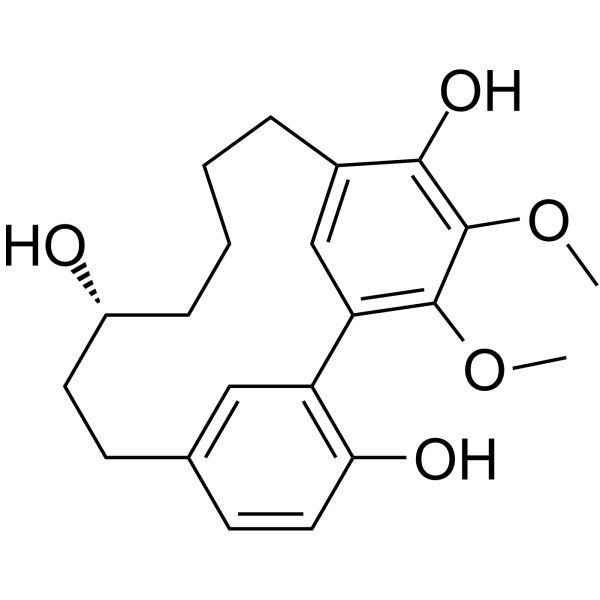
    Myricanol is a diarylheptanoid and a Nampt activator. Myricanol exerts anti-inflammatory effects and alleviates glucocorticoid-induced muscle atrophy by increasing Sirtuin 1 (SIRT1) and PRDX5 activities while regulating inflammatory factors. Myricanol exhibits growth inhibition and induces apoptosis in human lung adenocarcinoma A549 cells. Myricanol promotes autophagy-mediated clearance of microtubule-associated protein tau to exert neuroprotective effects. Myricanol protects cardiovascular function by inhibiting PDGFRβ and NF-κB signaling pathways. Myricanol activates mitochondrial transcription factor A (TFAM) expression to exert anti-renal fibrosis effects. Myricanol improves insulin resistance through AMPK activation .
    Myricanol
  • HY-N16524

    α-synuclein Neurological Disease
    Alpinin A is a diarylheptanoid found in the rhizomes of Alpinia officinarum. Alpinin A can strongly inhibit the aggregation of α-synuclein with inhibition rate of 66% at 10 μM. Alpinin A can be used for the research of neurological disease, such as Parkinson’s disease .
    Alpinin A
  • HY-N4044

    (5S)-Hirsutanonol

    COX Parasite Infection Cancer
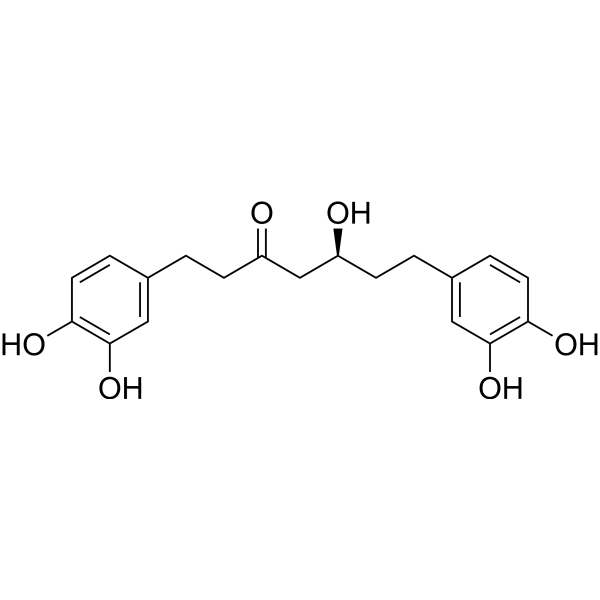
    Hirsutanonol ((5S)-Hirsutanonol) is a diarylheptanoid that can be isolated from the bark of Alnus hirsute var. sibirica. Hirsutanonol inhibits cyclooxygenase-2 (COX-2) expression. Hirsutanonol has anti-filarial with an IC50 value of 44.11 μg/mL for microfilariae .
    Hirsutanonol
  • HY-N15613

    α-synuclein Neurological Disease
    α-Synuclein inhibitor 14 (Compound 3) is a diarylheptanoid that can be isolated from Alpinia officinarum. α-Synuclein inhibitor 14 can inhibit the aggregation of α-synuclein, with an inhibition rate of 72.4% at a concentration of 10 μM. α-Synuclein inhibitor 14 can be used in the research of neurodegenerative diseases such as Parkinson's disease .
    α-Synuclein inhibitor 14
  • HY-N15215

    Enterovirus Influenza Virus RSV HSV Infection Cancer
    Antiviral agent 64 (Compound 12) is a diarylheptanoid that can be isolated from Alpinia officinarum. Antiviral agent 64 exhibits cytotoxicity in human neuroblastoma cell IMR-32 with an IC50 of 0.23 μM. Antiviral agent 64 exhibits antiviral efficacy, that inhibits RSV, poliovirus, measles virus, HSV-1, and influenza virus H1N1, with EC50 of 13.3, 3.7, 6.3, 5.7, and <10 μg/mL, respectively .
    Antiviral agent 64
  • HY-N17436

    Bacterial Inflammation/Immunology Cancer
    Demethoxyhexahydrocurcumin is a Curcumin (HY-N0005) biotransformation metabolite and diarylheptanoid with antioxidant and antimicrobial activities. Demethoxyhexahydrocurcumin scavenges free radicals, inhibits cancer cell viability, and suppresses microbial growth. Demethoxyhexahydrocurcumin can be used for the research of colorectal cancer .
    Demethoxyhexahydrocurcumin
  • HY-180408

    Influenza Virus Infection
    Platyphylloside is an anti-virus agent that can be isolated from the bark of Alnus japonica. Platyphylloside exhibits activity against H9N2 avian influenza virus. Platyphylloside can be used for the research of influenza .
    Platyphylloside

Inquiry Online

Your information is safe with us. * Required Fields.

Salutation


Country or Region *

Applicant Name *


Organization Name *

Department *


Email Address *


Product Name *

Cat. No.


Requested quantity *

Phone Number *


Remarks

Inquiry Online

Inquiry Information

Product Name:
Cat. No.:
Quantity:
MCE Japan Authorized Agent:

