
723 Results for "

drug molecules

" in MedChemExpress (MCE) Product Catalog:
Products (723)

723 Results for "drug molecules" in MCE Product Catalog:

8
8 Publications Verification
Cat. No.: HY-42973
CAS No.: 1353016-71-3
Target:  

ADC Linkers

Research Areas:  

Cancer

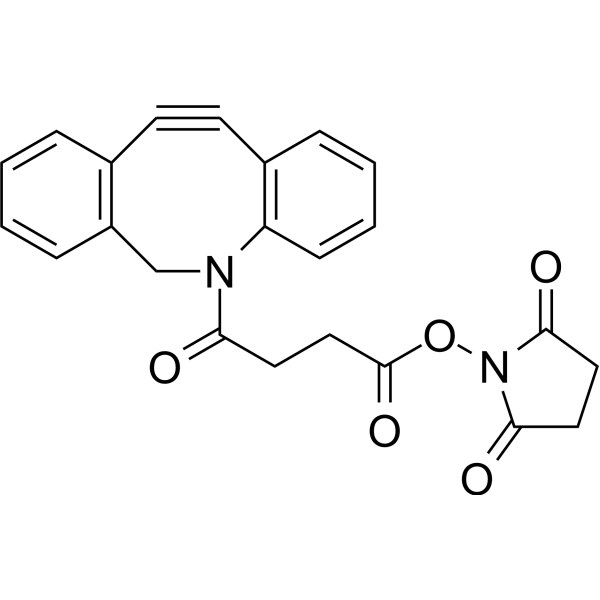
DBCO-NHS ester is a non-cleavable ADC linker used in the synthesis of antibody-drug conjugates (ADCs) . DBCO-NHS ester is a click chemistry reagent, it contains a DBCO group that can undergo strain-promoted alkyne-azide cycloaddition (SPAAC) with molecules containing Azide groups.
loading...
    loading...
3
3 Cited Publications
Cat. No.: HY-W001132
CAS No.: 120-72-9
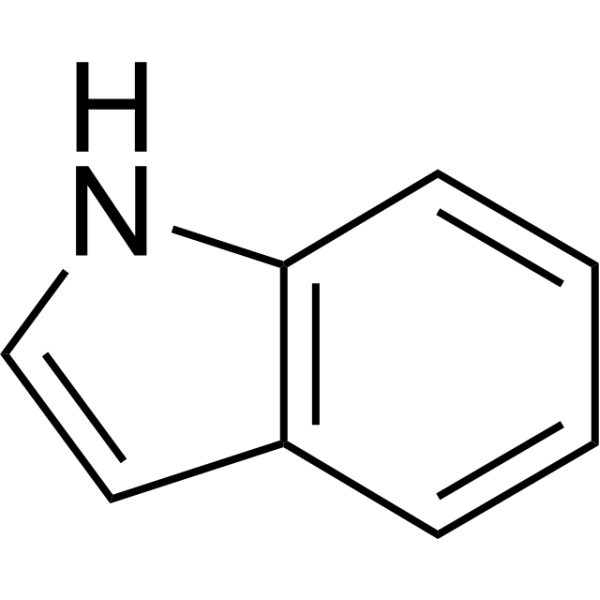
Indole is an aromatic, heterocyclic, organic compound which widely distributed in the natural environment and can be produced by a variety of bacteria. Indole regulates various aspects of bacterial physiology, including spore formation, plasmid stability, resistance to drugs, biofilm formation, and virulence as an intercellular signal molecule .
loading...
    loading...
3
3 Cited Publications
Cat. No.: HY-K0225

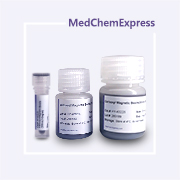
MCE Carboxyl Magnetic beads (200 nm, 10 mg/mL) are characterized by superparamagnetism, fast magnetic response, abundant carboxyl functional groups, monodispersity, and submicron scale particle size. Biological ligands (proteins, peptides, oligonucleotides, drug molecules, etc.) can be covalently coupled to the surface of microspheres under the action of special chemical reagents (such as EDC).

loading...
    loading...
3
3 Cited Publications
Cat. No.: HY-W441014
Target:  

Liposome

Research Areas:  

Others

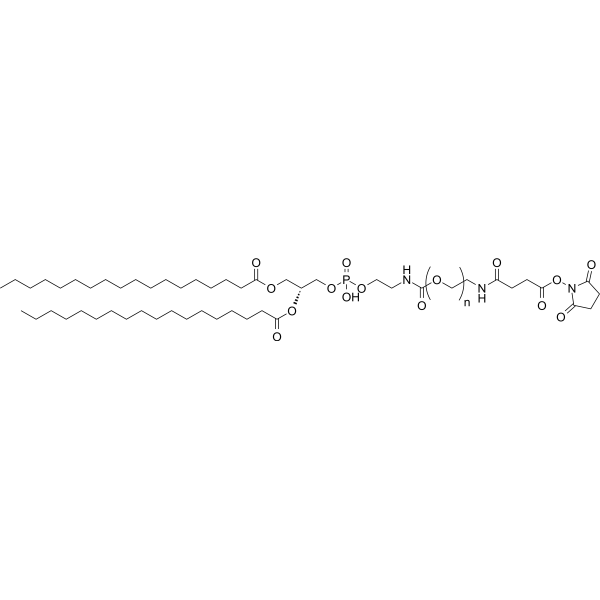
DSPE-PEG2000-NHS is a PEG-modified phospholipid derivative that can be used to prepare liposomes. DSPE-PEG2000-NHS is commonly employed as a linker molecule for the surface modification of liposomes to confer targeting capabilities. DSPE-PEG2000-NHS can be used in the study of drug delivery .
loading...
    loading...
3
3 Cited Publications
Cat. No.: HY-P1291
CAS No.: 201422-03-9
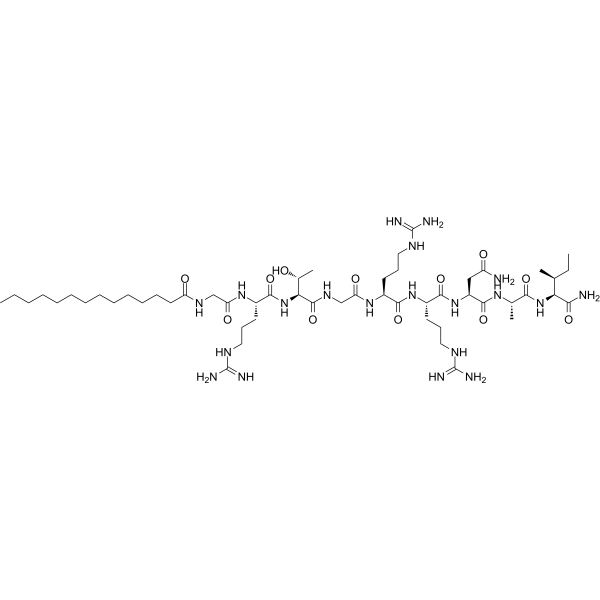
PKI 14-22 amide, myristoylated is a selective, cAMP-dependent, competitive PKA inhibitor with Ki=~36 nM. The myristoylation modification of PKI 14-22 amide, myristoylated makes it more permeable to cell membranes and blood-brain barriers than the precursor molecule. PKI 14-22 amide, myristoylated can block the phosphorylation of cAMP-dependent downstream targets (such as CREB). PKI 14-22 amide, myristoylated can prevent the development of morphine analgesic tolerance in mice, and also inhibits protein translation and negative-strand RNA synthesis of Zika virus. PKI 14-22 amide, myristoylated can be used in research fields such as opioid tolerance mechanisms and antiviral drugs .
loading...
    loading...
3
3 Cited Publications
Cat. No.: HY-P1291A
PKI 14-22 amide, myristoylated TFA is a selective, cAMP-dependent, competitive PKA inhibitor with Ki=~36 nM. The myristoylation modification of PKI 14-22 amide, myristoylated TFA makes it more permeable to cell membranes and blood-brain barriers than the precursor molecule. PKI 14-22 amide, myristoylated TFA can block the phosphorylation of cAMP-dependent downstream targets (such as CREB). PKI 14-22 amide, myristoylated TFA can prevent the development of analgesic tolerance in mice, and also inhibits protein translation and negative-strand RNA synthesis of Zika virus. PKI 14-22 amide, myristoylated TFA can be used in research fields such as opioid tolerance mechanisms and antiviral drugs .
loading...
    loading...
2
2 Cited Publications
Cat. No.: HY-104086
CAS No.: 259886-50-5
Purity:  ≥98.0%
Synonyms: CB7; Carrier CB7
Cucurbit[7]uril is a cyclic organic molecule consisting of seven glycoluril units linked by methylene bridges. It has a rigid barrel-like structure with two identical inlets at both ends to selectively encapsulate guest molecules of appropriate size, shape, and polarity. Cucurbit[7]uril is known for its high binding affinity for a variety of organic and inorganic guests, including drugs, amino acids, peptides, and metal ions. This property makes them promising candidates for various applications in areas such as drug delivery, catalysis, and sensing.
loading...
    loading...
2
2 Cited Publications
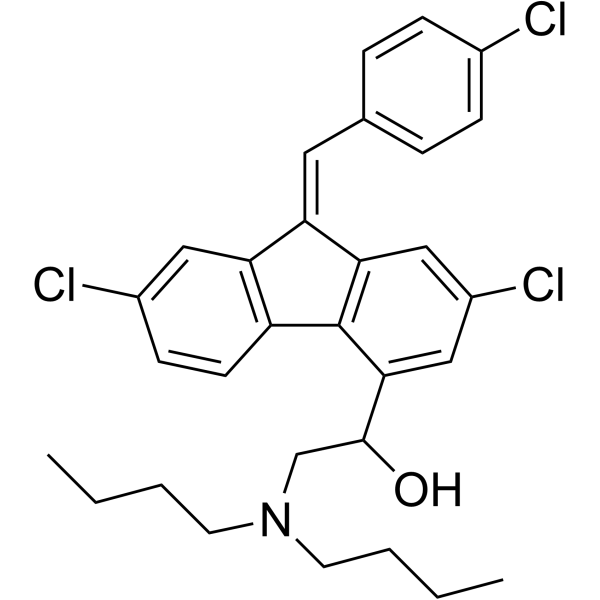
Cat. No.: HY-B0803
CAS No.: 82186-77-4
Synonyms: Benflumetol
Target:  

Parasite

Research Areas:  

Infection

Lumefantrine is an active antimalarial molecule used in combination with Artemether as a first- and second-line antimalarial drug with oral activity .
loading...
    loading...
2
2 Cited Publications
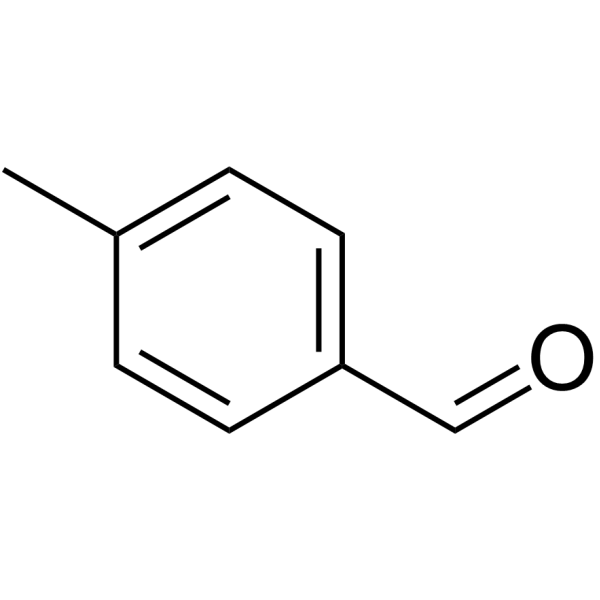
Cat. No.: HY-W012860
CAS No.: 104-87-0
p-Tolualdehyde is the active small molecule, that could used as drug intermediate .
loading...
    loading...
2
2 Cited Publications
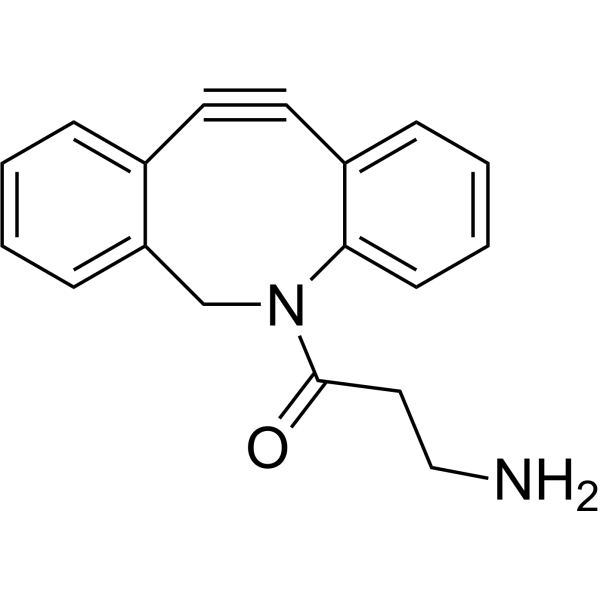
Cat. No.: HY-W000423
CAS No.: 1255942-06-3
Research Areas:  

Cancer

DBCO-amine is a click chemistry reagent, it contains a DBCO group that can undergo strain-promoted alkyne-azide cycloaddition (SPAAC) with molecules containing Azide groups. DBCO-amine is used in the synthesis of antibody-drug conjugates (ADCs) .
loading...
    loading...
2
2 Cited Publications
Cat. No.: HY-141598B
CAS No.: 2238831-60-0
Synonyms: DS-1062; Dato-DXd
Datopotamab deruxtecan (DS-1062) is a TROP2-targeted antibody-drug conjugate (ADC) with human TROP2 Kd of 0.74 nmol/L. Datopotamab deruxtecan consists of the antibody Datopotamab (HY-P99843) and the toxic molecule-linker conjugate Deruxtecan (HY-13631E). Datopotamab deruxtecan binds TROP2, triggers internalization and lysosomal trafficking and releases DXd topoisomerase I inhibitor payload. Datopotamab deruxtecan disrupts DNA function, induces DNA damage, apoptosis, and bystander killing of tumor microenvironment cells. Datopotamab deruxtecan can be used in research related to triple-negative breast cancer, gastric cancer, and non-small cell lung cancer .
loading...
    loading...
2
2 Cited Publications
Cat. No.: HY-141598
CAS No.: 2238831-60-0
Purity:  99.54%
Synonyms: DS-1062 (solution); Dato-DXd (solution)
Datopotamab deruxtecan (DS-1062) solution is a TROP2-targeted antibody-drug conjugate (ADC) with human TROP2 Kd of 0.74 nmol/L. Datopotamab deruxtecan solution consists of the antibody Datopotamab (HY-P99843) and the toxic molecule-linker conjugate Deruxtecan (HY-13631E). Datopotamab deruxtecan solution binds TROP2, triggers internalization and lysosomal trafficking and releases DXd topoisomerase I inhibitor payload. Datopotamab deruxtecan solution disrupts DNA function, induces DNA damage, apoptosis, and bystander killing of tumor microenvironment cells. Datopotamab deruxtecan solution can be used in research related to triple-negative breast cancer, gastric cancer, and non-small cell lung cancer .
loading...
    loading...
1
1 Cited Publications
Cat. No.: HY-153069
CAS No.: 251459-32-2
Purity:  99.71%
Research Areas:  

Cancer

GGFG-PAB-Exatecan consists of an ADC toxin Exatecan (HY-13631) and a linker GGFG-PAB, and can be used as a drug-linker conjugate for the synthesis of ADC molecules .
loading...
    loading...
1
1 Cited Publications
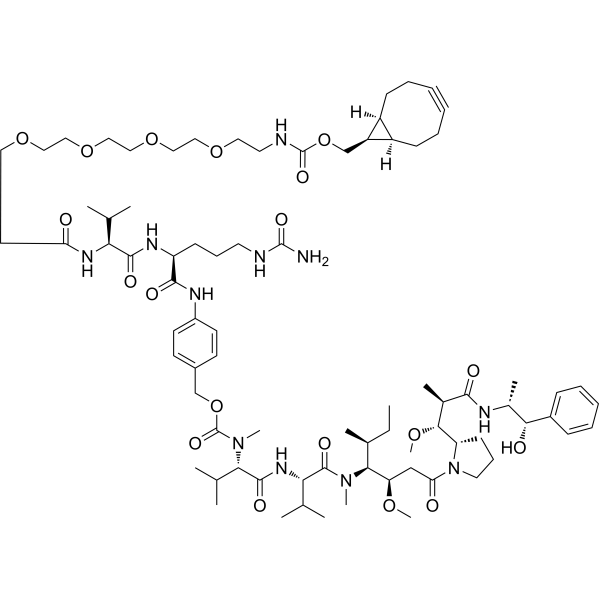
Cat. No.: HY-141155
CAS No.: 2762519-08-2
Purity:  99.95%
Research Areas:  

Cancer

endo-BCN-PEG4-Val-Cit-PAB-MMAE is a cleavable ADC linker conjugated with drug containing 4-unit PEG, which can be used for synthesizing antibody-drug conjugates (ADCs). endo-BCN-PEG4-Val-Cit-PAB-MMAE is a click chemistry reagent, it contains a BCN group that can undergo strain-promoted alkyne-azide cycloaddition (SPAAC) with molecules containing Azide groups .
loading...
    loading...
1
1 Cited Publications
Cat. No.: HY-135966
CAS No.: 2446160-73-0
Purity:  ≥95.0%
Target:  

ADC Linkers

Research Areas:  

Cancer

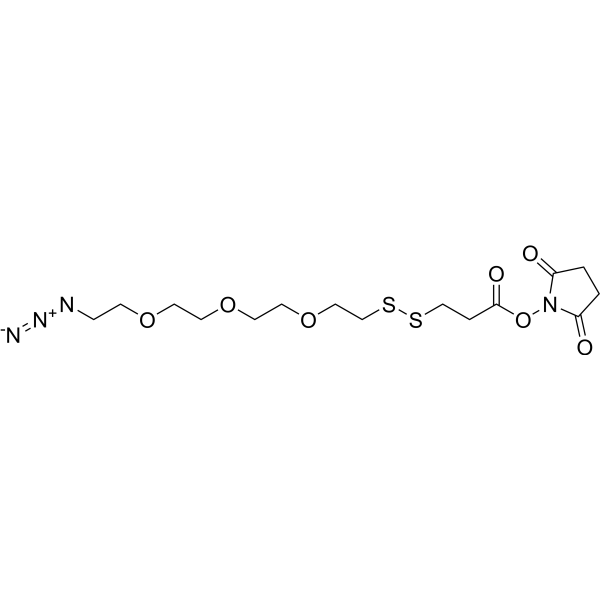
Azido-PEG3-SS-NHS is a cleavable 3 unit PEG ADC linker used in the synthesis of antibody-drug conjugates (ADCs) . Azido-PEG3-SS-NHS is a click chemistry reagent, it contains an Azide group and can undergo copper-catalyzed azide-alkyne cycloaddition reaction (CuAAc) with molecules containing Alkyne groups. It can also undergo strain-promoted alkyne-azide cycloaddition (SPAAC) reactions with molecules containing DBCO or BCN groups.
loading...
    loading...
1
1 Cited Publications
Cat. No.: HY-133429
CAS No.: 2748394-67-2
Purity:  98.05%
Target:  

ADC Linkers

Research Areas:  

Cancer

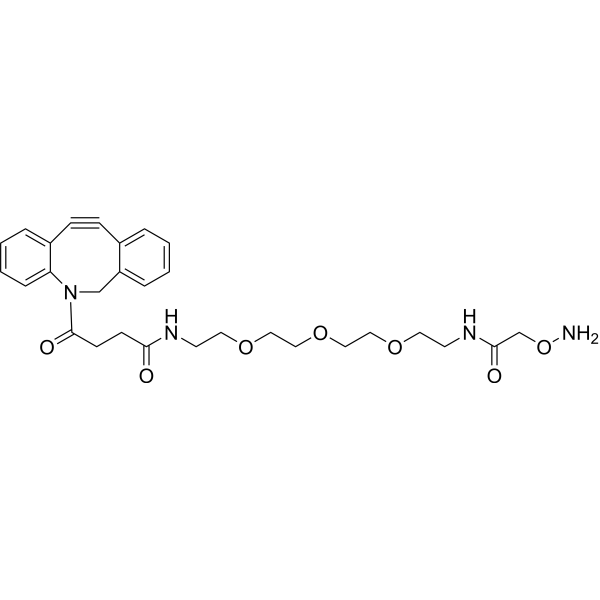
DBCO-PEG3-oxyamine is a non-cleavable 3 unit PEG ADC linker used in the synthesis of antibody-drug conjugates (ADCs) . DBCO-PEG3-oxyamine is a click chemistry reagent, it contains a DBCO group that can undergo strain-promoted alkyne-azide cycloaddition (SPAAC) with molecules containing Azide groups.
loading...
    loading...
1
1 Cited Publications
Cat. No.: HY-140139
CAS No.: 1802907-98-7
Purity:  ≥95.0%
Target:  

ADC Linkers

Research Areas:  

Cancer

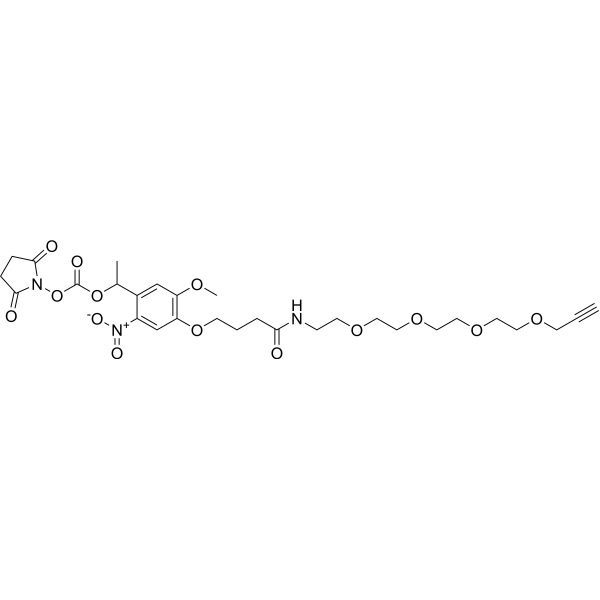
PC Alkyne-PEG4-NHS ester is a cleavable 4 unit PEG ADC linker used in the synthesis of antibody-drug conjugates (ADCs) . PC Alkyne-PEG4-NHS ester is a click chemistry reagent, it contains an Alkyne group and can undergo copper-catalyzed azide-alkyne cycloaddition (CuAAc) with molecules containing Azide groups.
loading...
    loading...
1
1 Cited Publications
Cat. No.: HY-126526
CAS No.: 1312309-64-0
Purity:  ≥97.0%
Target:  

ADC Linkers

Research Areas:  

Cancer

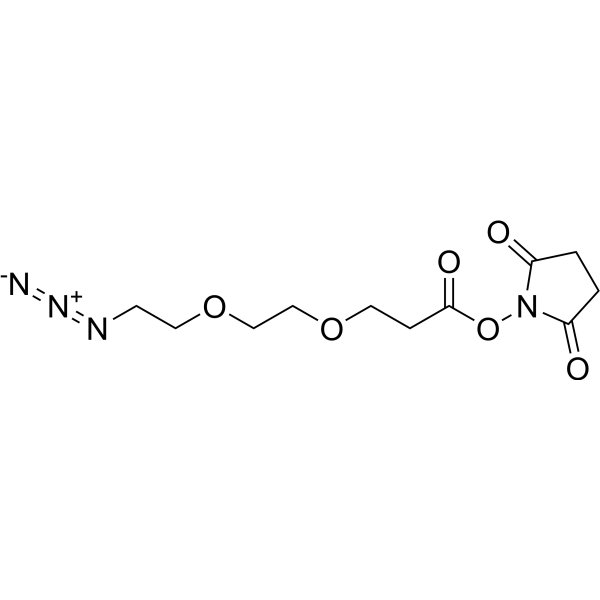
N3-PEG2-C2-NHS ester is a nonclaevable 2-unit PEG linker used in the synthesis of antibody-drug conjugates (ADCs). N3-PEG2-C2-NHS ester is a click chemistry reagent, it contains an Azide group and can undergo copper-catalyzed azide-alkyne cycloaddition reaction (CuAAc) with molecules containing Alkyne groups. It can also undergo strain-promoted alkyne-azide cycloaddition (SPAAC) reactions with molecules containing DBCO or BCN groups.
loading...
    loading...
1
1 Cited Publications
Cat. No.: HY-D1719A
Target:  

Fluorescent Dye

Research Areas:  

Cancer

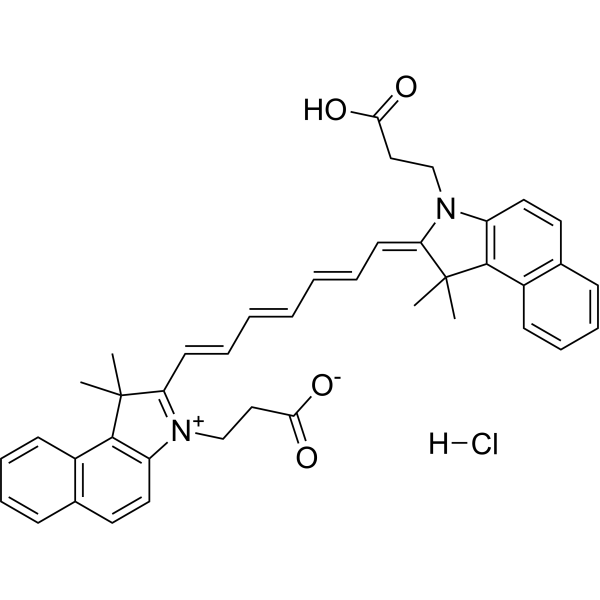
Cypate is a near-infrared fluorescent dye that belongs to the family of photosensitizers. Cypate has high photostability and optical properties, and is often used in near-infrared optical imaging, as well as optical imaging, tumor marking, and drug delivery. In addition, Cypate is also used as a molecular probe and combined with targeting molecules (such as CBT or small interfering RNA) to achieve efficient detection and imaging of specific cells or tissues .
loading...
    loading...
1
1 Cited Publications
Cat. No.: HY-142978
CAS No.: 156543-00-9
Synonyms: DSPE-mPEG2000
Target:  

Liposome

Research Areas:  

Others

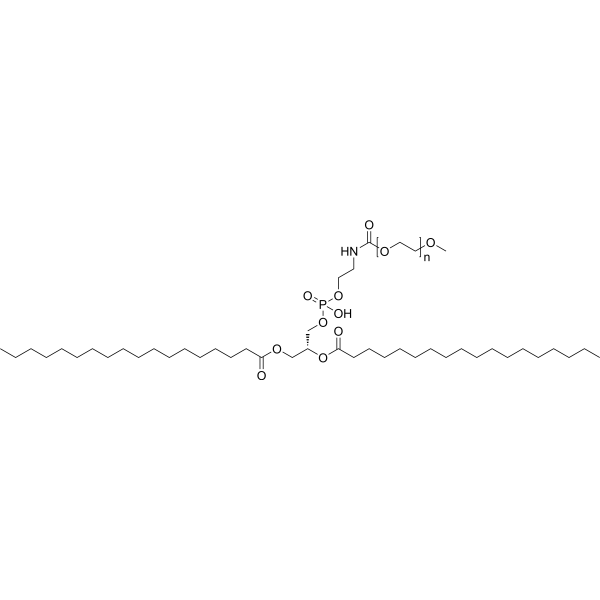
18:0 mPEG2000 PE (DSPE-mPEG2000) ammonium is a kind of amphiphilic polymer material. 18:0 mPEG2000 PE ammonium combines hydrophobic lipids (18:0 stearic acid chain) with hydrophilic polyethylene glycol (2 kDa) chains to form amphiphilic molecules, which are used to construct stable liposomes/nanoparticles, thereby enhancing drug delivery, prolonging circulation time, and achieving targeted effects through its functional terminal groups (usually biotin or carboxyl groups). 18:0 mPEG2000 PE ammonium can be used for the research of nanoprobes and drug delivery .
loading...
    loading...