




1. Search Result
Search Result
Results for "

ester bonds

" in MedChemExpress (MCE) Product Catalog:

559

Inhibitors & Agonists

26

Screening Libraries

87

Fluorescent Dyes

152

Biochemical Assay Reagents

16

Peptides

15

MCE Kits

2

Inhibitory Antibodies

31

Natural
Products

12

Isotope-Labeled Compounds

14

Click Chemistry

19

Oligonucleotides

2

GMP Molecules

Cat. No. Product Name Target Research Areas Chemical Structure
  • HY-O0004

    MMP Metabolic Disease
    Collagenases are enzymes that break the peptide bonds in collagen. Collagenases are derived from the Clostridium histolyticum. Collagenases (Type I) are proteolytic enzymes that break peptide bonds in collagen and can be used for tissue digestion and dissociation.
    Collagenase I, from Clostridium histolyticum
  • HY-Z0275

    Biochemical Assay Reagents Bacterial Infection
    HOAT is a peptide bond-forming reagent. HOAT is utilized to affect formation of peptide bonds by coupling carboxylic acids with amines. HOAt is not mutagenic in the bacterial reverse mutation test .
    HOAT
  • HY-P3004

    Lyticase

    Endogenous Metabolite Fungal Infection
    Endo-1,3-β-glucanase (Lyticase) is an endoenzyme that can specifically cleave β-1,3-glycosidic bonds. Endo-1,3-β-glucanase recognizes and binds to β-1,3-glucan chains, catalyzing the cleavage of glycosidic bonds and hydrolyzing polysaccharides into oligosaccharides. Endo-1,3-β-glucanase eliminates vaginal Candida. Endo-1,3-β-glucanase can be used in the study of recurrent Candida vaginitis .
    Endo-1,3-β-glucanase
  • HY-P2875

    Endogenous Metabolite Others
    Hemicellulase is a hemicellulose-targeting hydrolase that breaks down the binding of glucose and polymers to water molecules present in plant fibers. Hemicellulase specifically degrades hemicellulose (such as xylan and mannan) in plant cell walls by hydrolyzing β-1,4-xylosidic bonds and ester bonds (such as acetyl and ferulic acid ester bonds). Hemicellulase relies on the synergistic action of the glycoside hydrolase (GH) and carbohydrate esterase (CE) families to achieve efficient hydrolysis through acid-base catalysis (such as Glu/Asp residues) and substrate binding pockets. Hemicellulase can be used in the food industry (such as improving bread texture), biofuel production (lignocellulose pretreatment) and paper industry (biobleaching) .
    Hemicellulase
  • HY-E70200

    Ser/Thr Protease Others
    Recombinant Kex2 protease is a membrane-bound, Ca 2+-dependent serine protease. Recombinant Kex2 protease specifically recognize and cleave the carboxyl-terminal peptide bonds of dibasic amino acids .
    Recombinant Kex2 protease
  • HY-P2863
    Deoxyribonuclease II
    2 Publications Verification

    DNase II

    Endonuclease Others
    Deoxyribonuclease II (DNase II) is an endonuclease that hydrolyzes the phosphodiester bonds of deoxyribonucleotides in native and denatured DNA, producing 3' phosphate and 5'-hydroxyl termini. Deoxyribonuclease II works best at acidic pH and is commonly used in biochemical research .
    Deoxyribonuclease II
  • HY-111951
    D-Panose
    1 Publications Verification

    Endogenous Metabolite Others
    D-Panose is an oligosaccharide composed of glucose units linked by specific glycosidic bonds .
    D-Panose
  • HY-Y1422I

    Environmental Pollutants Biochemical Assay Reagents Lipase Others
    Lipase, Pseudomonas fluorescens (Immobilized) is an immobilized biocatalyst derived from Pseudomonas fluorescens. Lipase, Pseudomonas fluorescens (Immobilized) efficiently catalyzes the hydrolysis, esterification and transesterification of triacylglycerols in solvent-free systems, and is particularly suitable for biodiesel production from soybean oil and selective modification of oils rich in EPA and DHA. Lipase, Pseudomonas fluorescens (Immobilized) exhibits optimal activity at pH 8.5 and 45°C, and retains residual activity after repeated cycles of use. Lipase, Pseudomonas fluorescens (Immobilized) is activated by Ca 2+, but inhibited by Co 2+, Ni 2+, Fe 3+, Fe 2+ and EDTA .
    Lipase,Pseudomonas fluorescens (Immobilized)
  • HY-P3208B

    Biochemical Assay Reagents Others
    Endoproteinase Lys-C (MS grade) is a hydrolase that cleaves peptide bonds at the carboxyl side of lysine residues. Endoproteinase Lys-C (MS grade) causes non-specific hydrolysis of peptide bonds linked to the carboxyl groups of non-lysine residues, resulting in partial cleavage at these sites .
    Endoproteinase Lys-C (MS grade)
  • HY-P2838

    Creatinine amidohydrolase; CAH

    Endogenous Metabolite Metabolic Disease
    Creatininase, Microorganism (Creatinine amidohydrolase; CAH), namely creatinine amidohydrolase, from Pseudomonas putida, is a homohexameric enzyme commonly used in biochemical research. Creatininase acts on carbon-nitrogen bonds other than peptide bonds, and can catalyze the hydrolysis of creatinine to creatine, which can then be metabolized by creatinase to urea and sarcosine .
    Creatininase, Microorganism
  • HY-112624H

    Dextran 2; Dextran D2; Dextran T2(MW 1600-2400)

    Biochemical Assay Reagents Others
    Dextran T2 (Dextran 2; Dextran T2(MW 1600-2400)) is a natural high molecular weight polysaccharide, the glycosidic bonds in its structure can be recognized by endo-dextranase and exo-dextranase. Dextran T2 (MW 2,000) breaks the glycosidic bonds in the enzymatic hydrolysis mechanism, releasing products such as D-glucose, Isomaltose (IM2), and Isomaltotriose (IM3). Dextran T2 (MW 2,000) can be used as a model substrate to characterize the catalytic properties of dextranase (such as optimal pH, temperature and product specificity), and to study enzymatic mechanism research and polysaccharide degradation pathways in glycobiology. The Dextran series of compounds are also a natural polysaccharide drug carrier, which can be connected to drugs through covalent bonding methods such as ester bonds, amide bonds or click chemistry, or self-assembled to form carriers such as nanoparticles and hydrogels. Dextran is biodegradable and biocompatible, and can achieve targeted delivery and controlled release of drugs. Dextran derivatives can prolong drug half-life, increase local concentration and reduce immune clearance activity .
    Dextran T2 (MW 2,000)
  • HY-W009439

    GlcN6P; D-Glucosamine-6-sulfate

    Biochemical Assay Reagents Others
    Glucosamine 6-sulfate (GlcN6P) is an organic cofactor that splits phosphodiester bonds. Glucosamine 6-sulfate plays a variety of catalytic roles in glmS ribozymes .
    Glucosamine 6-sulfate
  • HY-Y1422H

    Environmental Pollutants Biochemical Assay Reagents Lipase Others
    Lipase, Candida cylindracea (Immobilized) is an immobilized hydrolase and biocatalyst with relaxed positional and substrate specificity. Lipase, Candida cylindracea (Immobilized) can target primary and secondary ester bonds to completely hydrolyze triglycerides into fatty acids and glycerol, producing only trace amounts of monoglycerides. Lipase, Candida cylindracea (Immobilized) exhibits chain specificity, with a relatively fast hydrolysis rate for oleic acid and lauric acid chains, and the slowest hydrolysis rate for stearic acid chains. Lipase, Candida cylindracea (Immobilized) shows high catalytic activity toward long-chain triglycerides under the conditions of pH 8.0 and 37°C .
    Lipase,Candida cylindracea (Immobilized)
  • HY-158089
    PLGA-COOH (MW 80000) (LA/GA 50:50)
    1 Publications Verification

    Biochemical Assay Reagents Others
    PLGA-COOH (MW 80000) (LA/GA 50:50) is a copolymer composed of lactic acid (LA)-glycolic acid (GA) at a molar ratio of 50:50 and a terminal carboxyl group. PLGA-COOH (MW 80000) (LA/GA 50:50) is used in compound delivery systems due to its biocompatibility and biodegradability .
    PLGA-COOH (MW 80000) (LA/GA 50:50)
  • HY-W437745

    Fluorescent Dye Others
    Desthiobiotin-NHS ester is a biotinylated biochemical assay reagent that reacts with amine groups (such as lysine residues) of proteins or other biomolecules to form stable amide bonds. Desthiobiotin-NHS ester can be used as probes for metalloproteins .
    Desthiobiotin-NHS ester
  • HY-P3187

    DNA/RNA Synthesis Others
    Exo-1,4-β-xylosidase is an exonuclease that specifically acts on the β-1,4 glycosidic bonds at the non-reducing ends of xylan and xylooligosaccharides. Exo-1,4-β-xylosidase is Ca 2+-dependent and reversibly binds to metal ions to catalyze the hydrolysis of β-1,4 glycosidic bonds, thereby degrading xylan to produce xylose. Exo-1,4-β-xylosidase can be used in research fields such as lignocellulose bioconversion, bioethanol production, and optimization of xylan saccharification processes .
    exo-β-1,4-Xylosidase, Cellulosimicrobium cellulans sp. 21
  • HY-108605

    Pim Cancer
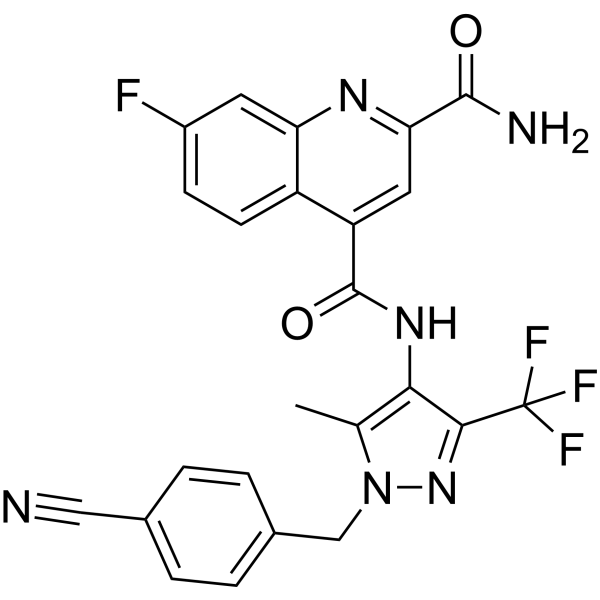
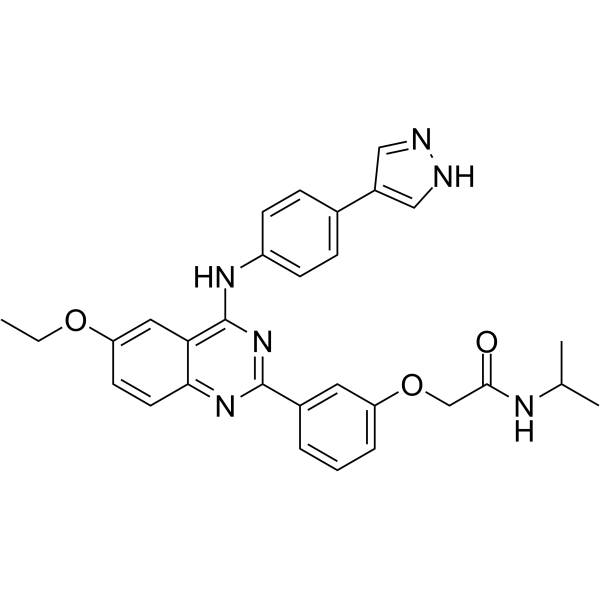
    PIM1-IN-2 is a potent and ATP competitive Pim-1 inhibitor with a Ki of 91 nM. PIM1-IN-2 targets the ATP-binding kinase hinge region not by forming classical hydrogen bonds .
    PIM1-IN-2
  • HY-W590531

    Biochemical Assay Reagents Liposome Others
    80-O16B is an ionizable cationic lipid containing disulfide bonds that can be used to prepare lipid nanoparticles (LNP) .
    80-O16B
  • HY-E70115

    Others Others
    Feruloyl esterase plays a major role in the degradation of plant biomass. Feruloyl esterase catalyzes the cleavage and formation of ester bonds between plant cell wall polysaccharide and phenolic acid .
    Feruloyl esterase
  • HY-D2493

    Cy7 COOH

    Fluorescent Dye Others
    Cyanine7 carboxylic acid (Cy7 COOH) is a derivative of Cy7 (HY-D0825) dye. Cyanine7 carboxylic acid contains carboxyl groups, which can condense ammonia to form covalent bonds .
    Cyanine7 carboxylic acid
  • HY-NP161

    MAP

    Biochemical Assay Reagents Others
    Mussel Adhesive Protein (MAP) is a mussel-derived mucin. Mussel Adhesive Protein can be formulated into a waterproof, eco-safe adhesive that bonds materials such as glass, plastic, metal and wood to bones or teeth, biological organisms, and other chemicals or molecules .
    Mussel Adhesive Protein
  • HY-30014
    4-Bromo-7-azaindole
    1 Publications Verification

    Drug Intermediate Others
    4-Bromo-7-azaindole is a brominated derivative of 7-azaindole. 4-Bromo-7-azaindole serves as a substrate for palladium-catalyzed C-N and C-O cross-coupling reactions, reacting with amides, amines, amino acid esters and phenols .
    4-Bromo-7-azaindole
  • HY-120996B

    cis-10-Pentadecenoic acid

    Biochemical Assay Reagents Others
    10(Z)-Pentadecenoic acid is an unsaturated fatty acid. Unsaturated fatty acids are an important class of lipid molecules whose chemical structure contains one or more double bonds.
    10(Z)-Pentadecenoic acid
  • HY-P3150

    Ser/Thr Protease Others
    Recombinant Proteinase K is a serine protease that cleaves the carboxy-terminated peptide bonds of aliphatic and aromatic amino acids. Recombinant Proteinase K can be used to digest proteins and remove contamination from nucleic acid preparations .
    Recombinant Proteinase K
  • HY-P2827

    ACS

    Acetyl-CoA synthetase Cancer
    Acetyl-CoA synthetase (ACS) is a key enzyme that catalyzes the conversion of acetate to acetyl-CoA (Ac-CoA). Acetyl-CoA synthetase catalyzes the formation of thioester bonds between coenzyme A and carboxylic acids, while simultaneously hydrolyzing ATP into AMP and pyrophosphate .
    Acetyl-CoA synthetase
  • HY-W190877

    SH-PEG1-COOH

    Biochemical Assay Reagents Others
    Thiol-PEG1-acid (SH-PEG1-COOH) is a PEG derivative consisting of a thiol (-SH), 1 PEG unit, and a carboxyl (-COOH). The thiol is a highly reactive chemical group that can react specifically with a variety of molecules to form stable covalent bonds. The carboxyl group can easily form stable amide bonds with amino groups, and can also form ester bonds with hydroxyl groups.
    Thiol-PEG1-acid
  • HY-W094511

    Gold chloride sodium dihydrate

    Biochemical Assay Reagents Others
    Tetrachloroaurate III sodium dihydrate (Gold chloride sodium dihydrate) is utilized as catalyst in reactions like nucleophilic addition to multiple bonds, nucleophilic substitution of propargylic alcohols, and nonsymmetrical etherization .
    Tetrachloroaurate(III) sodium dihydrate
  • HY-129654

    Sodium (2-Sulfonatoethyl)methanethiosulfonate

    Biochemical Assay Reagents Others
    MTSES sodium (Sodium (2-Sulfonatoethyl)methanethiosulfonate) is a negatively charged, membrane-impermeable methanethiosulfonate (MTS). MTS is a compound that reacts with sulfhydryl groups to form mixed disulfide bonds and is often used to study cysteine ??residues on proteins.
    MTSES sodium
  • HY-W111005

    DNA Alkylator/Crosslinker Cancer
    1-Chloromethylpyrene is an alkylating agent that enters the DNA double helix structure through intercalation, forms covalent bonds with electrophilic groups, resulting in DNA cross-linking, thereby inhibiting the proliferation of tumor cells .
    1-Chloromethylpyrene
  • HY-143700

    Biochemical Assay Reagents Others
    18:0 DAP is a cationic or ionizable lipid with no unsaturated bonds in its hydrocarbon chain. The mRNA encapsulation efficiency of 18:0 DAP is 0%. 18:0 DAP cannot form functional lipid nanoparticles suitable for mRNA delivery .
    18:0 DAP
  • HY-151647

    Biochemical Assay Reagents Others
    3-Azidopropanoic acid-PFP ester is an azidopropanoic acid linker that contains an activated PFP ester. The azide group can undergo copper-catalyzed Click Chemistry reactions with alkynes, DBCO and BCN to form triazole linkages. The activated PFP ester can react with amine groups to form stable amide bonds . 3-Azidopropanoic acid-PFP ester is a click chemistry reagent, it contains an Azide group and can undergo copper-catalyzed azide-alkyne cycloaddition reaction (CuAAc) with molecules containing Alkyne groups. It can also undergo strain-promoted alkyne-azide cycloaddition (SPAAC) reactions with molecules containing DBCO or BCN groups.
    3-Azidopropanoic acid-PFP ester
  • HY-E70018

    Endogenous Metabolite Infection Metabolic Disease
    Picornain 3C is a protease found in picornaviruses, which cleaves peptide bonds of non-terminal sequences. Picornain 3C is an intermediate between the serine peptidase chymotrypsin and the cysteine peptidase papain. Picornain 3C shows endopeptidase activity by selectively cleaving Gln-Gly bonds in the polyprotein of poliovirus and with substitution of Glu for Gln, and Ser or Thr for Gly in other picornaviruses .
    Picornain 3C
  • HY-P2927

    PDI Cardiovascular Disease
    Protein disulfide isomerase is a prototypic thiol isomerase that catalyzes the formation and cleavage of thiol-disulfide bonds during protein folding in the endoplasmic reticulum (ER). Protein disulfide isomerase can be used for the study of cardiovascular diseases .
    Protein disulfide isomerase
  • HY-W701082

    Amino Acid Derivatives Others
    Cyclo(leucylleucine) is a cyclic dipeptide formed by the cyclization of two leucine molecules via peptide bonds, and it can be used in the preparation of nanomaterials .
    Cyclo(leucylleucine)
  • HY-112108D

    COS (MW 2000)

    Biochemical Assay Reagents Others
    Chitosan oligosaccharide (MW 2000) (COS (MW 2000)) is a degradation product of chitosan. It is an oligosaccharide composed of 2-20 glucosamine groups linked by β-(1→4) glycosidic bonds .
    Chitosan oligosaccharide (MW 2000)
  • HY-N16390

    Drug Derivative Others
    16-Hydroxy-9-hexadecenoic acid is a minor hydroxy fatty acid component. 16-Hydroxy-9-hexadecenoic acid can form ester bonds with terpenoid acids to form monoester or polyester structures in cordyceps .
    16-Hydroxy-9-hexadecenoic acid
  • HY-W024564

    Acetamidomethanol

    Biochemical Assay Reagents Others
    N-(Hydroxymethyl)acetamide (Acetamidomethanol) is a model molecule of Ceramide. The dimers of N-(Hydroxymethyl)acetamide have various hydrogen bonds, and the three-dimensional network structure formed by these hydrogen bonds may be the main reason for the barrier function of the stratum corneum of the skin .
    N-(Hydroxymethyl)acetamide
  • HY-E70017

    Erepsin; Peptidase (IMPa)

    Others Others
    Peptidase (IMPa) (Erepsin) is catalytically active enzyme that cleaves peptide bonds in proteins and peptides by hydrolysis .
    Peptidase, microorganism
  • HY-P3183

    Diisopropylfluorophosphatase

    Biochemical Assay Reagents Others
    Organophosphorus acid anhydrolase (Diisopropylfluorophosphatase) is a hydrolase that target phosphoanhydride bonds of organophosphate compounds such as phosphorus-halide and phosphoruscyanide .
    Organophosphorus acid anhydrolase
  • HY-W800846

    Biochemical Assay Reagents Others
    Fmoc-Amido-Tri-(carboxyethoxymethyl)-methane is a multifunctional reagent containing three carboxylic acids and a primary amine that is Fmoc-protected. The carboxylic acids can react with primary amine groups to form stable amide bonds. The Fmoc protecting group can be removed using piperidine, freeing up the amine for a variety of uses such as coupling with carboxylic acids to form amide bonds.
    Fmoc-Amido-Tri-(carboxyethoxymethyl)-methane
  • HY-W1049075E

    Biochemical Assay Reagents Others
    mPEG-pALD (MW 2000) is an important unilaterally active PEG derivative whose reactive groups can react with amines, peptides and the N-termini of proteins to form imines containing C=N double bonds, which can be further reduced. Polyethylene glycol aldehyde or ketone derivatives can be used for reversible PEGylation by reacting with hydrazine or hydrazine to form hydrolyzed acylhydrazone bonds .
    mPEG-pALD (MW 2000)
  • HY-W1049075B

    Biochemical Assay Reagents Others
    mPEG10000-Pald is an important unilaterally active PEG derivative whose reactive groups can react with amines, peptides and the N-termini of proteins to form imines containing C=N double bonds, which can be further reduced. Polyethylene glycol aldehyde or ketone derivatives can be used for reversible PEGylation by reacting with hydrazine or hydrazine to form hydrolyzed acylhydrazone bonds .
    mPEG10000-Pald
  • HY-W1049075D

    Biochemical Assay Reagents Others
    mPEG40000-pALD is an important unilaterally active PEG derivative whose reactive groups can react with amines, peptides and the N-termini of proteins to form imines containing C=N double bonds, which can be further reduced. Polyethylene glycol aldehyde or ketone derivatives can be used for reversible PEGylation by reacting with hydrazine or hydrazine to form hydrolyzed acylhydrazone bonds .
    mPEG40000-pALD
  • HY-W698574

    Biochemical Assay Reagents
    Dansylamidoethyl mercaptan is a molecule that reacts with -SH groups of proteins and other sulfhydryl-containing molecules and has activity for detecting SS bonds in proteins.
    Dansylamidoethyl mercaptan
  • HY-W739486

    Biochemical Assay Reagents Others
    10,12-Octadecadienoic acid is a mixture of geometric and positional isomers of Octadecadienoic Acid in which the double bonds are conjugated instead of being methylene separated as they are in Linoleic Acid.
    10,12-Octadecadienoic acid
  • HY-145065

    Phosphodiesterase (PDE) Infection Cancer
    Enpp-1-IN-7 is a potent inhibitor of ectonucleotide pyrophosphatase-phosphodiesterase 1 (enpp-1). The ENPP 1 has broad specificity and can cleave a variety of substrates, including phosphodiester bonds of nucleotides and nucleotide sugars and pyrophosphate bonds nucleotides and nucleotide sugars. Enpp-1-IN-7 has the potential for the research of cancer and infectious diseases (extracted from patent WO2021203772A1, compound 51) .
    Enpp-1-IN-7
  • HY-145064

    Phosphodiesterase (PDE) Infection Cancer
    Enpp-1-IN-6 is a potent inhibitor of ectonucleotide pyrophosphatase-phosphodiesterase 1 (enpp-1). The ENPP 1 has broad specificity and can cleave a variety of substrates, including phosphodiester bonds of nucleotides and nucleotide sugars and pyrophosphate bonds nucleotides and nucleotide sugars. Enpp-1-IN-6 has the potential for the research of cancer and infectious diseases (extracted from patent WO2021203772A1, compound 51) .
    Enpp-1-IN-6
  • HY-145070

    Phosphodiesterase (PDE) Infection Cancer
    Enpp-1-IN-9 is a potent inhibitor of ectonucleotide pyrophosphatase-phosphodiesterase 1 (enpp-1). The ENPP 1 has broad specificity and can cleave a variety of substrates, including phosphodiester bonds of nucleotides and nucleotide sugars and pyrophosphate bonds nucleotides and nucleotide sugars. Enpp-1-IN-9 has the potential for the research of cancer and infectious diseases (extracted from patent WO2021203772A1, compound 51) .
    Enpp-1-IN-9
  • HY-145069

    Phosphodiesterase (PDE) Cancer
    Enpp-1-IN-8 is a potent inhibitor of ectonucleotide pyrophosphatase-phosphodiesterase 1 (enpp-1). The ENPP 1 has broad specificity and can cleave a variety of substrates, including phosphodiester bonds of nucleotides and nucleotide sugars and pyrophosphate bonds nucleotides and nucleotide sugars. Enpp-1-IN-8 has the potential for the research of cancer and infectious diseases (extracted from patent WO2021203772A1, compound 51) .
    Enpp-1-IN-8
  • HY-161948

    Ferroptosis Cancer
    Ferroptosis inducer-4 (Compound 5) is a ferroptosis (Ferroptosis) inducer with a structure featuring terminal double bonds introduced at the sn-2 position of phospholipids. Ferroptosis inducer-4 exhibits significant cytotoxicity towards HT-1080 cells, with an IC50 of 18 μM. This cytotoxic mechanism involves the generation of lipid peroxides and oxidative damage to the cell membrane triggered by the terminal double bonds. Ferroptosis inducer-4 can be used for research on ferroptosis regulation .
    Ferroptosis inducer-4

Inquiry Online

Your information is safe with us. * Required Fields.

Salutation


Country or Region *

Applicant Name *


Organization Name *

Department *


Email Address *


Product Name *

Cat. No.


Requested quantity *

Phone Number *


Remarks

Inquiry Online

Inquiry Information

Product Name:
Cat. No.:
Quantity:
MCE Japan Authorized Agent:

