1. Search Result
Search Result
Results for "

eukaryotic translation factor

" in MedChemExpress (MCE) Product Catalog:

24

Inhibitors & Agonists

2

Natural
Products

19

Recombinant Proteins

38

Antibodies

1

Oligonucleotides

Cat. No. 상품명 Target 연구분야 Chemical Structure
  • HY-108666
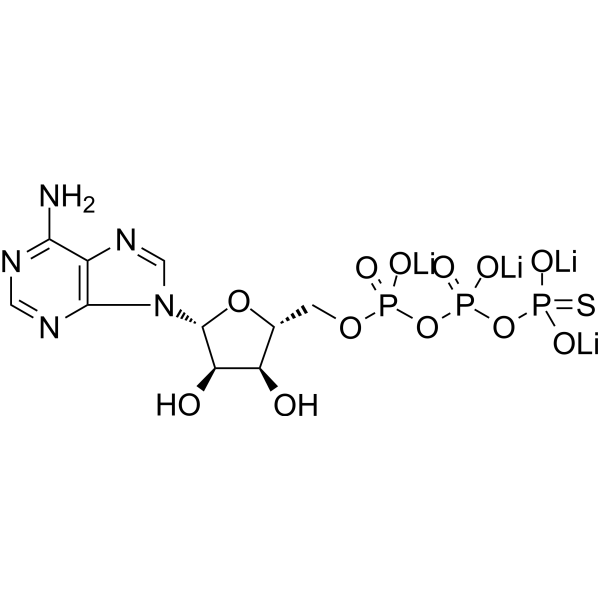
    ATPγS tetralithium salt
    1 Publications Verification

    Adenosine-5'-O-3-thiotriphosphate tetralithium salt; Adenosine 5'-[γ-thio]triphosphate tetralithium salt

    Eukaryotic Initiation Factor (eIF) P2Y Receptor Neurological Disease Metabolic Disease Inflammation/Immunology
    ATPγS (tetralithium salt) is a P2Y11 receptor agonist, an antioxidant and a neuroprotective agent. ATPγS (tetralithium salt) can be used as a substrate for the nucleotide hydrolysis and RNA unwinding activities of eukaryotic translation initiation factor eIF4A. ATPγS (tetralithium salt) is active in ATP hydrolysis .
    ATPγS tetralithium salt
  • HY-13251
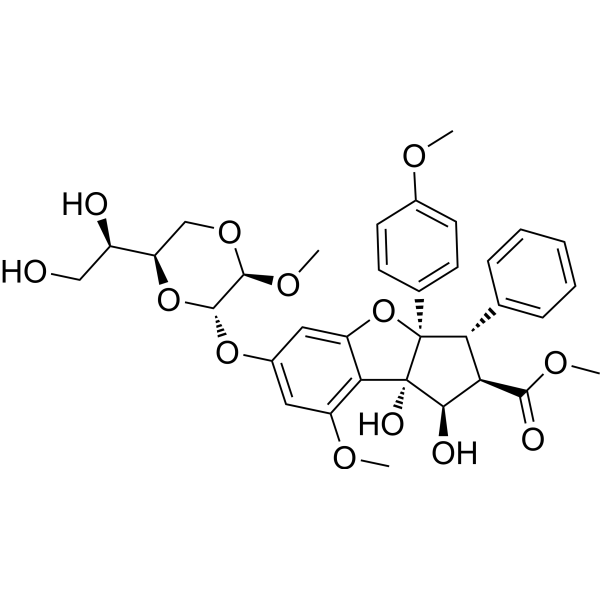
    Silvestrol
    50+ Cited Publications

    (-)-Silvestrol

    Eukaryotic Initiation Factor (eIF) Apoptosis Autophagy Cancer
    Silvestrol is a eukaryotic translation initiation factor 4A (eIF4A) inhibitor isolated from Agave americana Linn.. Silvestrol induces autophagy and caspase-mediated apoptosis .
    Silvestrol
  • HY-15969
    Sal003
    4 Publications Verification

    Phosphatase Apoptosis Cancer
    Sal003 is a potent, specific and cell-permeable inhibitor of the eukaryotic translation initiation factor 2α (eIF2α) phosphatase. Sal003 is a derivative of salubrinal .
    Sal003
  • HY-16366

    ON 014185

    Eukaryotic Initiation Factor (eIF) CDK c-Myc MDM-2/p53 Caspase Apoptosis Cancer
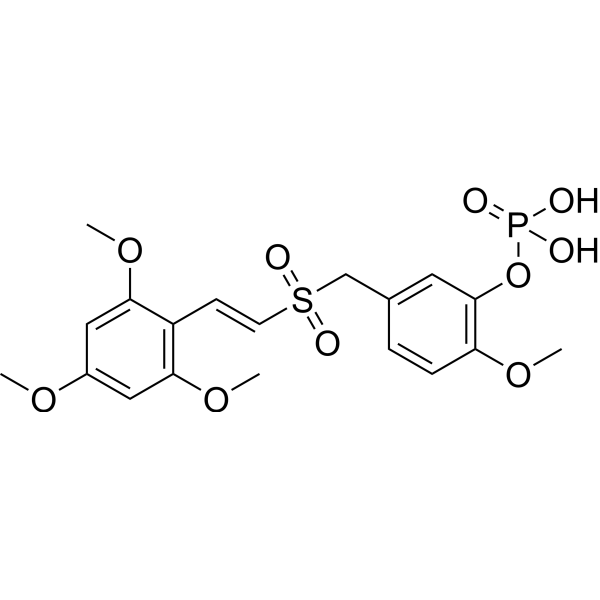
    Briciclib (ON 014185) is a eukaryotic translation initiation factor 4E (eIF4E) inhibitor. Briciclib exhibits broad-spectrum anti-cancer activity, including in mantle cell leukemia, breast cancer, gastric cancer, and esophageal cancer cells. Briciclib reduces the expression of cyclin D1 and c-Myc, and enhances the expression of P53 and Cleaved Caspase 3 pro-apoptotic proteins. Briciclib can be used for the study of hematological system tumors and solid tumors .
    Briciclib
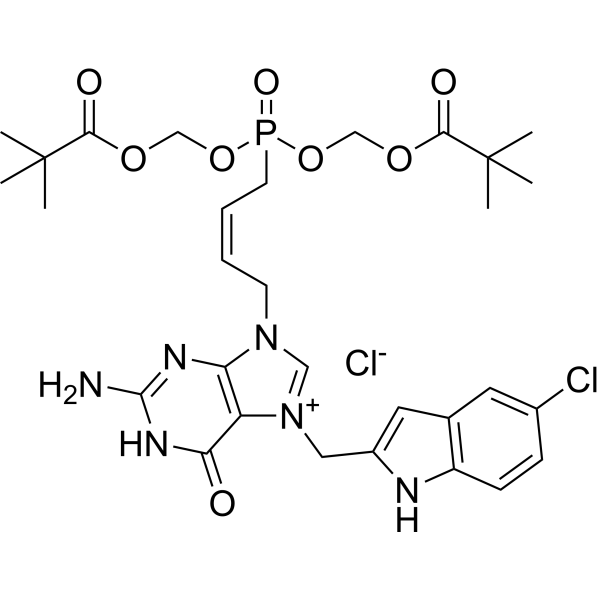
  • HY-176844

    ADC Payload Drug Intermediate Cancer
    eIF4A-IN-1 intermediate (Compound 71E) is an intermediate of Eukaryotic translation initiation factor 4A (eIF4A) inhibitor. eIF4A-IN-1 intermediate can be used as a cytotoxic payload for synthesis of antibody-drug conjugates (ADCs) .
    eIF4A-IN-1 intermediate
  • HY-W348485

    mTOR Cancer
    WRX606 is an orally active nonrapalog inhibitor for mTOR complex 1 (mTORC1M). WRX606 inhibits the phosphorylation of mTORC1 substrate S6 kinase 1 (S6K1) (IC50 = 10 nM) and eukaryotic translation initiation factor 4E binding protein (p-4E-BP1) (IC50 = 0.27 μM) in MCF-7 cells. WRX606 suppresses tumor growth in mice without promotion of metastasis. WRX606 can be studied in research as an antitumor agent .
    WRX606
  • HY-134361

    P2Y Receptor Eukaryotic Initiation Factor (eIF) Neurological Disease Metabolic Disease Inflammation/Immunology
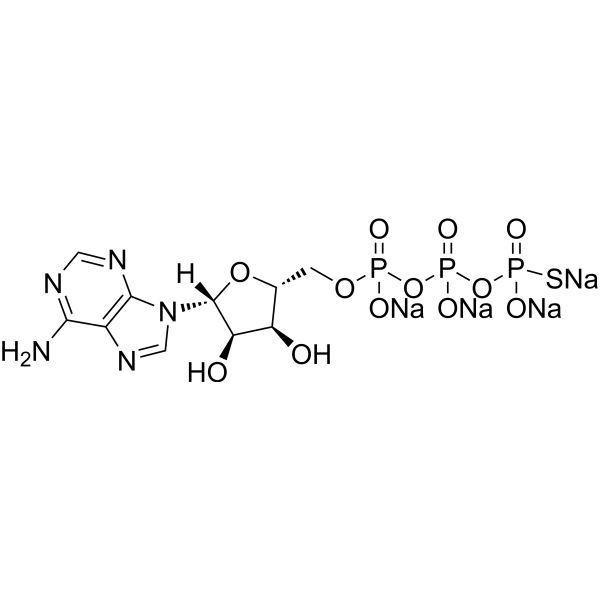
    ATP-γ-S (tetrasodium) is a P2Y11 receptor agonist, an antioxidant and a neuroprotective agent. ATP-γ-S (tetrasodium) can be used as a substrate for the nucleotide hydrolysis and RNA unwinding activities of eukaryotic translation initiation factor eIF4A. ATP-γ-S (tetrasodium) is active in ATP hydrolysis .
    ATP-γ-S tetrasodium
  • HY-126171

    Endogenous Metabolite Others
    Hypusine is a natural amino acid. The post-translational synthesis of hypusine is mainly catalyzed by deoxyhypusine synthase (DHPS) and deoxyhypusine hydroxylase (DOHH) .
    Hypusine
  • HY-176843

    Eukaryotic Initiation Factor (eIF) ADC Payload Cancer
    eIF4A-IN-2 (Compound 93) is an Eukaryotic translation initiation factor 4A (eIF4A) inhibitor. eIF4A-IN-2 can be used as a cytotoxic payload for synthesis of antibody-drug conjugates (ADCs) .
    eIF4A-IN-2
  • HY-111522

    Sirtuin c-Myc Cancer
    RK-9123016 is a potent inhibitor of SIRT2. RK-9123016 inhibits the enzymatic activity of SIRT2 with an IC50 value of 0.18 µM but not other human sirtuin members including SIRT1 and SIRT3 at 100 µM. RK-9123016 increases the acetylation level of eukaryotic translation initiation factor 5A (eIF5A), a physiological substrate of SIRT2, and reduces cell viability of human breast cancer cells accompanied with a decrease in c-Myc expression .
    RK-9123016
  • HY-148664

    Eukaryotic Initiation Factor (eIF) Cancer
    eIF4E-IN-4 (Compound 33) is a selective inhibitor of eukaryotic initiation factor 4E (eIF4E) with biochemical activity value of 95 nM. eIF4E-IN-4 inhibits cap-dependent mRNA translation with an IC50 value of 2.5 μM. eIF4E-IN-4 can be used for breast cancer, colon cancer, and head and neck cancer study .
    eIF4E-IN-4
  • HY-129767

    Eukaryotic Initiation Factor (eIF) Cancer
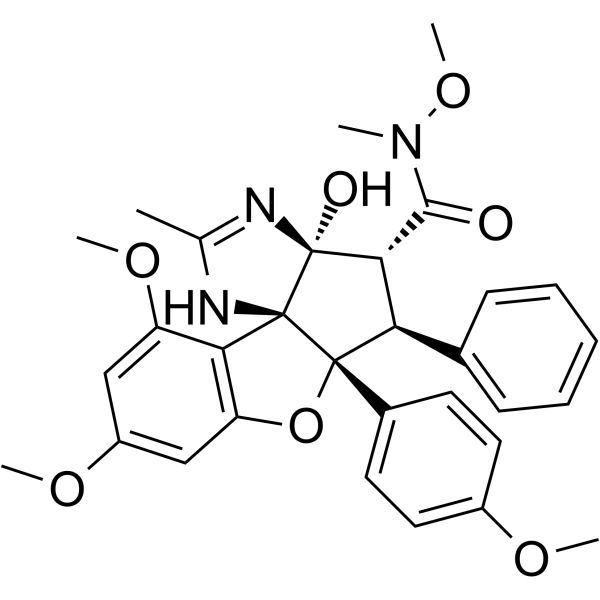
    CMLD012612 is an amidino-rocaglate containing a hydroxamate group and is a potent eukaryotic initiation factor 4A (eIF4A) inhibitor. CMLD012612 inhibits cell translation and is cytotoxic to NIH/3T3 cells with an IC50 value of 2 nM. CMLD012612 inhibits eukaryotic translation initiation by modifying the behavior of the RNA helicase (eIF4A) and possesses potent anti-neoplastic activity .
    CMLD012612
  • HY-106801

    RP 49532

    Interleukin Related NF-κB AP-1 MDM-2/p53 Apoptosis Infection Inflammation/Immunology Cancer
    Girolline (RP 49532) is a protein synthesis inhibitor and a functional modulator of eIF5A. Girolline induces ribosome stalling by interfering with the binding of eIF5A to ribosomes. Girolline also inhibits the production of IL-6 and IL-8, and induces cell cycle arrest in tumor cells. Girolline is applicable to research related to inflammatory diseases, solid tumors, leukemia and malaria .
    Girolline
  • HY-121722

    Amino Acid Derivatives Cancer
    Deoxyhypusine is an unusual amino acid formed during the posttranslational modification of eukaryotic translation initiation factor 5A (eIF-5A) by the enzyme deoxyhypusine hydroxylase (DOHH) .
    Deoxyhypusine
  • HY-129769

    Eukaryotic Initiation Factor (eIF) Cancer
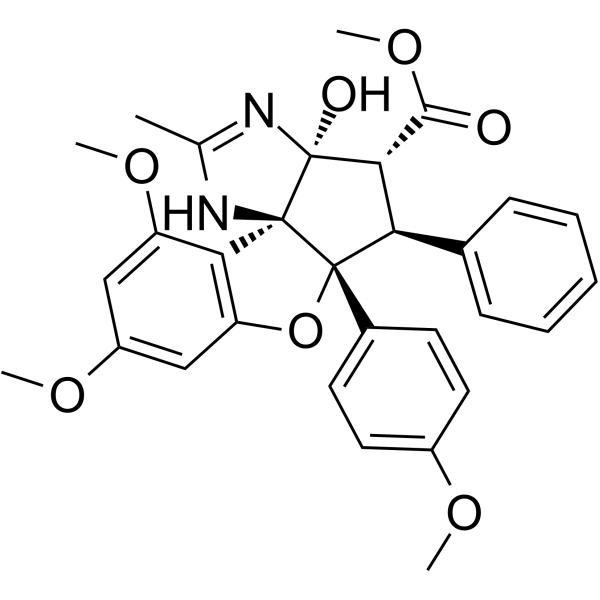
    CMLD012073 is an amidino-rocaglates and is a potent eukaryotic initiation factor 4A (eIF4A) inhibitor. CMLD012073 inhibits the growth of NIH/3T3 cells with an IC50 of 10 nM. CMLD012073 inhibits eukaryotic translation initiation by modifying the behavior of the RNA helicase (eIF4A) .
    CMLD012073
  • HY-155676

    Eukaryotic Initiation Factor (eIF) Cancer
    eIF4E-IN-5 (Compound 6n) is a eIF4E cell-permeable inhibitor. eIF4E-IN-5 can bind to capped mRNA to inhibit cap-dependent translation .
    eIF4E-IN-5
  • HY-122039

    Amino Acid Derivatives Others
    Hypusine dihydrochloride is a natural amino acid found only in the eukaryotic translation initiation factor 5A (eIF-5A). Hypusine is formed by the transfer of the butylamine portion from spermidine to the ϵ-amino group of a specific lysine residue of eIF-5A precursor and by the hydroxylation at carbon 2 of the incoming 4-aminobutyl moiety .
    Hypusine dihydrochloride
  • HY-168326

    DNA/RNA Synthesis Microtubule/Tubulin Cancer
    Antiproliferative agent-64 (Compound 76) is an inhibitor for eukaryotic translation initiation factor 4E (eIF4E), that block the secondary structure of mRNA, thereby inhibiting protein translation. Antiproliferative agent-64 inhibits the 5' untranslated region (5'UTR) of c-Myc (c-myc 5'UTR) with an EC50 of 1.2 nM, inhibits 5'UTR encoding tubulin (tub 5'UTR) with an EC50 of 40 nM. Antiproliferative agent-64 inhibits the proliferation of MDA-MB-231 with an EC50 of 7 nM .
    Antiproliferative agent-64
  • HY-174720

    mRNA Inflammation/Immunology
    Human EIF2AK2 mRNA encodes the human eukaryotic translation initiation factor 2 alpha kinase 2 (EIF2AK2) protein, a serine/threonine protein kinase that is activated by autophosphorylation after binding to dsRNA. EIF2AK2 plays a key role in the innate immune response to viral infection and is also involved in the regulation of signal transduction, apoptosis, cell proliferation and differentiation.
    Human EIF2AK2 mRNA
  • HY-184004

    MNK Eukaryotic Initiation Factor (eIF) Neurological Disease Cancer
    NUCC-0231068 is a MNK1 and MNK2 inhibitor with IC50 values of 8 nM and 7 nM, respectively. NUCC-0231068 inhibits the phosphorylation of eukaryotic translation initiation factor 4E (eIF4E) at Ser209, with an IC50 of 23 nM in its purified form and 17 nM in its D2B form. NUCC-0231068 can be used in studies related to glioblastoma .
    NUCC-0231068
  • HY-183328

    MNK Bcl-2 Family Cancer
    MNK1/2-IN-11 is a potent, selective and orally active MNK1/2 inhibitor with MNK1 IC50 of 1.2 nM, MNK2 IC50 of 1.3 nM. MNK1/2-IN-11 reduces eukaryotic translation initiation factor 4E phosphorylation, decreases Mcl-1 and Cyclin D1 expression. MNK1/2-IN-11 inhibits tumor growth in mouse CT26 colorectal tumor models. MNK1/2-IN-11 can be used for the research of colorectal cancer .
    MNK1/2-IN-11
  • HY-173172

    Eukaryotic Initiation Factor (eIF) Apoptosis c-Myc CDK Cancer
    MG-002 is an orally active eIF4A inhibitor. MG-002 non-productively traps the eukaryotic translation initiation factor 4A (eIF4A) onto RNA, hindering the recruitment and scanning of ribosomes, thereby inhibiting mRNA translation. MG-002 selectively inhibits the growth and metastasis formation of triple-negative breast cancer (TNBC) tumors and induces cell apoptosis. MG-002 significantly inhibits the protein expression of c-MYC and cyclin D1. MG-002 can be used for research on TNBC .
    MG-002
  • HY-108666R

    Adenosine-5'-O-(3-thiotriphosphate) tetralithium salt (Standard); Adenosine 5'-[γ-thio]triphosphate tetralithium salt (Standard)

    Reference Standards Eukaryotic Initiation Factor (eIF) P2Y Receptor Neurological Disease Metabolic Disease Inflammation/Immunology
    ATPγS tetralithium salt (Standard) is the analytical standard of ATPγS (tetralithium salt) (HY-108666). This product is intended for research and analytical applications. ATPγS (tetralithium salt) is a P2Y11 receptor agonist, an antioxidant and a neuroprotective agent. ATPγS (tetralithium salt) can be used as a substrate for the nucleotide hydrolysis and RNA unwinding activities of eukaryotic translation initiation factor eIF4A. ATPγS (tetralithium salt) is active in ATP hydrolysis .
    ATPγS tetralithium salt (Standard)
  • HY-16366A

    ON 014185 sodium

    Eukaryotic Initiation Factor (eIF) CDK c-Myc MDM-2/p53 Caspase Apoptosis Cancer
    Briciclib (ON 014185) sodium is a eukaryotic translation initiation factor 4E (eIF4E) inhibitor. Briciclib sodium exhibits broad-spectrum anti-cancer activity, including in mantle cell leukemia, breast cancer, gastric cancer, and esophageal cancer cells. Briciclib sodium reduces the expression of cyclin D1 and c-Myc, and enhances the expression of P53 and Cleaved Caspase 3 pro-apoptotic proteins. Briciclib sodium can be used for the study of hematological system tumors and solid tumors .
    Briciclib sodium

온라인 문의

Your information is safe with us. * Required Fields.

호칭


Country or Region *

고객명 *


회사명 *

Department *


메일주소 *


상품명 *

Cat. No.


Requested quantity *

전화번호 *


비고

온라인 문의

Inquiry Information

상품명:
Cat. No.:
수량:
MCE Japan Authorized Agent:

