10 Results for "

flavanone flavonoid

" in MedChemExpress (MCE) Product Catalog:
Products (10)

10 Results for "flavanone flavonoid" in MCE Product Catalog:

7
7 Publications Verification
Cat. No.: HY-N2131
CAS No.: 480-43-3
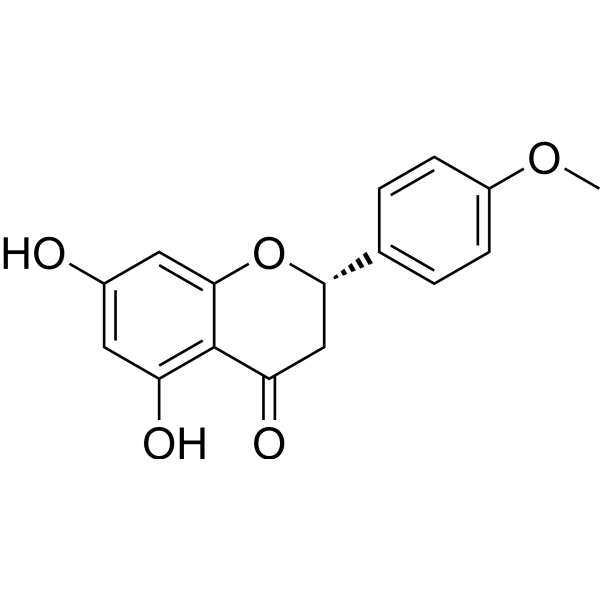
Isosakuranetin is a flavanone flavonoid which can be found in the fruit of Citrus bergamia. Isosakuranetin is a TRPM3 blocker .
loading...
    loading...
1
1 Cited Publications
Cat. No.: HY-N1854
CAS No.: 52117-69-8
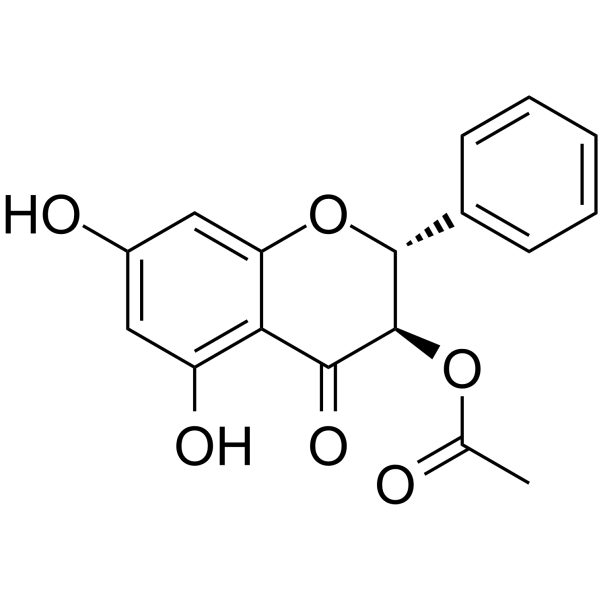
Pinobanksin 3-acetate is a flavanone and flavonoid ester with antioxidant activity. Pinobanksin 3-acetate is naturally present in Sonoran propolis, honey, medicinal plants, and forestry coproducts of Pinus caribaea. Pinobanksin 3-acetate exerts anti-colorectal cancer activity by modulating proliferation, apoptosis, cell cycle, and Wnt signaling pathways. Pinobanksin 3-acetate can be used for the research of colon cancer .
loading...
    loading...
1
1 Cited Publications
Cat. No.: HY-N2123
CAS No.: 5088-75-5
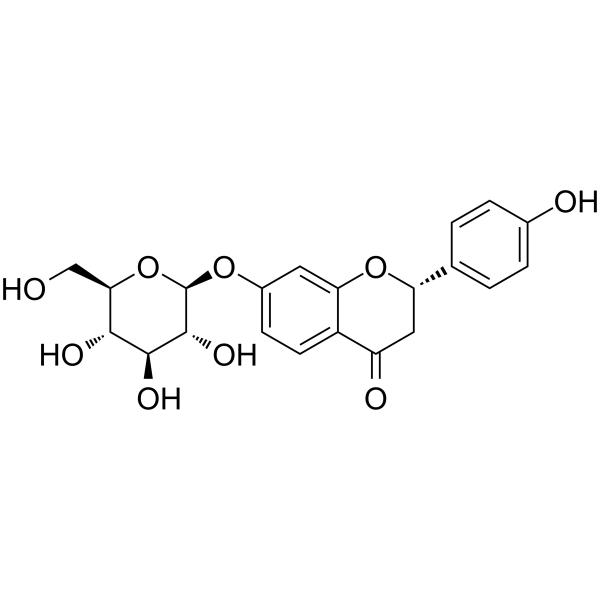
Neoliquiritin is a flavonoid and flavanone-derived cytotoxic agent with anticancer activity and neuroprotective effects. Neoliquiritin exhibits excellent tumor specificity, exerting a more pronounced killing effect on cancer cells compared with normal oral cells. Neoliquiritin also exerts neuroprotective effects by inhibiting ATP depletion and the elevation of caspase 3/7 activity. Widely present in the roots of Glycyrrhiza uralensis, Glycyrrhiza inflata and Glycyrrhiza glabra, Neoliquiritin can be applied to studies on human oral squamous cell carcinoma, leukemia, Parkinson's disease and other conditions .
loading...
    loading...
Cat. No.: HY-E70104
CAS No.: 37288-35-0
Synonyms: α-L-Rhamnosidase
Target:  

Glycosidase Bacterial

Research Areas:  

Infection Cancer

α-Rhamnosidase (α-L-Rhamnosidase) is a kind of glycoside hydrolase. α-Rhamnosidase exhibits activity against Naringin (HY-N0153), 4-NRP, flavonoid glycosides and flavanone rhamnosides, and can hydrolyze the corresponding glycosidic bonds to release L-Rhamnose (Rhamnose) (HY-N1420) and other products. α-Rhamnosidase promotes the release of total flavonoids, ginkgolides and aroma components from ginkgo tea, while also enhancing the free radical scavenging capacity of the leachate, inhibiting inflammatory cell activation and increasing its cytotoxicity against tumor cells. α-Rhamnosidase can be used in research related to bacillary dysentery and cancer .
loading...
    loading...
Cat. No.: HY-N2131A
CAS No.: 221362-74-9
Target:  

TRP Channel

Research Areas:  

Others

(R)-Isosakuranetin is an isomer of Isosakuranetin (HY-N2131). Isosakuranetin is a flavanone flavonoid which can be found in the fruit of Citrus bergamia. Isosakuranetin is a TRPM3 blocker .
loading...
    loading...
Cat. No.: HY-N21600
CAS No.: 1619976-98-5
Eleocharin C is a dimethylallyl-substituted flavanone flavonoid that acts as a DPPH radical scavenger and is present in the peel of Eleocharis tuberosa. Eleocharin C exhibits reducing capacity in the ferric reducing assay .
loading...
    loading...
Cat. No.: HY-L068
583 compounds

Flavonoids are an important class of natural products; particularly, they belong to a class of plant secondary metabolites having a polyphenolic structure, widely found in fruits, vegetables and certain beverages. Flavonoids can be subdivided into different subgroups depending on the carbon of the C ring on which the B ring is attached and the degree of unsaturation and oxidation of the C ring. These subgroups are: flavones, flavonols, flavanones, flavanonols, flavanols or catechins, anthocyanins and chalcones. Flavonoids are now considered as an indispensable component in a variety of nutraceutical, pharmaceutical, medicinal and cosmetic applications. This is attributed to their anti-oxidative, anti-inflammatory, anti-mutagenic and anti-carcinogenic properties coupled with their capacity to modulate key cellular enzyme function. Naturally occurring flavonoids are known to have biological activities for use as drugs, for example, in diseases like cancer, Alzheimer’s disease (AD), atherosclerosis, etc.

MCE offers a unique collection of 583 natural flavonoid compounds which is a useful tool for drug discovery as an important source of lead compounds.

Cat. No.: HY-E70104A
Target:  

Glycosidase Bacterial

α-Rhamnosidase, Penicillium sp. is a kind of glycoside hydrolase. α-Rhamnosidase, Penicillium sp. exhibits activity against Naringin (HY-N0153), 4-NRP, flavonoid glycosides and flavanone rhamnosides, and can hydrolyze the corresponding glycosidic bonds to release L-Rhamnose (Rhamnose) (HY-N1420) and other products. α-Rhamnosidase, Penicillium sp. promotes the release of total flavonoids, ginkgolides and aroma components from ginkgo tea, while also enhancing the free radical scavenging capacity of the leachate, inhibiting inflammatory cell activation and increasing its cytotoxicity against tumor cells. α-Rhamnosidase, Penicillium sp. can be used in research related to bacillary dysentery and cancer .
loading...
    loading...
Cat. No.: HY-N9784
CAS No.: 340997-02-6
2′′,3′′-Dihydroochnaflavone is a flavonoid/flavanone-type ether-linked biflavonoid anti-leukemic compound. 2′′,3′′-Dihydroochnaflavone exhibits significant cytotoxicity against P388 murine lymphocytic leukemia cells (IC50 = 3.1 μg/mL). It can be naturally extracted from the dried leaves of Quintinia acutifolia and has also been previously isolated and identified from Ochna interrima and Luxemburgia nobilis (both Ochnaceae plants). 2′′,3′′-Dihydroochnaflavone can be used in research related to anti-tumor (especially leukemia) applications .
loading...
    loading...
Cat. No.: HY-N21599
CAS No.: 1619976-99-6
Eleocharin D is a flavanone isolated from chufa (Eleocharis tuberosa) peels and a DPPH radical scavenging inhibitor. Eleocharin D exhibits weak radical scavenging activity .
loading...
    loading...

