20 Results for "

food safety

" in MedChemExpress (MCE) Product Catalog:
Products (20)

20 Results for "food safety" in MCE Product Catalog:

1
1 Cited Publications
Cat. No.: HY-131146
CAS No.: 43056-63-9
Purity:  99.89%
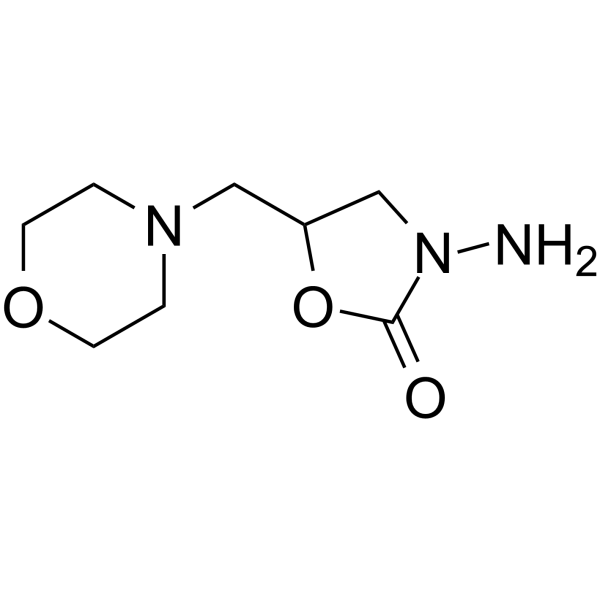
Synonyms: 3-Amino-5-morpholinomethyl-2-oxazolidone
Target:  

Drug Metabolite

Research Areas:  

Infection

AMOZ is a carcinogenic metabolite of Furaltadone (HY-B1148A), which forms stable tissue residues by covalently binding to proteins as a hapten. AMOZ can be coupled with carrier proteins (such as BSA/OVA) to induce immune response and is released after acid hydrolysis. AMOZ residues can be detected by competitive ELISA method, and the detection limit in the monoclonal antibody 2E5.1 test is as low as 0.16 μg/kg (shrimp sample). AMOZ can be used as a typical marker to monitor drug residues in animal-derived foods in the field of food safety[1][2].
loading...
    loading...
Cat. No.: HY-N1446C
CAS No.: 1338-43-8
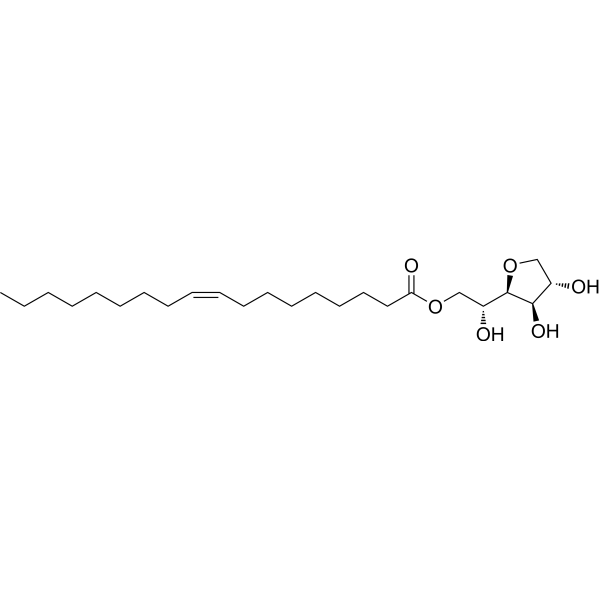
Sorbitan monooleate is a food emulsifier and can also be used as a pharmaceutical excipient. Sorbitan monooleate has good safety .
loading...
    loading...
Cat. No.: HY-123630
CAS No.: 25956-17-6
Purity:  98.01%
Synonyms: FD&C RED NO. 40; CI 16035
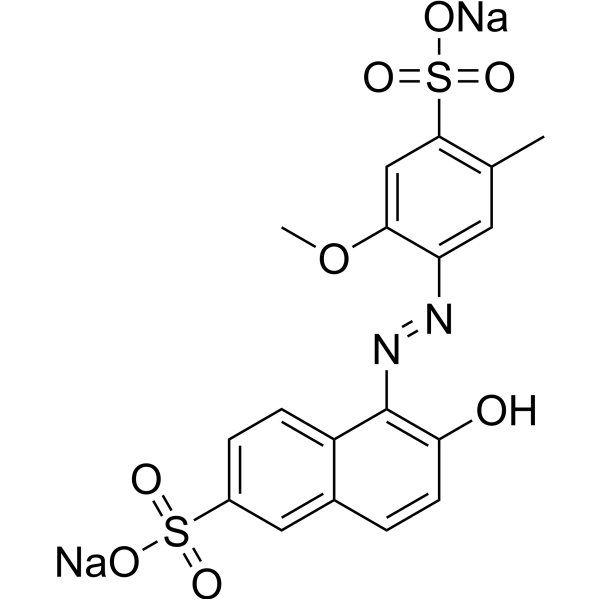
Allura Red AC is a food colorant, appearing as a deep red water-soluble powder or granules, used in various applications such as beverages, syrups, candies, and cereals. Allura Red AC can statically quench the intrinsic fluorescence of HSA. Additionally, Allura Red AC is a 5-hydroxytryptamine (5-HT) pathway-associated pro-inflammatory agent, capable of exacerbating experimental colitis. Allura Red AC holds potential for research in inflammatory bowel disease (IBD), intestinal barrier function, and food additive safety .
loading...
    loading...
Cat. No.: HY-W040040
CAS No.: 17465-86-0
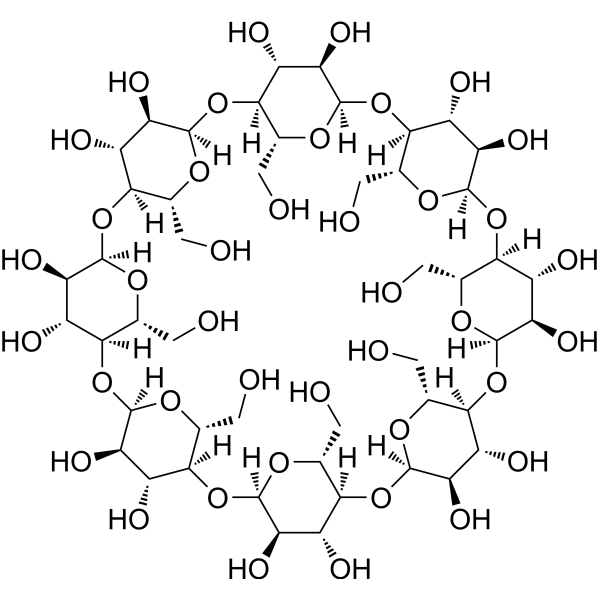
γ-Cyclodextrin is an orally active cyclic oligosaccharide composed of eight glucose molecules, which can be formed by bacteria digesting starch. γ-Cyclodextrin can form water-soluble inclusion complexes with a variety of poorly soluble compounds and is widely used in fields such as pharmacy and food. In addition, γ-Cyclodextrin has good safety .
loading...
    loading...
Cat. No.: HY-147294
CAS No.: 1435480-40-2
Purity:  99.74%
Synonyms: ACT-539313
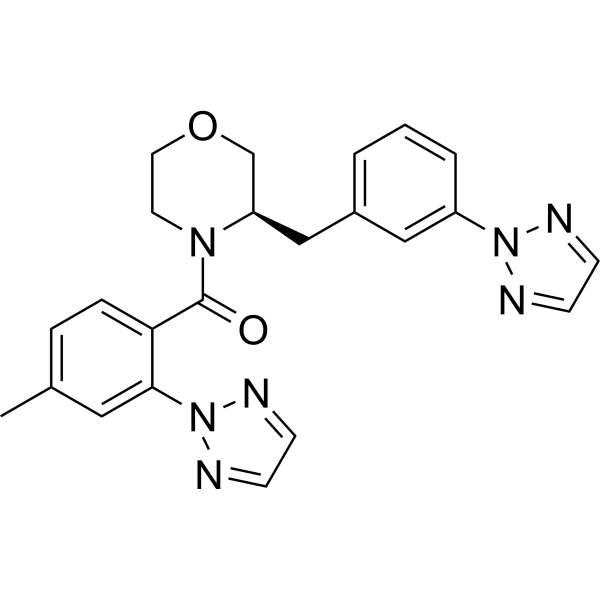
Nivasorexant (ACT-539313) is an orally active, blood-brain barrier penetrant, selective orexin OX1R inhibitor. Nivasorexant specifically blocks central OX1Rs without affecting OX2Rs, and exhibits competitive inhibitory activity against CYP2C8, CYP2C9, CYP2C19 and CYP3A4 (IC50 values are 25 μM, 8.6 μM, 1.6 μM, 19 μM/44 μM, respectively). Nivasorexant significantly reduces binge-like eating behavior of highly palatable food in rat models and has long-acting properties. Nivasorexant shows no relevant off-target activity against over 130 selected proteins, exhibits favorable safety profiles, and can be used for studies related to binge eating disorder .
loading...
    loading...
Cat. No.: HY-W040040A
CAS No.: 91464-90-3
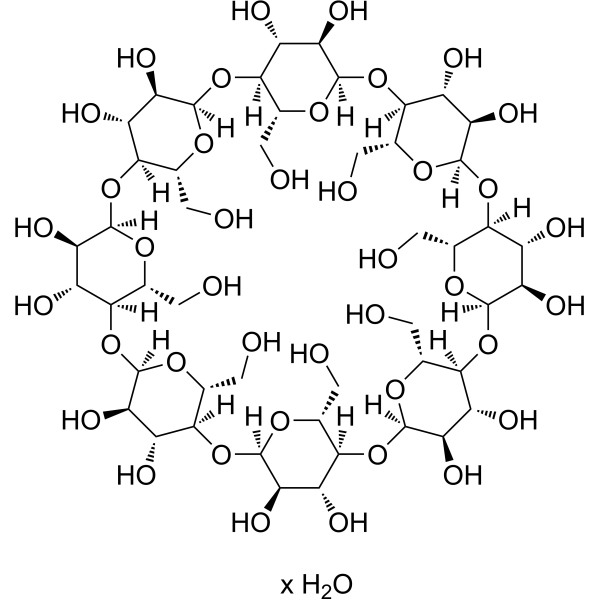
γ-Cyclodextrin hydrate is an orally active cyclic oligosaccharide composed of eight glucose molecules, which can be formed by bacteria digesting starch. γ-Cyclodextrin hydrate can form water-soluble inclusion complexes with a variety of poorly soluble compounds and is widely used in fields such as pharmacy and food. In addition, γ-Cyclodextrin hydrate has good safety .
loading...
    loading...
Cat. No.: HY-121111
CAS No.: 2757-90-6
Agaritine is a compound isolated from the commonly cultivated commercial mushroom Agaricus bisporus. Agaritine is hydrolyzed by an enzyme system present in the mushroom into 4-(hydroxymethyl)benzenediazonium ion, which is a carcinogen in mice. Agaritine is structurally similar to some known carcinogens and can be used for research in cancer and food safety .
loading...
    loading...
Cat. No.: HY-W142663
CAS No.: 13595-25-0
Target:  

Endogenous Metabolite

Bisphenol M is a synthetic organic compound with antioxidant activity. Bisphenol M is commonly used in industry to make plastics and resins, and is used as a stabilizer and preservative in cosmetics. Bisphenol M can also be used in certain food packaging materials to improve product durability and safety.
loading...
    loading...
Cat. No.: HY-121067
CAS No.: 121-59-5
Target:  

Parasite

Research Areas:  

Cancer

Carbarsone, also known as p-ureidobenzenearsonic acid, is historically used as an amebicide in human and veterinary medicine and extensively employed in poultry and swine feed, often in combination with antibiotics to prevent conditions like blackhead in turkeys. It exhibits relatively low acute toxicity, prompting investigations into its safety for food additives under the Federal Food, Drug, and Cosmetic Act. Studies aimed at assessing its potential carcinogenicity in laboratory animals have shown negative evidence similar to other arsanilic acid derivatives, suggesting minimal risk under chronic ingestion conditions. Metabolically, carbarsone is converted to arsanilic acid, which has been observed in preliminary studies involving dogs at high doses .
loading...
    loading...
Cat. No.: HY-123630R
CAS No.: 25956-17-6
Synonyms: FD&C RED NO. 40 (Standard); CI 16035 (Standard)
Allura Red AC (Standard) is an analytical standard of Allura Red AC. This product is intended for research and analytical applications. Allura Red AC is a food colorant, appearing as a deep red water-soluble powder or granules, used in various applications such as beverages, syrups, candies, and cereals. Allura Red AC can statically quench the intrinsic fluorescence of HSA. Additionally, Allura Red AC is a 5-hydroxytryptamine (5-HT) pathway-associated pro-inflammatory agent, capable of exacerbating experimental colitis. Allura Red AC holds potential for research in inflammatory bowel disease (IBD), intestinal barrier function, and food additive safety .
loading...
    loading...
Cat. No.: HY-N7402
CAS No.: 6378-65-0
Target:  

Others

Hexyl hexanoate is a fruit aroma component with potential food and beverage additive activity. Hexyl hexanoate is found in alcoholic beverages and is used to blend fruit flavors. Hexyl hexanoate is present in many fruits, Parmesan cheese, alcoholic beverages, and black tea. Hexyl hexanoate is a volatile component produced as a result of fruit ripening. Toxicity assessments of hexyl hexanoate showed that it is not mutagenic and that exposure is below safety thresholds for repeated dose, reproduction, and local respiratory toxicity. Hexyl hexanoate is also below thresholds in skin sensitization assessments, and for phototoxicity and photosensitization, the results showed that it does not present a relevant risk. Hexyl hexanoate is considered non-persistent, non-bioaccumulative, and non-toxic according to the environmental criteria of the International Fragrance Association .
loading...
    loading...
Cat. No.: HY-123002
CAS No.: 88283-41-4
Target:  

Fungal

Research Areas:  

Others

Pyrifenox is a fungicide, which is used in fruits, ornamentals, and vegetables. Pyrifenox can be utilized as one of the assessment criteria for environmental and food safety .
loading...
    loading...
Cat. No.: HY-125104
CAS No.: 73684-69-2
Mirosamicin is an antibiotic with high antibacterial activity that targets a wide range of gram-positive bacteria and certain Gram-negative bacteria as well as mycoplasma. Mirosamicin can be used for research in the field of food safety monitoring .
loading...
    loading...
Cat. No.: HY-123002R
CAS No.: 88283-41-4
Research Areas:  

Others

Pyrifenox (Standard) is the analytical standard of Pyrifenox. This product is intended for research and analytical applications. Pyrifenox is a fungicide, which is used in fruits, ornamentals, and vegetables. Pyrifenox can be utilized as one of the assessment criteria for environmental and food safety .
loading...
    loading...
Cat. No.: HY-W040040R
CAS No.: 17465-86-0
γ-Cyclodextrin (Standard) is the analytical standard of γ-Cyclodextrin (HY-W040040). This product is intended for research and analytical applications. γ-Cyclodextrin is an orally active cyclic oligosaccharide composed of eight glucose molecules, which can be formed by bacteria digesting starch. γ-Cyclodextrin can form water-soluble inclusion complexes with a variety of poorly soluble compounds and is widely used in fields such as pharmacy and food. In addition, γ-Cyclodextrin has good safety.
loading...
    loading...
Cat. No.: HY-L093
450 compounds

Food additives are substances added to food to maintain or improve its safety, freshness, taste, texture, or appearance. All food additives used in food undergo a safety assessment, which includes rigorous testing, before they are approved, so all food additives are generally recognized as safe substances.

MCE supplies 450 approved food additives which are safe substances and can be used for drug discovery and other research.

Cat. No.: HY-L055
1,824 compounds

Medicine Food Homology (MFH) means that some food themselves are medicines and there is no absolute boundary between them. MFH theory combines the function of food and medicine together scientifically and MFH materials can be used both for food and medicine. Besides nutritional value, MFH materials also have the functions in the prevention and treatment of disease and many other healthcare effects. Food as medicines has many benefits because of their safety while taking drugs will bring inevitable side effect to people. In order to ensure the safe use of functional food, National Health Commission of People's Republic of China made specific provisions on MFH items. More than 100 kinds of widely used MFH materials have been released.

Based on MFH items released by National Health Commission, PRC, MCE carefully designs a unique collection of 1,824 Medicine Food Homology Compounds with high safety that can be used for high throughput and high content screening for drug discovery.

Cat. No.: HY-W014610
CAS No.: 77-83-8
Synonyms: Ethyl methylphenylglycidate
Strawberry aldehyde is an orally active synthetic flavor compound widely used in the food and cosmetics industries. Its presence in small cigar smoke shows a significant positive correlation with free radical levels, thereby increasing the toxicity of the smoke. Strawberry aldehyde has demonstrated long-term safety in rats .
loading...
    loading...
Cat. No.: HY-L192
69 compounds

Dietary supplement, also known as nutritional supplement or food supplement, include dietary components such as vitamins, minerals, and amino acids. The unique value of dietary supplement is particularly significant in the post-pandemic era. Compared to traditional medication, dietary supplement is often more readily accepted by the public due to their higher safety profile and the natural origin. By orally supplementing essential nutrients and bioactive substances, dietary supplement can help to enhance the body's health level and reduce the risk of diseases. For certain chronic conditions, proper dietary supplement can also serve as a powerful adjunct to conventional medical treatment, enhancing the effectiveness of medication.

MCE has included 69 dietary supplements, whose ingredients are all derived from the official lists published by authoritative organizations such as the FDA, EFSA, NMPA, etc. These compounds can be utilized in the development of health food products and for the mechanistic research of certain chronic diseases.
Cat. No.: HY-L100
147 compounds

Cancer is a multi-step process which involves initiation, promotion and progression. Chemical carcinogens can alter any of these processes to induce their carcinogenic effects. People are continuously exposed exogenously to varying amounts of chemicals that have been shown to have carcinogenic or mutagenic properties in experimental systems. Exposure can occur exogenously when these agents are present in food, air or water, and also endogenously when they are products of metabolism or pathophysiologic states such as inflammation. The administration of chemical carcinogens is one of the most commonly used methods to induce tumors in several organs in laboratory animals in order to study oncologic diseases of humans. MCE offers a unique collection of 147 chemical carcinogens which have been identified with carcinogenic activity either in humans or in animal models. MCE Tumorigenesis-Related Compound Library is a powerful tool for studying oncologic diseases of humans. Standard opration based on safety data sheet will not cause harm to the body.

  • 1

