
25 Results for "

gelling properties

" in MedChemExpress (MCE) Product Catalog:
Products (25)

25 Results for "gelling properties" in MCE Product Catalog:

1
1 Cited Publications
Art. -Nr.: HY-B2221B1
CAS. Nr.: 9004-62-0
Forschungsgebiete:  

Others

Hydroxyethyl cellulose, Viscosity(2%):150mPa.s is a class of nonionic cellulose ether gel-forming polymers with pH-independent drug release properties. When used as a tablet coating, Hydroxyethyl cellulose, Viscosity(2%):150mPa.s regulates the water permeation rate, thereby altering the drug release lag time; the higher the viscosity, the longer the drug release lag time. When used as a hydrogel thickener, it increases the dynamic viscosity of the system. Hydroxyethyl cellulose, Viscosity(2%):150mPa.s can be used in organic synthesis-related research, such as pharmaceutical excipients, hydrogel thickeners, etc.
loading...
    loading...
Art. -Nr.: HY-Y1310A
CAS. Nr.: 9005-38-3
Sodium alginate is an anionic straight chain polysaccharide. Sodium alginate can be obtained from different species of algae. Sodium alginate has different properties, such as pH-sensitivity, nontoxicity, nonimmunogenicity. Sodium alginate has weak gelation, viscosity, and film-forming properties. Sodium alginate can be utilized to prepare gels and film materials for food preservation. Sodium alginate is a versatile functional biomaterial for viscosity enhancement, stabilizer, matrixing agent, encapsulation polymer, bioadhesive and film former .
loading...
    loading...
Art. -Nr.: HY-101064
CAS. Nr.: 35661-60-0
Reinheit:  99.89%
Synonyms: N-FMOC-leucine; NPC 15199; NSC 334290
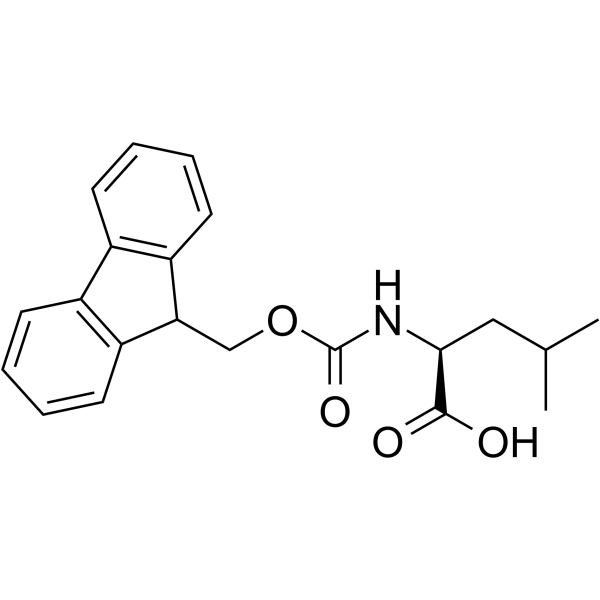
Fmoc-Leucine (N-FMOC-leucine) is an anti-inflammatory agent that not only promotes extracellular Ca 2+ influx but also facilitates intracellular Ca 2+ release. Fmoc-Leucine is a selective ligand for PPARγ (Ki = 15 μM), exhibiting insulin-sensitizing effects but with weak fatogenic activity. Fmoc-Leucine exhibits unique self-assembly properties and can form transient gels, stable gels, or crystals/2D sheets through different pathways. Fmoc-Leucine can be used in the research of diabetes, colitis, and bladder cancer .
loading...
    loading...
Art. -Nr.: HY-154487
CAS. Nr.: 25637-84-7
Forschungsgebiete:  

Neurological Disease

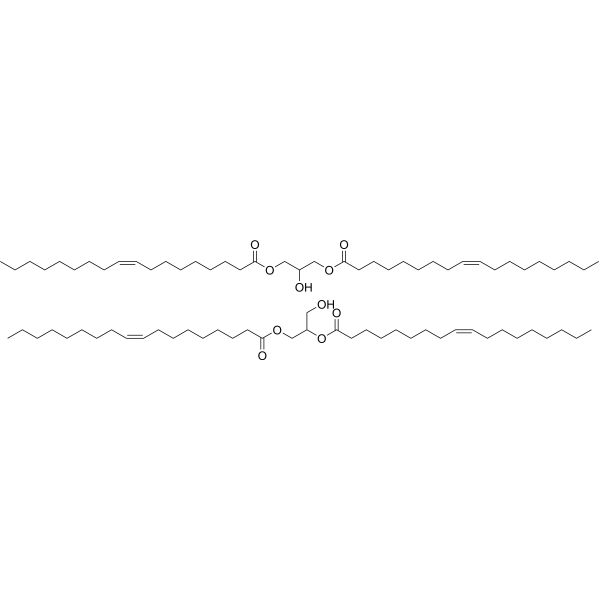
Glycerol dioleate is a lipid capable of forming Lyotropic Liquid Crystal (LLC). When formulated with phosphatidylcholine and exposed to aqueous media, glycerol dioleate constructs an inverted hexagonal (HII) phase structure with sustained-release properties. The in-situ forming gel prepared by optimizing glycerol dioleate with phosphatidylcholine and N-methyl-2-pyrrolidone enables stable release of Risperidone (HY-11018) for up to 60 days in vitro and in vivo. Glycerol dioleate causes minimal side effects in rabbits, making it an ideal carrier component for the development of antischizophrenia agents .Note: Lyotropic liquid crystals (Lyotropic Liquid Crystal, LLC) are ordered fluid phases self-assembled by amphipathic molecules (e.g., lipids, surfactants) in solvents (usually water) at specific concentrations .
loading...
    loading...
Art. -Nr.: HY-Y1324
CAS. Nr.: 10039-32-4
Synonyms: Disodium hydrogen phosphate dodecahydrate; Disodium phosphate dodecahydrate
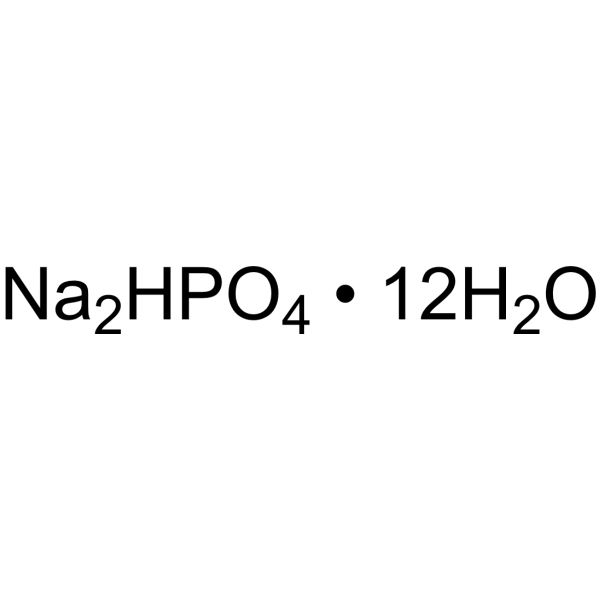
Phosphoric acid disodium dodecahydrate is an inorganic compound and food additive. Phosphoric acid disodium dodecahydrate promotes gel formation, improves food texture and thermal properties of materials. Phosphoric acid disodium dodecahydrate induces glomerular calcification. Phosphoric acid disodium dodecahydrate can be used in kidney disease research .
loading...
    loading...
Art. -Nr.: HY-116282I
CAS. Nr.: 9011-18-1
Synonyms: DSS (MW>500000); DXS (MW>500000)
Dextran sulfate sodium salt (MW>500000) (DSS (MW>500000)) is a negatively charged sulfated polysaccharide. Dextran sulfate sodium salt has antiviral, antibacterial, anti-inflammatory, antifibrotic, and wound-healing properties. Dextran sulfate sodium salt can be used as an additive in cell culture media for preventing cell aggregation and in cosmetics as a gel-forming agent .
loading...
    loading...
Art. -Nr.: HY-W115746
CAS. Nr.: 9004-57-3
Synonyms: Ethyl cellulose N-100
Forschungsgebiete:  

Others

Ethyl cellulose (viscosity 100 cP) is a non-toxic cellulose derivative with unique properties including oil gel formation, active ingredient delivery and film-forming ability. Ethyl cellulose (viscosity 100 cP) can serve as a pharmaceutical excipient, such as a coating agent, flavoring agent, tablet filler, etc. .
loading...
    loading...
Art. -Nr.: HY-W004761
CAS. Nr.: 13675-18-8
Synonyms: Hypodiboric acid
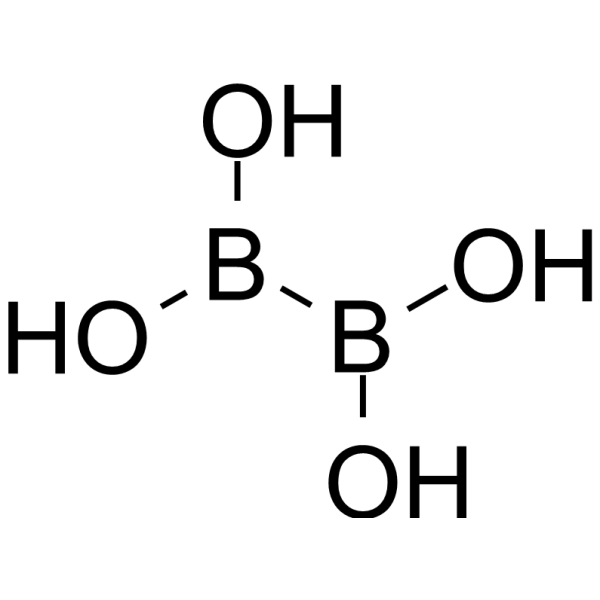
Tetrahydroxydiboron (Hypodiboric acid) acts as a hydrogel initiator and bioadhesion promoter, with broad-spectrum antibacterial activity, ROS scavenging capacity, and osteogenic induction properties. Tetrahydroxydiboron initiates rapid gelation by generating free radicals through reactions with vinyl monomers and dissolved oxygen, overcoming oxygen inhibition without deoxygenation or external triggers. Tetrahydroxydiboron achieves strong bioadhesion via interaction with carboxymethyl chitosan. Tetrahydroxydiboron can be used in the research of periodontitis and related inflammatory diseases .
loading...
    loading...
Art. -Nr.: HY-158231
Synonyms: F127DA
Polyether F127 Diacrylate (F127DA) is an acrylated polyethylene glycol-polypropylene glycol-polyethylene glycol triblock copolymer. Polyether F127 Diacrylate rapidly crosslinks and cures into a gel under ultraviolet or visible light with the action of a photoinitiator. Polyether F127 Diacrylate exhibits excellent thermogelation properties and favorable biosafety. Polyether F127 Diacrylate can upregulate the Integrin-FAK pathway, enhance collagen production, increase the protein and gene expression levels of COL-1/SCX, and promote fibroblastic differentiation of periodontal ligament stem cells. Polyether F127 Diacrylate promotes periodontal ligament regeneration and reduces abnormal healing in a rat model of delayed replanted teeth . Polyether F127 Diacrylate promotes functional osteochondral regeneration in a rat model of osteoarthritis. Polyether F127 Diacrylate supports adipose tissue survival, rendering it suitable for breast reconstruction applications. Polyether F127 Diacrylate can be used in studies related to periodontal ligament injury, breast defect and osteoarthritis .
loading...
    loading...
Art. -Nr.: HY-116282M
CAS. Nr.: 9011-18-1
Dextran sulfate, low sulfate (MW 40000), a biopolymer, is a sulfated polysaccharide. Dextran sulfate, low sulfate (MW 40000) has antiviral, antibacterial, anti-inflammatory, antifibrotic, and wound-healing properties. Dextran sulfate can be used as an additive in cell culture media for preventing cell aggregation and in cosmetics as a gel-forming agent .
loading...
    loading...
Art. -Nr.: HY-W041988
CAS. Nr.: 145038-49-9
Target:  

Bacterial

Forschungsgebiete:  

Infection

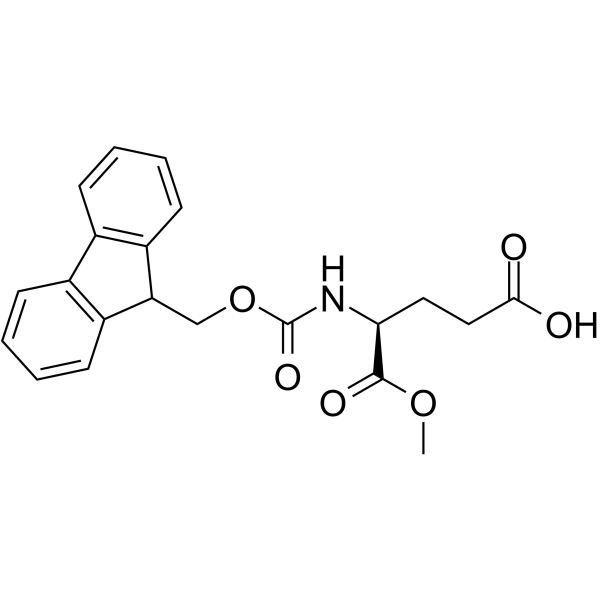
Fmoc-Glu-OMe is a glutamic acid derivative. Fmoc-Glu-OMe exhibits significant antibacterial activity and excellent gelation properties in silver nitrate (AgNO3) solution. Fmoc-Glu-OMe promotes wound healing in rat models and eliminates bacteria in MRSA-infected rat wound models. Fmoc-Glu-OMe can be used in studies related to wound infections and MRSA-infected wounds .
loading...
    loading...
Art. -Nr.: HY-W250120
CAS. Nr.: 37220-17-0
Konjac glucomannan (Viscosity≥15000mPa.s) is an orally active acetylated (1-4)-β-D-glucomannan with multiple biological activities including anti-diabetic, anti-obesity, anti-inflammatory effects, as well as film-forming and gelling properties. Konjac glucomannan (Viscosity≥15000mPa.s) forms a defensive coating on the intestinal surface, reducing levels of blood glucose, cholesterol, triglycerides and blood pressure; it is specifically degraded by colonic β-mannanase produced by human colonic bacteria. Konjac glucomannan (Viscosity≥15000mPa.s) can be used as a food additive, dietary supplement and excipient for oral colon-targeted drug delivery systems. Konjac glucomannan (Viscosity≥15000mPa.s) is applicable to research related to various diseases such as type 2 diabetes, obesity, atopic dermatitis and metabolic syndrome, as well as research in fields including biotechnology, pharmaceuticals and tissue engineering .
loading...
    loading...
Art. -Nr.: HY-W250146
CAS. Nr.: 9000-40-2
Synonyms: Locust bean gum, Polysaccharide>75%, 5000-6500 mPa·S
Locust bean gum is a natural polysaccharide derived from the seeds of the carob tree. It is commonly used as a thickening, stabilizing and gelling agent in a variety of foods, including dairy, baked goods and meat products. Locust bean gum has several properties suitable for these applications, including high water retention capacity, ability to form stable gels at low temperatures, and resistance to acidic conditions. Additionally, it can be used as a dietary fiber supplement due to its potential health benefits, including improving digestion and lowering cholesterol levels.
loading...
    loading...
Art. -Nr.: HY-164068
Forschungsgebiete:  

Others Inflammation/Immunology

Cross-linked sodium hyaluronate gel is a biomaterial formed by cross-linking sodium hyaluronate. Cross-linked sodium hyaluronate gel has good moisturizing properties, viscoelasticity and biocompatibility. Cross-linked sodium hyaluronate gel can be used for the treatment of arthritis and the development of auxiliary materials in ophthalmic surgery .
loading...
    loading...
Art. -Nr.: HY-W243303N
CAS. Nr.: 9003-01-4
Poly(acrylic acid) (Mv 500000) is an anionic polyacrylic acid. Poly(acrylic acid) (Mv 500000) possesses thickening, dispersing, and pH-responsive gelling properties. Poly(acrylic acid) (Mv 500000) can be used in biochemical, cosmetic, and various industrial formulations .
loading...
    loading...
Art. -Nr.: HY-116282J
CAS. Nr.: 9011-18-1
Dextran sulfate, low sulfate (MW 5000), a biopolymer, is a sulfated polysaccharide. Dextran sulfate, low sulfate (MW 5000) has antiviral, antibacterial, anti-inflammatory, antifibrotic, and wound-healing properties. Dextran sulfate can be used as an additive in cell culture media for preventing cell aggregation and in cosmetics as a gel-forming agent .
loading...
    loading...
Art. -Nr.: HY-P2769A
CAS. Nr.: 37288-57-6
Forschungsgebiete:  

Others

Thermostable β-Agarase is a hydrolase that can hydrolyze the β-1,4 linkages in agarose to produce neoagaro-oligosaccharides, and it can be used to extract DNA and RNA from gels. Compared to conventional β-Agarase, Thermostable β-Agarase exhibits higher heat resistance and stronger hydrolytic activity. The thermostable properties of Thermostable β-Agarase simplify experimental procedures and make it suitable for the rapid purification of intact large DNA molecules .
loading...
    loading...
Art. -Nr.: HY-B2221B2
CAS. Nr.: 9004-62-0
Forschungsgebiete:  

Others

Hydroxyethyl cellulose, Viscosity (2%):40000mPa.s is a class of nonionic cellulose ether gel-forming polymers with pH-independent drug release properties. When used as a tablet coating, Hydroxyethyl cellulose, Viscosity (2%):40000mPa.s regulates the water permeation rate, thereby altering the drug release lag time; the higher the viscosity, the longer the drug release lag time. When used as a hydrogel thickener, it increases the dynamic viscosity of the system. Hydroxyethyl cellulose, Viscosity (2%):40000mPa.s can be used in organic synthesis-related research, such as pharmaceutical excipients, hydrogel thickeners, etc.
loading...
    loading...
Art. -Nr.: HY-B2221B3
CAS. Nr.: 9004-62-0
Forschungsgebiete:  

Others

Hydroxyethyl cellulose, Viscosity (2%):6000mPa.s is a class of nonionic cellulose ether gel-forming polymers with pH-independent drug release properties. When used as a tablet coating, Hydroxyethyl cellulose, Viscosity (2%):6000mPa.s regulates the water permeation rate, thereby altering the drug release lag time; the higher the viscosity, the longer the drug release lag time. When used as a hydrogel thickener, it increases the dynamic viscosity of the system. Hydroxyethyl cellulose, Viscosity (2%):6000mPa.s can be used in organic synthesis-related research, such as pharmaceutical excipients, hydrogel thickeners, etc.
loading...
    loading...
Art. -Nr.: HY-D1005A7
CAS. Nr.: 9003-11-6
Synonyms: PEG-PPG-PEG, 2400 (Average)
Poloxamer 125 (L45) (PEG-PPG-PEG, 2400 (Average)) is a block polymer of polyoxyethylene and polyoxypropylene, belonging to water-soluble non-ionic biosurfactants with properties such as emulsification and wetting. Poloxamer 125 (L45) has thermosensitive characteristics and can form thermoreversible hydrogels in aqueous solutions, presenting a fluid state at room temperature and transforming into a viscous gel under body temperature conditions; when its concentration is higher than the critical micelle concentration, it can also self-assemble into micelles in aqueous systems. Poloxamer 125 (L45) enables controlled drug release, prolongs the local retention time of drugs, and is often used as a drug delivery carrier. Poloxamer 125 (L45) can be applied in the fields of cosmetics, biomedicine and tissue engineering .
loading...
    loading...

