13 Results for "

gut microbial metabolite

" in MedChemExpress (MCE) Product Catalog:
Products (13)

13 Results for "gut microbial metabolite" in MCE Product Catalog:

49
49 Publications Verification
Cat. No.: HY-100599
CAS No.: 1143-70-0
Purity:  99.82%
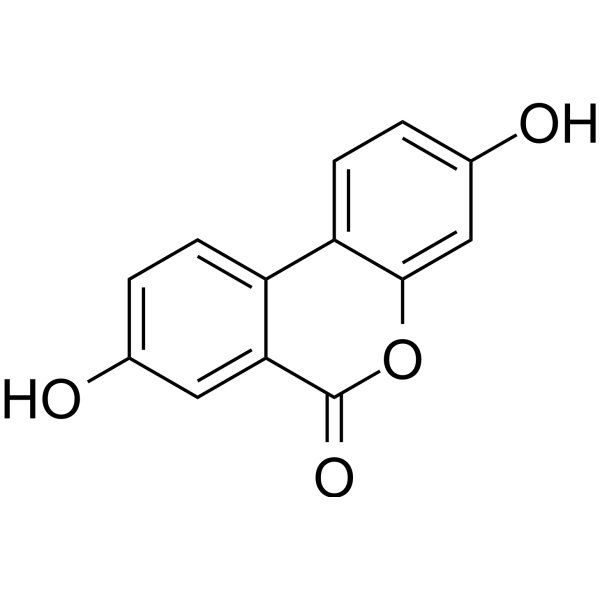
Urolithin A, a gut-microbial metabolite of ellagic acid, exerts anti-inflammatory, antiproliferative, and antioxidant properties. Urolithin A induces autophagy and apoptosis, suppresses cell cycle progression, and inhibits DNA synthesis .
loading...
    loading...
5
5 Cited Publications
Cat. No.: HY-135897
CAS No.: 165393-06-6
Purity:  ≥98.0%
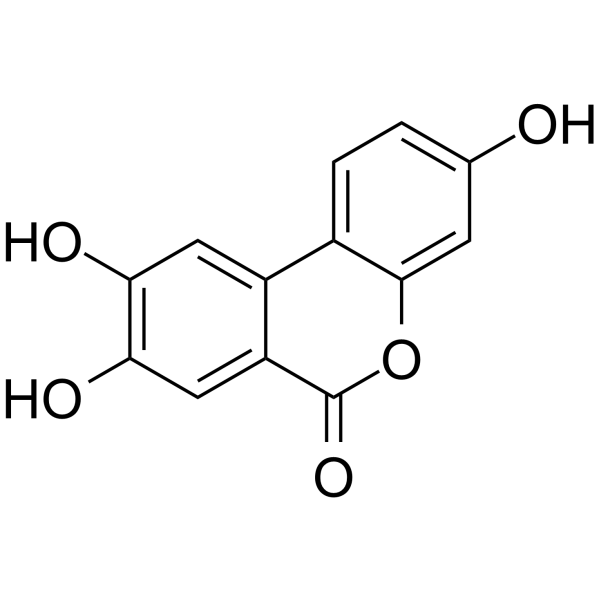
Urolithin C, a gut-microbial metabolite of Ellagic acid, is a glucose-dependent activator of insulin secretion. Urolithin C is a L-type Ca 2+ channel opener and enhances Ca 2+ influx. Urolithin C induces cell apoptosis through a mitochondria-mediated pathway and also stimulates reactive oxygen species (ROS) formation .
loading...
    loading...
1
1 Cited Publications
Cat. No.: HY-W015061
CAS No.: 500-98-1
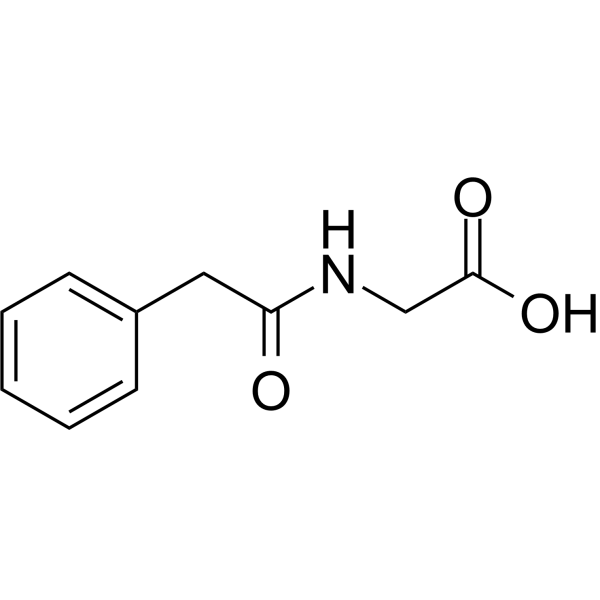
Phenylacetylglycine is a gut microbial metabolite that can activate β2AR. Phenylacetylglycine protects against cardiac injury caused by ischemia/reperfusion .
loading...
    loading...
Cat. No.: HY-W674241
CAS No.: 85734-98-1
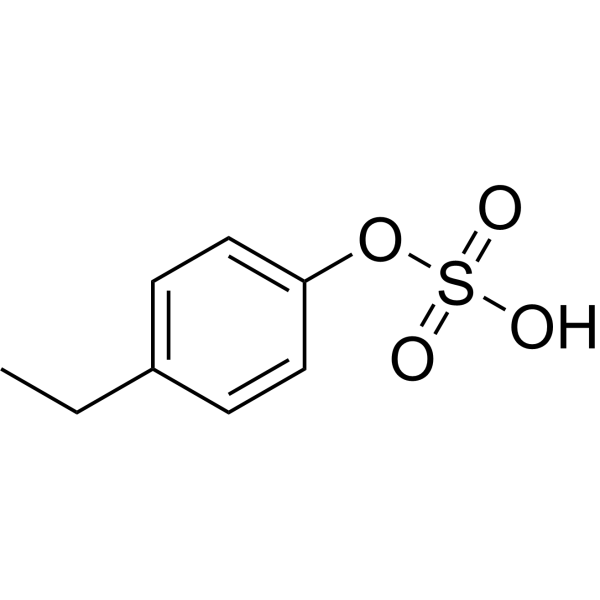
4-Ethylphenyl sulfate is an orally active and brain-penetrant gut microbial metabolite. 4-Ethylphenyl sulfate downregulates Bcl2 expression, upregulates Bax expression, and induces cancer cell apoptosis via the endogenous apoptotic pathway. 4-Ethylphenyl sulfate induces G2/M cell cycle arrest and reactive oxygen species (ROS) production. 4-Ethylphenyl sulfate impairs oligodendrocyte maturation, reduces oligodendrocyte-neuron interactions, decreases axonal myelination levels, and shifts the oligodendrocyte population toward immature precursor cells. 4-Ethylphenyl sulfate alters brain region-specific neural activity and functional connectivity in mice, and correlates with anxiety-like behaviors in mice .
loading...
    loading...
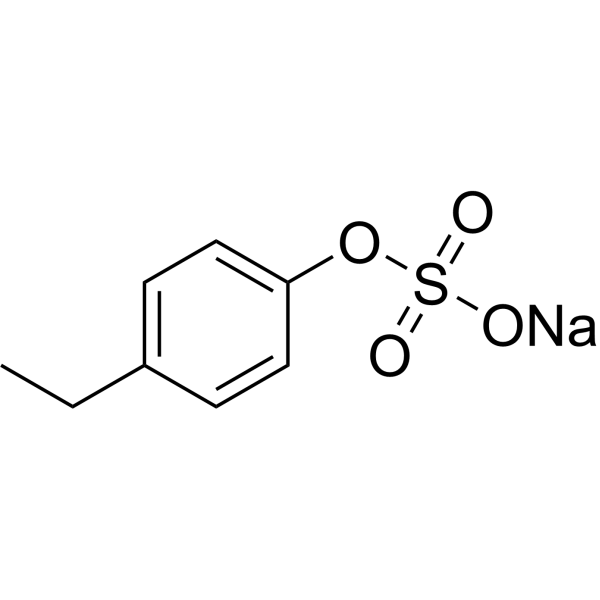
Cat. No.: HY-W674241A
4-Ethylphenyl sulfate sodium is an orally active and brain-penetrant gut microbial metabolite. 4-Ethylphenyl sulfate sodium downregulates Bcl2 expression, upregulates Bax expression, and induces cancer cell apoptosis via the endogenous apoptotic pathway. 4-Ethylphenyl sulfate sodium induces G2/M cell cycle arrest and reactive oxygen species (ROS) production. 4-Ethylphenyl sulfate sodium impairs oligodendrocyte maturation, reduces oligodendrocyte-neuron interactions, decreases axonal myelination levels, and shifts the oligodendrocyte population toward immature precursor cells. 4-Ethylphenyl sulfate sodium alters brain region-specific neural activity and functional connectivity in mice, and correlates with anxiety-like behaviors in mice .
loading...
    loading...
Cat. No.: HY-W015061R
CAS No.: 500-98-1
Phenylacetylglycine (Standard) is the analytical standard of Phenylacetylglycine. This product is intended for research and analytical applications. Phenylacetylglycine is a gut microbial metabolite that can activate β2AR. Phenylacetylglycine protects against cardiac injury caused by ischemia/reperfusion .
loading...
    loading...
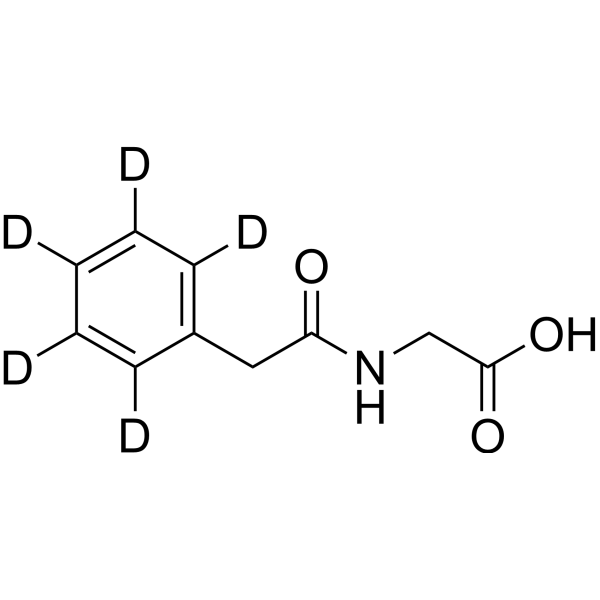
Cat. No.: HY-W015061S
CAS No.: 1189920-31-7
Synonyms: 2-(2-Phenylacetamido)acetic acid-d5
N-(Phenylacetyl-d5)glycine is the deuterium labeled Phenylacetylglycine. Phenylacetylglycine is a gut microbial metabolite that can activate β2AR. Phenylacetylglycine protects against cardiac injury caused by ischemia/reperfusion .
loading...
    loading...
Cat. No.: HY-L078
475 compounds

Accumulating evidence has revealed that intestinal microbiota play an important role in human health and disease, including cardiovascular diseases, inflammatory bowel disease, diabetes, obesity, cancer, and depression, etc. Changes in the composition of gut microbiota associated with disease, referred to as dysbiosis, have been linked to pathologies. Indeed, the gut microbiome functions like an endocrine organ, generating bioactive metabolites which play important roles in human metabolism, health, and disease. Gut microbiome has become a novel therapeutic target for many diseases. Analysis and identification of gut microbial metabolite will contribute to the development of therapeutic methods.

In order to meet the need of gut microbiome research, MCE carefully selected a unique collection of 475 gut microbial metabolites. MCE gut microbial metabolite library is a powerful tool for gut microbiome research and gut microbiome -related drug discovery.

Cat. No.: HY-100599S2
Urolithin A- 13C6 is the 13C-labeled Urolithin A (HY-100599). Urolithin A, a gut-microbial metabolite of ellagic acid, exerts anti-inflammatory, antiproliferative, and antioxidant properties. Urolithin A induces autophagy and apoptosis, suppresses cell cycle progression, and inhibits DNA synthesis .
loading...
    loading...
Cat. No.: HY-155385
CAS No.: 1036406-73-1
Target:  

Drug Metabolite

Research Areas:  

Metabolic Disease

10-Oxo-12(Z),15(Z)-octadecadienoic acid is a gut microbial fatty acid metabolite .
loading...
    loading...
Cat. No.: HY-135897R
CAS No.: 165393-06-6
Urolithin C (Standard) is the analytical standard of Urolithin C. This product is intended for research and analytical applications. Urolithin C, a gut-microbial metabolite of Ellagic acid, is a glucose-dependent activator of insulin secretion. Urolithin C is a L-type Ca2+ channel opener and enhances Ca2+ influx. Urolithin C induces cell apoptosis through a mitochondria-mediated pathway and also stimulates reactive oxygen species (ROS) formation .
loading...
    loading...
Cat. No.: HY-N0894A
CAS No.: 408324-14-1
Synonyms: (3R,5R)-Hexahydrobisdemethoxycurcumin
(3R,5R)-Octahydrocurcumin (Compound 7) is gut microbial metabolite of Curcumin (HY-N0005). (3R,5R)-Octahydrocurcumin exhibits neuroprotective efficacy against Aβ25-35-induced cell damage in SH-SY5Y, and anti-inflammatory activity against LPS-stimulated mouse microglial BV-2 .
loading...
    loading...
Cat. No.: HY-W746773
CAS No.: 16606-62-5
Research Areas:  

Metabolic Disease

5-Hydroxy Indoleacetylglycine is an indole derivative metabolite derived from tryptophan metabolism, and its production depends on the gut microbiota and is associated with tryptophan metabolism and intestinal Clostridium colonization. 5-Hydroxy Indoleacetylglycine can be used for research on gut microbial metabolism and tryptophan metabolic pathways .
loading...
    loading...
  • 1

