18 Results for "

hydrophobic cores

" in MedChemExpress (MCE) Product Catalog:
Products (18)

18 Results for "hydrophobic cores" in MCE Product Catalog:

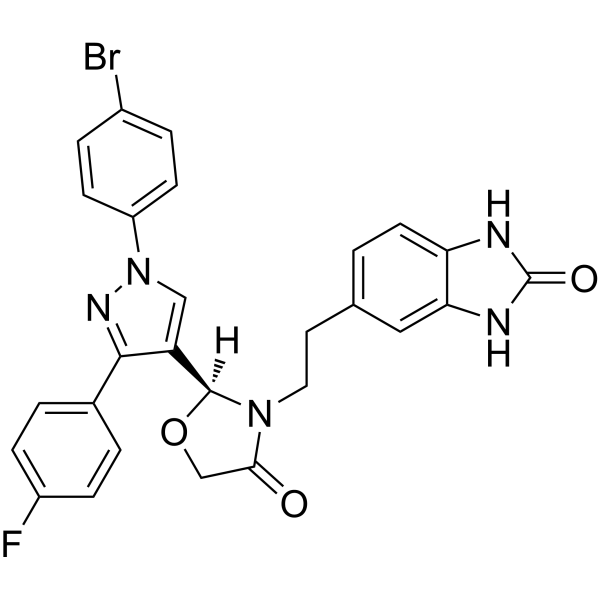
Cat. No.: HY-147255
CAS No.: 2137847-19-7
Purity:  98.40%
Synonyms: ZM-H1505R
Target:  

HBV

Research Areas:  

Infection

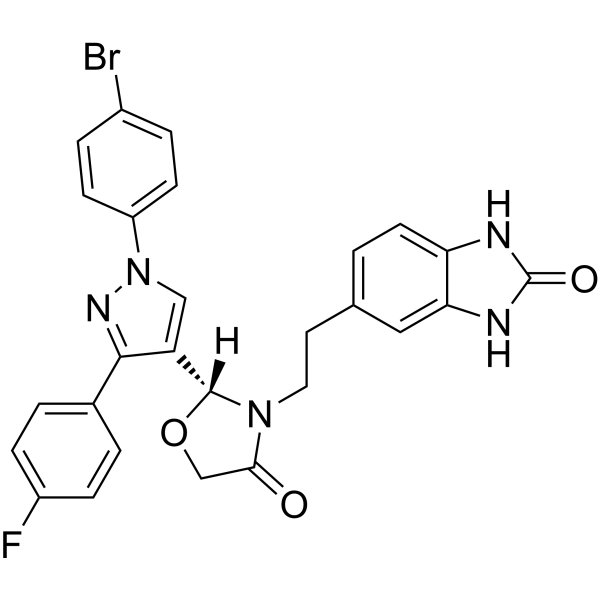
Canocapavir (ZM-H1505R) is an orally active HBV core protein-targeting antiviral agent. Canocapavir binds to the hydrophobic pocket at the dimer-dimer interface of HBV core protein (HBc), stimulating intracellular accumulation of nonfunctional HBV capsids, disrupting viral replication. Canocapavir interferes with the interaction between HBc and HBV large surface protein, resulting in diminished
production of empty virionsis. Canocapavir can be used for the research of hepatitis B virus (HBV) infection .
loading...
    loading...
Cat. No.: HY-117401
CAS No.: 107827-77-0
Purity:  99.32%
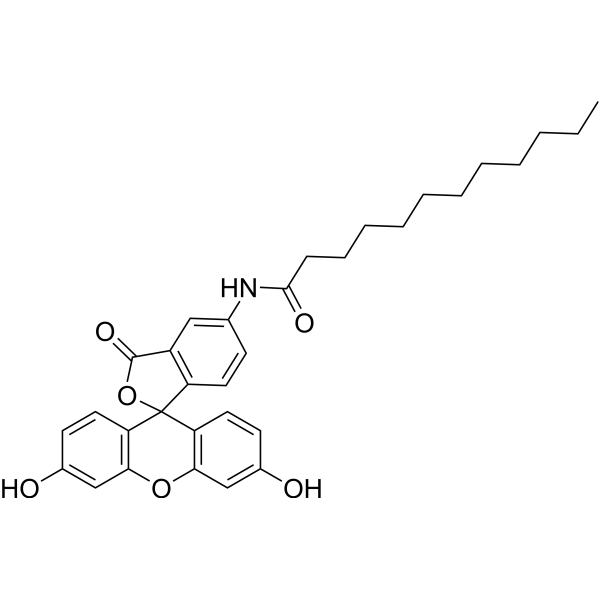
5-Dodecanoylaminofluorescein is an amphipathic (amphoteric) fluorescent probe (Ex/Em = 485 nm/515-535 nm), which consists of a hydrophilic fluorescein core and a hydrophobic dodecanoyl group (C12 fatty acid chain) linked by an amide bond. 5-Dodecanoylaminofluorescein is mainly used as an interface-localized radical trapping/indicator probe. Dodecanoylaminofluorescein can be used for the determination of the antioxidant properties of emulsions, or can serve as a lipophilic drug model for the study of passive skin penetration when encapsulated in tyrosine-derived nanospheres .
loading...
    loading...
Cat. No.: HY-W010514
CAS No.: 1460-57-7
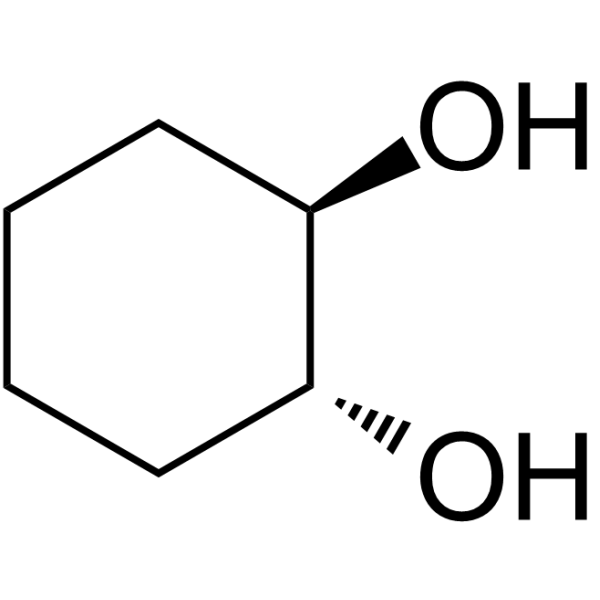
trans-Cyclohexane-1,2-diol (TCHD) is a transient dilator of the nuclear pore complex (NPC). By interacting with the hydrophobic core (FG nucleoporin) of the NPC, trans-Cyclohexane-1,2-diol can disrupt the NPC structure and reversibly increase the permeability of the nuclear pore, allowing macromolecules larger than 40 kDa (such as plasmid DNA) to enter the cell nucleus by passive diffusion, thereby enhancing the nuclear import efficiency of non-viral vectors. trans-Cyclohexane-1,2-diol can improve the efficiency of in vitro electrotransfection or lipid-mediated gene transfection, especially significantly increasing gene expression in differentiated airway epithelial cells .
loading...
    loading...
Cat. No.: HY-W040217
CAS No.: 85261-20-7
Synonyms: N-Oxodecyl meglumine; Decanoyl N-methylglucamide
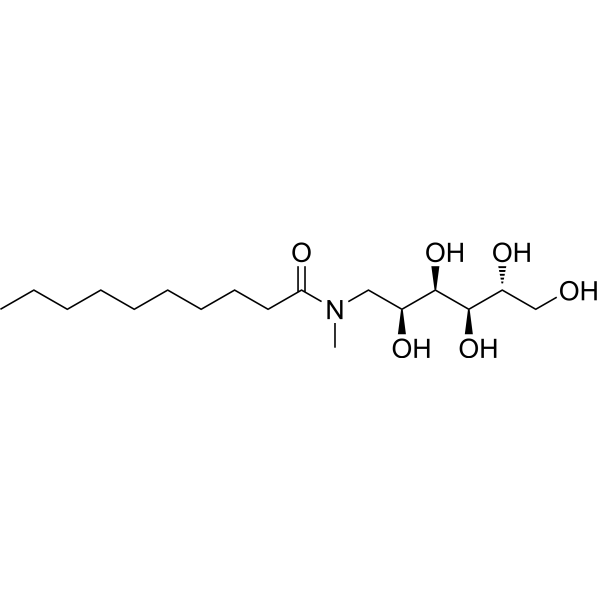
MEGA-10 (N-Oxodecyl meglumine) is a nonionic sugar-based surfactant. MEGA-10 sequesters n-alkylbenzenes into its hydrophobic core via micelle formation as a solubilizer .
loading...
    loading...
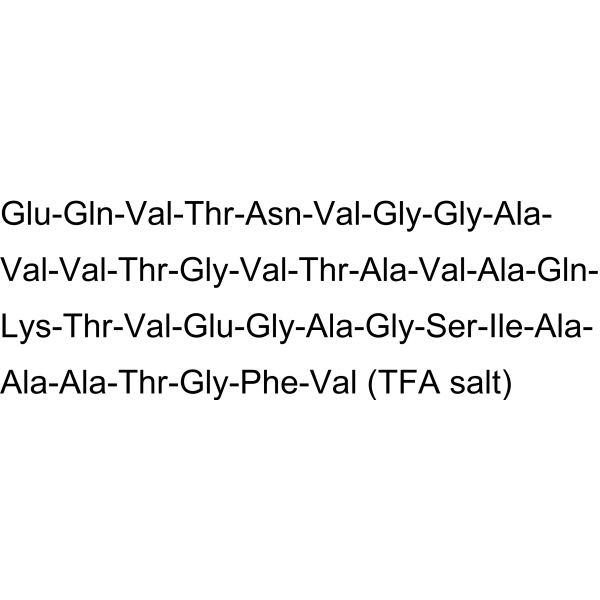
Cat. No.: HY-P4704A
Target:  

α-synuclein

Research Areas:  

Neurological Disease

α-Synuclein (61-95) (human) TFA is the hydrophobic core region of α-synuclein, and induces neuronal cell death. α-Synuclein (61-95) (human) TFA can be used for research of neurodegenerative diseases, including Alzheimer’s disease (AD) and Parkinson’s disease (PD) .
loading...
    loading...
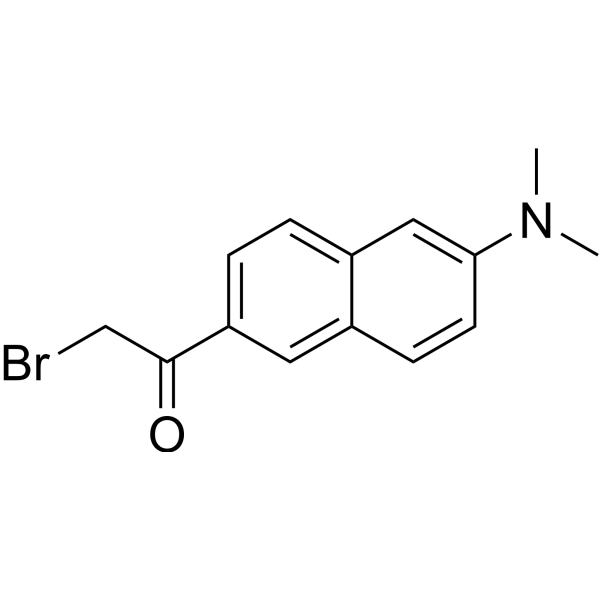
Cat. No.: HY-D1470
CAS No.: 210832-86-3
Target:  

Fluorescent Dye

Research Areas:  

Others

BADAN is a thiol-reactive, environment-sensitive fluorescent probe used for site-specific labeling of protein cysteine residues to detect protein topology, local polarity, protein-lipid interactions, and conformational changes. The bromoacetyl group of BADAN covalently binds to cysteine thiols, and its fluorescence originates from the intramolecular charge transfer (ICT) excited state. The emission peak position varies with the polarity of the surrounding medium: it blue-shifts to approximately 488 nm in nonpolar environments (such as the hydrophobic core of lipid bilayers) and red-shifts to approximately 496-507 nm in polar environments (such as aqueous phases), independent of enzymes, pH, or membrane potential. Ex = 380-402 nm; Em = 400-600 nm .
loading...
    loading...
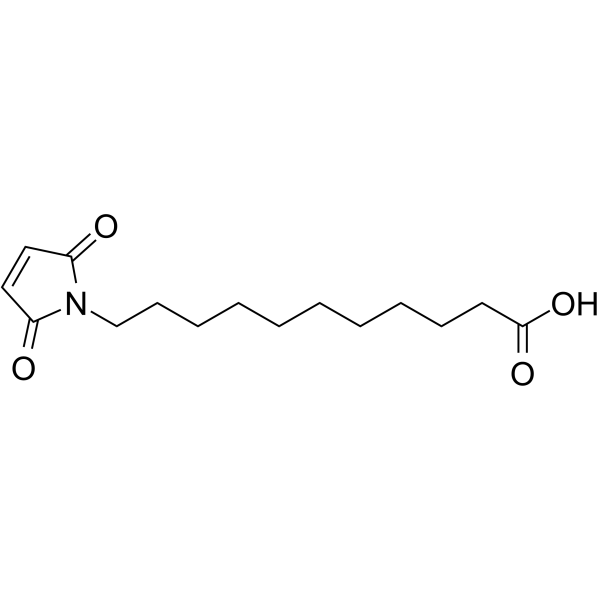
Cat. No.: HY-130908
CAS No.: 57079-01-3
Purity:  99.92%
Research Areas:  

Cancer

11-Maleimidoundecanoic acid is a maleimide-containing hydrophobic core former. 11-Maleimidoundecanoic acid forms a hydrophobic core via maleimide-thiol coupling with cysteine residues on polypeptides, enabling stable loading and controllable release of Doxorubicin (HY-15142A). 11-Maleimidoundecanoic acid can be used for the research of breast cancer .
loading...
    loading...
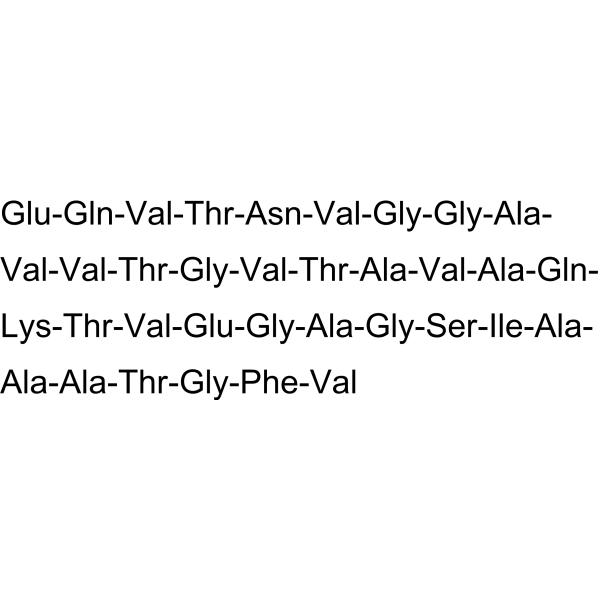
Cat. No.: HY-P4704
CAS No.: 154040-19-4
Target:  

α-synuclein

Research Areas:  

Neurological Disease

α-Synuclein (61-95) (human) is the hydrophobic core region of α-synuclein, and induces neuronal cell death. α-Synuclein (61-95) (human) can be used for research of neurodegenerative diseases, including Alzheimer’s disease (AD) and Parkinson’s disease (PD) .
loading...
    loading...
Cat. No.: HY-P10567
Target:  

Inhibitory Antibodies

Research Areas:  

Others

Pip6a is an arginine-rich cell-penetrating peptide. Pip6a has the ability to deliver associated cargoes across the plasma and endosomal membranes and is stable to serum proteolysis. Pip6a is composed of a hydrophobic core region flanked on each side by arginine-rich domains containing β-alanine and aminohexanoyl spacers. Pip6a-conjugated morpholino phosphorodiamidate oligomer (PMO) dramatically enhanced antisense oligonucleotide (ASO) delivery into striated muscles of myotonic dystrophy (DM1) mice .
loading...
    loading...
Cat. No.: HY-W440898
Research Areas:  

Others

DSPE-PEG5000-SH is a polyPEG attached DSPE molecule. The lipid tails allow formation of lipid bilayer in water and can be used to solubilize hydrophobic drugs while the hydrophilic core can encapsulate therapeutic agents, such as nuclein acid (mRNA/DNA), protein or peptide.
loading...
    loading...
Cat. No.: HY-147255A
CAS No.: 2137847-77-7
Synonyms: (S)-ZM-H1505R
Target:  

HBV

Research Areas:  

Infection

(S)-Canocapavir is the isomer of Canocapavir (HY-147255A). Canocapavir (ZM-H1505R) is an orally active HBV core protein-targeting antiviral agent. Canocapavir binds to the hydrophobic pocket at the dimer-dimer interface of HBV core protein (HBc), stimulating intracellular accumulation of nonfunctional HBV capsids, disrupting viral replication. Canocapavir interferes with the interaction between HBc and HBV large surface protein, resulting in diminished
production of empty virionsis. Canocapavir can be used for the research of hepatitis B virus (HBV) infection .
loading...
    loading...
Cat. No.: HY-W440901
Target:  

Liposome

Research Areas:  

Others

DSPE-PEG5000-SPDP is an amphiphilic polyPEG which forms lipid bilayer in water. It can be used to encapsualte therapeutic agents. The core can encapsulate hydrophilic nutrients, such as protein/peptide and mRNA/DNA/siRNA etc. while the lipid bilayer can solubilize hydrophobic drugs, such as doxorubicin, curcumin etc. The SPDP moiety can react with thiol molecule to form a disulfide bond.
loading...
    loading...
Cat. No.: HY-D3520
CAS No.: 2484683-99-8
HPsensor 2 is a fluorescent probe used to detect the surface hydrophobicity of proteins. The detection mechanism of HPsensor 2 relies on its amphipathic properties. The 2-methoxyethylamine substituents at positions 3 and 5 of its BODIPY core enhance water solubility, enabling it to interact with solvent-exposed hydrophobic regions on proteins. When it binds to these hydrophobic surfaces, the free rotation of the meso-aryl substituent is restricted, increasing molecular rigidity and reducing non-radiative deactivation, which results in a significant enhancement of fluorescence. HPsensor 2 exhibits weak but detectable fluorescence in aqueous environments, and its fluorescence is highly sensitive to changes in protein surface hydrophobicity (Ex/Em = 528/579 nm) .
loading...
    loading...
Cat. No.: HY-173121
Target:  

HBV

Research Areas:  

Infection

KR019 is a potent HBV capsid assembly modulator, exhibits potent antiviral activity in HBV-replicating cells. KR019 binds to the hydrophobic pocket at the core protein dimer-dimer interface, misdirecting capsid assembly into genome-free capsids and thereby inhibiting viral replication .
loading...
    loading...
Cat. No.: HY-184849
CAS No.: 7219-59-2
Research Areas:  

Others

Glu-Arg is a dipeptide linked by L-glutamic acid and L-arginine. Glu-Arg contributes to the construction of the hydrophobic network and maintenance of stability of mouse cAMP-dependent protein kinase; it acts as a core hub connecting the activation segment and the GHI subdomain in eukaryotic protein kinases, and promotes signal transmission between elements and within enzymes. As a salt bridge, Glu-Arg regulates the formation and unfolding rates of α-helices, and its optimized spatial conformation is conducive to the stability and folding rate of α-helices. Glu-Arg induces concentration-dependent intracellular calcium changes in cultured human fungiform taste bud cells .
loading...
    loading...
Cat. No.: HY-134096
CAS No.: 78323-98-5
Synonyms: DNS-M
Target:  

Fluorescent Dye

Research Areas:  

Others

Dansyl-morpholine (DNS-M) is a Fluorescent probe for lipid droplet imaging, cancer cell discrimination, and real-time tracking of lipid droplet dynamics. As a solvatochromic probe with a donor-π-acceptor structure, it relies on hydrophobic interaction for its mechanism of action: its good lipophilicity, confirmed by an oil-water partition coefficient LogP = 2.35, allows it to rapidly penetrate cell membranes, and it specifically localizes to the hydrophobic core of lipid droplets; its fluorescence is strongly enhanced in the nonpolar environment of lipid droplets, while it emits very weak fluorescence in polar environments like PBS buffer, and it exhibits a bathochromic shift in emission wavelength with increasing solvent polarity. It has negligible cytotoxicity, with cell viability remaining over 95% after 24-hour incubation with 100 μM of the probe, and it possesses excellent photostability, retaining over 97% of initial fluorescence intensity after 60 continuous laser scans. For cell imaging applications, its excitation/emission wavelengths for lipid droplet labeling are Ex/Em = 405/480−540 nm, and in a simulative lipid environment O/W emulsion, it has an excitation wavelength of ~346 nm and emission wavelength of ~500 nm, giving a Stokes shift of 154 nm[1].
loading...
    loading...
Cat. No.: HY-187340
Target:  

c-Kit c-Fms

CSF1R/c-Kit-IN-1 is a CSF-1R and c-Kit inhibitor, with an IC50 of 5.88 nM against human CSF-1R and an IC50 of 1.47 nM against human c-Kit. CSF1R/c-Kit-IN-1 binds to the ATP-binding pocket of CSF-1R, forming a hinge interaction with Cys666 via the oxazole nitrogen atom and adjacent amino group, and binds to residues in the hydrophobic binding pocket. CSF1R/c-Kit-IN-1 binds to the ATP-binding pocket of c-Kit, maintains a hinge interaction through its 2-amino-oxazole core, and binds to a broader hydrophobic surface near the solvent-exposed region via its morpholine substituent. CSF1R/c-Kit-IN-1 inhibits CSF-1-induced phosphorylation of ERK, which is a downstream readout of the CSF-1R signaling pathway. CSF1R/c-Kit-IN-1 can be used in the research of neuroinflammation-related neurodegenerative diseases .
loading...
    loading...
Cat. No.: HY-W010514R
CAS No.: 1460-57-7
trans-Cyclohexane-1,2-diol (Standard) is the analytical standard of trans-Cyclohexane-1,2-diol (HY-W010514). This product is intended for research and analytical applications. trans-Cyclohexane-1,2-diol (TCHD) is a transient dilator of the nuclear pore complex (NPC). By interacting with the hydrophobic core (FG nucleoporin) of the NPC, trans-Cyclohexane-1,2-diol can disrupt the NPC structure and reversibly increase the permeability of the nuclear pore, allowing macromolecules larger than 40 kDa (such as plasmid DNA) to enter the cell nucleus by passive diffusion, thereby enhancing the nuclear import efficiency of non-viral vectors. trans-Cyclohexane-1,2-diol can improve the efficiency of in vitro electrotransfection or lipid-mediated gene transfection, especially significantly increasing gene expression in differentiated airway epithelial cells .
loading...
    loading...
  • 1

