13 Results for "

intracranial tumor model

" in MedChemExpress (MCE) Product Catalog:
Products (13)

13 Results for "intracranial tumor model" in MCE Product Catalog:

1
1 Cited Publications
Cat. No.: HY-153341
CAS No.: 2882165-79-7
Purity:  99.41%
Synonyms: CFT1946
Target:  

PROTACs Raf

Research Areas:  

Cancer

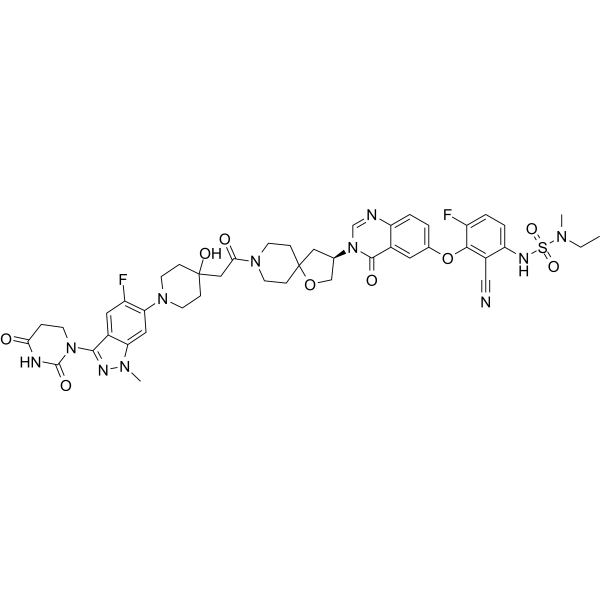
Tagarafdeg (CFT1946) is an orally active, blood-brain barrier-penetrant, and selective bifunctional BiDAC degrader of the BRAF V600E/K mutant protein, with a DC50 of 14 nM in A375 cells. Tagarafdeg mediates the ubiquitination and proteasomal degradation of BRAF mutant proteins. Tagarafdeg inhibits tumor progression in multiple models of BRAF V600E-mutant intracranial tumors, melanoma, and colorectal cancer. Tagarafdeg is applicable to tumor-related research .
loading...
    loading...
Cat. No.: HY-P11303
CAS No.: 161147-59-7
Target:  

CD74 MHC

Research Areas:  

Neurological Disease Cancer

PADRE peptide is a pan-HLA-DR binding epitope and immunostimulant. PADRE peptide binds to the peptide-binding groove of MHC class II molecules for presentation to CD4 + T cells, thereby effectively stimulating specific immune responses. PADRE peptide not only enhances anti-tumor immune responses, inhibits tumor growth and prolongs survival; it also significantly increases the frequency of E7-specific CD8 + T cells and improves therapeutic efficacy against TC-1 tumors when used in combination with E7 peptide-based vaccines and poly (I:C). The intensity of the immune response induced by PADRE peptide is lower than that of the Ii-PADRE DNA vaccine, and it fails to enhance the immune effect of CRT-E7 DNA. PADRE peptide is widely applicable to research on related tumors such as melanoma, glioblastoma and cervical cancer .
loading...
    loading...
Cat. No.: HY-161275
CAS No.: 2769715-68-4
Research Areas:  

Cancer

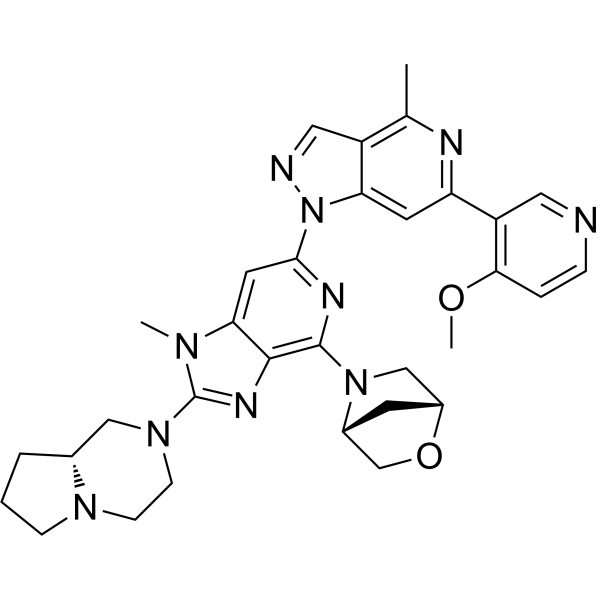
BI-4732 is an orally active, reversible, ATP-competitive EGFR inhibitor with blood-brain barrier penetration. BI-4732 inhibits the kinase activity of EGFR L858R, T790M and C797S with IC50 values of 1 nM while sparing EGFR wild-type. BI-4732 inhibits EGFR and reduces the phosphorylation of AKT, ERK, and S6K. BI-4732 demonstrates excellent intracranial anti-tumor efficacy in YU-1097 xenograft model harboring EGFR_E19del/T790M/C797S. BI-4732 can be used for the study of non-small cell lung cancer (NSCLC) .
loading...
    loading...
Cat. No.: HY-125374
CAS No.: 156294-36-9
Purity:  ≥97.0%
Synonyms: XRP9881
Target:  

Microtubule/Tubulin

Research Areas:  

Neurological Disease Cancer

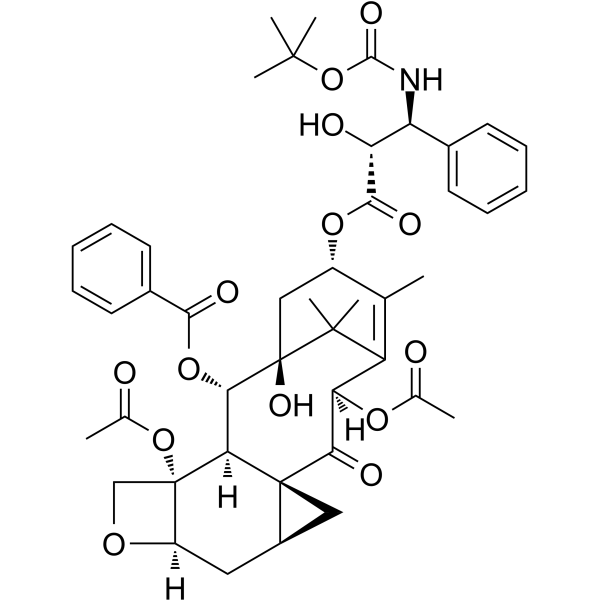
Larotaxel (XRP9881) is an orally active and blood-brain barrier penetrant Microtubule stabilizer with an IC50 of 0.21 μM. Larotaxel shows activity in Taxane-resistant tumor models. Larotaxel exhibits antitumor activity in intracranial glioblastoma models. Larotaxel can be used for research on advanced solid tumors .
loading...
    loading...
Cat. No.: HY-P10427
DV1 is a CXCR4 inhibitor with anti-proteolytic properties that specifically blocks the binding of SDF-1α to its receptor. DV1 inhibits the migration of breast cancer cells and enables the targeted delivery of avidin-PLGA nanoparticles to CXCR4-expressing cancer cells. DV1 not only effectively suppresses the progression of metastatic breast cancer in mouse models, but also preferentially accumulates in brain tumor tissues rather than normal brain tissues, showing potential for inhibiting intracranial tumor metastasis. As a humoral immune stimulant, DV1 induces the production of specific IgG, neutralizing antibodies and cellular immune responses, thereby providing the host with protection against lethal challenges. DV1 has been applied to studies on CXCR4-expressing cancers, glioblastoma, dengue fever and other related diseases .
loading...
    loading...
Cat. No.: HY-P10427A
Target:  

CXCR Dengue Virus

Research Areas:  

Infection

DV1 TFA is a CXCR4 inhibitor with anti-proteolytic properties that specifically blocks the binding of SDF-1α to its receptor. DV1 TFA inhibits the migration of breast cancer cells and enables the targeted delivery of avidin-PLGA nanoparticles to CXCR4-expressing cancer cells. DV1 TFA not only effectively suppresses the progression of metastatic breast cancer in mouse models, but also preferentially accumulates in brain tumor tissues rather than normal brain tissues, showing potential for inhibiting intracranial tumor metastasis. As a humoral immune stimulant, DV1 TFA induces the production of specific IgG, neutralizing antibodies and cellular immune responses, thereby providing the host with protection against lethal challenges. DV1 TFA has been applied to studies on CXCR4-expressing cancers, glioblastoma, dengue fever and other related diseases .
loading...
    loading...
Cat. No.: HY-123009
CAS No.: 927823-01-6
KCN1 is a p300/HIF-1α interaction inhibitor with a Kd value of 345 nM for p300-CH1. KCN1 binds to the CH1 domain of p300, blocks the assembly of the p300/HIF-1α complex, and disrupts the HIF-1α-p300/CBP interaction. KCN1 inhibits cancer cell growth, induces cancer cell cycle arrest and apoptosis. KCN1 inhibits β-galactosidase activity and downregulates the expression of VEGF, Glut1, CA9 and CAIX. KCN1 exerts anticancer activity in mouse tumor xenograft models. KCN1 can be used in research related to malignant glioma, pancreatic cancer and metastatic uveal melanoma .
loading...
    loading...
Cat. No.: HY-178061
CAS No.: 2598870-24-5
Target:  

ERK RET

Research Areas:  

Cancer

APS03118 is an orally active, potent and selective rearranged during transfection (RET) inhibitor. APS03118 broadly inhibits RET fusions and mutations (including G810, V804, L730, and Y806 variants), with IC50 values predominantly below 1 nM (0.095 nM for WT; ranging from 0.00438 to 5.72 nM for mutants), and demonstrates marked superiority against RET G810 mutations. APS03118 inhibits the entire RET signaling pathway (including RET, Shc, and ERK1/2), with >20-fold selectivity over most off-target kinases (except FLT3 and YES). APS03118 induces complete tumor regression in KIF5B-RET and CCDC6-RET V804 M patient derived xenografts (PDXs) and significantly prolongs survival in an intracranial CCDC6-RET metastasis mice model. APS03118 can be used for selective RET inhibitor (SRI)-resistant, RET-driven cancer research .
loading...
    loading...
Cat. No.: HY-178391
Research Areas:  

Cancer

SMU-037 is an orally active and selective ROS1 inhibitor that demonstrates potent activity (IC₅₀ = 6.8 nM) and possesses the ability to penetrate the blood-brain barrier. SMU-037 shows ~25-fold selectivity over ALK, and superior sensitivity against the G2032R mutation. SMU-037 attenuates phosphorylation of ROS1 and downstream MAPK-ERK signaling pathway, leading to cell cycle arrest and apoptosis. SMU-037 effectively suppresses tumor progression in both xenograft and intracranial mouse models. SMU-037 can be used for non-small cell lung cancer (NSCLC) research .
loading...
    loading...
Cat. No.: HY-125374A
CAS No.: 192573-38-9
Synonyms: XRP9881 dihydrate
Target:  

Microtubule/Tubulin

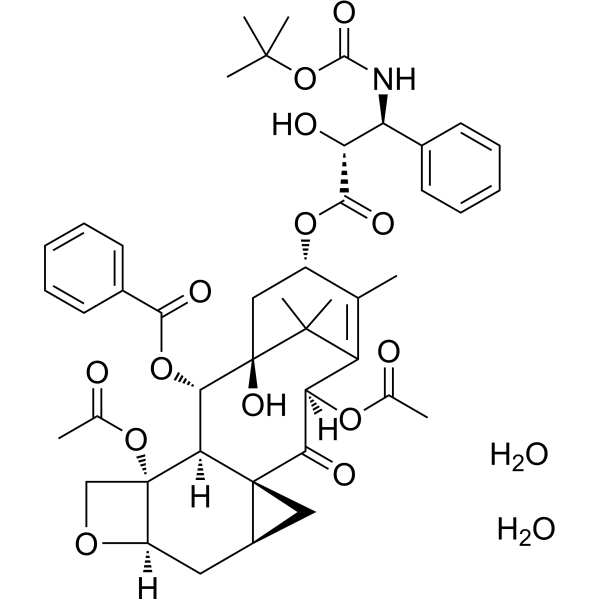
Larotaxel dihydrate (XRP9881 dihydrate) is an orally active and blood-brain barrier penetrant Microtubule stabilizer with an IC50 of 0.21 μM. Larotaxel dihydrate shows activity in Taxane-resistant tumor models. Larotaxel dihydrate exhibits antitumor activity in intracranial glioblastoma models. Larotaxel dihydrate can be used for research on advanced solid tumors .
loading...
    loading...
Cat. No.: HY-125374S
Synonyms: XRP9881-d9
Larotaxel-d9 (XRP9881-d9) is the d9-labeled Larotaxel (HY-125374). Larotaxel (XRP9881) is an orally active and blood-brain barrier penetrant Microtubule stabilizer with an IC50 of 0.21 μM. Larotaxel shows activity in Taxane-resistant tumor models. Larotaxel exhibits antitumor activity in intracranial glioblastoma models. Larotaxel can be used for research on advanced solid tumors .
loading...
    loading...
Cat. No.: HY-187181
CAS No.: 2933893-78-6
Target:  

YAP Hippo (MST)

Research Areas:  

Cancer

GNE-2181 is an orally active, blood-brain barrier-penetrant pan-TEAD transcription factor inhibitor, with IC50 values of 13, 26, 61 and 17 nM against TEAD1, TEAD2, TEAD3 and TEAD4, respectively. GNE-8021 allosterically disrupts the TEAD-YAP/TAZ interaction and inhibits TEAD-mediated oncogenic transcriptional programs via the Hippo signaling pathway. GNE-8021 suppresses YAP-driven tumor cell growth. GNE-2181 inhibits the growth of intracranial tumor models in vivo. GNE-2181 can be used for research on brain metastasis of lung cancer .
loading...
    loading...
Cat. No.: HY-184290
CAS No.: 3062852-59-6
Research Areas:  

Neurological Disease Cancer

PRMT5-IN-56 is a PRMT5⋅MTA complex inhibitor with an IC50 of 0.2 nM, oral activity, and blood-brain barrier penetration. PRMT5-IN-56 inhibits PRMT5 methyltransferase activity in an MTA-cooperative manner, suppresses symmetrical dimethylarginine levels in MTAP-deficient cells. PRMT5-IN-56 suppresses proliferation of MTAP-deleted cancer cells with high selectivity over MTAP-wild type cells. PRMT5-IN-56 induces dose-dependent tumor growth inhibition in subcutaneous xenograft models, inhibits intracranial tumor progression, and prolongs survival in orthotopic brain xenograft models. PRMT5-IN-56 exhibits high intrinsic permeability, good oral bioavailability, and a high brain-to-plasma ratio. PRMT5-IN-56 can be used for the research of MTAP-deleted cancers and glioblastoma .
loading...
    loading...
  • 1

