12 Results for "

leucine catabolism

" in MedChemExpress (MCE) Product Catalog:
Products (12)

12 Results for "leucine catabolism" in MCE Product Catalog:

1
1 Cited Publications
Cat. No.: HY-113232
CAS No.: 33008-07-0
Purity:  99.90%
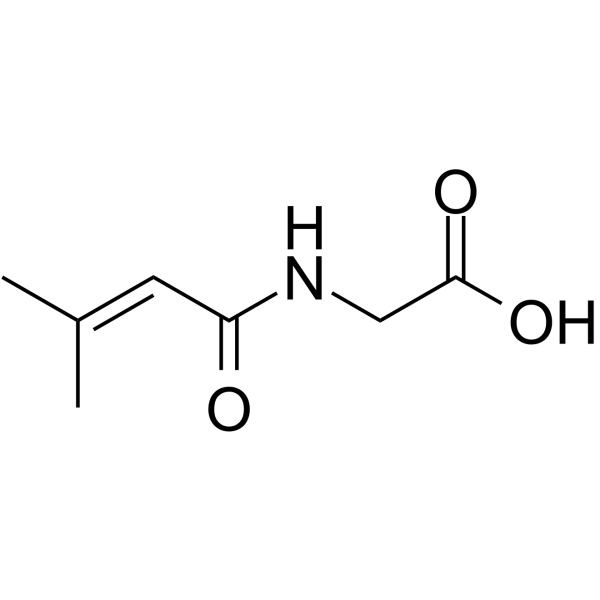
3-Methylcrotonylglycine is an organic acid conjugate associated with leucine catabolism that inhibits respiratory chain complex II-III, mitochondrial creatine kinase, and synaptic membrane Na +, K +-ATPase. 3-Methylcrotonylglycine increases reactive oxygen species levels to mediate oxidative damage, while inhibiting mitochondrial electron transport, reducing tricarboxylic acid cycle flux, and interfering with intracellular energy transport and neuronal ion homeostasis. 3-Methylcrotonylglycine is a neurotoxic metabolite that accumulates in the metabolic pathway of 3-methylcrotonyl-CoA carboxylase deficiency. 3-Methylcrotonylglycine can be used in studies related to 3-methylcrotonyl-CoA carboxylase deficiency .
loading...
    loading...
Cat. No.: HY-N11200
CAS No.: 99159-87-2
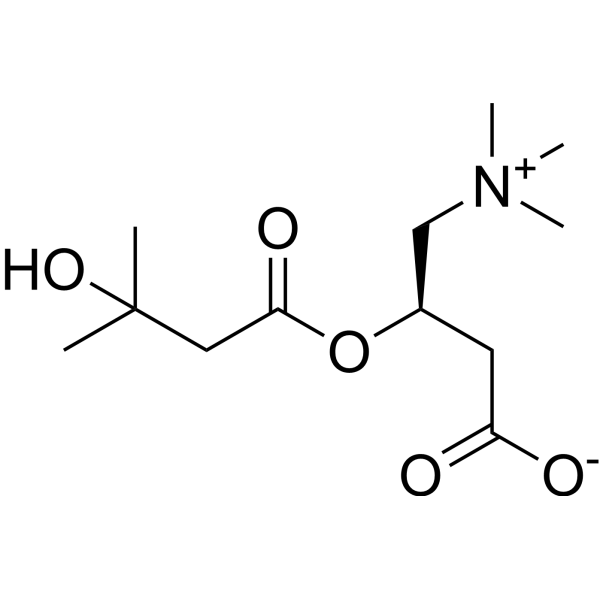
3-Hydroxyisovalerylcarnitine is a carnitine derivative. 3-Hydroxyisovaleryl carnitine in plasma may serve as a novel biomarker of biotin deficiency in humans, with its concentration increasing with biotin deficiency. Biotin deficiency reduces the activity of biotin-dependent 3-methylcrotonyl-CoA carboxylase, hinders the conversion of 3-methylcrotonyl-CoA into 3-methylglutaconyl-CoA, and impairs the leucine catabolism pathway; resulting in plasma 3-Hydroxyisovalerylcarnitine concentrations rise .
loading...
    loading...
Cat. No.: HY-30216A
CAS No.: 498-36-2
Synonyms: α-Hydroxyisocaproic acid
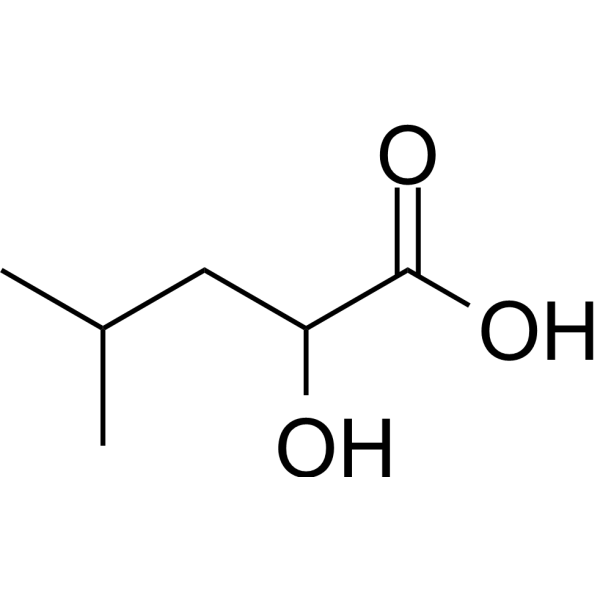
Leucic acid (α-Hydroxyisocaproic acid) is an orally active end-product of the microbial metabolism of leucine. Leucic acid can bind to HCAR2, alters AMPK and ERK1/2 phosphorylation status, suppresses lipid synthesis, promotes catabolism, reduces adiposity, enhances lean mass and exercise capacity. Leucic acid suppresses pro-inflammatory cytokine secretion, inflammation-related gene mRNA expression. Leucic acid decreases basal protein synthesis, attenuates myotube atrophy. Leucic acid can be used for the research of obesity .
loading...
    loading...
Cat. No.: HY-164093
CAS No.: 6244-91-3
Synonyms: Isovaleryl-coenzyme A
Target:  

Acetyl-CoA synthetase

Research Areas:  

Metabolic Disease

Isovaleryl-CoA sodium is a branched-chain acyl-CoA and an inhibitor of succinate-CoA ligase (SCL), with an IC50 of 273 μM in rat liver mitochondria .
loading...
    loading...
Cat. No.: HY-113278
CAS No.: 3063-05-6
Purity:  99.56%
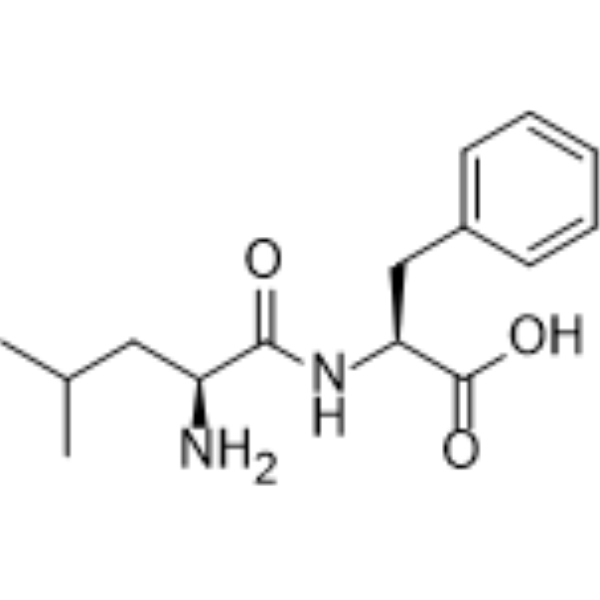
Leucyl-phenylalanine is a linear dipeptide composed of L-leucine and L-phenylalanine, and also serves as a cyclization substrate. Leucyl-phenylalanine is an incomplete degradation product generated during protein breakdown or catabolism. Leucyl-phenylalanine undergoes heat-induced solid-state cyclization via an autocatalytic mechanism to form its cyclic diketopiperazine analog .
loading...
    loading...
Cat. No.: HY-113278S
Leucyl-phenylalanine- 13C6, 15N TFA is the 13C, 15N-labeled Leucyl-phenylalanine (HY-113278). Leucyl-phenylalanine is a linear dipeptide composed of L-leucine and L-phenylalanine, and also serves as a cyclization substrate. Leucyl-phenylalanine is an incomplete degradation product generated during protein breakdown or catabolism. Leucyl-phenylalanine undergoes heat-induced solid-state cyclization via an autocatalytic mechanism to form its cyclic diketopiperazine analog .
loading...
    loading...
Cat. No.: HY-W654243
Isovalerylcarnitine-d9-1 (chloride) is deuterium labeled Isovalerylcarnitine (chloride). Isovalerylcarnitine chloride, a product of the catabolism of L-leucine, is a potent activator of the Ca 2+-dependent proteinase (calpain) of human neutrophils .
loading...
    loading...
Cat. No.: HY-N11200R
CAS No.: 99159-87-2
3-Hydroxyisovalerylcarnitine (Standard) is the analytical standard of 3-Hydroxyisovalerylcarnitine. This product is intended for research and analytical applications. 3-Hydroxyisovalerylcarnitine is a carnitine derivative. 3-Hydroxyisovaleryl carnitine in plasma may serve as a novel biomarker of biotin deficiency in humans, with its concentration increasing with biotin deficiency. Biotin deficiency reduces the activity of biotin-dependent 3-methylcrotonyl-CoA carboxylase, hinders the conversion of 3-methylcrotonyl-CoA into 3-methylglutaconyl-CoA, and impairs the leucine catabolism pathway; resulting in plasma 3-Hydroxyisovalerylcarnitine concentrations rise .
loading...
    loading...
Cat. No.: HY-113232S
CAS No.: 1276197-31-9
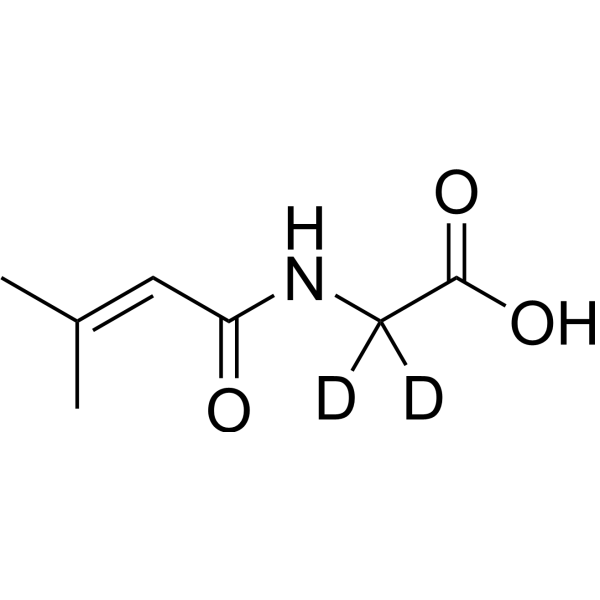
3-Methylcrotonylglycine-d2 is the deuterated-labeled 3-Methylcrotonylglycine (HY-113232). 3-Methylcrotonylglycine is an organic acid conjugate associated with leucine catabolism that inhibits respiratory chain complex II-III, mitochondrial creatine kinase, and synaptic membrane Na +, K +-ATPase. 3-Methylcrotonylglycine increases reactive oxygen species levels to mediate oxidative damage, while inhibiting mitochondrial electron transport, reducing tricarboxylic acid cycle flux, and interfering with intracellular energy transport and neuronal ion homeostasis. 3-Methylcrotonylglycine is a neurotoxic metabolite that accumulates in the metabolic pathway of 3-methylcrotonyl-CoA carboxylase deficiency. 3-Methylcrotonylglycine can be used in studies related to 3-methylcrotonyl-CoA carboxylase deficiency .
loading...
    loading...
Cat. No.: HY-W101499
CAS No.: 3062-14-4
Target:  

Endogenous Metabolite

Research Areas:  

Others

L-a-Aspartyl-L-leucine is a dipeptide composed of aspartate and leucine. It is an incomplete breakdown product of protein digestion or protein catabolism.
loading...
    loading...
Cat. No.: HY-E72091
Research Areas:  

Others

[3-Methyl-2-oxobutanoate dehydrogenase (acetyl-transferring)] kinase (EC 2.7.11.4) is an ATP-dependent serine/threonine protein kinase that inactivates the branched-chain α-keto acid dehydrogenase complex (BCKDH) by phosphorylating its E1α subunit, thereby inhibiting the catabolism of leucine, isoleucine, and valine.
loading...
    loading...
Cat. No.: HY-113278R
CAS No.: 3063-05-6
Leucyl-phenylalanine (Standard) is the analytical standard of Leucyl-phenylalanine (HY-113278). This product is intended for research and analytical applications. Leucyl-phenylalanine is a linear dipeptide composed of L-leucine and L-phenylalanine, and also serves as a cyclization substrate. Leucyl-phenylalanine is an incomplete degradation product generated during protein breakdown or catabolism. Leucyl-phenylalanine undergoes heat-induced solid-state cyclization via an autocatalytic mechanism to form its cyclic diketopiperazine analog .
loading...
    loading...
  • 1

