
1. Search Result
Search Result
Results for "

melanocyte-stimulating hormone

" in MedChemExpress (MCE) Product Catalog:

26

Inhibitors & Agonists

21

Peptides

1

Inhibitory Antibodies

1

Natural
Products

1

Recombinant Proteins

1

Antibodies

Cat. No. Product Name Target Research Areas Chemical Structure
  • HY-P0252
    α-MSH
    Maximum Cited Publications
    23 Publications Verification

    α-melanocyte-stimulating hormone

    Melanocortin Receptor Neurological Disease Metabolic Disease Inflammation/Immunology
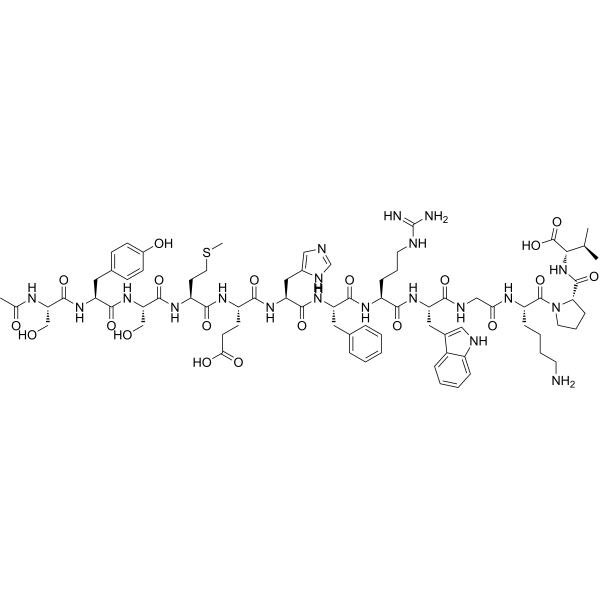
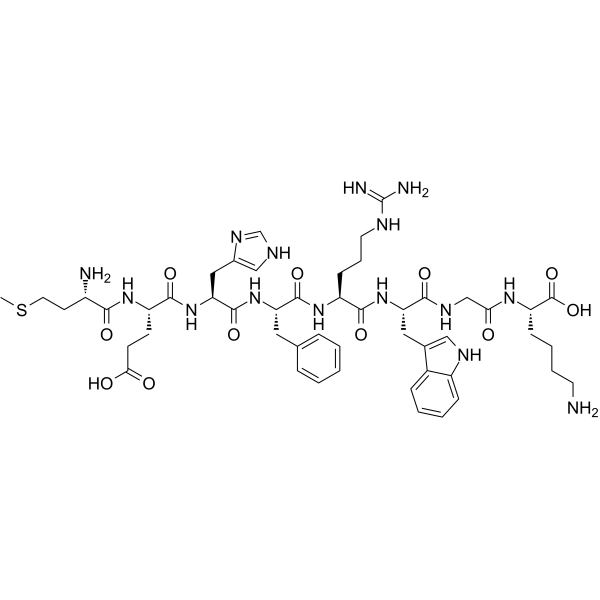
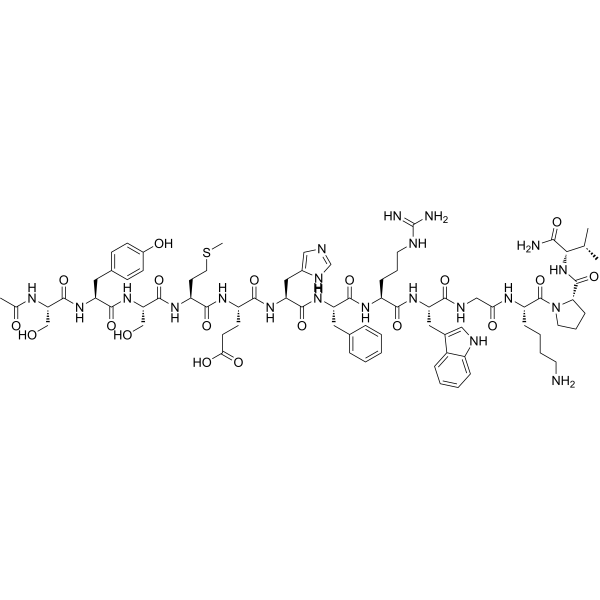
    α-MSH (α-Melanocyte-Stimulating Hormone), an endogenous neuropeptide, is an endogenous melanocortin receptor 4 (MC4R) agonist with anti-inflammatory and antipyretic activities. α-MSH is a post-translational derivative of pro-opiomelanocortin (POMC) .
    α-MSH
  • HY-N2466
    Melanotan I
    1 Publications Verification

    MT-I; [Nle4,D-Phe7]-α-MSH

    Melanocortin Receptor Neurological Disease Cancer
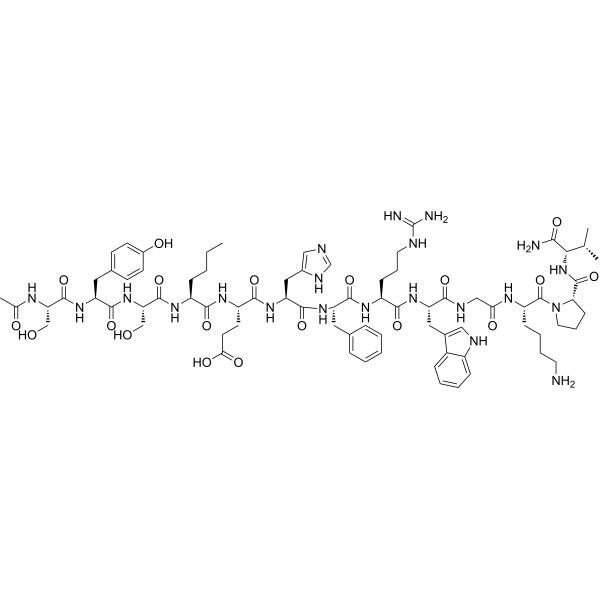
    Melanotan I is a potent non-selective melanocortin receptor (MCR) agonist. Melanotan I is a synthetic analogue of α-melanocyte stimulating hormone (α-MSH) that stimulates melanogenesis. Melanotan I can induce skin tanning by mimicking the actions of a-MSH on the melanocortin type 1 receptors (MC1R) of melanocytes. Melanotan I can be used for the research of sun-induced skin cancer, melanoma, inflammation and male erectile dysfunction .
    Melanotan I
  • HY-P0252A
    α-MSH TFA
    Maximum Cited Publications
    23 Publications Verification

    α-melanocyte-stimulating hormone TFA

    Melanocortin Receptor Neurological Disease Metabolic Disease Inflammation/Immunology
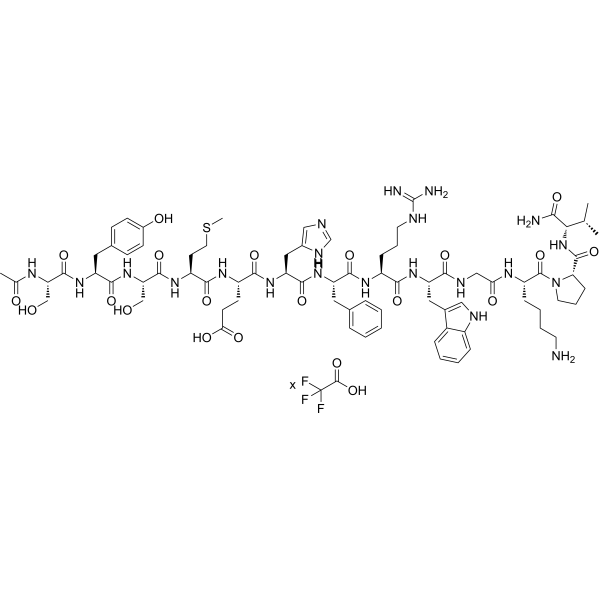
    α-MSH (α-Melanocyte-Stimulating Hormone) TFA, an endogenous neuropeptide, is an endogenous melanocortin receptor 4 (MC4R) agonist with anti-inflammatory and antipyretic activities. α-MSH TFA is a post-translational derivative of pro-opiomelanocortin (POMC) .
    α-MSH TFA
  • HY-P3662

    Tyrosinase Cancer
    Ac-[Nle4,D-Phe7]-α-MSH (4-10)-NH2 is a melanotropin, a melanocyte-stimulating hormone. Ac-[Nle4,D-Phe7]-α-MSH (4-10)-NH2 stimulates tyrosinase and exhibits thermoregulatory effect in rats model .
    Ac-[Nle4,D-Phe7]-α-MSH (4-10)-NH2
  • HY-P1531

    Melanocortin Receptor Cardiovascular Disease Metabolic Disease Endocrinology
    γ-1-Melanocyte Stimulating Hormone (MSH), amide is a 11-amino acid peptide. γ-1-Melanocyte Stimulating Hormone (MSH) regulates sodium (Na +) balance and blood pressure through activation of the melanocortin receptor 3 (MC3-R).
    γ-1-Melanocyte Stimulating Hormone (MSH), amide
  • HY-108842

    PegIFN a-2b; Sch 54031; Sylatron; ViraferonPeg

    HIV HCV Infection Cancer
    Peginterferon alfa-2b (PegIFN a-2b; Sch 54031; Sylatron; ViraferonPeg) is an immunomodulator. Peginterferon alfa-2b is a recombinant alfa-2b interferon covalently linked PEG with antiviral activity against HCV. Peginterferon alfa-2b decreases viral DNA in HIV. Peginterferon alfa-2b can be used in research of melanoma and hepatitis C .
    Peginterferon alfa-2b
  • HY-107648
    McN-A-343
    2 Publications Verification

    mAChR Neurological Disease Inflammation/Immunology
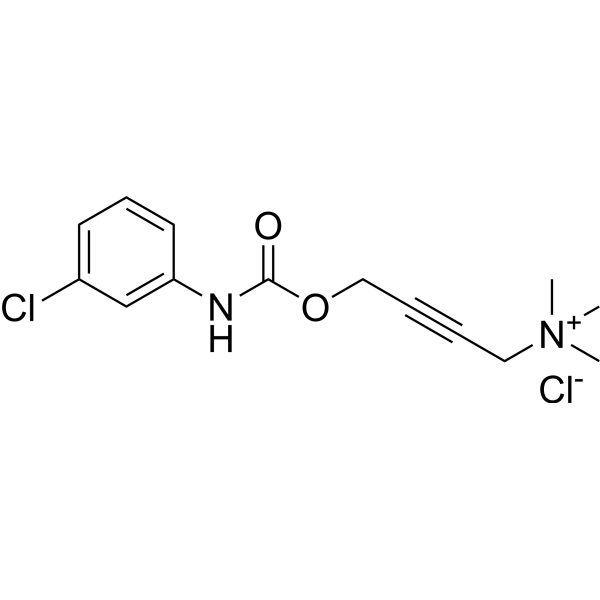
    McN-A-343 is a selective M1 muscarinic agonist that stimulates muscarinic transmission in sympathetic ganglia. McN-A-343 produces a significant inhibitory effect on Muscarine (HY-121404)-evoked catecholamine secretion from the isolated perfused rat adrenal gland. McN-A-343 is involved in the regulation of neuronal firing and activates enteroendocrine L cells to release glucagon-like peptide 1 (GLP-1) and modulates the secretion of α-melanocyte stimulating hormone (α-MSH) from the pituitary gland in the central nervous system. McN-A-343 reduces colonic inflammation and oxidative stress in Acetic acid (HY-Y0319)-induced ulcerative colitis (UC) mice. McN-A-343 can be used for the study of ulcerative colitis .
    McN-A-343
  • HY-P1504

    Beta-MSH (1-22) (human)

    Melanocortin Receptor Neurological Disease Metabolic Disease Endocrinology
    β-Melanocyte Stimulating Hormone (MSH), human, a 22-residue peptide, acts as an endogenous melanocortin-4 receptor (MC4-R) agonist .
    β-Melanocyte Stimulating Hormone (MSH), human
  • HY-P1504A

    Beta-MSH (1-22) (human) TFA

    Melanocortin Receptor Neurological Disease Metabolic Disease Endocrinology
    β-Melanocyte Stimulating Hormone (MSH), human TFA, a 22-residue peptide, acts as an endogenous melanocortin-4 receptor (MC4-R) agonist .
    β-Melanocyte Stimulating Hormone (MSH), human TFA
  • HY-135014

    Melanocortin Receptor Adrenergic Receptor Others
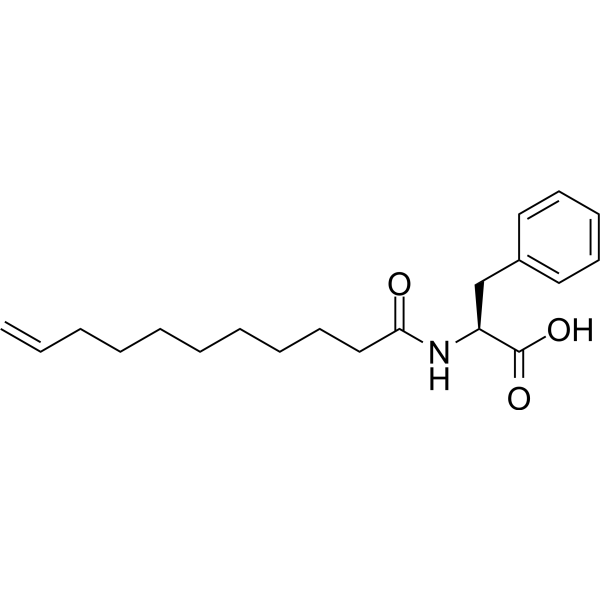
    Undecylenoyl phenylalanine is an antagonist for α-melanocyte-stimulating hormone (MSH) and β-adrenergic receptor (β-ADR) to reduce the melanogenesis in melanocytes, reduces hyperpigmentation and thus ameliorates melasma lesions and solar lentigines .
    Undecylenoyl phenylalanine
  • HY-P5220

    Melitane

    Melanocortin Receptor Others
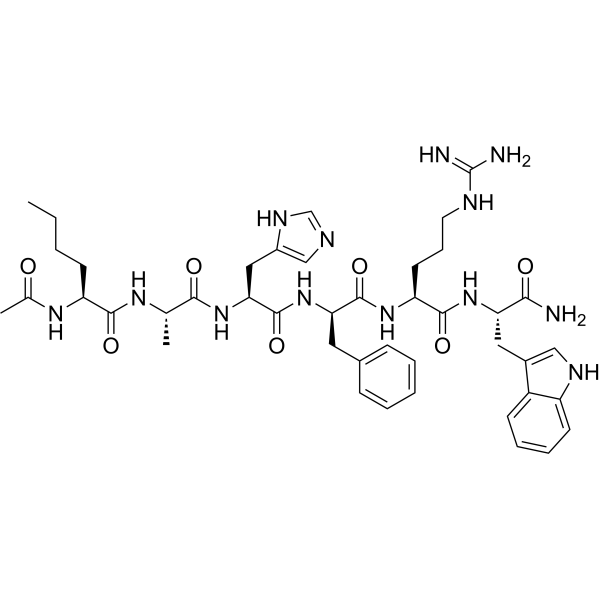
    Acetyl hexapeptide-1 (Melitane) is a biomimetic peptide that mimics the activity of α-melanocyte-stimulating hormone (α-MSH). Acetyl hexapeptide-1 regulates muscle contraction, thereby reducing facial expression lines. Acetyl hexapeptide-1 is one of the components of anti-aging skincare serums targeting dynamic wrinkles. Acetyl hexapeptide-1 can be used in research related to mild photoaged facial skin and premature gray hair .
    Acetyl hexapeptide-1
  • HY-P5220A

    Melitane acetate

    Melanocortin Receptor Others
    Acetyl hexapeptide-1 (Melitane) acetate is a biomimetic peptide that mimics the activity of α-melanocyte-stimulating hormone (α-MSH). Acetyl hexapeptide-1 acetate can regulate muscle contraction, thereby reducing facial expression lines. Acetyl hexapeptide-1 acetate is one of the components of anti-aging skin care essences targeting dynamic wrinkles. Acetyl hexapeptide-1 acetate can be used in studies related to mild photo-aged facial skin and premature graying of hair .
    Acetyl hexapeptide-1 acetate
  • HY-P1518

    Melanocortin Receptor Metabolic Disease
    Adrenocorticotropic Hormone (ACTH) (1-10), human, an adrenocorticotropin hormone fragment, possesses a weak α-melanocyte stimulating hormone (α-MSH) potency only at high doses (100 and 1000 nM).
    Adrenocorticotropic Hormone (ACTH) (1-10), human
  • HY-P0252B

    α-melanocyte-stimulating hormone free acid

    Melanocortin Receptor Neurological Disease
    α-MSH free acid (α-Melanocyte-Stimulating Hormone free acid) is an MC3R and MC4R agonist with EC50s of 0.16 nM and 5.6 nM, respectively. α-MSH free acid activates cAMP generation at MC3R and MC4R .
    α-MSH free acid
  • HY-P3645

    Melanocortin Receptor Others
    (Nle4)-α-MSH is a synthetic analogue of α-MSH (HY-P0252), a melanocyte-stimulating hormone. (Nle4)-α-MSH reversibly darkens frog skins and also exhibits prolonged activity after heat-alkali treatment .
    (Nle4)-α-MSH
  • HY-105305

    ABT-719; AP-214

    Melanocortin Receptor Inflammation/Immunology
    Modimelanotide (ABT-719) is an α-melanocyte-stimulating hormone analog. Modimelanotide has high specific binding ability to melanocortin receptors (MCR1, 3, 4, 5). Modimelanotide possesses anti-inflammatory and organ-protective effects. Modimelanotide can be used in the research of diseases such as acute kidney injury .
    Modimelanotide
  • HY-N2466A
    Melanotan I acetate
    1 Publications Verification

    MT-I acetate; [Nle4,D-Phe7]-α-MSH acetate

    Melanocortin Receptor Cancer
    Melanotan I acetate is a potent non-selective melanocortin receptor (MCR) agonist. Melanotan I acetate is a synthetic analogue of α-melanocyte stimulating hormone (α-MSH) that stimulates melanogenesis. Melanotan I acetate can induce skin tanning by mimicking the actions of a-MSH on the melanocortin type 1 receptors (MC1R) of melanocytes. Melanotan I acetate can be used for sunlight-induced skin cancers research .
    Melanotan I acetate
  • HY-P1503

    Adrenocorticotropic hormone (4-11), human

    Melanocortin Receptor Metabolic Disease
    ACTH (4-11), an adrenocorticotropin hormone fragment, possesses a weak α-melanocyte stimulating hormone (α-MSH) potency only at high doses (100 and 1000 nM).
    ACTH (4-11)
  • HY-P2336

    Melanocortin Receptor Cancer
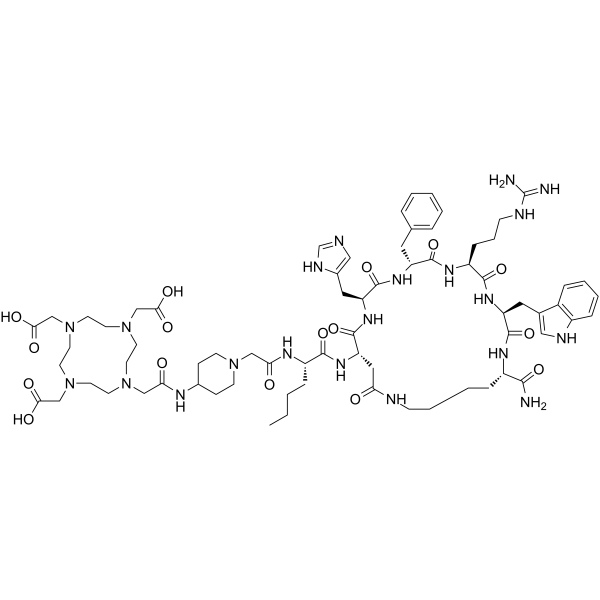
    CCZ01048, a α-melanocyte-stimulating hormone (α-MSH) analogue, exhibits high binding affinity to melanocortin 1 receptor (MC1R) with a Ki of 0.31 nM. CCZ01048 shows rapid internalization into B16F10 melanoma cells and high in vivo stability. CCZ01048 is a promising candidate for PET imaging of malignant melanoma .
    CCZ01048
  • HY-P1869

    MCHR1 (GPR24) Melanocortin Receptor Neurological Disease Endocrinology
    Neuropeptide EI, rat displays functional melanin concentrating hormone (MCH)-antagonist and melanocyte-stimulating hormone (MSH) agonist activity in different behavioral paradigms .
    Neuropeptide EI, rat
  • HY-P10265

    Melanocortin Receptor Others
    Melanostatin, frog is an inhibitor for α-melanocyte-stimulating hormone (α-MSH) release, with an IC50 of 60 nM .
    Melanostatin, frog
  • HY-P10693

    TNF Receptor Bacterial Infection Inflammation/Immunology
    CZEN-002 is a derivative of alpha-melanocyte-stimulating hormone that has anti-inflammatory and antibacterial properties, inhibiting the production of TNF-α .
    CZEN-002
  • HY-P3567

    Melanocortin Receptor Neurological Disease
    (p-Iodo-Phe7)-ACTH (4-10) is a adrenocorticotrophic hormone (ACTH) derivative, which is produced and secreted by the anterior pituitary gland. (p-Iodo-Phe7)-ACTH (4-10) serves as a melanocortin (MC) receptor antagonist and inhibits α-melanocyte-stimulating hormone (α-MSH)-induced excessive grooming behavior in rats .
    (p-Iodo-Phe7)-ACTH (4-10)
  • HY-N7587

    Melanocortin Receptor Metabolic Disease
    Chlorophorin is a inhibitor of Melanocortin Receptor. Chlorophorin reduces tyrosinase activity and inhibits a-melanocyte-stimulating hormone-induced melanin production in B16F10 melanoma cells .
    Chlorophorin
  • HY-W415753

    VUFB-15754

    Drug Derivative Neurological Disease Inflammation/Immunology
    Alaptide, a spirocyclic synthetic dipeptide and a derivative of melanocyte-stimulating hormone release-inhibiting factor (MIF), is a transdermal permeation modifier. Alaptide loaded on nanofibrous membranes accelerates the healing of skin incisions, particularly the healing of skin burns. Alaptide is a nootropic agent, that influences the dopaminergic system and increases homovanillic acid level in the striatum of rat models. Alaptide can be used for wound healing with large damaged areas and neurological diseases research .
    Alaptide
  • HY-105305A

    ABT-719 acetate; AP-214 acetate

    Melanocortin Receptor Endocrinology
    Modimelanotide (ABT-719) acetate is an α-melanocyte-stimulating hormone analog. Modimelanotide acetate has high specific binding ability to melanocortin receptors (MCR1, 3, 4, 5). Modimelanotide acetate possesses anti-inflammatory and organ-protective effects. Modimelanotide acetate can be used in the research of diseases such as acute kidney injury .
    Modimelanotide acetate

Inquiry Online

Your information is safe with us. * Required Fields.

Salutation


Country or Region *

Applicant Name *


Organization Name *

Department *


Email Address *


Product Name *

Cat. No.


Requested quantity *

Phone Number *


Remarks

Inquiry Online

Inquiry Information

Product Name:
Cat. No.:
Quantity:
MCE Japan Authorized Agent: