Search Result
Results for "
metabolic-dysfunction-associated steatohepatitis
" in MedChemExpress (MCE) Product Catalog:
-
- HY-172317
-
|
|
FAP
|
Metabolic Disease
|
|
AZD2389 is a potent and orally active FAP inhibitor. AZD2389 can be used for the study of metabolic dysfunction-associated steatohepatitis .
|
-
-
- HY-P990964
-
|
BOS-580; LLF580
|
FGFR
|
Metabolic Disease
Inflammation/Immunology
|
|
Efimosfermin alfa is a genetically engineered FGF21 variant. Efimosfermin alfa exerts its function by activating the FGFR1c/β-Klotho complex. Efimosfermin alfa is applicable to researches on metabolic dysfunction-associated steatohepatitis, obesity and mild hypertriglyceridemia .
|
-
-
- HY-160929
-
|
CS-0159
|
FXR
|
Inflammation/Immunology
|
|
Linafexor (CS-0159) is a FXR agonist and bile acid homeostasis modulator. Linafexor exerts its effects by activating FXR, a regulator of liver function. Linafexor is applicable to research related to primary sclerosing cholangitis (PSC). Linafexor is also suitable for research in the field of metabolic dysfunction-associated steatohepatitis (MASH) .
|
-
-
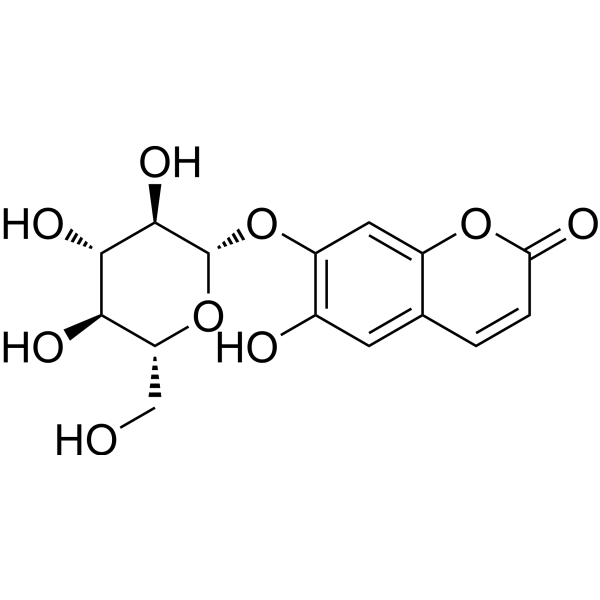
- HY-N8599
-
-
-
- HY-158766
-
|
3-Succinylated cholic acid
|
Endogenous Metabolite
Bacterial
|
Infection
Inflammation/Immunology
|
|
3-sucCA is an orally available bacterial bile acid that exerts anti-MASH effects by promoting the growth of Akkermansia muciniphila. By remodeling the intestinal microbiota and promoting the growth of Akkermansia, 3-sucCA can improve intestinal barrier damage and reduce chronic low-level inflammation, thereby alleviating the progression of metabolic dysfunction-associated steatohepatitis (MASH). 3-sucCA accelerates the synthesis of cell wall peptidoglycan and has in vivo efficacy in the mouse MAFL-MASH model. 3-sucCA levels are low in the MAFLD model and are mainly used in the study of MASH .
|
-
-
- HY-177704
-
|
|
ACSL Family
Drug Derivative
|
Metabolic Disease
Cancer
|
|
ACSL5-IN-1 (Compound A) is an ACSL5 inhibitor with body weight-reducing activity. ACSL5-IN-1 inhibits ACSL5, an enzyme linked to fatty acid metabolism. ACSL5-IN-1 reduces body weight in diet-induced obesity mice. ACSL5-IN-1 can be used for the research of obesity, metabolic dysfunction-associated steatohepatitis, metabolic syndrome, non-alcoholic fatty liver disease, type 2 diabetes, acute myeloid leukemia, colorectal cancer, and breast cancer .
|
-
-
- HY-171454
-
|
|
GPR119
|
Metabolic Disease
Inflammation/Immunology
|
|
DA-1241 is a GPR119 agonist. DA-1241 reduces macrophage differentiation through downregulation of NFκB signaling by activating GPR119. DA-1241, alone and in combination with a DPP4 inhibitor, reduces liver inflammation and restores inflammation-related liver gene expression. DA-1241 can be used for the research of metabolic dysfunction-associated steatohepatitis (MASH) .
|
-
-
- HY-164221A
-
-
-
- HY-P11208C
-
|
|
GABA Receptor
|
Inflammation/Immunology
|
|
mNLS-CPP-WSTF TFA is the trifluoroacetate salt of mNLS-CPP-WSTF (HY-P11208). mNLS-CPP-WSTF is a nuclear localization signal (NLS)-cell-penetrating peptide based on the mouse WSTF sequence. mNLS-CPP-WSTF significantly inhibits the GABARAP-WSTF interaction, WSTF degradation and inflammatory gene expression. mNLS-CPP-WSTF effectively attenuates chronic inflammation, liver fibrosis and cartilage damage in metabolic-dysfunction-associated steatohepatitis (MASH) and osteoarthritis (OA) mice model. mNLS-CPP-WSTF is promising for research of chronic inflammatory diseases such as MASH and OA .
|
-
-
- HY-156065
-
|
|
Keap1-Nrf2
Reactive Oxygen Species (ROS)
Interleukin Related
|
Metabolic Disease
|
|
S217879 is an orally active and selective NRF2 activator. S217879 activates the NRF2 pathway by specifically disrupting the KEAP1 (Kd: 4.15 nM)-NRF2 interaction, and upregulates the antioxidant response. S217879 also ameliorates steatohepatitis and reduces the degree of liver fibrosis. S217879 can be used in the research of metabolic dysfunction-associated steatotic liver disease and nonalcoholic steatohepatitis .
|
-
-
- HY-172661
-
|
|
Thyroid Hormone Receptor
Interleukin Related
LDLR
|
Infection
Metabolic Disease
|
|
KYLO-0603 is an orally active, selective THR-β agonist (EC50 : 31.07 nM). KYLO-0603 has significant activity in lowering serum cholesterol and low-density lipoprotein cholesterol. KYLO-0603 upregulates the expression of THR-regulated genes (including iodothyronine deiodinase 1 (Dio1), malic enzyme 1 (Me1), and thyroid hormone response (Thrsp) gene) and inhibits the expression of inflammatory and fibrotic genes (low-density lipoprotein receptor (LDL-R) gene) by activating THR-β receptors. KYLO-0603 can be used to treat metabolic dysfunction-associated steatohepatitis (MASH) and liver fibrosis research .
|
-
-
- HY-P11208
-
|
|
GABA Receptor
|
Inflammation/Immunology
|
|
mNLS-CPP-WSTF is a nuclear localization signal (NLS)-cell-penetrating peptide based on the mouse WSTF sequence. mNLS-CPP-WSTF significantly inhibits the GABARAP-WSTF interaction, WSTF degradation and inflammatory gene expression. mNLS-CPP-WSTF effectively attenuates chronic inflammation, liver fibrosis and cartilage damage in metabolic-dysfunction-associated steatohepatitis (MASH) and osteoarthritis (OA) mice model. mNLS-CPP-WSTF is promising for research of chronic inflammatory diseases such as MASH and OA .
|
-
-
- HY-164221
-
-
-
- HY-178015
-
|
|
Thyroid Hormone Receptor
|
Metabolic Disease
Inflammation/Immunology
|
|
THR-β agonist 11 is an orally active and selective thyroid hormone receptor (THR-β) agonist. THR-β agonist 11 shows potent cholesterol-lowering activity in cholesterol-fed rats. THR-β agonist 11 significantly reduces serum total TG, LDL-cholesterol, liver total TC and TG levels, and alleviates hepatic steatosis, inflammation and fibrosis in HFD-CCl4-induced Metabolic dysfunction-associated steatohepatitis (MASH) model mice. THR-β agonist 11 can be used for the study of metabolic dysfunction-associated steatohepatitis (MASH) and other fibrotic diseases .
|
-
-
- HY-170369
-
|
|
Mitochondrial Metabolism
|
Metabolic Disease
|
|
SHO1122147 (Compound 7m) affects the mitochondrial electron transport chain, exhibits mitochondrial uncoupling activity (EC50=3.6 μM), and increases the oxygen consumption rate (OCR=69%) and promotes cellular respiration. SHO1122147 is orally active, and can be used in reaearch of obesity and metabolic dysfunction-associated steatohepatitis (MASH) .
|
-
-
- HY-175676
-
|
|
Thyroid Hormone Receptor
|
Metabolic Disease
Inflammation/Immunology
|
|
THR-β agonist 10 is an orally active and selective THR-β agonist, with an EC50 of 11 nM. THR-β agonist 10 significantly reduces ALT (Alanine Aminotransferase), TC (Total Cholesterol), and LDL-C (Low-Density Lipoprotein Cholesterol) levels, and improves steatosis, ballooning, inflammation and fibrosis in the metabolic dysfunction-associated steatohepatitis (MASH) mouse model. THR-β agonist 10 can be used for the study of MASH .
|
-
-
- HY-174887
-
|
|
Thyroid Hormone Receptor
AMPK
Acetyl-CoA Carboxylase
Mitochondrial Metabolism
|
Metabolic Disease
|
|
THR-β agonist 9 is a potent, selective, and His435 mutation-sensitive THR-β (EC50: 3.2 nM) agonist. THR-β agonist 9 has moderate selectivity (approximately 10-fold) and good activation capacity (EC50: 134.2 nM to 515.5 nM) for multiple His435 mutants (H435A, H435Y, and H435R). THR-β agonist 9 has the potential to be used in the study of dyslipidemia, metabolic dysfunction-associated steatohepatitis (MASH), or resistance to thyroid hormone (RTH) .
|
-
-
- HY-174858
-
|
|
PROTACs
ASK1
p38 MAPK
|
Metabolic Disease
|
|
dASK1-VHL is an orally active PROTAC degrader targeting ASK1. dASK1-VHL can effectively bind VHL and promote the selective degradation of ASK1. dASK1-VHL effectively reduces ASK1 protein levels, inhibits the activation of p38 MAPK, and reduces liver lipid content. dASK1-VHL provides new ideas for the study of Metabolic dysfunction-associated steatohepatitis (MASH) (Pink: ASK1 ligand 1 (HY-174860); Blue: E3 ligand (S,R,S)-AHPC (HY-125845); Black: Linker, (S,R,S)-AHPC-CO-C2-PEG-NHCO-C2-COOH (HY-174861) .
|
-
-
- HY-173265
-
|
|
Cyclophilin
|
Metabolic Disease
Inflammation/Immunology
|
|
CypB-IN-1 (Compound 11) is an inhibitor of cyclophilin B (cyclophilin B) with a Kd value of 12 nM. CypB-IN-1 can be applied to the research field of metabolic dysfunction-associated steatohepatitis (MASH) and the liver fibrosis diseases resulting from it .
|
-
-
- HY-159881
-
|
|
Mitophagy
|
Metabolic Disease
|
|
SHS206 (compound 6n) is an orally active mitochondrial uncoupler that reduces hepatic triglyceride levels. SHS206 exhibits in vivo efficacy in the GAN mouse model and shows inhibitory effects on metabolic dysfunction-associated steatohepatitis (MASH) .
|
-
-
- HY-168629
-
|
|
FXR
|
Metabolic Disease
|
|
FXR agonist 9 (compound 26) is an oral active and selectivity FXR partial agonist with the EC50 of 0.09 µM (75.13 % maximum efficacy). FXR agonist 9 ameliorates pathological features in HFD and CCl4(HY-Y0298)-induced metabolic dysfunction-associated steatohepatitis mice .
|
-
-
- HY-172122
-
|
|
FXR
17β-HSD
|
Metabolic Disease
|
|
FXR/HSD17B13 modulator 1 (compound 6) is a potent modulator of FXR/HSD17B13. FXR/HSD17B13 modulator 1 plays an important roel in metabolic dysfunction-associated steatohepatitis (MASH) research .
|
-
-
- HY-168713
-
|
|
FXR
|
Metabolic Disease
|
|
LZ-007 is an agonist for farnesoid X receptor (FXR) with an EC50 of 51 nM measuring by TR-FRET assay, or an EC50 of 76 nM in HepG2 cell. LZ-007 exhibits good pharmacokinetic characheristics in SD rats. LZ-007 ameliorates western diet and CCl4 (HY-Y0298)-induced mice metabolic dysfunction-associated steatohepatitis
|
-
-
- HY-172883
-
|
|
FABP
PPAR
|
Metabolic Disease
Inflammation/Immunology
|
|
ABP/PPAR modulator 1 is an orally active FABP and PPAR multiple modulator (IC50s of 0.65 μM and 1.08 μM for FABP1 and FABP4, EC50 s of 9.19 μM, 2.20 μM and 1.58 μM for PPARα, PPARγ and PPARδ). ABP/PPAR modulator 1 has potent anti-metabolic dysfunction-associated steatohepatitis (MASH) activity. ABP/PPAR modulator 1 dose-dependently ameliorates multiple pathological characteristics of fatty liver in WD + Carbon tetrachloride-induced MASH mice model .
|
-
-
- HY-174133
-
|
|
17β-HSD
|
Metabolic Disease
Inflammation/Immunology
|
|
HSD17B13-IN-104 (Compound 32) is an orally active, highly potent and selective HSD17B13 inhibitor (IC50=2.5 nM). HSD17B13-IN-104 regulates hepatic lipid metabolism by inhibiting the SREBP-1c/FAS pathway. HSD17B13-IN-104 blocks HSD17B13 enzymatic activity to improve hepatic lipid accumulation. HSD17B13-IN-104 is promising for research of metabolic dysfunction-associated steatohepatitis .
|
-
-
- HY-172883A
-
|
|
FABP
PPAR
|
Metabolic Disease
Inflammation/Immunology
|
|
(E/Z)-ABP/PPAR modulator 1 is a mixture of the E and Z isomers of ABP/PPAR modulator 1 (HY-172883). ABP/PPAR modulator 1 is an orally active FABP and PPAR multiple modulator (IC50s of 0.65 μM and 1.08 μM for FABP1 and FABP4, EC50 s of 9.19 μM, 2.20 μM and 1.58 μM for PPARα, PPARγ and PPARδ). ABP/PPAR modulator 1 has potent anti-metabolic dysfunction-associated steatohepatitis (MASH) activity. ABP/PPAR modulator 1 dose-dependently ameliorates multiple pathological characteristics of fatty liver in WD + Carbon tetrachloride-induced MASH mice model .
|
-
-
- HY-179591
-
|
326E
|
ATP Citrate Lyase
PPAR
|
Metabolic Disease
|
|
BGT-002 (326E) is an orally active dual ACLY inhibitor and PPARα agonist. BGT-002 reduces lipogenesis by inhibiting synthesis and promoting efflux. BGT-002 demonstrates efficacy in ameliorating metabolic dysfunction-associated steatohepatitis (MASH) and improving hyperlipidemia in vivo. BGT-002 can be used for hypercholesterolemia and MASH research .
|
-
-
- HY-182750
-
|
|
ATP Citrate Lyase
|
Inflammation/Immunology
|
|
ACLY-IN-3 is an ATP-citrate lyase (ACLY) inhibitor with an IC50 of 0.036 μM and a target Kd of 0.54 μM. ACLY-IN-3 interacts with the allosteric binding site of ACLY to inhibit its activity. ACLY-IN-3 exhibits excellent lipid-lowering effects and alleviates hepatic inflammation and liver fibrosis. ACLY-IN-3 can be used for the research of metabolic dysfunction-associated steatohepatitis .
|
-
-
- HY-183279
-
|
|
FXR
AMPK
|
Metabolic Disease
|
|
FXR antagonist 4 (Compound 4l) is an orally active, selective FXR antagonist with an IC50 of 0.70 μM. FXR antagonist 4 binds to FXR, differentially regulates bile acid and lipid transporter genes, and exerts no effect on gluconeogenesis-related genes. FXR modulator 1 activates the AMPK signaling pathway to inhibit fatty acid synthesis. FXR modulator 1 alleviates hepatic steatosis, ballooning degeneration and fibrosis, and improves dyslipidemia. FXR modulator 1 can be used for research on metabolic dysfunction-associated steatohepatitis .
|
-
-
- HY-182751
-
|
|
ATP Citrate Lyase
|
Inflammation/Immunology
|
|
ACLY-IN-4 is an ATP-citrate lyase (ACLY) inhibitor with an IC50 of 0.022 μM and a Kd of 0.19 μM. ACLY-IN-4 binds to the allosteric binding site of ACLY. ACLY-IN-4 exhibits hypolipidemic, anti-steatotic, insulin sensitivity-improving, anti-oxidative stress, anti-inflammatory and anti-fibrotic activities. ACLY-IN-4 alleviates hepatic steatosis, systemic insulin resistance, oxidative stress, hepatic inflammation and fibrosis. ACLY-IN-4 can be used for the research of metabolic dysfunction-associated steatohepatitis .
|
-
-
- HY-183318
-
|
|
PPAR
|
Metabolic Disease
|
|
PPARα/δ agonist 4 is a potent orally active and selective dual peroxisome proliferator-activated receptor (PPAR) α/δ agonist with EC50s of 0.36 and 1.31 nM, respectively. PPARα/δ agonist 4 exhibits >123-fold selectivity over PPARγ (EC50 = 160.84 nM). PPARα/δ agonist 4 upregulates expression of downstream fatty acid oxidation genes PDK4, CPT1A, and ACADVL. PPARα/δ agonist 4 can be used for the research of metabolic dysfunction-associated steatohepatitis .
|
-
-
- HY-183692
-
|
|
FXR
G protein-coupled Bile Acid Receptor 1
TNF Receptor
Heme Oxygenase (HO)
Quinone Reductase
Keap1-Nrf2
|
Cardiovascular Disease
Inflammation/Immunology
|
|
FXR agonist 18 is an orally active FXR agonist, with an EC50 of 10 nM against human FXR and an EC50 of 1360 nM against human TGR5. FXR agonist 18 inhibits inflammatory responses by reducing nitrite production, downregulating the expression of pro-inflammatory genes (Tnf, Adgre1, Cyp8b1, upregulating the expression of FXR, Hmox1, Nqo1, Nrf2, and enhancing antioxidant responses. FXR agonist 18 ameliorates liver fibrosis in mice, exhibits protective effects in mice with cholestatic liver injury, and shows anti-MASH efficacy. FXR agonist 18 can be used in studies of metabolic dysfunction-associated steatohepatitis .
|
-
-
- HY-183309
-
|
|
FXR
17β-HSD
|
Inflammation/Immunology
|
|
FXR/HSD17B13-modulator-2 is a dual FXR activator and HSD17B13 inhibitor with human FXR EC50 of 128 nM, human HSD17B13 IC50 of 0.18 μM, high selectivity over related nuclear receptors and HSD17B isoforms, and oral effectiveness.FXR/HSD17B13-modulator-2 alleviates fatty liver, regulates lipid metabolism, reduces inflammation, and attenuates hepatic fibrosis.FXR/HSD17B13-modulator-2 is the first non-carboxylic acid dual FXR/HSD17B13 modulator.FXR/HSD17B13-modulator-2 can be used for the research of metabolic dysfunction-associated steatohepatitis .
|
-
-
- HY-P11208C
-
|
|
GABA Receptor
|
Inflammation/Immunology
|
|
mNLS-CPP-WSTF TFA is the trifluoroacetate salt of mNLS-CPP-WSTF (HY-P11208). mNLS-CPP-WSTF is a nuclear localization signal (NLS)-cell-penetrating peptide based on the mouse WSTF sequence. mNLS-CPP-WSTF significantly inhibits the GABARAP-WSTF interaction, WSTF degradation and inflammatory gene expression. mNLS-CPP-WSTF effectively attenuates chronic inflammation, liver fibrosis and cartilage damage in metabolic-dysfunction-associated steatohepatitis (MASH) and osteoarthritis (OA) mice model. mNLS-CPP-WSTF is promising for research of chronic inflammatory diseases such as MASH and OA .
|
-
- HY-P11208
-
|
|
GABA Receptor
|
Inflammation/Immunology
|
|
mNLS-CPP-WSTF is a nuclear localization signal (NLS)-cell-penetrating peptide based on the mouse WSTF sequence. mNLS-CPP-WSTF significantly inhibits the GABARAP-WSTF interaction, WSTF degradation and inflammatory gene expression. mNLS-CPP-WSTF effectively attenuates chronic inflammation, liver fibrosis and cartilage damage in metabolic-dysfunction-associated steatohepatitis (MASH) and osteoarthritis (OA) mice model. mNLS-CPP-WSTF is promising for research of chronic inflammatory diseases such as MASH and OA .
|
-
- HY-P11207
-
|
NLS-cell penetrating peptide
|
ペプチド
|
Inflammation/Immunology
|
|
NLS-CPP is a nuclear localization signal (NLS)-cell-penetrating peptide, which contains the NLS of OCT6. NLS-CPP facilitates nuclear delivery. NLS-CPP can be used for chronic inflammatory diseases s research, such as metabolic-dysfunction-associated steatohepatitis (MASH) and osteoarthritis (OA) .
|
| 製品番号 |
製品名 |
Target |
研究分野 |
Image |
-
- HY-P990964
-
|
BOS-580; LLF580
|
FGFR
|
Metabolic Disease
Inflammation/Immunology
|
|
Efimosfermin alfa is a genetically engineered FGF21 variant. Efimosfermin alfa exerts its function by activating the FGFR1c/β-Klotho complex. Efimosfermin alfa is applicable to researches on metabolic dysfunction-associated steatohepatitis, obesity and mild hypertriglyceridemia .
|
-
(5)
| 製品番号 |
製品名 |
Category |
Target |
構造式 |
-
- HY-164221A
-
|
ALN-HSD sodium
|
|
siRNAs
siRNA drugs
|
|
Rapirosiran (ALN-HSD) sodium is a HSD17β13-targeting siRNA. Rapirosiran sodium can be used for the research of metabolic dysfunction-associated steatohepatitis .
|
-
- HY-164221
-
|
ALN-HSD; ALN-288996; AD-288996
|
|
siRNAs
|
|
Rapirosiran (ALN-HSD) is a HSD17β13-targeting siRNA. Rapirosiran can be used for the research of metabolic dysfunction-associated steatohepatitis .
|
入力情報は安全に管理されます. ※ 必須入力項目.
Inquiry Information
- 製品名:
- 製品番号:
- 数量:
- MCE 日本正規代理店:

