

Search Result
Results for "
methacrylate
" in MedChemExpress (MCE) Product Catalog:
22
Biochemical Assay Reagents
1
Isotope-Labeled Compounds
| Cat. No. |
Product Name |
Target |
Research Areas |
Chemical Structure |
-
- HY-W110584
-
|
|
Biochemical Assay Reagents
|
Others
|
|
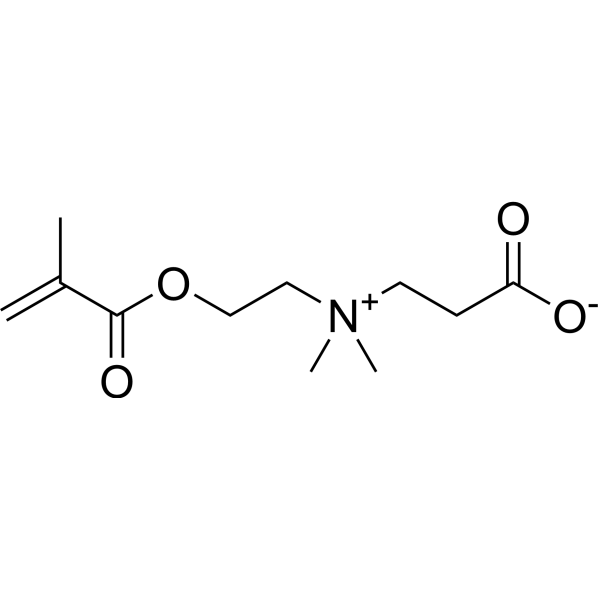
Carboxybetaine methacrylate is an amphoteric ionic compound with excellent properties such as good hydrophilicity, antistatic property, and biocompatibility. Carboxybetaine methacrylate can be used to prepare tissue engineering scaffolds, drug carriers, and so on .
|
-
-
- HY-W015924
-
|
|
Endogenous Metabolite
|
Metabolic Disease
|
|
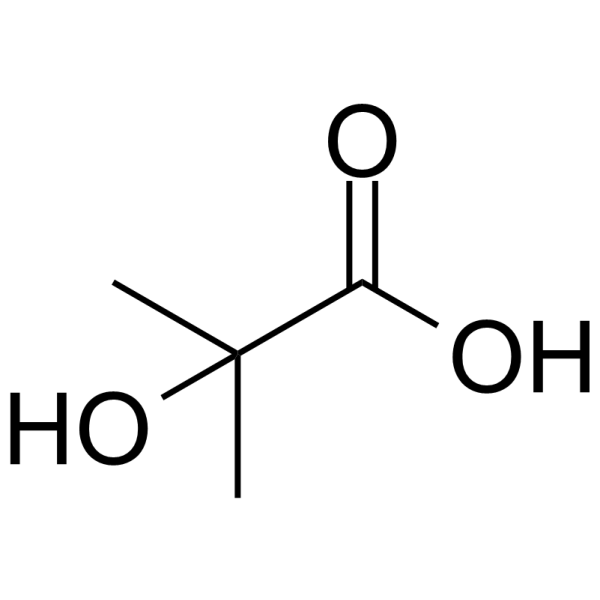
2-Hydroxyisobutyric acid (2-HIBA) is a selective modulator of the Insulin/IGF-1 pathway and the p38 MAPK pathway, which reduces reactive oxygen species (ROS) and fat accumulation in Caenorhabditis elegans. 2-Hydroxyisobutyric acid promotes β-oxidation and inhibits fatty acid synthesis by upregulating SKN-1/NRF2 and downregulating SREBP-1c transcription factors. 2-Hydroxyisobutyric acid has anti-aging and lipid-lowering effects, and can be used to study metabolic diseases such as obesity and diabetes. 2-Hydroxyisobutyric acid is also a renewable precursor of methacrylate through 2-HIB-CoA mutase-mediated biosynthesis[1][2].
|
-
-
- HY-112531
-
|
|
Biochemical Assay Reagents
|
Others
|
|
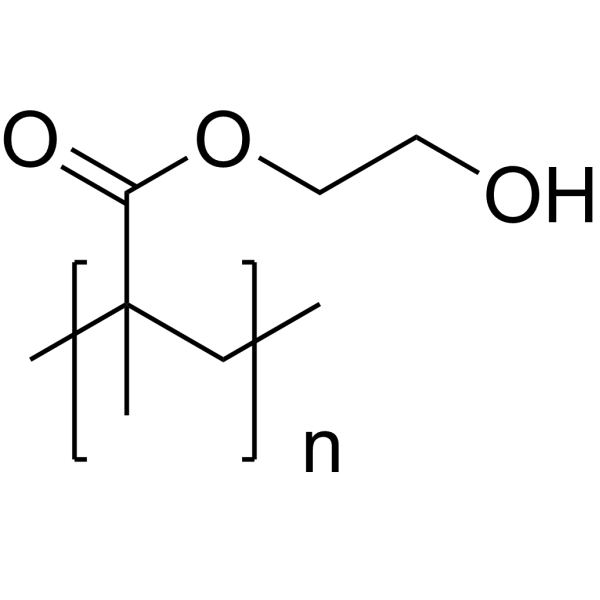
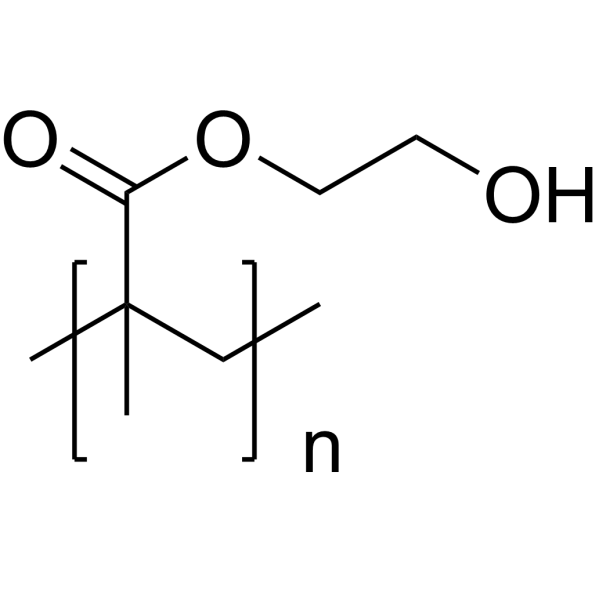
Poly(2-hydroxyethyl methacrylate) (MW 20000) is one of the most important hydrogels in the biomaterials world. Poly(2-hydroxyethyl methacrylate) is the basic component of contact lenses, and is also used in implantation of soft tissues, synthetic transplant for gristle and bone, regeneration of neurotic tissue, transmission of agent and etc .
|
-
-
- HY-W105426
-
|
[3-(Methacryloyloxy)propyl]trimethoxysilane
|
Biochemical Assay Reagents
|
Others
|
|
3-(Trimethoxysilyl)propyl methacrylate is a reactive monomer and silane coupling agent with C=C and O-C=O functional groups, acting as a surface modifier and anti-agglomeration agent. 3-(Trimethoxysilyl)propyl methacrylate can be used to prepare nanoparticles .
|
-
-
- HY-W012723
-
|
|
Biochemical Assay Reagents
|
Others
|
|
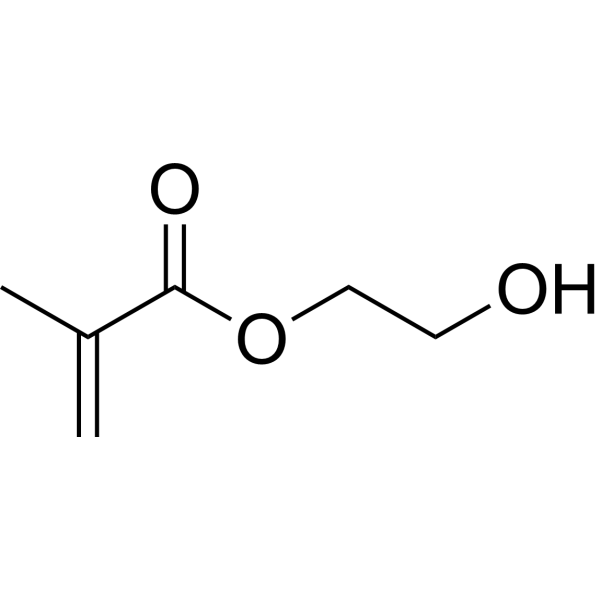
2-Hydroxyethyl methacrylate (HEMA) is a monomer used in the synthesis of various polymers, and the polymer PHEMA of 2-Hydroxyethyl methacrylate is widely used in the synthesis of dental composite materials .
|
-
-
- HY-137477
-
|
|
Biochemical Assay Reagents
|
Others
|
|
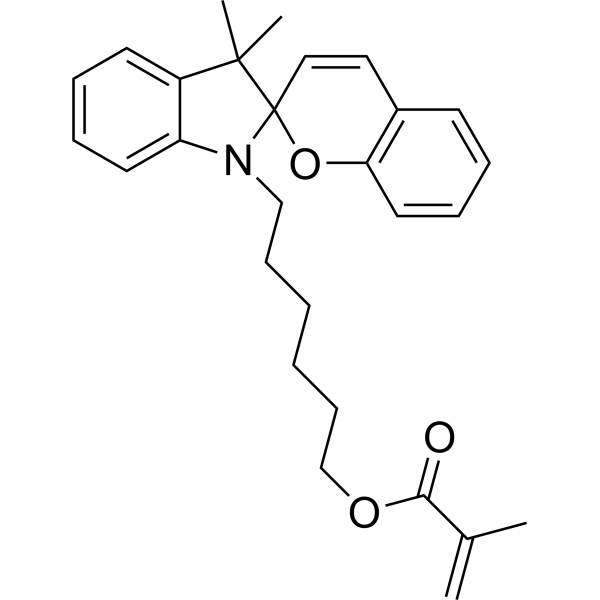
Spiropyran hexyl methacrylate is a compound used to prepare spiropyran-based polymer hydrogels, which can be used in research on photoactivated mechanical drives .
|
-
-
- HY-112531A
-
|
|
Biochemical Assay Reagents
|
Others
|
|
Poly(2-hydroxyethyl methacrylate) (MW 1000000) is one of the most important hydrogels in the biomaterials world. Poly(2-hydroxyethyl methacrylate) is the basic component of contact lenses, and is also used in implantation of soft tissues, synthetic transplant for gristle and bone, regeneration of neurotic tissue, transmission of agent and etc .
|
-
-
- HY-112531B
-
|
|
Biochemical Assay Reagents
|
Others
|
|
Poly(2-hydroxyethyl methacrylate) (Mv 300000) is a biocompatible, optically transparent, hydrophilic, and non-degradable polymer with excellent cytocompatibility, eliciting a minimal immunological response from host tissue. Poly(2-hydroxyethyl methacrylate) (Mv 300000) can be used for different biomedical applications, such as bone tissue regeneration, wound dressings and drug delivery .
|
-
-
- HY-W923198
-
|
Methacryloyloxy fluorescein
|
Fluorescent Dye
|
Others
|
|
Fluorescein O-methacrylate (Methacryloyloxy fluorescein) is a pH-responsive fluorescent monomeric dye. Fluorescein O-methacrylate exhibits pH-responsive fluorescence properties: its fluorescence is activated under alkaline conditions and quenched under neutral or acidic conditions; reversible switching of fluorescence is achievable by adjusting the pH of the solution. Fluorescein O-methacrylate can be used as a monomer for the synthesis of amphiphilic fluorescein polymers. These polymers can self-assemble into stable polymer nanoparticles with enhanced aqueous-phase fluorescence, and also enable the conjugation of nanoparticles with amine-containing biomolecules to support sensitive optical detection of biomarkers (Ex/Em = 490/520 nm) .
|
-
-
- HY-W014940
-
|
|
Reactive Oxygen Species (ROS)
Apoptosis
Glutathione Peroxidase
SOD
|
Others
|
|
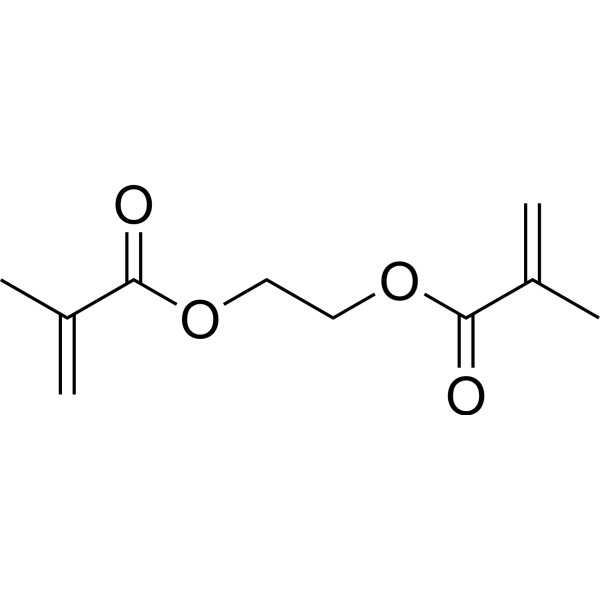
Ethylene glycol dimethacrylate is a diester formed by the condensation of Ethylene glycol (HY-Y0338) and Methacrylic acid. Ethylene glycol dimethacrylate is a cross-linking agent for polymers. Ethylene glycol dimethacrylate increases Apoptosis, GPx4, SOD2, ROS. Ethylene glycol dimethacrylate is cytotoxic and genotoxic. Ethylene glycol dimethacrylate exhibits cross-linking activity, enhancing the mechanical properties and stability of materials .
|
-
-
- HY-158226
-
|
ElaMA
|
Biochemical Assay Reagents
|
Others
|
Elastin Methacrylated (ElaMA) elastin recruits and modulates innate immune cells and accelerates angiogenesis at the wound site, thereby improving wound regeneration. Elastin Methacrylated attracts large numbers of neutrophils and primarily M2 macrophages to the wound and induces their penetration into the hydrogel. Elastin Methacrylated has excellent immunomodulatory effects, leading to superior angiogenesis, collagen deposition and dermal regeneration . Elastin Methacrylated needs to self-assemble into fibrous hydrogel under the action of photoinitiator LAP (HY-44076), and target bioactive adhesion sites, play an inherent supporting role for tissue cells and biodegradable activity. Application: cell culture, biological 3D printing, tissue engineering, etc.
|
-
-
- HY-W391506
-
-
-
- HY-158229
-
|
HepMA
|
Biochemical Assay Reagents
|
Others
|
Heparin Methacrylate (HepMA) is methacrylated heparin and is an ideal tissue engineering scaffold material and 3D printing bioink . Heparin Methacrylate needs to self-assemble into fibrous hydrogel under the action of photoinitiator LAP (HY-44076), and target bioactive adhesion sites, play an inherent supporting role for tissue cells and biodegradable activity. Application: cell culture, biological 3D printing, tissue engineering, etc.
|
-
-
- HY-158225
-
|
Col1MA
|
MMP
|
Others
|
Methacrylated Type I collagen (Col1MA) is a methacrylated tissue engineering scaffold material that retains the basic properties of natural collagen . Methacrylated Type I collagen needs to self-assemble into fibrous hydrogel under the action of photoinitiator LAP (HY-44076), and target bioactive adhesion sites, play an inherent supporting role for tissue cells and biodegradable activity. Application: cell culture, biological 3D printing, tissue engineering, etc.
|
-
-
- HY-158220
-
|
HAMA (MW 400 kDa)
|
Biochemical Assay Reagents
|
Others
|
|
Hyaluronic acid Methacryloyl (HAMA) is methacrylated hyaluronic acid that is biocompatible. Hyaluronic acid Methacryloyl is also used as a 3D printing hydrogel ink, which has the characteristics of fast photosensitive response, fast gelation speed and stable hydrogel performance. Hyaluronic acid Methacryloyl can quickly induce gelation with lithium phenyl-2,4,6-trimethylbenzoylphosphinate (LAP) under UV irradiation. The combination of Hyaluronic acid Methacryloyl and tissue-specific extracellular matrix (ECM) materials (such as pancreatic extracellular matrix (pECM)) will become an important source material for organoid culture .
|
-
-
- HY-158220A
-
|
HAMA (MW 150 kDa)
|
Biochemical Assay Reagents
|
Others
|
|
Hyaluronic acid Methacryloyl (HAMA) MW 150 kDa is methacrylated hyaluronic acid that is biocompatible. Hyaluronic acid Methacryloyl is also used as a 3D printing hydrogel ink, which has the characteristics of fast photosensitive response, fast gelation speed and stable hydrogel performance. Hyaluronic acid Methacryloyl can quickly induce gelation with lithium phenyl-2,4,6-trimethylbenzoylphosphinate (LAP) under UV irradiation. The combination of Hyaluronic acid Methacryloyl and tissue-specific extracellular matrix (ECM) materials (such as pancreatic extracellular matrix (pECM)) will become an important source material for organoid culture .
|
-
-
- HY-158224
-
|
FibMA
|
Biochemical Assay Reagents
|
Others
|
Silk Fibroin Methacryloyl (FibMA) is methacrylated silk fibroin with excellent biocompatibility, stable mechanical properties and good processing properties, and was selected as the substrate for multifunctional microneedle (MN) patches. . MN patches made of Silk Fibroin Methacryloyl exhibit excellent biocompatibility, sustained drug release, pro-angiogenic, antioxidant and antibacterial properties depending on the specific drug encapsulated . Silk Fibroin Methacryloyl needs to self-assemble into fibrous hydrogel under the action of photoinitiator LAP (HY-44076), and target bioactive adhesion sites, play an inherent supporting role for tissue cells and biodegradable activity. Application: cell culture, biological 3D printing, tissue engineering, etc.
|
-
-
- HY-W110548D
-
|
|
Biochemical Assay Reagents
|
Others
|
|
Poly(ethylene glycol) methyl ether methacrylate (MW 4000) is a nonlinear analogue of polyethylene glycol (PEG) and can be used for PEG surface modification .
|
-
-
- HY-W110548A
-
|
|
Biochemical Assay Reagents
|
Others
|
|
Poly(ethylene glycol) methyl ether methacrylate (MW 300) is a nonlinear analogue of polyethylene glycol (PEG) and can be used for PEG surface modification .
|
-
-
- HY-W110548
-
|
|
Biochemical Assay Reagents
|
Others
|
|
Poly(ethylene glycol) methyl ether methacrylate (MW 500) is a nonlinear analogue of polyethylene glycol (PEG) and can be used for PEG surface modification .
|
-
-
- HY-158228
-
|
PLMA
|
Biochemical Assay Reagents
|
Others
|
Poly-L-lysine Methacryloyl (PLMA) is methacrylated polylysine. When Poly-L-lysine Methacryloyl is cross-linked on polyetheretherketone (PEEK) through UV-induced cross-linking, it can improve the hydrophilicity of PEEK and retain its own degradation bioinertness . Poly-L-lysine Methacryloyl needs to self-assemble into fibrous hydrogel under the action of photoinitiator LAP (HY-44076), and target bioactive adhesion sites, play an inherent supporting role for tissue cells and biodegradable activity. Application: cell culture, biological 3D printing, tissue engineering, etc.
|
-
-
- HY-158223
-
|
CMCSMA
|
Biochemical Assay Reagents
|
Others
|
Carboxymethyl chitosan Methacryloyl (CMCSMA) is methacrylated carboxymethyl chitosan with properties as a 3D printing ink. A composite hydrogel made of Carboxymethyl chitosan Methacryloyl can effectively accelerate bone healing in an infectious microenvironment after implantation in a rat model of Staphylococcus aureus-infected femoral defect . Carboxymethyl chitosan Methacryloyl needs to self-assemble into fibrous hydrogel under the action of photoinitiator LAP (HY-44076), and target bioactive adhesion sites, play an inherent supporting role for tissue cells and biodegradable activity. Application: cell culture, biological 3D printing, tissue engineering, etc.
|
-
-
- HY-158221
-
|
CSMA
|
Biochemical Assay Reagents
|
Others
|
Chondroitin Sulfate Methacryloyl (CSMA) is methacrylated chondroitin sulfate and is biocompatible. Chondroitin Sulfate Methacryloyl has a higher degree of methacrylation than HAMA (HY-158220), and the degree of methacrylation is closely related to customizable mechanical properties, swelling properties and enzymatic degradability. Chondroitin Sulfate Methacryloyl is a versatile biomaterial suitable for biomimetic hydrogel scaffolds and an ideal 3D printing hydrogel ink . Chondroitin Sulfate Methacryloyl needs to self-assemble into fibrous hydrogel under the action of photoinitiator LAP (HY-44076), and target bioactive adhesion sites, play an inherent supporting role for tissue cells and biodegradable activity. Application: cell culture, biological 3D printing, tissue engineering, etc.
|
-
-
- HY-W015924R
-
|
|
Reference Standards
Endogenous Metabolite
|
Metabolic Disease
|
|
2-Hydroxyisobutyric acid (Standard) is the analytical standard of 2-Hydroxyisobutyric acid. This product is intended for research and analytical applications. 2-Hydroxyisobutyric acid (2-HIBA) is a selective modulator of the Insulin/IGF-1 pathway and the p38 MAPK pathway, which reduces reactive oxygen species (ROS) and fat accumulation in Caenorhabditis elegans. 2-Hydroxyisobutyric acid promotes β-oxidation and inhibits fatty acid synthesis by upregulating SKN-1/NRF2 and downregulating SREBP-1c transcription factors. 2-Hydroxyisobutyric acid has anti-aging and lipid-lowering effects, and can be used to study metabolic diseases such as obesity and diabetes. 2-Hydroxyisobutyric acid is also a renewable precursor of methacrylate through 2-HIB-CoA mutase-mediated biosynthesis[1][2].
|
-
-
- HY-W110166
-
|
|
Biochemical Assay Reagents
|
Others
|
|
Hexyl acrylate is a photoinitiator. Hexyl acrylate undergoes self-polymerization via piCVD under 254 nm UV radiation. Hexyl acrylate can be polymerized by atom transfer radical polymerization technology .
|
-
-
- HY-W017213
-
-
-
- HY-28914
-
|
|
Drug Intermediate
|
Others
|
|
3,5-Dihydroxyadamantan-1-yl methacrylate is a drug intermediate for synthesis of various active compounds.
|
-
-
- HY-W110548B
-
|
|
Biochemical Assay Reagents
|
Others
|
|
Poly(ethylene glycol) methyl ether methacrylate (MW 950) is a nonlinear analogue of polyethylene glycol (PEG) and can be used for PEG surface modification .
|
-
-
- HY-W420458R
-
|
Amino methacrylate copolymer (Standard)
|
Reference Standards
|
|
|
2-(Dimethylamino)ethyl methacrylate compound with butyl methacrylate and methyl methacrylate (1:1:1) (Standard) is the analytical standard of 2-(Dimethylamino)ethyl methacrylate compound with butyl methacrylate and methyl methacrylate (1:1:1). This product is intended for research and analytical applications.
|
-
-
- HY-158220C
-
|
HAMA (MW 50000)
|
Biochemical Assay Reagents
|
Others
|
|
Hyaluronic acid methacryloyl (HAMA) (MW 50000) is a methacrylate-modified hyaluronic acid that serves as a hydrogel former, hydrolysis-resistant material, photocrosslinkable hydrogel scaffold, and drug delivery carrier for tissue engineering. Hyaluronic acid methacryloyl (MW 50000) forms hydrogels via photocrosslinking; when combined with AuMA NPs through a one-step photocrosslinking method, its effective swelling ratio increases, and the mechanical reinforcement effect of Au NPs compensates for the impact caused by reduced crosslinking density. Hyaluronic acid methacryloyl (MW 50000) can be combined with AuMA NPs via a one-step photocrosslinking method, enabling non-invasive monitoring of hydrogel degradation with contrast-enhanced micro-CT .
|
-
-
- HY-W012723S
-
|
|
Isotope-Labeled Compounds
Biochemical Assay Reagents
|
Others
|
|
2-Hydroxyethyl methacrylate- 13C is the 13C--labeled 2-Hydroxyethyl methacrylate (HY-W012723). 2-Hydroxyethyl methacrylate (HEMA) is a monomer used in the synthesis of various polymers, and the polymer PHEMA of 2-Hydroxyethyl methacrylate is widely used in the synthesis of dental composite materials .
|
-
-
- HY-W110548C
-
|
|
Biochemical Assay Reagents
|
Others
|
|
Poly(ethylene glycol) methyl ether methacrylate (MW 1500) is a nonlinear analogue of polyethylene glycol (PEG) and can be used for PEG surface modification .
|
-
-
- HY-27979
-
|
|
Biochemical Assay Reagents
|
Others
|
|
Ethyl acrylate-methyl methacrylate copolymer can be used as an excipient, such as sustained-release coating materials, matrix sustained-release tablet binders and retarders. Pharmaceutical excipients, or pharmaceutical auxiliaries, refer to other chemical substances used in the pharmaceutical process other than pharmaceutical ingredients. Pharmaceutical excipients generally refer to inactive ingredients in pharmaceutical preparations, which can improve the stability, solubility and processability of pharmaceutical preparations. Pharmaceutical excipients also affect the absorption, distribution, metabolism, and elimination (ADME) processes of co-administered drugs .
|
-
-
- HY-N8521
-
|
|
TMV
Parasite
|
Infection
|
|
6-O-Methacrylate, a trilobolide, is isolated from the leaves of Wedelia trilobata. 6-O-Methacrylate displays marked antimalarial activity, with IC50 of 8.9 μg/mL against P. falciparum parasite. 6-O-Methacrylate also has anti-tobacco mosaic virus (TMV) activity .
|
-
-
- HY-W763557B
-
|
|
Biochemical Assay Reagents
|
Others
|
|
Poly(ethylene glycol) methacrylate (MW 500) is a monomethacrylate functionalized PEG, which is used to prepare composite materials, such as Poly(ethylene glycol) methacrylate-chitosan, and can be used as an ocular drug delivery carrier .
|
-
-
- HY-W763557A
-
|
|
Biochemical Assay Reagents
|
Others
|
|
Poly(ethylene glycol) methacrylate (MW 360) is a monomethacrylate functionalized PEG, which is used to prepare composite materials, such as Poly(ethylene glycol) methacrylate-chitosan, and can be used as an ocular drug delivery carrier .
|
-
-
- HY-W096161
-
|
|
PROTAC Linkers
|
Cancer
|
|
Bis-methacrylate-PEG5 is a PEG-based PROTAC linker that can be used in the synthesis of PROTACs .
|
-
-
- HY-D2630
-
|
|
Fluorescent Dye
|
Others
|
|
Cy3 HA MA (MW 3000) is a hyaluronic acid methacrylate labeled with CY3 (HY-D0822). Cy3 HA MA (MW 3000) is widely used in the fields of biolabeling and imaging, drug delivery and tissue engineering and regenerative medicine (Ex/Em = 550/570 nm).
|
-
-
- HY-D2651
-
|
|
Fluorescent Dye
|
Others
|
|
Cy5 HA MA (MW 50000) is a hyaluronic acid methacrylate labeled with CY5 (HY-D0821). Cy5 HA MA (MW 50000) is widely used in the fields of biolabeling and imaging, drug delivery and tissue engineering and regenerative medicine (Ex/Em = 633/670 nm).
|
-
-
- HY-D2649
-
|
|
Fluorescent Dye
|
Others
|
|
Cy5 HA MA (MW 5000) is a hyaluronic acid methacrylate labeled with CY5 (HY-D0821). Cy5 HA MA (MW 5000) is widely used in the fields of biolabeling and imaging, drug delivery and tissue engineering and regenerative medicine (Ex/Em = 633/670 nm).
|
-
-
- HY-D2685
-
|
|
Fluorescent Dye
|
Others
|
|
Cy7 HA MA (MW 100000) is a hyaluronic acid methacrylate labeled with CY7 (HY-D0825). Cy7 HA MA (MW 100000) is widely used in the fields of biolabeling and imaging, drug delivery and tissue engineering and regenerative medicine (Ex/Em = 740/770 nm).
|
-
-
- HY-D2681
-
|
|
Fluorescent Dye
|
Others
|
|
Cy7 HA MA (MW 3000) is a hyaluronic acid methacrylate labeled with CY7 (HY-D0825). Cy7 HA MA (MW 3000) is widely used in the fields of biolabeling and imaging, drug delivery and tissue engineering and regenerative medicine (Ex/Em = 740/770 nm).
|
-
-
- HY-D2632
-
|
|
Fluorescent Dye
|
Others
|
|
Cy3 HA MA (MW 10000) is a hyaluronic acid methacrylate labeled with CY3 (HY-D0822). Cy3 HA MA (MW 10000) is widely used in the fields of biolabeling and imaging, drug delivery and tissue engineering and regenerative medicine (Ex/Em = 550/570 nm).
|
-
-
- HY-D2633
-
|
|
Fluorescent Dye
|
Others
|
|
Cy3 HA MA (MW 50000) is a hyaluronic acid methacrylate labeled with CY3 (HY-D0822). Cy3 HA MA (MW 50000) is widely used in the fields of biolabeling and imaging, drug delivery and tissue engineering and regenerative medicine (Ex/Em = 550/570 nm).
|
-
-
- HY-D2683
-
|
|
Fluorescent Dye
|
Others
|
|
Cy7 HA MA (MW 10000) is a hyaluronic acid methacrylate labeled with CY7 (HY-D0825). Cy7 HA MA (MW 10000) is widely used in the fields of biolabeling and imaging, drug delivery and tissue engineering and regenerative medicine (Ex/Em = 740/770 nm).
|
-
-
- HY-D2650
-
|
|
Fluorescent Dye
|
Others
|
|
Cy5 HA MA (MW 10000) is a hyaluronic acid methacrylate labeled with CY5 (HY-D0821). Cy5 HA MA (MW 10000) is widely used in the fields of biolabeling and imaging, drug delivery and tissue engineering and regenerative medicine (Ex/Em = 633/670 nm).
|
-
-
- HY-D2634
-
|
|
Fluorescent Dye
|
Others
|
|
Cy3 HA MA (MW 100000) is a hyaluronic acid methacrylate labeled with CY3 (HY-D0822). Cy3 HA MA (MW 100000) is widely used in the fields of biolabeling and imaging, drug delivery and tissue engineering and regenerative medicine (Ex/Em = 550/570 nm).
|
-
-
- HY-D2684
-
|
|
Fluorescent Dye
|
Others
|
|
Cy7 HA MA (MW 50000) is a hyaluronic acid methacrylate labeled with CY7 (HY-D0825). Cy7 HA MA (MW 50000) is widely used in the fields of biolabeling and imaging, drug delivery and tissue engineering and regenerative medicine (Ex/Em = 740/770 nm).
|
-
-
- HY-D2648
-
|
|
Fluorescent Dye
|
Others
|
|
Cy5 HA MA (MW 3000) is a hyaluronic acid methacrylate labeled with CY5 (HY-D0821). Cy5 HA MA (MW 3000) is widely used in the fields of biolabeling and imaging, drug delivery and tissue engineering and regenerative medicine (Ex/Em = 633/670 nm).
|
-
-
- HY-D2631
-
|
|
Fluorescent Dye
|
Others
|
|
Cy3 HA MA (MW 5000) is a hyaluronic acid methacrylate labeled with CY3 (HY-D0822). Cy3 HA MA (MW 5000) is widely used in the fields of biolabeling and imaging, drug delivery and tissue engineering and regenerative medicine (Ex/Em = 550/570 nm).
|
-
- HY-D2699
-
|
|
Fluorescent Dye
|
Others
|
|
Cy7.5 HA MA (MW 10000) is a hyaluronic acid methacrylate labeled with CY7.5 (HY-D0926). Cy7.5 HA MA (MW 10000) is widely used in the fields of biolabeling and imaging, drug delivery and tissue engineering and regenerative medicine (Ex/Em = 770/820 nm).
|
-
- HY-D2666
-
|
|
Fluorescent Dye
|
Others
|
|
Cy5.5 HA MA (MW 10000) is a hyaluronic acid methacrylate labeled with CY5.5 (HY-D0924). Cy5.5 HA MA (MW 10000) is widely used in the fields of biolabeling and imaging, drug delivery and tissue engineering and regenerative medicine (Ex/Em = 680/710 nm).
|
-
- HY-D2664
-
|
|
Fluorescent Dye
|
Others
|
|
Cy5.5 HA MA (MW 3000) is a hyaluronic acid methacrylate labeled with CY5.5 (HY-D0924). Cy5.5 HA MA (MW 3000) is widely used in the fields of biolabeling and imaging, drug delivery and tissue engineering and regenerative medicine (Ex/Em = 680/710 nm).
|
-
- HY-D2665
-
|
|
Fluorescent Dye
|
Others
|
|
Cy5.5 HA MA (MW 5000) is a hyaluronic acid methacrylate labeled with CY5.5 (HY-D0924). Cy5.5 HA MA (MW 5000) is widely used in the fields of biolabeling and imaging, drug delivery and tissue engineering and regenerative medicine (Ex/Em = 680/710 nm).
|
-
- HY-D2700
-
|
|
Fluorescent Dye
|
Others
|
|
Cy7.5 HA MA (MW 50000) is a hyaluronic acid methacrylate labeled with CY7.5 (HY-D0926). Cy7.5 HA MA (MW 50000) is widely used in the fields of biolabeling and imaging, drug delivery and tissue engineering and regenerative medicine (Ex/Em = 770/820 nm).
|
-
- HY-D2698
-
|
|
Fluorescent Dye
|
Others
|
|
Cy7.5 HA MA (MW 5000) is a hyaluronic acid methacrylate labeled with CY7.5 (HY-D0926). Cy7.5 HA MA (MW 5000) is widely used in the fields of biolabeling and imaging, drug delivery and tissue engineering and regenerative medicine (Ex/Em = 770/820 nm).
|
-
- HY-D2701
-
|
|
Fluorescent Dye
|
Others
|
|
Cy7.5 HA MA (MW 100000) is a hyaluronic acid methacrylate labeled with CY7.5 (HY-D0926). Cy7.5 HA MA (MW 100000) is widely used in the fields of biolabeling and imaging, drug delivery and tissue engineering and regenerative medicine (Ex/Em = 770/820 nm).
|
-
- HY-D2667
-
|
|
Fluorescent Dye
|
Others
|
|
Cy5.5 HA MA (MW 50000) is a hyaluronic acid methacrylate labeled with CY5.5 (HY-D0924). Cy5.5 HA MA (MW 50000) is widely used in the fields of biolabeling and imaging, drug delivery and tissue engineering and regenerative medicine (Ex/Em = 680/710 nm).
|
-
- HY-D2697
-
|
|
Fluorescent Dye
|
Others
|
|
Cy7.5 HA MA (MW 3000) is a hyaluronic acid methacrylate labeled with CY7.5 (HY-D0926). Cy7.5 HA MA (MW 3000) is widely used in the fields of biolabeling and imaging, drug delivery and tissue engineering and regenerative medicine (Ex/Em = 770/820 nm).
|
-
- HY-D2668
-
|
|
Fluorescent Dye
|
Others
|
|
Cy5.5 HA MA (MW 100000) is a hyaluronic acid methacrylate labeled with CY5.5 (HY-D0924). Cy5.5 HA MA (MW 100000) is widely used in the fields of biolabeling and imaging, drug delivery and tissue engineering and regenerative medicine (Ex/Em = 680/710 nm).
|
-
- HY-158219A
-
|
GelMA, 60% methacrylation, blue fluorescent
|
Biochemical Assay Reagents
|
Others
|
Gelatin Methacryloyl (GelMA), 60% methacrylation, blue fluorescent is methacrylated gelatin (GelMA) with blue fluorescence, which is obtained by "grafting" fluorescent molecules on GelMA. Gelatin Methacryloyl, 60% methacrylation, blue fluorescent has a scaffolding effect and can be used to design tissue analogs from vasculature to cartilage and bone, allowing cell proliferation and spreading. Gelatin Methacryloyl, 30% methacrylation, blue fluorescent needs to be self-assembled into fibrous hydrogels under the action of the photoinitiator LAP (HY-44076), and target bioactive adhesion sites, exert inherent support for tissue cells and biodegradation activity. Application direction: cell culture, biological 3D printing, tissue engineering, etc.
|
-
- HY-158219
-
|
GelMA, 30% methacrylation, blue fluorescent
|
Biochemical Assay Reagents
|
Others
|
Gelatin Methacryloyl (GelMA), 30% methacrylation, blue fluorescent is methacrylated gelatin (GelMA) with blue fluorescence, which is obtained by "grafting" fluorescent molecules on GelMA. Gelatin Methacryloyl, 30% methacrylation, blue fluorescent has a scaffolding effect and can be used to design tissue analogs from vasculature to cartilage and bone, allowing cell proliferation and spreading. Gelatin Methacryloyl, 30% methacrylation, blue fluorescent needs to be self-assembled into fibrous hydrogels under the action of the photoinitiator LAP (HY-44076), and target bioactive adhesion sites, exert inherent support for tissue cells and biodegradation activity. Application direction: cell culture, biological 3D printing, tissue engineering, etc.
|
-
- HY-158219B
-
|
GelMA, 90% methacrylation, blue fluorescent
|
Biochemical Assay Reagents
|
Others
|
Gelatin Methacryloyl (GelMA), 90% methacrylation, blue fluorescent is methacrylated gelatin (GelMA) with blue fluorescence, which is obtained by "grafting" fluorescent molecules on GelMA. Gelatin Methacryloyl, 90% methacrylation, blue fluorescent has a scaffolding effect and can be used to design tissue analogs from vasculature to cartilage and bone, allowing cell proliferation and spreading. Gelatin Methacryloyl, 30% methacrylation, blue fluorescent needs to be self-assembled into fibrous hydrogels under the action of the photoinitiator LAP (HY-44076), and target bioactive adhesion sites, exert inherent support for tissue cells and biodegradation activity. Application direction: cell culture, biological 3D printing, tissue engineering, etc.
|
-
- HY-117007
-
|
|
Apoptosis
|
Others
|
|
Glycidyl methacrylate exhibits concentration-dependent cytotoxicity and genotoxicity against human peripheral blood lymphocytes and CCRF-CEM leukemia cells. Glycidyl methacrylate can induce DNA strand breaks, base oxidative damage, and apoptosis through oxidative stress mechanisms, but the induced DNA damage can be effectively cleared by the cellular repair system within 2 hours (>90%). Glycidyl methacrylate can be used in dental composite restorative materials .
|
-
- HY-182140
-
-
- HY-182885
-
|
EPEMA
|
Drug Intermediate
Biochemical Assay Reagents
|
Metabolic Disease
|
|
2-(Ethyl (propyl) amino) ethyl methacrylate (EPEMA) is an acid-responsive reagent and chemical intermediate. 2-(Ethyl (propyl) amino) ethyl methacrylate can be used for the synthesis of pDMA-pEPEMA. The protonation of 2-(Ethyl (propyl) amino) ethyl methacrylate in pDMA-pEPEMA under acidic conditions triggers the responsive release of Cortistatin. 2-(Ethyl (propyl) amino) ethyl methacrylate can be used in the research of diabetic ulcers .
|
-
- HY-107205
-
|
|
Biochemical Assay Reagents
|
Others
|
|
Propargyl methacrylate is an effective electrolyte additive used to stabilize the formation of the solid electrolyte interface (SEI) layer on meso-porous carbon microbeads (MCMB) in lithium-ion batteries .
|
-
- HY-W101527
-
|
|
Biochemical Assay Reagents
|
Others
|
|
Benzoin isopropyl ether is a photoinitiator. Benzoin isopropyl ether can be used for the photopolymerization of Methyl methacrylate .
|
-
- HY-W019888
-
|
Ferrofloc
|
Environmental Pollutants
|
Others
|
|
Iron (II) chloride (Ferrofloc) is an active radical polymerization initiator, which is a transition metal chloride composed of Fe 2+ and Cl − ions. The ion association constant logKFeCl2 of Iron (II) chloride is −0.89. In acidic aqueous solutions, Iron (II) chloride forms solvated Fe 2++2Cl − ions as well as FeCl ++Cl − ion pairs. Without the addition of aluminum compounds, Iron (II) chloride drives the living radical polymerization of methyl methacrylate by generating transient radical growing species through homolytic reversible cleavage of the carbon-halogen end groups of organic halide initiators .
|
-
- HY-D2652
-
|
|
Fluorescent Dye
|
Others
|
|
Cy5 HA MA (MW 100000) is a hyaluronic acid methacrylate labeled with CY5 (HY-D0821). Cy5 HA MA (MW 100000) is widely used in the fields of biolabeling and imaging, drug delivery and tissue engineering and regenerative medicine (Ex/Em = 633/670 nm).
|
-
- HY-D2682
-
|
|
Fluorescent Dye
|
Others
|
|
Cy7 HA MA (MW 5000) is a hyaluronic acid methacrylate labeled with CY7 (HY-D0825). Cy7 HA MA (MW 5000) is widely used in the fields of biolabeling and imaging, drug delivery and tissue engineering and regenerative medicine (Ex/Em = 740/770 nm).
|
-
| Cat. No. |
Product Name |
Type |
-
- HY-W923198
-
|
Methacryloyloxy fluorescein
|
Fluorescent Dye
|
|
Fluorescein O-methacrylate (Methacryloyloxy fluorescein) is a pH-responsive fluorescent monomeric dye. Fluorescein O-methacrylate exhibits pH-responsive fluorescence properties: its fluorescence is activated under alkaline conditions and quenched under neutral or acidic conditions; reversible switching of fluorescence is achievable by adjusting the pH of the solution. Fluorescein O-methacrylate can be used as a monomer for the synthesis of amphiphilic fluorescein polymers. These polymers can self-assemble into stable polymer nanoparticles with enhanced aqueous-phase fluorescence, and also enable the conjugation of nanoparticles with amine-containing biomolecules to support sensitive optical detection of biomarkers (Ex/Em = 490/520 nm) .
|
-
- HY-D2630
-
|
|
Fluorescent Dye
|
|
Cy3 HA MA (MW 3000) is a hyaluronic acid methacrylate labeled with CY3 (HY-D0822). Cy3 HA MA (MW 3000) is widely used in the fields of biolabeling and imaging, drug delivery and tissue engineering and regenerative medicine (Ex/Em = 550/570 nm).
|
-
- HY-D2651
-
|
|
Fluorescent Dye
|
|
Cy5 HA MA (MW 50000) is a hyaluronic acid methacrylate labeled with CY5 (HY-D0821). Cy5 HA MA (MW 50000) is widely used in the fields of biolabeling and imaging, drug delivery and tissue engineering and regenerative medicine (Ex/Em = 633/670 nm).
|
-
- HY-D2649
-
|
|
Fluorescent Dye
|
|
Cy5 HA MA (MW 5000) is a hyaluronic acid methacrylate labeled with CY5 (HY-D0821). Cy5 HA MA (MW 5000) is widely used in the fields of biolabeling and imaging, drug delivery and tissue engineering and regenerative medicine (Ex/Em = 633/670 nm).
|
-
- HY-D2685
-
|
|
Fluorescent Dye
|
|
Cy7 HA MA (MW 100000) is a hyaluronic acid methacrylate labeled with CY7 (HY-D0825). Cy7 HA MA (MW 100000) is widely used in the fields of biolabeling and imaging, drug delivery and tissue engineering and regenerative medicine (Ex/Em = 740/770 nm).
|
-
- HY-D2681
-
|
|
Fluorescent Dye
|
|
Cy7 HA MA (MW 3000) is a hyaluronic acid methacrylate labeled with CY7 (HY-D0825). Cy7 HA MA (MW 3000) is widely used in the fields of biolabeling and imaging, drug delivery and tissue engineering and regenerative medicine (Ex/Em = 740/770 nm).
|
-
- HY-D2632
-
|
|
Fluorescent Dye
|
|
Cy3 HA MA (MW 10000) is a hyaluronic acid methacrylate labeled with CY3 (HY-D0822). Cy3 HA MA (MW 10000) is widely used in the fields of biolabeling and imaging, drug delivery and tissue engineering and regenerative medicine (Ex/Em = 550/570 nm).
|
-
- HY-D2633
-
|
|
Fluorescent Dye
|
|
Cy3 HA MA (MW 50000) is a hyaluronic acid methacrylate labeled with CY3 (HY-D0822). Cy3 HA MA (MW 50000) is widely used in the fields of biolabeling and imaging, drug delivery and tissue engineering and regenerative medicine (Ex/Em = 550/570 nm).
|
-
- HY-D2683
-
|
|
Fluorescent Dye
|
|
Cy7 HA MA (MW 10000) is a hyaluronic acid methacrylate labeled with CY7 (HY-D0825). Cy7 HA MA (MW 10000) is widely used in the fields of biolabeling and imaging, drug delivery and tissue engineering and regenerative medicine (Ex/Em = 740/770 nm).
|
-
- HY-D2650
-
|
|
Fluorescent Dye
|
|
Cy5 HA MA (MW 10000) is a hyaluronic acid methacrylate labeled with CY5 (HY-D0821). Cy5 HA MA (MW 10000) is widely used in the fields of biolabeling and imaging, drug delivery and tissue engineering and regenerative medicine (Ex/Em = 633/670 nm).
|
-
- HY-D2634
-
|
|
Fluorescent Dye
|
|
Cy3 HA MA (MW 100000) is a hyaluronic acid methacrylate labeled with CY3 (HY-D0822). Cy3 HA MA (MW 100000) is widely used in the fields of biolabeling and imaging, drug delivery and tissue engineering and regenerative medicine (Ex/Em = 550/570 nm).
|
-
- HY-D2684
-
|
|
Fluorescent Dye
|
|
Cy7 HA MA (MW 50000) is a hyaluronic acid methacrylate labeled with CY7 (HY-D0825). Cy7 HA MA (MW 50000) is widely used in the fields of biolabeling and imaging, drug delivery and tissue engineering and regenerative medicine (Ex/Em = 740/770 nm).
|
-
- HY-D2648
-
|
|
Fluorescent Dye
|
|
Cy5 HA MA (MW 3000) is a hyaluronic acid methacrylate labeled with CY5 (HY-D0821). Cy5 HA MA (MW 3000) is widely used in the fields of biolabeling and imaging, drug delivery and tissue engineering and regenerative medicine (Ex/Em = 633/670 nm).
|
-
- HY-D2631
-
|
|
Fluorescent Dye
|
|
Cy3 HA MA (MW 5000) is a hyaluronic acid methacrylate labeled with CY3 (HY-D0822). Cy3 HA MA (MW 5000) is widely used in the fields of biolabeling and imaging, drug delivery and tissue engineering and regenerative medicine (Ex/Em = 550/570 nm).
|
-
- HY-D2699
-
|
|
Fluorescent Dye
|
|
Cy7.5 HA MA (MW 10000) is a hyaluronic acid methacrylate labeled with CY7.5 (HY-D0926). Cy7.5 HA MA (MW 10000) is widely used in the fields of biolabeling and imaging, drug delivery and tissue engineering and regenerative medicine (Ex/Em = 770/820 nm).
|
-
- HY-D2666
-
|
|
Fluorescent Dye
|
|
Cy5.5 HA MA (MW 10000) is a hyaluronic acid methacrylate labeled with CY5.5 (HY-D0924). Cy5.5 HA MA (MW 10000) is widely used in the fields of biolabeling and imaging, drug delivery and tissue engineering and regenerative medicine (Ex/Em = 680/710 nm).
|
-
- HY-D2664
-
|
|
Fluorescent Dye
|
|
Cy5.5 HA MA (MW 3000) is a hyaluronic acid methacrylate labeled with CY5.5 (HY-D0924). Cy5.5 HA MA (MW 3000) is widely used in the fields of biolabeling and imaging, drug delivery and tissue engineering and regenerative medicine (Ex/Em = 680/710 nm).
|
-
- HY-D2665
-
|
|
Fluorescent Dye
|
|
Cy5.5 HA MA (MW 5000) is a hyaluronic acid methacrylate labeled with CY5.5 (HY-D0924). Cy5.5 HA MA (MW 5000) is widely used in the fields of biolabeling and imaging, drug delivery and tissue engineering and regenerative medicine (Ex/Em = 680/710 nm).
|
-
- HY-D2700
-
|
|
Fluorescent Dye
|
|
Cy7.5 HA MA (MW 50000) is a hyaluronic acid methacrylate labeled with CY7.5 (HY-D0926). Cy7.5 HA MA (MW 50000) is widely used in the fields of biolabeling and imaging, drug delivery and tissue engineering and regenerative medicine (Ex/Em = 770/820 nm).
|
-
- HY-D2698
-
|
|
Fluorescent Dye
|
|
Cy7.5 HA MA (MW 5000) is a hyaluronic acid methacrylate labeled with CY7.5 (HY-D0926). Cy7.5 HA MA (MW 5000) is widely used in the fields of biolabeling and imaging, drug delivery and tissue engineering and regenerative medicine (Ex/Em = 770/820 nm).
|
-
- HY-D2701
-
|
|
Fluorescent Dye
|
|
Cy7.5 HA MA (MW 100000) is a hyaluronic acid methacrylate labeled with CY7.5 (HY-D0926). Cy7.5 HA MA (MW 100000) is widely used in the fields of biolabeling and imaging, drug delivery and tissue engineering and regenerative medicine (Ex/Em = 770/820 nm).
|
-
- HY-D2667
-
|
|
Fluorescent Dye
|
|
Cy5.5 HA MA (MW 50000) is a hyaluronic acid methacrylate labeled with CY5.5 (HY-D0924). Cy5.5 HA MA (MW 50000) is widely used in the fields of biolabeling and imaging, drug delivery and tissue engineering and regenerative medicine (Ex/Em = 680/710 nm).
|
-
- HY-D2697
-
|
|
Fluorescent Dye
|
|
Cy7.5 HA MA (MW 3000) is a hyaluronic acid methacrylate labeled with CY7.5 (HY-D0926). Cy7.5 HA MA (MW 3000) is widely used in the fields of biolabeling and imaging, drug delivery and tissue engineering and regenerative medicine (Ex/Em = 770/820 nm).
|
-
- HY-D2668
-
|
|
Fluorescent Dye
|
|
Cy5.5 HA MA (MW 100000) is a hyaluronic acid methacrylate labeled with CY5.5 (HY-D0924). Cy5.5 HA MA (MW 100000) is widely used in the fields of biolabeling and imaging, drug delivery and tissue engineering and regenerative medicine (Ex/Em = 680/710 nm).
|
-
- HY-D2652
-
|
|
Fluorescent Dye
|
|
Cy5 HA MA (MW 100000) is a hyaluronic acid methacrylate labeled with CY5 (HY-D0821). Cy5 HA MA (MW 100000) is widely used in the fields of biolabeling and imaging, drug delivery and tissue engineering and regenerative medicine (Ex/Em = 633/670 nm).
|
-
- HY-D2682
-
|
|
Fluorescent Dye
|
|
Cy7 HA MA (MW 5000) is a hyaluronic acid methacrylate labeled with CY7 (HY-D0825). Cy7 HA MA (MW 5000) is widely used in the fields of biolabeling and imaging, drug delivery and tissue engineering and regenerative medicine (Ex/Em = 740/770 nm).
|
| Cat. No. |
Product Name |
Type |
-
- HY-W110584
-
|
|
Biochemical Assay Reagents
|
|
Carboxybetaine methacrylate is an amphoteric ionic compound with excellent properties such as good hydrophilicity, antistatic property, and biocompatibility. Carboxybetaine methacrylate can be used to prepare tissue engineering scaffolds, drug carriers, and so on .
|
-
- HY-W105426
-
|
[3-(Methacryloyloxy)propyl]trimethoxysilane
|
Biochemical Assay Reagents
|
|
3-(Trimethoxysilyl)propyl methacrylate is a reactive monomer and silane coupling agent with C=C and O-C=O functional groups, acting as a surface modifier and anti-agglomeration agent. 3-(Trimethoxysilyl)propyl methacrylate can be used to prepare nanoparticles .
|
-
- HY-158226
-
|
ElaMA
|
Biochemical Assay Reagents
|
Elastin Methacrylated (ElaMA) elastin recruits and modulates innate immune cells and accelerates angiogenesis at the wound site, thereby improving wound regeneration. Elastin Methacrylated attracts large numbers of neutrophils and primarily M2 macrophages to the wound and induces their penetration into the hydrogel. Elastin Methacrylated has excellent immunomodulatory effects, leading to superior angiogenesis, collagen deposition and dermal regeneration . Elastin Methacrylated needs to self-assemble into fibrous hydrogel under the action of photoinitiator LAP (HY-44076), and target bioactive adhesion sites, play an inherent supporting role for tissue cells and biodegradable activity. Application: cell culture, biological 3D printing, tissue engineering, etc.
|
-
- HY-158229
-
|
HepMA
|
Biochemical Assay Reagents
|
Heparin Methacrylate (HepMA) is methacrylated heparin and is an ideal tissue engineering scaffold material and 3D printing bioink . Heparin Methacrylate needs to self-assemble into fibrous hydrogel under the action of photoinitiator LAP (HY-44076), and target bioactive adhesion sites, play an inherent supporting role for tissue cells and biodegradable activity. Application: cell culture, biological 3D printing, tissue engineering, etc.
|
-
- HY-158225
-
|
Col1MA
|
Biochemical Assay Reagents
|
Methacrylated Type I collagen (Col1MA) is a methacrylated tissue engineering scaffold material that retains the basic properties of natural collagen . Methacrylated Type I collagen needs to self-assemble into fibrous hydrogel under the action of photoinitiator LAP (HY-44076), and target bioactive adhesion sites, play an inherent supporting role for tissue cells and biodegradable activity. Application: cell culture, biological 3D printing, tissue engineering, etc.
|
-
- HY-158220
-
|
HAMA (MW 400 kDa)
|
Biochemical Assay Reagents
|
|
Hyaluronic acid Methacryloyl (HAMA) is methacrylated hyaluronic acid that is biocompatible. Hyaluronic acid Methacryloyl is also used as a 3D printing hydrogel ink, which has the characteristics of fast photosensitive response, fast gelation speed and stable hydrogel performance. Hyaluronic acid Methacryloyl can quickly induce gelation with lithium phenyl-2,4,6-trimethylbenzoylphosphinate (LAP) under UV irradiation. The combination of Hyaluronic acid Methacryloyl and tissue-specific extracellular matrix (ECM) materials (such as pancreatic extracellular matrix (pECM)) will become an important source material for organoid culture .
|
-
- HY-158220A
-
|
HAMA (MW 150 kDa)
|
Biochemical Assay Reagents
|
|
Hyaluronic acid Methacryloyl (HAMA) MW 150 kDa is methacrylated hyaluronic acid that is biocompatible. Hyaluronic acid Methacryloyl is also used as a 3D printing hydrogel ink, which has the characteristics of fast photosensitive response, fast gelation speed and stable hydrogel performance. Hyaluronic acid Methacryloyl can quickly induce gelation with lithium phenyl-2,4,6-trimethylbenzoylphosphinate (LAP) under UV irradiation. The combination of Hyaluronic acid Methacryloyl and tissue-specific extracellular matrix (ECM) materials (such as pancreatic extracellular matrix (pECM)) will become an important source material for organoid culture .
|
-
- HY-158224
-
|
FibMA
|
Biochemical Assay Reagents
|
Silk Fibroin Methacryloyl (FibMA) is methacrylated silk fibroin with excellent biocompatibility, stable mechanical properties and good processing properties, and was selected as the substrate for multifunctional microneedle (MN) patches. . MN patches made of Silk Fibroin Methacryloyl exhibit excellent biocompatibility, sustained drug release, pro-angiogenic, antioxidant and antibacterial properties depending on the specific drug encapsulated . Silk Fibroin Methacryloyl needs to self-assemble into fibrous hydrogel under the action of photoinitiator LAP (HY-44076), and target bioactive adhesion sites, play an inherent supporting role for tissue cells and biodegradable activity. Application: cell culture, biological 3D printing, tissue engineering, etc.
|
-
- HY-W110548D
-
|
|
Biochemical Assay Reagents
|
|
Poly(ethylene glycol) methyl ether methacrylate (MW 4000) is a nonlinear analogue of polyethylene glycol (PEG) and can be used for PEG surface modification .
|
-
- HY-W110548A
-
|
|
Biochemical Assay Reagents
|
|
Poly(ethylene glycol) methyl ether methacrylate (MW 300) is a nonlinear analogue of polyethylene glycol (PEG) and can be used for PEG surface modification .
|
-
- HY-W110548
-
|
|
Biochemical Assay Reagents
|
|
Poly(ethylene glycol) methyl ether methacrylate (MW 500) is a nonlinear analogue of polyethylene glycol (PEG) and can be used for PEG surface modification .
|
-
- HY-158228
-
|
PLMA
|
Biochemical Assay Reagents
|
Poly-L-lysine Methacryloyl (PLMA) is methacrylated polylysine. When Poly-L-lysine Methacryloyl is cross-linked on polyetheretherketone (PEEK) through UV-induced cross-linking, it can improve the hydrophilicity of PEEK and retain its own degradation bioinertness . Poly-L-lysine Methacryloyl needs to self-assemble into fibrous hydrogel under the action of photoinitiator LAP (HY-44076), and target bioactive adhesion sites, play an inherent supporting role for tissue cells and biodegradable activity. Application: cell culture, biological 3D printing, tissue engineering, etc.
|
-
- HY-158223
-
|
CMCSMA
|
Biochemical Assay Reagents
|
Carboxymethyl chitosan Methacryloyl (CMCSMA) is methacrylated carboxymethyl chitosan with properties as a 3D printing ink. A composite hydrogel made of Carboxymethyl chitosan Methacryloyl can effectively accelerate bone healing in an infectious microenvironment after implantation in a rat model of Staphylococcus aureus-infected femoral defect . Carboxymethyl chitosan Methacryloyl needs to self-assemble into fibrous hydrogel under the action of photoinitiator LAP (HY-44076), and target bioactive adhesion sites, play an inherent supporting role for tissue cells and biodegradable activity. Application: cell culture, biological 3D printing, tissue engineering, etc.
|
-
- HY-158221
-
|
CSMA
|
Biochemical Assay Reagents
|
Chondroitin Sulfate Methacryloyl (CSMA) is methacrylated chondroitin sulfate and is biocompatible. Chondroitin Sulfate Methacryloyl has a higher degree of methacrylation than HAMA (HY-158220), and the degree of methacrylation is closely related to customizable mechanical properties, swelling properties and enzymatic degradability. Chondroitin Sulfate Methacryloyl is a versatile biomaterial suitable for biomimetic hydrogel scaffolds and an ideal 3D printing hydrogel ink . Chondroitin Sulfate Methacryloyl needs to self-assemble into fibrous hydrogel under the action of photoinitiator LAP (HY-44076), and target bioactive adhesion sites, play an inherent supporting role for tissue cells and biodegradable activity. Application: cell culture, biological 3D printing, tissue engineering, etc.
|
-
- HY-W110548B
-
|
|
Biochemical Assay Reagents
|
|
Poly(ethylene glycol) methyl ether methacrylate (MW 950) is a nonlinear analogue of polyethylene glycol (PEG) and can be used for PEG surface modification .
|
-
- HY-158220C
-
|
HAMA (MW 50000)
|
Biochemical Assay Reagents
|
|
Hyaluronic acid methacryloyl (HAMA) (MW 50000) is a methacrylate-modified hyaluronic acid that serves as a hydrogel former, hydrolysis-resistant material, photocrosslinkable hydrogel scaffold, and drug delivery carrier for tissue engineering. Hyaluronic acid methacryloyl (MW 50000) forms hydrogels via photocrosslinking; when combined with AuMA NPs through a one-step photocrosslinking method, its effective swelling ratio increases, and the mechanical reinforcement effect of Au NPs compensates for the impact caused by reduced crosslinking density. Hyaluronic acid methacryloyl (MW 50000) can be combined with AuMA NPs via a one-step photocrosslinking method, enabling non-invasive monitoring of hydrogel degradation with contrast-enhanced micro-CT .
|
-
- HY-W110548C
-
|
|
Biochemical Assay Reagents
|
|
Poly(ethylene glycol) methyl ether methacrylate (MW 1500) is a nonlinear analogue of polyethylene glycol (PEG) and can be used for PEG surface modification .
|
-
- HY-W763557B
-
|
|
Biochemical Assay Reagents
|
|
Poly(ethylene glycol) methacrylate (MW 500) is a monomethacrylate functionalized PEG, which is used to prepare composite materials, such as Poly(ethylene glycol) methacrylate-chitosan, and can be used as an ocular drug delivery carrier .
|
-
- HY-W763557A
-
|
|
Biochemical Assay Reagents
|
|
Poly(ethylene glycol) methacrylate (MW 360) is a monomethacrylate functionalized PEG, which is used to prepare composite materials, such as Poly(ethylene glycol) methacrylate-chitosan, and can be used as an ocular drug delivery carrier .
|
-
- HY-158219A
-
|
GelMA, 60% methacrylation, blue fluorescent
|
Biochemical Assay Reagents
|
Gelatin Methacryloyl (GelMA), 60% methacrylation, blue fluorescent is methacrylated gelatin (GelMA) with blue fluorescence, which is obtained by "grafting" fluorescent molecules on GelMA. Gelatin Methacryloyl, 60% methacrylation, blue fluorescent has a scaffolding effect and can be used to design tissue analogs from vasculature to cartilage and bone, allowing cell proliferation and spreading. Gelatin Methacryloyl, 30% methacrylation, blue fluorescent needs to be self-assembled into fibrous hydrogels under the action of the photoinitiator LAP (HY-44076), and target bioactive adhesion sites, exert inherent support for tissue cells and biodegradation activity. Application direction: cell culture, biological 3D printing, tissue engineering, etc.
|
-
- HY-158219
-
|
GelMA, 30% methacrylation, blue fluorescent
|
Biochemical Assay Reagents
|
Gelatin Methacryloyl (GelMA), 30% methacrylation, blue fluorescent is methacrylated gelatin (GelMA) with blue fluorescence, which is obtained by "grafting" fluorescent molecules on GelMA. Gelatin Methacryloyl, 30% methacrylation, blue fluorescent has a scaffolding effect and can be used to design tissue analogs from vasculature to cartilage and bone, allowing cell proliferation and spreading. Gelatin Methacryloyl, 30% methacrylation, blue fluorescent needs to be self-assembled into fibrous hydrogels under the action of the photoinitiator LAP (HY-44076), and target bioactive adhesion sites, exert inherent support for tissue cells and biodegradation activity. Application direction: cell culture, biological 3D printing, tissue engineering, etc.
|
-
- HY-158219B
-
|
GelMA, 90% methacrylation, blue fluorescent
|
Biochemical Assay Reagents
|
Gelatin Methacryloyl (GelMA), 90% methacrylation, blue fluorescent is methacrylated gelatin (GelMA) with blue fluorescence, which is obtained by "grafting" fluorescent molecules on GelMA. Gelatin Methacryloyl, 90% methacrylation, blue fluorescent has a scaffolding effect and can be used to design tissue analogs from vasculature to cartilage and bone, allowing cell proliferation and spreading. Gelatin Methacryloyl, 30% methacrylation, blue fluorescent needs to be self-assembled into fibrous hydrogels under the action of the photoinitiator LAP (HY-44076), and target bioactive adhesion sites, exert inherent support for tissue cells and biodegradation activity. Application direction: cell culture, biological 3D printing, tissue engineering, etc.
|
| Cat. No. |
Product Name |
Category |
Target |
Chemical Structure |
-
- HY-W015924
-
-
-
- HY-W015924R
-
|
|
Structural Classification
Ketones, Aldehydes, Acids
Endogenous metabolite
Source Classification
|
Reference Standards
Endogenous Metabolite
|
|
2-Hydroxyisobutyric acid (Standard) is the analytical standard of 2-Hydroxyisobutyric acid. This product is intended for research and analytical applications. 2-Hydroxyisobutyric acid (2-HIBA) is a selective modulator of the Insulin/IGF-1 pathway and the p38 MAPK pathway, which reduces reactive oxygen species (ROS) and fat accumulation in Caenorhabditis elegans. 2-Hydroxyisobutyric acid promotes β-oxidation and inhibits fatty acid synthesis by upregulating SKN-1/NRF2 and downregulating SREBP-1c transcription factors. 2-Hydroxyisobutyric acid has anti-aging and lipid-lowering effects, and can be used to study metabolic diseases such as obesity and diabetes. 2-Hydroxyisobutyric acid is also a renewable precursor of methacrylate through 2-HIB-CoA mutase-mediated biosynthesis[1][2].
|
-
-
- HY-N8521
-
-
| Cat. No. |
Product Name |
Chemical Structure |
-
- HY-W012723S
-
|
|
|
2-Hydroxyethyl methacrylate- 13C is the 13C--labeled 2-Hydroxyethyl methacrylate (HY-W012723). 2-Hydroxyethyl methacrylate (HEMA) is a monomer used in the synthesis of various polymers, and the polymer PHEMA of 2-Hydroxyethyl methacrylate is widely used in the synthesis of dental composite materials .
|
-
| Cat. No. |
Product Name |
|
Classification |
Your information is safe with us. * Required Fields.
Inquiry Information
- Product Name:
- Cat. No.:
- Quantity:
- MCE Japan Authorized Agent:

