
1. Search Result
Search Result
Results for "

microtubule-associated

" in MedChemExpress (MCE) Product Catalog:

20

Inhibitors & Agonists

1

Screening Libraries

2

Peptides

1

Inhibitory Antibodies

1

Natural
Products

27

Recombinant Proteins

1

Isotope-Labeled Compounds

39

Antibodies

1

Click Chemistry

Cat. No. Product Name Target Research Areas Chemical Structure
  • HY-13627
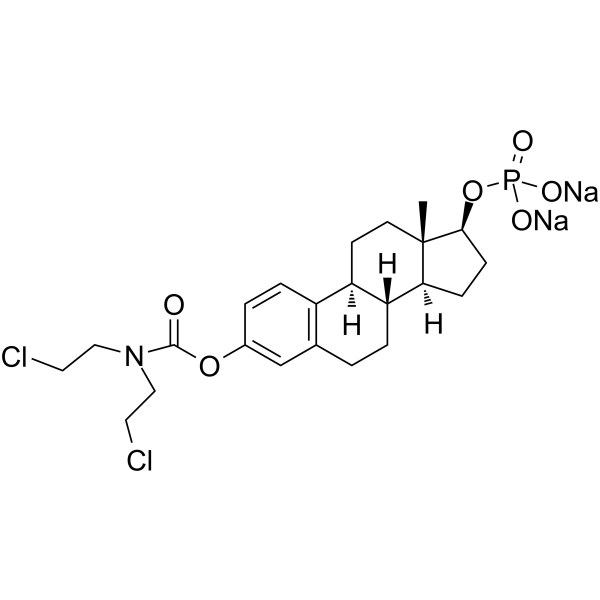
    Estramustine phosphate sodium
    1 Publications Verification

    Apoptosis Microtubule/Tubulin Mitosis Inflammation/Immunology Endocrinology Cancer
    Estramustine phosphate sodium, an estradiol analog, is an orally active antimicrotubule chemotherapy agent. Estramustine phosphate sodium depolymerises microtubules by binding to microtubule associated proteins (MAPs) and/or to tubulin. Estramustine phosphate sodium can interfere mitosis, trigger cell death and induce apoptosis, which can be used for the research of cancer like prostate cancer .
    Estramustine phosphate sodium
  • HY-103711
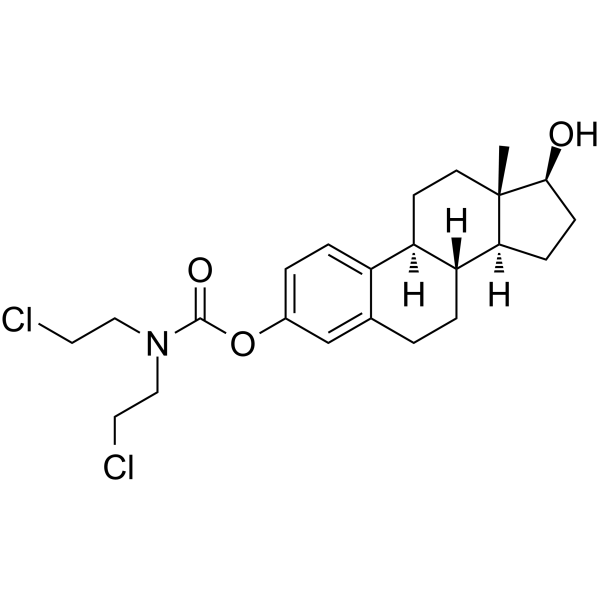
    Estramustine
    1 Publications Verification

    Microtubule/Tubulin Apoptosis Mitosis Cancer
    Estramustine, an estradiol analog, is an orally active antimicrotubule chemotherapy agent. Estramustine depolymerises microtubules by binding to microtubule associated proteins (MAPs) and/or to tubulin. Estramustine can interfere mitosis, trigger cell death and induce apoptosis, which can be used for the research of cancer like prostate cancer .
    Estramustine
  • HY-107116

    Microtubule/Tubulin Neurological Disease
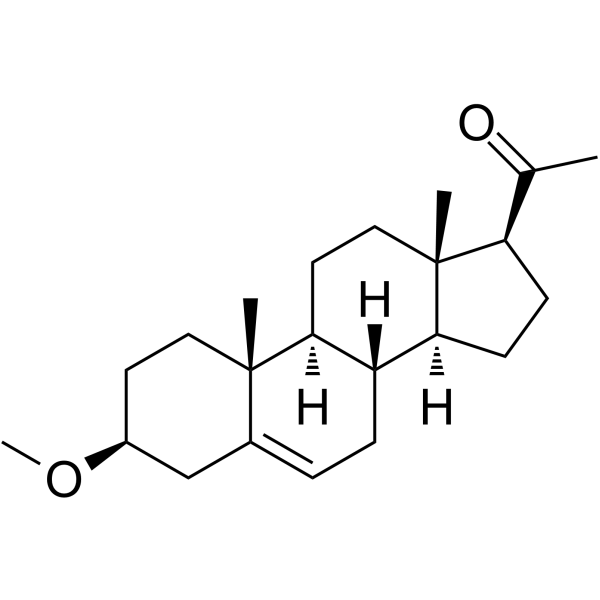
    MAP4343 is the 3-methylether derivative of Pregnenolone. MAP4343 binds in vitro to microtubule-associated protein 2 (MAP2), stimulates the polymerization of tubulin, enhances the extension of neurites and protects neurons against neurotoxic agents .
    MAP4343
  • HY-137552
    MKI-1
    1 Publications Verification

    MASTL Kinase Inhibitor-1

    MASTL Cancer
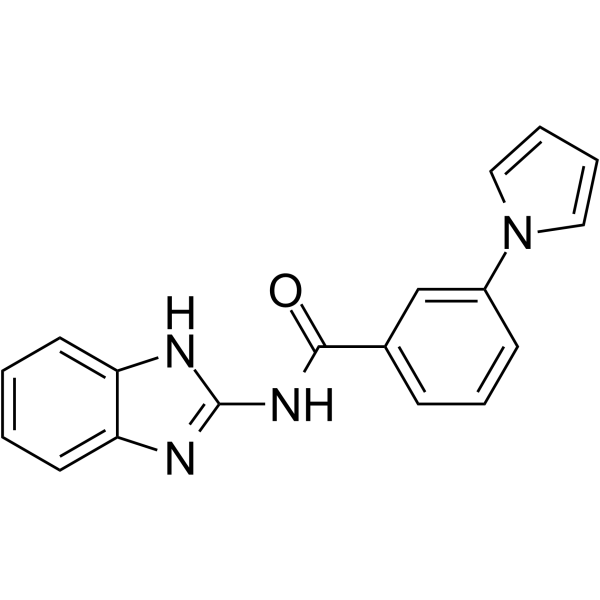
    MKI-1, an inhibitor of MASTL (microtubule-associated serine/threonine kinase-like) with an IC50 of 9.9 μM, exerts antitumor and radiosensitizer activities through PP2A activation in breast cancer .
    MKI-1
  • HY-156716

    MASTL Cancer
    MASTL-IN-2 is an MASTL (microtubule-associated serine/threonine kinase-like) inhibitor. MASTL-IN-2 inhibits human epithelial MIA PaCa cancer cell proliferation with IC50 of 2.8 nM .
    MASTL-IN-2
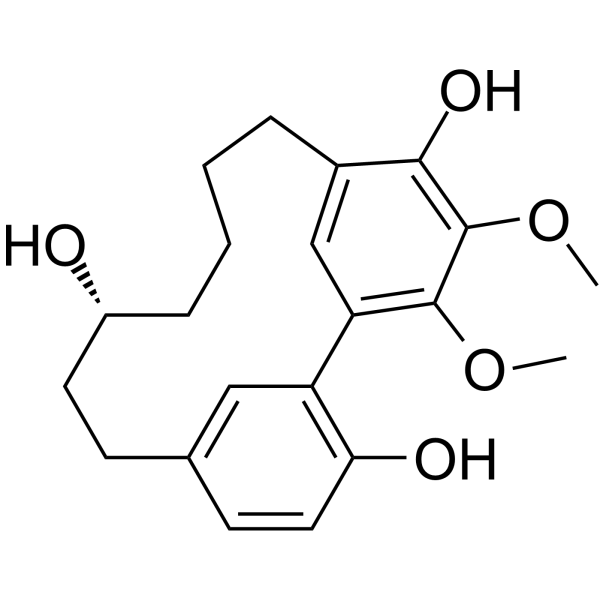
  • HY-N3225

    NAMPT Sirtuin Microtubule/Tubulin Apoptosis Autophagy PDGFR NF-κB AMPK Cardiovascular Disease Neurological Disease Metabolic Disease Inflammation/Immunology Cancer
    Myricanol is a diarylheptanoid and a Nampt activator. Myricanol exerts anti-inflammatory effects and alleviates glucocorticoid-induced muscle atrophy by increasing Sirtuin 1 (SIRT1) and PRDX5 activities while regulating inflammatory factors. Myricanol exhibits growth inhibition and induces apoptosis in human lung adenocarcinoma A549 cells. Myricanol promotes autophagy-mediated clearance of microtubule-associated protein tau to exert neuroprotective effects. Myricanol protects cardiovascular function by inhibiting PDGFRβ and NF-κB signaling pathways. Myricanol activates mitochondrial transcription factor A (TFAM) expression to exert anti-renal fibrosis effects. Myricanol improves insulin resistance through AMPK activation .
    Myricanol
  • HY-P9995

    JNJ-63733657

    Tau Protein Neurological Disease
    Posdinemab (JNJ-63733657) is a humanized IgG1/κ monoclonal antibody that selectively targets phosphorylated tau (pT217). Posdinemab specifically binds to the pT217+tau epitope rich in the proline domain, blocks tau protein aggregation and seed propagation, and promotes the clearance of extracellular tau species. Posdinemab reduces the levels of free and total p217+tau in cerebrospinal fluid, thereby inhibiting the pathological propagation of tau protein and the formation of neurofibrillary tangles. Posdinemab can be used for the study of progressive supranuclear palsy syndrome and Alzheimer's disease (AD), especially for prodromal or mild AD disease .
    Posdinemab
  • HY-112140

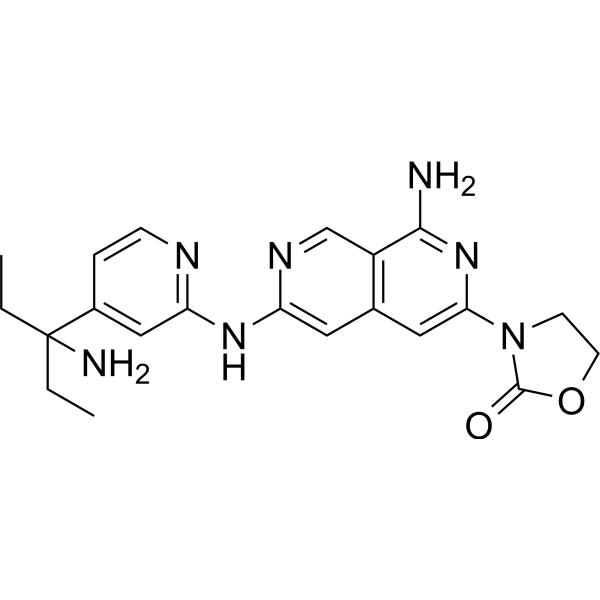
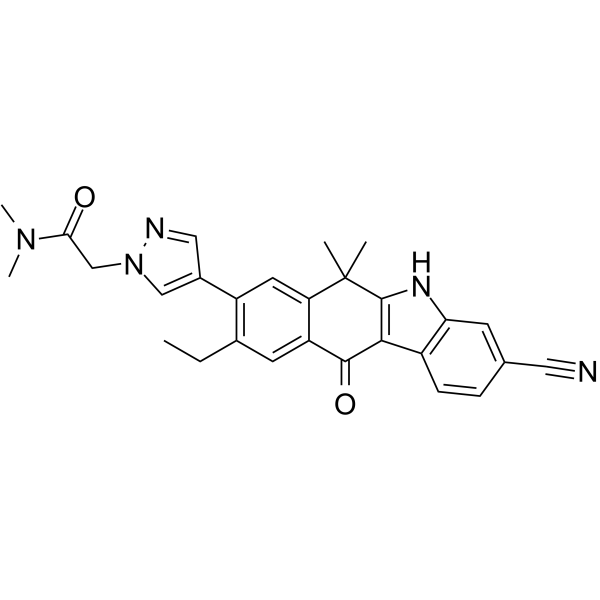
    Anaplastic lymphoma kinase (ALK) Cancer
    JH-VIII-157-02 is a structural analogue of alectinib, acts as an ALK inhibitor, and shows an IC50 of 2 nM for echinoderm microtubule-associated protein-like 4-ALK (EML4-ALK) G1202R in cells.
    JH-VIII-157-02
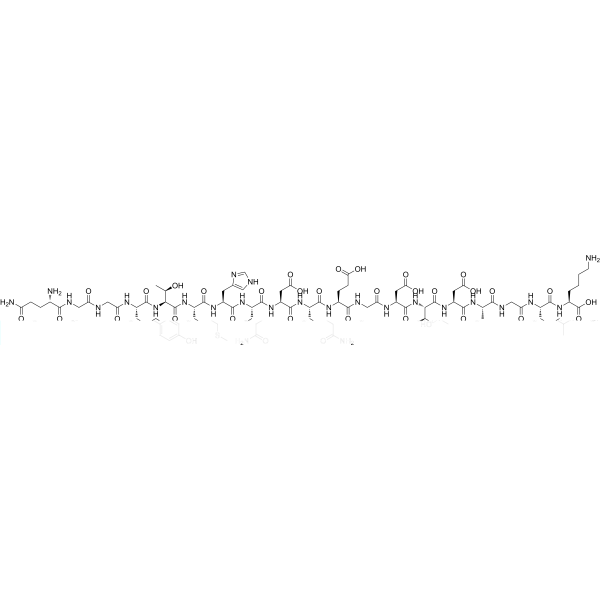
  • HY-P0181

    Tau Protein Neurological Disease
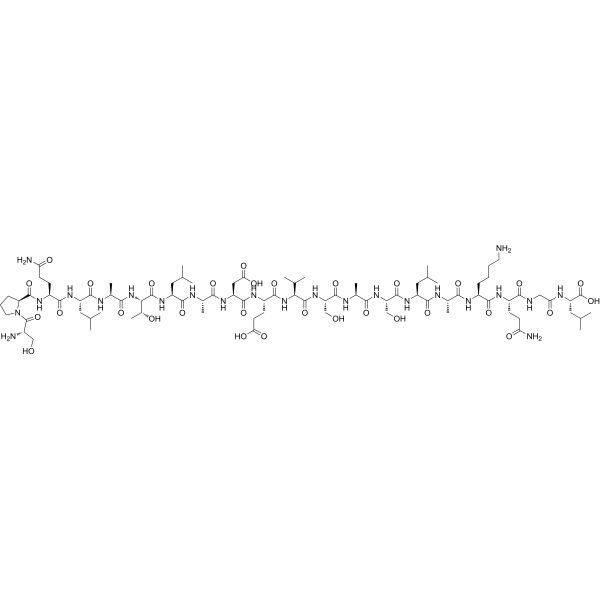
    Microtubule-associated protein tau (26-44) is a synthetic peptide chain with an amine group attached to glutamine and an carboxyl group attached to lysine.
    Microtubule-associated protein tau (26-44)
  • HY-159653

    Microtubule/Tubulin Cancer
    MASTL-IN-5 (compound 11) is a MASTL (microtubule-associated serine/threonine kinase-like) inhibitor, with a Ki of 0.018 nM .
    MASTL-IN-5
  • HY-111752

    Anaplastic lymphoma kinase (ALK) Cancer
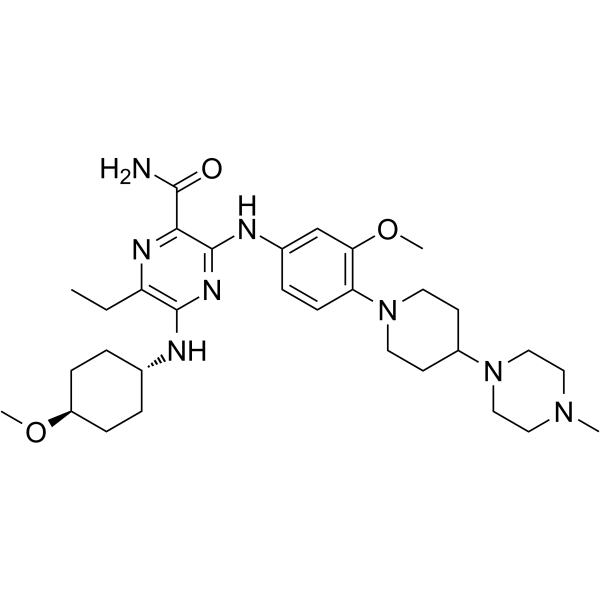
    EML4-ALK kinase inhibitor 1 is a potent orally active inhibitor of echinoderm microtubule-associated protein-like 4-anaplastic lymphoma kinase (EML4-ALK), with an IC50 of 1 nM .
    EML4-ALK kinase inhibitor 1
  • HY-119587

    Microtubule/Tubulin Cancer
    Alestramustine is an antineoplastic cytostatic agent that disrupts microtubule function by binding to microtubule-associated proteins and β-tubulin through its active metabolites, effectively inhibiting cell division.
    Alestramustine
  • HY-171165

    Microtubule/Tubulin Cancer
    JC168 is a phenyl analog of peloruside and serves as a microtubule inhibitor, demonstrating antiproliferative and anticancer activities. JC168 promotes tubulin polymerization, thereby interfering with microtubule dynamics, and can be utilized in research related to microtubule-associated disorders .
    JC168
  • HY-121085

    Microtubule/Tubulin Cancer
    CID-663143 targets microtubule-associated proteins, not tubulin itself, to inhibit the polymerization process within cells. CID-663143 inhibits cancer cell growth (IC50: <100 nM for HT-1080, BJeLR, MCF10A cells) .
    CID-663143
  • HY-107116S

    Isotope-Labeled Compounds Microtubule/Tubulin Neurological Disease
    MAP4343-d4 is the deuterium labeled MAP4343. MAP4343 is the 3-methylether derivative of Pregnenolone. MAP4343 binds in vitro to microtubule-associated protein 2 (MAP2), stimulates the polymerization of tubulin, enhances the extension of neurites and protects neurons against neurotoxic agents .
    MAP4343-d4
  • HY-13627A

    Apoptosis Microtubule/Tubulin Mitosis Metabolic Disease Inflammation/Immunology Cancer
    Estramustine phosphate, an estradiol analog, is an orally active antimicrotubule chemotherapy agent. Estramustine phosphate depolymerises microtubules by binding to microtubule associated proteins (MAPs) and/or to tubulin. Estramustine phosphate can interfere mitosis, trigger cell death and induce apoptosis, which can be used for the research of cancer like prostate cancer .
    Estramustine phosphate
  • HY-107116R

    Reference Standards Microtubule/Tubulin Neurological Disease
    MAP4343 (Standard) is the analytical standard of MAP4343 (HY-107116). This product is intended for research and analytical applications. MAP4343 is the 3-methylether derivative of Pregnenolone. MAP4343 binds in vitro to microtubule-associated protein 2 (MAP2), stimulates the polymerization of tubulin, enhances the extension of neurites and protects neurons against neurotoxic agents .
    MAP4343 (Standard)
  • HY-E70950

    Ser/Thr Kinase Neurological Disease
    Calmodulin-dependent protein kinase II, Rat, is a serine-threonine protein kinase involved in neurotransmitter release, stimulation-induced gene expression control, and microtubule-associated protein phosphorylation.
    Calmodulin-dependent Protein Kinase II, Rat
  • HY-182391

    MASTL Apoptosis Aurora Kinase PARP Caspase Cancer
    MKI-3 is a selective microtubule-associated serine/threonine kinase-like (MASTL) inhibitor with an IC50 of 5.72 nM and a Kd of 1.89 nM. MKI-3 disrupts the MASTL-ENSA-Aurora A signaling axis. MKI-3 induces chromosomal instability, mitotic catastrophe and apoptosis (apoptosis) in cancer cells. MKI-3 is applicable to research related to triple-negative breast cancer .
    MKI-3
  • HY-117578

    Endogenous Metabolite Neurological Disease
    KB 5666 is a benzoxazine derivative with lipid peroxidation inhibitory activity. KB 5666 showed protective effects against post-ischemic neuronal death. KB 5666 effectively protected CA1 neurons when injected 5 minutes before or immediately after ischemia. KB 5666 also showed a dose-dependent protective effect when injected within 1 hour after ischemia. KB 5666 effectively prevented the significant decrease in microtubule-associated protein 2 immunoreactivity within the dendritic field of CA1 pyramidal cells. KB 5666 prevented the decrease in [3H]PDBu binding activity in different layers of the CA1 region after ischemia. The application of KB 5666 showed the ability to improve the cellular and functional consequences of ischemia .
    KB 5666

Inquiry Online

Your information is safe with us. * Required Fields.

Salutation


Country or Region *

Applicant Name *


Organization Name *

Department *


Email Address *


Product Name *

Cat. No.


Requested quantity *

Phone Number *


Remarks

Inquiry Online

Inquiry Information

Product Name:
Cat. No.:
Quantity:
MCE Japan Authorized Agent:

