1. Search Result
Search Result
Results for "

mitochondrial permeability transition pore (mPTP)

" in MedChemExpress (MCE) Product Catalog:

14

Inhibitors & Agonists

2

Natural
Products

Cat. No. Product Name Target Research Areas Chemical Structure
  • HY-15763
    Erastin
    Maximum Cited Publications
    805 Publications Verification

    VDAC Ferroptosis Disulfidptosis Cancer
    Erastin is a ferroptosis inducer. Erastin exhibits the mechanism of ferroptosis induction related to ROS and iron-dependent signaling. Erastin inhibits voltage-dependent anion channels (VDAC2/VDAC3) and accelerates oxidation, leading to the accumulation of endogenous reactive oxygen species. Erastin also disrupts mitochondrial permeability transition pore (mPTP) with anti-tumor activity. Furthermore, Erastin can block the uptake of cystine mediated by SLC7A11 and also spares UMRC6-EV and -C91A cells from disulfidptosis under glucose starvation .
    Erastin
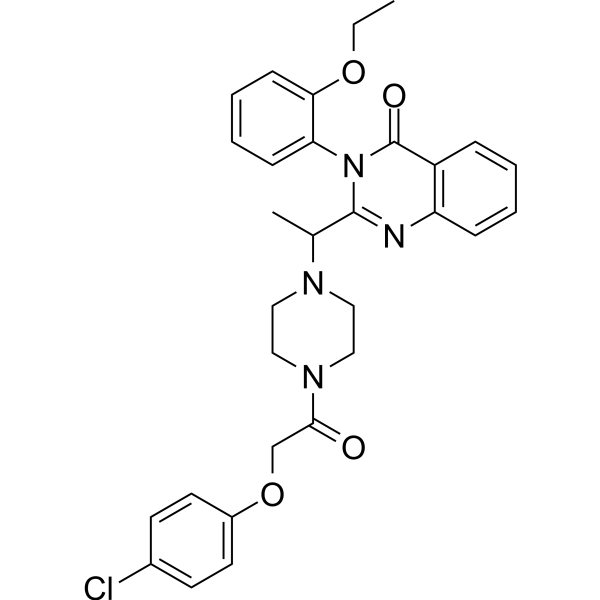
  • HY-100852
    ER-000444793
    5+ Cited Publications

    Mitochondrial Metabolism Cancer
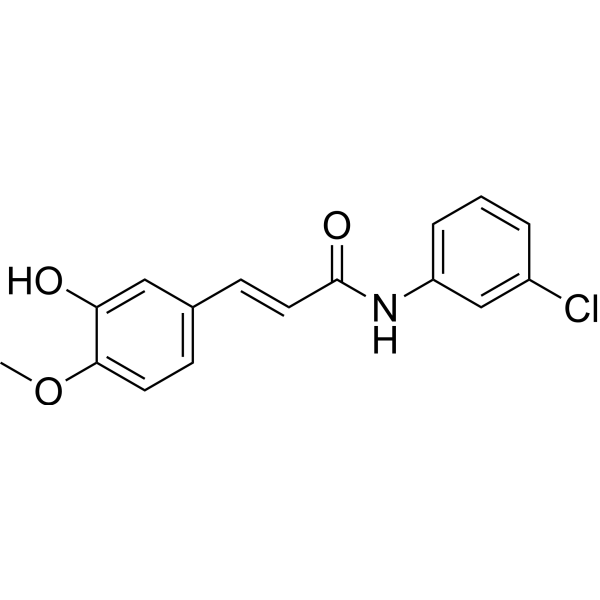
    ER-000444793 is a potent inhibitor of mitochondrial permeability transition pore (mPTP) opening. ER-000444793 inhibits mPTP with an IC50 of 2.8 μM.
    ER-000444793
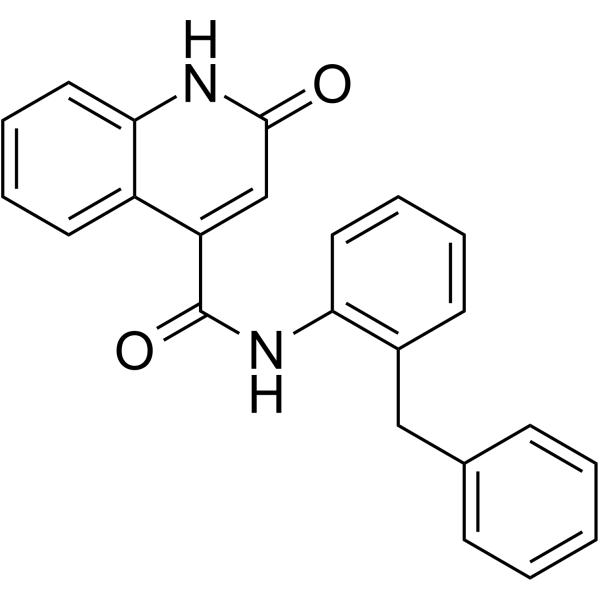
  • HY-175715

    Mitochondrial Metabolism Neurological Disease
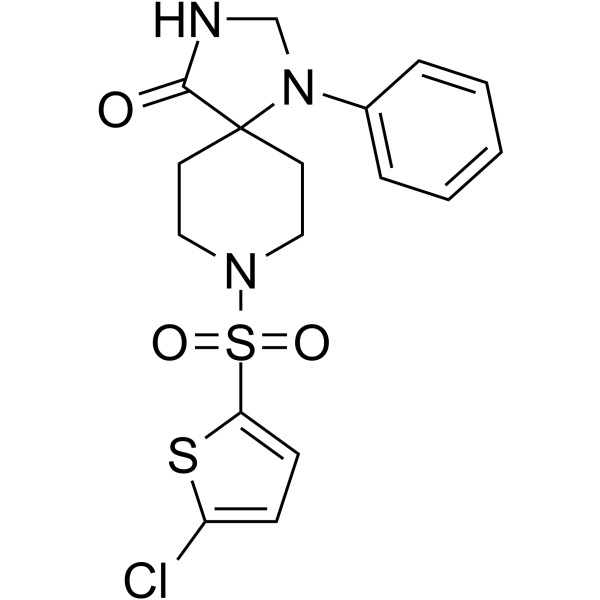
    NRG1271 is an orally active mitochondrial permeability transition pore (mPTP) inhibitor with blood-brain barrier penetration. NRG1271 can be used for the study of Neurological Disease .
    NRG1271
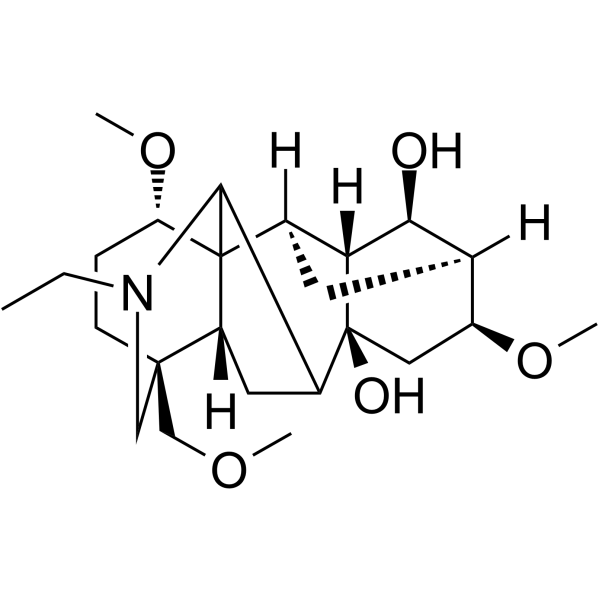
  • HY-N0663

    Mitochondrial Metabolism Cyclophilin Potassium Channel Cardiovascular Disease Neurological Disease Inflammation/Immunology
    Talatisamine is an orally active cyclophilin D activator isolated from the roots of Aconitum carmichaeli Debx. Talatisamine exerts biological functions by activating cyclophilin D, inhibiting Ca 2+-dependent opening of the mitochondrial permeability transition pore (mPTP) (IC50=78 μM), and blocking delayed rectifier K + channels (IC50=146 μM). Talatisamine possesses both antioxidant and membrane-stabilizing properties, effectively inhibits lipid peroxidation and protects mitochondrial membrane function. Talatisamine exhibits multiple activities including antiarrhythmic, hypotensive, anti-inflammatory, anticancer and neuroprotective effects. Talatisamine finds applications in the research of ischemic diseases, rheumatoid arthritis, inflammation-related diseases and Alzheimer's disease .
    Talatisamine
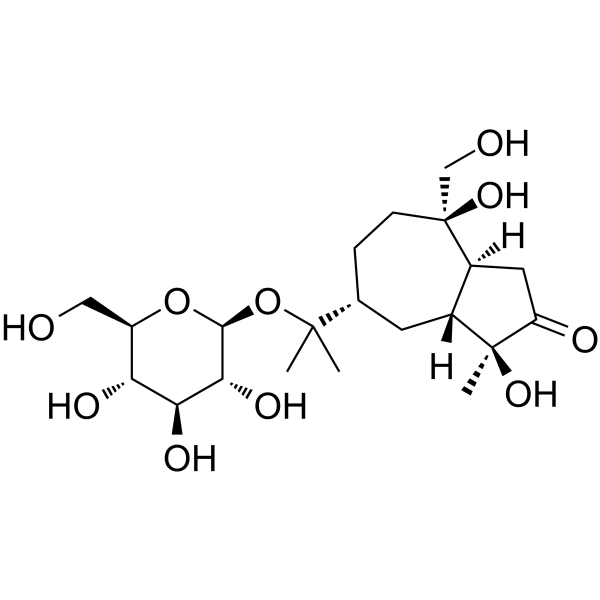
  • HY-N0237
    Atractyloside A
    3 Publications Verification

    Toll-like Receptor (TLR) MyD88 NF-κB Mitochondrial Metabolism Interleukin Related Aquaporin Cardiovascular Disease Metabolic Disease Inflammation/Immunology
    Atractyloside A is an orally active inhibitor of the TLR4/MyD88/NF-κB signaling pathway and also an opener of the mitochondrial permeability transition pore (MPTP). Atractyloside A interferes with the activation of the TLR4/MyD88/NF-κB pathway, thereby inhibiting intestinal inflammatory responses. Atractyloside A reverses mucin synthesis impairment, improves intestinal barrier integrity, and restores homeostasis by altering the composition of the gut microbiota. Atractyloside A can be used in studies related to spleen deficiency diarrhea and myocardial injury .
    Atractyloside A
  • HY-119909

    Mitochondrial Metabolism Cardiovascular Disease
    GNX-865 is a mitochondrial permeability transition pore (mPTP) inhibitor that protects against ischemia-reperfusion injury in vivo .
    GNX-865
  • HY-112715

    ATP Synthase Cardiovascular Disease
    ATP synthase inhibitor 1 is a potent inhibitor of c subunit of the F1/FO-ATP synthase complex, inhibits mitochondrial permeability transition pore (mPTP) opening, does not affect ATP levels .
    ATP synthase inhibitor 1
  • HY-172959

    Mitochondrial Metabolism Cardiovascular Disease
    mPTP-IN-1 (Compound 14e) is a mitochondrial permeability transition pore (mPTP) inhibitor. mPTP-IN-1 blocks calcium-induced mPTP opening by targeting the C subunit of ATP synthase. mPTP-IN-1 can be used to study myocardial ischemia/reperfusion injury (IRI) .
    mPTP-IN-1
  • HY-136804

    Cyclophilin Neurological Disease
    CypD-IN-29 (compound 29) is an inhibitor of the Alzheimer's disease target CypD (KD=88.2 nM). CypD is a mitochondrial-specific cyclophilin that can bind to β-amyloid protein in brain mitochondria and promote the formation of mitochondrial permeability transition pore (mPTP).
    CypD-IN-29
  • HY-169652

    Reactive Oxygen Species (ROS) AMPK Cancer
    NPC26 is a small molecule mitochondrial disruptor with anti-tumor activity. NPC-26 shows significant anti-proliferative and cytotoxic effects on CRC cell lines (HCT-116, DLD-1, and HT-29). NPC26 can damage mitochondrial function, leading to the opening of the mitochondrial permeability transition pore (mPTP) and the production of reactive oxygen species, ultimately inducing cell death. NPC-26 can kill CRC cells by activating the AMP-activated protein kinase (AMPK) signaling pathway .
    NPC26
  • HY-100852R

    Mitochondrial Metabolism Reference Standards Cancer
    ER-000444793 (Standard) is the analytical standard of ER-000444793 (HY-100852). This product is intended for research and analytical applications. ER-000444793 is a potent inhibitor of mitochondrial permeability transition pore (mPTP) opening. ER-000444793 inhibits mPTP with an IC50 of 2.8 μM.
    ER-000444793 (Standard)
  • HY-179417

    Cyclophilin Inflammation/Immunology
    CypD-IN-7 is a potent cyclophilin D (CypD/PPIF) inhibitor that inhibits CypD PPIase activity (K i = 2.4 nM) and provides protection against mitochondrial permeability transition pore (MPTP) opening. CypD-IN-7 can be used for pancreatitis research .
    CypD-IN-7
  • HY-179416

    Cyclophilin Inflammation/Immunology
    CypD-IN-6 is a potent cyclophilin D (CypD/PPIF) inhibitor that inhibits CypD PPIase activity (Ki = 32 nM) and binds to CypD (Kd = 60 nM). CypD-IN-6 can be used for mitochondrial permeability transition pore (MPTP) related disease research such as ischemia-reperfusion injury and acute pancreatitis 1.
    CypD-IN-6
  • HY-W223348

    Drug Intermediate Drug Derivative Drug Metabolite Cardiovascular Disease Neurological Disease
    Org-9768 (Compound (2-methyl-2,3-dihydro-1H-inden-2-yl)methanamine) is a drug intermediate for synthesizing the mitochondrial permeability transition pore (mPTP) inhibitor. Org-9768 can be used for the researches of neurological and cardiovascular disease, such as Parkinson's disease .
    Org-9768

Inquiry Online

Your information is safe with us. * Required Fields.

Salutation


Country or Region *

Applicant Name *


Organization Name *

Department *


Email Address *


Product Name *

Cat. No.


Requested quantity *

Phone Number *


Remarks

Inquiry Online

Inquiry Information

Product Name:
Cat. No.:
Quantity:
MCE Japan Authorized Agent:

