
1. Search Result
Search Result
Results for "

morphology

" in MedChemExpress (MCE) Product Catalog:

197

Inhibitors & Agonists

13

Fluorescent Dye

20

Biochemical Assay Reagents

18

Peptides

5

MCE Kits

32

Natural
Products

12

Isotope-Labeled Compounds

4

Oligonucleotides

1

GMP Molecules

Cat. No. Product Name Target Research Areas Chemical Structure
  • HY-B0113
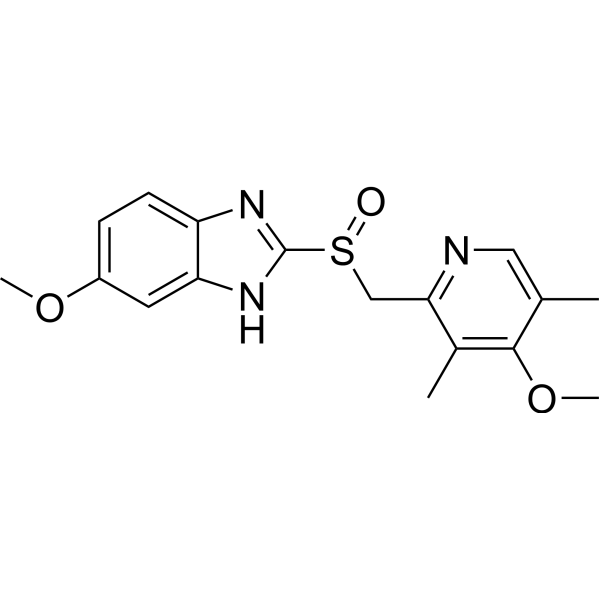
    Omeprazole
    5+ Cited Publications

    H 16868

    Na+/K+ ATPase Proton Pump Bacterial Cytochrome P450 Apoptosis Autophagy Atg8/LC3 TNF Receptor Interleukin Related Infection Neurological Disease Inflammation/Immunology Cancer
    Omeprazole (H 16868) is an orally active H +,K +-ATPase inhibitor and a proton pump inhibitor. Omeprazole competitively inhibits CYP2C19, CYP3A4, and CYP2C9 activity. Omeprazole inhibits gastric acid secretion and can be used for acid-related gastrointestinal disorders. Omeprazole inhibits pancreatic cancer cell proliferation, induces apoptosis, autophagosome accumulation (elevated LC3-I and LC3-II levels), oxidative stress, and cytogenetic imbalance, modulates lysosomal transport, reduces inflammatory cytokines. Omeprazole alters small intestinal morphology and magnesium absorption, and induces gastric mucosa morphologic changes. Omeprazole aslo has neuroprotective and antibacterial effects .
    Omeprazole
  • HY-101878
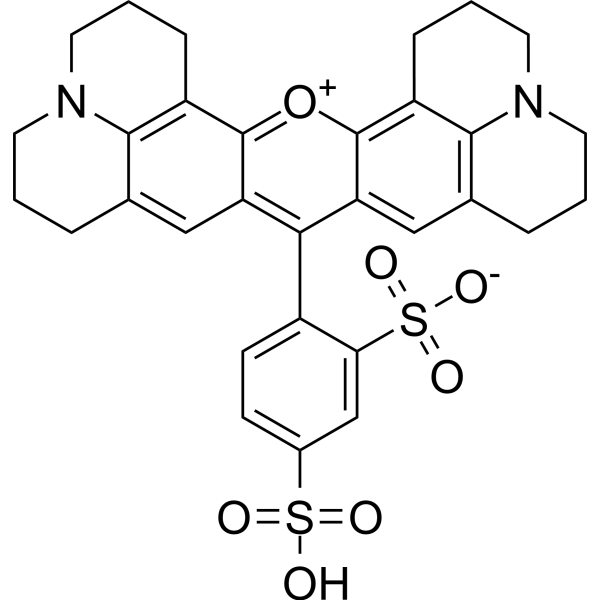
    Texas Red
    5 Publications Verification

    Sulforhodamine 101; SR101

    Fluorescent Dye Neurological Disease
    Texas Red (Sulforhodamine 101) is an amphoteric rhodamine red fluorescent dye (excitation/emission: 586/605 nm). Texas Red is used extensively for investigating neuronal morphology and acts as acell type-selective fluorescent marker of astrocytes bothin vivoand in slice preparations .
    Texas Red
  • HY-B0113A
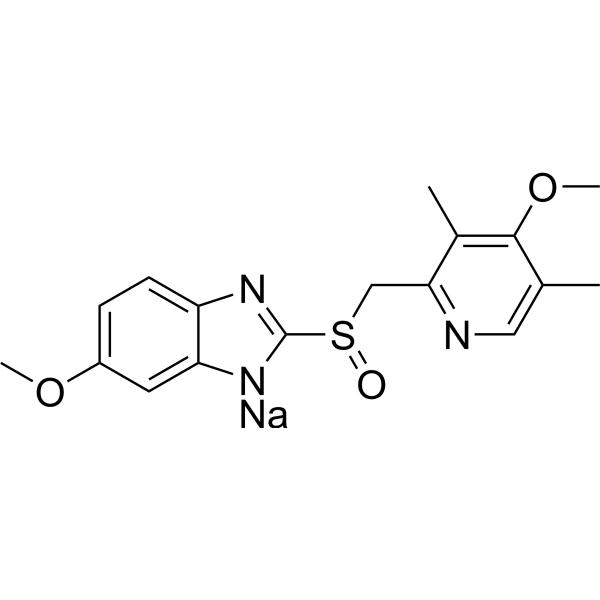
    Omeprazole sodium
    5+ Cited Publications

    H 16868 sodium

    Na+/K+ ATPase Interleukin Related Proton Pump Cytochrome P450 Bacterial Apoptosis Autophagy TNF Receptor Atg8/LC3 Infection Inflammation/Immunology
    Omeprazole (H 16868) sodium is an orally active H +,K +-ATPase inhibitor and a proton pump inhibitor. Omeprazole sodium competitively inhibits CYP2C19, CYP3A4, and CYP2C9 activity. Omeprazole sodium inhibits gastric acid secretion and can be used for acid-related gastrointestinal disorders. Omeprazole sodium inhibits pancreatic cancer cell proliferation, induces apoptosis, autophagosome accumulation (elevated LC3-I and LC3-II levels), oxidative stress, and cytogenetic imbalance, modulates lysosomal transport, reduces inflammatory cytokines. Omeprazole sodium alters small intestinal morphology and magnesium absorption, and induces gastric mucosa morphologic changes. Omeprazole sodium aslo has neuroprotective and antibacterial effects .
    Omeprazole sodium
  • HY-N10889

    Drug Metabolite RET Neurological Disease
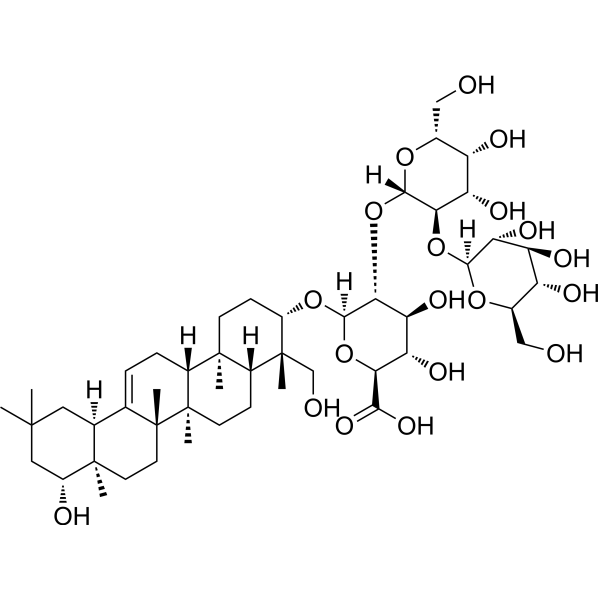
    Sominone is the active metabolite of Withanoside IV (HY-N8693). Sominone enhances neuronal morphological plasticity by activating the RET pathway. Sominone can also induce axon/dendrite regeneration and synaptic reconstruction, thereby improving spatial memory. Sominone can be used in the research of neurodegenerative diseases such as Alzheimer's disease .
    Sominone
  • HY-122266

    Biochemical Assay Reagents Metabolic Disease
    Orcein is an irreversible stain that specifically targets elastic fibers and can interact hydrophobically with the protein components in elastic fibers. Orcein makes elastic fibers in tissues appear purple or purple-red. Orcein can be used for morphological studies of Drosophila polytene chromosomes and for qualitative and quantitative analysis of elastic fibers, collagen fibers and other components in atherosclerotic plaques .
    Orcein
  • HY-151527
    PI3K/Akt/CREB activator 1
    4 Publications Verification

    Akt PI3K Epigenetic Reader Domain Neurological Disease
    PI3K/Akt/CREB activator 1 (compound AE-18) is a potent, orally active PI3K/Akt/CREB activator. PI3K/Akt/CREB activator 1 promotes neuronal proliferation, induced differentiation of Neuro-2a cells into a neuron-like morphology, and accelerated the establishment of axon-dendrite polarization of primary hippocampal neurons through upregulating brain-derived neurotrophic factor via the PI3K/Akt/CREB pathway. PI3K/Akt/CREB activator 1 can be used in research of vascular dementia (VaD) .
    PI3K/Akt/CREB activator 1
  • HY-W088068

    Fluorescent Dye Others
    Wright's stain is a composite cell stain that mainly binds to intracellular nucleic acids, proteins and other components through thiazine dyes (such as methylene blue) and eosin. Wright's stain is pH-dependent (optimal pH 6.4-6.7) and achieves cell morphology resolution by differentially staining the cytoplasm and nucleus. Under alkaline conditions, thiazine dyes bind to nucleic acids to form purple, and acidic eosin binds to cytoplasmic proteins to form red, which can form contrasting cell morphological features. Wright's stain can clearly display the fine structures of blood cells and bone marrow cells (such as nuclear chromatin and granules) and quickly evaluate cell morphological abnormalities .
    Wright's stain
  • HY-135498

    Bacterial Infection
    Ferrioxamine E is a siderophore and bacterial growth regulator. Ferrioxamine E can chelate ferric iron, and promote the growth, morphological differentiation and antibiotic synthesis of Streptomyces tanashiensis .
    Ferrioxamine E
  • HY-118773

    A22 hydrochloride

    Bacterial Infection
    MreB Perturbing Compound A22 hydrochloride (A22 hydrochloride) is a reversible MreB inhibitor and antimicrobial agent that exhibits bacteriostatic activity against Escherichia coli, with low activity against Gram-positive bacteria. MreB Perturbing Compound A22 hydrochloride rapidly and reversally delocalizes MreB from the helical/circular structures in cells, impairs MreB function, and reduces the binding of MreB to the chromosomal region proximal to the replication origin. MreB Perturbing Compound A22 hydrochloride alters the cell morphology of caulobacters to round/lemon-shaped, slows caulobacter growth, blocks their cell division, and induces the formation of spherical morphology, asymmetric division, and anucleate cells in Escherichia coli. MreB Perturbing Compound A22 hydrochloride is used for studies related to bacterial rod-shaped morphology determination, chromosome segregation, and cell division mechanisms .
    MreB Perturbing Compound A22 hydrochloride
  • HY-NP077

    PHA-L

    Biochemical Assay Reagents Neurological Disease
    Phaseolus vulgaris leucoagglutinin (PHA-L) is a lectin, that can be extracted from red kidney beans (Phaseolus vulgaris). Phaseolus vulgaris leucoagglutinin can be used as an anterograde axonal tracer in neuroanatomical research to study the morphology of neurons, axons, and terminal structures in the nervous system .
    Phaseolus vulgaris leucoagglutinin
  • HY-P10304

    Cyclo(Pro-Arg)

    Fungal Others
    Cyclo(Arg-Pro) (Cyclo(Pro-Arg)) is an inhibitor for chitinase. Cyclo(Arg-Pro) inhibits cell separation of Saccharomyces cerevisiae, without affecting its growth. Cyclo(Arg-Pro) inhibits the morphological change of Candida albicans from yeast form to filamentous form .
    Cyclo(Arg-Pro)
  • HY-DY3003

    Biochemical Assay Reagents Others
    Tissue and Cell Fixative (4% Paraformaldehyde, PFA) is mainly composed of paraformaldehyde, phosphate, and deionized water, with a pH of 7.0-7.4. Tissue and Cell Fixative (4% Paraformaldehyde, PFA) is suitable for fixing most tissues and cells, and can effectively protect the morphology and structure of tissues and cells as well as nucleic acids.
    Tissue and Cell Fixative (4% Paraformaldehyde, PFA)
  • HY-18766
    EW-7195
    1 Publications Verification

    TGF-β Receptor p38 MAPK Cancer
    EW-7195 is a potent and selective ALK5 (TGFβR1) inhibitor with an IC50 of 4.83 nM. EW-7195 has >300-fold selectivity for ALK5 over p38α. EW-7195 efficiently inhibits TGF-β1-induced Smad signaling, epithelial-to-mesenchymal transition (EMT) and breast tumour metastasis to the lung .
    EW-7195
  • HY-126222A

    Apoptosis Mitochondrial Metabolism Cancer
    MitoTam iodide, hydriodide is a Tamoxifen derivative , an electron transport chain (ETC) inhibitor, spreduces mitochondrial membrane potential in senescent cells and affects mitochondrial morphology . MitoTam iodide, hydriodide is an effective anticancer agent, suppresses respiratory complexes (CI-respiration) and disrupts respiratory supercomplexes (SCs) formation in breast cancer cells . MitoTam iodide, hydriodide causes apoptosis .
    MitoTam iodide, hydriodide
  • HY-Y0248

    trans,trans-Farnesol; (2E,6E)-Farnesol

    Fungal Infection
    (E,E)-Farnesol (trans,trans-Farnesol) is a quorum-sensing molecule of Candida species. (E,E)-Farnesol can inhibit the growth, metabolism and biofilm formation of various Candida species, and affect their morphology and invasiveness .
    (E,​E)​-​Farnesol
  • HY-124701

    Fungal Infection
    Filastatin is a long-lasting inhibitor of Candida albicans filamentation. Filastatin inhibits adhesion by multiple pathogenic Candida species with an IC50 of ~3 μM in the GFP-based adhesion assay. Filastatin inhibits fungal adhesion to polystyrene and human cells, the yeast-to-hyphal morphological transition, induction of the hyphal-specific HWP1 promoter. Filastatin has potent antifungal effect .
    Filastatin
  • HY-P1242
    NEP(1-40)
    2 Publications Verification

    Transmembrane Glycoprotein Inflammation/Immunology
    NEP(1-40) is a Nogo-66 receptor (NgR) antagonist peptide, reversing the injury-induced shift in distribution of microglia morphologies by limiting myelin-based inhibition .
    NEP(1-40)
  • HY-13563

    T138067

    Microtubule/Tubulin Apoptosis Cancer
    Batabulin (T138067) is an antitumor agent, which binds covalently and selectively to a subset of the β-tubulin isotypes, thereby disrupting microtubule polymerization. Batabulin affects cell morphology and leads to cell-cycle arrest ultimately induces apoptotic cell death .
    Batabulin
  • HY-B0113R

    H 16868 (Standard)

    Reference Standards Na+/K+ ATPase Interleukin Related Proton Pump Cytochrome P450 Bacterial Apoptosis Autophagy TNF Receptor Atg8/LC3 Infection Metabolic Disease Cancer
    Omeprazole (Standard) is the analytical standard of Omeprazole. This product is intended for research and analytical applications. Omeprazole (H 16868) is an orally active H +,K +-ATPase inhibitor and a proton pump inhibitor. Omeprazole competitively inhibits CYP2C19, CYP3A4, and CYP2C9 activity. Omeprazole inhibits gastric acid secretion and can be used for acid-related gastrointestinal disorders. Omeprazole inhibits pancreatic cancer cell proliferation, induces apoptosis, autophagosome accumulation (elevated LC3-I and LC3-II levels), oxidative stress, and cytogenetic imbalance, modulates lysosomal transport, reduces inflammatory cytokines. Omeprazole alters small intestinal morphology and magnesium absorption, and induces gastric mucosa morphologic changes. Omeprazole aslo has neuroprotective and antibacterial effects .
    Omeprazole (Standard)
  • HY-B0113S
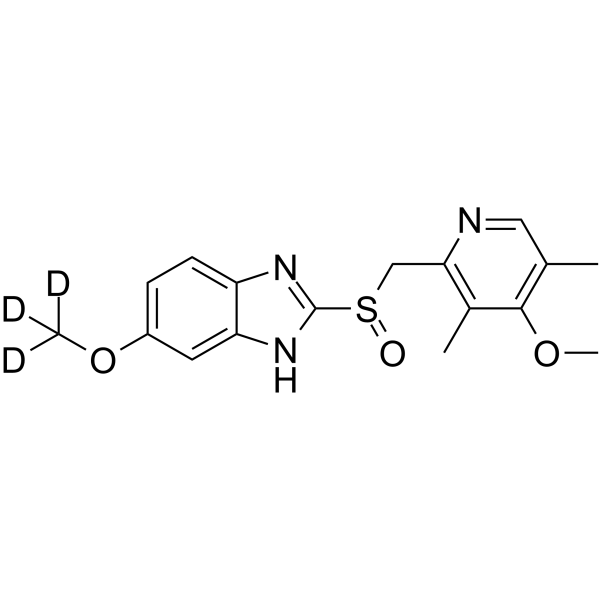
    Omeprazole-d3
    1 Publications Verification

    H 16868-d3

    Na+/K+ ATPase Interleukin Related Proton Pump Cytochrome P450 Bacterial Apoptosis Autophagy TNF Receptor Atg8/LC3 Infection Metabolic Disease Cancer
    Omeprazole-d3 (H 16868-d3) is deuterium labeled Omeprazole. Omeprazole (H 16868) is an orally active H +,K +-ATPase inhibitor and a proton pump inhibitor. Omeprazole competitively inhibits CYP2C19, CYP3A4, and CYP2C9 activity. Omeprazole inhibits gastric acid secretion and can be used for acid-related gastrointestinal disorders. Omeprazole inhibits pancreatic cancer cell proliferation, induces apoptosis, autophagosome accumulation (elevated LC3-I and LC3-II levels), oxidative stress, and cytogenetic imbalance, modulates lysosomal transport, reduces inflammatory cytokines. Omeprazole alters small intestinal morphology and magnesium absorption, and induces gastric mucosa morphologic changes. Omeprazole aslo has neuroprotective and antibacterial effects .
    Omeprazole-d3
  • HY-N6701

    Arp2/3 Complex DNA/RNA Synthesis Calcium Channel Inflammation/Immunology
    Dihydrocytochalasin B is an Actin disruptor. Dihydrocytochalasin B disrupts actin microfilament bundles, inhibits actin polymerization, and alters intracellular actin cytoskeletal structures. Dihydrocytochalasin B blocks the initiation of DNA synthesis. Dihydrocytochalasin B inhibits Calcium transport. Dihydrocytochalasin B inhibits cytokinesis and alters cell morphology. Dihydrocytochalasin B can be used in studies related to rickets .
    Dihydrocytochalasin B
  • HY-137975

    Bacterial Endocrinology
    Exo2 is a secretion inhibitor. Exo2 perturbs trafficking of Shiga toxin between endosomes and the trans-Golgi network. Exo2 blocks secretory cargo exit from the ER (endoplasmic reticulum) and disrupts the Golgi apparatus, but does not affect the morphology of the TGN (trans-Golgi network) Exo2 can stimulate calcium-dependent exocytosis in permeabilized adrenal chromaff in cells .
    Exo2
  • HY-Q22471
    ROCK1-IN-1
    1 Publications Verification

    ROCK Cardiovascular Disease
    ROCK1-IN-1 is a ROCK1 inhibitor with a Ki value of 540 nM. ROCK1-IN-1 can be used for the research of hypertension, glaucoma and erectile dysfunction .
    ROCK1-IN-1
  • HY-P10304A

    Cyclo(Pro-Arg) TFA

    Fungal Infection
    Cyclo (Arg-Pro) TFA is a chitinase inhibitor. Cyclo (Arg-Pro) TFA disrupts cell separation and morphological transition of yeast by inhibiting chitinase activity. Cyclo (Arg-Pro) TFA prevents cell separation of Saccharomyces cerevisiae, leading to the formation of grape-like cell clusters, without inhibiting cell growth. Cyclo (Arg-Pro) TFA blocks the morphological transition of Candida albicans from yeast form to hyphal form, without inhibiting cell growth .
    Cyclo(Arg-Pro) TFA
  • HY-123635

    Antibiotic Bacterial Infection
    Nybomycin, an antibiotic, exhibits antiphage and antibacterial properties. Nybomycin binds to DNA and induces a unique morphological change to mycobacterial bacilli leading the bacterial cell death .
    Nybomycin
  • HY-13563A

    T138067 sodium

    Microtubule/Tubulin Apoptosis Cancer
    Batabulin sodium (T138067 sodium) is an antitumor agent, which binds covalently and selectively to a subset of the β-tubulin isotypes, thereby disrupting microtubule polymerization. Batabulin sodium affects cell morphology and leads to cell-cycle arrest ultimately induces apoptotic cell death .
    Batabulin sodium
  • HY-D2155

    Fluorescent Dye Others
    Texas red-X 4-succinimidyl ester is a derivative of Texas Red (HY-101878), an amphoteric rhodamine red fluorescent dye. Texas Red is widely used to study neuronal morphology and as a cell type-selective fluorescent marker for astrocytes, both in vivo and in slice preparations.
    Texas red-X 4-succinimidyl ester
  • HY-B1740

    Microtubule/Tubulin Neurological Disease
    Pregnenolone acetate (compound #43), a nonmetabolized Pregnenolone (HY-B0151) analog, can promote neurite extension and induce a change in growth cone morphology in primary cultures of cerebellar granule neurons. Pregnenolone acetate, a neurosteroid, increases microtubule polymerization. Pregnenolone acetate has the potential for neurodevelopmental diseases research .
    Pregnenolone acetate
  • HY-109546

    Na+/K+ ATPase Interleukin Related Proton Pump Cytochrome P450 Bacterial Apoptosis Autophagy TNF Receptor Atg8/LC3 Infection Metabolic Disease Cancer
    Omeprazole (H 16868) magnesium is an orally active H +,K +-ATPase inhibitor and a proton pump inhibitor. Omeprazole magnesium competitively inhibits CYP2C19, CYP3A4, and CYP2C9 activity. Omeprazole magnesium inhibits gastric acid secretion and can be used for acid-related gastrointestinal disorders. Omeprazole magnesium inhibits pancreatic cancer cell proliferation, induces apoptosis, autophagosome accumulation (elevated LC3-I and LC3-II levels), oxidative stress, and cytogenetic imbalance, modulates lysosomal transport, reduces inflammatory cytokines. Omeprazole magnesium alters small intestinal morphology and magnesium absorption, and induces gastric mucosa morphologic changes. Omeprazole magnesium aslo has neuroprotective and antibacterial effects .
    Omeprazole magnesium
  • HY-W004705

    2-Hydroxymethylaniline

    Chloride Channel Neurological Disease
    (2-Aminophenyl)methanol (2-Hydroxymethylaniline) is a molecular chaperone to rescue P123S mutant pendrin. (2-Aminophenyl)methanol has the advantages of low dose, long-term effect and low toxicity. (2-Aminophenyl)methanol can be used for the study of Pendred syndrome (a syndromic deafness) .
    (2-Aminophenyl)methanol
  • HY-163459

    Fungal Infection
    HWY-289 is a semisynthetic protoberberine derivative, has broad-spectrum and potent activities against phytopathogenic fungi, particularly Botrytis cinerea (EC50 = 1.34 μg/mL). HWY-289 changes the morphology of the mycelium and the internal structure of cells. HWY-289 reduces ATP content, ATPase activities, and key enzyme activities in the TCA cycle .
    HWY-289
  • HY-150187

    GPR55 ERK ROCK Calcium Channel Neurological Disease
    20:4 Lyso PI acts as an activator of GPR55 and RhoA. 20:4 Lyso PI activates the GPR55-RhoA-ROCK pathway, thereby inducing morphological changes, cytoskeleton assembly, cell rounding and stress fiber formation. 20:4 Lyso PI can be used in research related to diseases such as those of the nervous system .
    20:4 Lyso PI
  • HY-126222

    Apoptosis Mitochondrial Metabolism Cancer
    MitoTam bromide, hydrobromide, a Tamoxifen derivative , is an electron transport chain (ETC) inhibitor. MitoTam bromide, hydrobromide reduces mitochondrial membrane potential in senescent cells and affects mitochondrial morphology . MitoTam bromide, hydrobromide is an effective anticancer agent, suppresses respiratory complexes (CI-respiration) and disrupts respiratory supercomplexes (SCs) formation in breast cancer cells .
    MitoTam bromide, hydrobromide
  • HY-B0113S3

    H 16868-13C,d3

    Isotope-Labeled Compounds Na+/K+ ATPase Interleukin Related Proton Pump Cytochrome P450 Bacterial Apoptosis Autophagy TNF Receptor Atg8/LC3 Infection Metabolic Disease Cancer
    Omeprazole- 13C,d3 is a 13C-labeled and deuterium labeled Omeprazole. Omeprazole (H 16868) is an orally active H +,K +-ATPase inhibitor and a proton pump inhibitor. Omeprazole competitively inhibits CYP2C19, CYP3A4, and CYP2C9 activity. Omeprazole inhibits gastric acid secretion and can be used for acid-related gastrointestinal disorders. Omeprazole inhibits pancreatic cancer cell proliferation, induces apoptosis, autophagosome accumulation (elevated LC3-I and LC3-II levels), oxidative stress, and cytogenetic imbalance, modulates lysosomal transport, reduces inflammatory cytokines. Omeprazole alters small intestinal morphology and magnesium absorption, and induces gastric mucosa morphologic changes. Omeprazole aslo has neuroprotective and antibacterial effects .
    Omeprazole-13C,d3
  • HY-DY1056

    Fluorescent Dye Neurological Disease
    Texas Red (Sulforhodamine 101) (solution) is an amphoteric rhodamine red fluorescent dye (excitation/emission: 586/605 nm). Texas Red is used extensively for investigating neuronal morphology and acts as acell type-selective fluorescent marker of astrocytes bothin vivoand in slice preparations .
    Solvent and concentration: DMSO: 10 mM
    The 1 mL volume is defined as the base specification. All larger sizes correspond to incremental volumes of this base.
    Texas Red (solution)
  • HY-121161C

    Phytohormone Metabolic Disease
    Brassinazole (0.5, 1, 5 μM) causes markedly deformed seedlings, whose morphology is similar to that of BR-deficient mutants. Brassinazole causes cress dwarfism, altering leaf morphology such as the typical downward curl and dark green appearance of Arabidopsis BR-deficient mutants. However, administration of 10 nM BR reversed dwarfism .
    (2R,3S)-Brassinazole
  • HY-P10304C

    Fungal Infection
    Cyclo(Pro-dArg) is an inhibitor of chitinase. Cyclo(Pro-dArg) inhibits the cell separation of Saccharomyces cerevisiae but does not affect its growth. Cyclo(Pro-dArg) inhibits the transition of Candida albicans from yeast to filamentous morphology.
    Cyclo(Pro-dArg)
  • HY-111423

    Cdc42-binding kinase Cancer
    BDP8900 is a potent and selective inhibitor of myotonic dystrophy-related Cdc42-binding kinases (MRCKα and MRCKβ). BDP8900 reduces substrate phosphorylation, leading to morphological changes, motility inhibition and invasiveness of cancer cells .
    BDP8900
  • HY-162422

    Fluorescent Dye Pyroptosis Cancer
    Mito-DK is a small-molecule fluorescent dye with the capability of crosstalk-free response to polarity and mtDNA as well as mitochondrial morphology. Mito-DK has high photostability, low cytotoxicity, and good mitochondria-targeting properties. Mito-DK can be used for real-time tracking and multidimensional assessing of mitochondria-related pyroptosis in cancer cells .
    Mito-DK
  • HY-Y0248AS

    trans,trans-Farnesol-d6; (2E,6E)-Farnesol-d6

    Isotope-Labeled Compounds Fungal Infection
    (E,​E)​-​Farnesol-d6 (trans,trans-Farnesol-d6) is deuterium labeled (E,​E)​-​Farnesol (HY-Y0248). (E,E)-Farnesol (trans,trans-Farnesol) is a quorum-sensing molecule of Candida species. (E,E)-Farnesol can inhibit the growth, metabolism and biofilm formation of various Candida species, and affect their morphology and invasiveness .
    (E,​E)​-​Farnesol-d6
  • HY-N3765

    Apoptosis Metabolic Disease
    Diosbulbin D is a potential hepatotoxic compound that can be isolated from Dioscorea bulbifera L.. Diosbulbin D induces apoptosis in L-02 cells .
    Diosbulbin D
  • HY-113091

    Apoptosis Neurological Disease
    Alpha-Tocotrienol is a vitamin E analog with anti-apoptotic neuroprotective action and antioxidant properties. Alpha-Tocotrienol prevents oxidative stress-independent apoptotic cell death, DNA cleavage, and nuclear morphological changes .
    DL-α-Tocotrienol
  • HY-W040176

    N-Palmitoyl-tyrosine phosphoric acid ammonium

    LPL Receptor Cardiovascular Disease Neurological Disease Inflammation/Immunology
    N-PTyrosine PA (N-Palmitoyl-tyrosine phosphoric acid) ammonium is a lysophosphatidic acid (LPA) receptor modulator, which exhibits weak inhibitory activity against LPA1 and partial agonist properties towards LPA5. N-PTyrosine PA ammonium inhibits the activation of LPA receptors and downstream responses by competing with agonists for binding sites. N-PTyrosine PA ammonium can induce morphological changes and aggregation, and also inhibit LPA-induced morphological changes through receptor desensitization caused by pre-incubation. N-PTyrosine PA ammonium can be used in the research of related diseases such as atherosclerosis and acute ischemic syndromes (e.g., unstable angina, myocardial infarction, stroke) .
    N-PTyrosine PA ammonium
  • HY-N11128

    Kinesin Cancer
    Solidagonic acid inhibits HSET motor activity by promoting the conversion from abnormal monopolar to bipolar spindles. Solidagonic acid suppresses fission yeast cell death and enables reversion of the mitotic spindles from a monopolar to bipolar morphology. Solidagonic acid showed the growth inhibitory activity on the seedlings of Lactuca sativa L. and Lolium multiflorum Lam .
    Solidagonic acid
  • HY-N10958

    Fungal HIV Microtubule/Tubulin Infection
    Wikstrol A is a potent antifungal, antimitotic and anti-HIV-1 Agent. Wikstrol A induces morphological deformation of P. oryzae mycelia with an MMDC value of 70.1 µM. Wikstrol A shows activity against microtubule polymerization with an IC50 value of 131 µM. Wikstrol A shows anti-HIV-1 activity with an IC50 value of 67.8 µM .
    Wikstrol A
  • HY-145814

    HSP Fungal Infection
    HSP90-IN-9 is a potent and selective HSP90 inhibitor. HSP90-IN-9 displays a fungicidal effect in a dose-dependent manner. HSP90-IN-9 inhibits fungal biofilm formation and fungal morphological changes after being combined with FLC. HSP90-IN-9 recovers FLC resistance by down-regulating the expression of related genes (ERG11, CDR1 and CDR2) .
    HSP90-IN-9
  • HY-124021

    Aryl Hydrocarbon Receptor Others
    Benzyl 2-naphthyl ether is a compound mentioned in the study of the effects of aromatic sensitizers on zebrafish embryos. It can cause morphological abnormalities and changes in gene expression in zebrafish embryos. Its toxicity mechanism is partly related to AHR, and there may be other mechanisms independent of AHR.
    Benzyl 2-naphthyl ether
  • HY-145438

    Others Cancer
    Antitumor agent-38 is a potent antitumor agents. Antitumor agent-38 shows antiproliferative activity for cancer cells. Antitumor agent-38 induces cell cycle arrest at the late S and G2/M phase without interfering with microtubule formation or cell morphology[1].
    Antitumor agent-38
  • HY-155769

    Fungal Infection
    Antimicrobial agent-24 (compound E8) is a hydrazide compound with excellent and broad-spectrum fungicidal activities. Antimicrobial agent-24 affects the normal function of the plasma membrane, further generating changes in the morphology and subcellular structure of mycelia .
    Antimicrobial agent-24
  • HY-146116

    Fungal Infection
    Antifungal agent 32 (compound 1a) is a potent antifungal agent. Antifungal agent 32 inhibits Candida albicans filamentation and biofilm formation. Antifungal agent 32 inhibits the morphological switching of Candida albicans and its adherence to epithelial cells. Antifungal agent 32 can be used for Candida albicans infections research .
    Antifungal agent 32

Inquiry Online

Your information is safe with us. * Required Fields.

Salutation


Country or Region *

Applicant Name *


Organization Name *

Department *


Email Address *


Product Name *

Cat. No.


Requested quantity *

Phone Number *


Remarks

Inquiry Online

Inquiry Information

Product Name:
Cat. No.:
Quantity:
MCE Japan Authorized Agent:

