1. Search Result
Search Result
Pathways Recommended: Stem Cell/Wnt Cell Cycle/DNA Damage
Results for "

murine bone marrow cells

" in MedChemExpress (MCE) Product Catalog:

8

阻害剤およびアゴニスト

1

ペプチド

2

阻害性抗体

1

天然物

1

同位体標識化合物

製品番号 製品名 Target 研究分野 構造式
  • HY-N7114A
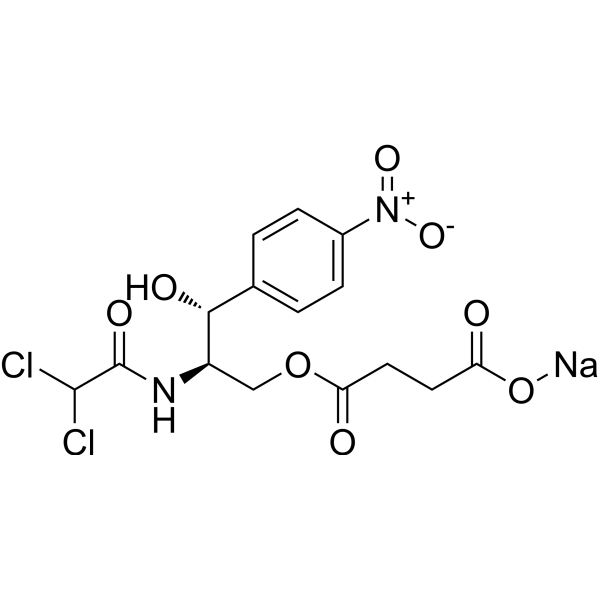
    Chloramphenicol succinate sodium
    3 Publications Verification

    Bacterial P2Y Receptor Succinate Dehydrogenase Drug Intermediate Infection Inflammation/Immunology
    Chloramphenicol succinate sodium is a prodrug of Chloramphenicol (HY-B0239), acting as a P2Y14R inhibitor with an IC50 of 1.585 nM. Chloramphenicol succinate sodium serves as a competitive substrate and inhibitor of succinate dehydrogenase (SDH), which may account for its toxicity. Chloramphenicol succinate sodium exerts a significant inhibitory effect on colitis. Chloramphenicol succinate sodium can be used in research related to myelosuppression, gray baby syndrome, aplastic anemia, bacterial meningitis and inflammatory bowel disease .
    Chloramphenicol succinate sodium
  • HY-P2612

    TNF Receptor RANKL/RANK Apoptosis Inflammation/Immunology
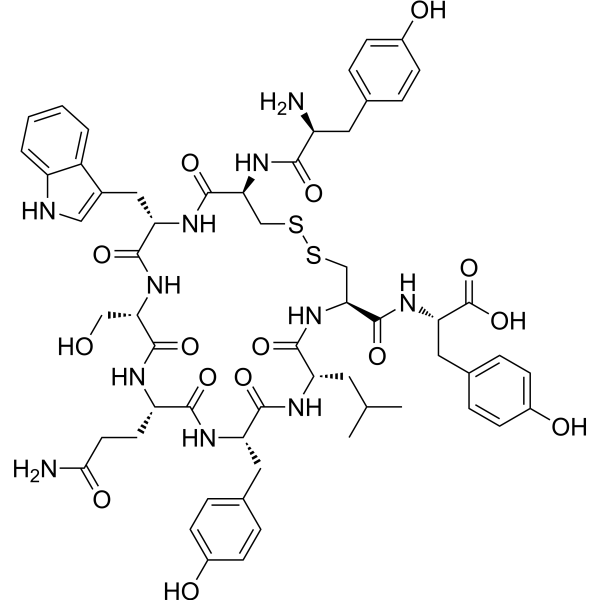
    WP9QY is an inhibitor targeting TNFα and RANKL, which blocks the TNFα-TNFR1 interaction and inhibits TNFα-mediated apoptosis, cytotoxicity and bone destruction. WP9QY inhibits osteoclastogenesis and promotes osteoblast differentiation, induces chondrocyte proliferation and glycosaminoglycan production, and synergizes with TGF-β3 to promote chondrogenesis. WP9QY effectively repairs full-thickness articular cartilage defects in rabbits via intra-articular injection, and inhibits methylmercury-induced reduction of NeuN-positive cells in mouse brain slices. WP9QY can be applied to the research of diseases related to methylmercury-induced neuronal death, cartilage injury, osteoarthritis and bone loss .
    WP9QY
  • HY-117365

    Epigenetic Reader Domain Cancer
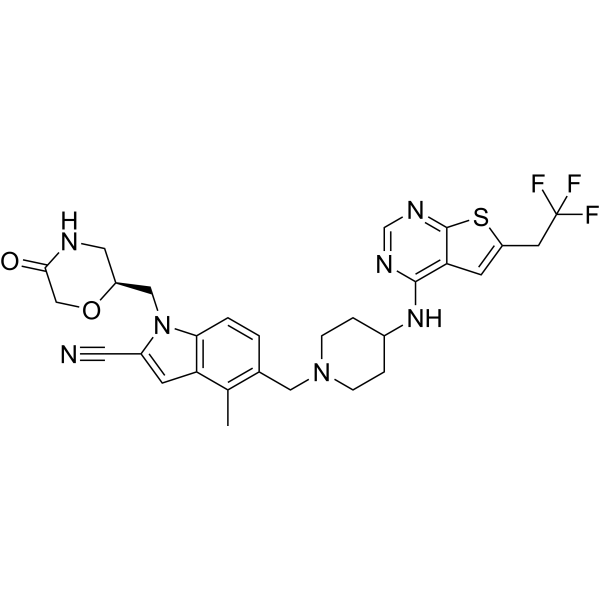
    MI-1481 is a highly potent inhibitor of the Menin-MLL1 interaction with IC50 of 3.6 nM. MI-1481 markedly reduces cell growth of murine bone marrow cells transformed and inhibits leukemia progression .
    MI-1481
  • HY-163544

    Drug Intermediate Cancer
    δ-Tocotrienol prodrug-1 (compound 5b) is a prodrug of δ-tocotrienol (HY-122778). δ-Tocotrienol prodrug-1 shows radioprotective efficacy. δ-Tocotrienol prodrug-1 promotes the hematopoietic progenitor and stem cell regeneration in murine bone marrow and spleen .
    δ-Tocotrienol prodrug-1
  • HY-160850

    Endogenous Metabolite Endocrinology
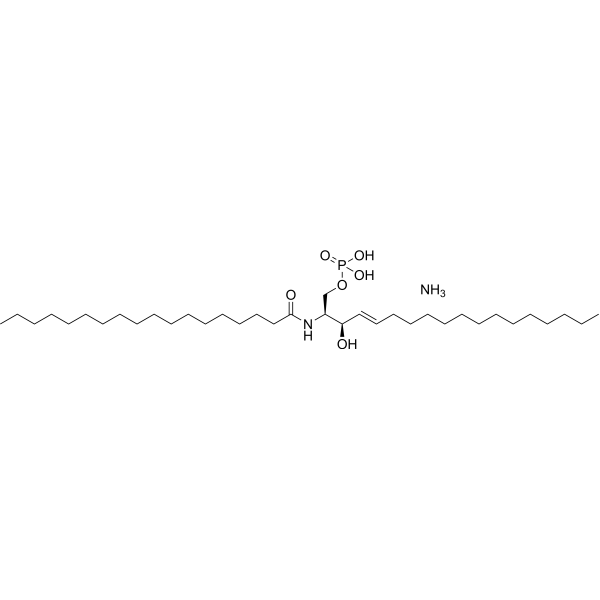
    C18 Ceramide-1-phosphate (d18:1/18:0) (ammonium salt) is a specific type of long-chain molecule found in murine skin . C18 Ceramide-1-phosphate (d18:1/18:0) (ammonium salt) promotes migration of both mouse bone marrow-derived multipotent stromal cells and human umbilical vein endothelial cells at concentrations between 0.5-5 µM. C18 Ceramide-1-phosphate (d18:1/18:0) (ammonium salt)’s levels are higher in CFPAC-1 pancreatic ductal adenocarcinoma cells than in pancreatic cancer stem cells .
    C18 Ceramide-1-phosphate (d18:1/18:0) ammonium salt
  • HY-152021S

    Isotope-Labeled Compounds Others
    C18 Ceramide-1-phosphate (d18:1/18:0)-d3 is the deuterium labeled C18 Ceramide-1-phosphate (d18:1/18:0) (HY-160850). C18 Ceramide-1-phosphate (d18:1/18:0) is a specific type of long-chain molecule found in murine skin. C18 Ceramide-1-phosphate (d18:1/18:0) promotes migration of both mouse bone marrow-derived multipotent stromal cells and human umbilical vein endothelial cells at concentrations between 0.5-5 μM. C18 Ceramide-1-phosphate (d18:1/18:0)’s levels are higher in CFPAC-1 pancreatic ductal adenocarcinoma cells than in pancreatic cancer stem cells .
    C18 Ceramide-1-phosphate (d18:1/18:0)-d3
  • HY-P991744

    CXCR Cancer
    Anti-Mouse CXCR4 Antibody is a monoclonal antibody that specifically recognizes murine CXCR4 (C-X-C chemokine receptor 4), also known as fusin or CD184. CXCR4 is a seven-transmembrane G protein–coupled receptor whose principal endogenous ligand is CXCL12 (stromal cell–derived factor-1α, SDF-1α) and is widely expressed in hematopoietic cells, endothelial cells, neurons, as well as embryonic and adult stem cells. The CXCR4–CXCL12 signaling axis activates multiple downstream pathways, including ERK1/2, Ras, p38 MAPK, PLC/MAPK, and SAPK/JNK, thereby regulating cell survival, proliferation, migration, and stemness maintenance. Aberrant overexpression of CXCR4 is closely associated with poor prognosis and metastasis in various cancers, with CXCR4-positive tumor cells preferentially home to CXCL12-rich tissues such as the liver, bone marrow, lung, and lymph nodes. Accordingly, CXCR4 and its CXCL12-related antagonists emerge as attractive targets for experimental anticancer therapy. Anti-Mouse CXCR4 Antibody is generated using a cell-based immunization and screening strategy and exhibits high affinity for both endogenous and exogenous murine CXCR4. Anti-Mouse CXCR4 Antibody can be used for thestudy of chronic lymphocytic leukemia and multiple myeloma .
    Anti-Mouse CXCR4 Antibody (Cx4Mab-1)
  • HY-P992063

    Transmembrane Glycoprotein Inflammation/Immunology
    Anti-Mouse CD8α Antibody (YTS 105.18) is a non-depleting rat IgG2a monoclonal antibody. Anti-Mouse CD8α Antibody (YTS 105.18) binds to CD8α (epitope c) on mouse CD8 + T cells; when used in combination with a non-depleting anti-CD4 antibody, it does not deplete CD8 + T cells but instead promotes the induction of peripheral tolerance in this cell subset. Anti-Mouse CD8α Antibody (YTS 105.18) can be used in studies of graft rejection .
    Anti-Mouse CD8α Antibody (YTS 105.18)

オンラインお問い合わせ

入力情報は安全に管理されます. 必須入力項目.

タイトル


国或いは地域 *

お名前 *


組纖名 *

デパートメント *


メールアドレス *


製品名 *

製品番号


カスタマ需要量 *

電話番号 *


必ず会社名を記載ください。個人への返信は行いません。

備考

バルクお問い合わせ

Inquiry Information

製品名:
製品番号:
数量:
MCE 日本正規代理店:

