

23 Results for "

myeloid-derived

" in MedChemExpress (MCE) Product Catalog:
Products (23)

23 Results for "myeloid-derived" in MCE Product Catalog:

10
10 Publications Verification
Cat. No.: HY-119339
CAS No.: 1648843-04-2
Purity:  99.67%
Target:  

CXCR

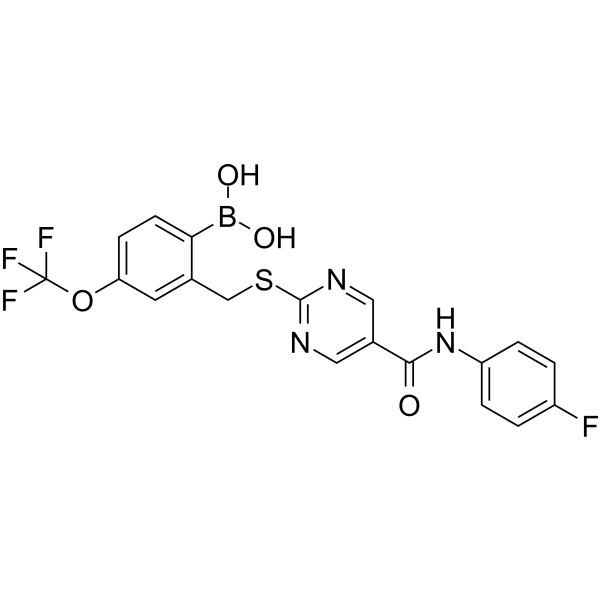
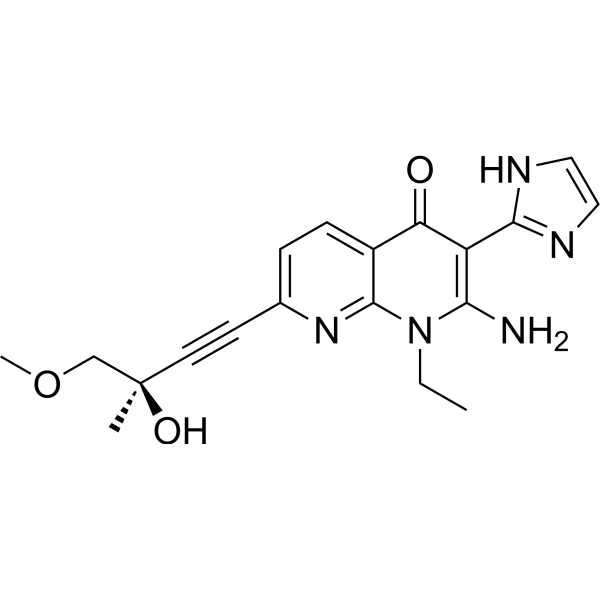
SX-682 is an orally bioavailable, potent allosteric inhibitor of CXCR1 and CXCR2. SX-682 can block tumor myeloid-derived suppressor cells (MDSCs) recruitment and enhance T cell activation and antitumor immunity .
loading...
    loading...
2
2 Cited Publications
Cat. No.: HY-N6985
CAS No.: 27548-93-2
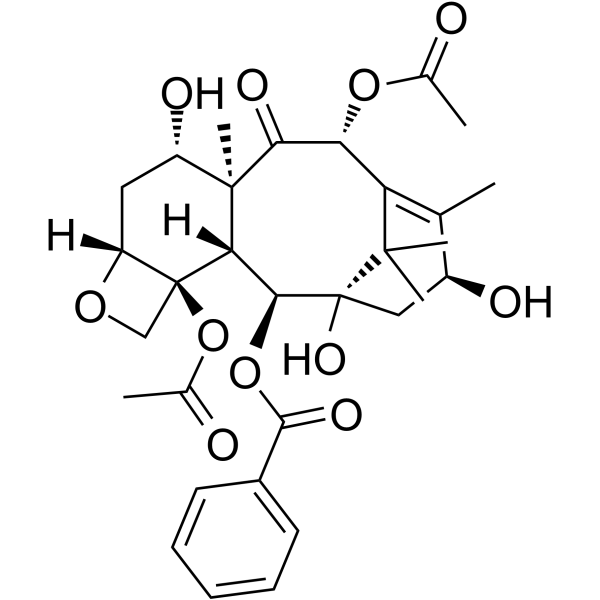
Baccatin III is an orally available, selective inhibitor of the TGF-β1 signaling pathway and myeloid-derived suppressor cell (MDSC) activation. Baccatin III targets the AKT/STAT6 and Smad2/3 pathways, blocking TGF-β1-induced fibroblast differentiation and MDSC-mediated immunosuppression. Baccatin III exerts anti-inflammatory and anti-fibrotic effects by inhibiting macrophage activation and extracellular matrix deposition, and shows potential in the treatment of pulmonary fibrosis and cancer in terms of regulating the tumor immune microenvironment .
loading...
    loading...
1
1 Cited Publications
Cat. No.: HY-P1181A
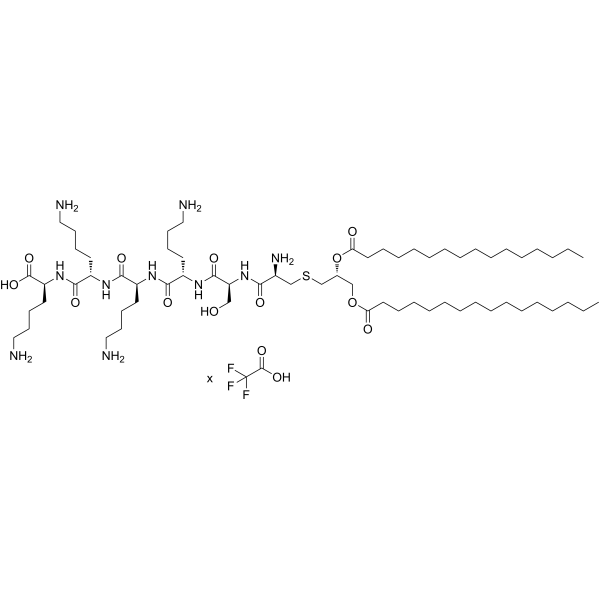
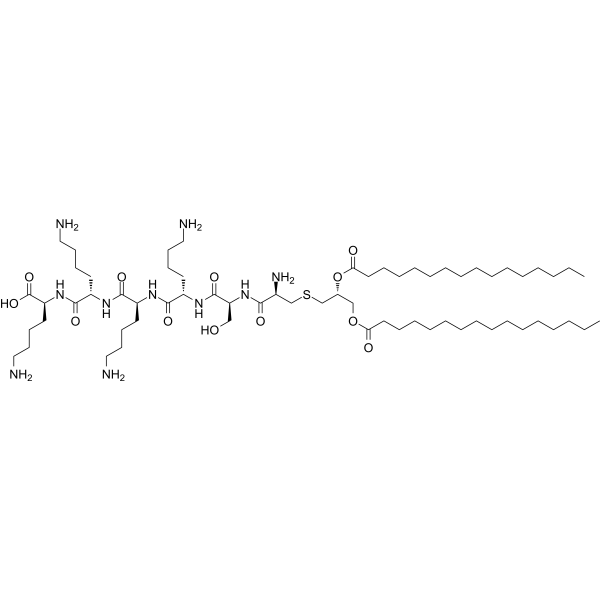
Pam2CSK4 TFA is a TLR2 agonist. Pam2CSK4 TFA induces the expression of iNOS and NO in macrophage cell lines via TBK1 and MyD88 molecules. Pam2CSK4 TFA activates the NF-κB and Bruton's tyrosine kinase signaling pathways in platelets, and promotes platelet-endothelial cell interactions. TLR2 activation triggered by Pam2CSK4 TFA expands myeloid-derived suppressor cells (MDSCs) and suppresses anti-tumor immune responses in the tumor microenvironment. Pam2CSK4 TFA acts as a Th2-polarizing adjuvant in mouse vaccine models against Leishmania major and Brugia malayi. Pam2CSK4 TFA can be used in the research of various diseases, including thromboinflammatory diseases, sepsis, atherosclerosis, heart failure, influenza, lymphoma, melanoma, cutaneous leishmaniasis and lymphatic filariasis .
loading...
    loading...
1
1 Cited Publications
Cat. No.: HY-142118A
Purity:  92.09%
Synonyms: AP 12009 sodium
Target:  

TGF-beta/Smad

Research Areas:  

Cancer

Trabedersen (AP 12009) sodium is an orally active synthetic antisense phosphorothioate oligodeoxynucleotide that selectively targets human TGFβ2 mRNA. Trabedersen sodium blocks TGFβ2 protein production, enters the nucleus without a transfection vector, and exerts dose-dependent antitumor effects. By reversing TGFβ2-induced immunosuppression and enhancing immune cytotoxicity, Trabedersen sodium exhibits significant antiproliferative, antimigratory, and antimetastatic activities, with favorable safety profiles. Trabedersen sodium is widely used in research related to various solid tumors, including anaplastic astrocytoma, glioblastoma, colorectal tumor, and melanoma .
loading...
    loading...
Cat. No.: HY-175603
CAS No.: 3091000-99-3
Research Areas:  

Cancer

NCGC00685960 is a Nicotinamide N-methyltransferase (NNMT) inhibitor with an IC50 <10  nM. NCGC00685960 has potent antitumor activity. NCGC00685960 increases H3K27 trimethylation levels in ovarian cancer cells and inhibits α-SMA expression in NNMT-expressing ovarian fibroblasts. NCGC00685960 reduces 1-MNA levels, reverses SAM and H3K27 hypomethylation and significantly impairs collagen contractility in cancer-associated fibroblasts (CAFs). NCGC00685960 can be used for cancers research, such as ovarian cancer, breast cancer, colon cancer .
loading...
    loading...
Cat. No.: HY-152830
CAS No.: 2394874-66-7
Purity:  99.51%
Synonyms: Q702
Target:  

c-Fms TAM Receptor MHC

Research Areas:  

Cancer

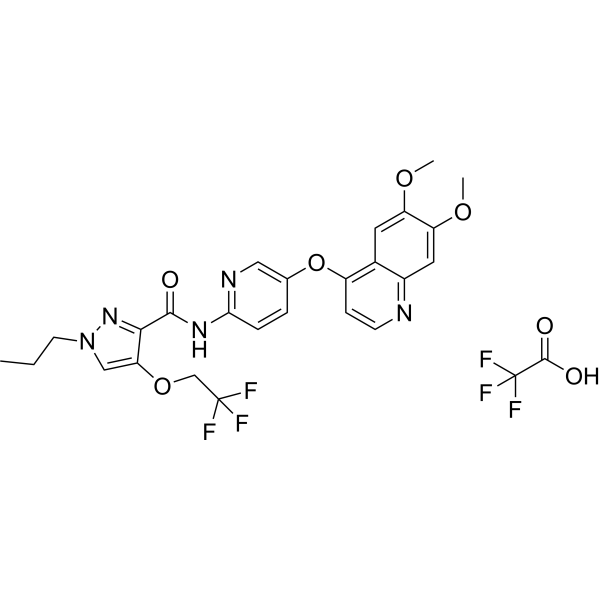
Adrixetinib (Q702) is an orally active triple inhibitor against CSF1R, Mer, and Axl, with Kd values of 8.7 nM, 0.8 nM, and 0.3 nM, respectively. Adrixetinib acts as a potent immune modulator that remodels the tumor microenvironment. Adrixetinib increases the abundance of M1 macrophages and CD8⁺ T cells, while decreasing the levels of M2 macrophages and myeloid-derived suppressor cells (MDSCs). Adrixetinib upregulates the expression of MHC class I and E-cadherin in tumor cells. Adrixetinib shows remarkable antitumor efficacy in syngeneic mouse tumor models. Adrixetinib is suitable for the research of breast cancer, renal adenocarcinoma, colon carcinoma, and melanoma .
loading...
    loading...
Cat. No.: HY-152293
CAS No.: 1412453-70-3
Target:  

VEGFR ERK

Research Areas:  

Cancer

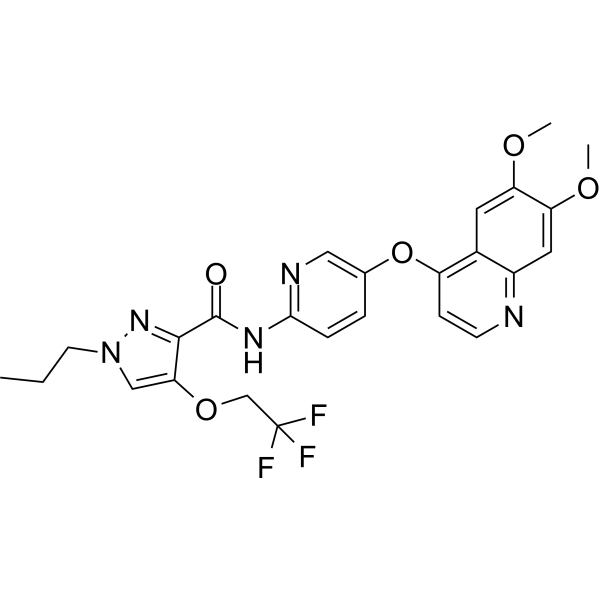
EVT801 is an orally active and selective inhibitor of VEGFR-3 (IC50=11 nM), which has antitumor effects. EVT801 inhibits not only VEGF-C-induced human endothelial cell proliferation, but also tumor (lymphatic) angiogenesis in tumor mouse models. EVT801 can reduce tumor hypoxia, immunosuppressive cytokines (CCL4, CCL5) and myeloid derived suppressor cells (MDSC) production. EVT801 has synergistic effect with immune checkpoint therapy (ICT), which improves ICT response rate and has better inhibitory effect on cancer mouse models . EVT801 is a click chemistry reagent, it contains an Alkyne group and can undergo copper-catalyzed azide-alkyne cycloaddition (CuAAc) with molecules containing Azide groups.
loading...
    loading...
Cat. No.: HY-159779
CAS No.: 2766608-52-8
NR-V04 is a selective NR4A1 PROTAC degrader. NR-V04 forms a ternary complex with NR4A1 and the VHL E3 ligase, mediates proteasome-dependent degradation of NR4A1. NR-V04 induces tumor-infiltrating B cells and effector memory CD8 + T cells and reduces monocytic myeloid-derived suppressor cells in tumor microenvironments. NR-V04 can be used for the research of melanoma and colon cancer .
loading...
    loading...
Cat. No.: HY-P1181
CAS No.: 868247-72-7
Pam2CSK4 is a TLR2 agonist. Pam2CSK4 induces the expression of iNOS and NO in macrophage cell lines via TBK1 and MyD88 molecules. Pam2CSK4 activates the NF-κB and Bruton's tyrosine kinase signaling pathways in platelets, and promotes platelet-endothelial cell interactions. TLR2 activation triggered by Pam2CSK4 expands myeloid-derived suppressor cells (MDSCs) and suppresses anti-tumor immune responses in the tumor microenvironment. Pam2CSK4 acts as a Th2-polarizing adjuvant in mouse vaccine models against Leishmania major and Brugia malayi. Pam2CSK4 can be used in the research of various diseases, including thromboinflammatory diseases, sepsis, atherosclerosis, heart failure, influenza, lymphoma, melanoma, cutaneous leishmaniasis and lymphatic filariasis .
loading...
    loading...
Cat. No.: HY-P99906
CAS No.: 2414962-49-3
Synonyms: DKN-01; LY-2812176

Target:  

β-catenin Wnt

Research Areas:  

Cancer

Sirexatamab (DKN-01; LY-2812176) is a humanized IgG4 monoclonal antibody targeting DKK1, with Kd values of 3.3 pM and 20 pM for human and murine (mDKN-01) forms, respectively. Sirexatamab binds to DKK1 to neutralize its activity and reverse the inhibition of the canonical Wnt/β-catenin signaling pathway. Sirexatamab can be used in research related to cancers such as non-small cell lung cancer, endometrial cancer, and ovarian cancer .
loading...
    loading...
Cat. No.: HY-P10862
Target:  

Exosomes Virus Protease

Research Areas:  

Infection Cancer

AH-D peptide is a brain-penetrant antiviral agent disrupting highly curved lipid membranes. AH-D peptide exhibits broad-spectrum antiviral activity against ZIKV, Dengue virus, Chikungunya virus, yellow fever virus and Japanese encephalitis virus, with
IC50
values of 11.9, 12.5, 35.7, 206 and 136 nM, respectively. AH-D peptide reduces the viral load in the brain, suppresses inflammation, protects neurons, and does not damage the blood brain barrier. AH-D peptide restores antitumor immunity by decreasing circulating PD-L1 + exosomes, reducing intratumoral immunosuppressive cells (regulatory T cells, myeloid-derived suppressor cells), and enhancing T cell function. AH-D peptide inhibits membrane-enveloped viruses and cancer cell metastasis in vivo. AH-D peptide exhibits no immunogenicity and has negligible effects on normal tissues. AH-D peptide can be used for research in Zika virus and other mosquito-borne viruses, cancer immunotherapy and metastasis .
loading...
    loading...
Cat. No.: HY-P991517
BI-836858 is a fully human anti-CD33 monoclonal antibody. BI-836858 reduces CD33+ cells via antibody-dependent cellular cytotoxicity (ADCC), blocks downstream signaling of S100A9/CD33, decreases the secretion of immunosuppressive cytokines and reactive oxygen species-induced genomic instability, and restores bone marrow hematopoietic function. BI-836858 is applicable to the research of myelodysplastic syndrome (MDS) and AML .
loading...
    loading...
Cat. No.: HY-P990650

Target:  

TREM receptor

Research Areas:  

Cancer

PY159 is a humanized antibody targeting TREM1/CD354. PY159 reprograms immunosuppressive intratumoral myeloid cells towards an inflammatory, anti-tumor phenotype, promotes anti-tumor immune responses, upregulates monocyte activation markers, and induces proinflammatory cytokines. PY159 can be used for the research of platinum-resistant ovarian cancer, advanced solid tumors, and advanced refractory solid tumors .
loading...
    loading...
Cat. No.: HY-P990249

Target:  

TNF Receptor

Research Areas:  

Inflammation/Immunology Cancer

Anti-Mouse DR5/CD262 Antibody (MD5-1) is an anti-mouse DR5/CD262 IgG monoclonal antibody. Anti-Mouse DR5/CD262 Antibody (MD5-1) can eliminate myeloid derived suppressor cells (MDSCs) and enhance T cell anti-tumor immunity. Anti-Mouse DR5/CD262 Antibody (MD5-1) can be used for research on cancer such as gastric and colon cancer .
loading...
    loading...
Cat. No.: HY-172934
FGT-4 is a FR-β-targeted chimeric molecule. FGT-4 acts as a TLR7 agonist. FGT-4 binds to FR-β to enable delivery to tumor-associated macrophages and myeloid-derived suppressor cells. FGT-4 promotes the secretion of iNOS (associated with M1 macrophages) and the pro-inflammatory cytokine IL-6, and enhances the proliferation of cytotoxic CD8+ T cells. FGT-4 can be used for the research of breast cancer .
loading...
    loading...
Cat. No.: HY-152830A
Purity:  99.82%
Synonyms: Q702 TFA
Target:  

c-Fms TAM Receptor MHC

Research Areas:  

Cancer

Adrixetinib (Q702) TFA is an orally active triple inhibitor against CSF1R, Mer, and Axl, with Kd values of 8.7 nM, 0.8 nM, and 0.3 nM, respectively. Adrixetinib TFA acts as a potent immune modulator that remodels the tumor microenvironment. Adrixetinib TFA increases the abundance of M1 macrophages and CD8⁺ T cells, while decreasing the levels of M2 macrophages and myeloid-derived suppressor cells (MDSCs). Adrixetinib TFA upregulates the expression of MHC class I and E-cadherin in tumor cells. Adrixetinib TFA shows remarkable antitumor efficacy in syngeneic mouse tumor models. Adrixetinib TFA is suitable for the research of breast cancer, renal adenocarcinoma, colon carcinoma, and melanoma .
loading...
    loading...
Cat. No.: HY-162494
CAS No.: 3044006-76-7
Research Areas:  

Cancer

PAD4-IN-4 (compound 28) is a potent PAD4 inhibitor (IC50=0.79±0.09 μM). PAD4-IN-4 improves the tumor immune microenvironment by reshaping neutrophil phenotype, upregulating the proportions of dendritic cells and M1 macrophages, and reducing the amount of myeloid-derived suppressor cells. PAD4-IN-4 can be used for Triple-negative breast cancer research .
loading...
    loading...
Cat. No.: HY-174576
Target:  

mRNA

Research Areas:  

Inflammation/Immunology

Human MYDGF mRNA encodes the human myeloid derived growth factor (MYDGF) protein. MYDGF was previously thought to support proliferation of lymphoid cells and was considered an interleukin.
loading...
    loading...
Cat. No.: HY-P992389

Target:  

LILRB

Research Areas:  

Cancer

IO-202 is a high-affinity LILRB4/ILT3 binder and myeloid checkpoint inhibitor. IO-202 blocks APOE binding and LILRB4 activation to reverse T-cell suppression and enhance T-cell cytotoxicity, while eliminating LILRB4-high-expressing leukemic blasts via ADCC and ADCP mechanisms. IO-202 promotes dendritic cell maturation and antigen presentation, reshapes the phenotype of tumor-associated macrophages, and reduces myeloid-derived suppressor cells. IO-202 is widely applicable to research on relapsed/refractory acute myeloid leukemia (AML), chronic myelomonocytic leukemia (CMML), and solid tumors .
loading...
    loading...
Cat. No.: HY-P70581
Purity:  ≥ 95%, as determined by reducing SDS-PAGE.
Synonyms: MYDGF; myeloid-derived Growth Factor; Prev. C19orf10; IL-25; Prev. IL27w; Stromal Cell-derived Growth Factor SF20; Prev. IL27; Chromosome 19 Open Reading Frame 10; R33729_1; UPF0556 Protein C19orf10; SF20; EUROIMAGE1875335; IL25; Interleukin-25; Interleuk
Species:  
Human
Source:  
E. coli
loading...
    loading...

