

23 Results for "

neuronal outgrowth

" in MedChemExpress (MCE) Product Catalog:
Products (23)

23 Results for "neuronal outgrowth" in MCE Product Catalog:

1
1 Cited Publications
Cat. No.: HY-N7922
CAS No.: 91485-02-8
Synonyms: Decarboxyellagic acid
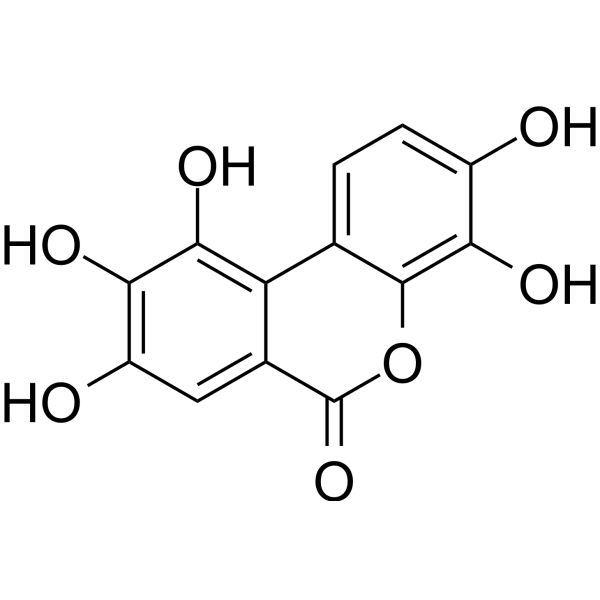
Urolithin M5 (Decarboxyellagic acid) is an orally active influenza virus neuraminidase inhibitor and neuroprotective agent, with IC50 values of 174.8 μM (HK68), 191.5 μM (pdm09), 243.2 μM (WSN) and 257.1 μM (PR8) against four influenza virus neuraminidases, respectively. Urolithin M5 inhibits viral neuraminidase activity, thereby blocking influenza virus replication (including oseltamivir (HY-13317)-resistant strains), protecting infected mammals from death and improving pulmonary edema. Urolithin M5 forms a hydrogen-bond stabilized complex with IGF1R, and binds to MAPK14, AKT1, NFKB1 and EGFR. Urolithin M5 reduces reactive oxygen species production, inhibits neuronal apoptosis, restores mitochondrial transmembrane potential, and promotes neurite outgrowth of damaged neuronal cells. Urolithin M5 can be used in research related to influenza virus infection and Alzheimer's disease .
loading...
    loading...
1
1 Cited Publications
Cat. No.: HY-B1239
CAS No.: 548-66-3
Synonyms: Hexahydroadiphenine hydrochloride
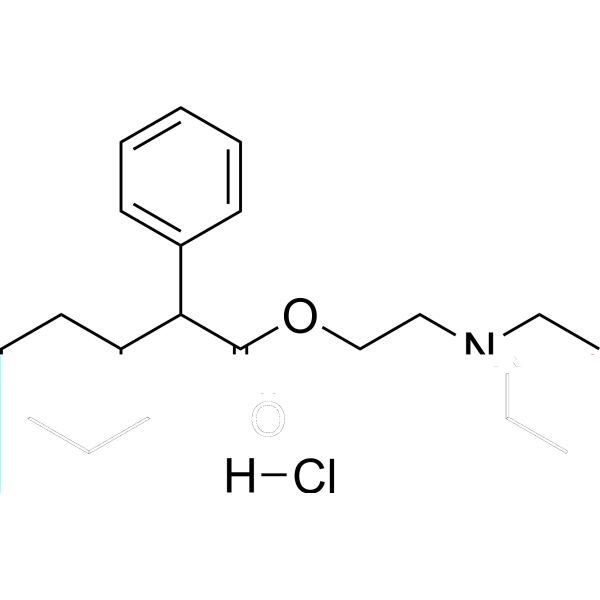
Drofenine (Cycloadiphene; Hexahydroadiphenine) hydrochloride is an brain-penetrant antispasmodic agent. Drofenine hydrochloride is a Kv2.1 channel inhibitor with human IC50 of 9.53 μM. Drofenine hydrochloride is a butyrylcholinesterase (BChE) inhibitor with Ki of 0.003 mM, and is a TRPV3 activator. Drofenine hydrochloride blocks Kv2.1-dependent potassium efflux, inhibits Kv2.1/JNK/NF-κB and IkBa/NF-kB signaling, suppresses Kv2.1 mRNA/protein expression. Drofenine suppresses oligomeric -induced microglial NLRP3 inflammasome activation and neuronal Tau hyperphosphorylation, improves cognitive impairment, promotes neurite outgrowth. Drofenine hydrochloride induces calcium influx in keratinocytes and exert cytotoxicity against keratinocytes. Drofenine hydrochloride ameliorates diabetic peripheral neuropathy -like pathology. Drofenine hydrochloride can be used for the researches of Alzheimer's disease, diabetic peripheral neuropathy and smooth muscle spasm .
loading...
    loading...
1
1 Cited Publications
Cat. No.: HY-120553
CAS No.: 1261576-81-1
Purity:  ≥99.0%
Target:  

Apoptosis

Research Areas:  

Neurological Disease

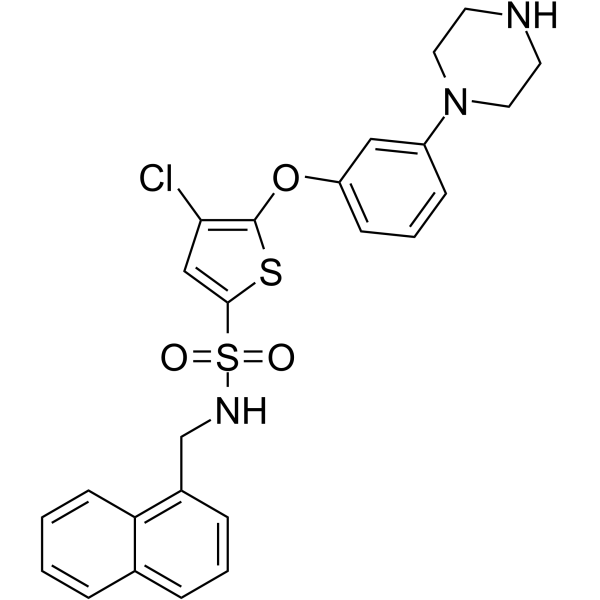
B355252, a phenoxy thiophene sulfonamide small molecule, is a potent NGF receptor agonist. B355252 potentiates NGF-induced neurite outgrowth. B355252 protects ischemic neurons from neuronal loss by attenuating DNA damage, reducing ROS production and the LDH level, and preventing neuronal apoptosis. B355252 has anti-apoptotic effects in glutamate-induced excitotoxicity, as well as in a murine hippocampal cell line (HT22) model of Parkinson disease (PD) .
loading...
    loading...
Cat. No.: HY-112798
CAS No.: 1311174-68-1
Purity:  98.78%
Target:  

Apolipoprotein

Research Areas:  

Neurological Disease

PH-002 is an inhibitor of apolipoprotein (apo) E4 intramolecular domain interaction in neuronal cells that could rescue impairments of mitochondrial motility and neurite outgrowth.
loading...
    loading...
Cat. No.: HY-113357
CAS No.: 588-30-7
Purity:  99.84%
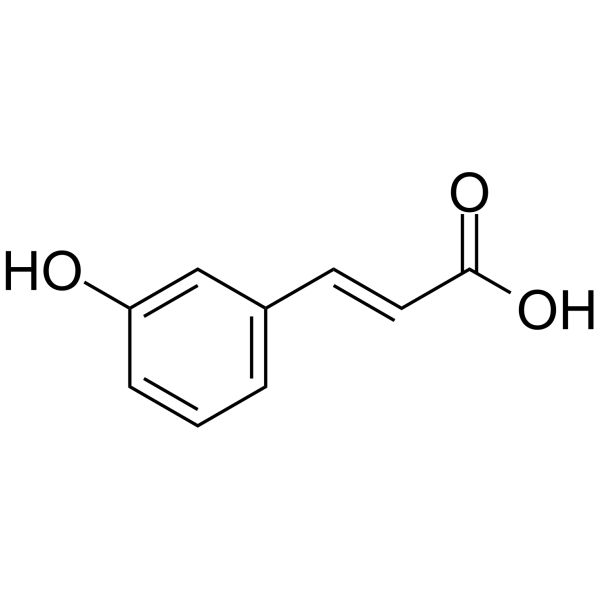
m-Coumaric acid is a polyphenol metabolite from caffeic acid, formed by the gut microflora and the amount in human biofluids is diet-dependant. m-Coumaric acid is a BBB-penetrant metabolite of chlorogenic acid. m-Coumaric acid stimulates the cerebral nerves in vitro. m-Coumaric acid can evoke neurite outgrowth in hippocampal neuronal cells. m-Coumaric acid can promote neuronal differentiation. m-Coumaric acid increases spontaneous locomotor activity in mice by acting on the central nervous system. m-Coumaric acid inhibits the oxidation of L-dopa by epidermis tyrosinase. m-Coumaric acid attenuates non-catalytic protein glycosylation in retinas of diabetic rats .
loading...
    loading...
Cat. No.: HY-N8303
CAS No.: 21187-73-5
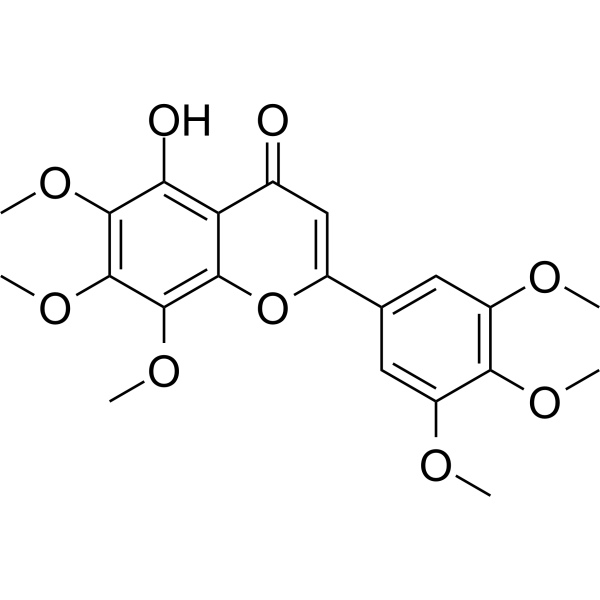
Gardenin A is an orally active and synthetic PMF analogue with the neurotrophic effect for neurite outgrowth and neuronal differentiation. Gardenin A promotes neuritogenesis via activating MAPK/ERK, PKC, and PKA, but not TrkA, CREB signaling pathways. Gardenin A also has sedative, anxiolytic, antidepressant, and anticonvulsant effects .
loading...
    loading...
Cat. No.: HY-W015891
CAS No.: 502-44-3
ε-Caprolactone is a 7-membered cyclic ester identified in Rubus arcticus L, and it is also a versatile monomer. ε-Caprolactone serves as an intermediate to derive various functional polymer materials. ε-Caprolactone is applicable to relevant research in fields such as biomedicine and material synthesis .
loading...
    loading...
Cat. No.: HY-E70043
CAS No.: 2170331-76-5
Synonyms: Sialidase isoenzyme S; AuSialidase S
Target:  

Sialyltransferase

Research Areas:  

Metabolic Disease

Ganglioside sialidase (AuSialidase S) is an endogenous metabolite. Ganglioside sialidases have been implicated in neuronal differentiation processes, including neurite outgrowth .
loading...
    loading...
Cat. No.: HY-111527
CAS No.: 896203-18-2
Purity:  99.92%
Target:  

Calcium Channel

Research Areas:  

Neurological Disease

PPZ2 is a diacylglycerol (DAG)-activated TRPC3/TRPC6/TRPC7 channel activator with activity in promoting neuronal development and survival. PPZ2 activates recombinant TRPC3/TRPC6/TRPC7 channels in a dose-dependent manner without affecting other TRPC channels. PPZ2 elicits cation currents and calcium ion (Ca(2+)) influx in cultured central neurons. PPZ2 is able to induce BDNF-like neurite outgrowth and neuroprotection, an effect that disappears after TRPC3/TRPC6/TRPC7 knockdown or inhibition. PPZ2 also increases the activation of the calcium-dependent transcription factor cAMP response element binding protein. The effects of PPZ2 suggest that calcium signaling mediated by activation of DAG-activated TRPC channels plays an important role in its neurotrophic effects .
loading...
    loading...
Cat. No.: HY-P5754B
Target:  

Apoptosis

Research Areas:  

Neurological Disease

TAT-NEP1-40 acetate is a therapeutic candidate for axonal regeneration and functional recovery after stroke. TAT-NEP1-40 acetate can protect PC12 cells against oxygen and glucose deprivation (OGD) and promote neurite outgrowth. TAT-NEP1-40 acetate protects the brain against ischemia/reperfusion injury through inhibition of neuronal apoptosis. TAT-NEP1-40 acetate can be efficiently delivered into the rat brains .
loading...
    loading...
Cat. No.: HY-113357R
CAS No.: 588-30-7
m-Coumaric acid (Standard) is the analytical standard of m-Coumaric acid. This product is intended for research and analytical applications. m-Coumaric acid is a polyphenol metabolite from caffeic acid, formed by the gut microflora and the amount in human biofluids is diet-dependant. m-Coumaric acid is a BBB-penetrant metabolite of chlorogenic acid. m-Coumaric acid stimulates the cerebral nerves in vitro. m-Coumaric acid can evoke neurite outgrowth in hippocampal neuronal cells. m-Coumaric acid can promote neuronal differentiation. m-Coumaric acid increases spontaneous locomotor activity in mice by acting on the central nervous system. m-Coumaric acid inhibits the oxidation of L-dopa by epidermis tyrosinase. m-Coumaric acid attenuates non-catalytic protein glycosylation in retinas of diabetic rats .
loading...
    loading...
Cat. No.: HY-147681
CAS No.: 1080650-67-4
Target:  

FGFR

Research Areas:  

Neurological Disease

SUN13837 is an orally active, blood-brain barrier permeable FGFR modulator and neuroprotective agent. SUN13837 mimics the activity of basic fibroblast growth factor, stimulates intracellular tyrosine phosphorylation of FGFR and signal transduction in neuronal cells, induces neurite outgrowth, and inhibits glutamate-induced neuronal death. SUN13837 can be used in research related to acute cervical spinal cord injury and severe spinal cord injury .
loading...
    loading...
Cat. No.: HY-W015891S
CAS No.: 1219802-08-0
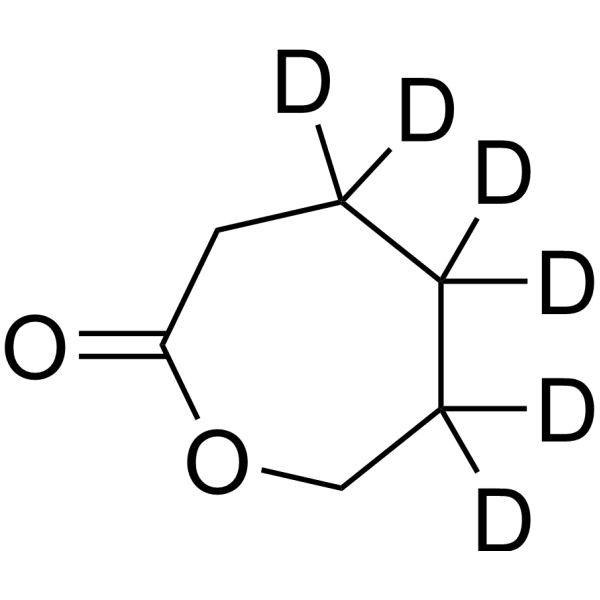
ε-Caprolactone-d6 is the deuterated-labeled ε-Caprolactone (HY-W015891). ε-Caprolactone is a 7-membered cyclic ester identified in Rubus arcticus L, and it is also a versatile monomer. ε-Caprolactone serves as an intermediate to derive various functional polymer materials. ε-Caprolactone is applicable to relevant research in fields such as biomedicine and material synthesis .
loading...
    loading...
Cat. No.: HY-N8693
CAS No.: 362472-81-9
Withanoside IV is an orally active, blood-brain barrier-permeable withanolide derivative. Withanoside IV specifically binds to the Sudlow I site of HSA, induces secondary structural changes in HSA, and forms stable HSA complexes. Withanoside IV inhibits the enzymatic activity of COX-2. Withanoside IV induces axonal regeneration, peripheral nervous system myelination and increased axonal density in spinal cord tissue, reduces reactive gliosis-related changes, and improves hindlimb motor function. Withanoside IV binds to amyloid-β 1-42 to inhibit its aggregation, induces neurite outgrowth and synapse reconstruction, repairs damaged axons and dendrites, enhances mitochondrial biogenesis, exerts neuroprotective effects via the BDNF and SIRT1 signaling pathways, reduces ROS production and neuronal apoptosis, and ameliorates memory deficits. Withanoside IV inhibits the activity of the SARS-CoV-2 main protease. Withanoside IV can be used in research related to spinal cord injury, Alzheimer's disease, and coronavirus disease 2019 (COVID-19) .
loading...
    loading...
Cat. No.: HY-170498
CAS No.: 3076335-23-1
Target:  

GABA Receptor

Research Areas:  

Neurological Disease

GABA-A Receptor Ligand-1 (Compound 4) is a ligand for GABA-A receptor with a pKi of 7.27. GABA-A Receptor Ligand-1 reduces mitochondrial dysfunction, promotes neurite outgrowth and neuronal regeneration. GABA-A Receptor Ligand-1 exhibits neuroprotective efficacy in rats ischemic stroke models .
loading...
    loading...
Cat. No.: HY-P2697
CAS No.: 123063-31-0
Synonyms: Cys-Laminin A chain 2091-2108
Target:  

Inhibitory Antibodies

Research Areas:  

Others

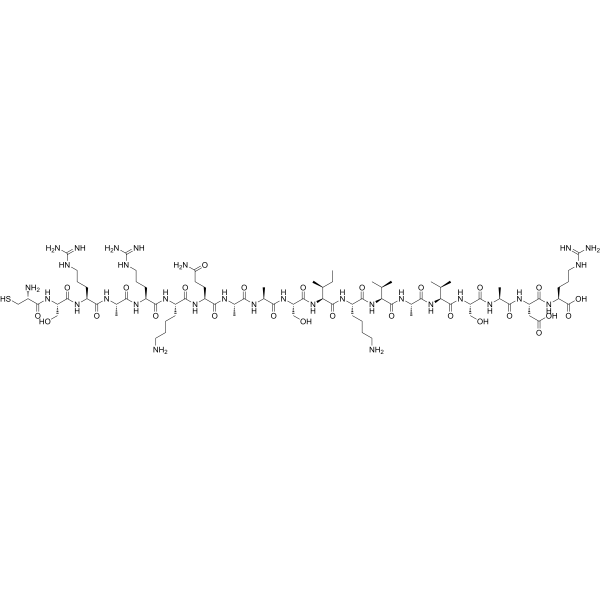
PA22-2 (free acid) (Cys-Laminin A chain 2091-2108) is a peptide that supports neurite outgrowth and stimulates neuronal-like process formation. PA22-2 (free acid) can be used to culture human adenoid cystic carcinoma cells, and in the preparation of peptide-functionalized supported phospholipid bilayers .
loading...
    loading...
Cat. No.: HY-15116
CAS No.: 117427-00-6
Research Areas:  

Neurological Disease

ONO 1603, a novel prolyl endopeptidase inhibitor investigated as a potential antidementia drug, demonstrated neuroprotective and neurotrophic effects in cerebellar granule cells similar to tetrahydroaminoacridine (THA). At a concentration of 0.03 microM, ONO 1603 promoted neuronal survival, enhanced neurite outgrowth, increased m3-muscarinic acetylcholine receptor (mAChR) mRNA levels, and stimulated mAChR-mediated signaling pathways. These findings suggest that ONO 1603 shares pharmacological similarities with THA, indicating its potential as a therapeutic agent for Alzheimer's disease by enhancing cholinergic neurotransmission and neuronal function .
loading...
    loading...
Cat. No.: HY-B1239A
CAS No.: 1679-76-1
Synonyms: Cycloadiphene; Hexahydroadiphenine
Drofenine (Cycloadiphene; Hexahydroadiphenine) is an brain-penetrant antispasmodic agent. Drofenine is a Kv2.1 channel inhibitor with human IC50 of 9.53 μM. Drofenine is a butyrylcholinesterase (BChE) inhibitor with Ki of 0.003 mM, and is a TRPV3 activator. Drofenine blocks Kv2.1-dependent potassium efflux, inhibits Kv2.1/JNK/NF-κB and IkBa/NF-kB signaling, suppresses Kv2.1 mRNA/protein expression. Drofenine suppresses oligomeric -induced microglial NLRP3 inflammasome activation and neuronal Tau hyperphosphorylation, improves cognitive impairment, promotes neurite outgrowth. Drofenine induces calcium influx in keratinocytes and exert cytotoxicity against keratinocytes. Drofenine ameliorates diabetic peripheral neuropathy -like pathology. Drofenine can be used for the researches of Alzheimer's disease, diabetic peripheral neuropathy and smooth muscle spasm .
loading...
    loading...
Cat. No.: HY-183059
Target:  

MAP4K

Research Areas:  

Neurological Disease

TNIK-IN-11 is a TNIK inhibitor with a human TNIK pIC50 of 7.80. TNIK-IN-11 inhibits TNIK kinase activity and promotes neurite outgrowth. TNIK-IN-11 activates AKT signaling via increased phosphorylated AKT levels, and induces gene expression changes including upregulation of neuronal differentiation and morphological remodeling genes. TNIK-IN-11 can be used for the research of dup15q syndrome .
loading...
    loading...
Cat. No.: HY-181984
Target:  

5-HT Receptor

Research Areas:  

Neurological Disease

AGH-194 is a 5-HT7 receptor agonist with a Ki value of 2 nM. AGH-194 activates Gs protein-coupled signaling pathways associated with neuroprotection and neurite outgrowth, and stimulates neurite outgrowth in neuronal cells. AGH-194 reduces cell damage in undifferentiated neuronal cells. AGH-194 can be used in the research of neurodegenerative diseases .
loading...
    loading...

