1. Search Result
Search Result
Results for "

oxidative degradation product

" in MedChemExpress (MCE) Product Catalog:

33

Inhibitors & Agonists

3

Biochemical Assay Reagents

12

Natural
Products

2

Isotope-Labeled Compounds

Targets Recommended:
Cat. No. Nombre del producto Target Áreas de investigación Chemical Structure
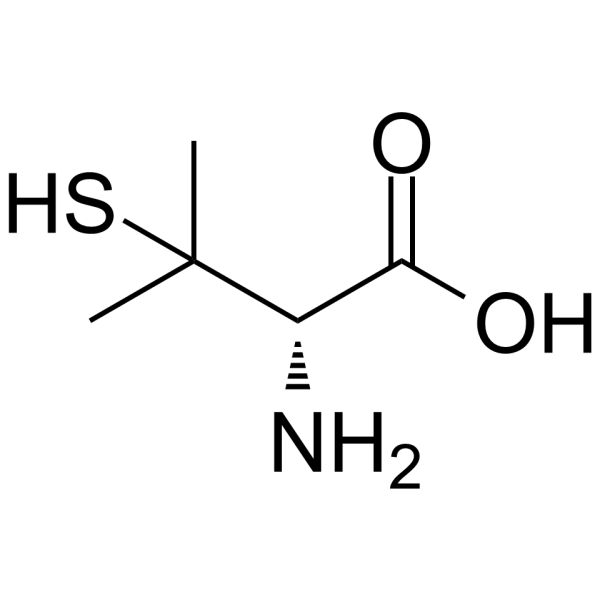
  • HY-B0300
    Penicillamine
    3 Publications Verification

    D-(-)-Penicillamine

    Cuproptosis Drug Metabolite Inflammation/Immunology Cancer
    Penicillamine (D-(-)-Penicillamine) is a penicillin metabolic degradation product, can be used as a heavy metal chelator. Penicillamine increases free copper and increases oxidative stress. Penicillamine has effect of seizures through nitric oxide/NMDA pathways. Penicillamine is a potential immune modulator. Penicillamine can be used for the research of Wilson disease, rheumatoid arthritis, and cystinuria .
    Penicillamine
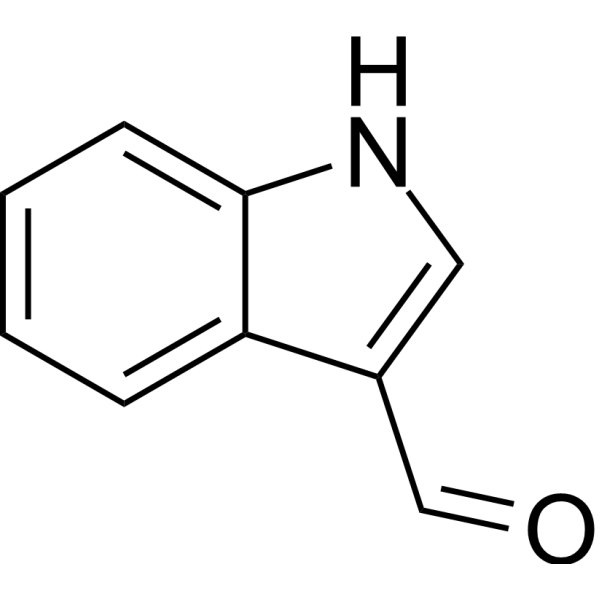
  • HY-W007376
    Indole-3-carboxaldehyde
    3 Publications Verification

    3-Formylindole

    Endogenous Metabolite Others
    Indole-3-carboxaldehyde (3-Formylindole), a banlangen extract, is the product of the oxidative degradation of indole-3-acetic acid (IAA) by crude enzyme preparations from etiolated pea seedlings. Indole-3-carboxaldehyde is a biochemical used to prepare analogs of the indole phytoalexin cyclobrassinin. Indole-3-carboxaldehyde also enhances the epithelial barrier and anti-inflammatory activity in the intestinal tract .
    Indole-3-carboxaldehyde
  • HY-176747

    DMPPD

    Reactive Oxygen Species (ROS) Others
    7-PPD (DMPPD) is a rubber antioxidant that scavenges free radicals and inhibits the oxidative degradation of rubber chains. 7-PPD shows promise for research in tire manufacturing and rubber product processing .
    7-PPD
  • HY-B0399R

    (R)-Carnitine (Standard); Levocarnitine (Standard)

    Reference Standards Endogenous Metabolite Neurological Disease Cancer
    L-Carnitine (Standard) is the analytical standard of L-Carnitine. This product is intended for research and analytical applications. L-Carnitine ((R)-Carnitine), a highly polar, small zwitterion, is an essential co-factor for the mitochondrial β-oxidation pathway. L-Carnitine functions to transport long chain fatty acyl-CoAs into the mitochondria for degradation by β-oxidation. L-Carnitine is an antioxidant. L-Carnitine can ameliorate metabolic imbalances in many inborn errors of metabolism .
    L-Carnitine (Standard)
  • HY-W007376R

    3-Formylindole (Standard)

    Reference Standards Endogenous Metabolite Others
    Indole-3-carboxaldehyde (Standard) is the analytical standard of Indole-3-carboxaldehyde. This product is intended for research and analytical applications. Indole-3-carboxaldehyde (3-Formylindole), a banlangen extract, is the product of the oxidative degradation of indole-3-acetic acid (IAA) by crude enzyme preparations from etiolated pea seedlings. Indole-3-carboxaldehyde is a biochemical used to prepare analogs of the indole phytoalexin cyclobrassinin. Indole-3-carboxaldehyde also enhances the epithelial barrier and anti-inflammatory activity in the intestinal tract[1][2].
    Indole-3-carboxaldehyde (Standard)
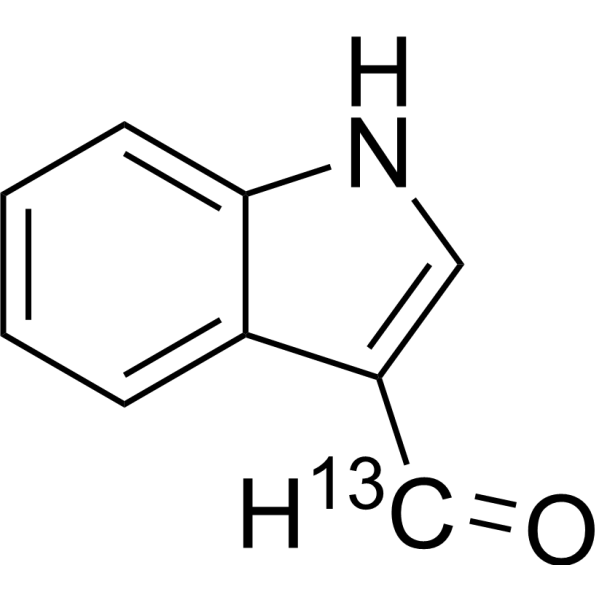
  • HY-W007376S

    3-Formylindole-13C3

    Isotope-Labeled Compounds Endogenous Metabolite Others
    Indole-3-carboxaldehyde- 13C (3-Formylindole- 13C) is a 13C labeled Indole-3-carboxaldehyde (HY-W007376). Indole-3-carboxaldehyde (3-Formylindole), a banlangen extract, is the product of the oxidative degradation of indole-3-acetic acid (IAA) by crude enzyme preparations from etiolated pea seedlings. Indole-3-carboxaldehyde (3-Formylindole) is a biochemical used to prepare analogs of the indole phytoalexin cyclobrassinin .
    Indole-3-carboxaldehyde-13C
  • HY-100096

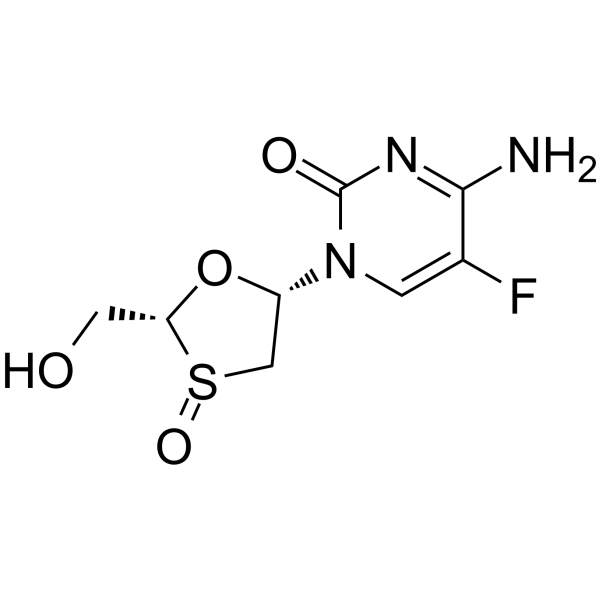
    Emtricitabine sulfoxide; Emtricitabine Degradant-III

    HIV Reverse Transcriptase Infection
    Emtricitabine S-oxide (Emtricitabine sulfoxide) is a major degradation product of Emtricitabine. Emtricitabine is a potent nucleoside reverse transcriptase inhibitor used for the treatment of HIV infection.
    Emtricitabine S-oxide
  • HY-W012814R

    Reference Standards Endogenous Metabolite Apoptosis Reactive Oxygen Species (ROS) Cardiovascular Disease Inflammation/Immunology Cancer
    4-Methylcatechol (Standard) is the analytical standard of 4-Methylcatechol. This product is intended for research and analytical applications. 4-Methylcatechol is an intermediate in the degradation of some alkylbenzenes and an orally active suicide inhibitor of catechol 2,3-dioxygenase (C23O). 4-Methylcatechol induces apoptosis in melanoma cells through oxidative stress, but some studies have also shown that 4-Methylcatechol is carcinogenic. In addition, 4-Methylcatechol has antiplatelet and blood pressure-lowering activities. 4-Methylcatechol can also inhibit protein oxidation in beef but does not disulfide formation[1][2][3][4][5][6].
    4-Methylcatechol (Standard)
  • HY-125740R

    Malvidin-3-O-glucoside chloride (Standard); Oenin chloride (Standard)

    Reference Standards Interleukin Related NO Synthase NF-κB TNF Receptor Metabolic Disease Inflammation/Immunology
    Malvidin-3-glucoside (Malvidin-3-O-glucoside; Oenin) chloride (Standard) is the analytical standard of Malvidin-3-glucoside chloride (HY-125740). This product is intended for research and analytical applications. Malvidin-3-glucoside chloride is an orally active inhibitor of the NF-κB pathway, which blocks inflammatory responses induced by TNF-α, reduces IκB-α degradation and p65 nuclear translocation, and upregulates endothelial nitric oxide synthase eNOS to increase NO production. Malvidin-3-glucoside chloride exerts anti-inflammatory and antioxidant effects by inhibiting pro-inflammatory molecules such as MCP-1, ICAM-1, and IL-6, and regulating intestinal microorganisms and metabolites, while protecting endothelial cells and improving intestinal microecological dysbiosis under inflammatory conditions. Malvidin-3-glucoside chloride can be used to study chronic inflammatory-related diseases such as atherosclerosis and inflammatory bowel disease, and has the potential to prevent vascular inflammation and improve intestinal health .
    Malvidin-3-glucoside chloride (Standard)
  • HY-100096A

    (Rac)-Emtricitabine sulfoxide; (Rac)-Emtricitabine Degradant-III

    HIV Reverse Transcriptase Infection
    (Rac)-Emtricitabine S-oxide ((Rac)-Emtricitabine sulfoxide; (Rac)-Emtricitabine Degradant-III) is Emtricitabine S-oxide (HY-100096) racemic modification. Emtricitabine S-oxide is a major degradation product of Emtricitabine. Emtricitabine is a potent nucleoside reverse transcriptase inhibitor used for the treatment of HIV infection.
    (Rac)-Emtricitabine S-oxide
  • HY-W653762

    Histamine Receptor Neurological Disease Inflammation/Immunology
    Cetirizine N-oxide is an oxidative degradation product of the histamine H1 receptor antagonist Cetirizine (HY-17042) .
    Cetirizine N-oxide
  • HY-W653762A

    Histamine Receptor Neurological Disease Inflammation/Immunology
    Cetirizine N-oxide dihydrochloride is an oxidative degradation product of the histamine H1 receptor antagonist Cetirizine (HY-17042) .
    Cetirizine N-oxide dihydrochloride
  • HY-113110R

    L-Cysteinylglycine (Standard); Cys-Gly (Standard); H-Cys-Gly-OH (Standard)

    Reference Standards Endogenous Metabolite Reactive Oxygen Species (ROS) DNA/RNA Synthesis Cardiovascular Disease Cancer
    Cysteinylglycine (Standard) is the analytical standard of Cysteinylglycine. This product is intended for research and analytical applications. Cysteinylglycine is a dipeptide formed by the peptide bond linkage between cysteine (Cysteine) and glycine (Glycine). Cysteinylglycine is an important metabolic intermediate in the human body, mainly derived from the degradation of glutathione (GSH). Cysteinylglycine reduces ferric iron to ferrous iron, drives the redox cycle of iron, generates reactive oxygen species (ROS), stimulates oxidative reactions, induces lipid peroxidation of human plasma LDL lipoproteins, and causes oxidative damage to DNA bases. Cysteinylglycine can be used as a biomarker to evaluate ischemic heart disease, breast cancer and other conditions .
    Cysteinylglycine (Standard)
  • HY-N6929R

    Reference Standards Ferroptosis Keap1-Nrf2 Reactive Oxygen Species (ROS) Neurological Disease Cancer
    Angelic acid (Standard)) is the analytical standard of Angelic acid (HY-N6929). This product is intended for research and analytical applications. Angelic acid is a ferroptosis inducer, targeting NRF2 degradation. Angelic acid binds to NRF2 protein and promotes NRF2 degradation via ubiquitination-proteasome pathway, relieves the inhibitory effect of NRF2 on oxidative stress and lipid peroxidation. Then, Angelic acid induces ferroptosis in tumor cells. Angelic acid can enhance the accumulation of intracellular reactive oxygen species (ROS), upregulate ferroptosis-related markers CHAC1 and PTGS2, and synergize with ferroptosis inducers to enhance anti-tumor effects. Angelic acid also has the activity of scavenging UVA-induced ROS in vitro, inhibiting skin fibroblast senescence and extracellular matrix degradation. Angelic Acid helps wound healing with sedative activity .
    Angelic acid (Standard)
  • HY-W750674

    3-Formylindole-C13C8

    Isotope-Labeled Compounds Inflammation/Immunology
    Indole-3-carboxaldehyde- 13C8 (3-Formylindole- 13C8) is the 13C-labeled Indole-3-carboxaldehyde (HY-W007376). Indole-3-carboxaldehyde, a banlangen extract, is the product of the oxidative degradation of indole-3-acetic acid (IAA) by crude enzyme preparations from etiolated pea seedlings. Indole-3-carboxaldehyde is a biochemical used to prepare analogs of the indole phytoalexin cyclobrassinin. Indole-3-carboxaldehyde also enhances the epithelial barrier and anti-inflammatory activity in the intestinal tract .
    Indole-3-carboxaldehyde-13C8
  • HY-136185

    Drug Metabolite Others
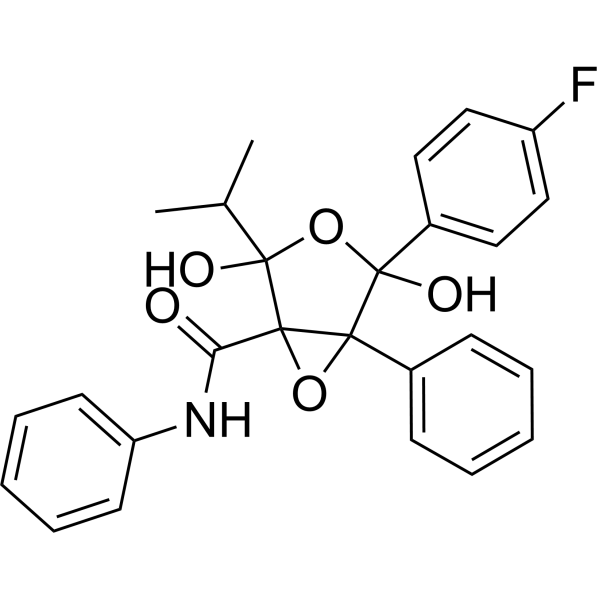
    Atorvastatin Epoxy Tetrahydrofuran Impurity is an impurity isolated oxidative degradation products of Atorvastatin (HY-B0589) . Atorvastatin is an orally active HMG-CoA reductase inhibitor, has the ability to effectively decrease blood lipids.
    Atorvastatin Epoxy Tetrahydrofuran Impurity
  • HY-135586

    Drug Metabolite Metabolic Disease
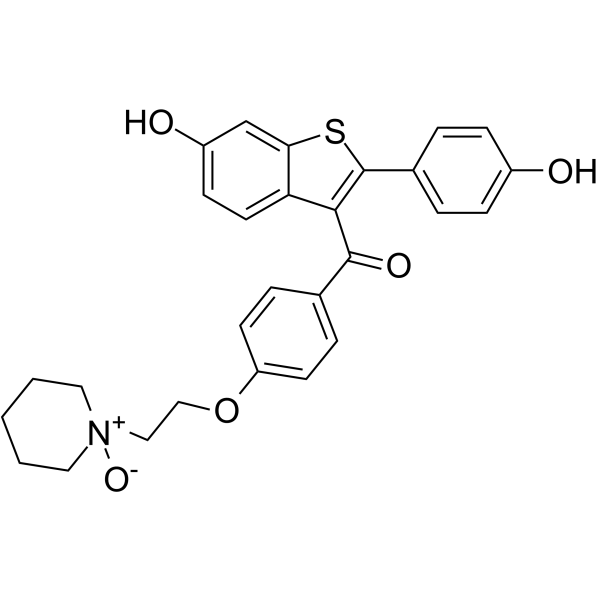
    Raloxifene N-Oxide is a Raloxifene oxidative degradation product .
    Raloxifene N-Oxide
  • HY-135586R

    Reference Standards Drug Metabolite Metabolic Disease
    Raloxifene N-Oxide (Standard) is the analytical standard of Raloxifene N-Oxide. This product is intended for research and analytical applications. Raloxifene N-Oxide is a Raloxifene oxidative degradation product .
    Raloxifene N-Oxide (Standard)
  • HY-158767

    Drug Derivative Others
    Dehydro amlodipine fumarate is a derivative of Dehydro amlodipine and is one of the forced degradation products of Dehydro amlodipine during oxidation and acid degradation .
    Dehydro amlodipine fumarate
  • HY-B0300R

    D-(-)-Penicillamine (Standard)

    Cuproptosis Reference Standards Drug Metabolite Inflammation/Immunology Cancer
    Penicillamine (Standard) is the analytical standard of Penicillamine. This product is intended for research and analytical applications. Penicillamine (D-(-)-Penicillamine) is a penicillin metabolic degradation product, can be used as a heavy metal chelator. Penicillamine increases free copper and increases oxidative stress. Penicillamine has effect of seizures through nitric oxide/NMDA pathways. Penicillamine is a potential immune modulator. Penicillamine can be used for the research of Wilson disease, rheumatoid arthritis, and cystinuria .
    Penicillamine (Standard)
  • HY-19698R

    4-CPA (Standard); p-Chlorophenoxyacetic acid (Standard)

    Biochemical Assay Reagents Reference Standards Others
    4-Chlorophenoxyacetic acid (4-CPA) (Standard) is the analytical standard of 4-Chlorophenoxyacetic acid (4-CPA). This product is intended for research and analytical applications. 4-Chlorophenoxyacetic acid (4-CPA) is a widely used herbicide for weed control in agriculture. 4-Chlorophenoxyacetic acid can be degraded in aqueous media through an electrochemical oxidation process. The end products of 4-Chlorophenoxyacetic acid degradation are harmless, such as carbon dioxide, water, and chloride ions .
    4-Chlorophenoxyacetic acid (4-CPA) (Standard)
  • HY-B2246R

    (R)-Carnitine hydrochloride (Standard); Levocarnitine hydrochloride (Standard)

    Reference Standards Endogenous Metabolite Metabolic Disease Cancer
    L-Carnitine (hydrochloride) (Standard) is the analytical standard of L-Carnitine (hydrochloride). This product is intended for research and analytical applications. L-Carnitine hydrochloride ((R)-Carnitine hydrochloride), a highly polar, small zwitterion, is an essential co-factor for the mitochondrial β-oxidation pathway. L-Carnitine hydrochloride functions to transport long chain fatty acyl-CoAs into the mitochondria for degradation by β-oxidation. L-Carnitine hydrochloride is an antioxidant. L-Carnitine hydrochloride can ameliorate metabolic imbalances in many inborn errors of metabolism .
    L-Carnitine hydrochloride (Standard)
  • HY-W105518R

    Reference Standards Endogenous Metabolite Neurological Disease
    L-Carnitine (tartrate) (Standard) is the analytical standard of L-Carnitine (tartrate). This product is intended for research and analytical applications. L-Carnitine tartrate is a highly polar, small zwitterion. L-Carnitine tartrate is an essential co-factor for the mitochondrial β-oxidation pathway. L-Carnitine tartrate functions to transport long chain fatty acyl-CoAs into the mitochondria for degradation by β-oxidation. L-Carnitine tartrate is an antioxidant. L-Carnitine tartrate can ameliorate metabolic imbalances in many inborn errors of metabolism [3] .
    L-Carnitine tartrate (Standard)
  • HY-B2053R

    Reference Standards Bacterial Infection
    Tolclofos-methyl (Standard) is the analytical standard of Tolclofos-methyl (HY-B2053). This product is intended for research and analytical applications. Tolclofos-methyl is an organophosphorus fungicide. Tolclofos-methyl undergoes photoinduced oxidative degradation to form oxo-analog derivatives. Tolclofos-methyl inhibits spore division in fungi and oomycetes, induces cytoplasmic leakage, and interferes with flagellar movement. Tolclofos-methyl is rapidly metabolized and excreted in rodents. Tolclofos-methyl can be used in studies related to fungal infections .
    Tolclofos-methyl (Standard)
  • HY-W099538R

    Dilauryl 3,3'-Thiodipropionate (Standard)

    Biochemical Assay Reagents Reference Standards Others
    Dilauryl thiodipropionate (Standard) is the analytical standard of Dilauryl thiodipropionate. This product is intended for research and analytical applications. Dilauryl thiodipropionate (DLTDP), which is a sulfur-containing antioxidant commonly used to stabilize polymers and plastics against degradation caused by heat, oxygen, and UV light, acts to scavenge free radicals and others that may cause polymer chain scission and cross-linked active substances, in addition, DLTDP has been used as an additive to lubricants, oils and other industrial fluids to improve their oxidation stability, the long hydrocarbon chain in DLTDP makes it low volatility and compatible with many materials and Good compatibility with substrates.
    Dilauryl thiodipropionate (Standard)
  • HY-N6818R

    TMF (Standard)

    Reference Standards Apoptosis Caspase PARP Endogenous Metabolite CFTR Cancer
    5,​7,​4'-​Trimethoxyflavone (Standard) is the analytical standard of 5,​7,​4'-​Trimethoxyflavone. This product is intended for research and analytical applications. 5,7,4’-Trimethoxyflavone can be isolated from the medicinal plant Kaempferia parviflora (KP). 5,7,4’-Trimethoxyflavone is a CFTR activator and EC50 is 64 μM. 5,7,4’-Trimethoxyflavone induces apoptosis, increases proteolytic activation of caspase-3, and degradation of ADP-ribose polymerase (PARP) protein. 5,7,4’-Trimethoxyflavone has antitumor activity. 5,7,4’-Trimethoxyflavone can be used to prevent skin aging and oxidative stress .
    5,​7,​4'-​Trimethoxyflavone (Standard)
  • HY-Z0833

    Endogenous Metabolite Endocrinology
    Bazedoxifene N-Oxide is the oxidative degradation product of selective estrogen receptor modulator (SERM) Bazedoxifene .
    Bazedoxifene N-Oxide
  • HY-W724128

    Drug Derivative Neurological Disease
    Cariprazine N-oxide (Compound DP-3) is the mono-oxidative degradation product of Cariprazine hydrochloride (HY-14763A). Cariprazine hydrochloride exhibits antipsychotic activity .
    Cariprazine N-oxide
  • HY-158767R

    Drug Derivative Reference Standards Others
    Dehydro amlodipine (fumarate) (Standard) is the analytical standard of Dehydro amlodipine (fumarate). This product is intended for research and analytical applications. Dehydro amlodipine fumarate is a derivative of Dehydro amlodipine and is one of the forced degradation products of Dehydro amlodipine during oxidation and acid degradation .
    Dehydro amlodipine fumarate (Standard)
  • HY-180471

    Drug Metabolite Others
    Desisopropyl-fesoterodine (compound 1), an oxidative Ndealkylation of the tertiary amine function of Fesoterodine (HY-70053), is a degradation product (compound PP-6) of Fesoterodine .
    Desisopropyl-fesoterodine
  • HY-N13110

    Others Others
    23-Aldehyde-16-O-angeloybarringtogenol C (compound 7) is a tea seed saponin, an acid hydrolysis product obtained by oxidative alkaline degradation. Tea seed saponins have potential quinine oxidoreductase inducing activity .
    23-Aldehyde-16-O-angeloybarringtogenol C
  • HY-175062

    iPF2α-III ethanolamide; 8-Isoprostane ethanolamide; 8-iso PGF2α ethanolamide

    Drug Derivative Others
    8-isoprostaglandin F2α ethanolamide (iPF2α-III ethanolamide; 8-Isoprostane ethanolamide; 8-iso PGF2α ethanolamide) is an isoprostanol ethanolamide derivative derived from anandamide (AEA) via non-enzymatic free radical oxidation. 8-isoprostaglandin F2α ethanolamide is commonly used as a marker of oxidative stress, distinguishing non-enzymatic degradation products from "prostamides" generated by enzymatic pathways such as COX-2 .
    8-iso Prostaglandin F2α ethanolamide
  • HY-W009690

    Tetraacetylethylenediamine; TAED

    Others
    N,N,N',N'-Tetraacetylethylenediamine (Tetraacetylethylenediamine; TAED) is a disinfectant and bleach activator. N,N,N',N'-Tetraacetylethylenediamine is a common bleach activator in phosphorus-free laundry detergent formulations, which acts to activate sodium perborate and improve bleaching efficiency at low temperatures. N,N,N',N'-Tetraacetylethylenediamine reacts with sodium percarbonate in water to produce peracetic acid with strong oxidative bactericidal activity. This reaction is environmentally friendly, and the final degradation products are sodium carbonate, acetic acid, ammonia, carbon dioxide, oxygen and water .
    N,N,N',N'-Tetraacetylethylenediamine

Consulta en línea

Your information is safe with us. * Required Fields.

Saludo


Country or Region *

Nombre del solicitante *


Nombre de la Organizaciòn *

Department *


Direcciòn del E-mail *


Nombre del producto *

Cat. No.


Requested quantity *

Número de teléfono *


Observaciones

Consulta en línea

Inquiry Information

Nombre del producto:
Cat. No.:
Cantidad:
MCE Japan Authorized Agent:

