



52-67-5
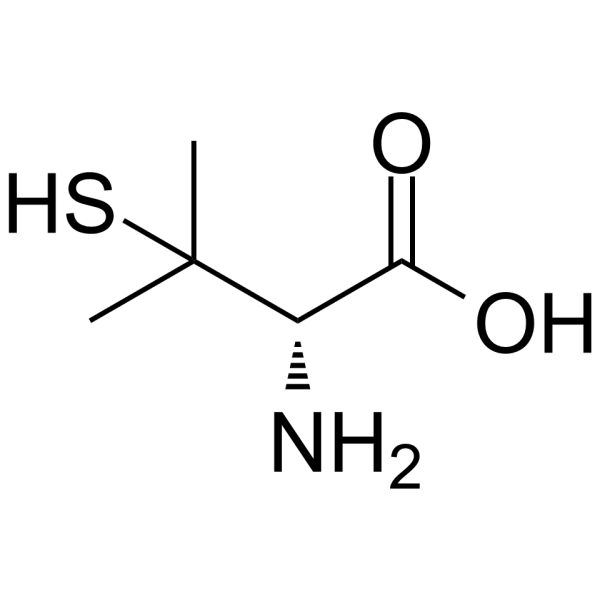
Chemical Structure
Penicillamine
Synonym(s): D-(-)-Penicillamine
- CAS No.: 52-67-5
- Formula:C5H11NO2S
- Molecular Weight:149.22
IUPAC Name: (S)-2-amino-3-mercapto-3-methylbutanoic acid
InChIKey: VVNCNSJFMMFHPL-VKHMYHEASA-N
SMILES: N[C@H](C(C)(S)C)C(O)=O
Biological Activity: Penicillamine (D-(-)-Penicillamine) is a penicillin metabolic degradation product, can be used as a heavy metal chelator. Penicillamine increases free copper and increases oxidative stress. Penicillamine has effect of seizures through nitric oxide/NMDA pathways. Penicillamine is a potential immune modulator. Penicillamine can be used for the research of Wilson disease, rheumatoid arthritis, and cystinuria[1][2][3][4].
| Cat. No. | Product Name | Purity | Description | Pricing | |||||||||||||||||||
|---|---|---|---|---|---|---|---|---|---|---|---|---|---|---|---|---|---|---|---|---|---|---|---|
|
|
Penicillamine | 98.0% | Penicillamine (D-(-)-Penicillamine) is a penicillin metabolic degradation product, can be used as a heavy metal chelator. Penicillamine increases free copper and increases oxidative stress. Penicillamine has effect of seizures through nitric oxide/NMDA pathways. Penicillamine is a potential immune modulator. Penicillamine can be used for the research of Wilson disease, rheumatoid arthritis, and cystinuria. | ||||||||||||||||||||
|
loading...
/
|
|||||||||||||||||||||||
|
|
Penicillamine (Standard) | ≥98% | Penicillamine (Standard) is the analytical standard of Penicillamine. This product is intended for research and analytical applications. Penicillamine (D-(-)-Penicillamine) is a penicillin metabolic degradation product, can be used as a heavy metal chelator. Penicillamine increases free copper and increases oxidative stress. Penicillamine has effect of seizures through nitric oxide/NMDA pathways. Penicillamine is a potential immune modulator. Penicillamine can be used for the research of Wilson disease, rheumatoid arthritis, and cystinuria. | ||||||||||||||||||||
|
loading...
/
|
|||||||||||||||||||||||
|
|
Penicillamine-d3 | Penicillamine-d3 is the deuterium labeled Penicillamine. Penicillamine (D-(-)-Penicillamine) is the most characteristic degradation product of the penicillin antibiotics. It is used as an antirheumatic and as a chelating agent in Wilson's disease. | |||||||||||||||||||||
|
loading...
/
|
|||||||||||||||||||||||
-
Similarity Score 1.00
 HY-116073L-Penicillamine
-
Similarity Score 1.00
 HY-W017457RDL-Penicillamine (Standard)
-
Similarity Score 0.85
 HY-W0749783-Fluoro-DL-valine
-
Similarity Score 0.85
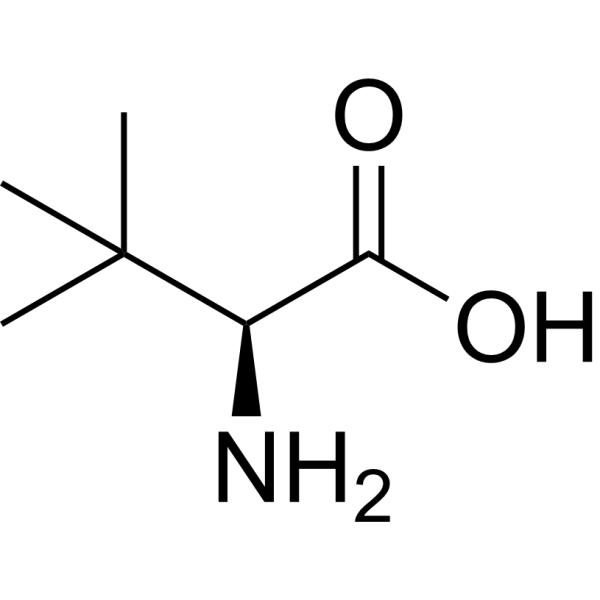 HY-59140(S)-2-Amino-3,3-dimethylbutanoic acid
-
Similarity Score 0.85
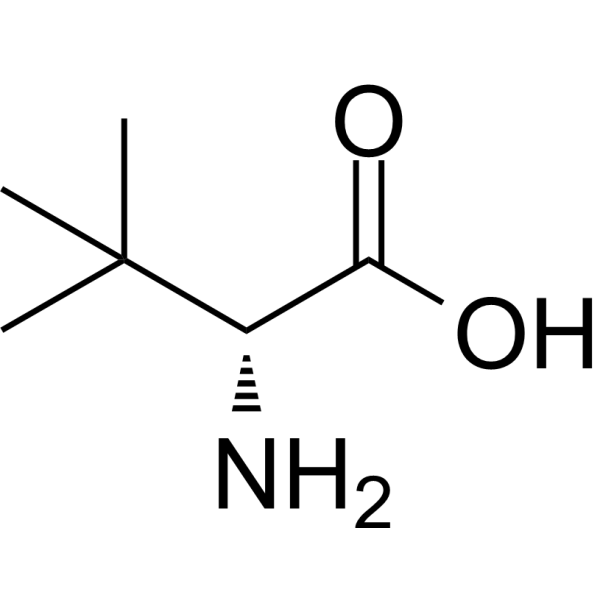 HY-W001954D-a-tert-Butyl-Gly-OH
-
Similarity Score 0.85
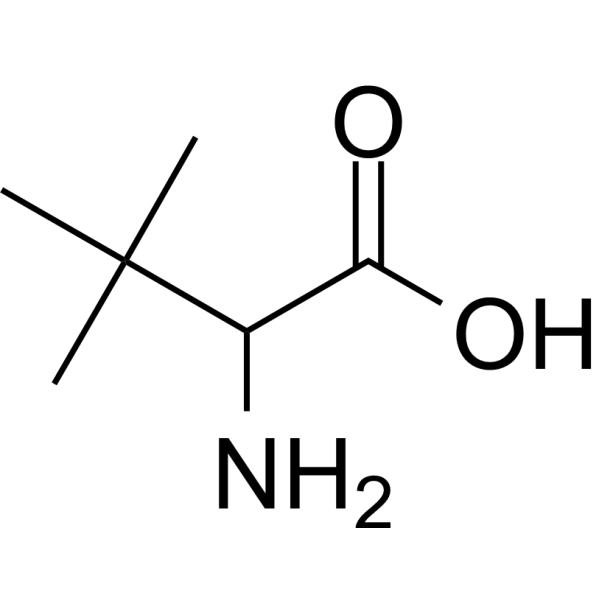 HY-W0023022-Amino-3,3-dimethylbutanoic acid
-
Similarity Score 0.85
 HY-178305SL-Valine-d1
-
Similarity Score 0.85
 HY-W012889S3DL-Valine-d-1
-
Similarity Score 0.83
 HY-W704772S-Methyl-D-penicillamine
-

Explore the MedChemAI to find more analogs


References
- [1]. Chen DB, et, al. Penicillamine increases free copper and enhances oxidative stress in the brain of toxic milk mice. PLoS One. 2012;7(5):e37709. [Content Brief]
- [2]. Rahimi N, et, al. Effects of D-penicillamine on pentylenetetrazole-induced seizures in mice: involvement of nitric oxide/NMDA pathways. Epilepsy Behav. 2014 Oct;39:42-7. [Content Brief]
- [3]. Masson MJ, et, al. Tolerance induced by low dose D-penicillamine in the brown Norway rat model of drug-induced autoimmunity is immune-mediated. Chem Res Toxicol. 2004 Jan;17(1):82-94. [Content Brief]
- [4]. Ishak R, et, al. Penicillamine revisited: historic overview and review of the clinical uses and cutaneous adverse effects. Am J Clin Dermatol. 2013 Jun;14(3):223-33. [Content Brief]



