1. Search Result
Search Result
Pathways Recommended: Neuronal Signaling JAK/STAT Signaling
Results for "

p53-dependent signaling

" in MedChemExpress (MCE) Product Catalog:

8

Inhibitors & Agonists

3

Natural
Products

1

Isotope-Labeled Compounds

Targets Recommended:
Cat. No. Product Name Target Research Areas Chemical Structure
  • HY-33354
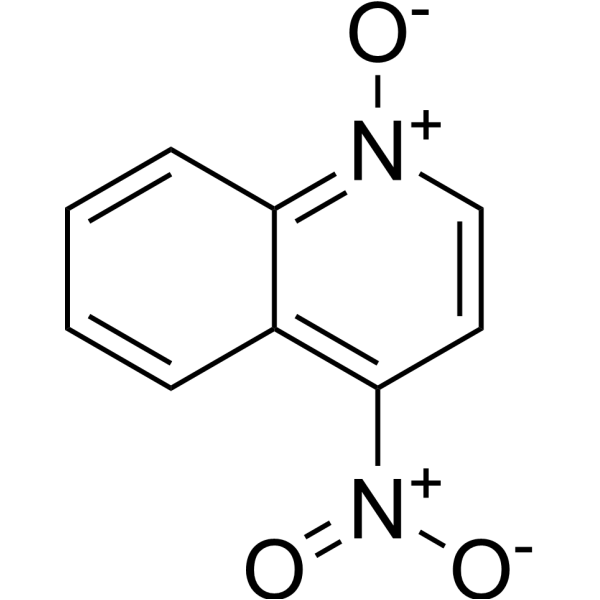
    Nitrochin
    3 Publications Verification

    4-NQO

    DNA/RNA Synthesis Apoptosis Inflammation/Immunology Cancer
    Nitrochin (4-NQO) is a chemical carcinogen. Nitrochin induces oncostatin-M (OSM) in esophageal cells. Nitrochin induces DNA damage, and induces apoptosis via a p53-dependent mitochondrial signaling pathway .
    Nitrochin
  • HY-115385
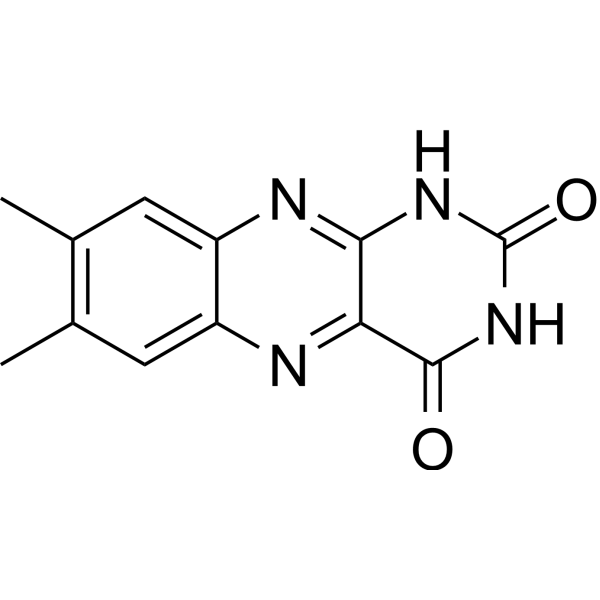
    Lumichrome
    2 Publications Verification

    Apoptosis MDM-2/p53 Akt β-catenin Nuclear Factor of activated T Cells (NFAT) NF-κB ERK p38 MAPK Metabolic Disease Cancer
    Lumichrome, a photodegradation product of Riboflavin, is an endogenous compound in humans. Lumichrome inhibits human lung cancer cell growth and induces apoptosis via a p53-dependent mechanism. Lumichrom is the inhibitor for AKT/β-catenin signaling pathway .
    Lumichrome
  • HY-N2902

    Reactive Oxygen Species (ROS) Cancer
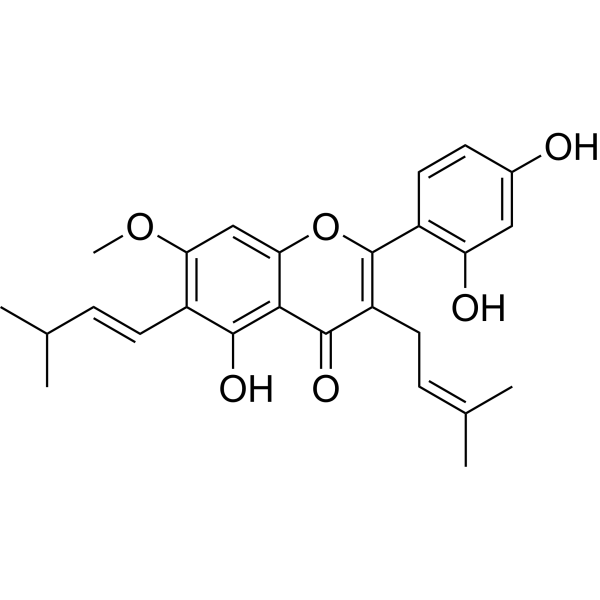
    Artocarpin is an orally active apoptosis inducer. Artocarpin targets NF-κB, Erk1/2, p38 MAPK, AktS473, p53, Akt 1 kinase and Akt 2 kinase. Artocarpin induces reactive oxygen species (ROS) production, mediates p53-dependent and p53-independent apoptotic signaling pathways, induces G1-phase cell cycle arrest, and triggers autophagic cell death. Artocarpin exerts cytotoxic and bactericidal effects on cancer cells, reduces bacterial load, and exhibits anti-inflammatory, analgesic and anti-angiogenic activities .
    Artocarpin
  • HY-115385R

    Reference Standards Apoptosis MDM-2/p53 Akt β-catenin Nuclear Factor of activated T Cells (NFAT) NF-κB ERK p38 MAPK Metabolic Disease Cancer
    Lumichrome (Standard) is the analytical standard of Lumichrome. This product is intended for research and analytical applications. Lumichrome, a photodegradation product of Riboflavin, is an endogenous compound in humans. Lumichrome inhibits human lung cancer cell growth and induces apoptosis via a p53-dependent mechanism. Lumichrom is the inhibitor for AKT/β-catenin signaling pathway. Lumichrom is the inhibitor for AKT/β-catenin signaling pathway .
    Lumichrome (Standard)
  • HY-W708917

    Isotope-Labeled Compounds p38 MAPK Apoptosis ERK Akt MDM-2/p53 NF-κB Nuclear Factor of activated T Cells (NFAT) Cancer
    Lumichrome-d8 is the deuterium labeled Lumichrome (HY-115385). Lumichrome, a photodegradation product of Riboflavin, is an endogenous compound in humans. Lumichrome inhibits human lung cancer cell growth and induces apoptosis via a p53-dependent mechanism. Lumichrom is the inhibitor for AKT/β-catenin signaling pathway .
    Lumichrome-d8
  • HY-169412

    MDM-2/p53 CDK Caspase Bcl-2 Family Reactive Oxygen Species (ROS) p38 MAPK ERK JNK Cancer
    MAPK-IN-3 (Compound 4a) is an anti-proliferative agent that shows particularly strong inhibitory effects on KYSE 30, HCT 116, and HGC 27, with IC50 values of 0.57 μM, 3.27 μM, and 2.28 μM, respectively. MAPK-IN-3 blocks the cell cycle via a p53-dependent mechanism and induces cell apoptosis through a p53-independent mechanism. MAPK-IN-3 downregulates the expression of cell cycle-related proteins like Cyclin D1 and cyclin B1, upregulates pro-apoptotic proteins such as cleaved PARP, cleaved caspase-7, and cleaved caspase-9, and reduces the expression of anti-apoptotic proteins like Bcl-2. Additionally, MAPK-IN-3 increases the intracellular level of ROS in KYSE 30 cells and upregulates the expression of members of the MAPK signaling pathway associated with ROS, such as p-ERK, p-p38 and p-JNK .
    MAPK-IN-3
  • HY-33354R

    4-NQO (Standard)

    DNA/RNA Synthesis Apoptosis Reference Standards Cancer
    Nitrochin (Standard) is the analytical standard of Nitrochin. This product is intended for research and analytical applications. Nitrochin (4-NQO) is a chemical carcinogen. Nitrochin induces oncostatin-M (OSM) in esophageal cells. Nitrochin induces DNA damage, and induces apoptosis via a p53-dependent mitochondrial signaling pathway .
    Nitrochin (Standard)
  • HY-182245

    Microtubule/Tubulin Carbonic Anhydrase Apoptosis MDM-2/p53 Cancer
    Anticancer agent 314 is a multi-target anticancer agent with tubulin polymerization inhibitory activity (IC50 = 6.35 μM) and human carbonic anhydrase IX (Ki = 27.1 nM) and XII (Ki 20.9 = nM) inhibitory activity. Anticancer agent 314 binds to the colchicine-binding pocket of tubulin and inhibits tumor-associated carbonic anhydrase isoforms via zinc coordination within enzyme active sites. Anticancer agent 314 induces G2/M phase cell cycle arrest, apoptosis via p53-dependent signaling, and broad-spectrum antiproliferative activity across multiple cancer cells. Anticancer agent 314 can be used for the research of cancer, such as leukemia, melanoma, ovarian cancer .
    Anticancer agent 314

Inquiry Online

Your information is safe with us. * Required Fields.

Salutation


Country or Region *

Applicant Name *


Organization Name *

Department *


Email Address *


Product Name *

Cat. No.


Requested quantity *

Phone Number *


Remarks

Inquiry Online

Inquiry Information

Product Name:
Cat. No.:
Quantity:
MCE Japan Authorized Agent:

