7 Results for "

pathological renal injury

" in MedChemExpress (MCE) Product Catalog:
Products (7)

7 Results for "pathological renal injury" in MCE Product Catalog:

Cat. No.: HY-156696
CAS No.: 215183-03-2
Research Areas:  

Metabolic Disease

S3226 is a highly selective NHE-3 inhibitor (IC50<1 μM) that specifically blocks NHE-3-mediated sodium transport. S3226 significantly inhibits blastocyst formation and expansion in mouse embryos, and reduces fluid and electrolyte reabsorption in rat proximal tubules in a dose-dependent manner. S3226 effectively alleviates ischemia-induced acute renal failure by improving renal function parameters, reducing renal tubular injury and restoring intracellular pH homeostasis, without interfering with the normal tubuloglomerular feedback response. S3226 is widely used in studies of acute renal failure and related pathological mechanisms .
loading...
    loading...
Cat. No.: HY-161904
CAS No.: 2378625-66-0
Research Areas:  

Endocrinology

CDYL-IN-1 is a selective small-molecule inhibitor of CDYL with a KD value of 0.5 μM. CDYL-IN-1 improves renal dysfunction, pathological damage and renal tubular pyroptosis, inhibits FABP4-mediated ROS production, and alleviates renal tubular epithelial cell injury. CDYL-IN-1 is applicable to the research of acute kidney injury .
loading...
    loading...
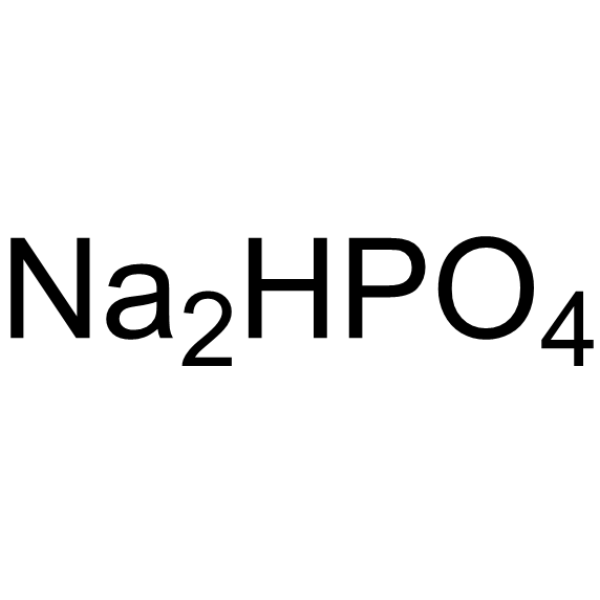
Cat. No.: HY-Y0308D
CAS No.: 7558-79-4
Synonyms: Disodium hydrogen phosphate, meets analytical specification of Ph. Eur. BP USP FCC E339
Sodium phosphate dibasic (Disodium hydrogen phosphate), meets analytical specification of Ph. Eur. BP USP FCC E339 is an inorganic dibasic phosphate that functions as an electrolyte supplement, a buffer carrier for injectable drugs, while also exhibiting nephrotoxicity. Sodium phosphate dibasic, meets analytical specification of Ph. Eur. BP USP FCC E339 induces extensive nephrotic syndrome-like changes, including systemic symptoms such as persistent proteinuria, lipemia, hypercholesterolemia, and anemia, and causes severe renal pathological alterations such as renal enlargement, glomerular calcification, podocyte injury, and tubulointerstitial lesions. Sodium phosphate dibasic, meets analytical specification of Ph. Eur. BP USP FCC E339 has the ability to induce phosphate-induced nephropathy and glomerular calcification, and can be widely used in studies on nephrotic syndrome and related renal pathological mechanisms .
loading...
    loading...
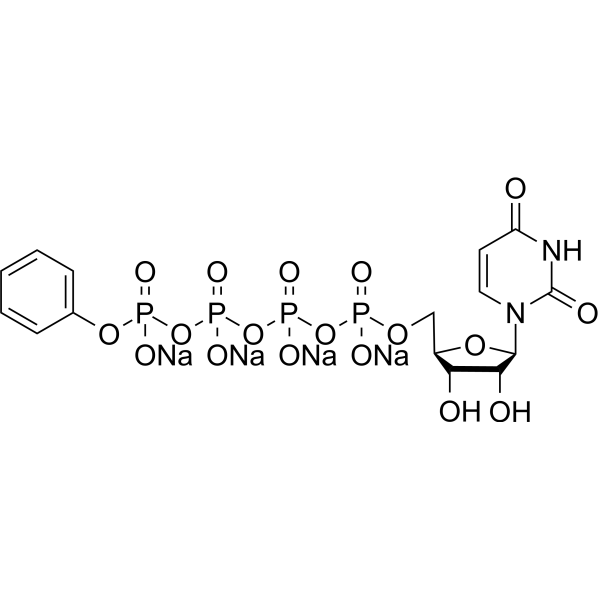
Cat. No.: HY-108649A
CAS No.: 2567869-47-8
Purity:  98.7%
MRS2768 tetrasodium salt is a potent, selective, and metabolically stable P2Y2 receptor agonist with an EC50 of 1.89 μM for the human P2Y2 receptor. MRS2768 tetrasodium salt activates Gq/PLC/PKC signaling, leading to downstream phosphorylation of Akt, eNOS, and ERK, with effects varying by cell type. MRS2768 tetrasodium salt inhibits ENaC via Gq/PKC/Src/Akt to promote natriuresis and lower blood pressure in the kidney. MRS2768 tetrasodium salt activates eNOS to increase NO secretion in endothelial cells. MRS2768 tetrasodium salt drives proliferation via PI3K/Akt in fibroblasts and cancer cells. MRS2768 tetrasodium salt exerts anti-apoptotic effects through PKC/Src/Akt in cardiomyocytes. MRS2768 tetrasodium salt can be applied to investigate P2Y2-dependent pathological processes, including acute kidney injury, chronic kidney disease and renal fibrosis, DOCA-salt induced hypertension, myocardial infarction, pulmonary arterial hypertension, pancreatic cancer, cardiac fibrosis, dry eye disease, as well as shear stress-mediated vascular remodeling and atherosclerosis .
loading...
    loading...
Cat. No.: HY-122446
CAS No.: 22677-62-9
Synonyms: Val-Lys
Research Areas:  

Endocrinology

Valyllysine (Val-Lys) is a renoprotective peptide. Valyllysine can be found in G. chorda soluble proteins following hydrolysis by thermolysin. Valyllysine effectively ameliorates pathological renal injury .
loading...
    loading...
Cat. No.: HY-K0606

MCE Methenamine Silver Stain Kit For Basement Membrane (PASM) is developed based on the classical staining principle. Through an optimized staining system and standardized reagent combination, it enables clear visualization of basement membranes and related reticular structures in tissue sections. This method is particularly widely used in renal pathology research, where it is commonly applied to examine morphological alterations of the glomerular capillary basement membrane, such as thickening, rupture, folding, double-contour (tram-track) appearance, or abnormal proliferation caused by inflammatory injury. In addition, this method can also be applied to the histological investigation and morphological observation of glomerular diseases, diabetic nephropathy, and other basement membrane–associated pathological changes.

loading...
    loading...
Cat. No.: HY-108649
CAS No.: 1047980-83-5
MRS2768 is a potent, selective, and metabolically stable P2Y2 receptor agonist with an EC50 of 1.89 μM for the human P2Y2 receptor. MRS2768 activates Gq/PLC/PKC signaling, leading to downstream phosphorylation of Akt, eNOS, and ERK, with effects varying by cell type. MRS2768 inhibits ENaC via Gq/PKC/Src/Akt to promote natriuresis and lower blood pressure in the kidney. MRS2768 activates eNOS to increase NO secretion in endothelial cells. MRS2768 drives proliferation via PI3K/Akt in fibroblasts and cancer cells. MRS2768 exerts anti-apoptotic effects through PKC/Src/Akt in cardiomyocytes. MRS2768 can be applied to investigate P2Y2-dependent pathological processes, including acute kidney injury, chronic kidney disease and renal fibrosis, DOCA-salt induced hypertension, myocardial infarction, pulmonary arterial hypertension, pancreatic cancer, cardiac fibrosis, dry eye disease, as well as shear stress-mediated vascular remodeling and atherosclerosis .
loading...
    loading...

