
1. Search Result
Search Result
Results for "

phosphoenolpyruvate

" in MedChemExpress (MCE) Product Catalog:

27

Inhibitors & Agonists

2

Biochemical Assay Reagents

10

Natural
Products

2

Recombinant Proteins

1

Isotope-Labeled Compounds

3

Antibodies

Targets Recommended:
Cat. No. Product Name Target Research Areas Chemical Structure
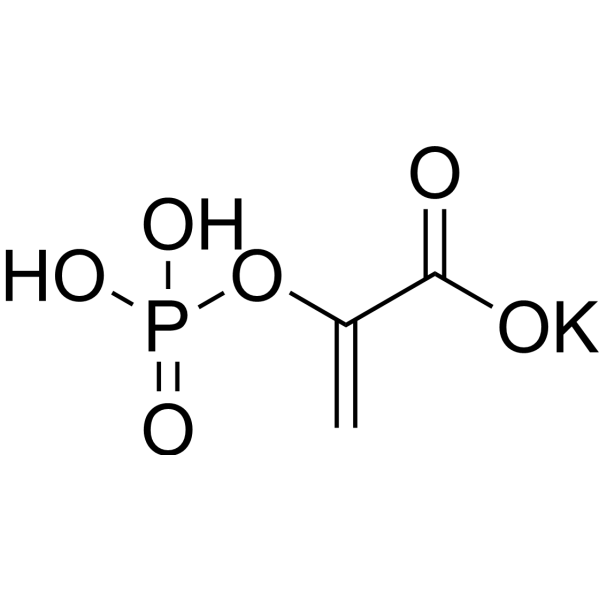
  • HY-W008807
    Phosphoenolpyruvic acid potassium
    1 Publications Verification

    phosphoenolpyruvate potassium

    Endogenous Metabolite Metabolic Disease
    Phosphoenolpyruvic acid (Phosphoenolpyruvate) potassium is a glycolysis metabolite with a high-energy phosphate group. Phosphoenolpyruvic acid potassium is involved in glycolysis and gluconeogenesis, and used as energy source to produce ATP, under the energy-limited conditions. Phosphoenolpyruvic acid potassium also exhibits cytoprotective and anti-oxidative properties .
    Phosphoenolpyruvic acid potassium
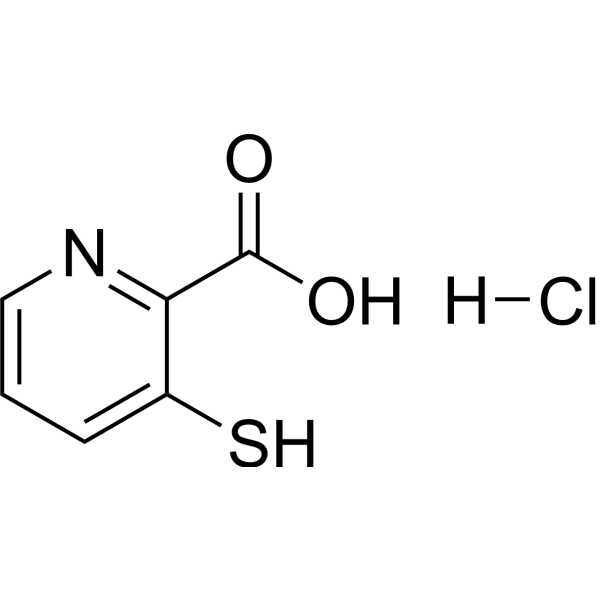
  • HY-128923
    SKF-34288 hydrochloride
    Maximum Cited Publications
    8 Publications Verification

    3-Mercaptopicolinic acid hydrochloride; 3-MPA hydrochloride

    PEPCK Metabolic Disease
    SKF-34288 (3-Mercaptopicolinic acid) hydrochloride is an orally active phosphoenolpyruvate carboxykinase (PEPCK) inhibitor (Ki: 2-9 μM). SKF-34288 hydrochloride is a potent hypoglycemic agent by inhibiting glucose synthesis. SKF-34288 hydrochloride also inhibits Asn metabolism and increases amino acids and amides .
    SKF-34288 hydrochloride
  • HY-W712327

    Biochemical Assay Reagents Others
    D-Xylulose 5-phosphate sodium is a pentose phosphate ester and an essential intermediate metabolite in the pentose phosphate pathway (PPP) and the non-oxidative phase of the pentose phosphate pathway. D-xylulose-5-phosphate sodium can be efficiently synthesized through the phosphorylation of D-xylulose catalyzed by D-xylulokinase (XKS1 from Saccharomyces cerevisiae), with ATP regeneration facilitated by the phosphoenolpyruvate (PEP)/pyruvate kinase (PK) system .
    D-Xylulose 5-phosphate sodium
  • HY-113422

    Endogenous Metabolite Glucocorticoid Receptor Inflammation/Immunology
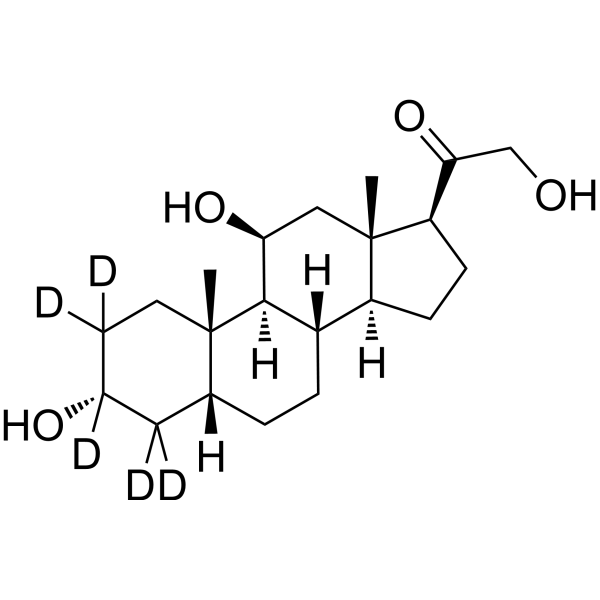
    Tetrahydrocorticosterone is a glucocorticoid. One of its active forms, 5α-Tetrahydrocorticosterone (HY-113364), exerts its effects by binding to the GC receptor and inhibiting inflammatory processes. Tetrahydrocorticosterone is naturally synthesized by the adrenal glands and plays a key role in regulating the metabolism of carbohydrates, proteins and fats .
    Tetrahydrocorticosterone
  • HY-113167

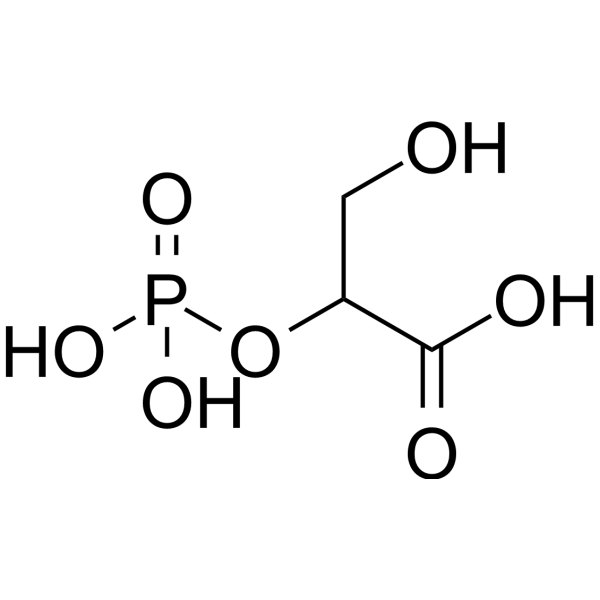
    DL-2-phosphoglyceric acid

    ACSL Family Endogenous Metabolite Ferroptosis Glutathione Peroxidase Reactive Oxygen Species (ROS) Metabolic Disease
    2-Phosphoglyceric acid (DL-2-phosphoglyceric acid) is a glycolytic substrate that is catalyzed by enolase to form phosphoenolpyruvate ester (PEP). 2-Phosphoglyceric acid inhibits the ferroptosis pathway by down-regulating ACSL4 and up-regulating GPX4, and has significant neuroprotective effects. 2-Phosphoglyceric acid reflects the overall metabolic state and flux of the cell .
    2-Phosphoglyceric acid
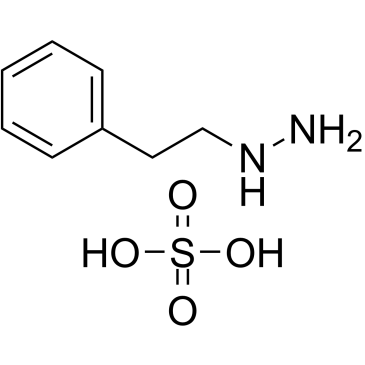
  • HY-B1018A
    Phenelzine sulfate
    5+ Cited Publications

    Monoamine Oxidase GABA Receptor Histone Demethylase Cardiovascular Disease Neurological Disease Metabolic Disease Inflammation/Immunology Cancer
    Phenelzine sulfate, an antidepressant agent, is an irreversible and orally active monoamine oxidase (MAO-A and MAO-B) inhibitor. Phenelzine sulfate inhibits GABA transaminase and primary amine oxidase (PrAO), and sequester reactive aldehydes. Phenelzine sulfate also inhibits LSD1 (Ki: 5.6 μM) and suppresses oxidative stress and lipogenesis. Phenelzine sulfate elevates neurotransmitters (serotonin, norepinephrine, dopamine). Phenelzine sulfate is studied in neurological, metabolic and cancer diseases for depression and anxiety disorders, stroke, spinal cord injury, traumatic brain injury, multiple sclerosis, Parkinson’s disease, Alzheimer’s disease, inflammatory pain, obesity and prostate cancer .
    Phenelzine sulfate
  • HY-P2806

    PK; Fluorokinase

    Endogenous Metabolite Metabolic Disease Cancer
    Pyruvate Kinase, Microorganism (PK) is a glycolytic enzyme that catalyzes the conversion of phosphoenolpyruvate and ADP to pyruvate and ATP .
    Pyruvate Kinase, Microorganism
  • HY-113049

    phosphoenolpyruvate

    Endogenous Metabolite Metabolic Disease
    Phosphoenolpyruvic acid (Phosphoenolpyruvate) is a glycolysis metabolite with a high-energy phosphate group. Phosphoenolpyruvic acid is involved in glycolysis and gluconeogenesis, and used as energy source to produce ATP, under the energy-limited conditions. Phosphoenolpyruvic acid also exhibits cytoprotective and anti-oxidative properties .
    Phosphoenolpyruvic acid
  • HY-E70015

    PEPC

    Others Others
    Phosphoenolpyruvate carboxylase, Microorganism (PEPC) is a carbon dioxide fixing enzyme that in an irreversible manner and in the presence of Mg 2+, converts phosphoenolpyruvate and bicarbonate into oxaloacetate and inorganic phosphorus. Phosphoenolpyruvate carboxylase catalyses the primary assimilation of CO(2) in Crassulacean acid metabolism plants. Phosphoenolpyruvate carboxylase plays a major role in setting the day-night pattern of metabolism in plants .
    Phosphoenolpyruvate carboxylase, Microorganism
  • HY-W008807S

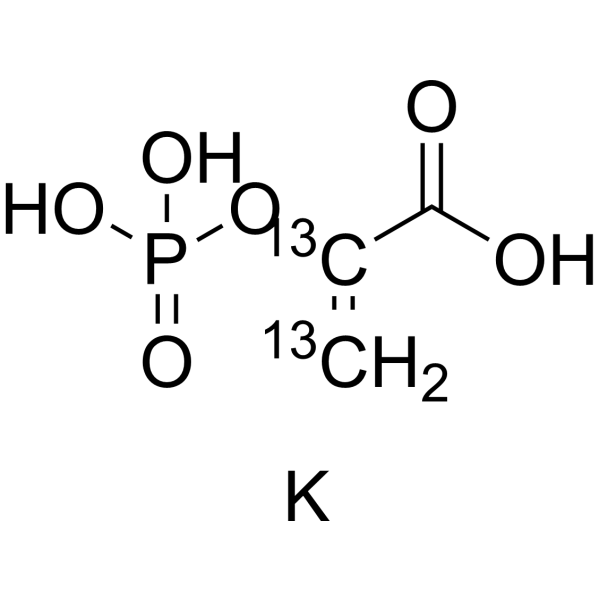
    phosphoenolpyruvate potassium-13C2

    Isotope-Labeled Compounds Endogenous Metabolite Metabolic Disease
    Phosphoenolpyruvic acid (potassium)- 13C2 is the 13C labeled Phosphoenolpyruvic acid potassium (HY-W008807) . Phosphoenolpyruvic acid (Phosphoenolpyruvate) potassium is a glycolysis metabolite with a high-energy phosphate group. Phosphoenolpyruvic acid potassium is involved in glycolysis and gluconeogenesis, and used as energy source to produce ATP, under the energy-limited conditions. Phosphoenolpyruvic acid potassium also exhibits cytoprotective and anti-oxidative properties .
    Phosphoenolpyruvic acid potassium-13C2
  • HY-W011704

    phosphoenolpyruvate cyclohexylammoniu​m salt

    Endogenous Metabolite Metabolic Disease
    Phosphoenolpyruvic acid (Phosphoenolpyruvate) cyclohexylammonium salt is a glycolysis metabolite with a high-energy phosphate group. Phosphoenolpyruvic acid cyclohexylammonium salt is involved in glycolysis and gluconeogenesis, and used as energy source to produce ATP, under the energy-limited conditions. Phosphoenolpyruvic acid cyclohexylammonium salt also exhibits cytoprotective and anti-oxidative properties .
    Phosphoenolpyruvic acid cyclohexylammoniu​m salt
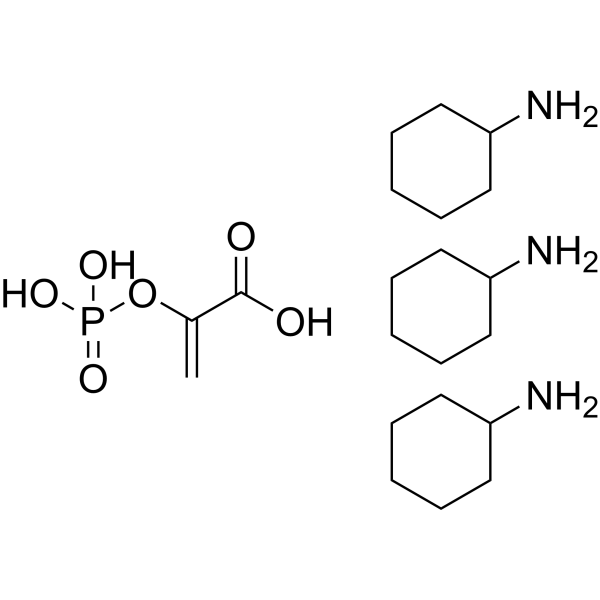
  • HY-W011704A

    phosphoenolpyruvate tricyclohexylammoniu​m salt

    Endogenous Metabolite Metabolic Disease
    Phosphoenolpyruvic acid (Phosphoenolpyruvate) tricyclohexylammoniu​m salt is a glycolysis metabolite with a high-energy phosphate group. Phosphoenolpyruvic acid tricyclohexylammoniu​m salt is involved in glycolysis and gluconeogenesis, and used as energy source to produce ATP, under the energy-limited conditions. Phosphoenolpyruvic acid tricyclohexylammoniu​m salt also exhibits cytoprotective and anti-oxidative properties .
    Phosphoenolpyruvic acid tricyclohexylammoniu​m salt
  • HY-W008807R

    phosphoenolpyruvate potassium (Standard)

    Reference Standards Endogenous Metabolite Metabolic Disease
    Phosphoenolpyruvic acid potassium (Standard) (Potassium 1-carboxyvinyl hydrogenphosphate (Standard)) is the analytical standard of Phosphoenolpyruvic acid potassium (HY-W008807). This product is intended for research and analytical applications. Phosphoenolpyruvic acid potassium is a glycolysis metabolite with a high-energy phosphate group. Phosphoenolpyruvic acid potassium is involved in glycolysis and gluconeogenesis, and used as energy source to produce ATP, under the energy-limited conditions. Phosphoenolpyruvic acid potassium also exhibits cytoprotective and anti-oxidative properties.
    Phosphoenolpyruvic acid potassium (Standard)
  • HY-111936

    BML283

    Pyruvate Kinase Cancer
    ML083 is a member of a series of highly specific allosteric activators for the tumor-specific isoform of human pyruvate kinase (M2 isoform). ML083 affects the cooperativity of phosphoenolpyruvate (PEP) binding. ML083 can be used in the research of tumors .
    ML 083
  • HY-N9551

    Cytochrome P450 Parasite COX Lipoxygenase Infection Neurological Disease Cancer
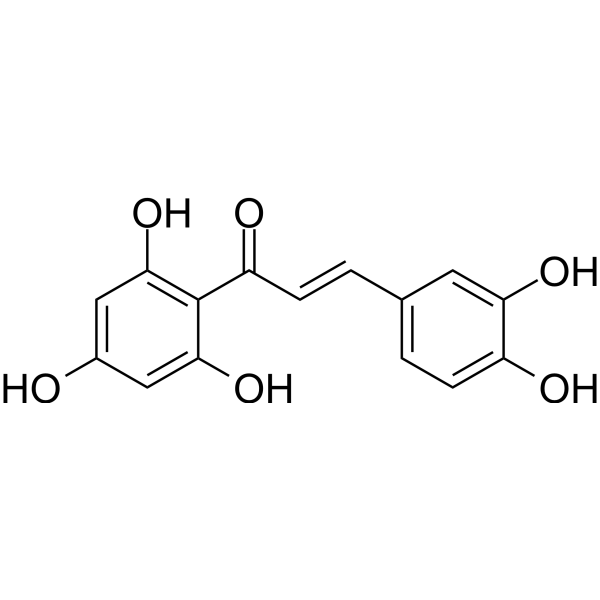
    Eriodictyol chalcone is an antioxidant that inhibits multiple key enzymes including 5-LOX (IC50=0.043 μM), aromatase/CYP19A1 (IC50=2.8 μM), PTPase 1B (IC50=1.26 μM), and COX (IC50=34 μM). Eriodictyol chalcone exhibits excellent free radical scavenging activity. Eriodictyol chalcone not only inhibits the growth of plasmodia and enhances the efficacy of Artemisinin (HY-B0094), but also reduces depression-like behaviors in animal models. Eriodictyol chalcone serves as a biosynthetic precursor for Aureusidin (HY-N9834). Eriodictyol chalcone is a potential dietary supplement and herbicide, and it can be applied to research on malaria, depression, breast cancer and other related diseases .
    Eriodictyol chalcone
  • HY-E70394

    Acetonyl-coenzyme A

    Biochemical Assay Reagents N-myristoyltransferase Metabolic Disease
    S-Acetonyl-CoA (Acetonyl-coenzyme A) is a non-reactive structural analog of acetyl-CoA that acts as a competitive inhibitor against multiple target enzymes. S-Acetonyl-CoA lacks the characteristic thioester group of acetyl-CoA, retaining only a thioether structure. S-Acetonyl-CoA competes with acetyl-CoA for binding to citrate synthase, phosphate transacetylase, carnitine acetyltransferase, and N-myristoyltransferase 1. S-Acetonyl-CoA serves as a reagent for investigating acetyl-CoA-dependent physiological processes .
    S-Acetonyl-CoA
  • HY-N13191

    Ingenol 3-benzoate

    PKC Others
    Ingenol 3-monobenzoate (Ingenol 3-benzoate) is a disgust inducing agent. Ingenol 3-monobenzoate can bind to and activate PKC (Ki=0.14 nM), inhibit the gene expression of phosphoenolpyruvate carboxykinase, thereby inhibiting gluconeogenesis, and increasing blood cortisol levels, producing food aversion .
    Ingenol 3-monobenzoate
  • HY-CE01731

    phosphoenolpyruvate-coenzyme A

    Biochemical Assay Reagents Metabolic Disease
    Phosphoenolpyruvate-CoA (Phosphoenolpyruvate-coenzyme A) is a coenzyme A derivative .
    Phosphoenolpyruvate-CoA
  • HY-113049A

    phosphoenolpyruvate trisodium

    Endogenous Metabolite Metabolic Disease
    Phosphoenolpyruvic acid (Phosphoenolpyruvate) trisodium is a glycolysis metabolite with a high-energy phosphate group. Phosphoenolpyruvic acid trisodium is involved in glycolysis and gluconeogenesis, and used as energy source to produce ATP, under the energy-limited conditions. Phosphoenolpyruvic acid trisodium also exhibits cytoprotective and anti-oxidative properties .
    Phosphoenolpyruvic acid trisodium
  • HY-W011704AR

    phosphoenolpyruvate tricyclohexylammoniu​m salt (Standard)

    Endogenous Metabolite Reference Standards Metabolic Disease
    Phosphoenolpyruvic acid (Phosphoenolpyruvate) tricyclohexylammoniu​m salt is a glycolysis metabolite with a high-energy phosphate group. Phosphoenolpyruvic acid tricyclohexylammoniu​m salt is involved in glycolysis and gluconeogenesis, and used as energy source to produce ATP, under the energy-limited conditions. Phosphoenolpyruvic acid tricyclohexylammoniu​m salt also exhibits cytoprotective and anti-oxidative properties .
    Phosphoenolpyruvic acid tricyclohexylammoniu​m salt (Standard)
  • HY-110124

    Pyruvate Kinase Cancer
    ML202 is a highly specific allosteric activator of human pyruvate kinase M2 (hPK-M2), which can affect the cooperativity of phosphoenolpyruvate (PEP) binding, while adenosine diphosphate (ADP) binding almost no effect .
    ML202
  • HY-135883

    Pyruvate Kinase Cardiovascular Disease
    PKR activator 1 is a potent pyruvate kinase-R (PKR) activator extracted from patent WO2019035865A1, compound E7-93 .
    PKR activator 1
  • HY-12689C

    AG-348 hydrochloride

    Pyruvate Kinase Cardiovascular Disease Metabolic Disease
    Mitapivat (AG-348) hydrochloride is an orally active and selective allosteric pyruvate kinase R (PK-R) activator. Mitapivat hydrochloride accelerates the reaction of PK-R catalyzing the conversion of phosphoenolpyruvate to pyruvate, thereby promoting the glycolytic pathway, increasing the production of adenosine triphosphate (ATP) in red blood cells, and reducing the level of 2,3-diphosphoglycerate (2,3-DPG). Mitapivat hydrochloride is promising for research of pyruvate kinase deficiency and other anemia-related diseases .
    Mitapivat hydrochloride
  • HY-W555010

    phosphoenolpyruvate monosodium

    Endogenous Metabolite Metabolic Disease
    Phosphoenolpyruvic acid (Phosphoenolpyruvate) monosodium is a glycolysis metabolite with a high-energy phosphate group. Phosphoenolpyruvic acid monosodium is involved in glycolysis and gluconeogenesis, and used as energy source to produce ATP, under the energy-limited conditions. Phosphoenolpyruvic acid monosodium also exhibits cytoprotective and anti-oxidative properties .
    Phosphoenolpyruvic acid monosodium
  • HY-141897

    Nucleoside Antimetabolite/Analog Metabolic Disease
    3-Deoxy-D-arabino-heptulosonate 7-phosphate is produced by the condensation of D-erythrose 4-phosphate with phosphoenolpyruvate (PEP), catalyzed by 3-deoxy-d-arabino-heptulosonate 7-phosphate (DAH 7-P) synthase (phe) .
    3-Deoxy-D-arabino-heptulosonate 7-phosphate
  • HY-P2806B

    Biochemical Assay Reagents Metabolic Disease
    Pyruvate Kinase, Bacillus stearothermophilus (EC 2.7.1.40) is an enzyme involved in glycolysis. Pyruvate Kinase, Bacillus stearothermophilus (EC 2.7.1.40) catalyzes the transfer of a phosphate group from phosphoenolpyruvate (PEP) to ADP, yielding one molecule of pyruvate and one molecule of ATP.
    Pyruvate Kinase, Bacillus stearothermophilus
  • HY-P2819A

    Endogenous Metabolite Metabolic Disease
    Phosphofructokinase from Bacillus stearothermophilus is a key enzyme in sugar metabolism that catalyzes the conversion of fructose-6-phosphate to fructose-1,6-bisphosphate during glycolysis. The enzyme's ability to bind fructose-6-phosphate can be inhibited by phosphoenolpyruvate (PEP), thereby regulating the rate of glycolysis. Phosphofructokinase from Bacillus stearothermophilus can be used for the measurement of fructose-6-phosphate levels .
    Phosphofructokinase,Bacillus stearothermophilus

Inquiry Online

Your information is safe with us. * Required Fields.

Salutation


Country or Region *

Applicant Name *


Organization Name *

Department *


Email Address *


Product Name *

Cat. No.


Requested quantity *

Phone Number *


Remarks

Inquiry Online

Inquiry Information

Product Name:
Cat. No.:
Quantity:
MCE Japan Authorized Agent:

