22 Results for "

proteasome catalytic

" in MedChemExpress (MCE) Product Catalog:
Products (22)

22 Results for "proteasome catalytic" in MCE Product Catalog:

28
28 Publications Verification
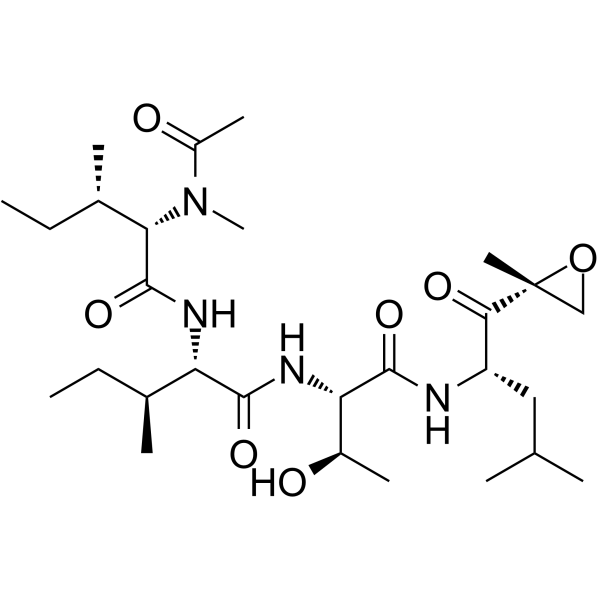
Cat. No.: HY-13821
CAS No.: 134381-21-8
Purity:  99.39%
Synonyms: BU-4061T
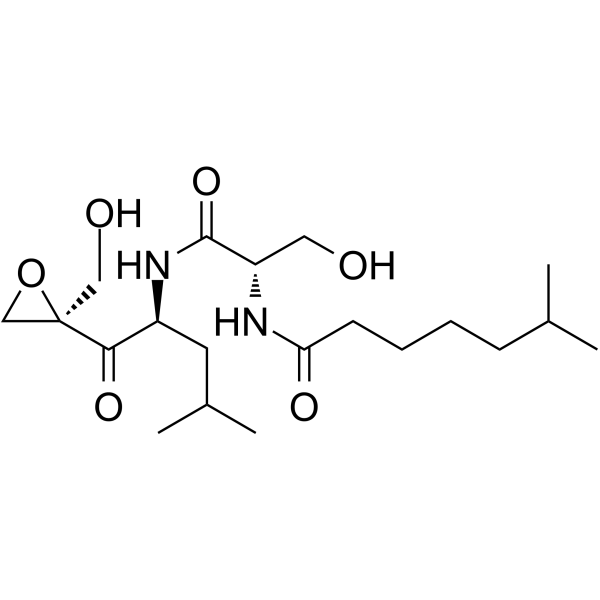
Epoxomicin (BU-4061T) is an epoxyketone-containing natural product and a potent, selective and irreversible proteasome inhibitor. Epoxomicin covalently binds to the LMP7, X, MECL1, and Z catalytic subunits of the proteasome and potently inhibits primarily the chymotrypsin-like activity. Epoxomicin can cross the blood-brain barrier. Epoxomicin has strongly antitumor and anti-inflammatory activity .
loading...
    loading...
26
26 Cited Publications
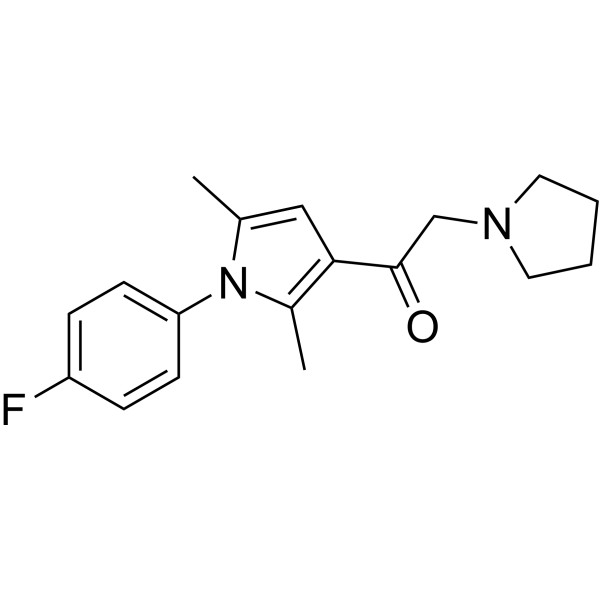
Cat. No.: HY-13817
CAS No.: 314245-33-5
Purity:  99.30%
IU1 is a selective, reversible USP14 inhibitor with an IC50 of 4-5 μM. IU1 binds USP14’s catalytic cleft to block deubiquitinase activity. IU1 induces calpain-dependent Tau cleavage, causes ATP deficits, reduces E1~Ub thioester levels and 26S proteasome assembly. IU1 enhances 26S proteasome chymotrypsin-like activity, modulates LC3B-dependent autophagy flux, reduces cancer cell proliferation and migration, and blocks G0/G1 to S phase cell cycle transition in follicular thyroid cancer cells. IU1 activates autophagy-lysosomal and ubiquitin-proteasome pathways, triggers apoptosis, and reduces cervical cancer cell growth. IU1 enhances degradation of proteasome substrates linked to neurodegenerative disease, accelerates oxidized protein degradation, and increases oxidative stress resistance. IU1 can be used for the research of Alzheimer’s disease, follicular thyroid cancer, ischemic stroke, cervical cancer, and neurodegenerative disease .
loading...
    loading...
3
3 Cited Publications
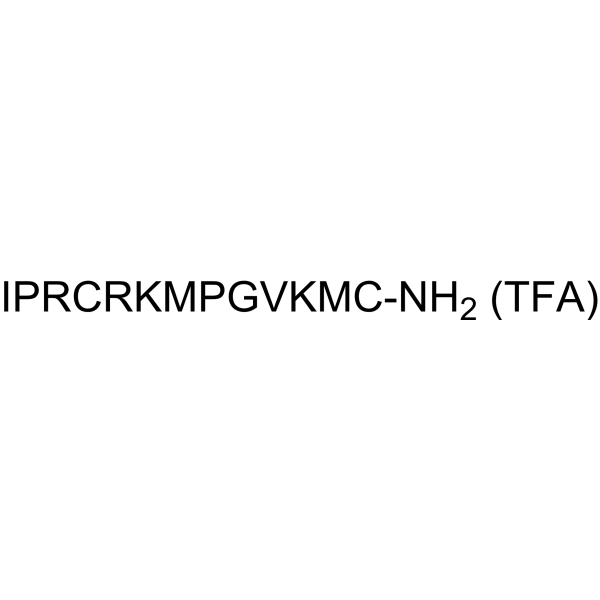
Cat. No.: HY-P3414A
Target:  

Proteasome

Research Areas:  

Neurological Disease

Proteasome-activating peptide 1 TFA is a peptide and a potent proteasome activator. Proteasome-activating peptide 1 TFA increases the chymotrypsin-like proteasomal catalytic activity and, consequently, proteolytic rates both in vitro and in culture. Proteasome-activating peptide 1 TFA prevents protein aggregation in a cellular model of amyotrophic lateral sclerosis .
loading...
    loading...
1
1 Cited Publications
Cat. No.: HY-W054146
CAS No.: 145888-79-5
Target:  

Proteasome

Research Areas:  

Cancer

RAMB4 is a ubiquitin-proteasome system (UPS)-stressor. RAMB4 inhibits ubiquitin-mediated protein degradation upstream of the 20S proteasomal catalytic activites. RAMB4 triggers a ubiquitin-proteasome-system (UPS)-stress response without affecting 20S proteasome catalytic activities. Anticancer activity .
loading...
    loading...
Cat. No.: HY-P11307
CAS No.: 1334608-28-4
Target:  

Proteasome

Research Areas:  

Cancer

Biotin-epoxomicin is a Proteasome subunit binder. Biotin-epoxomicin serves as an affinity reagent for identifying proteasomal catalytic subunits, and facilitates affinity purification of active proteasomal subunits for LC-MS identification. Biotin-epoxomicin can be used to study solid tumors derived from B16 melanoma .
loading...
    loading...
Cat. No.: HY-P11306
CAS No.: 247068-92-4
Target:  

Proteasome NF-κB

Research Areas:  

Inflammation/Immunology

Biotin-(Oaa)3-epoxomicin is a biotin-labeled form of Epoxomicin (HY-13821), prepared by conjugating Epoxomicin with biotin via three hydrophilic oxaacetyl amino acid (Oaa) linkers. Biotin-(Oaa)3-epoxomicin is primarily used in proteomic studies for the capture, identification and target validation of proteasome complexes, to determine the intracellular targets of epoxomicin. Epoxomicin acts as a proteasome inhibitor and NF-κB inhibitor, which effectively blocks inflammatory responses in mouse ear edema assays. It inhibits proteasome activity via covalent binding to catalytic subunits including LMP7, X, MECL1 and Z, with the strongest inhibitory effect on chymotrypsin-like activity, and does not interfere with non-proteasomal proteases such as trypsin and papain .
loading...
    loading...
Cat. No.: HY-162362
CAS No.: 3060730-06-2
Research Areas:  

Cancer

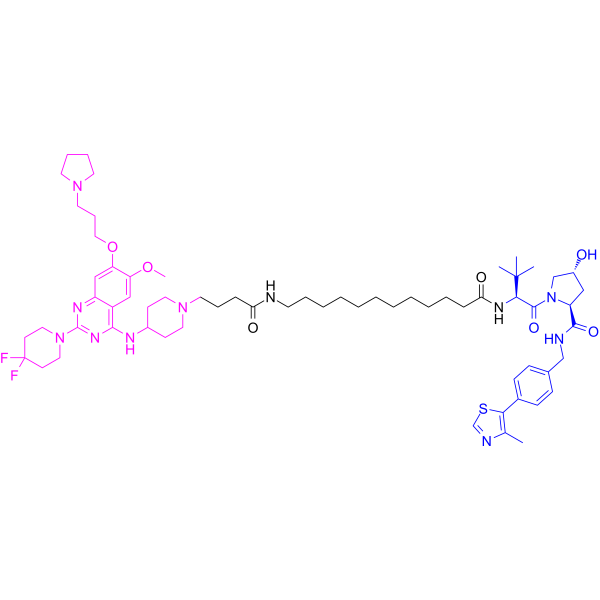
MS8709 is a PROTAC degrader that induces the degradation of G9a (EHMT2)/GLP (EHMT1) by recruiting VHL. MS8709 induces G9a/GLP protein degradation via a mechanism that simultaneously depends on G9a/GLP target protein binding, VHL recruitment, and the ubiquitin-proteasome system (UPS), while the mRNA levels of G9a and GLP do not show significant changes, indicating that the effect occurs primarily at the protein level rather than the transcriptional level. MS8709 retains the inhibitory effect on G9a/GLP methyltransferase activity and reduces H3K9me2 levels, thereby simultaneously affecting the catalytic and non-catalytic functions of G9a/GLP. MS8709 can be used for studies related to G9a/GLP biology, prostate cancer, lung cancer, and other relevant fields .
loading...
    loading...
Cat. No.: HY-130245
Purity:  98.33%
Target:  

HyT PCSK9

Research Areas:  

Metabolic Disease

PCSK9 degrader 1 is a HyT-like PCSK9 degrader with a Ki of 107 nM. PCSK9 degrader 1 binds to the allosteric pocket between the catalytic domain and C-terminal domain of PCSK9. While maintaining key interactions with this protein, it extends the proteasome-recruiting moiety, thereby driving degradation via the proteasomal pathway. PCSK9 degrader 1 induces the degradation of both the precursor and mature forms of PCSK9, with DC50 values of 4.8 μM and 3.4 μM respectively, and does not significantly affect cell viability or the expression of housekeeping proteins. PCSK9 degrader 1 can be used in the research of coronary heart disease .
loading...
    loading...
Cat. No.: HY-163144
CAS No.: 3044084-97-8
Target:  

PROTACs Src

Research Areas:  

Cancer

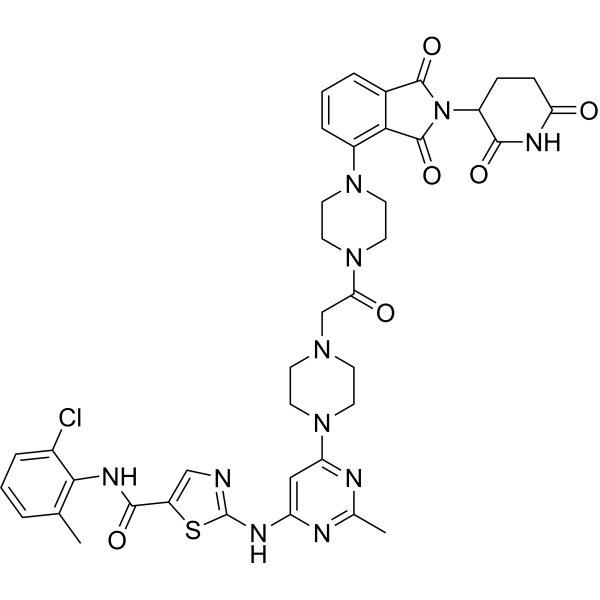
DAS-5-oCRBN is a PROTAC molecule with both c‑Src kinase inhibitory activity and target protein degradation activity, with an EC50 of 45 nM for c‑Src binding. DAS-5-oCRBN binds non-covalently to Cereblon and mediates target protein degradation via the ubiquitin-proteasome pathway. DAS-5-oCRBN can catalytically deplete intracellular c‑Src protein, while blocking both the kinase catalytic function of c‑Src and the non-catalytic protein interactions mediated by its SH2 and SH3 domains. DAS-5-oCRBN inhibits tumor cell proliferation and exerts significant anti-proliferative effects on both c‑Src kinase activity-dependent MDA-MB-231 cells and c‑Src protein level-dependent CAL51 cells. DAS-5-oCRBN can be used in cancer-related research such as studies on triple-negative breast cancer and chronic myeloid leukemia .
loading...
    loading...
Cat. No.: HY-P3414
CAS No.: 1565763-62-3
Target:  

Proteasome

Research Areas:  

Neurological Disease

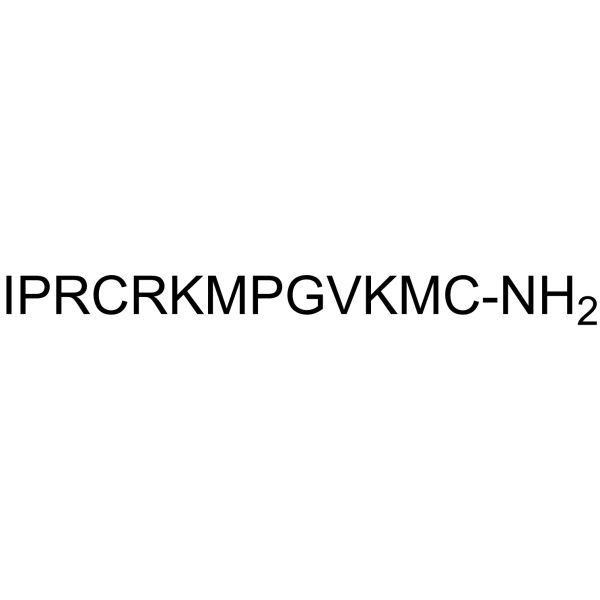
Proteasome-activating peptide 1 is a peptide, which increases the chymotrypsin-like proteasomal catalytic activity and, consequently, proteolytic rates both in vitro and in culture. Proteasome-activating peptide 1 prevents protein aggregation in a cellular model of amyotrophic lateral sclerosis .
loading...
    loading...
Cat. No.: HY-170363
CAS No.: 3063720-23-7
Target:  

Proteasome Parasite

Research Areas:  

Infection

Proteasome-IN-6 (Compound J-80) inhibits the β5 catalytic subunit of the Trypanosoma brucei 20S proteasome, inibits T. b. brucei, T. b. gambiense and T. b. rhodesiense with EC50s of 157 nM, 220 nM and 156 nM, respectively. Proteasome-IN-6 exhibits antitrypanosomal activity in mouse model .
loading...
    loading...
Cat. No.: HY-108553
CAS No.: 126463-64-7
Target:  

Proteasome Apoptosis

Research Areas:  

Cancer

Dihydroeponemycin, an analogue of the antitumor and antiangiogenic natural product eponemycin, selectively targets the 20S proteasome. Dihydroeponemycin covalently modifies a subset of catalytic proteasomal subunits, binding preferentially to the IFN-gamma-inducible subunits LMP2 and LMP7. Dihydroeponemycin-mediated proteasome inhibition induces a spindle-like cellular morphological change and apoptosis .
loading...
    loading...
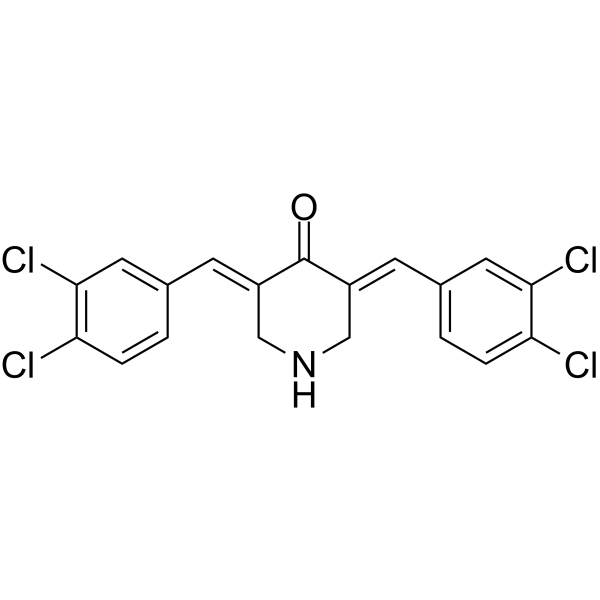
Cat. No.: HY-163770
Target:  

Proteasome

Research Areas:  

Cancer

Anticancer agent 233 (compound 5g) is a 3,5-bis(arylmethylene)-4-piperidinone derivative with anticancer activity, with GI50 of 0.25 and 0.23 μM for cervical cancer (HeLa) and colon cancer (HCT116) cell lines, respectively. The chlorine atom on the aromatic ring of Anticancer agent 233 interacts well with the catalytic site of 20S proteasome, inhibiting the activity of 20S proteasome to exert its anticancer effect .
loading...
    loading...
Cat. No.: HY-183468
CAS No.: 945611-89-2
Research Areas:  

Others

MV152 serves as the inactive control for the proteasome activity probe MV151. It contains a reduced ethyl sulfone group that replaces the vinyl sulfone reactive group of MV151, while retaining the identical fluorescent reporter group and peptide recognition sequence. MV152 does not bind to the active site of the proteasomal catalytic subunit β, does not induce peptide-mediated elevation of 20S proteasome activity, and does not label the proteasomal catalytic subunit β in brain tissue homogenates. MV152 can be used as an inactive negative control in proteasome-related experiments .
loading...
    loading...
Cat. No.: HY-P83719
Synonyms: DKFZp459C139 antibody; EC 3.4.25.1 antibody; LMPX antibody; Macropain epsilon chain antibody; MB1 antibody; MGC104214 antibody; MGC118075 antibody; MGC134464 antibody; Multicatalytic endopeptidase complex epsilon chain antibody; proteasome (prosome, macropain) subunit, beta type, 5 antibody; proteasome beta 5 subunit antibody; proteasome catalytic subunit 3 antibody; proteasome chain 6 antibody; proteasome epsilon chain antibody; proteasome subunit beta type-5 antibody; proteasome subunit MB1 antibody; proteasome subunit X antibody; proteasome subunit, beta type, 5 antibody; proteasome subunit, beta-5 antibody; PSB5_HUMAN antibody; PSMB5 antibody; PSX large multifunctional protease X antibody; X antibody

Host:  

Rabbit

Application:  

WB, IHC-P, ICC/IF, FC

Reactivity:  

Human, Mouse, Rat

loading...
    loading...
Cat. No.: HY-13821R
CAS No.: 134381-21-8
Synonyms: BU-4061T (Standard)
Epoxomicin (Standard) is the analytical standard of Epoxomicin (HY-13821). This product is intended for research and analytical applications. Epoxomicin (BU-4061T) is an epoxyketone-containing natural product and a potent, selective and irreversible proteasome inhibitor. Epoxomicin covalently binds to the LMP7, X, MECL1, and Z catalytic subunits of the proteasome and potently inhibits primarily the chymotrypsin-like activity. Epoxomicin can cross the blood-brain barrier. Epoxomicin has strongly antitumor and anti-inflammatory activity .
loading...
    loading...
Cat. No.: HY-187470
CAS No.: 3135155-78-8
Research Areas:  

Cancer

PROTAC AURKA degrader-4 is a AURKA PROTAC degrader with a DC50 of 25.62 nM (Jurkat cells). PROTAC AURKA degrader-4 recruits the CRBN E3 ubiquitin ligase via the ubiquitin-proteasome system. PROTAC AURKA degrader-4 disrupts both the catalytic and non-catalytic functions of AURKA, including its interactions with TPX2 and c-Myc. PROTAC AURKA degrader-4 induces G2/M phase arrest and apoptosis. PROTAC AURKA degrader-4 exhibits enhanced antiproliferative activity and in vivo antitumor efficacy in models with high CRBN and AURKA expression. PROTAC AURKA degrader-4 can be used for the research of acute lymphoblastic leukemia .
loading...
    loading...
Cat. No.: HY-187716
Target:  

PROTACs Virus Protease

Research Areas:  

Infection

PROTAC 3CPro degrader-1 is a picornavirus 3C protease (3CPro) PROTAC degrader with an DC50 value of 0.16 μM. PROTAC 3CPro degrader-1 directly inhibits the catalytic function of 3CPro, induces degradation via the ubiquitin-proteasome pathway, and binds to CRBN to form a ternary complex. PROTAC 3CPro degrader-1 inhibits viral replication, degrades drug-resistant EV71 3CPro mutants, and exhibits broad-spectrum activity against multiple picornavirus 3CPro variants. PROTAC 3CPro degrader-1 can be used in studies related to picornavirus infections .
loading...
    loading...
Cat. No.: HY-181967
Research Areas:  

Cancer

PROTAC PARP1 degrader-5 is a PARP1 PROTAC degrader with a DC50 of 0.12 μM. PROTAC PARP1 degrader-5 hijacks the ubiquitin-proteasome system via catalytic ternary complex formation to drive sustained PARP1 degradation. PROTAC PARP1 degrader-5 induces DNA damage, drives marginal cytosolic double-stranded DNA accumulation in tumor cells, and up-regulates PD-L1 surface expression in tumor cells. PROTAC PARP1 degrader-5 shows tumor growth inhibition activity in murine melanoma models when encapsulated in lipid nanoparticles. PROTAC PARP1 degrader-5 can be used for the research of cancer, such as melanoma .
loading...
    loading...
Cat. No.: HY-189256
Target:  

Bacterial Proteasome

Research Areas:  

Infection

20S Proteasome-IN-6 is a species-selective inhibitor of the Mycobacterium tuberculosis 20S proteasome. 20S Proteasome-IN-6 penetrates the Mycobacterium tuberculosis bacilli, sensitizes the bacteria to nitrosative stress, and reduces the bacterial burden of live Mycobacterium tuberculosis within infected macrophages. 20S Proteasome-IN-6 can be used for tuberculosis research .
loading...
    loading...

