
1. Search Result
Search Result
Results for "

protein translation initiation

" in MedChemExpress (MCE) Product Catalog:

24

Inhibitors & Agonists

3

Biochemical Assay Reagents

1

Natural
Products

18

Recombinant Proteins

17

Antibodies

9

Oligonucleotides

Cat. No. Product Name Target Research Areas Chemical Structure
  • HY-13250

    Drug Derivative Cancer
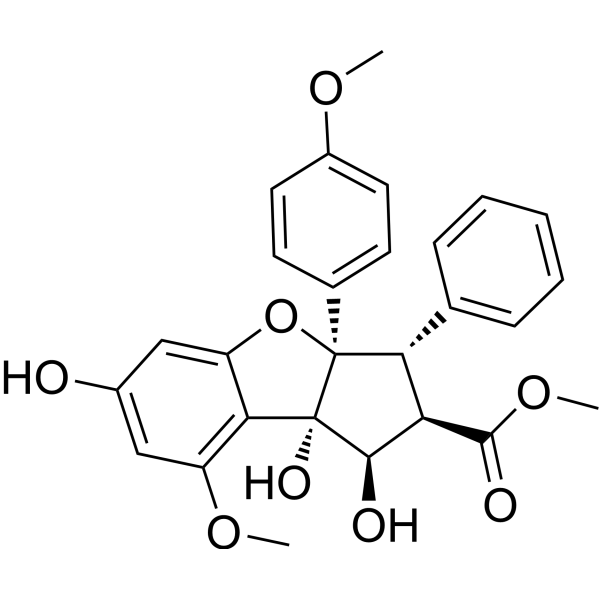
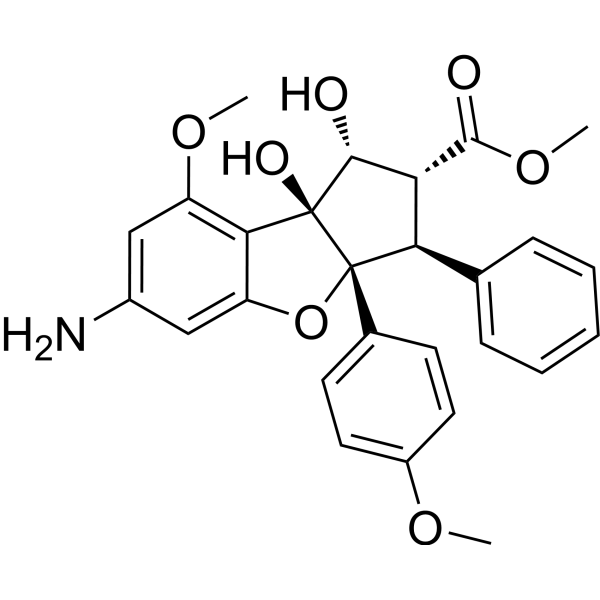
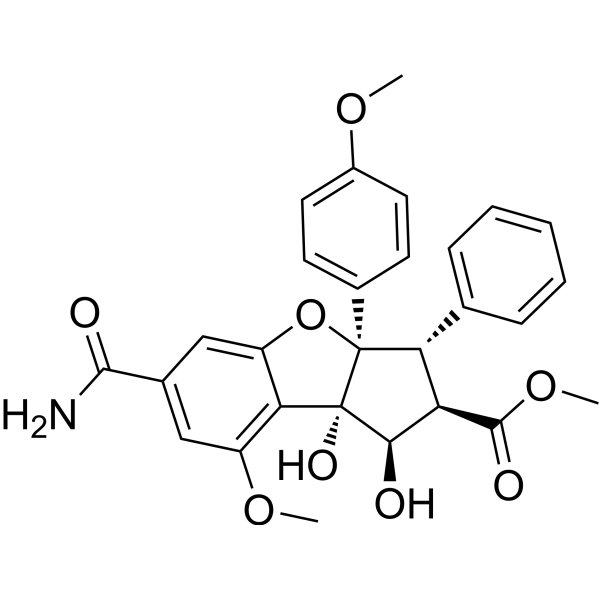
    Silvestrol aglycone is a Silvestrol analogue, inhibits protein translation initiation in cancer cells, with EC50s of 10 and 200 nM for myc-LUC and tub-LUC luciferase reporter protein translation, respectively. Anti-cancer activity .
    Silvestrol aglycone
  • HY-16366

    ON 014185

    Eukaryotic Initiation Factor (eIF) CDK c-Myc MDM-2/p53 Caspase Apoptosis Cancer
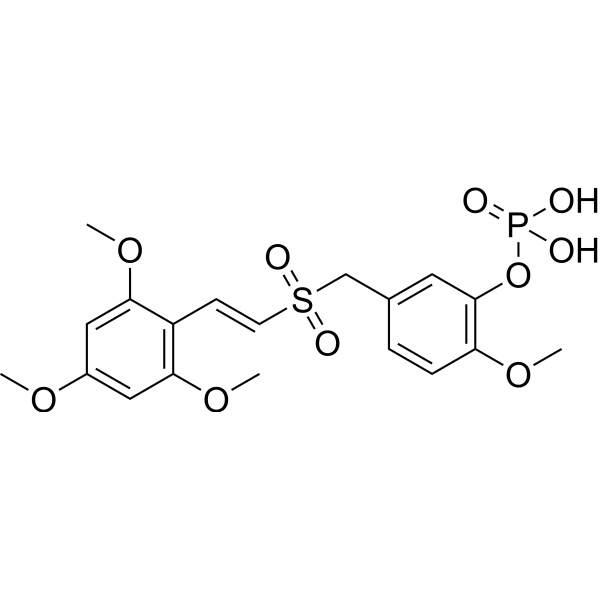
    Briciclib (ON 014185) is a eukaryotic translation initiation factor 4E (eIF4E) inhibitor. Briciclib exhibits broad-spectrum anti-cancer activity, including in mantle cell leukemia, breast cancer, gastric cancer, and esophageal cancer cells. Briciclib reduces the expression of cyclin D1 and c-Myc, and enhances the expression of P53 and Cleaved Caspase 3 pro-apoptotic proteins. Briciclib can be used for the study of hematological system tumors and solid tumors .
    Briciclib
  • HY-148448

    Eukaryotic Initiation Factor (eIF) Cancer
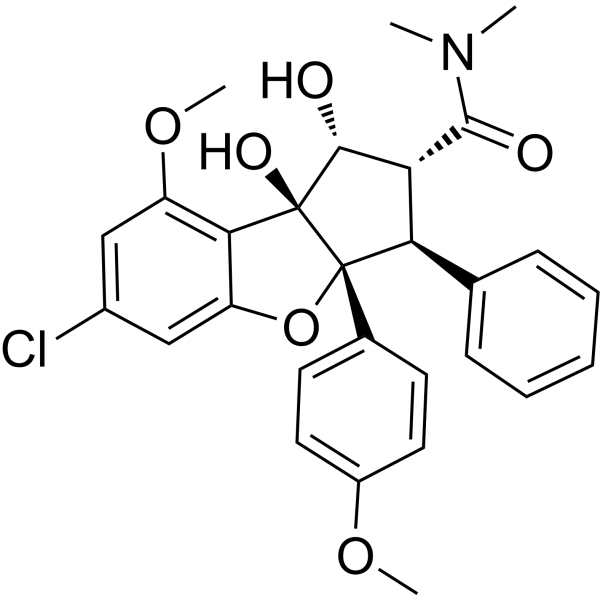
    eIF4A3-IN-9 is a Rocaglate analog. eIF4A3-IN-9 interferes with the assembly of the eIF4F translation complex, with EC50 values of 40 nM and > 2000 nM against myc-LUC and tub-LUC, respectively. eIF4A3-IN-9 can be used for the research of tumor pathogenesis .
    eIF4A3-IN-14
  • HY-10393

    PNU-100592

    Bacterial Antibiotic Infection
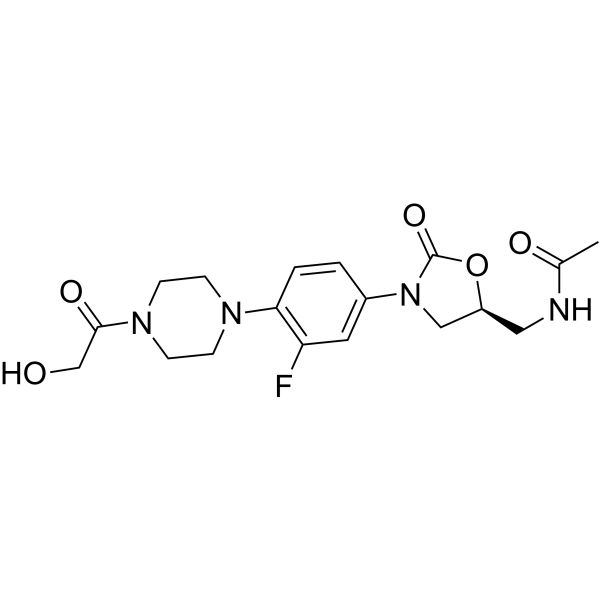
    Eperezolid (PNU-100592) is an orally active protein synthesis inhibitor that targets the bacterial 50S ribosomal subunit. Eperezolid competitively binds to a specific site on the ribosomal 50S subunit (overlapping with the binding sites of chloramphenicol (HY-B0239) and lincomycin (HY-117660)) to inhibit the translation initiation stage and exert antibacterial activity. Eperezolid can induce host cell autophagy to enhance the clearance of intracellular mycobacteria, and its MIC90 for Staphylococcus aureus and Enterococcus is 1-4 μg/mL. Eperezolid is mainly used for antibacterial research on infections with Gram-positive bacteria such as methicillin-resistant (HY-121544) Staphylococci and vancomycin-resistant (HY-B0671) Enterococci, as well as infections with intracellular bacteria such as Mycobacterium tuberculosis .
    Eperezolid
  • HY-148447

    Eukaryotic Initiation Factor (eIF) Cancer
    eIF4A-IN-3, Silvestrol (HY-13251) analogue, is an eIF4A inhibitor. eIF4A-IN-3 blocks protein translation initiation by interfering with eIF4F complex assembly, preferentially inhibiting translation of mRNAs with long, highly structured 5'-untranslated regions. eIF4A-IN-3 inhibits proliferation of human breast cancer cells. eIF4A-IN-3 has moderate apical to basolateral permeability in intestinal cell monolayers and a low efflux ratio .
    eIF4A-IN-3
  • HY-153108

    ARCA cap solution (100 mM)

    DNA/RNA Synthesis Others
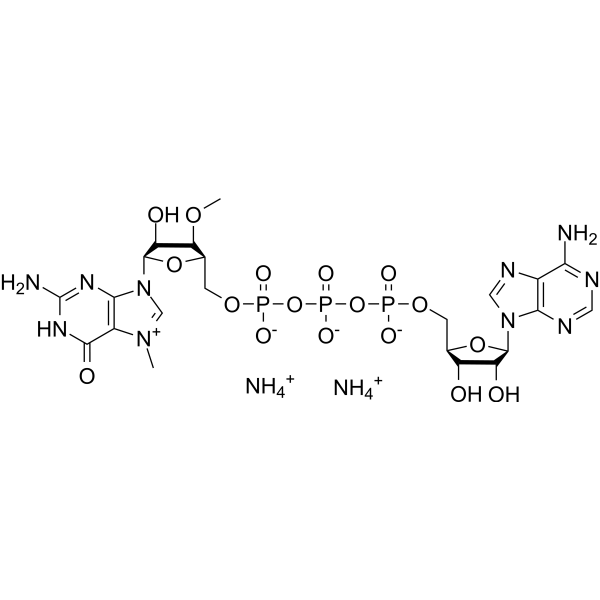
    3'-O-Me-m7G(5')ppp(5')A (ARCA cap) solution (100 mM), anti-reverse cap analog, has a special RNA cap structure. 3'-O-Me-m7G(5')ppp(5')A solution (100 mM) improves mRNA translation efficiency and stability, reduces translational inhibition by proteins such as IFIT1, and enables stronger and longer-lasting expression of the target protein. The RNA cap structure is a common feature of mRNAs in some RNA viruses and eukaryotes, and it serves as a signal for translation initiation .
    3'-O-Me-m7G(5')ppp(5')A solution (100 mM)
  • HY-148062

    PROTACs CDK AAK1 Cyclin G-associated Kinase (GAK) Salt-inducible Kinase (SIK) LIM Kinase (LIMK) Wee1 SnRK Others
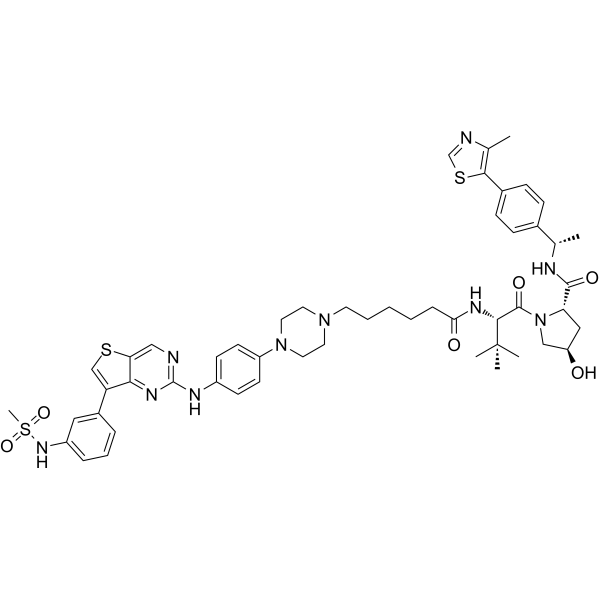
    RSS0680 is a small noncoding RNA (sRNA) targeting the mRNA ribosome binding site (RBS) and a PROTAC with protein kinase degradation activity (Pink: FLT3-IN-17 (HY-148070); Black: Linker (HY-W041970); Blue: E3 ligase Ligand (HY-112078)). RSS0680 competitively binds to RBS through the conserved CCUCCUCCC anti-Shine-Dalgarno (aSD) sequence and inhibits the translation initiation of target genes. RSS0680 can interact with the DUF1127 protein CcaF1, regulate its own stability and participate in bacterial oxidative stress defense, enhancing the host's resistance to heat shock and oxidative damage by affecting pathways such as C1 metabolism and pyruvate dehydrogenase complex. RSS0680 degrades AAK1, CDK1, CDK16, CDK2, CDK4, CDK6, EIF2AK4, GAK, LATSl, LIMK2, MAPK6, MAPKAPK5, MARK2, MARK4, MKNK2, NEK9, RPS6KB1, SIK2, SNRK, STK17A, STK17B, STK35, and WEEl. RSS0680 can be used to study diseases or disorders mediated by aberrant kinase activity and regulatory mechanisms of noncoding RNAs in α-proteobacteria[1][2].
    RSS0680
  • HY-N11857

    Antibiotic Bacterial Infection
    Gentamicin C2 is an aminoglycoside antibiotic with broad-spectrum bactericidal activity, selectively binding to the bacterial 16S rRNA A-site. Gentamicin C2 interferes with protein synthesis initiation and translation fidelity to exert bactericidal effects. Gentamicin C2 can be used for the research of bacterial infections .
    Gentamicin C2
  • HY-139098

    m7Gp3G

    DNA/RNA Synthesis Others
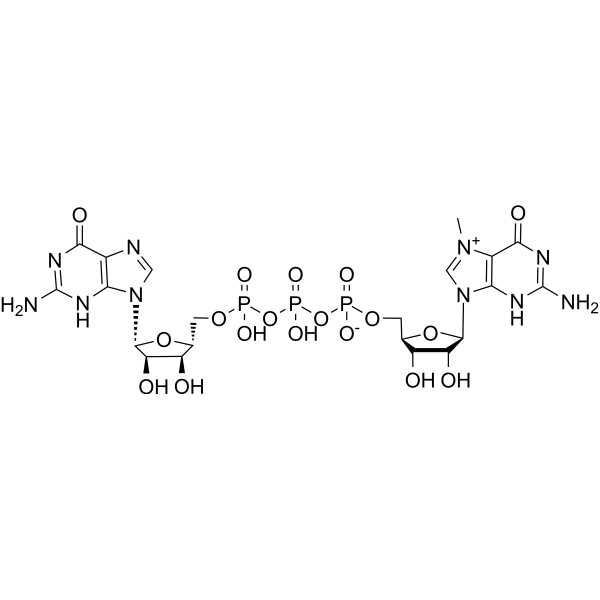
    7-Methyl-diguanosine triphosphate (m7Gp3G) is an mRNA cap structure analog that inhibits in vitro protein synthesis by binding to the translation initiation complex. 7-Methyl-diguanosine triphosphate binds to eIF4E, promotes cap-dependent translation initiation, stabilizes mRNA, and acts as a translation enhancer. 7-Methyl-diguanosine triphosphate can be used to prepare synthetic capped RNA transcripts for studies related to mRNA translation, splicing, turnover, and intracellular transport .
    7-Methyl-diguanosine triphosphate
  • HY-W348485

    mTOR Cancer
    WRX606 is an orally active nonrapalog inhibitor for mTOR complex 1 (mTORC1M). WRX606 inhibits the phosphorylation of mTORC1 substrate S6 kinase 1 (S6K1) (IC50 = 10 nM) and eukaryotic translation initiation factor 4E binding protein (p-4E-BP1) (IC50 = 0.27 μM) in MCF-7 cells. WRX606 suppresses tumor growth in mice without promotion of metastasis. WRX606 can be studied in research as an antitumor agent .
    WRX606
  • HY-148443

    Eukaryotic Initiation Factor (eIF) Cancer
    eIF4A3-IN-9 is a Rocaglate analog. eIF4A3-IN-9 interferes with the assembly of the eIF4F translation complex, with EC50 values of 29 and 450 nM against myc-LUC and tub-LUC, respectively. eIF4A3-IN-9 can be used for the research of tumor pathogenesis .
    eIF4A3-IN-9
  • HY-177610

    ISIS 2105

    HPV Infection
    Afovirsen is a 20-mer phosphorothioate oligonucleotide. It is complementary to the mRNA sequence for the translation initiation codon of the E2 protein vital to replication of HPV types 6 and 11.
    Afovirsen
  • HY-177638

    HSV Infection
    ISIS 1082 is an antisense oligonucleotide targeted to the translation initiation codon of herpes simplex virus (HSV) type 1 and 2 virion capsid protein. It has been shown to inhibit HSV-1 replication in vitro
    ISIS 1082
  • HY-177610A

    ISIS 2105 sodium

    HPV Infection
    Afovirsen sodium is a 20-mer phosphorothioate oligonucleotide. It is complementary to the mRNA sequence for the translation initiation codon of the E2 protein vital to replication of HPV types 6 and 11.
    Afovirsen sodium
  • HY-153837

    HCV Infection
    ISIS 14803 is a 20-unit antisense phosphorothioate oligodeoxynucleotide that binds to hepatitis C virus (HCV) RNA at the translation initiation region of the internal ribosome entry site (IRES) and inhibits protein expression in cell culture.
    ISIS 14803
  • HY-177638A

    HSV Infection
    ISIS 1082 sodium is an antisense oligonucleotide targeted to the translation initiation codon of herpes simplex virus (HSV) type 1 and 2 virion capsid protein. It has been shown to inhibit HSV-1 replication in vitro
    ISIS 1082 sodium
  • HY-153837A

    HCV Infection
    ISIS 14803 sodium is a 20-unit antisense phosphorothioate oligodeoxynucleotide that binds to hepatitis C virus (HCV) RNA at the translation initiation region of the internal ribosome entry site (IRES) and inhibits protein expression in cell culture.
    ISIS 14803 sodium
  • HY-W235043

    DNA/RNA Synthesis Infection
    Methyl 3-Oxodecanoate has been shown to have virulence factor activity against human pathogens and is active against fluorescent haplophyllum and culture supernatant. Methyl 3-oxodecanoate has also been shown to inhibit DNA synthesis by inhibiting protein synthesis at the level of translation initiation. Reagent grade, for research purpose.
    Methyl 3-oxodecanoate
  • HY-174720

    mRNA Inflammation/Immunology
    Human EIF2AK2 mRNA encodes the human eukaryotic translation initiation factor 2 alpha kinase 2 (EIF2AK2) protein, a serine/threonine protein kinase that is activated by autophosphorylation after binding to dsRNA. EIF2AK2 plays a key role in the innate immune response to viral infection and is also involved in the regulation of signal transduction, apoptosis, cell proliferation and differentiation.
    Human EIF2AK2 mRNA
  • HY-168326

    DNA/RNA Synthesis Microtubule/Tubulin Cancer
    Antiproliferative agent-64 (Compound 76) is an inhibitor for eukaryotic translation initiation factor 4E (eIF4E), that block the secondary structure of mRNA, thereby inhibiting protein translation. Antiproliferative agent-64 inhibits the 5' untranslated region (5'UTR) of c-Myc (c-myc 5'UTR) with an EC50 of 1.2 nM, inhibits 5'UTR encoding tubulin (tub 5'UTR) with an EC50 of 40 nM. Antiproliferative agent-64 inhibits the proliferation of MDA-MB-231 with an EC50 of 7 nM .
    Antiproliferative agent-64
  • HY-12770R

    Mebeverine metabolite Mebeverine alcohol (Standard)

    Reference Standards Drug Metabolite Neurological Disease
    Mebeverine alcohol (Standard) is an analytical standard for Mebeverine alcohol. This product is intended for research and analytical applications. Eperezolid (PNU-100592) is an orally active protein synthesis inhibitor that targets the bacterial 50S ribosomal subunit. Eperezolid competitively binds to a specific site on the ribosomal 50S subunit (overlapping with the binding sites of Chloramphenicol (HY-B0239) and Lincomycin (HY-117660)) to inhibit the translation initiation stage and exert antibacterial activity. Eperezolid can induce host cell autophagy to enhance the clearance of intracellular mycobacteria, and its MIC90 for Staphylococcus aureus and Enterococcus is 1-4 μg/mL. Eperezolid is mainly used for antibacterial research on infections with Gram-positive bacteria such as methicillin-resistant (HY-121544) Staphylococci and vancomycin-resistant (HY-B0671) Enterococci, as well as infections with intracellular bacteria such as Mycobacterium tuberculosis .
    Mebeverine alcohol (Standard)
  • HY-139098A

    m7Gp3G ammonium

    DNA/RNA Synthesis Others
    7-Methyl-diguanosine triphosphate (m7Gp3G) ammonium is an mRNA cap structure analog that inhibits in vitro protein synthesis by binding to the translation initiation complex. 7-Methyl-diguanosine triphosphate ammonium binds to eIF4E, promotes cap-dependent translation initiation, stabilizes mRNA, and acts as a translation enhancer. 7-Methyl-diguanosine triphosphate ammonium can be used to prepare synthetic capped RNA transcripts for studies related to mRNA translation, splicing, turnover, and intracellular transport .
    7-Methyl-diguanosine triphosphate ammonium
  • HY-173172

    Eukaryotic Initiation Factor (eIF) Apoptosis c-Myc CDK Cancer
    MG-002 is an orally active eIF4A inhibitor. MG-002 non-productively traps the eukaryotic translation initiation factor 4A (eIF4A) onto RNA, hindering the recruitment and scanning of ribosomes, thereby inhibiting mRNA translation. MG-002 selectively inhibits the growth and metastasis formation of triple-negative breast cancer (TNBC) tumors and induces cell apoptosis. MG-002 significantly inhibits the protein expression of c-MYC and cyclin D1. MG-002 can be used for research on TNBC .
    MG-002
  • HY-16366A

    ON 014185 sodium

    Eukaryotic Initiation Factor (eIF) CDK c-Myc MDM-2/p53 Caspase Apoptosis Cancer
    Briciclib (ON 014185) sodium is a eukaryotic translation initiation factor 4E (eIF4E) inhibitor. Briciclib sodium exhibits broad-spectrum anti-cancer activity, including in mantle cell leukemia, breast cancer, gastric cancer, and esophageal cancer cells. Briciclib sodium reduces the expression of cyclin D1 and c-Myc, and enhances the expression of P53 and Cleaved Caspase 3 pro-apoptotic proteins. Briciclib sodium can be used for the study of hematological system tumors and solid tumors .
    Briciclib sodium

Inquiry Online

Your information is safe with us. * Required Fields.

Salutation


Country or Region *

Applicant Name *


Organization Name *

Department *


Email Address *


Product Name *

Cat. No.


Requested quantity *

Phone Number *


Remarks

Inquiry Online

Inquiry Information

Product Name:
Cat. No.:
Quantity:
MCE Japan Authorized Agent:

