



Polyadenylic acid potassium

Based on 1 Customer Validation
Polyadenylic acid potassium (Poly(A)) is a polyribonucleotide. Polyadenylic acid potassium constitutes the 3'-poly(A) tail of eukaryotic mRNAs, governing mRNA maturation, stability, and translation initiation. Polyadenylic acid potassium serves as a target for studying nucleic acid structure-function relationships, with small molecules binding its tail influencing mRNA function and protein production. Polyadenylic acid (potassium) can be used for the research of cancer.
For research use only. We do not sell to patients.
- Purity : 90.00%
- CAS No.: 26763-19-9
- Molecular Weight:267KDa (Approximately)
-
Storage:
-20°C, sealed storage, away from moisture
* In solvent : -80°C, 6 months; -20°C, 1 month (sealed storage, away from moisture)


To place orders, for customer services and technical support, please contact: MedChemExpress USA
Tel: 609-228-6898 E-mail: [email protected] [email protected]


-
 Biological Activity
-
Chemical Information
- Protocols
- Purity & Documentation
- References
-
 Help & FAQs


-
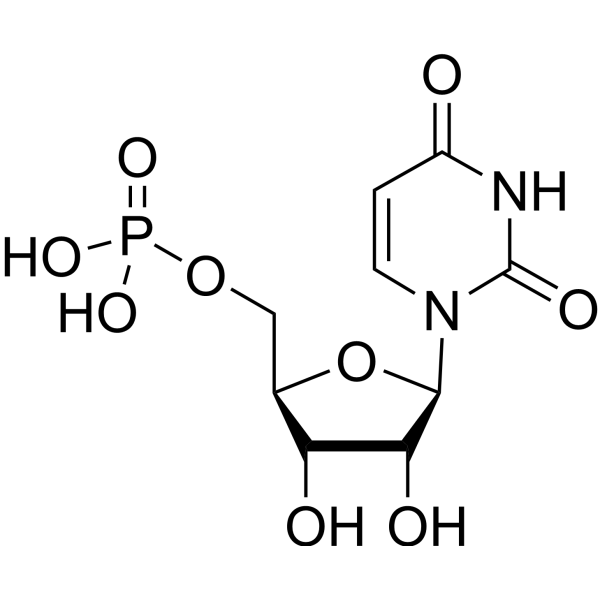
HY-101981
Uridine 5'-monophosphateNucleotide Analogue -
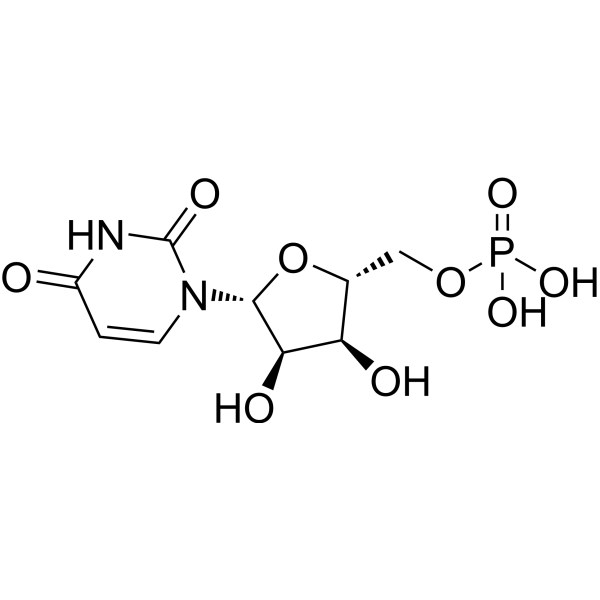
HY-101981R
Uridine 5'-monophosphate (Standard)Nucleotide Analogue -
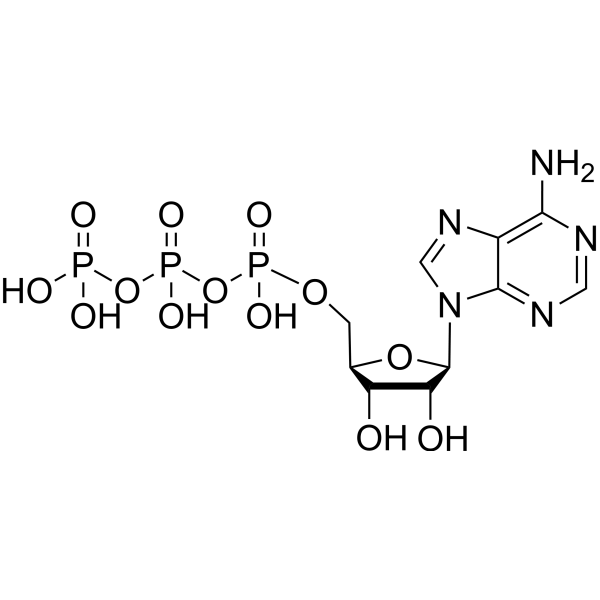
HY-B2176
ATPEndogenous Metabolite -
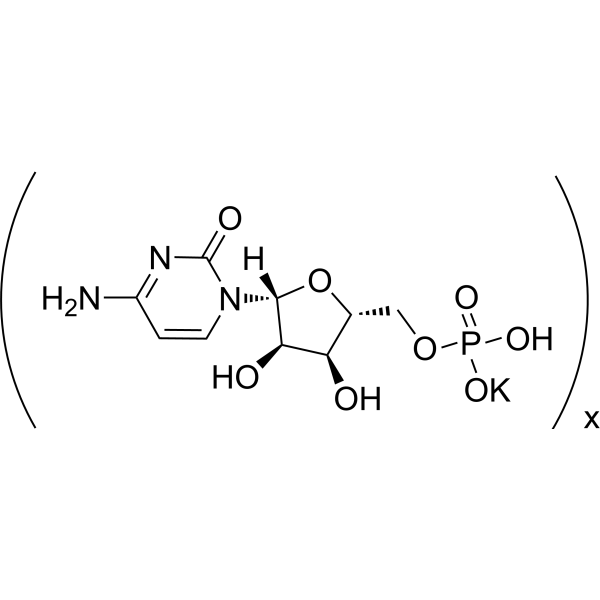
HY-W250152
Polycytidylic acid potassiumImmunostimulant -
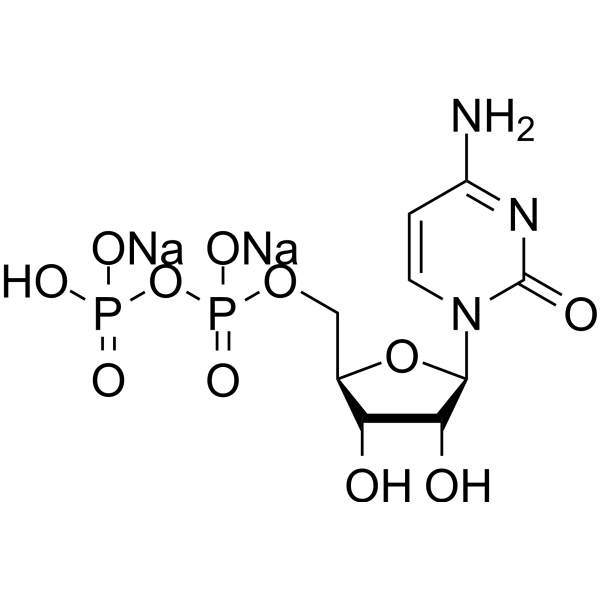
HY-W008940
Cytidine 5'-diphosphate disodium saltNucleotide -

HY-B2176R
ATP (Standard)Reference Standard -
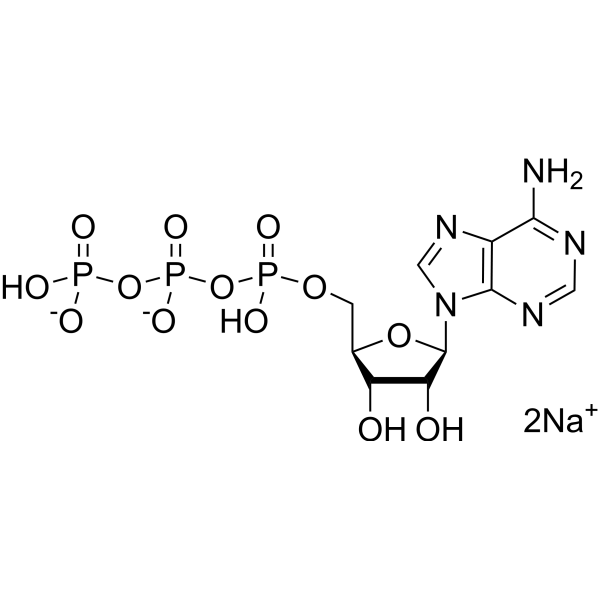
HY-B0345A
ATP disodium saltEndogenous Metabolite -
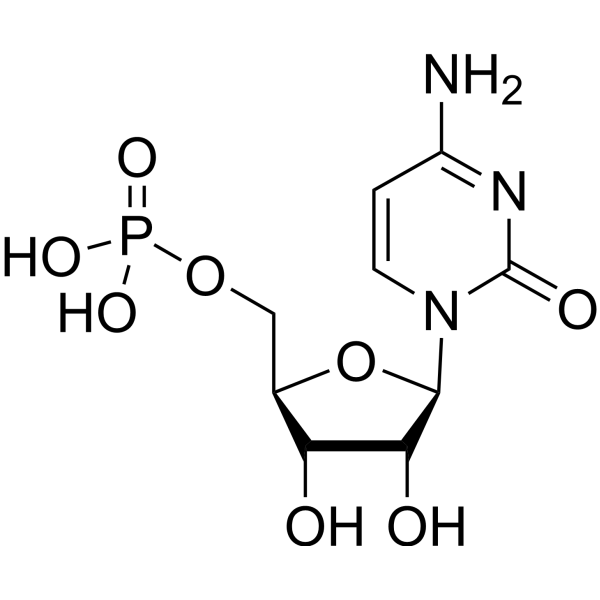
HY-W009162
Cytidine 5'-monophosphateEndogenous Metabolite -
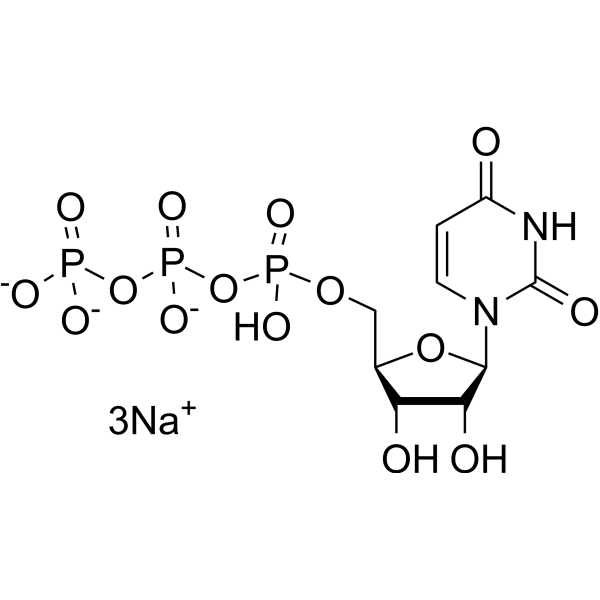
HY-W013093
Uridine triphosphate trisodium saltUTP -

HY-B2176I
ATP disodium salt, 100 mM Solution, PCR GradeEndogenous Metabolite -
HY-W013175
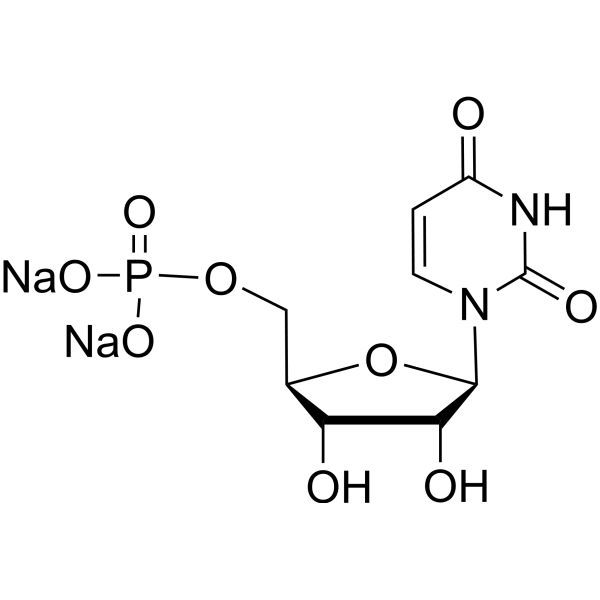
Uridine 5'-monophosphate disodium saltNucleotide Analogue -
HY-W013100
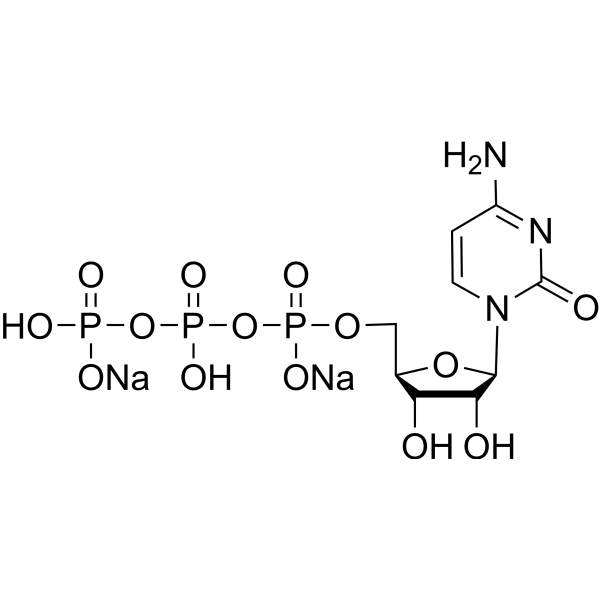
Cytidine-5'-triphosphate disodiumNucleoside Triphosphate


Biological Activity
Description
In Vitro
Polyadenylic acid potassium 55 μM undergoes pH-dependent conformational transitions, existing as a single-stranded helix at physiological pH, an intermediate B-form near pH 5.81, a double-stranded A-form at pH 4.0, and an aggregated "frozen" form at pH <3.8[1].
Polyadenylic acid potassium undergoes stacking and hydrogen bonding interactions with Lauroyl Uridine-containing liposomes to induce ordered base orientation[1].
MedChemExpress (MCE) has not independently confirmed the accuracy of these methods. They are for reference only. Further protocols information, click here.


Chemical Information
-
CAS No. 26763-19-9
-
Appearance Solid
-
Molecular Weight 267KDa (Approximately)
-
Color White to off-white
-
SMILES
NC1=C2C(N([C@@H]3O[C@H](COP(O)(O[K])=O)[C@@H](O)[C@H]3O)C=N2)=NC=N1.[n]
-
Synonyms
Poly(A)
-
Shipping
Room temperature in continental US; may vary elsewhere.
-
Storage
-20°C, sealed storage, away from moisture
* In solvent : -80°C, 6 months; -20°C, 1 month (sealed storage, away from moisture)

Protocols
-
RNA extraction experimental
By lysing cells, releasing RNA, and removing impurities such as proteins and DNA, high-purity RNA products are finally obtained. The commonly used traditional method is the guanidine isothiocyanate/phenol/chloroform method (Trizol), which is suitable for a variety of animal materials including animal tissues, microorganisms, cultured cells, etc., and most plant materials.
-
Protocol For Protein Expression And Purification
Recombinant protein expression in Escherichia coli followed by purification of a His-tagged soluble protein by immobilized metal affinity chromatography (IMAC), with optional MBP fusion and TEV tag removal when the construct includes these elements. The biological readout is production of the encoded target protein, detected as an inducible band at the expected molecular mass by SDS-PAGE and quantified by total protein assay or chromatographic absorbance; the purification readout is enrichment of the target protein in elution fractions after selective binding of polyhistidine residues to immobilized Ni2+/metal-chelate resin and elution by imidazole-containing buffer. Expression is driven by an inducible bacterial expression system, commonly T7/lac-based, in which IPTG or lactose/auto-induction activates transcription and translation of the cloned gene; lower induction temperature, lower inducer concentration, induction timing, and solubility-enhancing fusion tags can influence the frac


Purity & Documentation
-
Data Sheet (270 KB)
-
SDS (394 KB)
- English - EN (394 KB)
- Français - FR (394 KB)
- Deutsch - DE (394 KB)
- Norwegian - NO (394 KB)
- Español - ES (394 KB)
- Swedish - SV (394 KB)
- Italian - IT (394 KB)
- Korean - KR (394 KB)
- Portuguese - PT (394 KB)
-
Handling Instructions (2659 KB)
References
[1]. Giri P, et al. Molecular aspects of small molecules-poly(A) interaction: an approach to RNA based drug design. Curr Med Chem. 2009;16(8):965-987. [Content Brief]
[2]. Cuomo F, et al. Polyadenylic acid binding on cationic liposomes doped with the non-ionic nucleolipid Lauroyl Uridine. Colloids Surf B Biointerfaces. 2011;82(2):277-282. [Content Brief]

Calculators
Concentration (start) × Volume (start) = Concentration (final) × Volume (final)


Polyadenylic acid potassium Related Classifications
HY-W416291 Related Classifications
 Powered by Bioz