13 Results for "

radical-scavenging capacity

" in MedChemExpress (MCE) Product Catalog:
Products (13)

13 Results for "radical-scavenging capacity" in MCE Product Catalog:

Cat. No.: HY-N9413
CAS No.: 91216-95-4
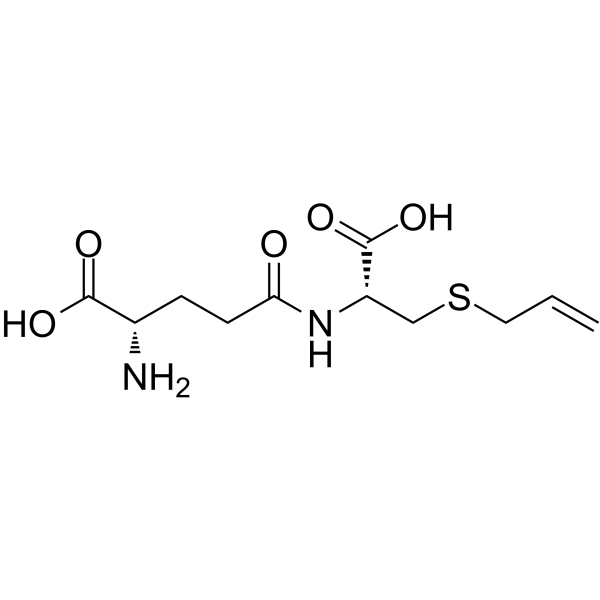
Synonyms: L-γ-Glutamyl-(S)-Allyl-Cysteine
γ-Glutamyl-S-allylcysteine (L-γ-Glutamyl-(S)-Allyl-Cysteine) is a naturally occurring organosulfur compound found in garlic. γ-Glutamyl-S-allylcysteine has antiglycative effect and shows radical-scavenging and metal-chelating capacities .
loading...
    loading...
Cat. No.: HY-N1521
CAS No.: 467-81-2
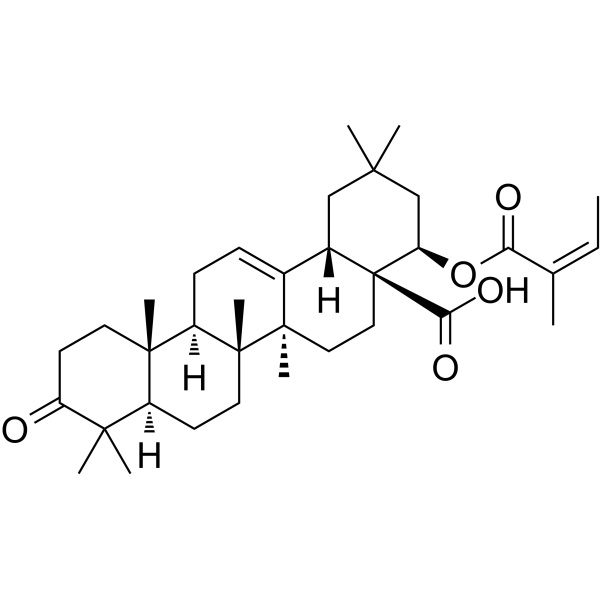
Synonyms: Lantadene A
Rehmannic acid (lantadene A) is a compound isolated from Lantana camara. Rehmannic acid shows considerable in vitro antioxidant, free radical scavenging capacity activities in a dose dependant manner. Rehmannic acid is a promising candidate for use as an antioxidant and hepatoprotective agent .
loading...
    loading...
Cat. No.: HY-E70104
CAS No.: 37288-35-0
Synonyms: α-L-Rhamnosidase
Target:  

Glycosidase Bacterial

Research Areas:  

Infection Cancer

α-Rhamnosidase (α-L-Rhamnosidase) is a kind of glycoside hydrolase. α-Rhamnosidase exhibits activity against Naringin (HY-N0153), 4-NRP, flavonoid glycosides and flavanone rhamnosides, and can hydrolyze the corresponding glycosidic bonds to release L-Rhamnose (Rhamnose) (HY-N1420) and other products. α-Rhamnosidase promotes the release of total flavonoids, ginkgolides and aroma components from ginkgo tea, while also enhancing the free radical scavenging capacity of the leachate, inhibiting inflammatory cell activation and increasing its cytotoxicity against tumor cells. α-Rhamnosidase can be used in research related to bacillary dysentery and cancer .
loading...
    loading...
Cat. No.: HY-N12291
CAS No.: 148462-00-4
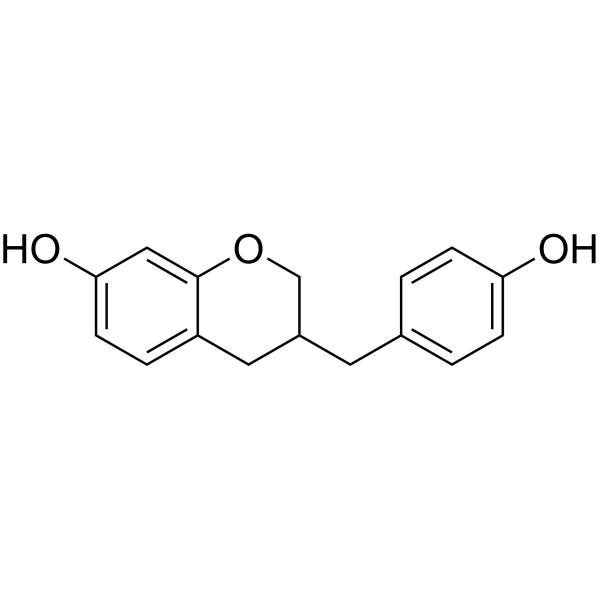
7,4'-Dihydroxyhomoisoflavane is a natural antioxidant. 7,4'-Dihydroxyhomoisoflavane has ABTS radical-scavenging capacity with an IC50 of 0.22 mg/mL .
loading...
    loading...
Cat. No.: HY-N16406
CAS No.: 41451-81-4
Auroglaucin is a potent antioxidant. Auroglaucin shows 1,1-diphenyl-2-picrylhydrazyl (DPPH) radical scavenging capacity and superoxide radical scavenging activity with EC50 value of 74.6, 12.3 µM, respectively. Auroglaucin shows low activity for inhibiting the autoxidation of docosahexaenoic acid (DHA) .
loading...
    loading...
Cat. No.: HY-N10770
CAS No.: 1221762-70-4
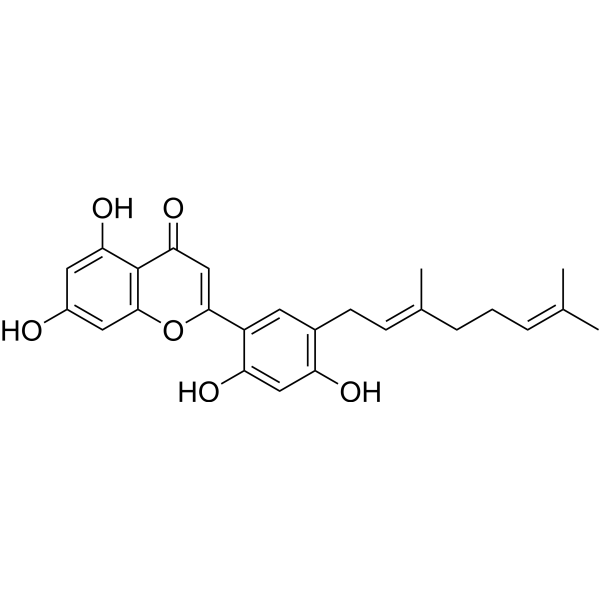
5'-Geranyl-5,7,2',4'-tetrahydroxyflavone, a phenolic compound, presents strong oxygen radical absorbance capacity (ORAC), DPPH radical-scavenging capacity, ABTS radical-scavenging capacity, ferric reducing antioxidant power (FRAP) and nitrite-scavenging capacity. 5'-Geranyl-5,7,2',4'-tetrahydroxyflavone has the potential for natural antioxidant research .
loading...
    loading...
Cat. No.: HY-N3315
CAS No.: 188300-19-8
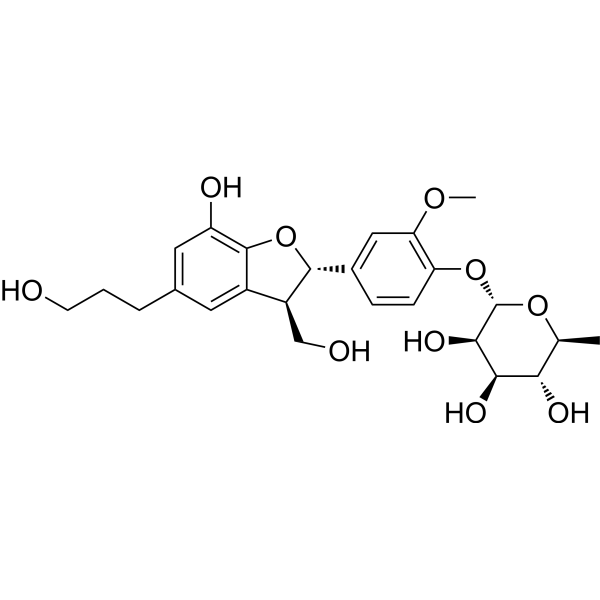
Massonianoside B is an antioxidant, which can be isolated from Cedrus deodara pine needle. Massonianoside B exhibits radicals scavenging capacities, and restores CCL4-impaired activity of antioxidant enzymes .
loading...
    loading...
Cat. No.: HY-150585
CAS No.: 2402753-39-1
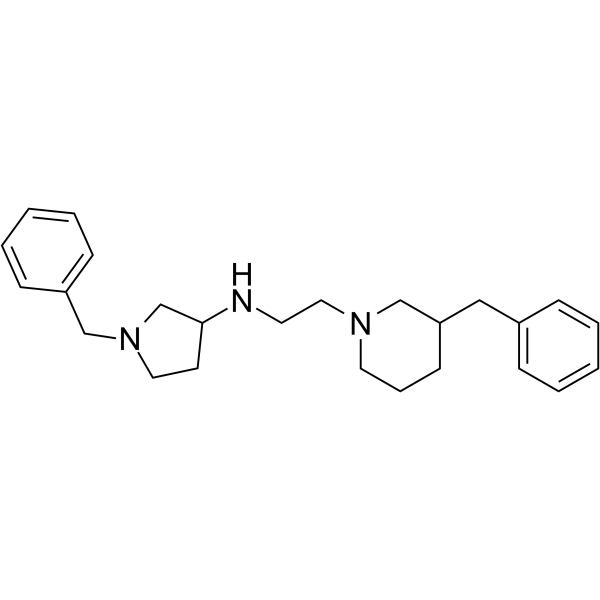
BuChE-IN-5 (compound 25b) is a potent BuChE inhibitor with an IC50 value of 1.94 μM. BuChE-IN-5 efficiently inhibits aggregation and tau protein in Escherichia coli. BuChE-IN-5 also has free radical scavenging capacity and antioxidant activity. BuChE-IN-5 can be used for researching Alzheimer’s disease .
loading...
    loading...
Cat. No.: HY-175027
Target:  

RIP kinase Ferroptosis

Research Areas:  

Neurological Disease

RIPK1-IN-33 is a blood-brain barrier-permeable and orally active RIPK1 inhibitor, with an IC50 of 0.115 μM. RIPK1-IN-33 demonstrates remarkable anti-ferroptosis activity, radical scavenging capacity (IC50 = 123.3 μM), and anti-lipid peroxidation effects (IC50 = 9.72 μM). RIPK1-IN-33 markedly reduces cerebral infarction volume and improves neurological function scores in transient middle cerebral artery occlusion (tMCAO) model. RIPK1-IN-33 can be used for the study of ischemic stroke .
loading...
    loading...
Cat. No.: HY-181028
Tyrosinase-IN-48 (Compound 3) is a potent and competitive chalcone-based tyrosinase inhibitor with an IC50 of 0.49 μM. Tyrosinase-IN-48 has potent antioxidant potential with significant DPPH and ABTS radical scavenging capacity. Tyrosinase-IN-48 can chelate the binuclear copper ions in the active center of tyrosinase and reduce Cu 2+ to Cu +, thereby reducing the catalytic activity of the enzyme. Tyrosinase-IN-48 has low cytotoxicity for HEK293 cells and zebrafish embryo. Tyrosinase-IN-48 shows antibrowning effects to improve food quality and can be used for research of food preservation .
loading...
    loading...
Cat. No.: HY-181029
Tyrosinase-IN-49 (Compound 12) is a potent and mixed-type chalcone-based tyrosinase inhibitor with an IC50 of 0.19 μM. Tyrosinase-IN-49 has potent antioxidant potential with significant DPPH and ABTS radical scavenging capacity. Tyrosinase-IN-49 can chelate the binuclear copper ions in the active center of tyrosinase and reduce Cu 2+ to Cu +, thereby reducing the catalytic activity of the enzyme. Tyrosinase-IN-49 has low cytotoxicity for HEK293 cells and zebrafish embryo. Tyrosinase-IN-49 shows antibrowning effects to improve food quality and can be used for research of food preservation .
loading...
    loading...
Cat. No.: HY-E70104A
Target:  

Glycosidase Bacterial

α-Rhamnosidase, Penicillium sp. is a kind of glycoside hydrolase. α-Rhamnosidase, Penicillium sp. exhibits activity against Naringin (HY-N0153), 4-NRP, flavonoid glycosides and flavanone rhamnosides, and can hydrolyze the corresponding glycosidic bonds to release L-Rhamnose (Rhamnose) (HY-N1420) and other products. α-Rhamnosidase, Penicillium sp. promotes the release of total flavonoids, ginkgolides and aroma components from ginkgo tea, while also enhancing the free radical scavenging capacity of the leachate, inhibiting inflammatory cell activation and increasing its cytotoxicity against tumor cells. α-Rhamnosidase, Penicillium sp. can be used in research related to bacillary dysentery and cancer .
loading...
    loading...
Cat. No.: HY-N19331
CAS No.: 5989-43-5
Matricarin is a sesquiterpene lactone antioxidant with ferric ion reducing antioxidant power activity. Matricarin exhibits free radical scavenging activity. Matricarin induces growth inhibition. Matricarin can be used in the research of ovarian cancer and renal cancer .
loading...
    loading...
  • 1

