1. Search Result
Search Result
Results for "

reproductive and developmental toxicity

" in MedChemExpress (MCE) Product Catalog:

14

Inhibitors & Agonists

1

Biochemical Assay Reagents

1

Isotope-Labeled Compounds

Cat. No. Product Name Target Research Areas Chemical Structure
  • HY-B0847
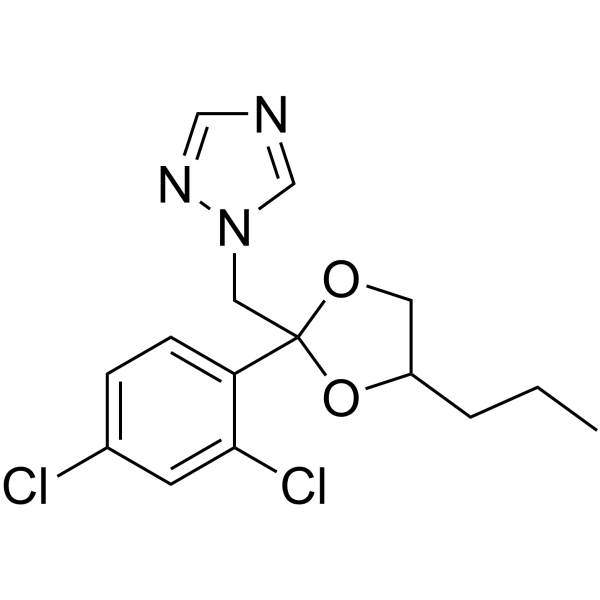
    Propiconazole
    2 Publications Verification

    Environmental Pollutants Reactive Oxygen Species (ROS) Fungal Infection
    Propiconazole is an orally active N-substituted triazole used as a fungicide. Propiconazole is a mouse liver hepatotoxicant and a hepatocarcinogen that has adverse reproductive and developmental toxicities in experimental animals .
    Propiconazole
  • HY-B1024
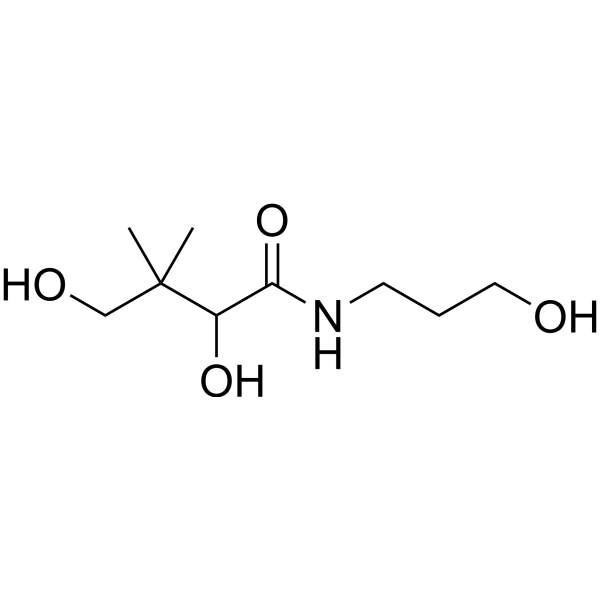
    DL-Panthenol
    1 Publications Verification

    DL-Pantothenol; DL-Pantothenyl alcohol

    Biochemical Assay Reagents Inflammation/Immunology
    DL-Panthenol (DL-Pantothenol) is a precursor of pantothenic acid. DL-Panthenol easily penetrates the skin and has effects of deep moisturizing, promoting wound healing and anti-inflammation. DL-Panthenol can also be used as a hair conditioner in cosmetics. DL-Panthenol has low acute toxicity, non-sensitizing property, and no significant genotoxicity or reproductive and developmental toxicity. DL-Panthenol can be applied to the research of cosmetics .
    DL-Panthenol
  • HY-W002199

    6:2 FTOH; 1H,1H,2H,2H-Perfluoro-1-octanol; 2-(Perfluorohexyl)ethanol

    Bacterial Apoptosis ERK TNF Receptor Infection Neurological Disease
    6:2 Fluorotelomer alcohol (6:2 FTOH) is an orally active, blood-brain barrier-permeable modulator of cyclin D1 and ETS1. 6:2 Fluorotelomer alcohol downregulates cyclin D1 expression, upregulates ETS1 via the TNF-α/ERK 1/2 pathway, impairs mitochondrial membrane potential and respiratory function, increases reactive oxygen species levels, disrupts calcium homeostasis and activates endoplasmic reticulum stress markers, and induces cell proliferation inhibition and endothelial-mesenchymal transition. Furthermore, 6:2 Fluorotelomer alcohol induces morphological abnormalities in zebrafish embryos and liver developmental damage, while disrupting the brain immune microenvironment in mice, causing systemic toxicity and delayed pup maturation in CD-1 mice. 6:2 Fluorotelomer alcohol also induces cortical neuron apoptosis, glial cell activation, synaptic abnormalities, colonic barrier damage, intestinal dysbiosis and autism spectrum disorder-like symptoms in mice. 6:2 Fluorotelomer alcohol shows no mutagenic, clastogenic, primary skin/eye irritation or skin sensitizing effects, exhibits no selective reproductive toxicity in CD-1 mice, and is classified as GHS Category 4 for acute oral toxicity. 6:2 Fluorotelomer alcohol can be used in studies of neurodevelopmental disorders and autism spectrum disorders .
    6:2 Fluorotelomer alcohol
  • HY-W013058

    DBDPE; 1,2-Bis(perbromophenyl)ethane

    Biochemical Assay Reagents Neurological Disease Metabolic Disease
    Decabromodiphenyl ethane (DBDPE; 1,2-Bis(perbromophenyl)ethane) is a brominated flame retardant. Decabromodiphenyl ethane can exhibit neurotoxicity, thyroid toxicity, reproductive developmental toxicity, hepatotoxicity, and oxidative stress in living organisms .
    Decabromodiphenyl ethane
  • HY-W203683

    PFNA; Heptadecafluorononanoic acid

    PPAR PERK Metabolic Disease
    Perfluorononanoic acid (PFNA) is an orally active PPARα activator. Perfluorononanoic acid activates PPARα-mediated gene expression, including upregulating target genes associated with lipid metabolism and triglyceride storage. Perfluorononanoic acid exhibits certain developmental and reproductive toxicity. Perfluorononanoic acid causes hepatomegaly in pregnant mice, induces high postnatal mortality in neonatal mice, and leads to dose-dependent delays in eye-opening time and puberty onset in mouse offspring .
    Perfluorononanoic acid
  • HY-W011787

    N,N′-Diphenyl-p-phenylenediamine

    Reactive Oxygen Species (ROS) Metabolic Disease
    DPPD (N,N′-Diphenyl-p-phenylenediamine) is an orally active polymerization inhibitor and antioxidant with antioxidative activity. DPPD causes reproductive/developmental toxicity in rats. DPPD is widely used in rubber, oils, and feedstuffs, especially for tires in the rubber industry .
    DPPD
  • HY-B2015

    Environmental Pollutants Insecticide Parasite Cholinesterase (ChE) Infection
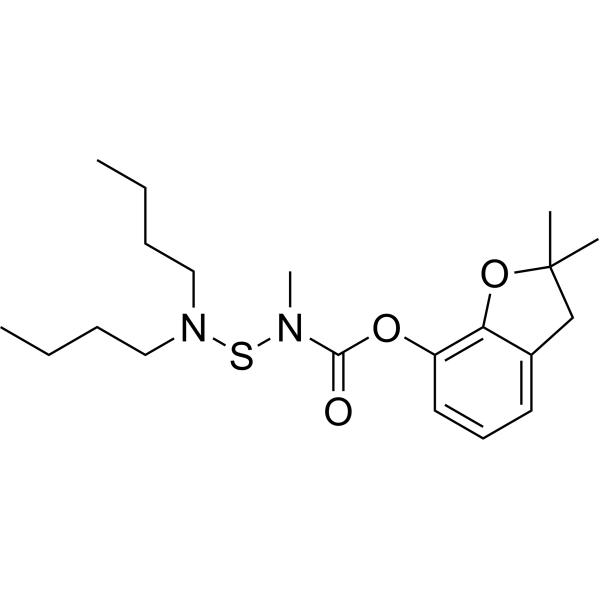
    Carbosulfan is an orally active AChE inhibitor that hydrolyzes to Carbofuran in organisms to exert insecticidal effects. Carbosulfan exhibits broad-spectrum insecticidal activity, and it also induces severe oxidative stress by enhancing lipid peroxidation and impairing the antioxidant defense system. Carbosulfan causes reproductive toxicity in male rats and developmental disorders in their offspring. Carbosulfan shows persistence in paddy field environments and potential hazards to non-target organisms, and it is commonly used in studies related to reproductive toxicity and environmental risk assessment .
    Carbosulfan
  • HY-B0847R

    Reference Standards Fungal Reactive Oxygen Species (ROS) Infection
    Propiconazole (Standard) is the analytical standard of Propiconazole. This product is intended for research and analytical applications. Propiconazole is an orally active N-substituted triazole used as a fungicide. Propiconazole is a mouse liver hepatotoxicant and a hepatocarcinogen that has adverse reproductive and developmental toxicities in experimental animals .
    Propiconazole (Standard)
  • HY-W088190

    Cyclohexyl ketone

    Drug Intermediate Biochemical Assay Reagents Others
    Dicyclohexyl ketone (Cyclohexyl ketone) is a toxic compound that causes toxic effects in rats at high doses, including death, decreased activity, staining of the fur on the lower body, reddening of the tears, and reproductive and developmental effects.
    Dicyclohexyl ketone
  • HY-B2015S

    Isotope-Labeled Compounds Parasite Insecticide Cholinesterase (ChE) Infection
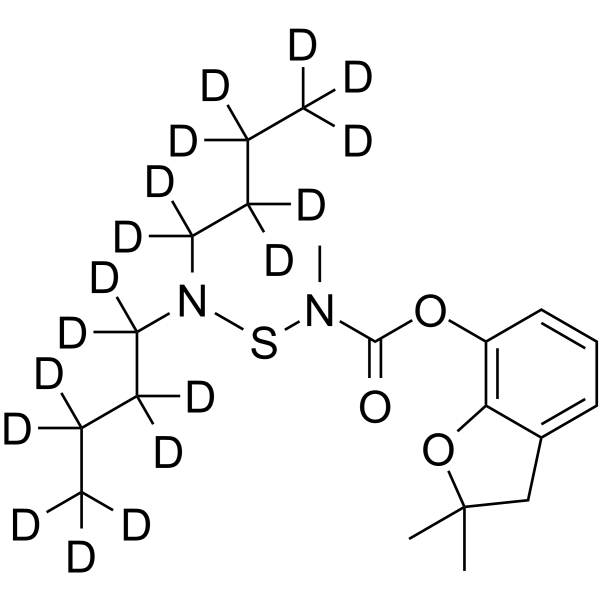
    Carbosulfan-d18 is the deuterium labeled Carbosulfan. Carbosulfan is an orally active AChE inhibitor that hydrolyzes to Carbofuran in organisms to exert insecticidal effects. Carbosulfan exhibits broad-spectrum insecticidal activity, and it also induces severe oxidative stress by enhancing lipid peroxidation and impairing the antioxidant defense system. Carbosulfan causes reproductive toxicity in male rats and developmental disorders in their offspring. Carbosulfan shows persistence in paddy field environments and potential hazards to non-target organisms, and it is commonly used in studies related to reproductive toxicity and environmental risk assessment .
    Carbosulfan-d18
  • HY-B2015R

    Reference Standards Parasite Insecticide Cholinesterase (ChE) Infection
    Carbosulfan (Standard) is the analytical standard of Carbosulfan. This product is intended for research and analytical applications. Carbosulfan is an orally active AChE inhibitor that hydrolyzes to Carbofuran in organisms to exert insecticidal effects. Carbosulfan exhibits broad-spectrum insecticidal activity, and it also induces severe oxidative stress by enhancing lipid peroxidation and impairing the antioxidant defense system. Carbosulfan causes reproductive toxicity in male rats and developmental disorders in their offspring. Carbosulfan shows persistence in paddy field environments and potential hazards to non-target organisms, and it is commonly used in studies related to reproductive toxicity and environmental risk assessment .
    Carbosulfan (Standard)
  • HY-W331198

    Insecticide Ferroptosis Infection
    Tralopyril is an orally active, blood-brain barrier-penetrating antifouling insecticide and endocrine disruptor. By interfering with the thyroid hormone system and mitochondrial oxidative phosphorylation, Tralopyril downregulates the transcription of genes such as TRHR, Nkx2.1, TRα and induces ferroptosis. Tralopyril disrupts amino acid, energy and lipid metabolism, exhibits significant skeletal and reproductive toxicity, and causes developmental damage. Tralopyril has a long half-life in vivo and wide tissue distribution, posing potential risks to aquatic organisms and human health. Tralopyril shows species specificity in in vitro liver microsomal metabolism, exerts lethal effects on target insects and laboratory animals, and is commonly used in studies of chlorfenapyr poisoning and related toxic mechanisms .
    Tralopyril
  • HY-W102684

    Biochemical Assay Reagents Others
    N,N-Dicyclohexyl-2-benzothiazolesulfenamide is a compound with reproductive and developmental toxicity that can affect body weight gain, reproductive organ weight, and multiple reproductive and developmental indicators in rats.
    N,N-Dicyclohexyl-2-benzothiazolesulfenamide
  • HY-W102352

    Drug Derivative Endocrinology
    Triethylene glycol diacetate is an orally active Triethylene glycol (HY-W017440) derivative with reproduction toxicity. Triethylene glycol diacetate reduces body weights of nursing mouse pups during lactation, with effects reversing by young adulthood, and increases combined kidney/adrenal weight in adult. Triethylene glycol diacetate can be used for the research of reproductive and developmental toxicity .
    Triethylene glycol diacetate

Inquiry Online

Your information is safe with us. * Required Fields.

Salutation


Country or Region *

Applicant Name *


Organization Name *

Department *


Email Address *


Product Name *

Cat. No.


Requested quantity *

Phone Number *


Remarks

Inquiry Online

Inquiry Information

Product Name:
Cat. No.:
Quantity:
MCE Japan Authorized Agent:

