
21 Results for "

retinal function

" in MedChemExpress (MCE) Product Catalog:
Products (21)

21 Results for "retinal function" in MCE Product Catalog:

2
2 Cited Publications
Cat. No.: HY-107661
CAS No.: 185517-21-9
Purity:  ≥98.0%
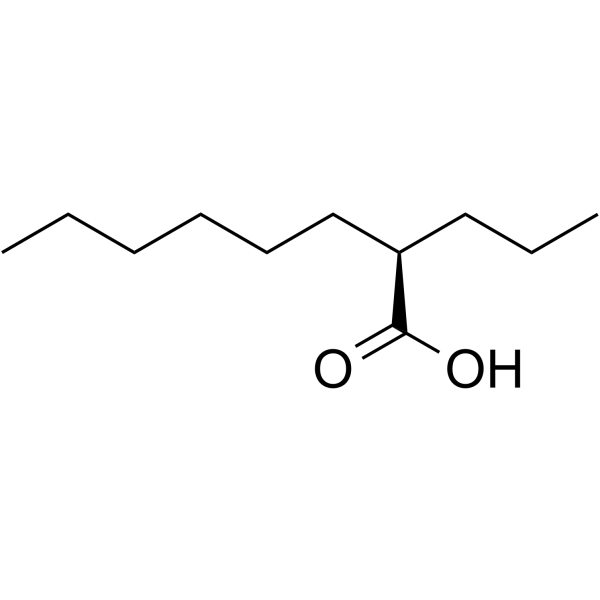
Synonyms: ONO-2506; (R)-2-Propyloctanoic acid
Target:  

ERK Akt NF-κB EAAT

Arundic Acid is an orally effective astrocyte function modulator and neuroprotective agent. Arundic Acid increases the expression and function of the astrocytic glutamate transporter EAAT1 by activating the ERK, Akt and NF-κB pathways. Arundic Acid attenuates retinal ganglion cell death in a normal-tension glaucoma model. Arundic Acid exerts neuroprotective effects in a mouse model of Parkinson's disease. Arundic Acid is a S100β protein synthesis inhibitor that prevents neurological deficits and brain tissue damage after intracerebral hemorrhage in rats. Arundic Acid downregulates neuroinflammation and astrocytic dysfunction after status epilepticus in immature rats. Arundic Acid is applicable to research related to Parkinson's disease, cerebral ischemia, glaucoma, intracerebral hemorrhage and epilepsy .
loading...
    loading...
1
1 Cited Publications
Cat. No.: HY-112624I
CAS No.: 9004-54-0
Synonyms: Dextran 3; Dextran D3; Dextran T3(MW 2400-3600)
Dextran T3 (Dextran 3; Dextran T3(MW 2400-3600)) is a neural tracer and intestinal permeability probe that can move anterogradely and retrogradely in neuronal axons by passive diffusion. Dextran T3 (MW 3,000) is able to permeate across the intestinal epithelial cell membrane in the presence of cholera toxin-induced cytoskeletal disturbance. Dextran T3 (MW 3,000) is used as a fluorescent marker to rapidly label developing neurons (such as Xenopus retinal ganglion cells) and to assess intestinal barrier function. It can be used to study axonal transport in neuroanatomy and permeability changes in intestinal pathophysiology. The Dextran series of compounds are also natural polysaccharide drug carriers that can be connected to drugs through covalent bonding methods such as ester bonds, amide bonds or click chemistry, or self-assembled to form carriers such as nanoparticles and hydrogels. Dextran is biodegradable and biocompatible, and can achieve targeted delivery and controlled release of drugs. Dextran derivatives can prolong the half-life of drugs, increase local concentrations, and reduce the activity of immune clearance .
loading...
    loading...
1
1 Cited Publications
Cat. No.: HY-N0819
CAS No.: 89412-79-3
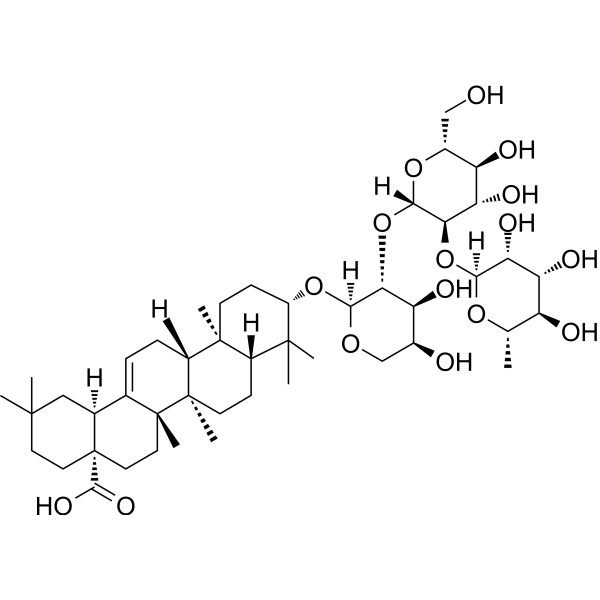
Raddeanin A is an oleanane-type triterpenoid saponin with oral activity. Raddeanin A inhibits SRC, mTOR, JNK, VEGFR2, NLRP3 inflammasome, Wnt/β-catenin, Wee1, PI3K/AKT signaling pathway, MAPK/ERK signaling pathway, AR-FL, AR-Vs, and downregulates the expression of p-PI3K and p-AKT. Raddeanin A inhibits osteoclast formation, bone resorption, osteolysis, cancer cell invasion, migration, proliferation, angiogenesis and epithelial-mesenchymal transition, while induces apoptosis, cell cycle arrest, ROS production, immunogenic cell death and dendritic cell maturation. Raddeanin A improves blood-retinal barrier function, alleviates inflammation, regulates the tumor microenvironment, and enhances the activity of anti-PD-1 antibody. Raddeanin A is applicable to the research of breast cancer-associated osteolysis, human osteosarcoma, colorectal cancer, glioblastoma, Alzheimer's disease, cholangiocarcinoma, melanoma, non-small cell lung cancer, castration-resistant prostate cancer and multiple myeloma .
loading...
    loading...
Cat. No.: HY-136234
CAS No.: 13312-52-2
Synonyms: 9Z β-Carotene
Target:  

Endogenous Metabolite

Research Areas:  

Others

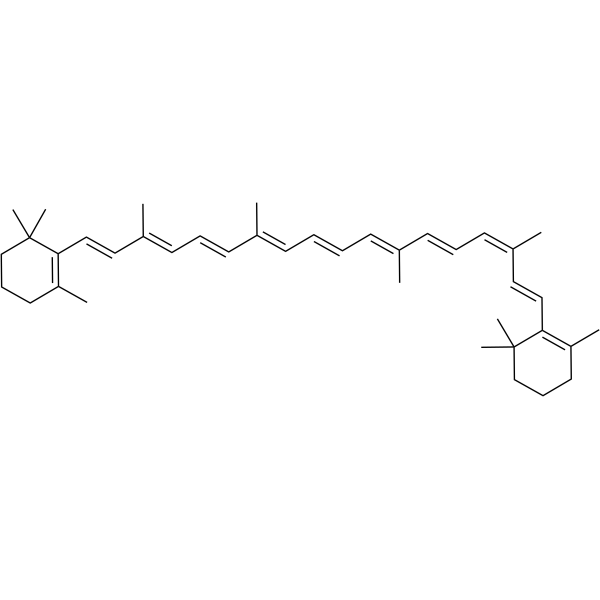
9-cis-β-Carotene, a precursor of retinal, is cleaved by beta-carotene oxygenase 1 (BCMO1) to produce 9-cis-retinal. 9-cis-β-Carotene inhibits photoreceptor degeneration and restores retinal function in vivo. 9-cis-β-Carotene has the potential for the study of congenital stationary night blindness and fundus albipunctatus .
loading...
    loading...
Cat. No.: HY-116711
CAS No.: 564-87-4
Synonyms: 11-cis retinaldehyde; 11-cis Vitamin A aldehyde
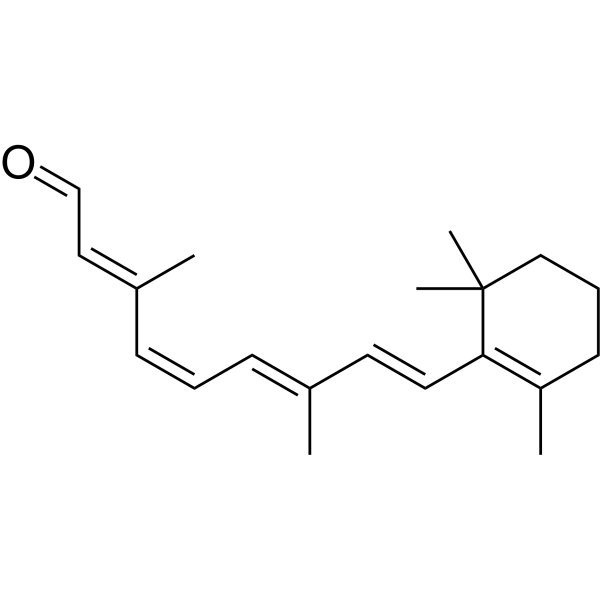
11-cis-Retinal (11-cis Retinaldehyde; 11-cis Vitamin A aldehyde), oxidized form of 11-cis-Retinol (HY-W587807), is a naturally occurring visual component. 11-cis-Retinal binds to opsin in the mammalian visual system as an inverse agonist forming the inactive conformation of rhodopsin. 11-cis-Retinal plays a crucial role in vision, growth and development. 11-cis-Retinal can restore visual function in moths with visual impairments. 11-cis-Retinal can restore retinal function in an early-age LCA2 retinal degeneration 12 mouse model .
loading...
    loading...
Cat. No.: HY-132893
CAS No.: 2830555-70-7
Target:  

TAM Receptor

Research Areas:  

Neurological Disease Cancer

AZ14145845 is an orally active dual-target type 1½ kinase inhibitor of Mer/Axl, which inhibits Mer kinase (pIC50 = 9.0) and Axl kinase (pIC50 = 7.9) with high selectivity over Flt3 and Tyro3. AZ14145845 suppresses Mer- and Axl-dependent proliferation in Ba/F3 cells and inhibits efferocytosis in macrophages. AZ14145845 reduces the phagocytosis of photoreceptor outer segments by polarized human retinal epithelial cells. AZ14145845 inhibits tumor growth and induces tumor regression in vivo, and its combination with anti-PD1 antibody and ionizing radiation improves the survival rate of mice with colorectal cancer. AZ14145845 causes retinal degeneration in mice, with pathological changes similar to those in MERTK loss-of-function models. AZ14145845 can be used in studies related to retinal degeneration, lymphoma and colorectal cancer .
loading...
    loading...
Cat. No.: HY-147412
CAS No.: 2642382-41-8
Synonyms: QR-421a
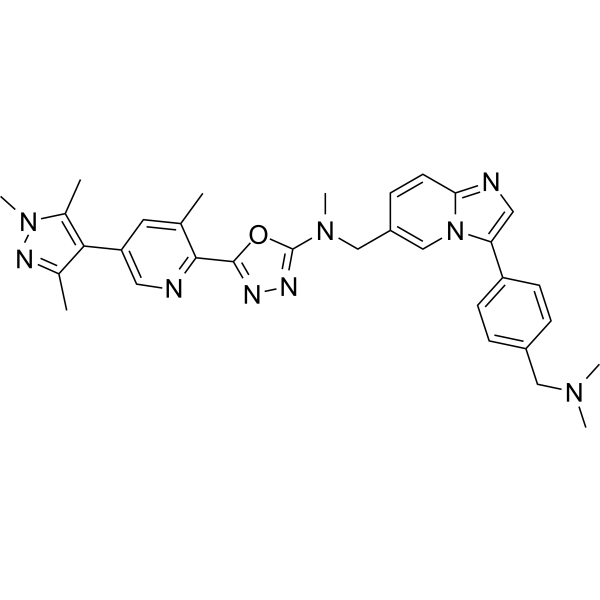
Ultevursen (QR-421a) is a splice-modulating antisense oligonucleotide targeting exon 13 of the USH2A gene, which restores the functional expression of Usherin protein by inducing exon skipping. Ultevursen binds to USH2A pre-mRNA and modulates the splicing process to specifically skip exon 13 carrying the pathogenic mutation c.2299delG, generating an in-frame transcript and a truncated yet functionally normal protein. Ultevursen exhibits concentration-dependent exon skipping activity in human cells and retinal organoid models, and restores Usherin expression and retinal function in zebrafish and gene-edited mouse models. Ultevursen can be used for related research on type 2 Usher syndrome and non-syndromic retinitis pigmentosa .
loading...
    loading...
Cat. No.: HY-P1615
CAS No.: 1006388-38-0
Synonyms: UPARANT
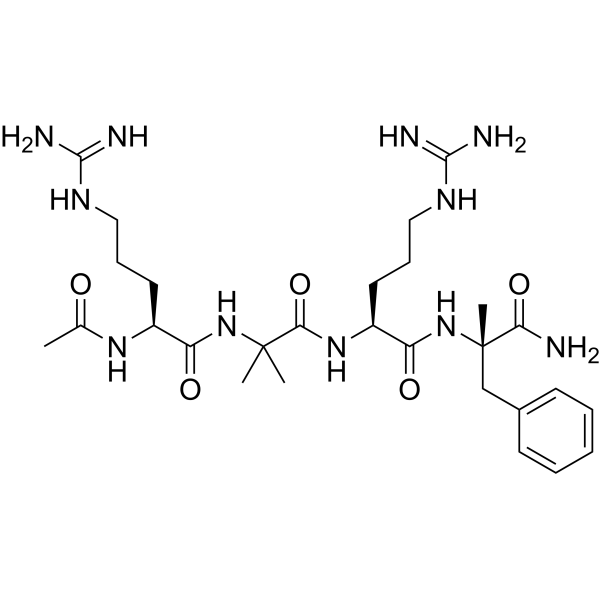
Cenupatide (UPARANT) is a uPAR and FPR antagonist with anti-angiogenic, anti-inflammatory, and vascular barrier regulatory activities, as well as high stability and resistance to enzymatic degradation in blood/plasma. Cenupatide blocks the uPAR-FPR interaction, reduces VEGF-induced phosphorylation levels of AKT, VEGFR-2, STAT3, JNK, p38 MAPK, ERK1/2, and NF-κB p65, and inhibits αvβ3 integrin activation. Cenupatide suppresses endothelial cell migration, invasion, tube formation, and angiogenic signaling pathways, restores tight junctions and blood-retinal barrier integrity, reduces pro-inflammatory marker levels, and inhibits apoptosis. Cenupatide reduces retinal neovascularization, renal fibrosis, and vascular leakage, and restores visual function in preclinical models. Cenupatide is applicable to research related to retinopathy, diabetic complications, ocular diseases, cancer, and inflammatory diseases .
loading...
    loading...
Ultevursen sodium
0 Images
RNA, (P-thio)[2′-O-(2-methoxyethyl)](A-G-m5C-m5U-m5U-m5C-G-G-A-G-A-A-A-m5U-m5U-m5U-A-A-A-m5U-m5C), sodium salt
Cat. No.: HY-147412A
Synonyms: QR-421a sodium
Ultevursen sodium (QR-421a) is a splice-modulating antisense oligonucleotide targeting exon 13 of the USH2A gene, which restores the functional expression of Usherin protein by inducing exon skipping. Ultevursen sodium binds to USH2A pre-mRNA and modulates the splicing process to specifically skip exon 13 carrying the pathogenic mutation c.2299delG, generating an in-frame transcript and a truncated yet functionally normal protein. Ultevursen sodium exhibits concentration-dependent exon skipping activity in human cells and retinal organoid models, and restores Usherin expression and retinal function in zebrafish and gene-edited mouse models. Ultevursen sodium can be used for related research on type 2 Usher syndrome and non-syndromic retinitis pigmentosa .
loading...
    loading...
Cat. No.: HY-162904
CAS No.: 2198977-68-1
Research Areas:  

Cardiovascular Disease

BPU17 binds to PHB1 and causes mild defects in mitochondrial function by defects in the PHB1-PHB2 interaction. This impairment inhibits the SRF/CArG-box-dependent transcription, resulting in the suppression of epithelial-mesenchymal transition (EMT) of retinal pigment epithelial cells (RPEs). BPU17 exhibits antifibrotic activity in vivo. BPU17 is promising for research of anti-neovascular age-related macular degeneration (nAMD) agent .
loading...
    loading...
Cat. No.: HY-153172
CAS No.: 2274723-90-7
Synonyms: Phenylbenzothiazole-PEG4-OH; SPG302
Target:  

Drug Intermediate

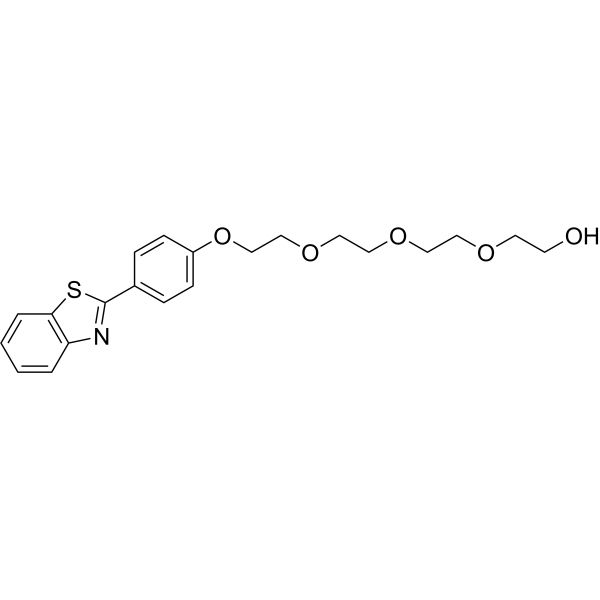
Tazbentetol (Phenylbenzothiazole-PEG4-OH) is a synaptogenic compound. Tazbentetol partially preserves inner retinal neurotransmission function and maintains retinal function. Tazbentetol increases dendritic spine glutamatergic synapses via cytoskeleton signaling pathways, enhances synaptic density both in vitro and in vivo, and restores glutamatergic synapses. Tazbentetol improves the progression of motor symptoms and enhances memory. Tazbentetol can be used in the research of glaucoma, diabetic retinopathy and amyotrophic lateral sclerosis .
loading...
    loading...
Cat. No.: HY-122129
CAS No.: 105517-82-6
Target:  

Endogenous Metabolite

Research Areas:  

Metabolic Disease

Very long chain polyunsaturated fatty acids (VLCPUFA) are present in retina, sperm, and brain. Though little is known of their biosynthesis or functional roles in these tissues, recent studies using the elongation of very long-chain FA-4 protein suggest a unique role for VLCPUFA in retinal development and macular degeneration. Dotriaconta-14,17,20,23,26,29-hexaenoic acid is a C32:6 VLCPUFA whose specific biological actions are largely unknown, but are thought to involve normal photoreceptor cell function in the retina.
loading...
    loading...
Cat. No.: HY-122129S
CAS No.: 2692624-20-5
Dotriaconta-14,17,20,23,26,29-hexaenoic acid-d6 is deuterium labeled Dotriaconta-14,17,20,23,26,29-hexaenoic acid. Very long chain polyunsaturated fatty acids (VLCPUFA) are present in retina, sperm, and brain. Though little is known of their biosynthesis or functional roles in these tissues, recent studies using the elongation of very long-chain FA-4 protein suggest a unique role for VLCPUFA in retinal development and macular degeneration. Dotriaconta-14,17,20,23,26,29-hexaenoic acid is a C32:6 VLCPUFA whose specific biological actions are largely unknown, but are thought to involve normal photoreceptor cell function in the retina .
loading...
    loading...
Cat. No.: HY-N0819R
CAS No.: 89412-79-3
Raddeanin A (Standard) is the analytical standard of Raddeanin A (HY-N0819). This product is intended for research and analytical applications. Raddeanin A is an oleanane-type triterpenoid saponin with oral activity. Raddeanin A inhibits SRC, mTOR, JNK, VEGFR2, NLRP3 inflammasome, Wnt/β-catenin, Wee1, PI3K/AKT signaling pathway, MAPK/ERK signaling pathway, AR-FL, AR-Vs, and downregulates the expression of p-PI3K and p-AKT. Raddeanin A inhibits osteoclast formation, bone resorption, osteolysis, cancer cell invasion, migration, proliferation, angiogenesis and epithelial-mesenchymal transition, while induces apoptosis, cell cycle arrest, ROS production, immunogenic cell death and dendritic cell maturation. Raddeanin A improves blood-retinal barrier function, alleviates inflammation, regulates the tumor microenvironment, and enhances the activity of anti-PD-1 antibody. Raddeanin A is applicable to the research of breast cancer-associated osteolysis, human osteosarcoma, colorectal cancer, glioblastoma, Alzheimer's disease, cholangiocarcinoma, melanoma, non-small cell lung cancer, castration-resistant prostate cancer and multiple myeloma.
loading...
    loading...
Cat. No.: HY-P992126
CAS No.: 3059389-31-7
Synonyms: EYE-103; MK-3000
Target:  

Wnt

Research Areas:  

Neurological Disease

Remigromig (EYE-103; MK-3000) is a humanized dual-target monoclonal antibody that targets LRP5 and FZD4. Remigromig activates the Wnt/β-catenin signaling pathway by mimicking the natural ligand Norrin, induces tight junction formation and restores blood-retinal barrier function. Administered via intravitreal injection, Remigromig reduces retinal vascular leakage, and demonstrates improvements in best-corrected visual acuity and reductions in retinal thickness in studies of diabetic macular edema. Remigromig can be used for research related to macular degeneration .
loading...
    loading...
Cat. No.: HY-147412D
Target:  

Fluorescent Dye

Research Areas:  

Neurological Disease

FAM labled Ultevursen sodiumis a FAM labled Ultevursen sodium (HY-147412A). Ultevursen sodium (QR-421a) is a splice-modulating antisense oligonucleotide targeting exon 13 of the USH2A gene, which restores the functional expression of Usherin protein by inducing exon skipping. Ultevursen sodium binds to USH2A pre-mRNA and modulates the splicing process to specifically skip exon 13 carrying the pathogenic mutation c.2299delG, generating an in-frame transcript and a truncated yet functionally normal protein. Ultevursen sodium exhibits concentration-dependent exon skipping activity in human cells and retinal organoid models, and restores Usherin expression and retinal function in zebrafish and gene-edited mouse models. Ultevursen sodium can be used for related research on type 2 Usher syndrome and non-syndromic retinitis pigmentosa .
loading...
    loading...
Cat. No.: HY-147412E
Target:  

Fluorescent Dye

Research Areas:  

Neurological Disease

Cy3 labled Ultevursen sodium is a Cy3 labled Ultevursen sodium (HY-147412A). Ultevursen sodium (QR-421a) is a splice-modulating antisense oligonucleotide targeting exon 13 of the USH2A gene, which restores the functional expression of Usherin protein by inducing exon skipping. Ultevursen sodium binds to USH2A pre-mRNA and modulates the splicing process to specifically skip exon 13 carrying the pathogenic mutation c.2299delG, generating an in-frame transcript and a truncated yet functionally normal protein. Ultevursen sodium exhibits concentration-dependent exon skipping activity in human cells and retinal organoid models, and restores Usherin expression and retinal function in zebrafish and gene-edited mouse models. Ultevursen sodium can be used for related research on type 2 Usher syndrome and non-syndromic retinitis pigmentosa .
loading...
    loading...
Cat. No.: HY-182484
CAS No.: 372198-80-6
Target:  

GlyT

Research Areas:  

Neurological Disease

Org 24461 is a selective and brain-penetrant GlyT-1 inhibitor. Org 24461 blocks glycine uptake, reuptake, reverse operation, [ 3H]glycine efflux and release. Org 24461 enhances NMDA receptor function, modulates striatal monoamine/glutamate levels, and reverses PCP-induced behavioral and electrographic abnormalities. Org 24461 can be used for the research of retinal hypoxia/ischemia, and schizophrenia .
loading...
    loading...
Cat. No.: HY-N18471
CAS No.: 31363-74-3
Synonyms: 5,7-DHP
5,7-Dihydroxytryptamine (5,7-DHP) is an autofluorescent (λex≈365 nm), selective neurotoxin and a transport substrate for MAO-A and 5-HT. 5,7-Dihydroxytryptamine can specifically target and damage central and peripheral 5-HTergic neurons, while affecting 5-HT-related pathways and neurotransmitter balance. 5,7-Dihydroxytryptamine can be used to establish 5-HTergic neuron injury models for studies on neural development, neurodegenerative diseases, as well as mechanisms related to platelet function and retinal neurons .
loading...
    loading...
Cat. No.: HY-N18471A
CAS No.: 1841081-30-8
Synonyms: 5,7-DHP hydrobromide
Research Areas:  

Neurological Disease

5,7-Dihydroxytryptamine (5,7-DHT) hydrobromide is an autofluorescent (Ex ≈ 365 nm), selective neurotoxin and a transport substrate for MAO-A and 5-HT. 5,7-Dihydroxytryptamine hydrobromide can specifically target and damage central and peripheral 5-HTergic neurons, while affecting 5-HT-related pathways and neurotransmitter balance. 5,7-Dihydroxytryptamine hydrobromide can be used to establish 5-HTergic neuron injury models for studies on neural development, neurodegenerative diseases, as well as mechanisms related to platelet function and retinal neurons .
loading...
    loading...

