
27 Results for "

skin+care

" in MedChemExpress (MCE) Product Catalog:
Products (27)

27 Results for "skin+care" in MCE Product Catalog:

1
1 Cited Publications
Cat. No.: HY-Y0335
CAS No.: 96-26-4
Synonyms: Dihydroxyacetone
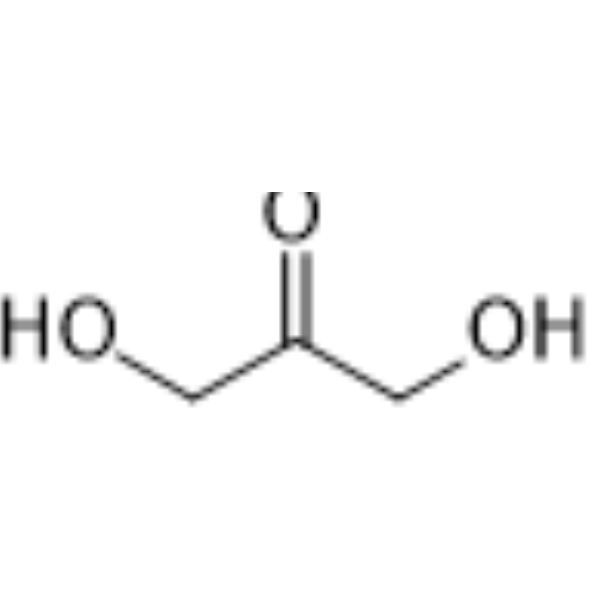
1,3-Dihydroxyacetone (DHA), the main active ingredient in sunless tanning skin-care preparations and an important precursor for the synthesis of various fine chemicals, is produced on an industrial scale by microbial fermentation of glycerol (HY-B1659) in Gluconobacter oxydans. 1,3-Dihydroxyacetone is also used for synthesis of new biodegradable polymers by combining with lactic acid (HY-B2227) .
loading...
    loading...
1
1 Cited Publications
Cat. No.: HY-N6006
CAS No.: 18483-17-5
Synonyms: 1,3,6-Tri-O-galloyl-β-D-glucose
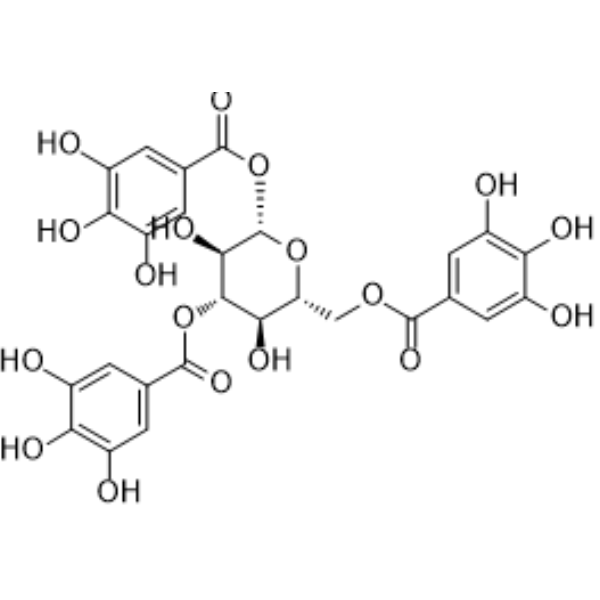
1,3,6-Tri-O-galloyl-beta-D-glucose is a non-covalent inhibitor of tyrosinase (TYR), which can block the rate-limiting step of melanin synthesis and inhibit melanin deposition. 1,3,6-Tri-O-galloyl-beta-D-glucose has antioxidant and anti-inflammatory activities and can be used as a natural active ingredient to develop anti-freckle and whitening skin care products .
loading...
    loading...
Cat. No.: HY-107784
CAS No.: 96702-03-3
Purity:  99.34%
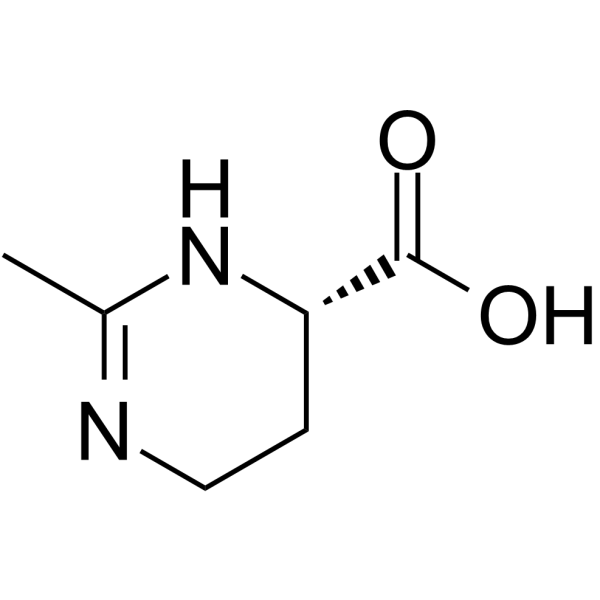
Ectoine is a natural cell protectant, an amino acid derivate produced by bacteria living under extremely harsh environmental conditions. Ectoine serves as an osmoregulatory compatible solute, increasing the hydration of the skin surface and stabilizing lipid layers, which is useful in skincare. Ectoine demonstrates a good safety profile for the treatment of allergic rhinitis .
loading...
    loading...
Cat. No.: HY-P0095
CAS No.: 820959-17-9
Research Areas:  

Others

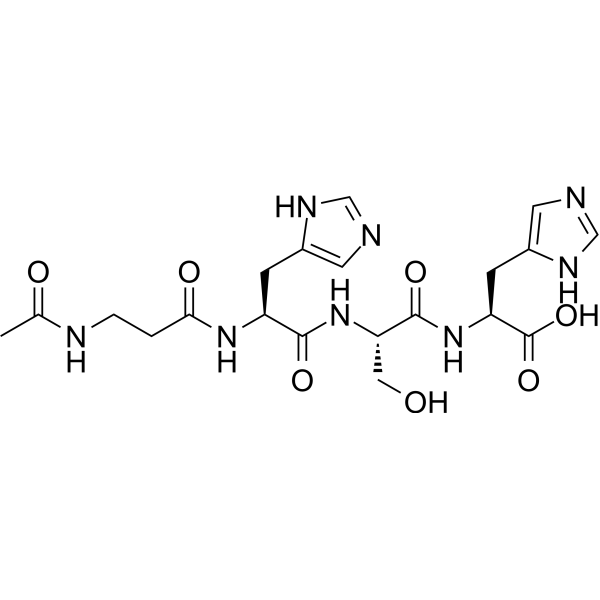
Acetyl tetrapeptide-5 inhibits glycosylation and ACE-1 activity. Acetyl tetrapeptide-5 reduces edema and relieves vascular pressure by improving the vascular system and strengthening the skin under the eyes. Acetyl tetrapeptide-5 can be used in the research of Antioxidant, anti-aging skin care .
loading...
    loading...
Cat. No.: HY-134120
CAS No.: 629-22-1
Purity:  99.86%
Synonyms: DL-2-Hydroxystearic acid
Research Areas:  

Others

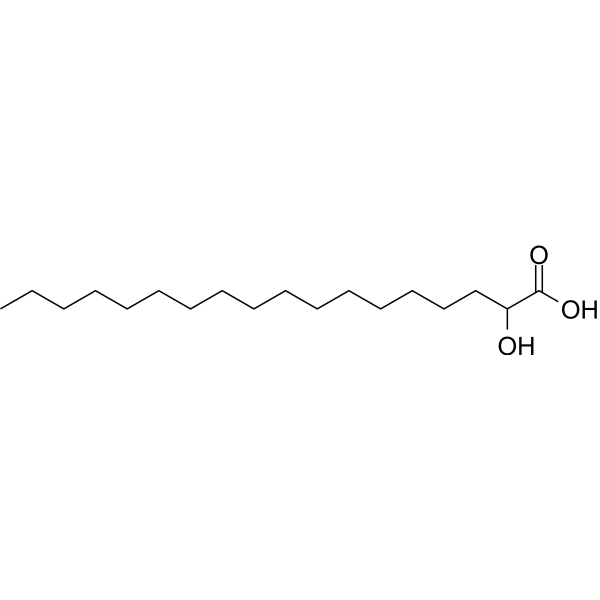
2-Hydroxystearic acid is an alpha-hydroxy fatty acid commonly used in a variety of personal care products, especially cosmetic and skin care formulations. 2-Hydroxystearic acid has unique chemical properties that make it an effective emulsifier and stabilizer, improving the texture and shelf life of cosmetic products. It also has a potential physiological role in improving skin hydration and elasticity, although its biological function is not fully understood.
loading...
    loading...
Cat. No.: HY-W010807
CAS No.: 540-10-3
Hexadecyl palmitate is an organic compound commonly used in the cosmetic industry as an emollient, thickener and skin conditioning agent. Cetyl palmitate is derived from a mixture of cetyl alcohol (a fatty alcohol) and palmitic acid (a saturated fatty acid). It is often used in skin care products such as moisturizers, lotions, and creams to improve their texture and Helps them glide smoothly on the skin. In addition to its use in cosmetics, cetyl palmitate is used in other industries including pharmaceuticals, food additives and lubricants. Overall, it's considered safe for use in personal care products, but like any other ingredient, it may cause irritation or an allergic reaction in some people.
loading...
    loading...
Cat. No.: HY-P0065
CAS No.: 868844-74-0
Research Areas:  

Neurological Disease

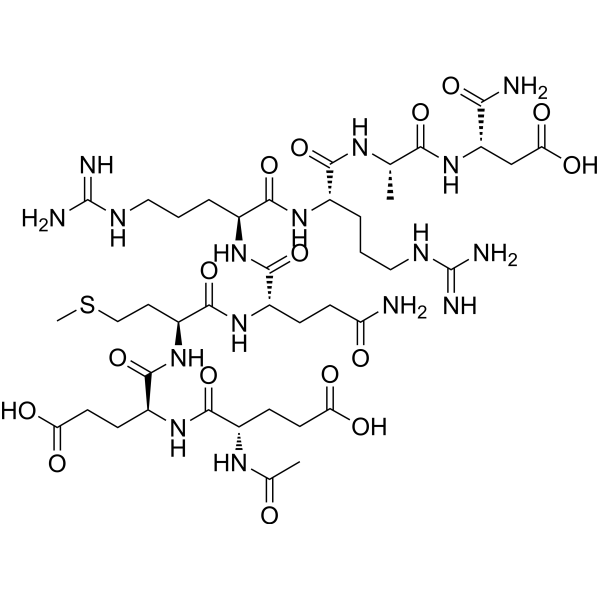
Acetyl octapeptide-1 is a competitive inhibitor of SNAP-25. Acetyl octapeptide-1 affects muscle contraction, thereby making the face (especially the forehead and periocular area) appear smoother and wrinkle-free. Acetyl octapeptide-1 can be used in research on muscle contraction and skincare products .
loading...
    loading...
Cat. No.: HY-P5220A
CAS No.: 2828433-36-7
Synonyms: Melitane acetate
Target:  

Melanocortin Receptor

Research Areas:  

Others

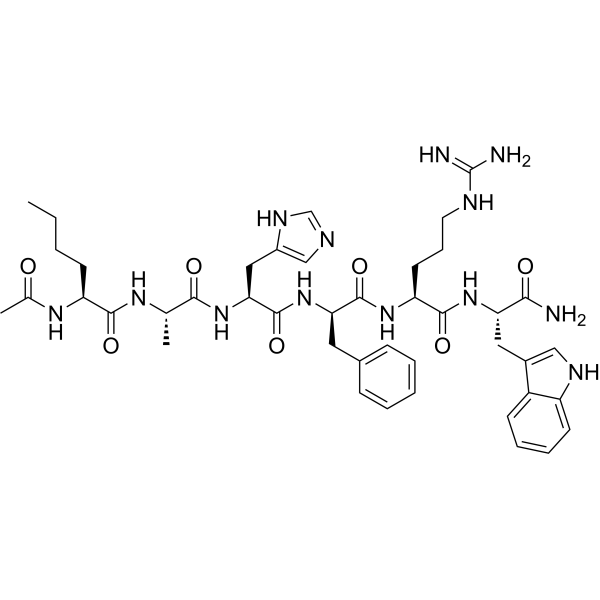
Acetyl hexapeptide-1 (Melitane) acetate is a biomimetic peptide that mimics the activity of α-melanocyte-stimulating hormone (α-MSH). Acetyl hexapeptide-1 acetate can regulate muscle contraction, thereby reducing facial expression lines. Acetyl hexapeptide-1 acetate is one of the components of anti-aging skin care essences targeting dynamic wrinkles. Acetyl hexapeptide-1 acetate can be used in studies related to mild photo-aged facial skin and premature graying of hair .
loading...
    loading...
Cat. No.: HY-107784R
CAS No.: 96702-03-3
Ectoine (Standard) is the analytical standard of Ectoine. This product is intended for research and analytical applications. Ectoine is a natural cell protectant, an amino acid derivate produced by bacteria living under extremely harsh environmental conditions. Ectoine serves as an osmoregulatory compatible solute, increasing the hydration of the skin surface and stabilizing lipid layers, which is useful in skincare. Ectoine demonstrates a good safety profile for the treatment of allergic rhinitis .
loading...
    loading...
Cat. No.: HY-P5220
CAS No.: 448944-47-6
Synonyms: Melitane
Target:  

Melanocortin Receptor

Research Areas:  

Others

Acetyl hexapeptide-1 (Melitane) is a biomimetic peptide that mimics the activity of α-melanocyte-stimulating hormone (α-MSH). Acetyl hexapeptide-1 regulates muscle contraction, thereby reducing facial expression lines. Acetyl hexapeptide-1 is one of the components of anti-aging skincare serums targeting dynamic wrinkles. Acetyl hexapeptide-1 can be used in research related to mild photoaged facial skin and premature gray hair .
loading...
    loading...
Cat. No.: HY-D1228
CAS No.: 6448-95-9
Target:  

Fluorescent Dye

Research Areas:  

Others

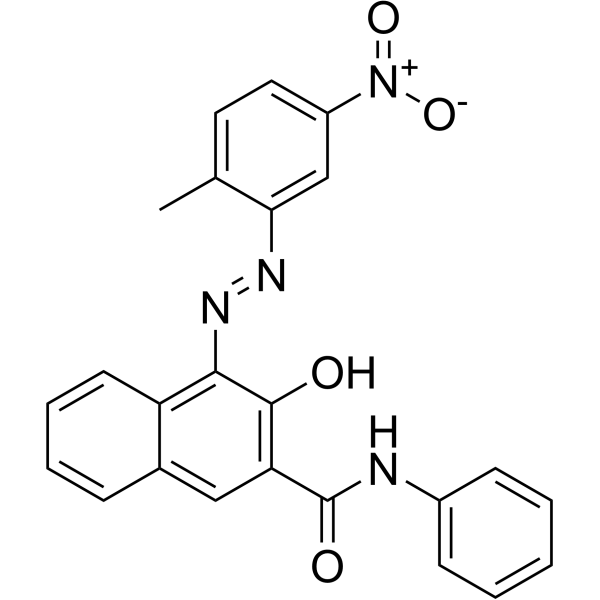
Pigment Red 22, a coloring agent, is used in the formulation of cleansing products, makeup, moisturizers, and night skin care products.
loading...
    loading...
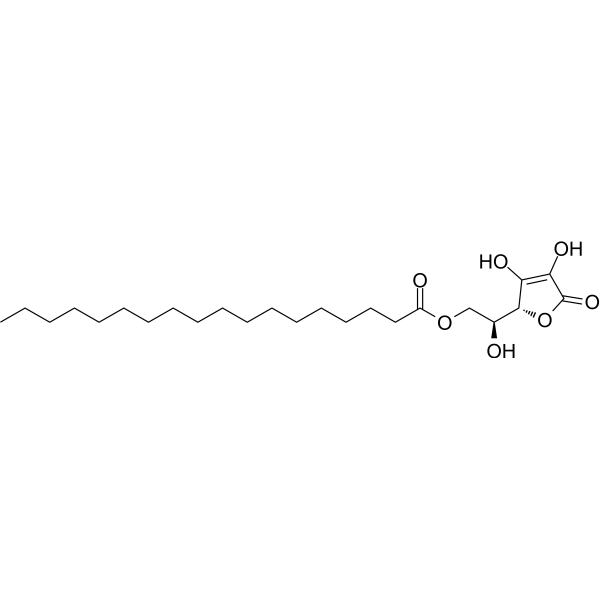
Cat. No.: HY-W127738
CAS No.: 10605-09-1
Synonyms: Vitamin C stearate; Ascorbic acid 6-stearate; Ascorbyl stearate
6-O-Staroyl-L-ascorbic acid is an organic compound commonly used in cosmetics and skin care products. It can be used as an antioxidant and whitening agent, and is widely used in anti-aging, moisturizing and skin repairing. In addition, this compound is used as a catalyst or buffer in certain chemical reactions.
loading...
    loading...
Cat. No.: HY-133847
CAS No.: 61792-31-2
Synonyms: Laurylamidopropyldimethylamine oxide
Target:  

Endogenous Metabolite

Research Areas:  

Others

LAPAO (Laurylamidopropyldimethylamine oxide) is an amphoteric surfactant with good biocompatibility and surface activity. LAPAO can be used as a detergent and foam enhancer for personal care and household cleaning products. LAPAO is stable at different pH values and can effectively remove dirt and grease. LAPAO also has a conditioning effect and is suitable for use in skin care and hair care products .
loading...
    loading...
Cat. No.: HY-148854
CAS No.: 53910-28-4
Research Areas:  

Others

L-Ascorbate-2-sulfate disodium (page 46) is a pharmacologically acceptable salt of the L-Ascorbic acid (HY-B0166G) derivative. L-Ascorbate-2-sulfate disodium stimulates collagen synthesis and possess skin-care functions including an elimination function of active oxygen .
loading...
    loading...
Cat. No.: HY-Y0335R
CAS No.: 96-26-4
Synonyms: Dihydroxyacetone (Standard)
1,3-Dihydroxyacetone (Standard) is the analytical standard of 1,3-Dihydroxyacetone. This product is intended for research and analytical applications. 1,3-Dihydroxyacetone (DHA), the main active ingredient in sunless tanning skin-care preparations and an important precursor for the synthesis of various fine chemicals, is produced on an industrial scale by microbial fermentation of glycerol (HY-B1659) in Gluconobacter oxydans. 1,3-Dihydroxyacetone is also used for synthesis of new biodegradable polymers by combining with lactic acid (HY-B2227) .
loading...
    loading...
Cat. No.: HY-W717735
CAS No.: 112340-30-4
Target:  

Endogenous Metabolite

Monononadecanoin is a lipid compound with anti-inflammatory and antioxidant activities. Monononadecanoin is often used as a moisturizer and skin repair ingredient in skin care products. Monononadecanoin also has the function of improving flavor and extending shelf life in food additives.
loading...
    loading...
Cat. No.: HY-W010807R
CAS No.: 540-10-3
Research Areas:  

Others

Hexadecyl palmitate (Standard) is the analytical standard of Hexadecyl palmitate. This product is intended for research and analytical applications. Hexadecyl palmitate is an organic compound commonly used in the cosmetic industry as an emollient, thickener and skin conditioning agent. Cetyl palmitate is derived from a mixture of cetyl alcohol (a fatty alcohol) and palmitic acid (a saturated fatty acid). It is often used in skin care products such as moisturizers, lotions, and creams to improve their texture and Helps them glide smoothly on the skin. In addition to its use in cosmetics, cetyl palmitate is used in other industries including pharmaceuticals, food additives and lubricants. Overall, it's considered safe for use in personal care products, but like any other ingredient, it may cause irritation or an allergic reaction in some people.
loading...
    loading...
Cat. No.: HY-N18767
CAS No.: 168456-53-9
Category:  

Extract

Target:  

Others

Poria Cocos Extract is obtained from the dried sclerotia of the fungus Poria cocos. It has a variety of skin care effects and is widely used in functional cosmetics.
loading...
    loading...
Cat. No.: HY-N18692
CAS No.: 8007-78-1
Category:  

Extract

Target:  

Others

Cactus Extract is obtained from the rhizome of the plant cactus, and saponin compounds are one of the main effective ingredients in the cactus. It has a certain skin care effect, and can be used as cosmetics material.
loading...
    loading...
Cat. No.: HY-N18768
CAS No.: 391900-47-3
Category:  

Extract

Target:  

Others

Leontopodium Alpinum Extract is a fully water-soluble botanical cosmetic raw material, obtained from the Asteraceae plant Edelweiss. Its main component is ferulic acid, which is an organic acid with strong skin care activity.
loading...
    loading...

