1. Search Result
Search Result
Results for "

stress

" in MedChemExpress (MCE) Product Catalog:

1933

Inhibitors & Agonists

16

Screening Libraries

34

Fluorescent Dye

33

Biochemical Assay Reagents

100

Peptides

3

MCE Kits

3

Inhibitory Antibodies

587

Natural
Products

29

Recombinant Proteins

188

Isotope-Labeled Compounds

52

Antibodies

6

Click Chemistry

19

Oligonucleotides

2

GMP Molecules

Cat. No. Product Name Target Research Areas Chemical Structure
  • HY-13433
    Thapsigargin
    135+ Cited Publications

    Calcium Channel SARS-CoV Apoptosis Infection Cancer
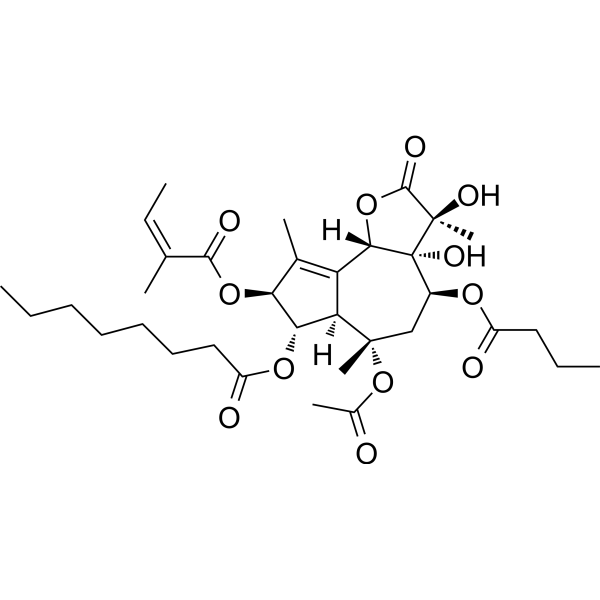
    Thapsigargin, an endoplasmic reticulum (ER) stress inducer, is an inhibitor of microsomal Ca 2+-ATPase. Thapsigargin efficiently inhibits coronavirus (HCoV-229E, MERS-CoV, SARS-CoV-2) replication in different cell types .
    Thapsigargin
  • HY-19696
    Tauroursodeoxycholate
    100+ Cited Publications

    Tauroursodeoxycholic acid; TUDCA; UR 906

    ERK Caspase Endogenous Metabolite Apoptosis Cancer
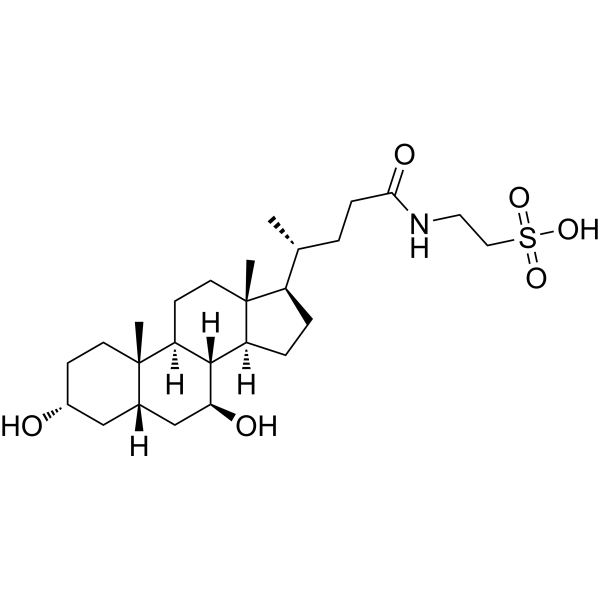
    Tauroursodeoxycholate (Tauroursodeoxycholic acid) is an orally active endoplasmic reticulum (ER) stress inhibitor. Tauroursodeoxycholate significantly reduces expression of apoptosis molecules, such as caspase-3 and caspase-12. Tauroursodeoxycholate also inhibits ERK .
    Tauroursodeoxycholate
  • HY-B0389
    D-Glucose
    50+ Cited Publications

    Glucose; D-(+)-Glucose; Dextrose

    Environmental Pollutants Endogenous Metabolite Cardiovascular Disease Others Metabolic Disease Endocrinology Cancer
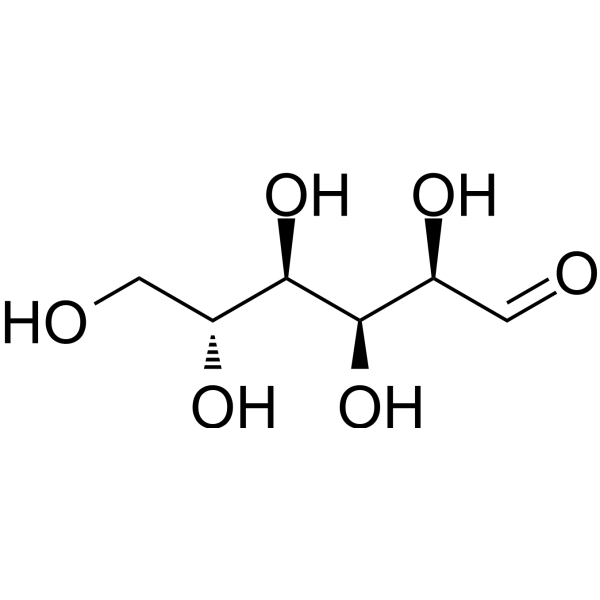
    D-Glucose is the naturally occurring form of glucose and the most abundant monosaccharide. D-Glucose is a critical components of the general metabolism, and serve as critical signaling molecules in relation to both cellular metabolic status and biotic or abiotic stress response .
    D-Glucose
  • HY-19696A
    Tauroursodeoxycholate sodium
    100+ Cited Publications

    Tauroursodeoxycholic acid sodium; TUDCA sodium; UR 906 sodium

    ERK Caspase Apoptosis Endogenous Metabolite Cancer
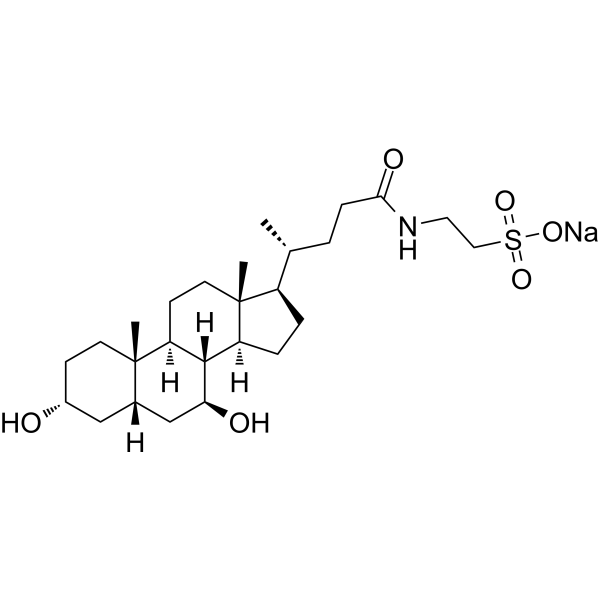
    Tauroursodeoxycholate (Tauroursodeoxycholic acid; TUDCA) sodium is an endoplasmic reticulum (ER) stress inhibitor. Tauroursodeoxycholate significantly reduces expression of apoptosis molecules, such as caspase-3 and caspase-12. Tauroursodeoxycholate also inhibits ERK.
    Tauroursodeoxycholate sodium
  • HY-W011793
    4-Thiouridine
    5+ Cited Publications

    Nucleoside Antimetabolite/Analog Others
    4-Thiouridine is a ribonucleoside analog, it is widely used in RNA analysis and (m)RNA labeling. 4-Thiouridine inhibits rRNA synthesis and causes a nucleolar stress response .
    4-Thiouridine
  • HY-126793

    DCFH2-DA

    Fluorescent Dye Reactive Oxygen Species (ROS) Others
    2′,7′-Dichlorofluorescein diacetate (DCFH2-DA) is a cell-permeable fluorescent probe. 2′,7′-Dichlorofluorescein diacetate can be used to detect the generation of reactive oxygen intermediates and for assessing the overall oxidative stress in toxicological phenomenon .
    2′,7′-Dichlorofluorescein diacetate
  • HY-N0520
    Calycosin-7-O-β-D-glucoside
    5 Publications Verification

    Calycosin-7-glucoside

    Reactive Oxygen Species (ROS) Others
    Calycosin-7-O-β-D-glucoside is an isoflavone isolated from Astragali Radix. Calycosin-7-O-β-D-glucoside has variety of biological activities, such as neuroprotective, cardioprotection, anti-inflammation, and antioxidative stress effects .
    Calycosin-7-O-β-D-glucoside
  • HY-101559

    CXA-10; 10-Nitrooleate

    Endogenous Metabolite Inflammation/Immunology
    10-Nitrooleic acid (CXA-10), a nitro fatty acid, has potential effects in disease states in which oxidative stress, inflammation, fibrosis, and/or direct tissue toxicity play significant roles .
    10-Nitrooleic acid
  • HY-Y0525
    AAPH
    2 Publications Verification

    2,2'-Azodiisobutyramidine dihydrochloride

    Reactive Oxygen Species (ROS) Inflammation/Immunology
    AAPH (2,2'-Azodiisobutyramidine dihydrochloride) has an effect of radical generation. AAPH induces oxidative stress and erythrocyte hemolysis . AAPH decomposes at 37°C to generate an alkyl radical, is used as an initiator. In the presence of oxygen, these alkyl radicals will be converted to peroxyl radicals that can cause lipid peroxidation and loss of erythrocyte membrane integrity, which could ultimately lead to hemolysis .
    AAPH
  • HY-P1410B
    D-GsMTx4
    3 Publications Verification

    Piezo Channel Calcium Channel mTOR PI3K Akt Cardiovascular Disease Neurological Disease Inflammation/Immunology
    D-GsMTx4 is a spider peptide and the D enantiomer of GsMTx4 (HY-P1410). D-GsMTx4 inhibits the mechanosensitive ion channel Piezo2. D-GsMTx4 inhibits [Ca 2+]i elevation. D-GsMTx4 inhibits mTOR and PI3K-Akt signaling pathways. D-GsMTx4 inhibits mechanical allodynia and thermal hyperalgesia. D-GsMTx4 can be used in researches of mechanical stress, chronic pain and idiopathic pulmonary fibrosis .
    D-GsMTx4
  • HY-110188
    BiP inducer X
    5+ Cited Publications

    Apoptosis Neurological Disease
    BiP inducer X, a selective inducer of immunoglobulin heavy chain binding protein (BiP)/GRP78, is an effective ER (endoplasmic reticulum) stress inhibitor. BiP inducer X preferentially induces BiP with slight inductions of GRP94, calreticulin, and C/EBP homologous protein. BiP inducer X protects neurons from ER stress .
    BiP inducer X
  • HY-113262

    Endogenous Metabolite Interleukin Related Neurological Disease Metabolic Disease Inflammation/Immunology
    8-Hydroxyguanosine, an oxidized nucleoside, is a marker of RNA oxidative damage and oxidative stress. 8-Hydroxyguanosine stimulates proliferation and differentiation of murine B cells with immunostimulatory activity. 8-Hydroxyguanosine is promising for research of Alzheimer’s disease and Down’s syndrome .
    8-Hydroxyguanosine
  • HY-125859A
    Myeloperoxidase, human white blood cells
    1 Publications Verification

    MPO

    Bacterial Inflammation/Immunology
    Myeloperoxidase, human white blood cells (MPO) is a peroxidase. In Myeloperoxidase, human white blood cells mediate oxidative stress by promoting the production of reactive oxygen species (ROS) and active nitrogen (RNS), regulating the polarization and inflammation-related signaling pathways of microglia and neutrophils. Myeloperoxidase, human white blood cells has antibacterial activity .
    Myeloperoxidase, human white blood cells
  • HY-N1487
    Oleanonic acid
    2 Publications Verification

    3-Oxooleanolic acid

    HIV Autophagy Ferroptosis Amyloid-β Infection Neurological Disease Inflammation/Immunology Cancer
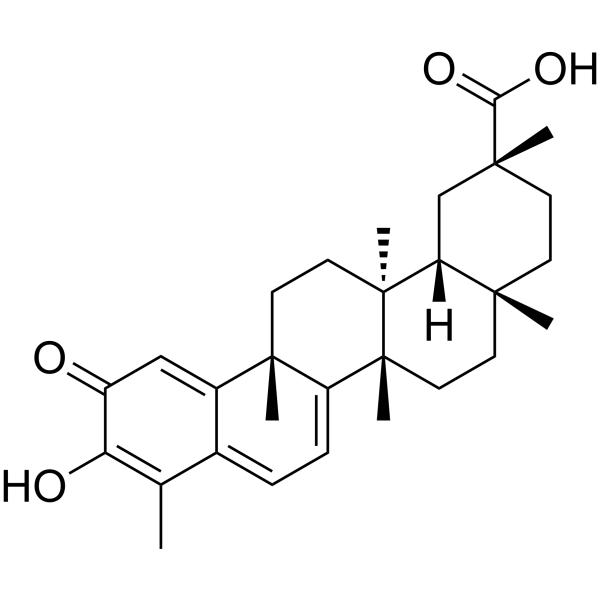
    Oleanonic acid (3-Oxooleanolic acid) is an orally available triterpene that has anti-inflammatory and insecticidal properties. In vitro, oleanonic acid can improve oxidative stress, autophagy defects, ferroptosis, mitochondrial damage, and endoplasmic reticulum stress induced by Amyloid-β, and in vivo, it can alleviate myocardial hypertrophy in rats .
    Oleanonic acid
  • HY-30267
    4-Hydroxyphenyl acetate
    2 Publications Verification

    4-HPA; 4-Acetoxyphenol

    Quinone Reductase Endogenous Metabolite Others
    4-Hydroxyphenyl acetate (4-HPA) is a natural antioxidant and protects cells from oxidative stress-induced necrosis. 4-Hydroxyphenyl acetate blocks the increase of cellular ROS induced by oxidative stress, and up-regulates NQO1 and HO-1 genes by stabilizing and inducing the nuclear translocation of NRF2 transcription factor .
    4-Hydroxyphenyl acetate
  • HY-N0061
    Ethyl ferulate
    3 Publications Verification

    Reactive Oxygen Species (ROS) Neurological Disease
    Ethyl ferulate, a naturally lipophilic derivative of ferulic acid originally derived from Rhizoma Chuanxiong, induces heme oxygenase-1 (HO-1) and protects rat neurons against oxidative stress . Ethyl ferulate also protects neurons against amyloid β peptide (1-42)-induced oxidative stress and neurotoxicity .
    Ethyl ferulate
  • HY-P2947

    Aldehyde dehydrogenase (NAD(P))

    Aldehyde Dehydrogenase (ALDH) Others Cancer
    ALDH (Aldehyde dehydrogenase (NAD(P))) catalyzes the oxidation of aldehydes into their corresponding carboxylic acids with the concomitant reduction of the cofactor NAD(P) into NAD(P)H, is often used in biochemical studies. The ALDHs are one of many enzyme systems the body utilizes to alleviate aldehyde stress .
    ALDH
  • HY-19934

    TAS-117

    Akt Apoptosis Autophagy Cancer
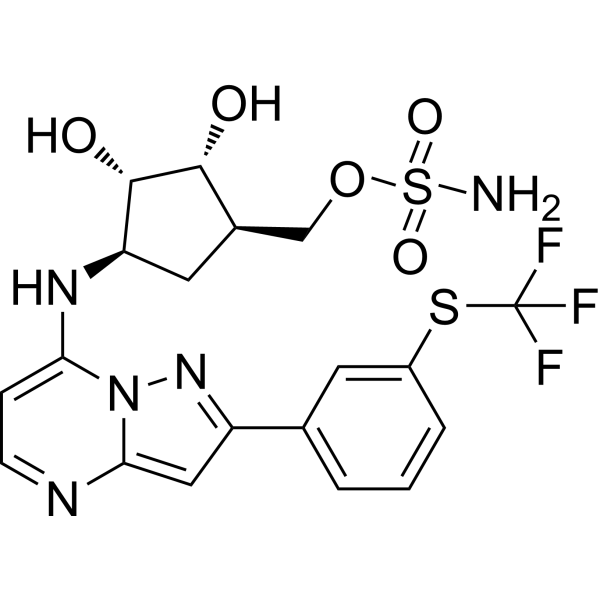
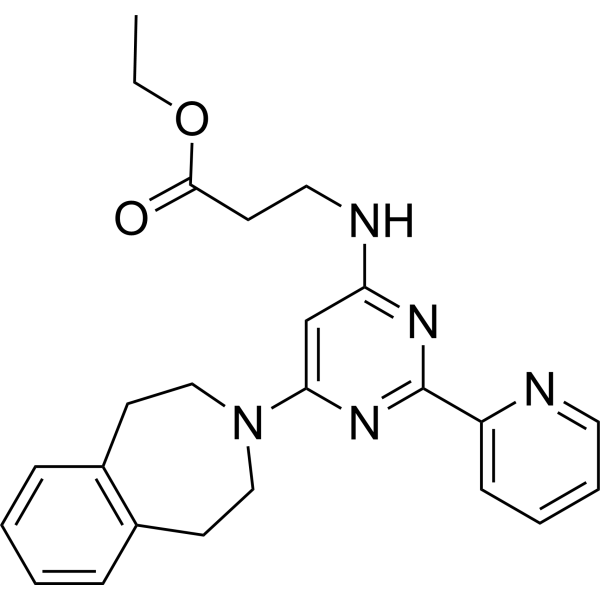
    Pifusertib (TAS-117) is a potent, selective, orally active allosteric Akt inhibitor (with IC50s of 4.8, 1.6, and 44 nM for Akt1, 2, and 3, respectively). Pifusertib triggers anti-myeloma activities and enhances fatal endoplasmic reticulum (ER) stress induced by proteasome inhibition. Pifusertib induces apoptosis and autophagy .
    Pifusertib
  • HY-W229874

    E1/E2/E3 Enzyme NF-κB Reactive Oxygen Species (ROS) SOD Cancer
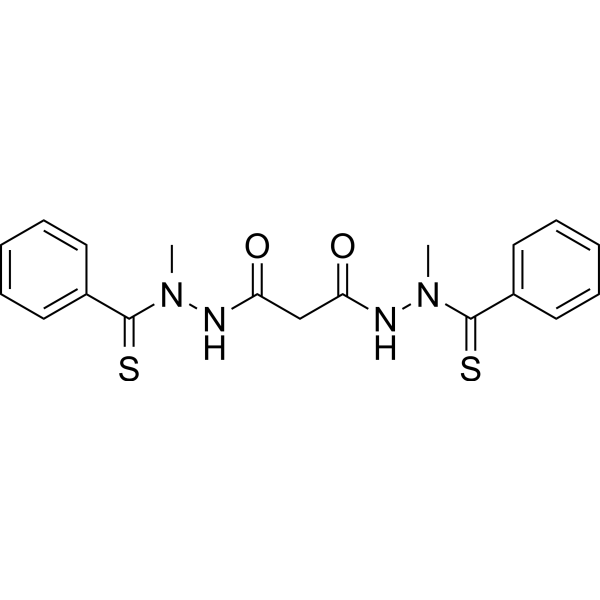
    EN106 is a potent inhibitor of FEMIB. EN106 is a cysteine-reactive covalent ligand. EN106 disrupts recognition of the key reductive stress substrate of FEM1B, FNIP1. EN106 reduces oxidative stress and rescues high glucose-induced impaired angiogenesis in HUVECs .
    EN106
  • HY-128901

    F 14679 fumarate

    5-HT Receptor Neurological Disease
    F13714 fumarate, a selective 5-HT1A receptor biased agonist, shows antidepressant-like properties after a single administration in the mouse model of chronic mild stress .
    F 13714 fumarate
  • HY-W015422

    PARP Metabolic Disease
    1,5-Isoquinolinediol is a potent PARP inhibitor, with an IC50 of 0.18-0.37 μM. 1,5-Isoquinolinediol attenuates diabetes-induced NADPH oxidase-derived oxidative stress in retina .
    1,5-Isoquinolinediol
  • HY-128707
    Z-LEVD-FMK
    4 Publications Verification

    Caspase Apoptosis Cancer
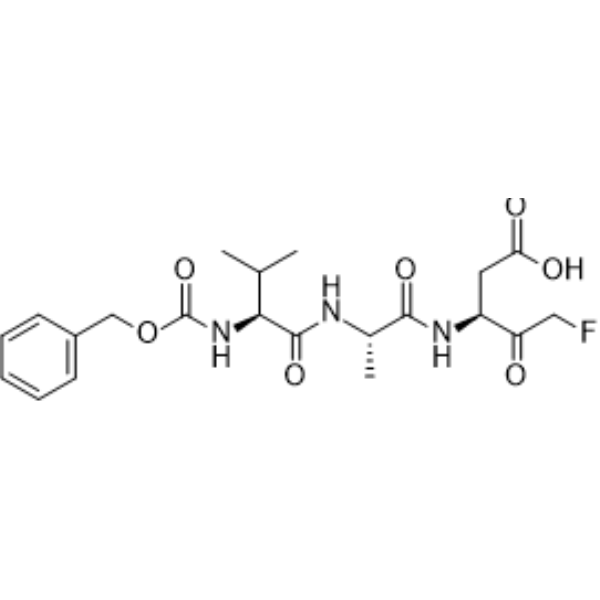
    Z-LEVD-FMK is a cell-permeable caspase-4 inhibitor. Z-LEVD-FMK blocks ER stress-induced apoptosis in cancer cells .
    Z-LEVD-FMK
  • HY-49116

    E1/E2/E3 Enzyme Infection Inflammation/Immunology
    CP26 is a small molecule inhibitor of protein dislocation from the ER lumen to the cytosol. CP26 targets the Hrd1 complex, inhibits ERAD, and induces ER stress .
    CP26
  • HY-111974

    ABA-GE; (S)-cis,trans-Abscisic acid glucosyl ester

    Proton Pump Endocrinology
    β-D-Glucopyranosyl abscisate (ABA-GE) is a hydrolyzable abscisic acid (ABA) conjugate that accumulates in the vacuole and presumably also in the endoplasmic reticulum. The deconjugation of β-D-Glucopyranosyl abscisate allows the rapid formation of free ABA in response to abiotic stress conditions such as dehydration and salt stress. β-D-Glucopyranosyl abscisate contributes to the maintenance of ABA homeostasis .
    β-D-Glucopyranosyl abscisate
  • HY-N1100

    (-)-Vasicinone

    Others Neurological Disease
    Vasicinone is a quinazoline alkaloid isolated from the Adhatoda vasica. Vasicinone is a potential agent for Parkinson's disease and possibly other oxidative stress-related neurodegenerative disorders .
    Vasicinone
  • HY-19934A

    TAS-117 hydrochloride

    Akt Apoptosis Autophagy Cancer
    Pifusertib (TAS-117) hydrochloride is a potent, selective, orally active allosteric Akt inhibitor (with IC50s of 4.8, 1.6, and 44 nM for Akt1, 2, and 3, respectively). Pifusertib hydrochloride triggers anti-myeloma activities and enhances fatal endoplasmic reticulum (ER) stress induced by proteasome inhibition. Pifusertib hydrochloride induces apoptosis and autophagy .
    Pifusertib hydrochloride
  • HY-153074

    Eukaryotic Initiation Factor (eIF) Cancer
    ISR-IN-1 (Compound 48) is an inhibitor of the integrated stress response (EC50: 0.6 nM) .
    ISR-IN-1
  • HY-170872

    PROTACs DNA/RNA Synthesis Cancer
    PT-129 is a G3BP1/G3BP2 PROTAC degrader. PT-129 inhibits the formation of stress granules, disassembles pre-existing stress granules, disrupts stress granule-mediated ATF4 trafficking via migratory exocytosis, and suppresses cancer cell proliferation. PT-129 is applicable to the research of lung cancer and melanoma .
    PT-129
  • HY-138233

    p97 Neurological Disease Inflammation/Immunology
    KUS121, a valosin-containing protein (VCP, p97) modulator with significant neuroprotective effects, attenuates ischemic retinal cell death via suppressing endoplasmic reticulum stress .
    KUS121
  • HY-158162
    SIRT3 activator 1
    1 Publications Verification

    Sirtuin Cardiovascular Disease
    SIRT3 activator 1 (Compound 5v) is a SIRT3 activator. SIRT3 activator 1 selectively elevates SIRT3 expression, leading to the upregulation of SOD2 and OPA1 expression, effectively preventing mitochondrial dysfunction, mitigating oxidative stress, and preserving cardiomyocyte viability. SIRT3 activator 1 can be used for research of cardiovascular diseases .
    SIRT3 activator 1
  • HY-110084
    BTZO-1
    2 Publications Verification

    Macrophage migration inhibitory factor (MIF) Apoptosis Cardiovascular Disease
    BTZO-1, a chemical probe, binds to Macrophage migration inhibitory factor (MIF) with a Kd value of 68.6 nM, and its binding requires the N-terminal Pro1. BTZO-1 can activate antioxidant response element (ARE)-mediated gene expression and suppress oxidative stress-induced cardiomyocyte apoptosis in vitro .
    BTZO-1
  • HY-N6911

    (18β,20α)-Glycyrrhizic acid

    Others Metabolic Disease
    Liquorice-saponin H2 ((18β,20α)-Glycyrrhizic acid) is a type of triterpenoid oligosaccharide glycoside found in the Glycyrrhiza genus. Liquorice-saponin H2 accumulates more in the roots of licorice plants under salt stress conditions, suggesting that it may play a role in plant stress resistance .
    Licorice-saponin H2
  • HY-153591

    Reactive Oxygen Species (ROS) Infection Neurological Disease Inflammation/Immunology Cancer
    ROS-IN-1 is a mitochondrial ROS inhibitor. ROS-IN-1 can reduce oxidative stress or inhibit reactive oxygen species (ROS) production .
    ROS-IN-1
  • HY-125221

    ROCK Cdc42-binding kinase Cancer
    DJ4 is a ATP-competitive inhibitor of ROCK1/2 (IC50 values:5 and 50 nM) and MRCKα/β (IC50 values:10 and 100 nM). DJ4 blocks stress fiber formation and inhibits migration and invasion of cancer cells. DJ4 can be used for study of lung cancer, breast cancer, and pancreatic (PANC-1) cancer .
    DJ4
  • HY-124815

    Reactive Oxygen Species (ROS) Others
    CP-312 is a potent Heme Oxygenase-1 (HO-1) inducer. CP-312 protects hiPSC-CM viability by targeting the antioxidant response network through induction of HMOX1 expression. CP-312 protects human iPSC-derived cardiomyocytes from oxidative stress .
    CP-312
  • HY-N3883

    Autophagy Neurological Disease Cancer
    Euxanthone, a xanthone derivative, attenuates Aβ1-42-induced oxidative stress and apoptosis by triggering autophagy. Euxanthone exhibits anti-neoplastic and neuroprotective activities .
    Euxanthone
  • HY-D2864

    Fluorescent Dye Others
    Aza-CyBz is a selective NaCl-responsive fluorescent probe. Aza-CyBz visualizes plant salt stress by forming ordered aggregates with NaCl, leading to near-infrared fluorescence quenching. Aza-CyBz acts via electrostatic interaction between the cationic cyanine dye and NaCl to form J-aggregates, causing fluorescence quenching with a detection limit of 170 μM .
    Aza-CyBz
  • HY-B0871

    Environmental Pollutants Herbicide Others
    Quinclorac, an herbicide widely applied in agriculture, induces oxidative stress due to free radical generation and changes in the antioxidant defense system .
    Quinclorac
  • HY-116625

    GHSR Neurological Disease
    PF-04628935 (compound 10n) is a potent ghrelin receptor inverse agonist, with an IC50 of 4.6 nM. PF-04628935 exhibits oral bioavailability of 43% in rats and shows reasonable penetration into the brain. PF-04628935 can be used for stress and anxiety research .
    PF-04628935
  • HY-125919

    Reactive Oxygen Species (ROS) Bacterial Endogenous Metabolite Infection Inflammation/Immunology
    Vulpinic acid, a lichen metabolite, decreases H2O2-induced ROS production, oxidative stress and oxidative stress-related damages in human umbilical vein endothelial cells (HUVEC). Vulpinic acid is active against staphylococci, enterococci, and anaerobic bacteria.Vulpinic acid has the potential for atherosclerosis research .
    Vulpinic acid
  • HY-P1930A

    Integrin Inflammation/Immunology
    Risuteganib hydrochloride is a synthetic RGD (arginyl-glycyl-aspartic acid)-class peptide. Risuteganib hydrochloride is an anti-integrin that downregulates oxidative stress and restores homeostasis, and targets three integrin receptors that are implicated in dry age-related macular degeneration (AMD) in order to restore homeostasis in the retina .
    Risuteganib hydrochloride
  • HY-19696R

    Tauroursodeoxycholic acid (Standard); TUDCA (Standard); UR 906 (Standard)

    Reference Standards ERK Caspase Endogenous Metabolite Apoptosis Cancer
    Tauroursodeoxycholate (Standard) is the analytical standard of Tauroursodeoxycholate. This product is intended for research and analytical applications. Tauroursodeoxycholate (Tauroursodeoxycholic acid) is an endoplasmic reticulum (ER) stress inhibitor. Tauroursodeoxycholate significantly reduces expression of apoptosis molecules, such as caspase-3 and caspase-12. Tauroursodeoxycholate also inhibits ERK.
    Tauroursodeoxycholate (Standard)
  • HY-148520

    Endoplasmic Reticulum Oxidoreductase 1 (ERO1) Metabolic Disease
    QM295 is an endoplasmic reticulum oxidation 1 (ERO1) inhibitor with selectively reversible thiol reactivity. QM295 can be used for the research of endoplasmic reticulum stress .
    QM295
  • HY-19696AR

    Tauroursodeoxycholic acid sodium (Standard); TUDCA sodium (Standard); UR 906 sodium (Standard)

    ERK Caspase Apoptosis Endogenous Metabolite Reference Standards Cancer
    Tauroursodeoxycholate (sodium) (Standard) is the analytical standard of Tauroursodeoxycholate (sodium). This product is intended for research and analytical applications. Tauroursodeoxycholate (Tauroursodeoxycholic acid; TUDCA) sodium is an endoplasmic reticulum (ER) stress inhibitor. Tauroursodeoxycholate significantly reduces expression of apoptosis molecules, such as caspase-3 and caspase-12. Tauroursodeoxycholate also inhibits ERK.
    Tauroursodeoxycholate sodium (Standard)
  • HY-153075

    Eukaryotic Initiation Factor (eIF) Cancer
    ISR-IN-2 (Compound 47) is an inhibitor of the integrated stress response (EC50: 0.8 nM) .
    ISR-IN-2
  • HY-B1711

    Adrenergic Receptor Endocrinology
    Norfenefrine is an orally active, endogenously found α-adrenergic agonist and can be used for the research of female stress incontinence .
    Norfenefrine
  • HY-123863

    FAAH Neurological Disease
    SSR411298 is an orally active, selective and reversible fatty acid amide hydrolase (FAAH) inhibitor. SSR411298 has the potential for post-traumatic stress disorder research .
    SSR411298
  • HY-108966

    Beta-secretase Inflammation/Immunology
    Kushenol C, isolated from the roots of Sophora flavescens, shows anti-Inflammatory and anti-oxidative stress activities. Kushenol C inhibits BACE1 (β-site APP cleaving enzyme 1) with an IC50 of 5.45 µM .
    Kushenol C
  • HY-106450

    MRE-0470; WRC 0470

    Adenosine Receptor Cardiovascular Disease
    Binodenoson (MRE-0470) is a potent and selective A2A adenosine receptor agonist (KD=270 nM). Binodenoson is being developed as a short-acting coronary vasodilator as an adjunct to radiotracers for use in myocardial stress imaging .
    Binodenoson
  • HY-117532

    PCB 118

    Pyroptosis Cancer
    PenCB (PCB 118) could induces pyroptosis by priming and activating NFκB-dependent NLRP3 inflammasome. PCB 118 induces oxidative stress and pyroptosis are dependent on Aryl hydrocarbon receptor (AhR) activation and subsequent cytochrome P450 1A1 upregulation .
    PenCB

Inquiry Online

Your information is safe with us. * Required Fields.

Salutation


Country or Region *

Applicant Name *


Organization Name *

Department *


Email Address *


Product Name *

Cat. No.


Requested quantity *

Phone Number *


Remarks

Inquiry Online

Inquiry Information

Product Name:
Cat. No.:
Quantity:
MCE Japan Authorized Agent:

