1. Search Result
Search Result
Results for "

structure-based design

" in MedChemExpress (MCE) Product Catalog:

29

Inhibitors & Agonists

1

Biochemical Assay Reagents

Cat. No. Product Name Target Research Areas Chemical Structure
  • HY-126247

    Ras Cancer
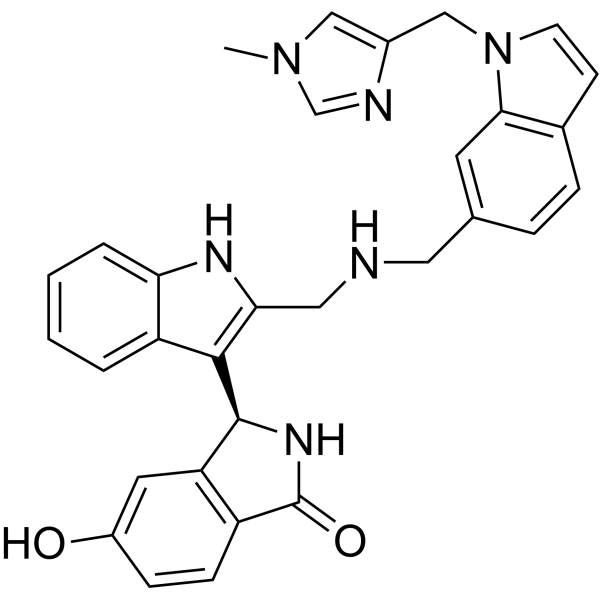
    BI-2852 is a KRAS inhibitor for the switch I/II pocket (SI/II-pocket) by structure-based agent design with nanomolar affinity. BI-2852 is mechanistically distinct from covalent KRASG12C inhibitor (binds to switch II pocket) and binds ten-fold more strongly to active KRASG12D versus KRASwt (740 nM vs 7.5 μM). BI-2852 blocks GEF, GAP, and effector interactions with KRAS, leading to inhibition of downstream signaling and an antiproliferative effect in KRAS mutant cells.
    BI-2852
  • HY-136742

    Beta-secretase Metabolic Disease
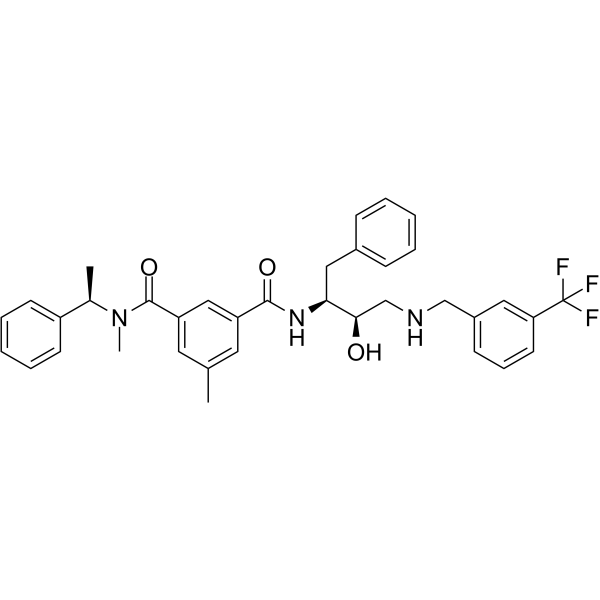
    BACE2-IN-1 (compound 3l) is a highly selective BACE2 inhibitor with a K i value of 1.6 nM. BACE2 inhibitors can be used to research of Type 2 Diabetes .
    BACE2-IN-1
  • HY-I0314

    Drug Intermediate Others
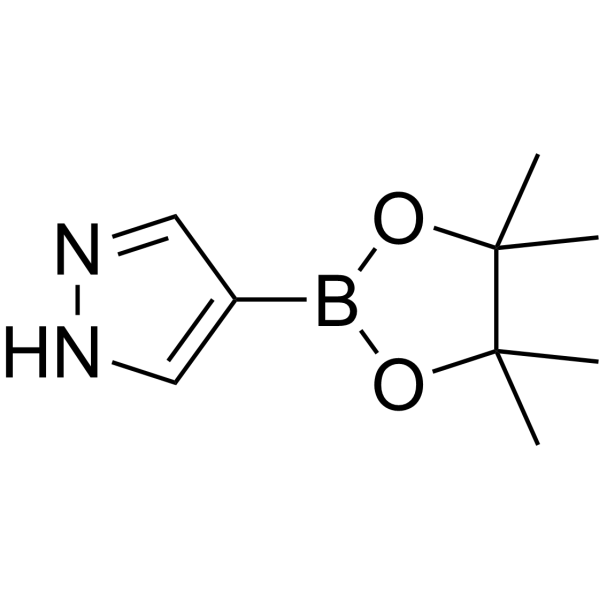
    1H-Pyrazole-4-boronic acid pinacol ester is a drug intermediate that can be used for the synthesis of Mps1 kinase inhibitors .
    1H-Pyrazole-4-boronic acid pinacol ester
  • HY-126247B

    Drug Derivative Ras Cancer
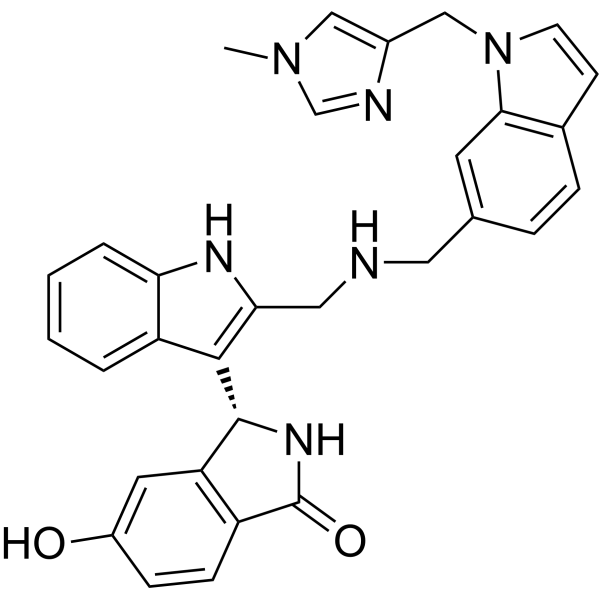
    (R)-BI-2852 is the isomer of BI-2852 (HY-126247), and can be used as an experimental control. BI-2852 is a KRAS inhibitor for the switch I/II pocket (SI/II-pocket) by structure-based agent design with nanomolar affinity. BI-2852 is mechanistically distinct from covalent KRASG12C inhibitor (binds to switch II pocket) and binds ten-fold more strongly to active KRASG12D versus KRASwt (740 nM vs 7.5 μM). BI-2852 blocks GEF, GAP, and effector interactions with KRAS, leading to inhibition of downstream signaling and an antiproliferative effect in KRAS mutant cells.
    (R)-BI-2852
  • HY-178760

    5-HT Receptor Neurological Disease
    TGF-8027 is a selective 5-HT2A agonist that can cross the blood-brain barrier. TGF-8027 exhibits EC50s of 3.3 nM, 160 nM and 7600 nM against human 5-HT2A, 5-HT2C and 5-HT2B and exhibits EC50s against mouse 5-HT2A and mouse 5-HT2C of 14 and 210 nM. TGF-8027 can induce a head-shaking response in mice. TGF-8027 can be used to study diseases that target the 5-HT2A receptor (such as depression) .
    TGF-8027
  • HY-153264

    Taste Receptor Others
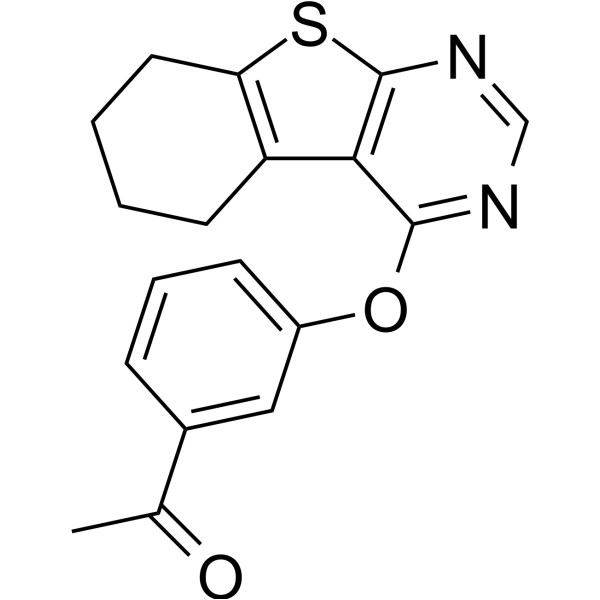
    TAS2R14 agonist is a potent TAS2R14 partial agonist with an EC50 of 116.6 ±23.6 nM .
    TAS2R14 agonist-1
  • HY-179237

    MAPKAPK2 (MK2) Others
    MK2-IN-8 (Compound 42) is a covalent MK2 kinase inhibitor. MK2-IN-8 forms a unique covalent bond with the catalytic lysine, thereby demonstrating that the fluorosulfonate can effectively target the catalytic lysine in kinases.
    MK2-IN-8
  • HY-179395

    YAP Cancer
    TEAD-IN-23 (Compound 22) is an efficient pan-TEAD inhibitor with an IC50 of 10 nM. TEAD-IN-23 exhibits potent anti-proliferative activity in both NCI-H226 and MSTO-211H. TEAD-IN-23 causes complete tumor regression in the MSTO-211H xenograft tumor model. TEAD-IN-23 can be used for the study of mesothelioma and hepatocellular carcinoma .
    TEAD-IN-23
  • HY-178292

    Phosphatase Cancer
    VHR-IN-3 (Compound 1) is a selective vaccinia H1-related (VHR) phosphatase inhibitor with a Ki of 0.81 μM. VHR-IN-3 mimics the phosphate group through the sulfonic acid group and competitively binds to the catalytic active center of VHR. VHR-IN-3 can be used for the research of cervical cancer .
    VHR-IN-3
  • HY-178296

    Phosphatase Cancer
    VHR-IN-6 is a selective vaccinia H1-related (VHR) phosphatase inhibitor with an IC50 of 74 nM. VHR-IN-6 shows very weaker inhibitory activity against MKP-1 (IC50 = 0.52 μM), CD45 (IC50 = 0.50 μM), Cdc25A (IC50 = 2.8 μM), PTP1B (IC50 = 0.42 μM), and HePTP (IC50 = 0.87 μM). VHR-IN-6 inhibits the proliferation of HeLa cells. VHR-IN-6 can be used for the research of cervical cancer .
    VHR-IN-6
  • HY-178301

    Phosphatase Cancer
    VHR-IN-9 is a selective vaccinia H1-related (VHR) phosphatase inhibitor with an IC50 of 270 nM. VHR-IN-9 shows very weaker inhibitory activity against MKP-1 (IC50 = 2.8 μM), CD45 (IC50 = 1.8 μM), Cdc25A (IC50 = > 10 μM), PTP1B (IC50 = 2.2 μM), and HePTP (IC50 = 2.4 μM). VHR-IN-9 inhibits the proliferation of HeLa cells. VHR-IN-9 can be used for the research of cervical cancer .
    VHR-IN-9
  • HY-178285

    Phosphatase Cancer
    VHR-IN-2 (Compound SA9) is a selective vaccinia H1-related (VHR) phosphatase inhibitor with an IC50 of 3.1 μM. VHR-IN-2 can be used for the research of cervical cancer .
    VHR-IN-2
  • HY-178297

    Phosphatase Cancer
    VHR-IN-7 is a selective vaccinia H1-related (VHR) phosphatase inhibitor with an IC50 of 71 nM. VHR-IN-7 shows very weaker inhibitory activity against MKP-1 (IC50 = 0.47 μM), CD45 (IC50 = 0.3 μM), Cdc25A (IC50 = 3.4 μM), PTP1B (IC50 = 0.59 μM), and HePTP (IC50 = 1.2 μM). VHR-IN-7 inhibits the proliferation of HeLa cells. VHR-IN-7 can be used for the research of cervical cancer .
    VHR-IN-7
  • HY-120281

    MEK PI3K Akt Apoptosis Caspase Cancer
    ST-168 is an orally active MEK/PI3K inhibitor with an IC50 of 182 nM against MEK1 and IC50 values ​​of 69.2, 41.7, 1482 and 2293 nM against PI3Kα, PI3Kδ, PI3Kβ and PI3Kγ respectively. ST-168 completely inhibits the phosphorylation of ERK1/2 and AKT and induces cancer cell death in a 3D tumor sphere model. ST-168 demonstrates significant antitumor effects in the A375 melanoma mouse model. ST-168 improves the ocular toxicity profile of MEK inhibitors, showing lower caspase activation levels, indicating reduced apoptosis induction. ST-168 can be used in melanoma research .
    ST-168
  • HY-179239

    METTL3 Cancer
    METTL3-IN-12 (Compound 15) is a selective METTL3 inhibitor with an IC50 of 50 nM. METTL3-IN-12 exhibits significant anti-proliferative activity in various leukemia cell lines. METTL3-IN-12 can be used for research on leukemia .
    METTL3-IN-12
  • HY-177756

    BCL6 Cancer
    BCL6-IN-11 (Compound 8) is an efficient inhibitor that induces partial degradation of BCL6 with its IC50 value for inhibiting the interaction between BCL6 and its co-inhibitory proteins (such as NCOR1) of 6 nM. BCL6-IN-11 can induce approximately 52% degradation of BCL6 after being treated with 5 μM concentration for 90 minutes, and thus is also classified as a partial degrader. BCL6-IN-11 can be used for the study of lymphoma .
    BCL6-IN-11
  • HY-178295

    Phosphatase Cancer
    VHR-IN-5 is a selective vaccinia H1-related (VHR) phosphatase inhibitor with an IC50 of 78 nM. VHR-IN-5 shows very weaker inhibitory activity against MKP-1 (IC50 = 0.78 μM), CD45 (IC50 = 0.61 μM), Cdc25A (IC50 = 3.4 μM), PTP1B (IC50 = 1.8 μM), and HePTP (IC50 = 1.5 μM). VHR-IN-5 inhibits the proliferation of HeLa cells. VHR-IN-5 can be used for the research of cervical cancer .
    VHR-IN-5
  • HY-178303

    Phosphatase Cancer
    VHR-IN-8 (Compound SA8) is a selective vaccinia H1-related (VHR) phosphatase inhibitor with an IC50 of 2.4 μM. VHR-IN-8 can be used for the research of cervical cancer .
    VHR-IN-8
  • HY-W800162

    VEGFR Cancer
    VEGFR-2-IN-37 (compound 12) is an inhibitor of VEGFR-2. The inhibition rate at 200 μM was approximately 56.9 μM. VEGFR-2-IN-37 is a potential inhibitor of human umbilical vein endothelial cell (HUVEC) proliferation .
    VEGFR-2-IN-37
  • HY-157307

    Tau Protein Neurological Disease
    TTBK1-IN-4 (Compound 19) is a potent inhibitor of TTBK1, with a biochemical IC₅₀ of 2.3 nM and a cellular IC₅₀ of 42 nM. TTBK1-IN-4 can be used for research on Alzheimer's disease .
    TTBK1-IN-4
  • HY-179342

    Tau Protein Neurological Disease
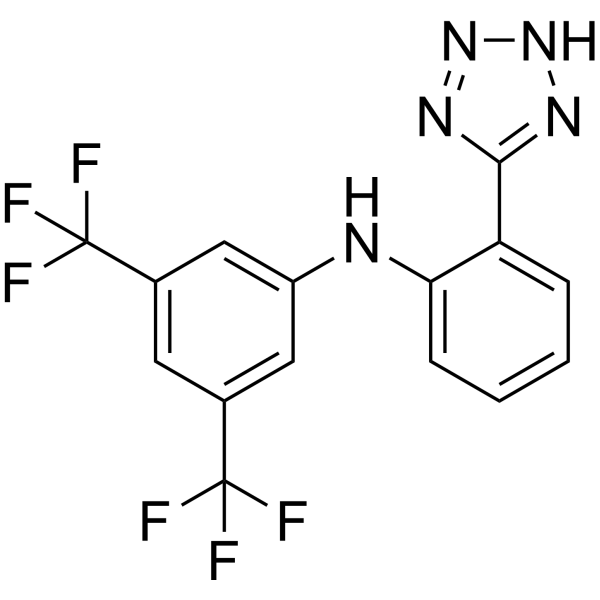
    TTBK1-IN-5 (Compound 32) is a potent TTBK1 inhibitor with an IC₅₀ of 239 nM. TTBK1-IN-5 can be used for research on Alzheimer's disease .
    TTBK1-IN-5
  • HY-157310

    Tau Protein Neurological Disease
    TTBK1-IN-3 (Compound 18) is a potent inhibitor of TTBK1, with a biochemical IC₅₀ of 18 nM and a cellular IC₅₀ of 259 nM. TTBK1-IN-3 can be used for research on Alzheimer's disease .
    TTBK1-IN-3
  • HY-179721

    Cholecystokinin Receptor Neurological Disease
    CCKBR agonist-2 (Compound z-44) is a Gi-preferring CCKBR agonist. CCKBR agonist-2 effectively activates the CCKBR-Gi signaling pathway (EC50 = 0.27 nM), but has almost no activity on Gq and Gs signaling pathways. CCKBR agonist-2 shows no significant protective effect in the mouse Alzheimer's disease model, proving that the simple activation of the Gi signal pathway does not play a dominant role in the improvement of cognitive function .
    CCKBR agonist-2
  • HY-18882

    p38 MAPK Cancer
    P38α-IN-11 (Compound 16c) is a p38α inhibitor with a KD value of 586 nM. P38α-IN-11 can be used for research on cervical cancer .
    p38α-IN-11
  • HY-19215

    PNU-96988

    HIV HIV Protease Infection
    U-96988 (PNU-96988) is a non-peptide HIV-1 protease inhibitor with a Ki value of 38 nM. U-96988 is also effective against HIV-2 protease. U-96988 exhibits an IC50 for HIV-1IIIB of 5 μM. U-96988 can be used for research on HIV infection .
    U-96988
  • HY-179607

    CCR Inflammation/Immunology Cancer
    LUF8100 is a dual-target antagonist of CCR2/CCR5 with pKi values for CCR2 and CCR5 of 5.23 and 4.97 respectively. LUF8100 can be used for research on immune homeostasis and cancer .
    LUF8100
  • HY-111103A

    PAK Cancer
    CZh226 hydrochloride is a potent and selective PAK4 inhibitor with an IC50 of 18 nM, and its selectivity for PAK1 is 346 times. The oral bioavailability of CZh226 hydrochloride is poor, and it requires the use of the prodrug PAK4-IN-1 (HY-130628) to improve absorption and metabolic stability. CZh226 hydrochloride can be used for research on colorectal cancer and melanoma .
    CZh226 hydrochloride
  • HY-180484

    Wee1 CDK Ligands for Target Protein for PROTAC Cancer
    PKMYT1-IN-12 (Compound 4) is a selective inhibitor of PKMYT1, with an IC₅₀ of 2.6 nM. PKMYT1-IN-12 can effectively inhibit the phosphorylation of CDK1, with an IC₅₀ of 44 nM. PKMYT1-IN-12 is a target protein ligand that can be used for the synthesis of PROTAC D16-M1P2 (HY-180485) .
    PKMYT1-IN-12
  • HY-179684

    CGRP Receptor 5-HT Receptor ERK Epigenetic Reader Domain Neurological Disease
    PCC0105005 is a dual-target CGRP Receptor antagonist (IC50 = 1.01 nM) and a partial agonist of 5-HT1F Receptor (EC50 = 77.91 nM). PCC0105005 shows significant efficacy in the rat model of migraine. PCC0105005 significantly reduces the expression of CGRP and c-Fos proteins, and inhibits the phosphorylation levels of ERK and CREB. PCC0105005 can be used for research on migraine .
    PCC0105005

Inquiry Online

Your information is safe with us. * Required Fields.

Salutation


Country or Region *

Applicant Name *


Organization Name *

Department *


Email Address *


Product Name *

Cat. No.


Requested quantity *

Phone Number *


Remarks

Inquiry Online

Inquiry Information

Product Name:
Cat. No.:
Quantity:
MCE Japan Authorized Agent:

