Search Result
Results for "
synthetic reagents
" in MedChemExpress (MCE) Product Catalog:
11
Biochemical Assay Reagents
8
Isotope-Labeled Compounds
| Cat. No. |
Product Name |
Target |
Research Areas |
Chemical Structure |
-
- HY-B0389A
-
|
Glucose-13C6; D-(+)-Glucose-13C6; Dextrose-13C6
|
Endogenous Metabolite
|
Metabolic Disease
|
|
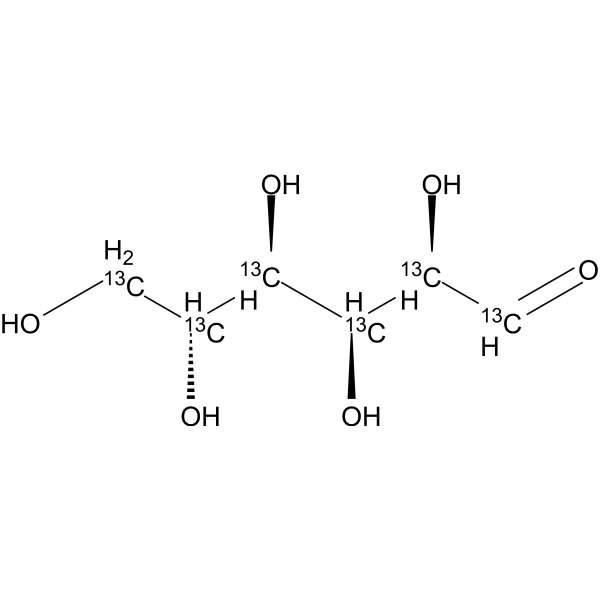
D-Glucose- 13C6 is a stable isotope-labeled counterpart of D-glucose (HY-B0389). D-Glucose- 13C6 can be used as a metabolic tracer to trace glucose-related synthetic catabolism or as synthesis ingredient, minimal media reagent, and internal standard .
|
-
-
- HY-136314
-
|
|
Drug-Linker Conjugates for ADC
|
Cancer
|
|
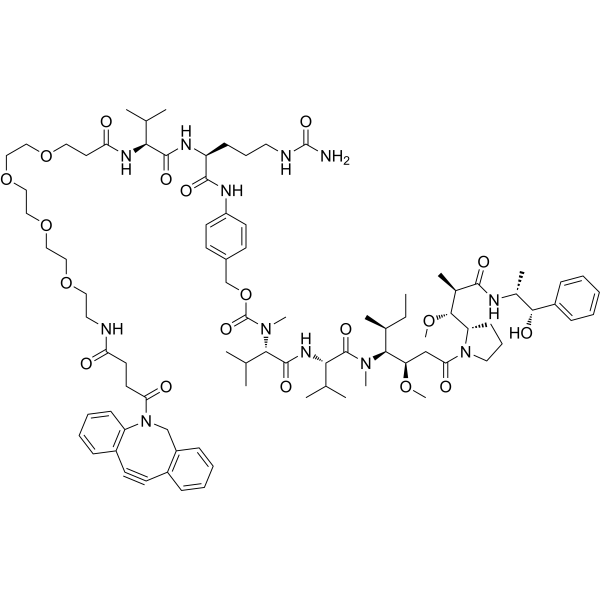
DBCO-PEG4-VC-PAB-MMAE consists a ADC linker (DBCO-PEG4-VC-PAB) and a tubulin polymerization inhibitor MMAE (HY-15162). DBCO-PEG4-VC-PAB-MMAE can be used in the synthesis of antibody-agent conjugates (ADCs). MMAE is a synthetic derivative of dolastatin 10 and functions as a potent mitotic inhibitor by inhibiting tubulin polymerization. DBCO-PEG4-VC-PAB-MMAE is a click chemistry reagent, it contains a DBCO group that can undergo strain-promoted alkyne-azide cycloaddition (SPAAC) with molecules containing Azide groups.
|
-
-
- HY-N7137
-
|
|
Reactive Oxygen Species (ROS)
|
Neurological Disease
Cancer
|
|
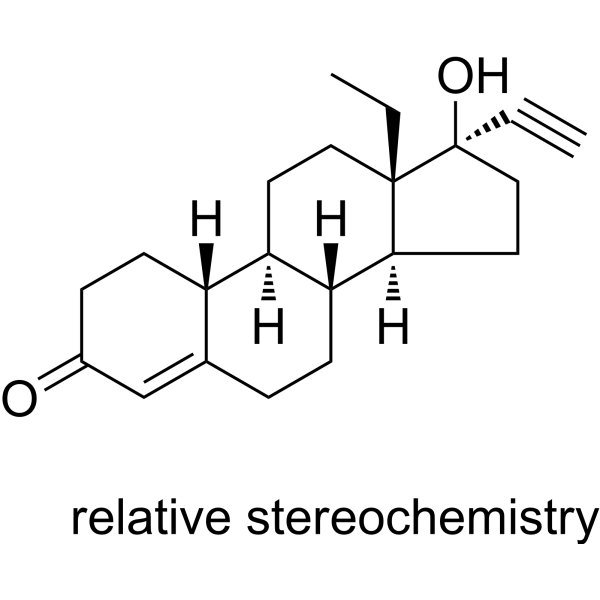
Norgestrel is a synthetic analog of progesterone, a compound commonly found in oral contraceptive pill, and a powerful neuroprotective antioxidant, preventing light-induced ROS in photoreceptor cells, and cell death . Norgestrel is a click chemistry reagent, it contains an Alkyne group and can undergo copper-catalyzed azide-alkyne cycloaddition (CuAAc) with molecules containing Azide groups.
|
-
-
- HY-W076836
-
|
p-aminobenzaldehyde
|
Biochemical Assay Reagents
|
Others
|
|
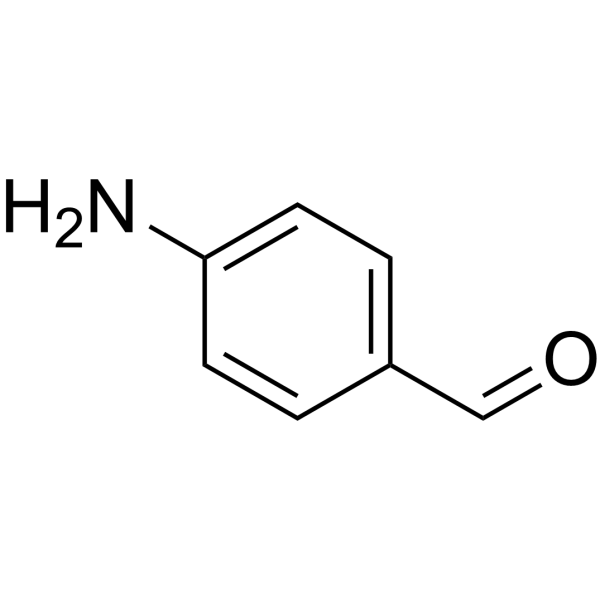
4-Aminobenzaldehyde (p-aminobenzaldehyde) is a useful synthetic reagent and monomer that can be used to synthesize monoazo dyes and photocurable ion exchange resins. 4-Aminobenzaldehyde is also a corrosion inhibitor of metals .
|
-
-
- HY-W006064
-
|
(S)-2-Aminopent-4-ynoic acid
|
Amino Acid Derivatives
|
Others
|
|
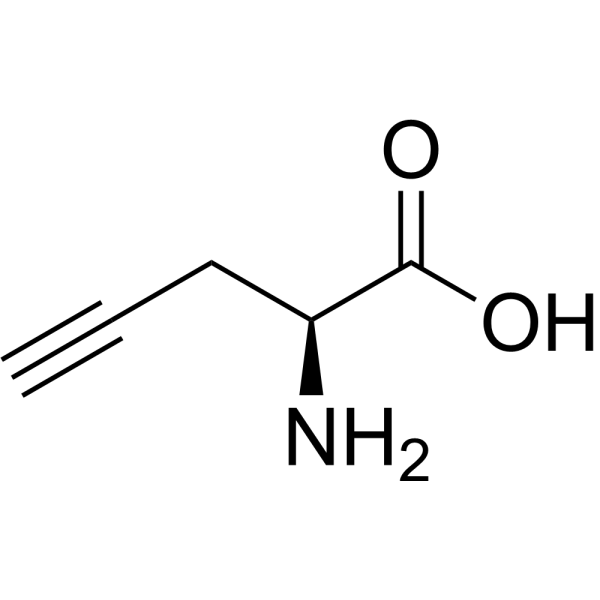
(S)-2-Aminopent-4-ynoic acid is a synthetic amino acid. (S)-2-Aminopent-4-ynoic acid can be used in synthesis of folate-conjugates and corresponding metal-chelate complexes . (S)-2-Aminopent-4-ynoic acid is a click chemistry reagent, it contains an Alkyne group and can undergo copper-catalyzed azide-alkyne cycloaddition (CuAAc) with molecules containing Azide groups.
|
-
-
- HY-101405
-
|
R 2323
|
Estrogen Receptor/ERR
|
Inflammation/Immunology
|
|
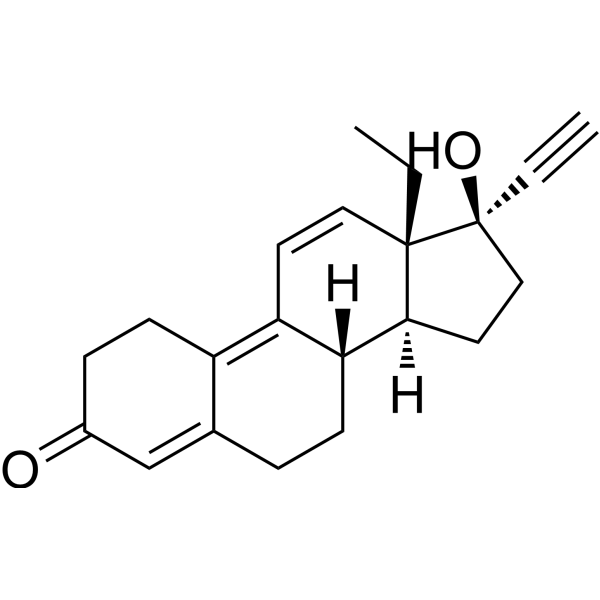
Gestrinone (R2323) is a synthetic steroid hormone used to treat endometriosis. It inhibits leiomyoma cells with an IC50 of 43.67 μM. Gestrinone is a click chemistry reagent, it contains an Alkyne group and can undergo copper-catalyzed azide-alkyne cycloaddition (CuAAc) with molecules containing Azide groups.
|
-
-
- HY-W013172
-
|
|
Progesterone Receptor
|
Endocrinology
|
|
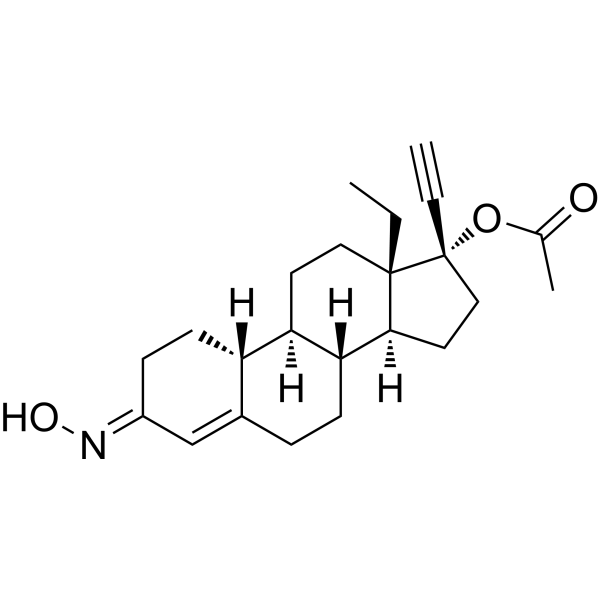
Norgestimate, a synthetic progesterone analog, is an orally active progestin with highly selective progestational activity and minimal androgenicity. Norgestimate is used for an oral contraceptive . Norgestimate is a click chemistry reagent, it contains an Alkyne group and can undergo copper-catalyzed azide-alkyne cycloaddition (CuAAc) with molecules containing Azide groups.
|
-
-
- HY-108039
-
|
HE 3286; NE-3107
|
NF-κB
|
Neurological Disease
Metabolic Disease
Inflammation/Immunology
|
|
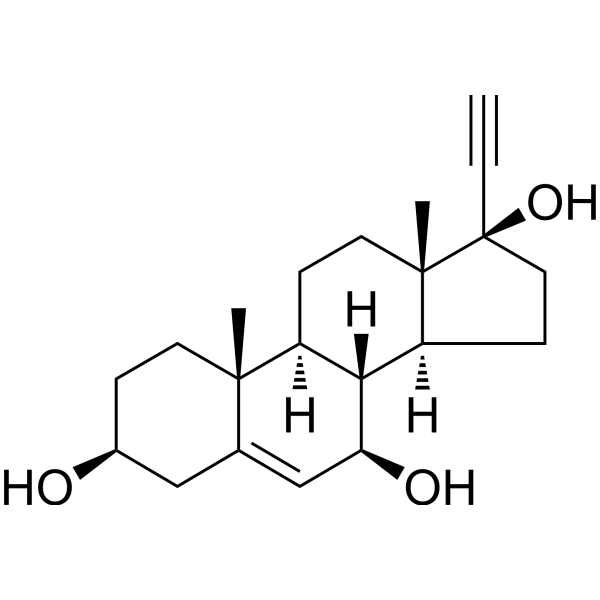
Bezisterim (HE 3286; NE-3107) is a synthetic derivative of a natural anti-inflammatory steroid, β-AET. Bezisterim is an orally active partial NF-κB inhibitor. HE3286 reduces proinflammatory signals, including IL-6 and matrix metallopeptidase 3. Bezisterim freely penetrates the blood brain barrier in mice. Bezisterim can be used for the research of the ulcerative colitis, arthritis, experimental autoimmune encephalomyelitis . Bezisterim is a click chemistry reagent, it contains an Alkyne group and can undergo copper-catalyzed azide-alkyne cycloaddition (CuAAc) with molecules containing Azide groups.
|
-
-
- HY-145149
-
|
|
ADC Payload
|
Cancer
|
|
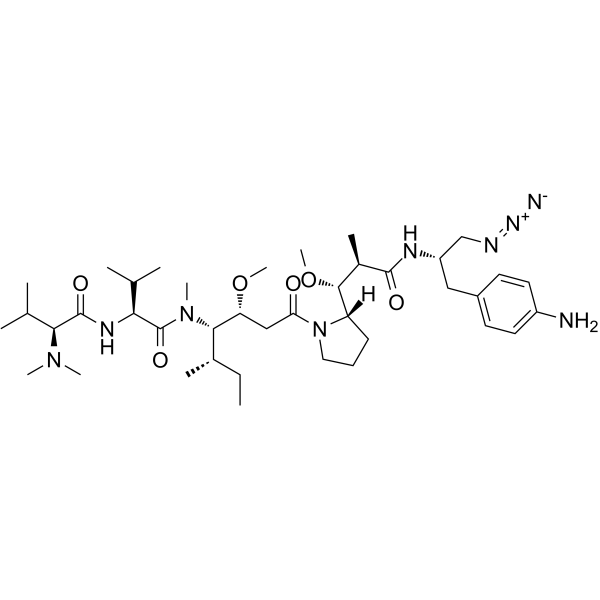
Duostatin 5 is a ADC Cytotoxin designed based on MMAF (HY-15579) and can be used to synthesize ADCs. The preparation of Duostatin 5 has the advantages of fewer synthetic steps, simple operation, less difficulty in quality control, and more stable chemical synthesis process. Duostatin 5 can be linked to the antibody targeting 5T4 (ZV05) by cross-linking with interchain cysteines through a disubstituted C-Lock linker. Duostatin 5 is a click chemistry reagent. It contains an azide group and can undergo copper-catalyzed azide-alkyne cycloaddition (CuAAc) with molecules containing alkyne groups. It can also undergo ring strain-driven alkyne-azide cycloaddition (SPAAC) with molecules containing DBCO or BCN groups[1][2].
|
-
-
- HY-W016618
-
|
Ethyl benzoylformate; Phenylglyoxylic acid ethyl ester
|
Drug Intermediate
Biochemical Assay Reagents
Carboxylesterase (CES)
|
Others
|
|
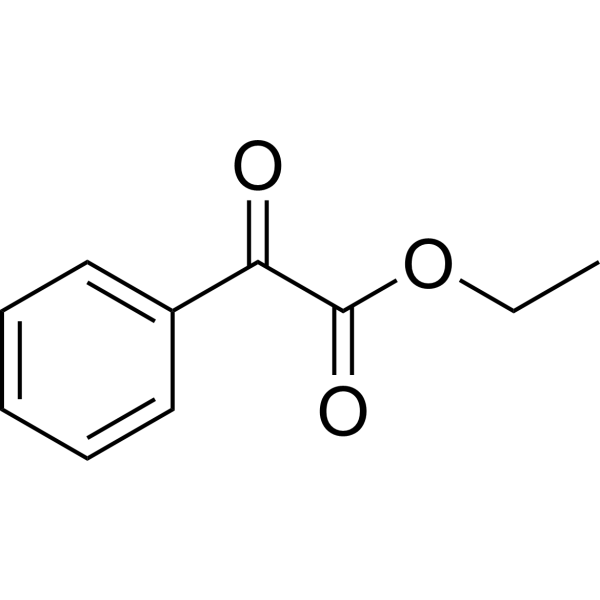
Ethyl phenylglyoxylate (Ethyl benzoylformate), the ethyl ester of phenylglyoxylic acid, is used as a synthetic reagent. Ethyl phenylglyoxylate is also a poor substrate but a potent inhibitor of chicken liver carboxylesterase. Additionally, Ethyl phenylglyoxylate exhibits photoreactivity, where its excited triplet carbonyl can initiate intermolecular hydrogen abstraction, radical coupling and cross-linking reactions .
|
-
-
- HY-59125
-
|
|
Endogenous Metabolite
|
Others
|
|
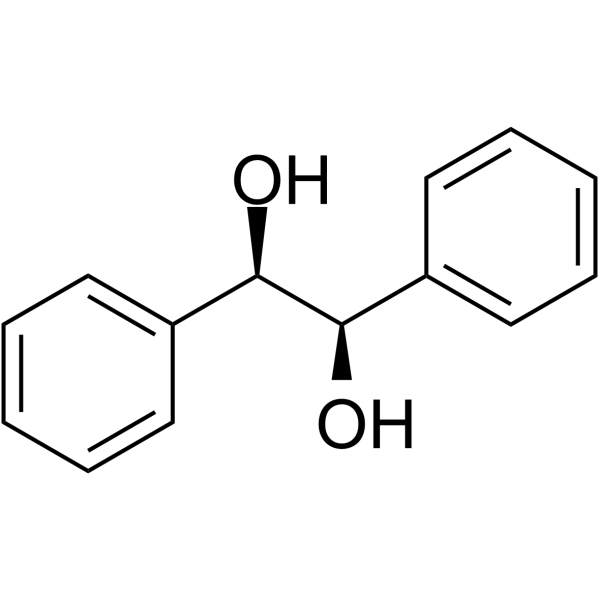
(R,R)-(+)-Hydrobenzoin is a chiral secondary alcohol that can be used as a key substrate or a chiral auxiliary reagent in various catalytic reactions and synthetic experiments .
|
-
-
- HY-B0257S1
-
|
|
Isotope-Labeled Compounds
Progesterone Receptor
|
Endocrinology
|
|
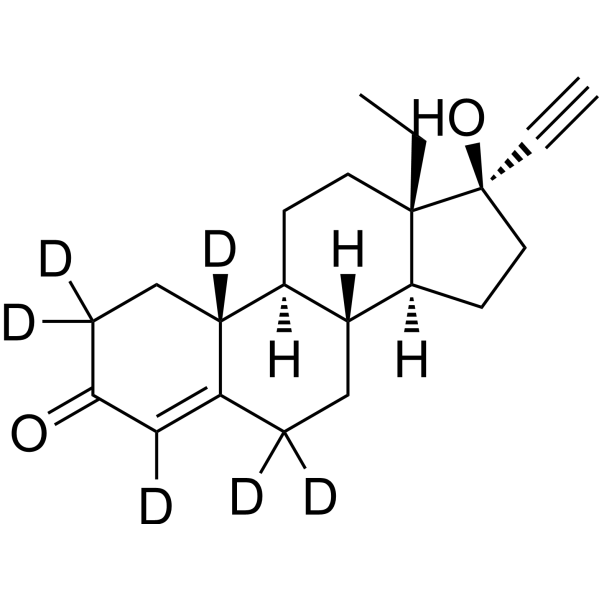
Norgestrel-d6 is the deuterium labeled Levonorgestrel. Levonorgestrel is a synthetic progestogen used as an active ingredient in some hormonal contraceptives. Norgestrel-d6 is a click chemistry reagent, it contains an Alkyne group and can undergo copper-catalyzed azide-alkyne cycloaddition (CuAAc) with molecules containing Azide groups.
|
-
-
- HY-B2091
-
|
|
Antibiotic
Bacterial
|
Infection
|
|
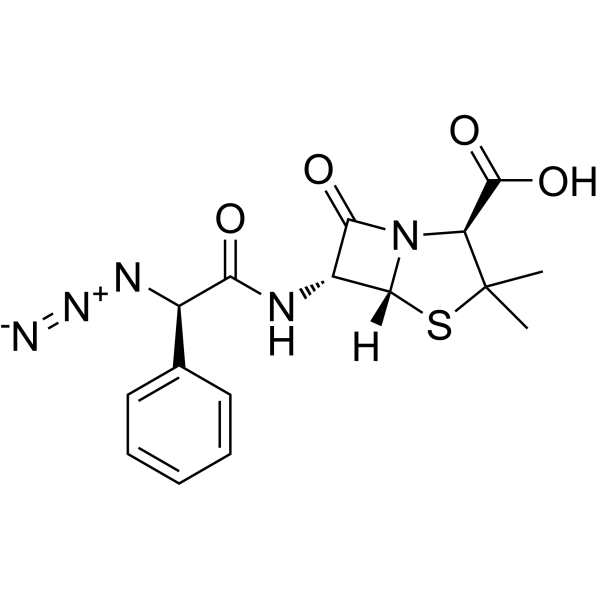
Azidocillin, a semi-synthetic Penicillin, is an orally active β-lactam antibiotic. Azidocillin bears an azide functionality and retains on-target activity within bacteria. Azidocillin can be used to research osteitis caused by dental surgery, otitis media, enterococcal septicemia and other bacterial infectious diseases . Azidocillin is a click chemistry reagent, it contains an Azide group and can undergo copper-catalyzed azide-alkyne cycloaddition reaction (CuAAc) with molecules containing Alkyne groups. It can also undergo strain-promoted alkyne-azide cycloaddition (SPAAC) reactions with molecules containing DBCO or BCN groups.
|
-
-
- HY-Y0373
-
|
|
Biochemical Assay Reagents
Drug Intermediate
|
Infection
|
|
tert-Butyl carbazate serves as a starting material for the preparation of heterocyclic and hydrazine derivatives. tert-Butyl carbazate undergoes coupling with aryl, heteroaryl, and alkenyl boronic acids to synthesize doubly protected monosubstituted hydrazines. Derivatives of tert-Butyl carbazate exhibit varying degrees of inhibitory activity against Gram-positive bacteria, Gram-negative bacteria, and various fungi .
|
-
-
- HY-W036733
-
|
|
Biochemical Assay Reagents
|
Others
|
|
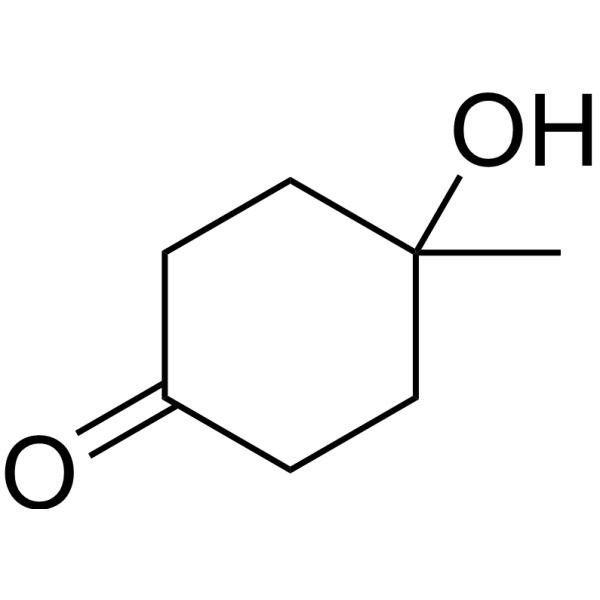
4-Hydroxy-4-methylcyclohexanone is a useful synthetic reagent extracted from patent JP2009022162A. 4-Hydroxy-4-methylcyclohexanone can be used to synthesize trans-4-amino-1-methylcyclohexanol which is intermediate of pharmaceutical synthesis .
|
-
-
- HY-147309
-
|
|
Fluorescent Dye
|
Others
|
|
16-Azidohexadecanoic acid, a synthetic fatty acid, can be used as a modification marker for nucleotides and a molecular probe for fatty acid metabolism . 16-Azidohexadecanoic acid is a click chemistry reagent, it contains an Azide group and can undergo copper-catalyzed azide-alkyne cycloaddition reaction (CuAAc) with molecules containing Alkyne groups. It can also undergo strain-promoted alkyne-azide cycloaddition (SPAAC) reactions with molecules containing DBCO or BCN groups.
|
-
-
- HY-P10143
-
|
Ac-Pro-Leu-Gly-[(S)-2-mercapto-4-methyl-pentanoyl]-Leu-Gly-OEt
|
MMP
|
Others
|
|
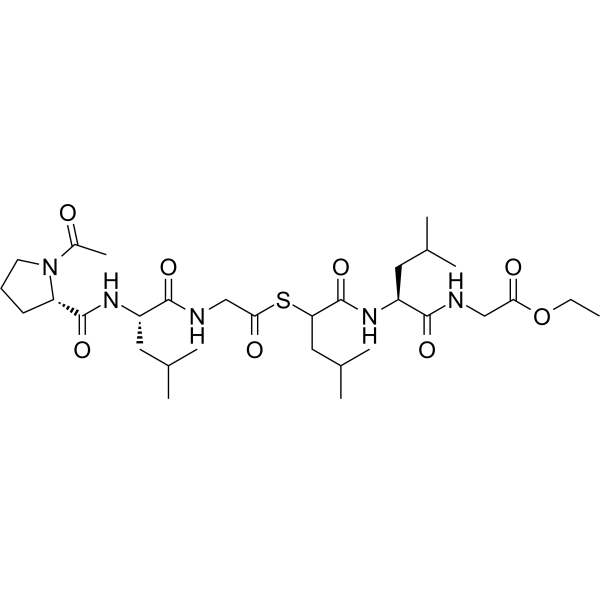
MMP-2/MMP-9 Substrate (Ac-Pro-Leu-Gly-[(S)-2-mercapto-4-methyl-pentanoyl]-Leu-Gly-OEt) is a synthetic chromogenic polypeptide substrate whose core structure mimics the cleavage sites of MMP-2 and MMP-9 (gelatinase A and B) in collagen. After being hydrolyzed by collagenase, MMP-2/MMP-9 Substrate reacts with 4,4'-dithiodipyridine or Ellman's Reagent via its thiol fragment to produce a product with ultraviolet absorption properties .
|
-
-
- HY-151661
-
|
L-azidovaline (CHA)
|
ADC Linker
|
Others
|
|
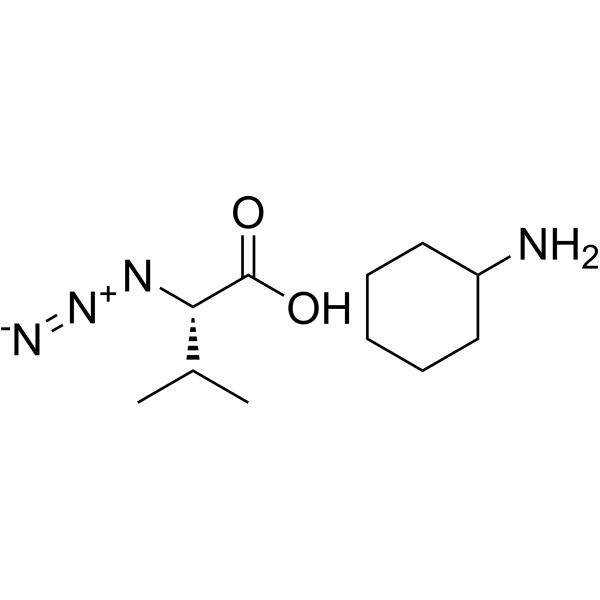
N3-L-Val-OH (CHA) is a click chemistry containing an azide group, a valine derivative. N3-L-Val-OH (CHA) can also be used as a synthetic intermediate for Valaciclovir (Valacyclovir) . It contains an azide group and can undergo copper-catalyzed azide-alkyne cycloaddition (CuAAc) with molecules containing alkyne groups. It can also undergo ring strain-promoted alkyne-azide cycloaddition (SPAAC) with molecules containing DBCO or BCN groups.
|
-
-
- HY-Y0689
-
|
|
MOFs
|
Others
|
|
Thiocarbonyldiimidazole is a synthetic chemical reagent that serves as a nitrogen-containing MOF ligand for synthetic applications. Thiocarbonyldiimidazole enables the preparation of thiocarbonyl imidazolides from alcohols, and is used in the Barton-McCombie deoxygenation reaction and natural product synthesis .
|
-
-
- HY-W127342
-
|
Decanoic acid chloride
|
Biochemical Assay Reagents
|
Others
|
|
Decanoyl chloride is an organic compound belonging to the class of acid chlorides. It is a colorless liquid with a pungent odor and is commonly used as a reagent in various organic chemical reactions, especially in the synthesis of esters, amides and fatty acids. Decanoyl chloride has numerous applications in synthetic organic chemistry, especially in the production of pharmaceuticals, agrochemicals and specialty chemicals. In addition, it can be used as a precursor for the synthesis of surfactants and detergents.
|
-
-
- HY-W095635
-
|
|
Biochemical Assay Reagents
|
Others
|
|
Tetramethylammonium fluoride tetrahydrate (TMAF) is a quaternary ammonium salt. TMAF is commonly used as a weak base and a source of fluoride ions in various organic reactions, including nucleophilic substitution, functional group deprotection, and ring-opening polymerization. Unlike other fluoride sources, TMAF is compatible with many functional groups, making it a versatile tool in synthetic chemistry. Functional reagents, In addition, TMAF has been used as a fluorinating agent in medicinal chemistry, for the preparation of radiotracers and protein modification in biochemistry, and the tetrahydrate form of TMAF is more stable and easier to handle than the anhydrous form.
|
-
-
- HY-32149
-
-
-
- HY-W145053
-
|
Sodium chloro(4-methylbenzenesulfonyl)azanide hydrate
|
Factor Xa
Bacterial
|
Infection
|
|
ChloraMine-T hydrate (Sodium chloro(4-methylbenzenesulfonyl)azanide (hydrate)) is a common reagent in various synthetic processes. It has been used as a reagent in aminohydroxylation and allylic amination reactions, a nitrogen source in aziridination reactions of alkenes and alkenes, and deprotection of sulfur groups in sulfur-containing compounds. It has been used as a reagent in the synthesis of factor Xa inhibitors. ChloraMine-T hydrate (Sodium chloro(4-methylbenzenesulfonyl)azanide (hydrate)) (0.2% w/v) is also an antimicrobial agent that kills Staphylococcus epidermidis, Staphylococcus aureus, Enterococcus faecalis, Escherichia coli, Proteus mirabilis, and Enterococcus cloacae.
|
-
-
- HY-G0018S
-
|
17-Deacetyl norgestimate-d6; 17-Deacylnorgestimate-d6
|
Isotope-Labeled Compounds
Drug Metabolite
|
Others
|
|
Norgestimate metabolite norelgestromin-d6 is the deuterium labeled Norgestimate metabolite norelgestromin. Norelgestromin is a metabolite of Norgestimate, which is a progestin or synthetic progestogen. Norgestimate metabolite norelgestromin-d6 is a click chemistry reagent, it contains an Alkyne group and can undergo copper-catalyzed azide-alkyne cycloaddition (CuAAc) with molecules containing Azide groups.
|
-
-
- HY-32149S
-
-
-
- HY-141520G
-
|
|
DNA/RNA Synthesis
|
Cancer
|
|
ART558 (GMP) is ART558 (HY-141520) produced by using GMP guidelines. GMP small molecules works appropriately as an auxiliary reagent for cell therapy manufacture. ART558 is a potent, selective and allosteric DNA polymerase theta (Polθ) inhibitor (IC50=7.9 nM). ART558 elicits BRCA-gene synthetic lethality and DNA damage. ART558 can be used for the research of cancer, such as breast cancer .
|
-
-
- HY-115715A
-
|
|
Fluorescent Dye
|
Cancer
|
|
EN219-alkyne is an alkyne-functionalized EN219 probe. EN219 (HY-P0287A) is a moderately selective synthetic covalent ligand against an N-terminal cysteine (C8) of RNF114 with an IC50 of 470 nM. EN219 inhibits RNF114-mediated autoubiquitination and p21 ubiquitination . EN219-alkyne is a click chemistry reagent, it contains an Alkyne group and can undergo copper-catalyzed azide-alkyne cycloaddition (CuAAc) with molecules containing Azide groups.
|
-
-
- HY-W189421
-
|
DPA
|
Biochemical Assay Reagents
|
Others
|
|
Diphenic anhydride (DPA) is a versatile reagent that can be used as a catalyst in many organic synthetic processes, such as polymer synthesis .
|
-
-
- HY-W097000
-
|
|
Biochemical Assay Reagents
|
Others
|
|
1-Propanesulfonic acid (sodium hydrate) is a versatile biochemical reagent used in synthesis reagents, experimental buffer solutions, etc. 1-Propanesulfonic acid (sodium hydrate) is a kind of biological materials or organic compounds that are widely used in life science research .
|
-
-
- HY-136396
-
|
|
Parasite
|
Others
|
|
Chlorempenthrin is a synthetic pyrethroid insecticide . Chlorempenthrin is a click chemistry reagent, it contains an Alkyne group and can undergo copper-catalyzed azide-alkyne cycloaddition (CuAAc) with molecules containing Azide groups.
|
-
-
- HY-W724743
-
|
|
Biochemical Assay Reagents
|
Cardiovascular Disease
|
|
Losartan azide is a click chemistry reagent containing an azide group and is a synthetic intermediate for the preparation of angiotensin AT1R-targeted renal PET imaging probe [18 F]fluoropyridine-losartan .
|
-
-
- HY-59125R
-
|
|
Endogenous Metabolite
Reference Standards
|
Others
|
|
(R,R)-(+)-Hydrobenzoin (Standard) is the analytical standard of (R,R)-(+)-Hydrobenzoin. This product is intended for research and analytical applications. (R,R)-(+)-Hydrobenzoin is a chiral secondary alcohol that can be used as a key substrate or a chiral auxiliary reagent in various catalytic reactions and synthetic experiments.
|
-
-
- HY-B0257S
-
|
D-Norgestrel-d8
|
Isotope-Labeled Compounds
Progesterone Receptor
|
Endocrinology
|
|
Levonorgestrel-d8 is the deuterium labeled Levonorgestrel. Levonorgestrel is a synthetic progestogen used as an active ingredient in some hormonal contraceptives . Levonorgestrel-d8 is a click chemistry reagent, it contains an Alkyne group and can undergo copper-catalyzed azide-alkyne cycloaddition (CuAAc) with molecules containing Azide groups.
|
-
-
- HY-101405R
-
|
R 2323 (Standard)
|
Reference Standards
Estrogen Receptor/ERR
|
Inflammation/Immunology
|
|
Gestrinone (Standard) is the analytical standard of Gestrinone. This product is intended for research and analytical applications. Gestrinone (R2323) is a synthetic steroid hormone used to treat endometriosis. It inhibits leiomyoma cells with an IC50 of 43.67 μM. Gestrinone is a click chemistry reagent, it contains an Alkyne group and can undergo copper-catalyzed azide-alkyne cycloaddition (CuAAc) with molecules containing Azide groups.
|
-
-
- HY-139244S
-
|
|
Isotope-Labeled Compounds
Progesterone Receptor
|
Endocrinology
|
|
Norgestimate-d6 is the deuterium labeled Norgestimate. Norgestimate, a synthetic progesterone analog, is an orally active progestin with highly selective progestational activity and minimal androgenicity. Norgestimate is used for an oral contraceptive . Norgestimate-d6 is a click chemistry reagent, it contains an Alkyne group and can undergo copper-catalyzed azide-alkyne cycloaddition (CuAAc) with molecules containing Azide groups.
|
-
-
- HY-114814A
-
|
|
Adrenergic Receptor
|
Others
|
|
(+)-ORM-10921 Free base is a compound that exhibits significant biological activity, particularly in the context of chemical synthesis studies and the preparation of pyrido [1,2-b] isoquinoline derivatives. (+)-ORM-10921 Free base is utilized as an active reagent in multi-component reactions involving alkynes and isoquinolinium ylides. (+)-ORM-10921 Free base plays a crucial role in the advancement of synthetic organic chemistry by enabling the formation of complex molecular structures.
|
-
-
- HY-B0450AG
-
|
Ciclopirox ethanolamine; HOE 296
|
Bacterial
Fungal
Ferroptosis
|
Infection
|
|
Ciclopirox (olamine) (GMP) is Ciclopirox olamine (HY-B0450A) produced by using GMP guidelines. GMP small molecules work appropriately as an auxiliary reagent for cell therapy manufacture. Ciclopirox (HOE296b) is a synthetic antifungal agent that can be used for superficial mycoses reseaech. Ciclopirox olamine has a very broad spectrum of activity and inhibits dermatophytes, yeasts, molds, and many Gram-positive and Gram-negative species pathogenic .
|
-
-
- HY-144585
-
|
|
Microtubule/Tubulin
ADC Payload
|
Others
|
|
AGD-0182 is a microtubule disrupting agent. AGD-0182 is a synthetic analogue of the naturally occurring tubulin-binding molecule Dolastatin 10 . AGD-0182 is a click chemistry reagent, it contains an Azide group and can undergo copper-catalyzed azide-alkyne cycloaddition reaction (CuAAc) with molecules containing Alkyne groups. It can also undergo strain-promoted alkyne-azide cycloaddition (SPAAC) reactions with molecules containing DBCO or BCN groups.
|
-
-
- HY-W016618R
-
|
Ethyl benzoylformate (Standard); Phenylglyoxylic acid ethyl ester (Standard)
|
Drug Intermediate
Reference Standards
Biochemical Assay Reagents
Carboxylesterase (CES)
|
Others
|
|
Ethyl phenylglyoxylate (Ethyl benzoylformate) (Standard) is the analytical standard of Ethyl phenylglyoxylate (HY-W016618). This product is intended for research and analytical applications. Ethyl phenylglyoxylate (Ethyl benzoylformate), the ethyl ester of phenylglyoxylic acid, is used as a synthetic reagent. Ethyl phenylglyoxylate is also a poor substrate but a potent inhibitor of chicken liver carboxylesterase. Additionally, Ethyl phenylglyoxylate exhibits photoreactivity, where its excited triplet carbonyl can initiate intermolecular hydrogen abstraction, radical coupling and cross-linking reactions .
|
-
-
- HY-W701476
-
|
Ethyl benzoylformate-d5; Phenylglyoxylic acid ethyl ester-d5
|
Isotope-Labeled Compounds
Biochemical Assay Reagents
Drug Intermediate
Carboxylesterase (CES)
|
Others
|
|
Ethyl phenylglyoxylate-d5 (Ethyl benzoylformate-d5; Phenylglyoxylic acid ethyl ester-d5) is the deuterium labeled Ethyl phenylglyoxylate (HY-W016618). Ethyl phenylglyoxylate (Ethyl benzoylformate), the ethyl ester of phenylglyoxylic acid, is used as a synthetic reagent. Ethyl phenylglyoxylate is also a poor substrate but a potent inhibitor of chicken liver carboxylesterase. Additionally, Ethyl phenylglyoxylate exhibits photoreactivity, where its excited triplet carbonyl can initiate intermolecular hydrogen abstraction, radical coupling and cross-linking reactions .
|
-
-
- HY-B2091A
-
|
|
Bacterial
Antibiotic
|
Infection
|
|
Azidocillin sodium, a semi-synthetic Penicillin, is an orally active β-lactam antibiotic. Azidocillin sodium bears an azide functionality and retains on-target activity within bacteria. Azidocillin sodium can be used to research osteitis caused by dental surgery, otitis media, enterococcal septicemia and other bacterial infectious diseases . Azidocillin sodium is a click chemistry reagent, it contains an Azide group and can undergo copper-catalyzed azide-alkyne cycloaddition reaction (CuAAc) with molecules containing Alkyne groups. It can also undergo strain-promoted alkyne-azide cycloaddition (SPAAC) reactions with molecules containing DBCO or BCN groups.
|
-
-
- HY-166863
-
-
-
- HY-79019
-
|
|
Biochemical Assay Reagents
|
Others
|
|
N-Benzylsulfamide is a benzyl-substituted sulfamide reagent. N-Benzylsulfamide can be used as a synthetic precursor to generate dioxides of bicyclic thiadiazines .
|
-
-
- HY-18570C
-
|
1-NAA Sterile Solution (1 mg/ml)
|
Biochemical Assay Reagents
|
Others
|
|
1-Naphthaleneacetic acid Sterile Solution (1 mg/mL) is a ready-to-use synthetic plant growth regulator (Auxin) stock solution, a core reagent for regulating cell division, differentiation and growth in plant tissue culture.
|
-
-
- HY-185226
-
|
|
Drug Metabolite
|
Cancer
|
|
γ-Linolenic acid NHS ester is a lipid metabolite of γ-Linolenic acid (GLA) (HY-N7140), which can serve as a synthetic intermediate or probe labeling reagent for the preparation of GLA conjugates. In practical applications, γ-Linolenic acid NHS ester can be conjugated with taxanes and polysaccharides to form dual-type conjugates for drug delivery purposes .
|
-
-
- HY-108039R
-
|
HE 3286 (Standard); NE-3107 (Standard)
|
Reference Standards
NF-κB
|
Neurological Disease
Metabolic Disease
Inflammation/Immunology
|
|
Bezisterim (Standard) is the analytical standard of Bezisterim (HY-108039). This product is intended for research and analytical applications. Bezisterim (HE 3286; NE-3107) is a synthetic derivative of a natural anti-inflammatory steroid, β-AET. Bezisterim is an orally active partial NF-κB inhibitor. HE3286 reduces proinflammatory signals, including IL-6 and matrix metallopeptidase 3. Bezisterim freely penetrates the blood brain barrier in mice. Bezisterim can be used for the research of the ulcerative colitis, arthritis, experimental autoimmune encephalomyelitis . Bezisterim is a click chemistry reagent, it contains an Alkyne group and can undergo copper-catalyzed azide-alkyne cycloaddition (CuAAc) with molecules containing Azide groups.
|
-
-
- HY-145149S
-
|
|
Isotope-Labeled Compounds
ADC Payload
|
Cancer
|
|
Duostatin 5- 13C,d3 is the 13C-labeled Duostatin 5 (HY-145149). Duostatin 5 is a ADC Cytotoxin designed based on MMAF (HY-15579) and can be used to synthesize ADCs. The preparation of Duostatin 5 has the advantages of fewer synthetic steps, simple operation, less difficulty in quality control, and more stable chemical synthesis process. Duostatin 5 can be linked to the antibody targeting 5T4 (ZV05) by cross-linking with interchain cysteines through a disubstituted C-Lock linker. Duostatin 5 is a click chemistry reagent. It contains an azide group and can undergo copper-catalyzed azide-alkyne cycloaddition (CuAAc) with molecules containing alkyne groups. It can also undergo ring strain-driven alkyne-azide cycloaddition (SPAAC) with molecules containing DBCO or BCN groups[1][2].
|
-
-
- HY-N0565AG
-
|
|
Apoptosis
MMP
Akt
PI3K
|
Infection
Neurological Disease
Inflammation/Immunology
Cancer
|
|
Doxycycline hydrochloride GMP is Doxycycline (hydrochloride) (HY-N0565A) produced by using GMP guidelines. GMP small molecules works appropriately as an auxiliary reagent for cell therapy manufacture. Doxycycline hydrochloride is an orally active highly lipophilic, tissue-permeable MMP inhibitor with broad-spectrum antibacterial activity. Doxycycline hydrochloride is also a semi-synthetic antibiotic with chelating properties, which blocks bacterial protein synthesis and inhibits extracellular matrix degradation through interactions with zinc and calcium atoms. Doxycycline hydrochloride also inhibits mitochondrial biogenesis, translation, and the expression of respiratory chain proteins. Doxycycline hydrochloride induces apoptosis, inhibits autophagy and EMT, downregulates stem cell markers, and activates the PI3K-AKT pathway, thereby effectively inhibiting the viability and proliferation of cancer cells such as breast cancer cells. Doxycycline hydrochloride also promotes the survival and self-renewal of embryonic stem cells and neural stem cells, and reduces the frequency of medium changes in culture. Doxycycline hydrochloride has been applied in studies related to breast cancer, prostate cancer, bladder cancer, and other cancers .
|
-
| Cat. No. |
Product Name |
Type |
-
- HY-141520G
-
|
|
Fluorescent Dyes
|
|
ART558 (GMP) is ART558 (HY-141520) produced by using GMP guidelines. GMP small molecules works appropriately as an auxiliary reagent for cell therapy manufacture. ART558 is a potent, selective and allosteric DNA polymerase theta (Polθ) inhibitor (IC50=7.9 nM). ART558 elicits BRCA-gene synthetic lethality and DNA damage. ART558 can be used for the research of cancer, such as breast cancer .
|
-
- HY-B0450AG
-
|
Ciclopirox ethanolamine; HOE 296
|
Fluorescent Dyes
|
|
Ciclopirox (olamine) (GMP) is Ciclopirox olamine (HY-B0450A) produced by using GMP guidelines. GMP small molecules work appropriately as an auxiliary reagent for cell therapy manufacture. Ciclopirox (HOE296b) is a synthetic antifungal agent that can be used for superficial mycoses reseaech. Ciclopirox olamine has a very broad spectrum of activity and inhibits dermatophytes, yeasts, molds, and many Gram-positive and Gram-negative species pathogenic .
|
-
- HY-N0565AG
-
|
|
Fluorescent Dyes
|
|
Doxycycline hydrochloride GMP is Doxycycline (hydrochloride) (HY-N0565A) produced by using GMP guidelines. GMP small molecules works appropriately as an auxiliary reagent for cell therapy manufacture. Doxycycline hydrochloride is an orally active highly lipophilic, tissue-permeable MMP inhibitor with broad-spectrum antibacterial activity. Doxycycline hydrochloride is also a semi-synthetic antibiotic with chelating properties, which blocks bacterial protein synthesis and inhibits extracellular matrix degradation through interactions with zinc and calcium atoms. Doxycycline hydrochloride also inhibits mitochondrial biogenesis, translation, and the expression of respiratory chain proteins. Doxycycline hydrochloride induces apoptosis, inhibits autophagy and EMT, downregulates stem cell markers, and activates the PI3K-AKT pathway, thereby effectively inhibiting the viability and proliferation of cancer cells such as breast cancer cells. Doxycycline hydrochloride also promotes the survival and self-renewal of embryonic stem cells and neural stem cells, and reduces the frequency of medium changes in culture. Doxycycline hydrochloride has been applied in studies related to breast cancer, prostate cancer, bladder cancer, and other cancers .
|
| Cat. No. |
Product Name |
Type |
-
- HY-W076836
-
|
p-aminobenzaldehyde
|
Biochemical Assay Reagents
|
|
4-Aminobenzaldehyde (p-aminobenzaldehyde) is a useful synthetic reagent and monomer that can be used to synthesize monoazo dyes and photocurable ion exchange resins. 4-Aminobenzaldehyde is also a corrosion inhibitor of metals .
|
-
- HY-W036733
-
|
|
Biochemical Assay Reagents
|
|
4-Hydroxy-4-methylcyclohexanone is a useful synthetic reagent extracted from patent JP2009022162A. 4-Hydroxy-4-methylcyclohexanone can be used to synthesize trans-4-amino-1-methylcyclohexanol which is intermediate of pharmaceutical synthesis .
|
-
- HY-W095635
-
|
|
Biochemical Assay Reagents
|
|
Tetramethylammonium fluoride tetrahydrate (TMAF) is a quaternary ammonium salt. TMAF is commonly used as a weak base and a source of fluoride ions in various organic reactions, including nucleophilic substitution, functional group deprotection, and ring-opening polymerization. Unlike other fluoride sources, TMAF is compatible with many functional groups, making it a versatile tool in synthetic chemistry. Functional reagents, In addition, TMAF has been used as a fluorinating agent in medicinal chemistry, for the preparation of radiotracers and protein modification in biochemistry, and the tetrahydrate form of TMAF is more stable and easier to handle than the anhydrous form.
|
-
- HY-32149
-
|
|
Biochemical Assay Reagents
|
|
1-Bromo-3-iodobenzene is a biochemical reagent and an important organic synthetic intermediate. 1-Bromo-3-iodobenzene can be used for the synthesis of other active compounds .
|
-
- HY-141520G
-
|
|
Biochemical Assay Reagents
|
|
ART558 (GMP) is ART558 (HY-141520) produced by using GMP guidelines. GMP small molecules works appropriately as an auxiliary reagent for cell therapy manufacture. ART558 is a potent, selective and allosteric DNA polymerase theta (Polθ) inhibitor (IC50=7.9 nM). ART558 elicits BRCA-gene synthetic lethality and DNA damage. ART558 can be used for the research of cancer, such as breast cancer .
|
-
- HY-W189421
-
|
DPA
|
Biochemical Assay Reagents
|
|
Diphenic anhydride (DPA) is a versatile reagent that can be used as a catalyst in many organic synthetic processes, such as polymer synthesis .
|
-
- HY-W097000
-
|
|
Biochemical Assay Reagents
|
|
1-Propanesulfonic acid (sodium hydrate) is a versatile biochemical reagent used in synthesis reagents, experimental buffer solutions, etc. 1-Propanesulfonic acid (sodium hydrate) is a kind of biological materials or organic compounds that are widely used in life science research .
|
-
- HY-B0450AG
-
|
Ciclopirox ethanolamine; HOE 296
|
Biochemical Assay Reagents
|
|
Ciclopirox (olamine) (GMP) is Ciclopirox olamine (HY-B0450A) produced by using GMP guidelines. GMP small molecules work appropriately as an auxiliary reagent for cell therapy manufacture. Ciclopirox (HOE296b) is a synthetic antifungal agent that can be used for superficial mycoses reseaech. Ciclopirox olamine has a very broad spectrum of activity and inhibits dermatophytes, yeasts, molds, and many Gram-positive and Gram-negative species pathogenic .
|
-
- HY-166863
-
-
- HY-18570C
-
|
1-NAA Sterile Solution (1 mg/ml)
|
Biochemical Assay Reagents
|
|
1-Naphthaleneacetic acid Sterile Solution (1 mg/mL) is a ready-to-use synthetic plant growth regulator (Auxin) stock solution, a core reagent for regulating cell division, differentiation and growth in plant tissue culture.
|
-
- HY-N0565AG
-
|
|
Biochemical Assay Reagents
|
|
Doxycycline hydrochloride GMP is Doxycycline (hydrochloride) (HY-N0565A) produced by using GMP guidelines. GMP small molecules works appropriately as an auxiliary reagent for cell therapy manufacture. Doxycycline hydrochloride is an orally active highly lipophilic, tissue-permeable MMP inhibitor with broad-spectrum antibacterial activity. Doxycycline hydrochloride is also a semi-synthetic antibiotic with chelating properties, which blocks bacterial protein synthesis and inhibits extracellular matrix degradation through interactions with zinc and calcium atoms. Doxycycline hydrochloride also inhibits mitochondrial biogenesis, translation, and the expression of respiratory chain proteins. Doxycycline hydrochloride induces apoptosis, inhibits autophagy and EMT, downregulates stem cell markers, and activates the PI3K-AKT pathway, thereby effectively inhibiting the viability and proliferation of cancer cells such as breast cancer cells. Doxycycline hydrochloride also promotes the survival and self-renewal of embryonic stem cells and neural stem cells, and reduces the frequency of medium changes in culture. Doxycycline hydrochloride has been applied in studies related to breast cancer, prostate cancer, bladder cancer, and other cancers .
|
| Cat. No. |
Product Name |
Target |
Research Area |
-
- HY-W006064
-
|
(S)-2-Aminopent-4-ynoic acid
|
Amino Acid Derivatives
|
Others
|
|
(S)-2-Aminopent-4-ynoic acid is a synthetic amino acid. (S)-2-Aminopent-4-ynoic acid can be used in synthesis of folate-conjugates and corresponding metal-chelate complexes . (S)-2-Aminopent-4-ynoic acid is a click chemistry reagent, it contains an Alkyne group and can undergo copper-catalyzed azide-alkyne cycloaddition (CuAAc) with molecules containing Azide groups.
|
-
- HY-P10143
-
|
Ac-Pro-Leu-Gly-[(S)-2-mercapto-4-methyl-pentanoyl]-Leu-Gly-OEt
|
MMP
|
Others
|
|
MMP-2/MMP-9 Substrate (Ac-Pro-Leu-Gly-[(S)-2-mercapto-4-methyl-pentanoyl]-Leu-Gly-OEt) is a synthetic chromogenic polypeptide substrate whose core structure mimics the cleavage sites of MMP-2 and MMP-9 (gelatinase A and B) in collagen. After being hydrolyzed by collagenase, MMP-2/MMP-9 Substrate reacts with 4,4'-dithiodipyridine or Ellman's Reagent via its thiol fragment to produce a product with ultraviolet absorption properties .
|
| Cat. No. |
Product Name |
Category |
Target |
Chemical Structure |
| Cat. No. |
Product Name |
Chemical Structure |
-
- HY-B0389A
-
|
|
|
D-Glucose- 13C6 is a stable isotope-labeled counterpart of D-glucose (HY-B0389). D-Glucose- 13C6 can be used as a metabolic tracer to trace glucose-related synthetic catabolism or as synthesis ingredient, minimal media reagent, and internal standard .
|
-
-
- HY-B0257S1
-
|
|
|
Norgestrel-d6 is the deuterium labeled Levonorgestrel. Levonorgestrel is a synthetic progestogen used as an active ingredient in some hormonal contraceptives. Norgestrel-d6 is a click chemistry reagent, it contains an Alkyne group and can undergo copper-catalyzed azide-alkyne cycloaddition (CuAAc) with molecules containing Azide groups.
|
-
-
- HY-G0018S
-
|
|
|
Norgestimate metabolite norelgestromin-d6 is the deuterium labeled Norgestimate metabolite norelgestromin. Norelgestromin is a metabolite of Norgestimate, which is a progestin or synthetic progestogen. Norgestimate metabolite norelgestromin-d6 is a click chemistry reagent, it contains an Alkyne group and can undergo copper-catalyzed azide-alkyne cycloaddition (CuAAc) with molecules containing Azide groups.
|
-
-
- HY-32149S
-
|
|
|
1-Bromo-3-iodobenzene-d4 is the deuterium labeled 1-Bromo-3-iodobenzene (HY-32149). 1-Bromo-3-iodobenzene is a biochemical reagent and an important organic synthetic intermediate. 1-Bromo-3-iodobenzene can be used for the synthesis of other active compounds .
|
-
-
- HY-B0257S
-
|
|
|
Levonorgestrel-d8 is the deuterium labeled Levonorgestrel. Levonorgestrel is a synthetic progestogen used as an active ingredient in some hormonal contraceptives . Levonorgestrel-d8 is a click chemistry reagent, it contains an Alkyne group and can undergo copper-catalyzed azide-alkyne cycloaddition (CuAAc) with molecules containing Azide groups.
|
-
-
- HY-139244S
-
|
|
|
Norgestimate-d6 is the deuterium labeled Norgestimate. Norgestimate, a synthetic progesterone analog, is an orally active progestin with highly selective progestational activity and minimal androgenicity. Norgestimate is used for an oral contraceptive . Norgestimate-d6 is a click chemistry reagent, it contains an Alkyne group and can undergo copper-catalyzed azide-alkyne cycloaddition (CuAAc) with molecules containing Azide groups.
|
-
-
- HY-W701476
-
|
|
|
Ethyl phenylglyoxylate-d5 (Ethyl benzoylformate-d5; Phenylglyoxylic acid ethyl ester-d5) is the deuterium labeled Ethyl phenylglyoxylate (HY-W016618). Ethyl phenylglyoxylate (Ethyl benzoylformate), the ethyl ester of phenylglyoxylic acid, is used as a synthetic reagent. Ethyl phenylglyoxylate is also a poor substrate but a potent inhibitor of chicken liver carboxylesterase. Additionally, Ethyl phenylglyoxylate exhibits photoreactivity, where its excited triplet carbonyl can initiate intermolecular hydrogen abstraction, radical coupling and cross-linking reactions .
|
-
-
- HY-145149S
-
|
|
|
Duostatin 5- 13C,d3 is the 13C-labeled Duostatin 5 (HY-145149). Duostatin 5 is a ADC Cytotoxin designed based on MMAF (HY-15579) and can be used to synthesize ADCs. The preparation of Duostatin 5 has the advantages of fewer synthetic steps, simple operation, less difficulty in quality control, and more stable chemical synthesis process. Duostatin 5 can be linked to the antibody targeting 5T4 (ZV05) by cross-linking with interchain cysteines through a disubstituted C-Lock linker. Duostatin 5 is a click chemistry reagent. It contains an azide group and can undergo copper-catalyzed azide-alkyne cycloaddition (CuAAc) with molecules containing alkyne groups. It can also undergo ring strain-driven alkyne-azide cycloaddition (SPAAC) with molecules containing DBCO or BCN groups[1][2].
|
-
| Cat. No. |
Product Name |
|
Classification |
-
- HY-136314
-
|
|
|
ADC Synthesis
DBCO
|
|
DBCO-PEG4-VC-PAB-MMAE consists a ADC linker (DBCO-PEG4-VC-PAB) and a tubulin polymerization inhibitor MMAE (HY-15162). DBCO-PEG4-VC-PAB-MMAE can be used in the synthesis of antibody-agent conjugates (ADCs). MMAE is a synthetic derivative of dolastatin 10 and functions as a potent mitotic inhibitor by inhibiting tubulin polymerization. DBCO-PEG4-VC-PAB-MMAE is a click chemistry reagent, it contains a DBCO group that can undergo strain-promoted alkyne-azide cycloaddition (SPAAC) with molecules containing Azide groups.
|
-
- HY-N7137
-
|
|
|
Alkynes
|
|
Norgestrel is a synthetic analog of progesterone, a compound commonly found in oral contraceptive pill, and a powerful neuroprotective antioxidant, preventing light-induced ROS in photoreceptor cells, and cell death . Norgestrel is a click chemistry reagent, it contains an Alkyne group and can undergo copper-catalyzed azide-alkyne cycloaddition (CuAAc) with molecules containing Azide groups.
|
-
- HY-W006064
-
|
(S)-2-Aminopent-4-ynoic acid
|
|
Alkynes
|
|
(S)-2-Aminopent-4-ynoic acid is a synthetic amino acid. (S)-2-Aminopent-4-ynoic acid can be used in synthesis of folate-conjugates and corresponding metal-chelate complexes . (S)-2-Aminopent-4-ynoic acid is a click chemistry reagent, it contains an Alkyne group and can undergo copper-catalyzed azide-alkyne cycloaddition (CuAAc) with molecules containing Azide groups.
|
-
- HY-101405
-
|
R 2323
|
|
Alkynes
|
|
Gestrinone (R2323) is a synthetic steroid hormone used to treat endometriosis. It inhibits leiomyoma cells with an IC50 of 43.67 μM. Gestrinone is a click chemistry reagent, it contains an Alkyne group and can undergo copper-catalyzed azide-alkyne cycloaddition (CuAAc) with molecules containing Azide groups.
|
-
- HY-W013172
-
|
|
|
Alkynes
|
|
Norgestimate, a synthetic progesterone analog, is an orally active progestin with highly selective progestational activity and minimal androgenicity. Norgestimate is used for an oral contraceptive . Norgestimate is a click chemistry reagent, it contains an Alkyne group and can undergo copper-catalyzed azide-alkyne cycloaddition (CuAAc) with molecules containing Azide groups.
|
-
- HY-108039
-
|
HE 3286; NE-3107
|
|
Alkynes
|
|
Bezisterim (HE 3286; NE-3107) is a synthetic derivative of a natural anti-inflammatory steroid, β-AET. Bezisterim is an orally active partial NF-κB inhibitor. HE3286 reduces proinflammatory signals, including IL-6 and matrix metallopeptidase 3. Bezisterim freely penetrates the blood brain barrier in mice. Bezisterim can be used for the research of the ulcerative colitis, arthritis, experimental autoimmune encephalomyelitis . Bezisterim is a click chemistry reagent, it contains an Alkyne group and can undergo copper-catalyzed azide-alkyne cycloaddition (CuAAc) with molecules containing Azide groups.
|
-
- HY-145149
-
|
|
|
Azide
ADC Synthesis
|
|
Duostatin 5 is a ADC Cytotoxin designed based on MMAF (HY-15579) and can be used to synthesize ADCs. The preparation of Duostatin 5 has the advantages of fewer synthetic steps, simple operation, less difficulty in quality control, and more stable chemical synthesis process. Duostatin 5 can be linked to the antibody targeting 5T4 (ZV05) by cross-linking with interchain cysteines through a disubstituted C-Lock linker. Duostatin 5 is a click chemistry reagent. It contains an azide group and can undergo copper-catalyzed azide-alkyne cycloaddition (CuAAc) with molecules containing alkyne groups. It can also undergo ring strain-driven alkyne-azide cycloaddition (SPAAC) with molecules containing DBCO or BCN groups[1][2].
|
-
- HY-B0257S1
-
|
|
|
Alkynes
|
|
Norgestrel-d6 is the deuterium labeled Levonorgestrel. Levonorgestrel is a synthetic progestogen used as an active ingredient in some hormonal contraceptives. Norgestrel-d6 is a click chemistry reagent, it contains an Alkyne group and can undergo copper-catalyzed azide-alkyne cycloaddition (CuAAc) with molecules containing Azide groups.
|
-
- HY-B2091
-
|
|
|
Azide
|
|
Azidocillin, a semi-synthetic Penicillin, is an orally active β-lactam antibiotic. Azidocillin bears an azide functionality and retains on-target activity within bacteria. Azidocillin can be used to research osteitis caused by dental surgery, otitis media, enterococcal septicemia and other bacterial infectious diseases . Azidocillin is a click chemistry reagent, it contains an Azide group and can undergo copper-catalyzed azide-alkyne cycloaddition reaction (CuAAc) with molecules containing Alkyne groups. It can also undergo strain-promoted alkyne-azide cycloaddition (SPAAC) reactions with molecules containing DBCO or BCN groups.
|
-
- HY-147309
-
|
|
|
Azide
|
|
16-Azidohexadecanoic acid, a synthetic fatty acid, can be used as a modification marker for nucleotides and a molecular probe for fatty acid metabolism . 16-Azidohexadecanoic acid is a click chemistry reagent, it contains an Azide group and can undergo copper-catalyzed azide-alkyne cycloaddition reaction (CuAAc) with molecules containing Alkyne groups. It can also undergo strain-promoted alkyne-azide cycloaddition (SPAAC) reactions with molecules containing DBCO or BCN groups.
|
-
- HY-151661
-
|
L-azidovaline (CHA)
|
|
Azide
|
|
N3-L-Val-OH (CHA) is a click chemistry containing an azide group, a valine derivative. N3-L-Val-OH (CHA) can also be used as a synthetic intermediate for Valaciclovir (Valacyclovir) . It contains an azide group and can undergo copper-catalyzed azide-alkyne cycloaddition (CuAAc) with molecules containing alkyne groups. It can also undergo ring strain-promoted alkyne-azide cycloaddition (SPAAC) with molecules containing DBCO or BCN groups.
|
-
- HY-G0018S
-
|
17-Deacetyl norgestimate-d6; 17-Deacylnorgestimate-d6
|
|
Alkynes
|
|
Norgestimate metabolite norelgestromin-d6 is the deuterium labeled Norgestimate metabolite norelgestromin. Norelgestromin is a metabolite of Norgestimate, which is a progestin or synthetic progestogen. Norgestimate metabolite norelgestromin-d6 is a click chemistry reagent, it contains an Alkyne group and can undergo copper-catalyzed azide-alkyne cycloaddition (CuAAc) with molecules containing Azide groups.
|
-
- HY-115715A
-
|
|
|
Alkynes
|
|
EN219-alkyne is an alkyne-functionalized EN219 probe. EN219 (HY-P0287A) is a moderately selective synthetic covalent ligand against an N-terminal cysteine (C8) of RNF114 with an IC50 of 470 nM. EN219 inhibits RNF114-mediated autoubiquitination and p21 ubiquitination . EN219-alkyne is a click chemistry reagent, it contains an Alkyne group and can undergo copper-catalyzed azide-alkyne cycloaddition (CuAAc) with molecules containing Azide groups.
|
-
- HY-136396
-
|
|
|
Alkynes
|
|
Chlorempenthrin is a synthetic pyrethroid insecticide . Chlorempenthrin is a click chemistry reagent, it contains an Alkyne group and can undergo copper-catalyzed azide-alkyne cycloaddition (CuAAc) with molecules containing Azide groups.
|
-
- HY-B0257S
-
|
D-Norgestrel-d8
|
|
Alkynes
|
|
Levonorgestrel-d8 is the deuterium labeled Levonorgestrel. Levonorgestrel is a synthetic progestogen used as an active ingredient in some hormonal contraceptives . Levonorgestrel-d8 is a click chemistry reagent, it contains an Alkyne group and can undergo copper-catalyzed azide-alkyne cycloaddition (CuAAc) with molecules containing Azide groups.
|
-
- HY-139244S
-
|
|
|
Alkynes
|
|
Norgestimate-d6 is the deuterium labeled Norgestimate. Norgestimate, a synthetic progesterone analog, is an orally active progestin with highly selective progestational activity and minimal androgenicity. Norgestimate is used for an oral contraceptive . Norgestimate-d6 is a click chemistry reagent, it contains an Alkyne group and can undergo copper-catalyzed azide-alkyne cycloaddition (CuAAc) with molecules containing Azide groups.
|
-
- HY-144585
-
|
|
|
Azide
|
|
AGD-0182 is a microtubule disrupting agent. AGD-0182 is a synthetic analogue of the naturally occurring tubulin-binding molecule Dolastatin 10 . AGD-0182 is a click chemistry reagent, it contains an Azide group and can undergo copper-catalyzed azide-alkyne cycloaddition reaction (CuAAc) with molecules containing Alkyne groups. It can also undergo strain-promoted alkyne-azide cycloaddition (SPAAC) reactions with molecules containing DBCO or BCN groups.
|
| Cat. No. |
Product Name |
Target |
Research Areas |
Chemical Structure |
-
- HY-B0450AG
-
|
Ciclopirox ethanolamine; HOE 296
|
Bacterial
Fungal
Ferroptosis
|
Infection
|
|
Ciclopirox (olamine) (GMP) is Ciclopirox olamine (HY-B0450A) produced by using GMP guidelines. GMP small molecules work appropriately as an auxiliary reagent for cell therapy manufacture. Ciclopirox (HOE296b) is a synthetic antifungal agent that can be used for superficial mycoses reseaech. Ciclopirox olamine has a very broad spectrum of activity and inhibits dermatophytes, yeasts, molds, and many Gram-positive and Gram-negative species pathogenic .
|
-
-
- HY-141520G
-
|
|
DNA/RNA Synthesis
|
Cancer
|
|
ART558 (GMP) is ART558 (HY-141520) produced by using GMP guidelines. GMP small molecules works appropriately as an auxiliary reagent for cell therapy manufacture. ART558 is a potent, selective and allosteric DNA polymerase theta (Polθ) inhibitor (IC50=7.9 nM). ART558 elicits BRCA-gene synthetic lethality and DNA damage. ART558 can be used for the research of cancer, such as breast cancer .
|
-
-
- HY-N0565AG
-
|
|
Apoptosis
MMP
Akt
PI3K
|
Infection
Neurological Disease
Inflammation/Immunology
Cancer
|
|
Doxycycline hydrochloride GMP is Doxycycline (hydrochloride) (HY-N0565A) produced by using GMP guidelines. GMP small molecules works appropriately as an auxiliary reagent for cell therapy manufacture. Doxycycline hydrochloride is an orally active highly lipophilic, tissue-permeable MMP inhibitor with broad-spectrum antibacterial activity. Doxycycline hydrochloride is also a semi-synthetic antibiotic with chelating properties, which blocks bacterial protein synthesis and inhibits extracellular matrix degradation through interactions with zinc and calcium atoms. Doxycycline hydrochloride also inhibits mitochondrial biogenesis, translation, and the expression of respiratory chain proteins. Doxycycline hydrochloride induces apoptosis, inhibits autophagy and EMT, downregulates stem cell markers, and activates the PI3K-AKT pathway, thereby effectively inhibiting the viability and proliferation of cancer cells such as breast cancer cells. Doxycycline hydrochloride also promotes the survival and self-renewal of embryonic stem cells and neural stem cells, and reduces the frequency of medium changes in culture. Doxycycline hydrochloride has been applied in studies related to breast cancer, prostate cancer, bladder cancer, and other cancers .
|
-
Your information is safe with us. * Required Fields.
Inquiry Information
- Product Name:
- Cat. No.:
- Quantity:
- MCE Japan Authorized Agent:

